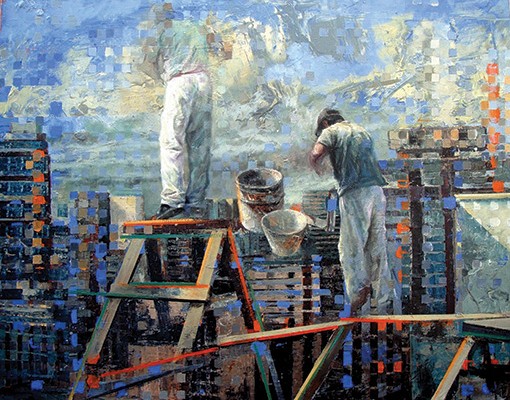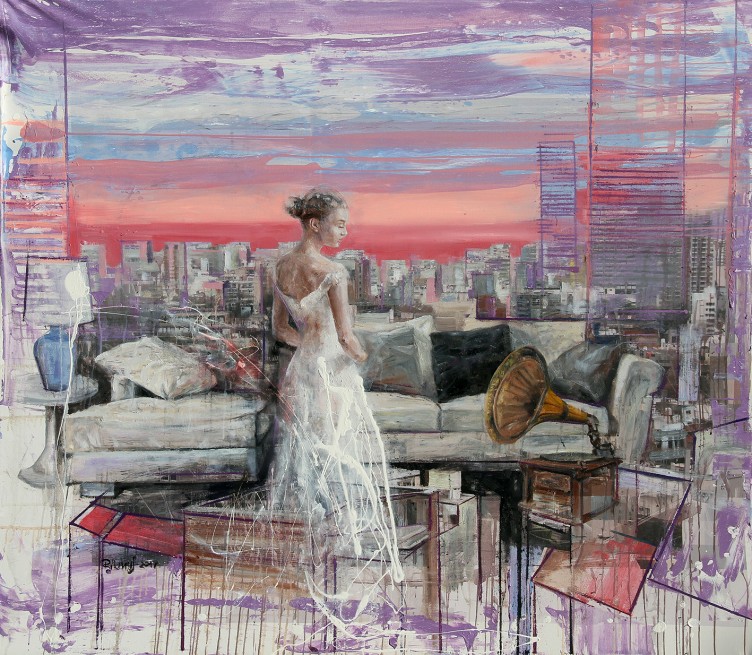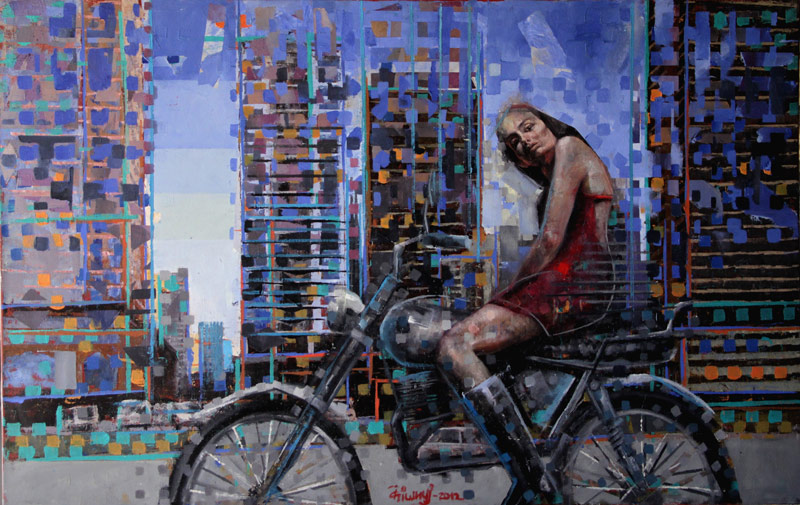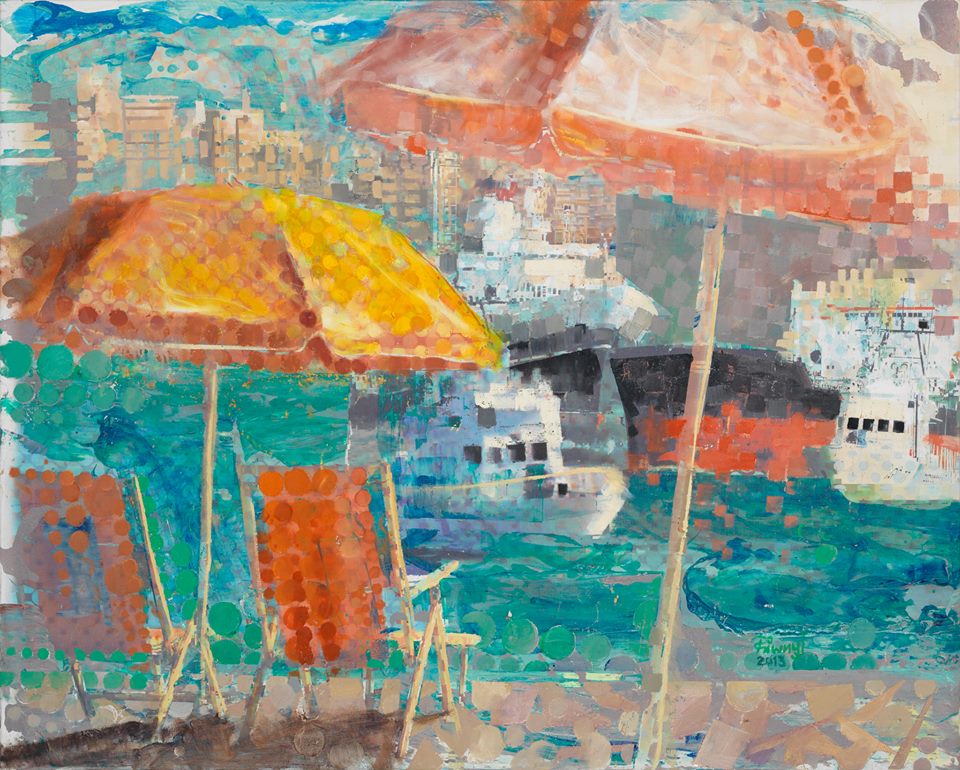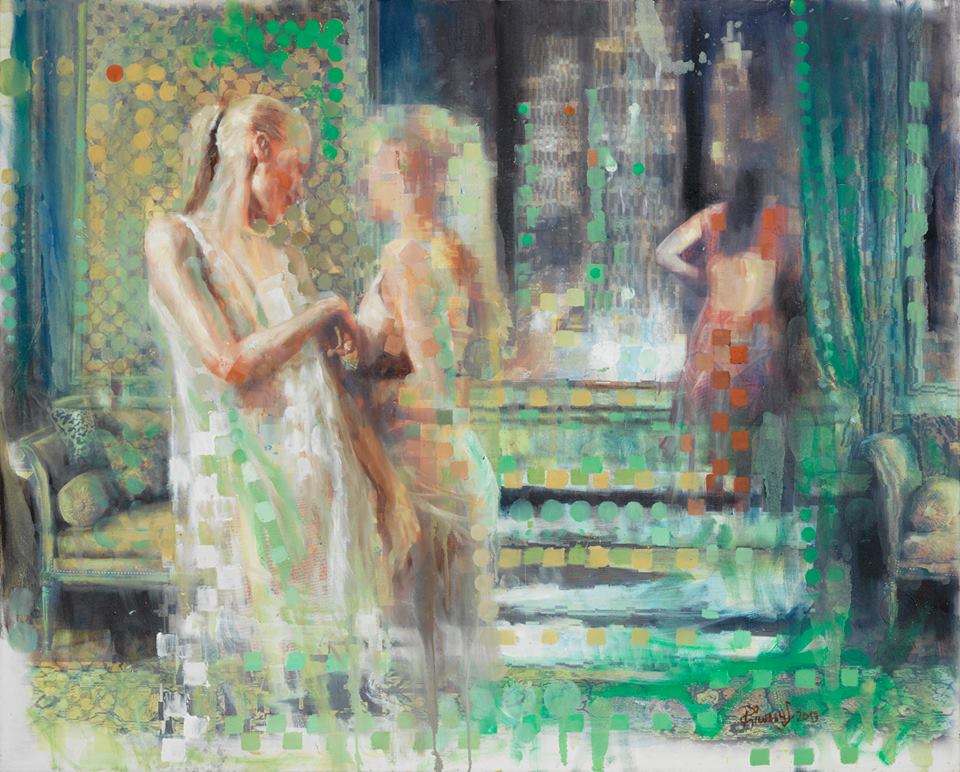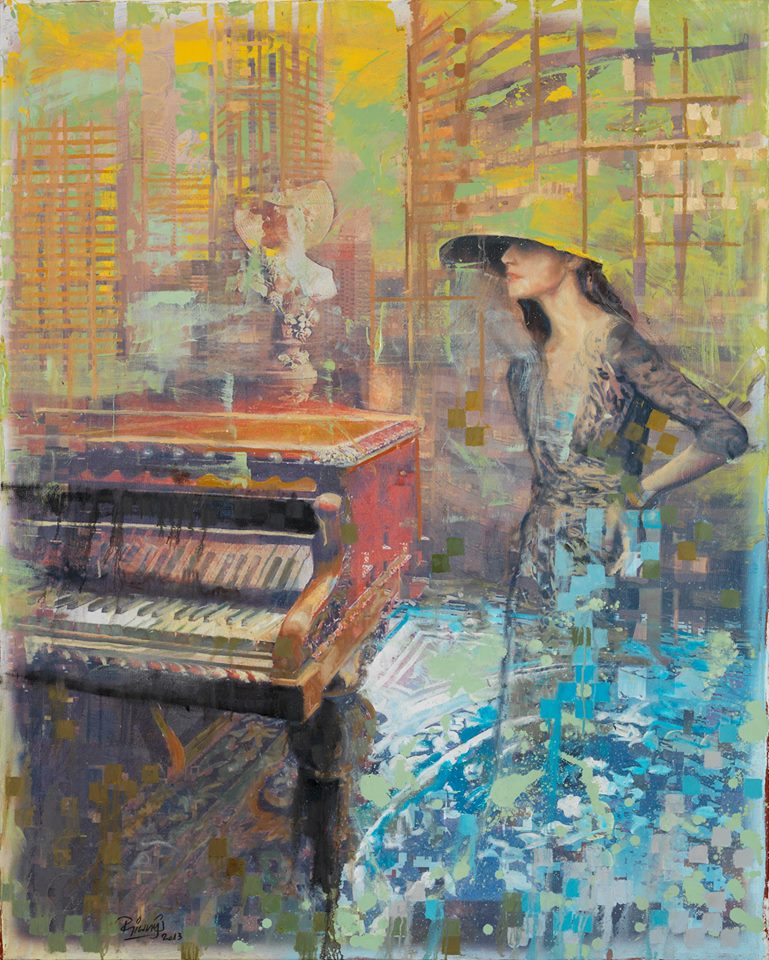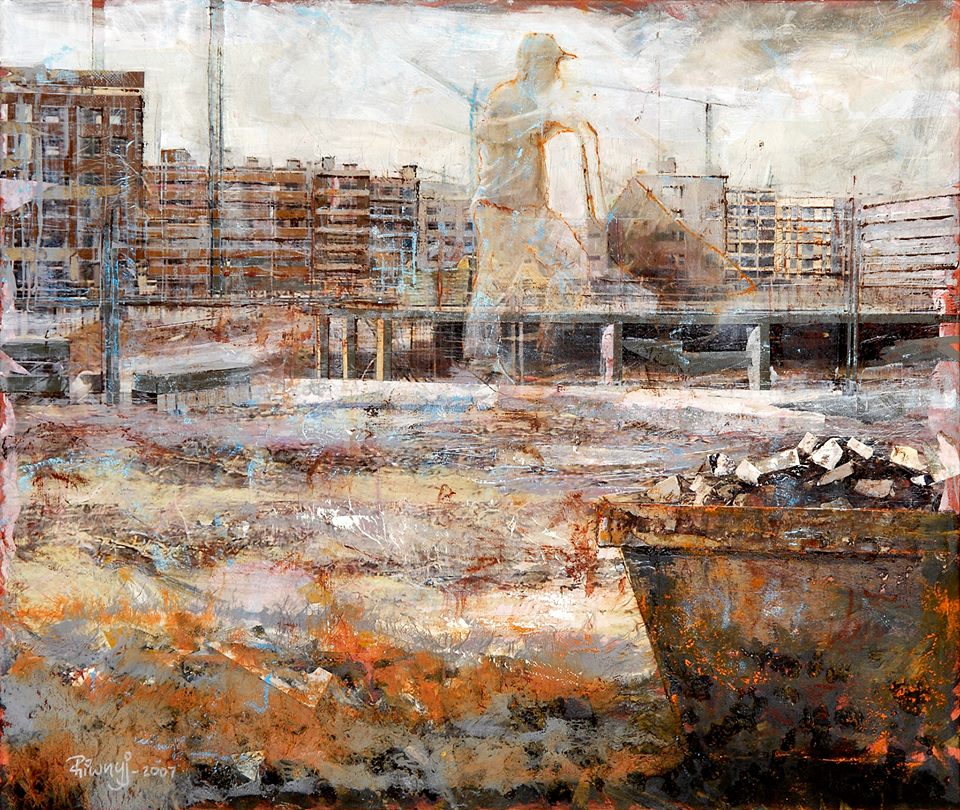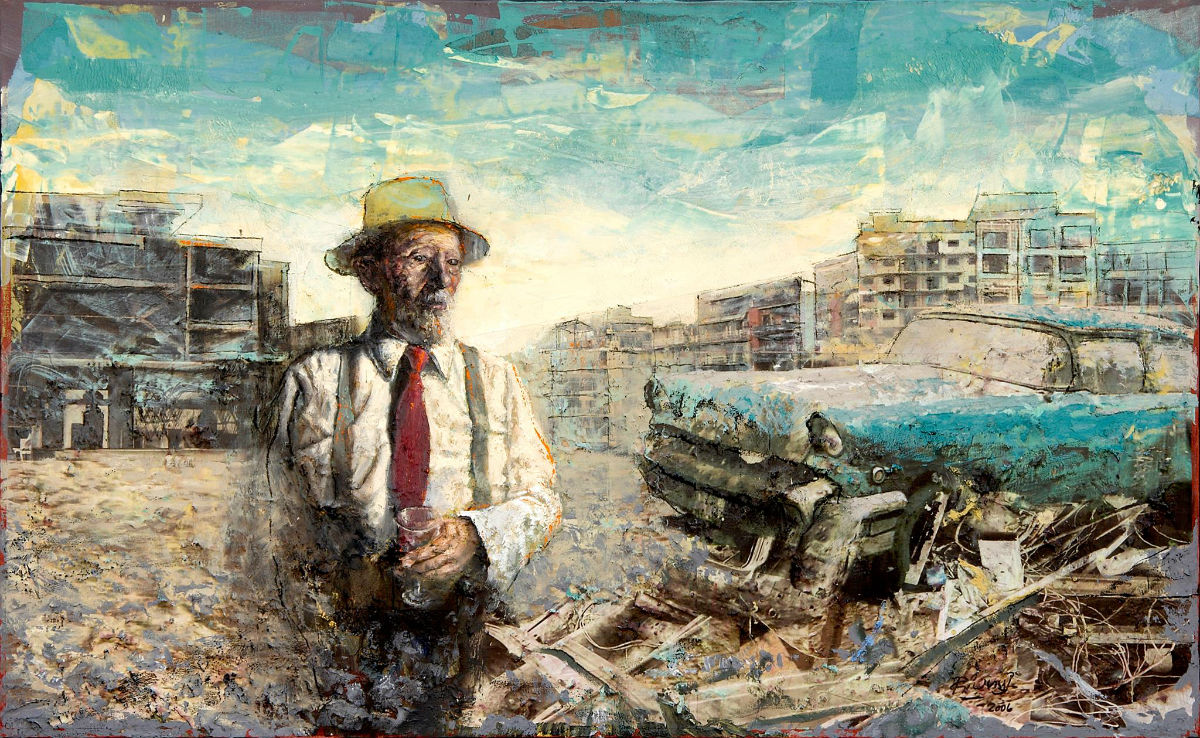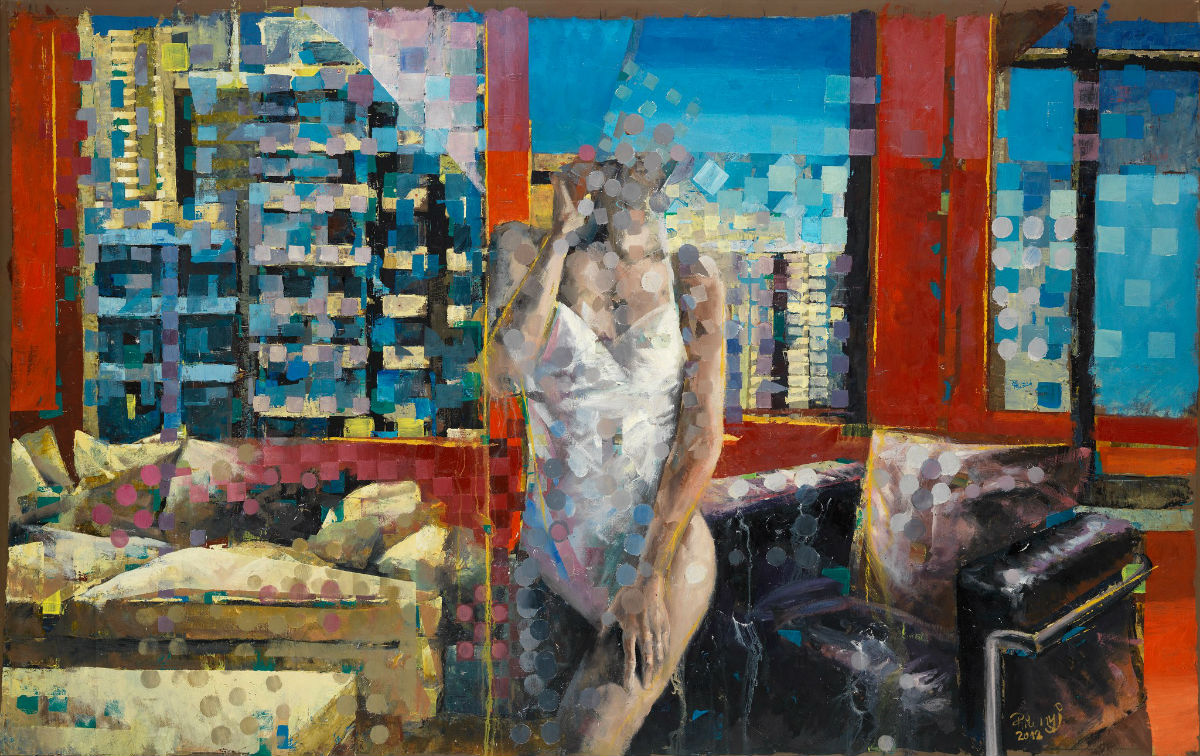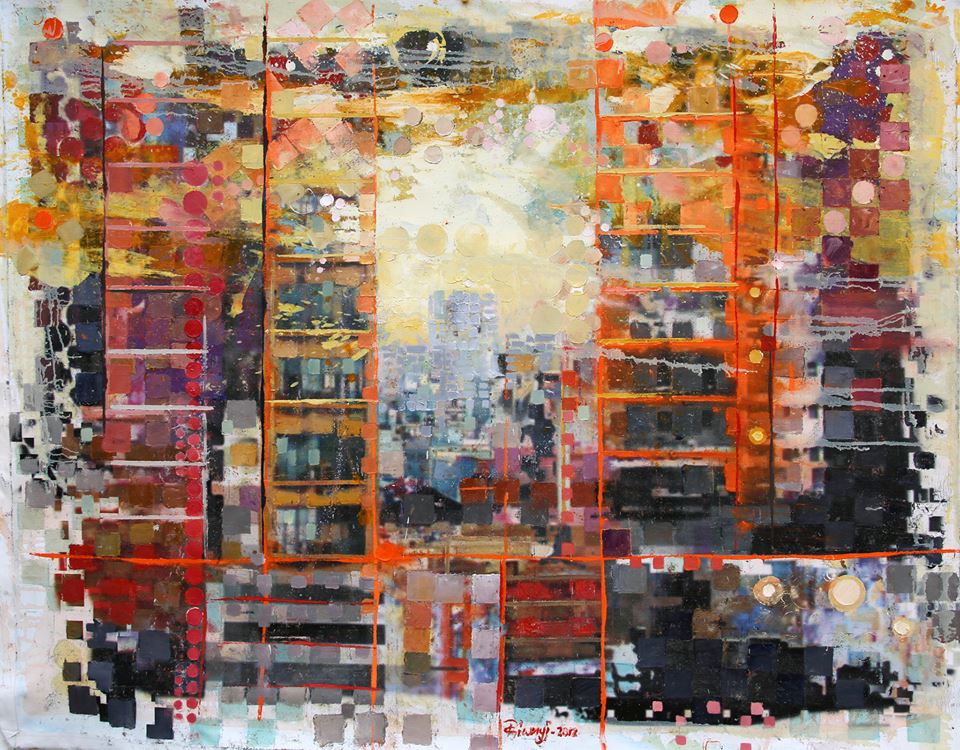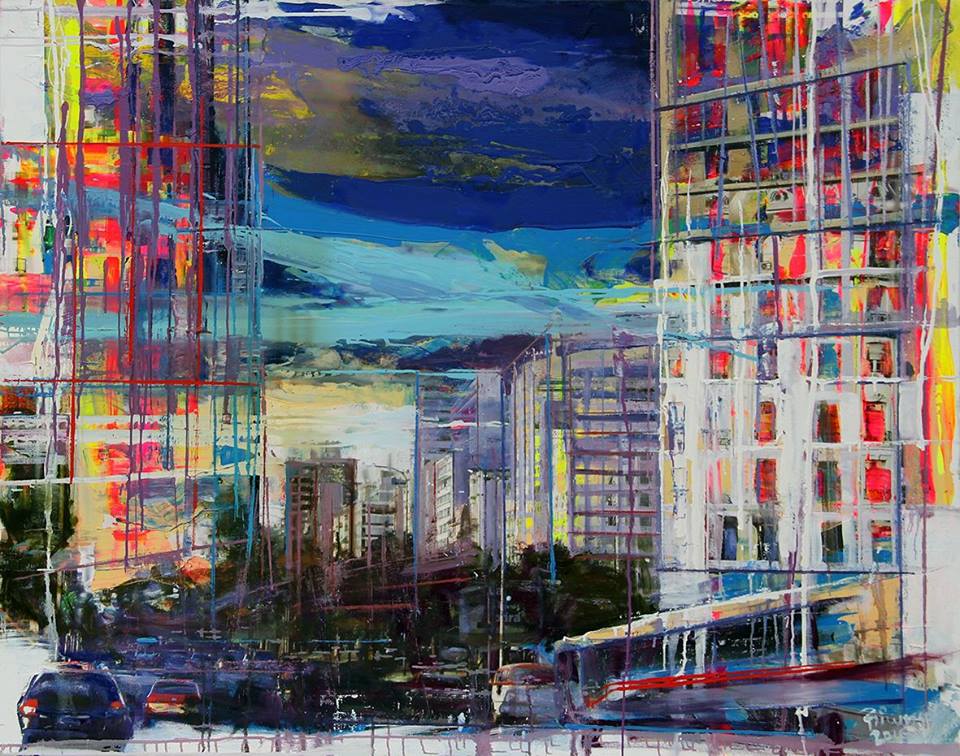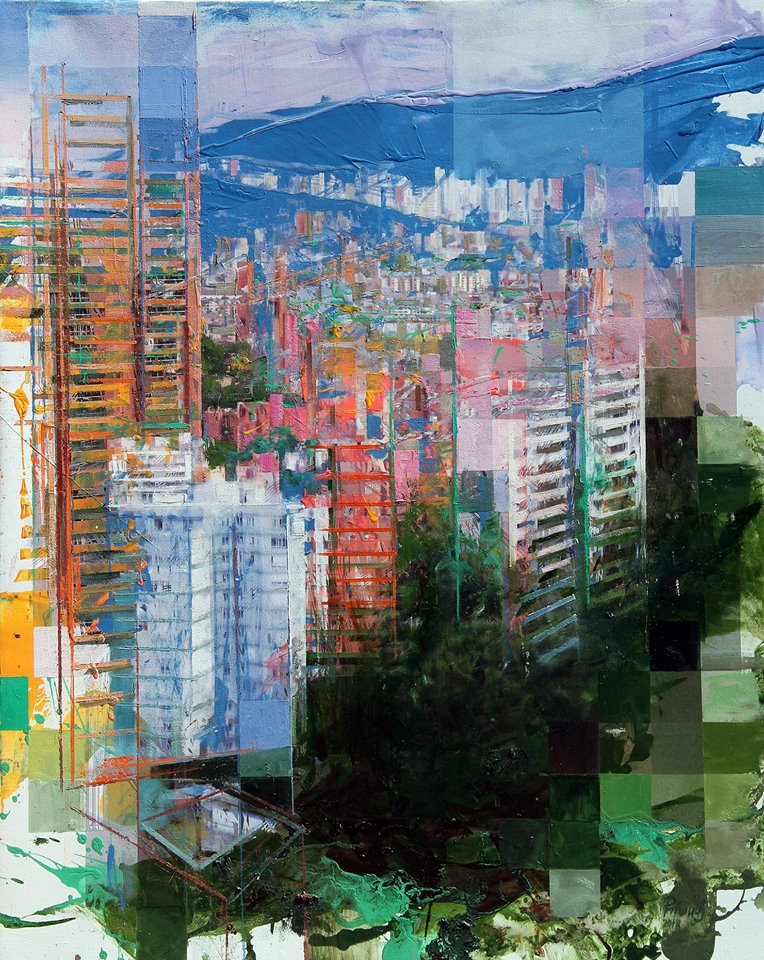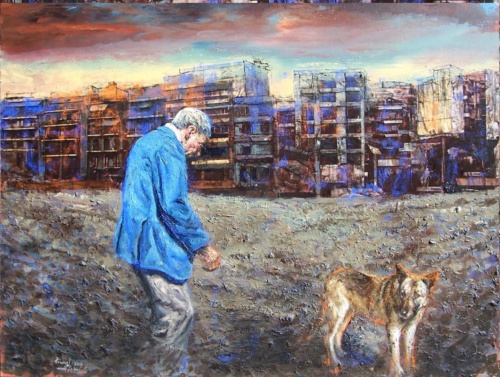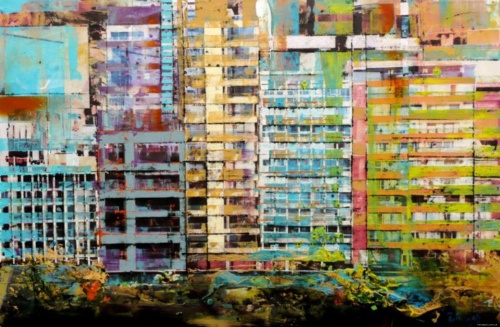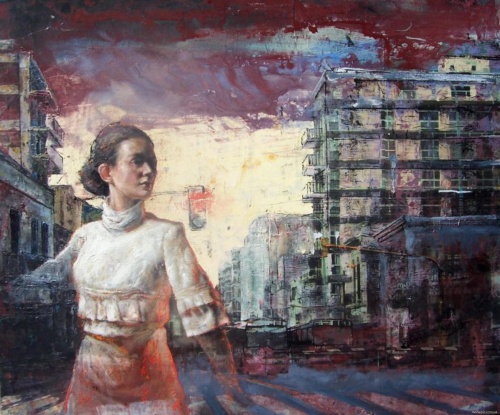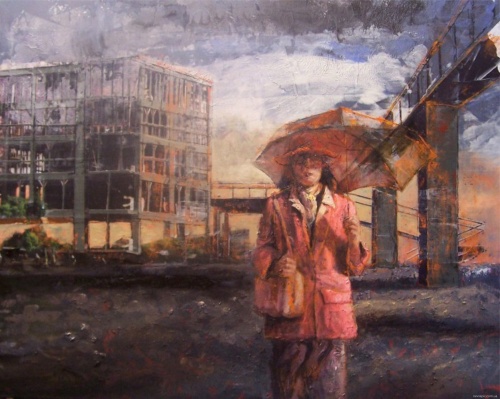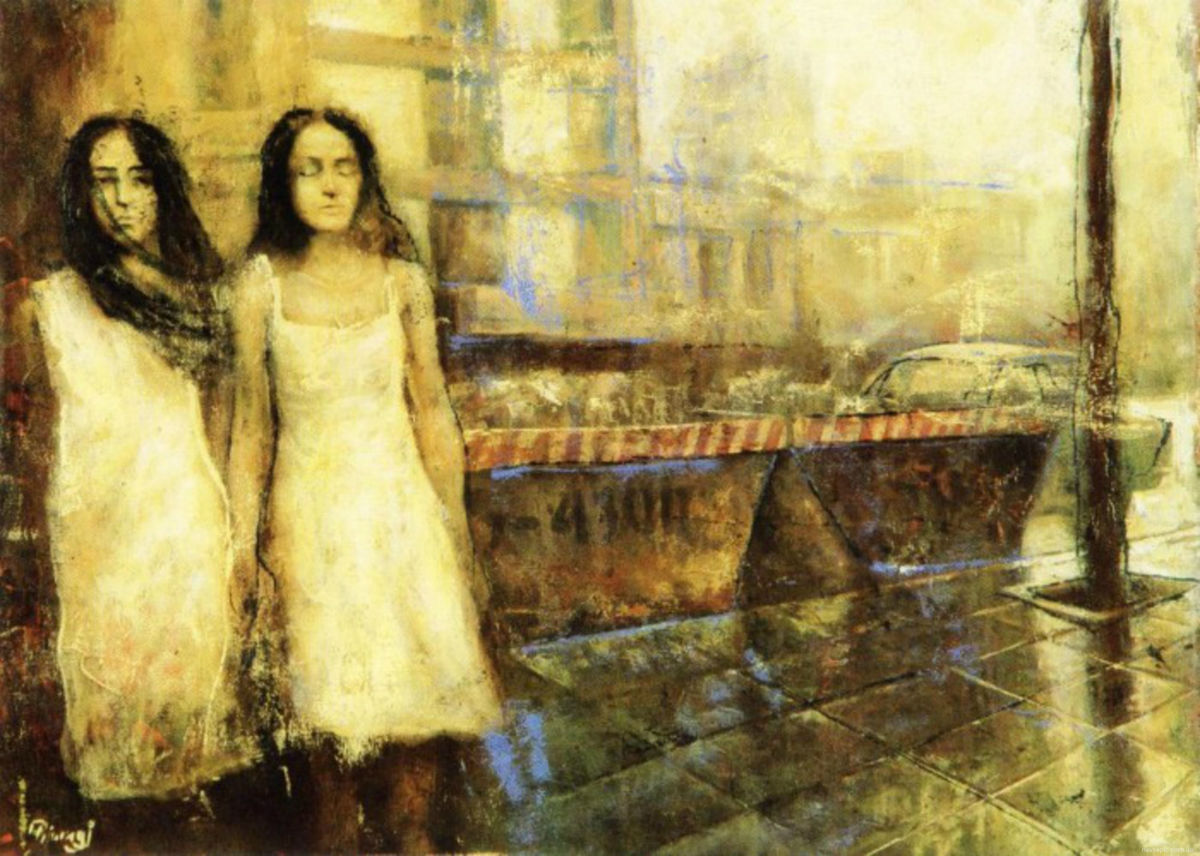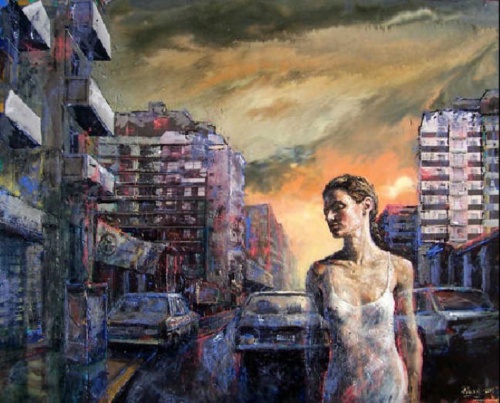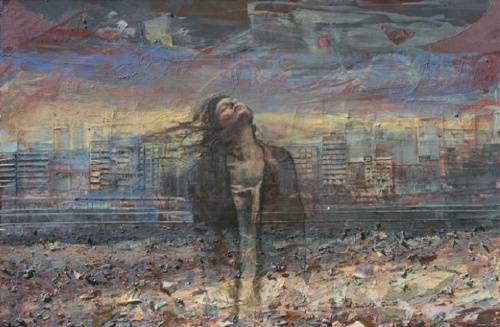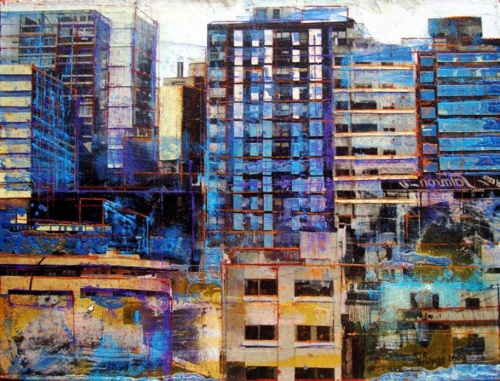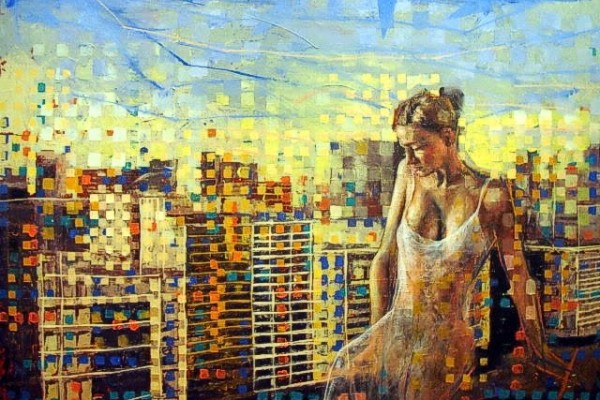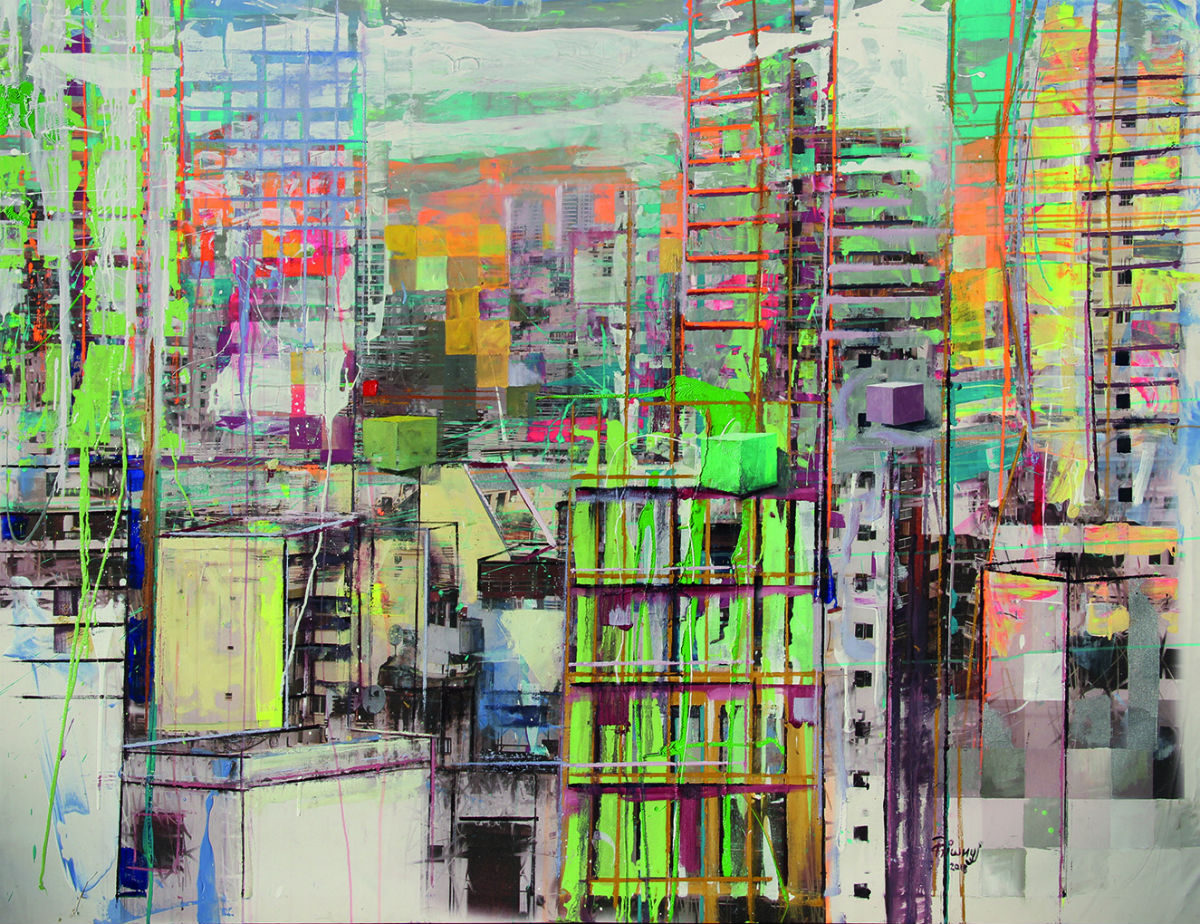
For Martín Riwnyj, the city is both a subject and a state of mind. His paintings capture the pulse of urban life—its steel and glass, its noise and solitude, its perpetual motion—and translate it into rhythm and geometry. The figures that inhabit his canvases are not portraits but presences, reflections of a humanity absorbed by architecture and light.
Born in Buenos Aires, Riwnyj has carried his fascination with cities across continents. Between Rome and Buenos Aires, Madrid and Medellín, his practice is shaped by the constant act of observing: people crossing streets, towers cutting into the sky, the quiet poetry of repetition. His work draws from classical training yet resists nostalgia; it lives in the tension between structure and emotion, precision and chaos.
Through the layering of oil, enamel, and paper, Riwnyj creates surfaces that feel alive—vibrating with texture, motion, and memory. The city becomes both muse and metaphor: a labyrinth where human experience unfolds in fragments of color and light.
In this conversation, he reflects on his beginnings, his fascination with the modern metropolis, and the delicate balance between innovation and intuition. Riwnyj’s art reminds us that even within the density of urban life, there is still room for wonder—for the simple act of looking, and seeing.
Interview
Artist: Martin Riwnyj
At what point did you decide or realize that you wanted to be a professional artist?
Actually that never happened. Since birth, from the moment I could reason, I knew I would be an artist. I painted as far as I have memory. Time went by. I took different workshops and later enrolled in the University of Beau Arts which transported me further into the universe of the arts without my even noticing it.
Then there were contests and prizes. Art galleries expressed interest in my work. I started to exhibit in various parts of the world and continue to this day. Becoming an artist was never a conscious decision; I had been swimming for some time before I realized I was even in the pool.
How would you describe your approach to someone unfamiliar with your work?
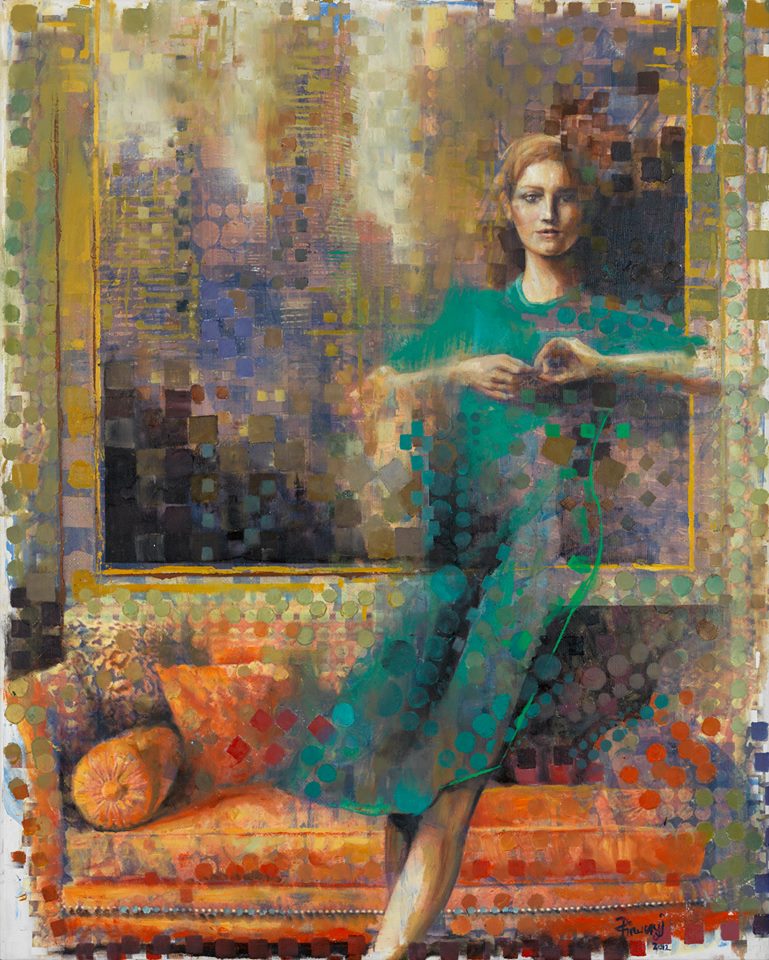
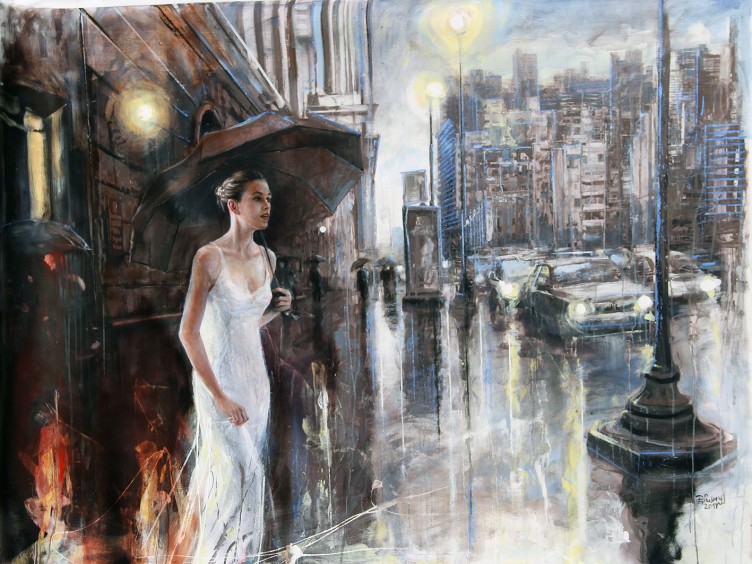
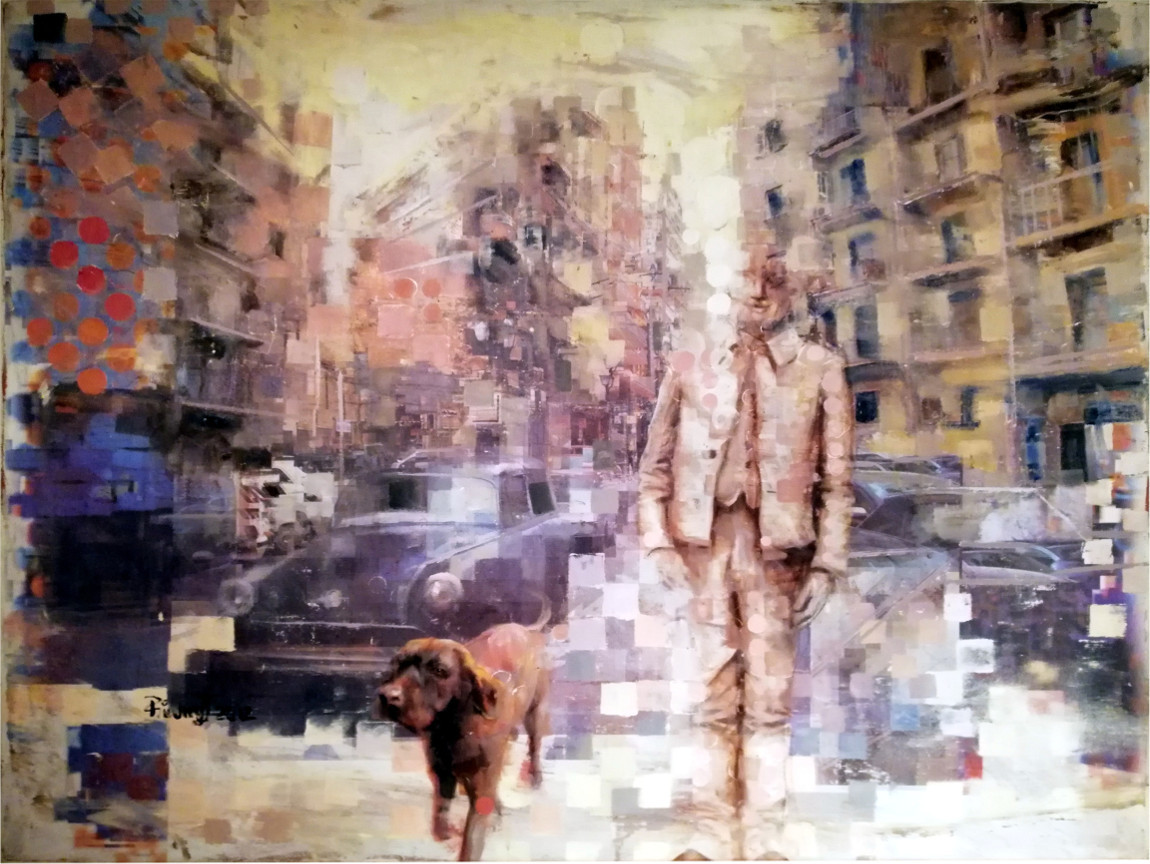
I come from a classical background of figurative, realistic painting. I have almost always worked with oil. Over the years I began incorporating elements of abstraction, both geometric and informalist, and adding other materials to the oil.
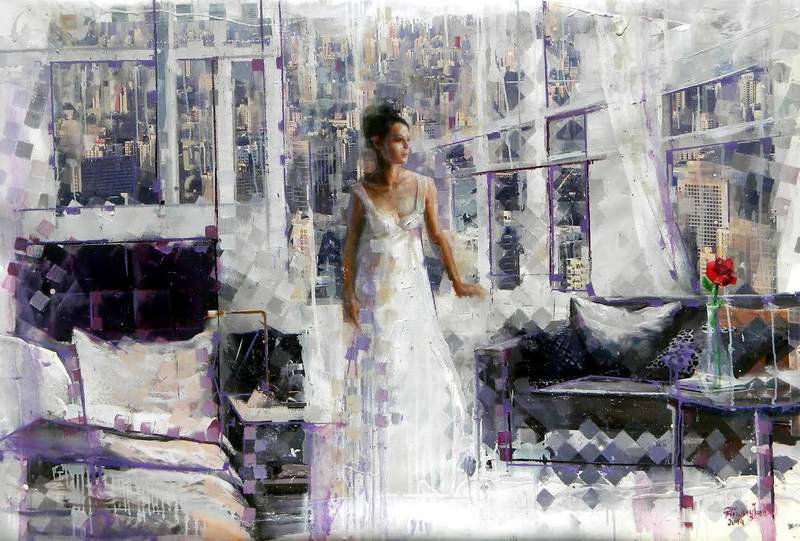
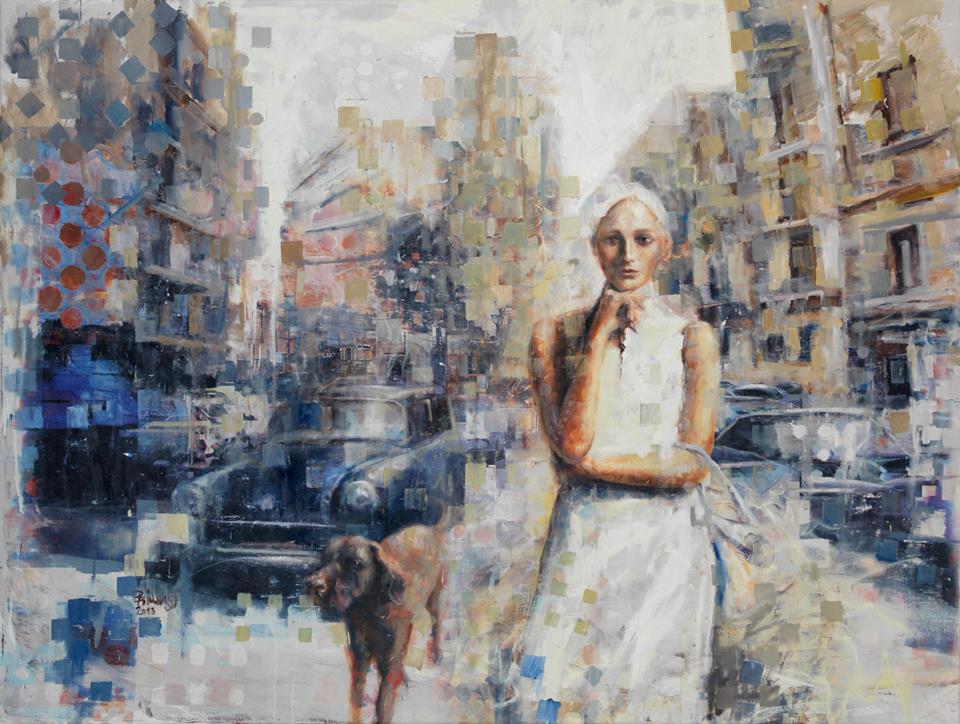
The thematic axis of my work is always the urban being and its surroundings. I try to reflect on human existence in the urban labyrinth. The big cities, with those infinite towers, and the characters that inhabit them, without falling into the portrait, is what I try to describe in my works.
How do you choose the materials?
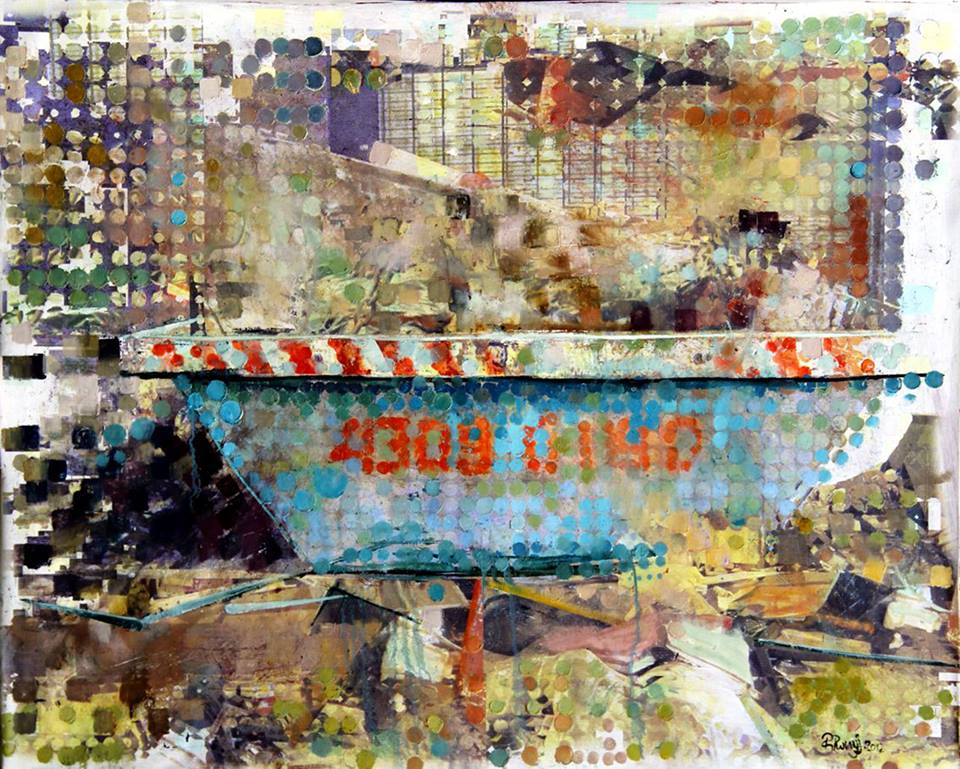
In my current work I use an infinite number of materials – oil, acrylic, synthetic enamel, glued papers, asphalt paint. I try to get carried away and let the material do its own work. In some cases, thanks to their incompatibility, a wealth of texture is created as when mixing water-based paint with other oilier materials.
You spend your time between Rome and Buenos Aires, cities rich in architecture and art. What attracts you to these cities and how do they nourish your work? What do you like most and least about each place?
Let’s also add Lima, Medellín, Madrid and others … they are cities that I’ve known for holding exhibitions and establishing links with the galleries. Then one gets to know people, strong and lasting bonds are created. In some ways they are cities that have adopted me. I always try to seek inspiration from them when thinking about the urban landscape. It is the most honest way to create, working from direct experience. I always have a positive vision and I get the best out of these places. Of course, I could find negative elements, for example “peak traffic” or related topics, but they are secondary issues or at least I do not pay attention to them.
What other artists in the fields of literature, painting, or music do you admire?
Phew! It would be an infinite list. But I always say that perhaps literature has influenced my work more than painting. If I had to cite someone, I would give two names: Jorge L. Borges and Julio Cortázar.
What things fascinate you and inspire you to create?
The big steel and glass towers, the cement labyrinths, the machines that run through the great gray jungle both on land and in the air. It is so natural and a daily occurrence that almost no one pays attention to the places where they live. However, I do not lose my ability for surprise. Every day I feel that I wake up in a science fiction film. I try to capture that shock and stupor in my canvases.
What obstacles do you face in making your work?
In creative terms my biggest obstacles are two: I cannot solve a picture because I went far with innovation, the desire to discover new resources, and then I fall into a stalemate, or otherwise, feel that I have solved a picture with known tools and therefore find it lacking freshness or spontaneity. The ideal result is an average between both positions. During the working day one wanders on that tightrope, being careful not to fall to one side or the other.
What is your artistic dream?
To be able to continue like this. Creating until the end of the days.
Favorite phrase
“El futuro llegó, hace rato.” “The future came a long time ago.”