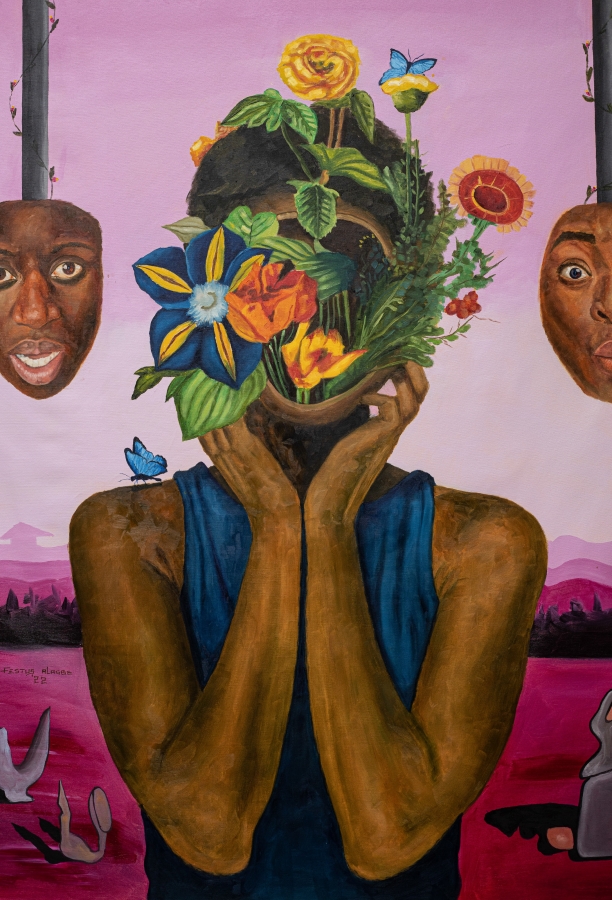
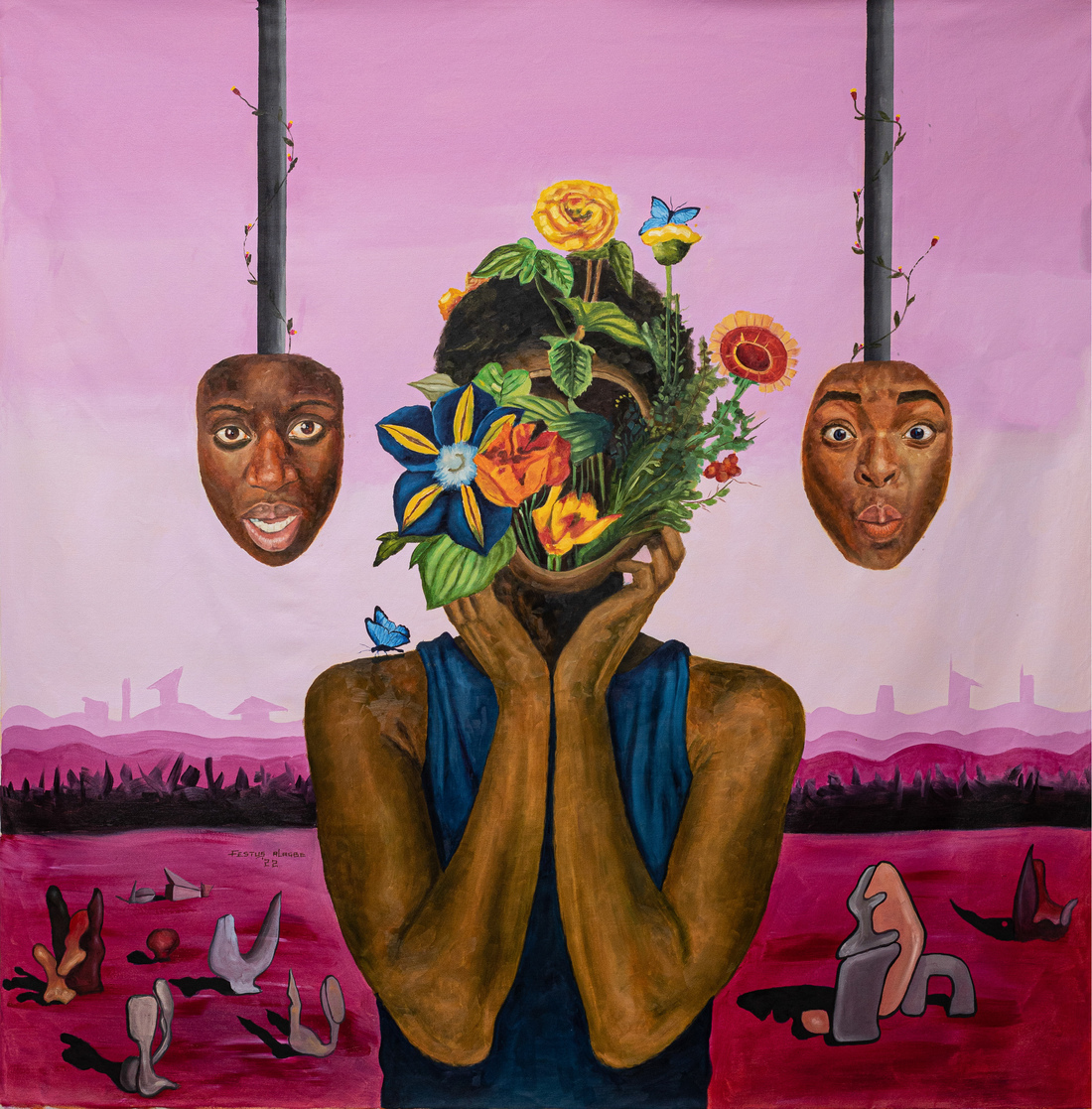
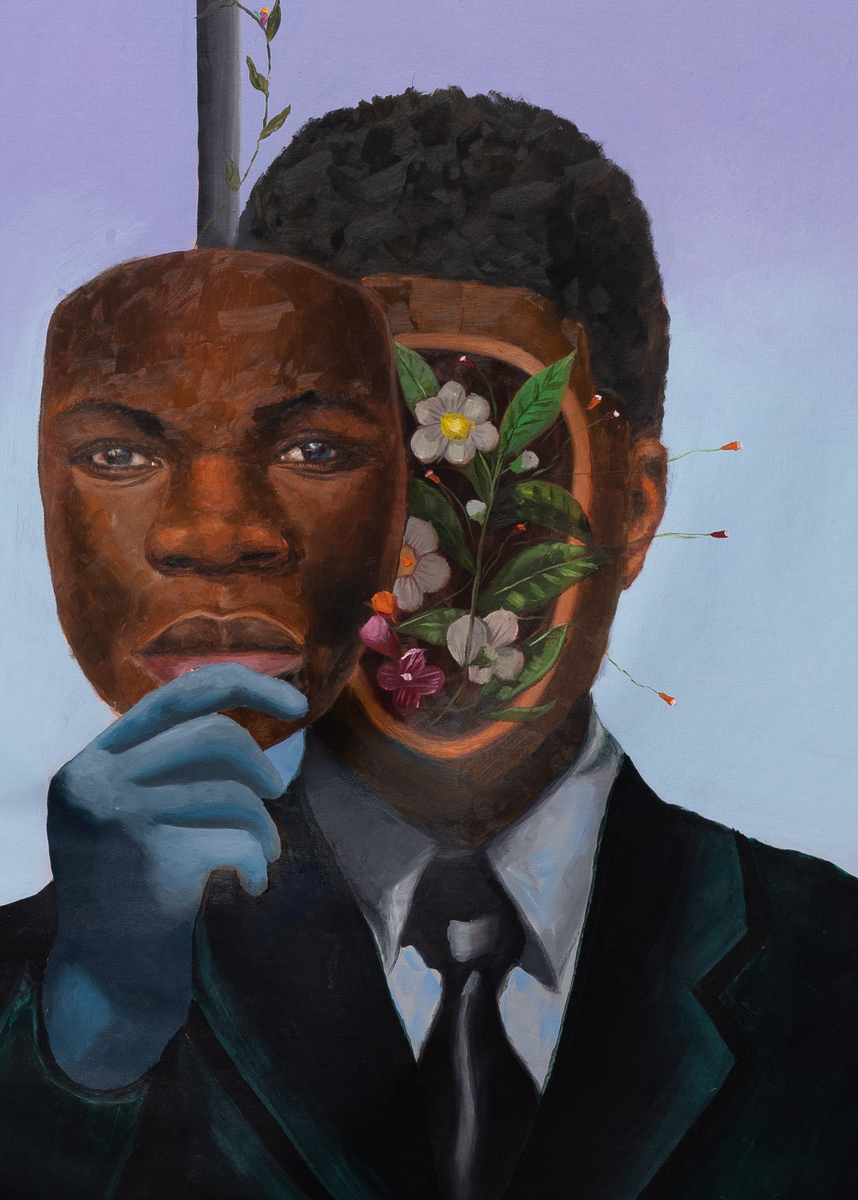
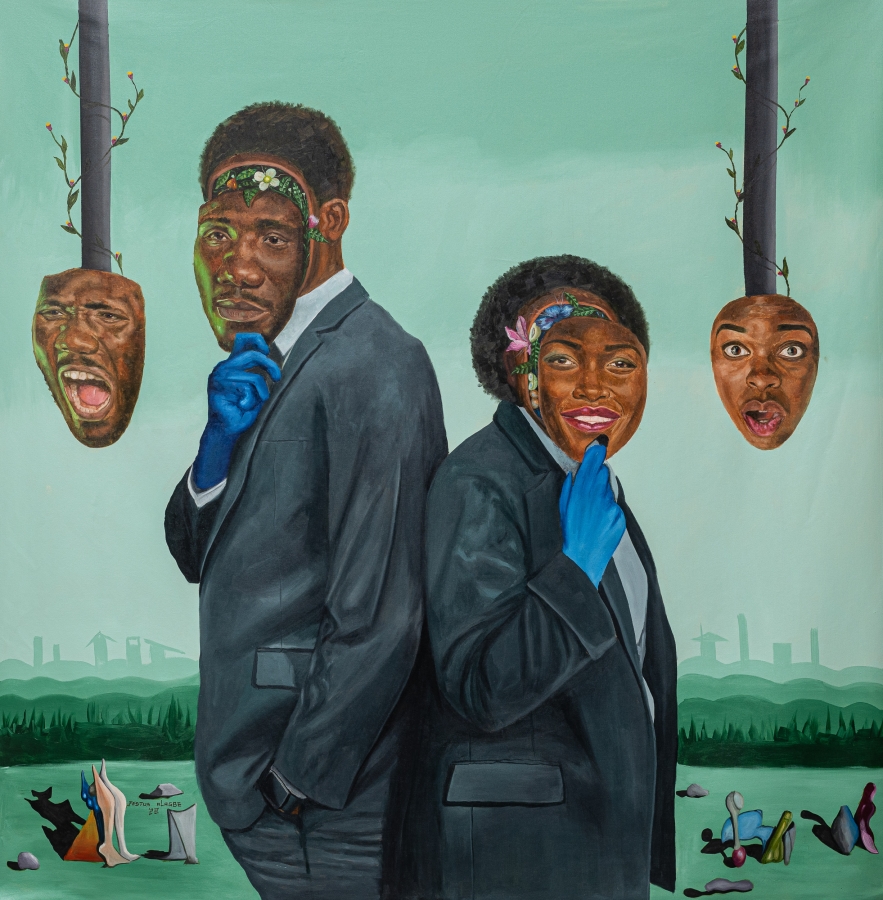
Festus Kehinde Alagbe’s paintings inhabit the delicate line between revelation and concealment. His bisected faces—half human, half symbol—seem to oscillate between worlds, inviting viewers to confront the multiplicity of identity. In his universe, the mask is not a disguise but a mirror, reflecting the layered realities of selfhood, culture, and faith.
Born and raised in Nigeria, Alagbe draws from a landscape charged with history, spirituality, and contradiction. His visual language, shaped by both instinct and discipline, merges figuration and abstraction, realism and dream. Through oil, charcoal, and acrylic, he constructs hybrid portraits where inner emotion meets social commentary. The recurring floral and abstract elements in his compositions serve as metaphors for growth and fragility, transformation and concealment.
In this conversation, Alagbe reflects on identity as both subject and process, on painting as a spiritual act, and on how art can unmask the invisible forces that shape who we are. His work speaks to the shared human condition—the beauty and burden of becoming visible.
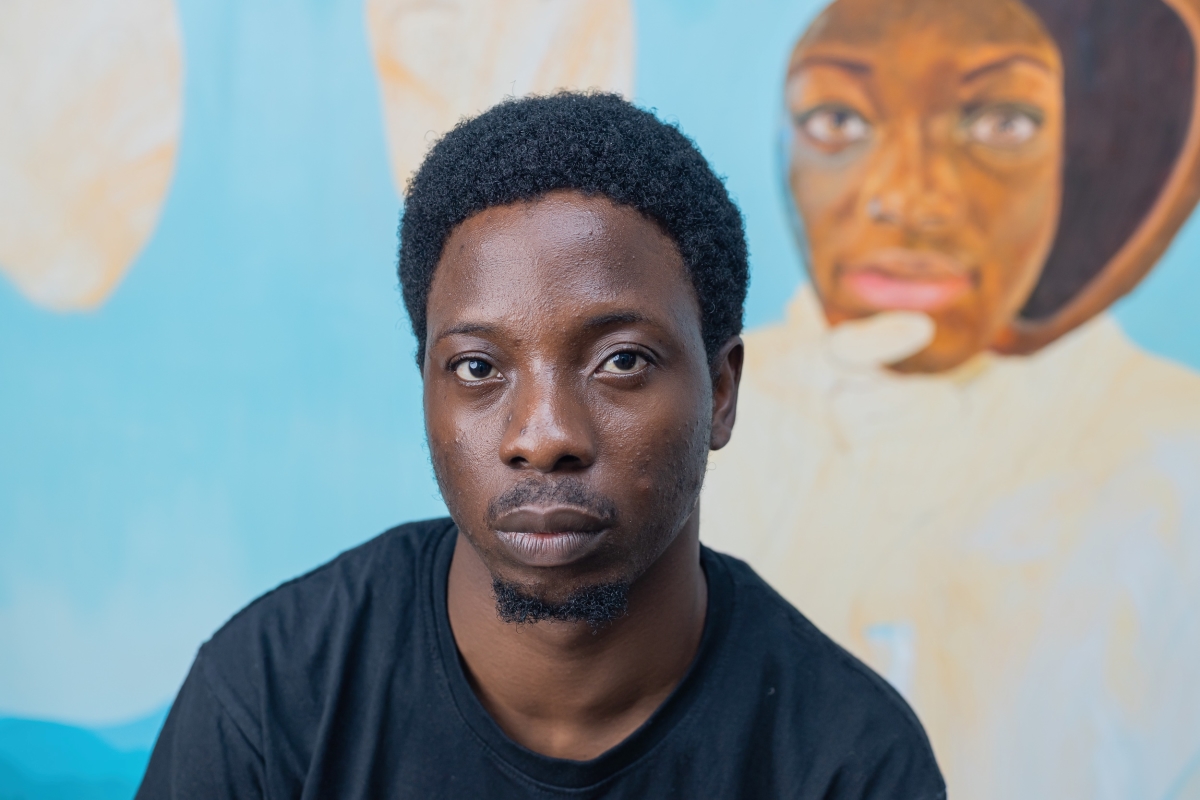
An Interview with Festus Kehinde Alagbe
By Carol Real
What experiences in Nigeria shaped the way you see and make art today?
While growing up in Nigeria, my artistic journey was influenced by so many experiences like religion, politics, crisis, the economy, culture, and my family experiences.
When did painting become more than an instinct for you—when did it become a calling?
My artistic journey began in childhood. I was born into a family that holds entrepreneurs and creatives in high esteem. And we’re all creatives. My parents (of blessed memory) were fashion designers, likewise my twin brother. I’m an instinctive artist. I have always wanted to express my imaginations and experiences in a visual form. But knowing that instincts aren’t enough, I joined The Polytechnic Ibadan’s Department of Art and Design as a painting major to be mentored and become a professional artist.
You’ve mentioned having mentors early in your career. What lessons stayed with you from those years of learning and apprenticeship?
As an intern, I was mentored by my lecturers in school, then mentored by Mr. Ebenezer Akinola, one of the masters of figurative and representational art in Nigeria. Under him, I was taught the rudiments of color and drawing with color applications and all.
Your portraits often combine realism with abstraction—faces divided, surrounded by florals and symbolic patterns. How does a piece usually take form from the first idea to the finished canvas?
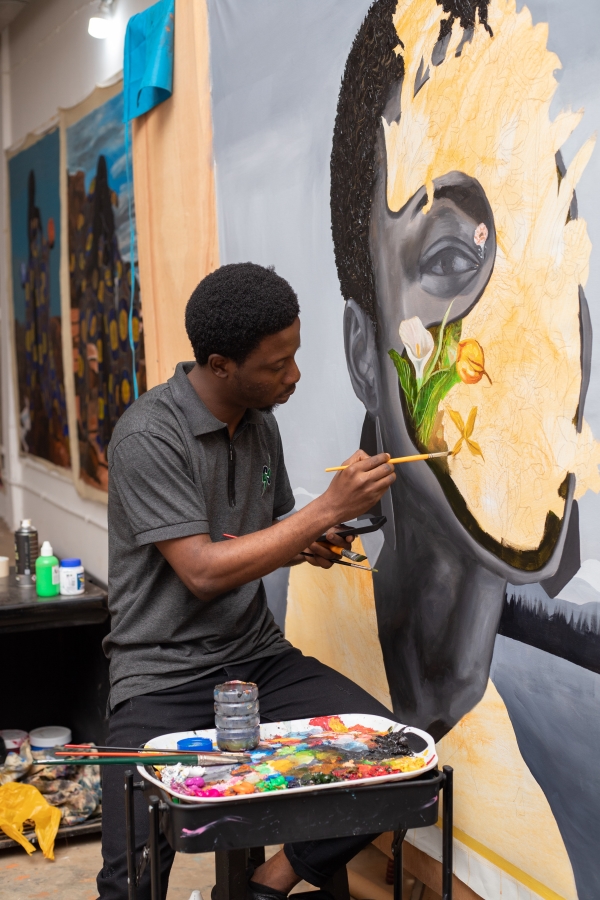
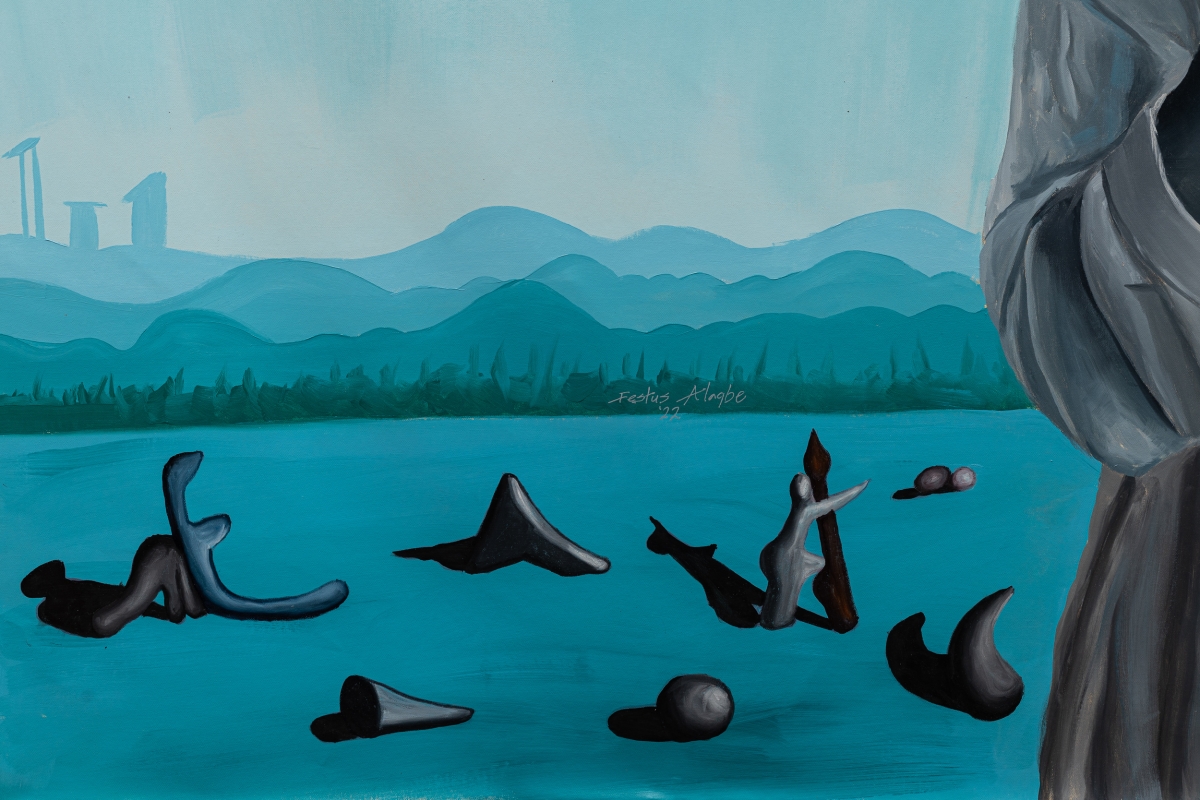
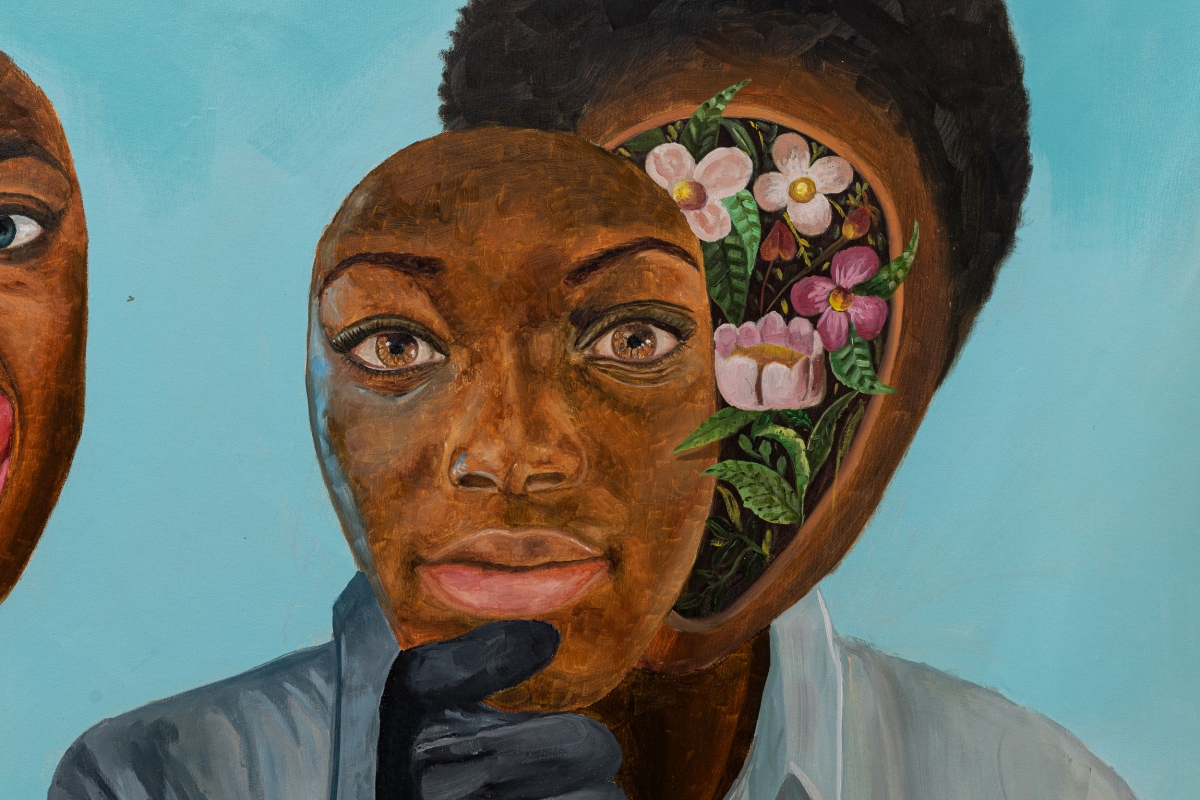
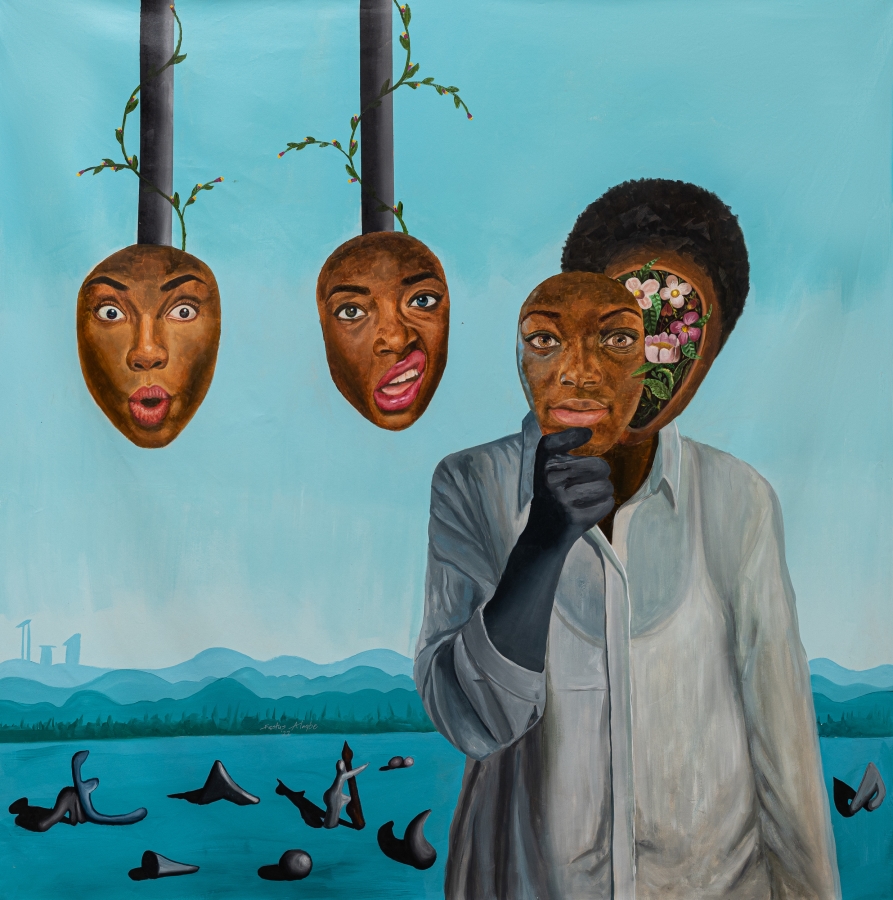
Most of my paintings are large scale canvases of predominantly bisected faces of different expressions (masks) combined with floral and abstraction elements. I used charcoal to draw and acrylic for my background and oil for the faces (subject) with the intention of discovering the medium that’s suitable for me and not be limited with any medium of expression.
Is there a particular medium that feels most natural to you, or do you prefer to move freely between materials?
I feel comfortable with oil and others.
Your recent paintings explore identity through expressions and masks. What does this idea of “wearing a mask” mean to you?
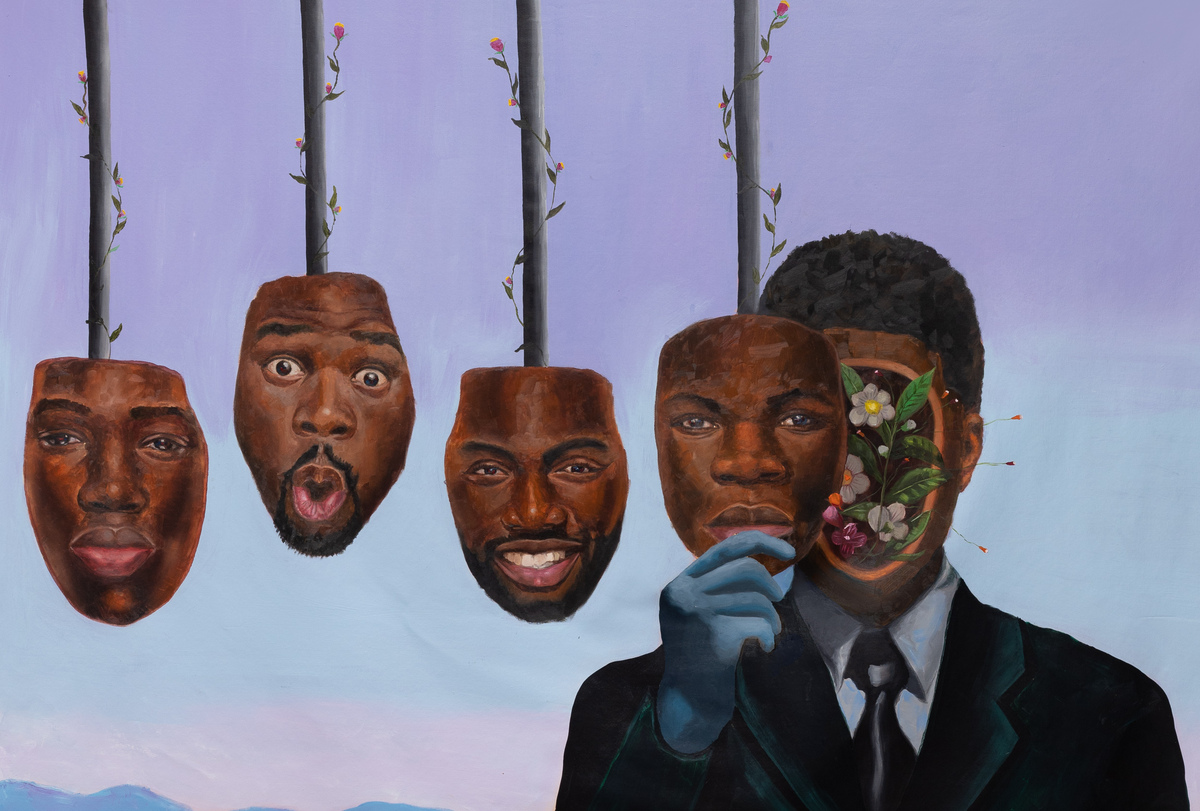
Well, as a surreal artist from Africa, I paint to strike a balance between realism and fantasy, the product of imagination. Recently I have been working on a series of paintings that talks about identity. I believe that facial expressions are subject to the situation of the society. “We wear the mask that grins and lies, it hides our cheeks and shades our eyes,” says a poem titled “We Wear the Mask” by Paul Laurence Dunbar. So, talking about my work, it takes a lot of processes to execute a painting. I try to think and read before engaging into a creative process. Have a mini sketch of ideas to translate into paintings, preparation of canvases, color selection, color application and all.
Identity is at the core of your practice. What draws you to this theme, and what questions are you hoping to raise through it?
My central theme is “identity” which involves many things – messages, thoughts, ideas – into consideration.
How do you balance the solitude of painting with your connections to family and community? What does a working day look like for you?
I talk with my family and friends over the phone, including colleagues, artists. Also, I eat and pray.
You often mention faith as a source of inspiration. How does spirituality enter your creative process?
Yes, I listen to worship songs because my inspiration comes from God. It influences my reasoning and perception.
Looking ahead, what are your hopes for the next chapter of your artistic journey?
I will be great, celebrated and be a reference point to society and institutions.
Is there a phrase or belief that guides you in moments of doubt or transition?
Editor: Lisa Portscher
https://www.instagram.com/lisaportscher/