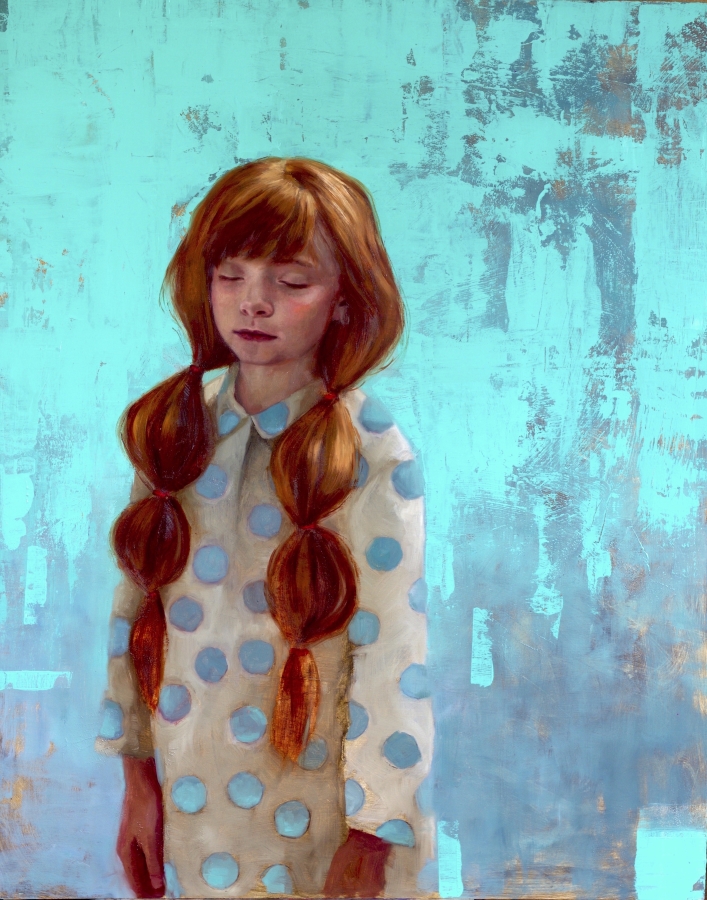
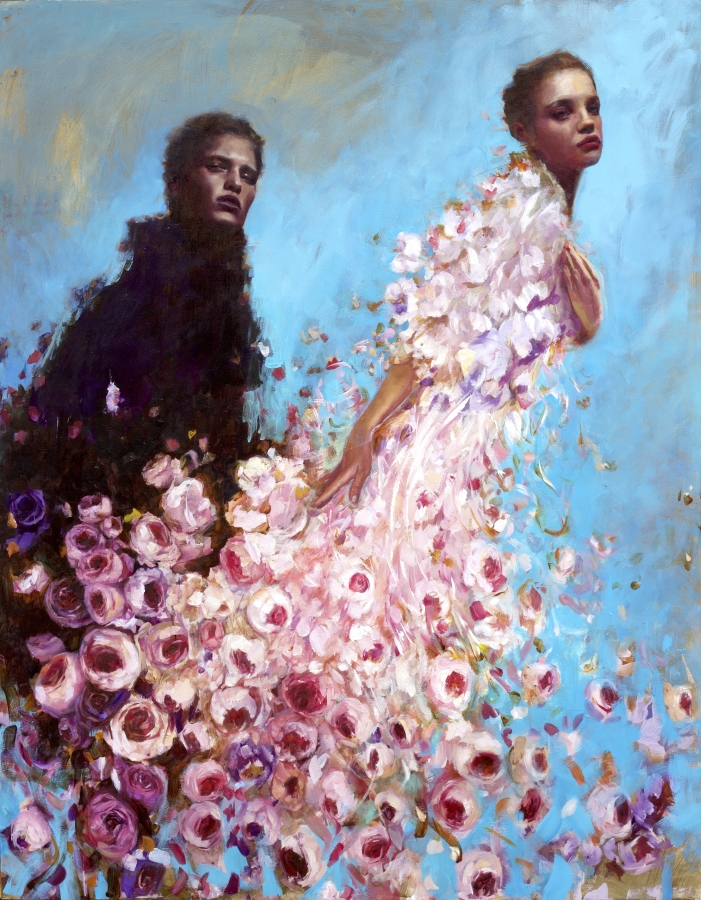
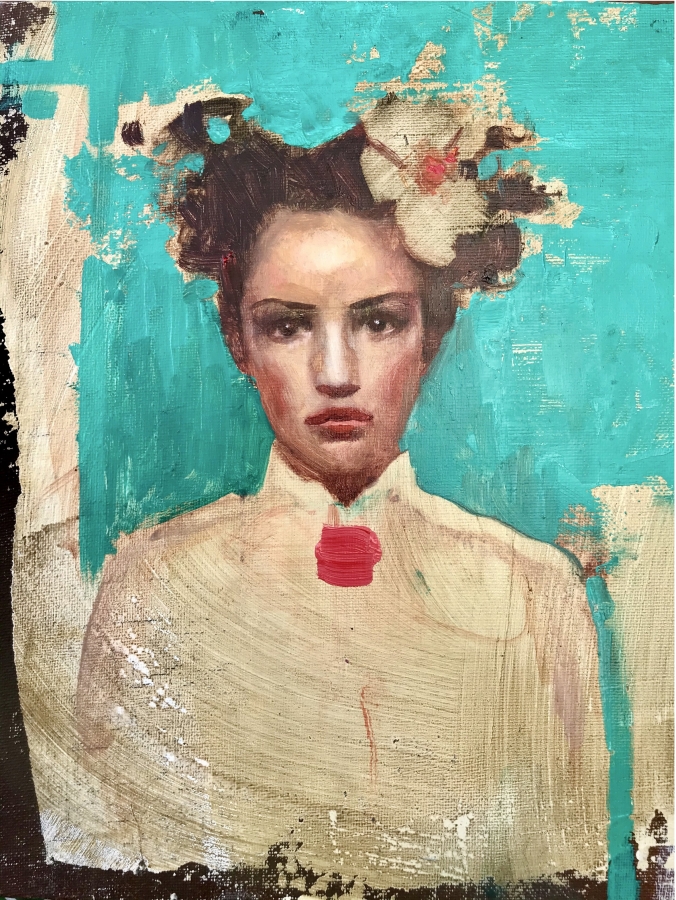
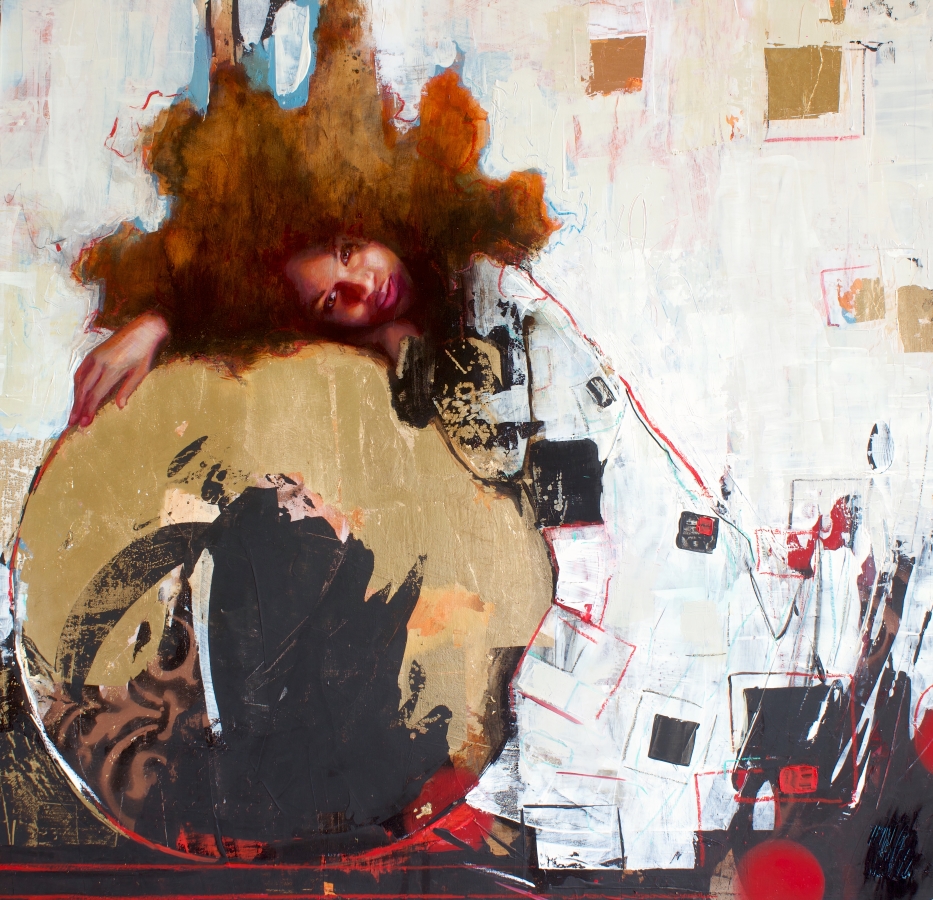
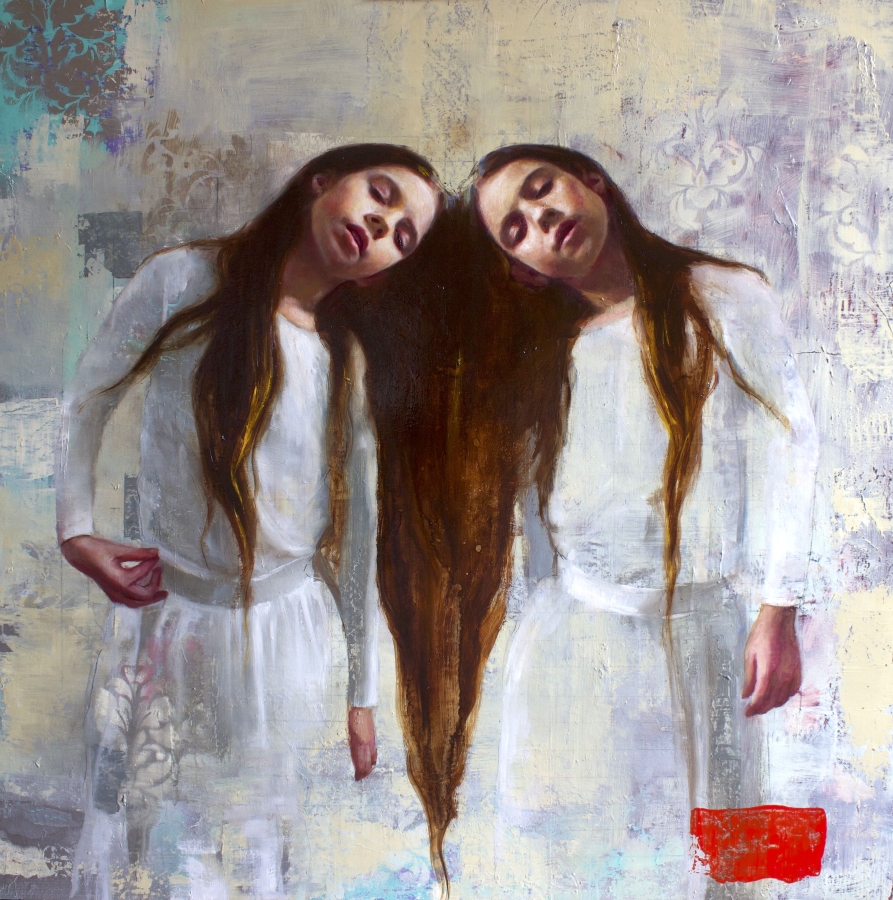
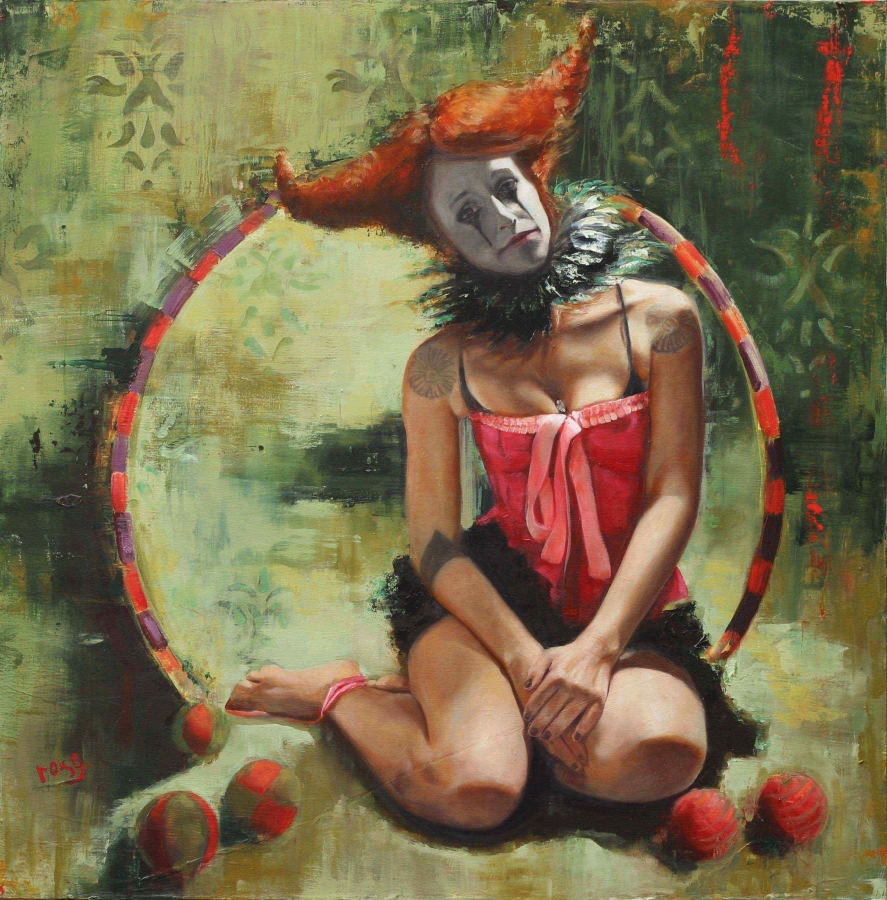
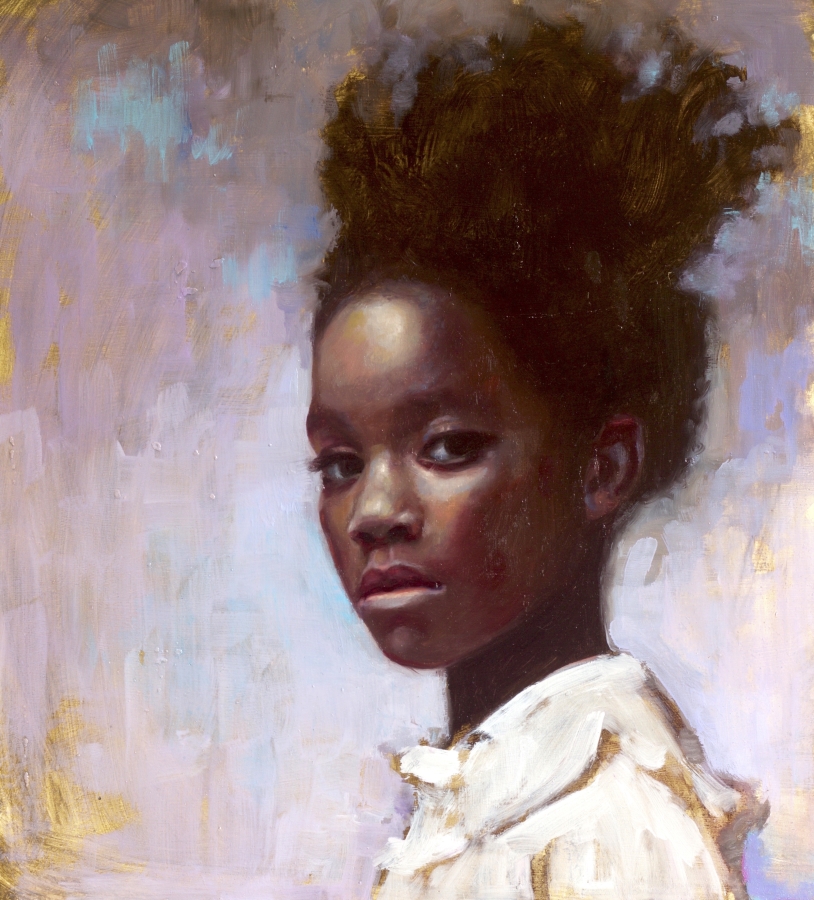
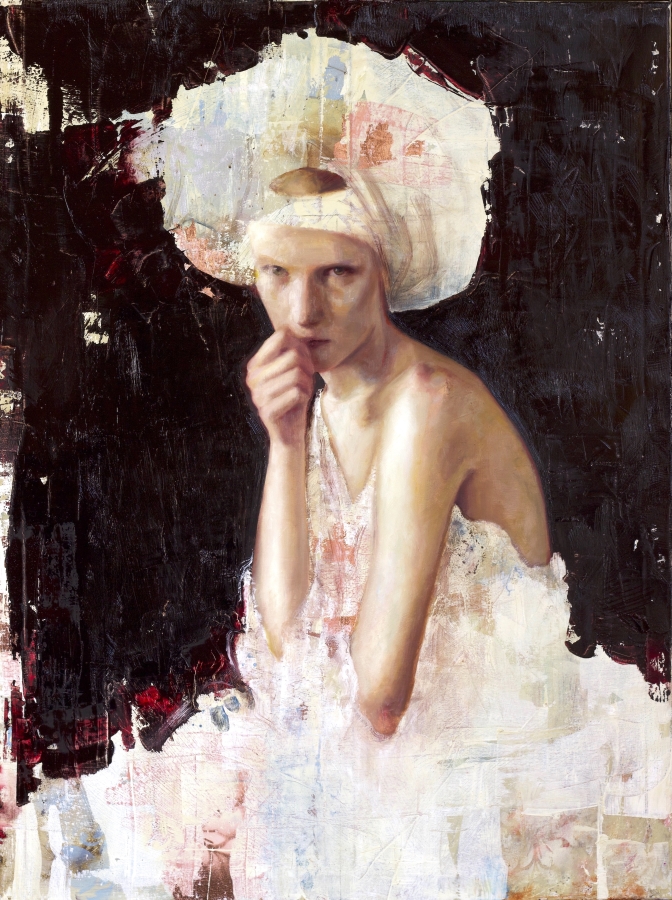
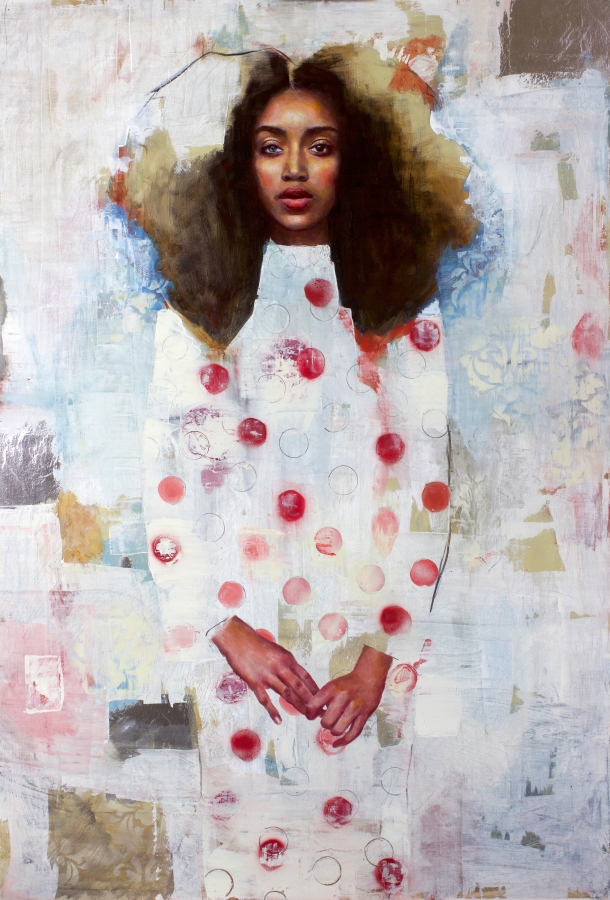
Rosso Emerald Crimson paints women suspended between eras—figures who feel at once ancient and startlingly contemporary. Emerging from veils of muted color and scraped gold, her subjects inhabit dreamlike spaces where emotion becomes architecture and silence carries weight. In her work, the portrait is less a likeness than a revelation of presence, an exploration of the feminine as both myth and mirror.
Born in Sicily and based in London since 2004, Rosso’s trajectory from communication studies to the visual arts reflects a deep fascination with human identity and perception. Self-taught yet methodical, she merges classical technique with experimental gestures: oil glazes, scratched surfaces, and flashes of metallic leaf that echo the tension between control and abandon. Her paintings meditate on themes of gender, race, and environmental fragility, transforming beauty into a form of inquiry rather than escape.
In this conversation, Rosso speaks about intuition and discipline, chaos and harmony, and the spiritual persistence that underlies her portraits. Through her vision, the female figure reclaims her timelessness—not as an icon, but as a living question.
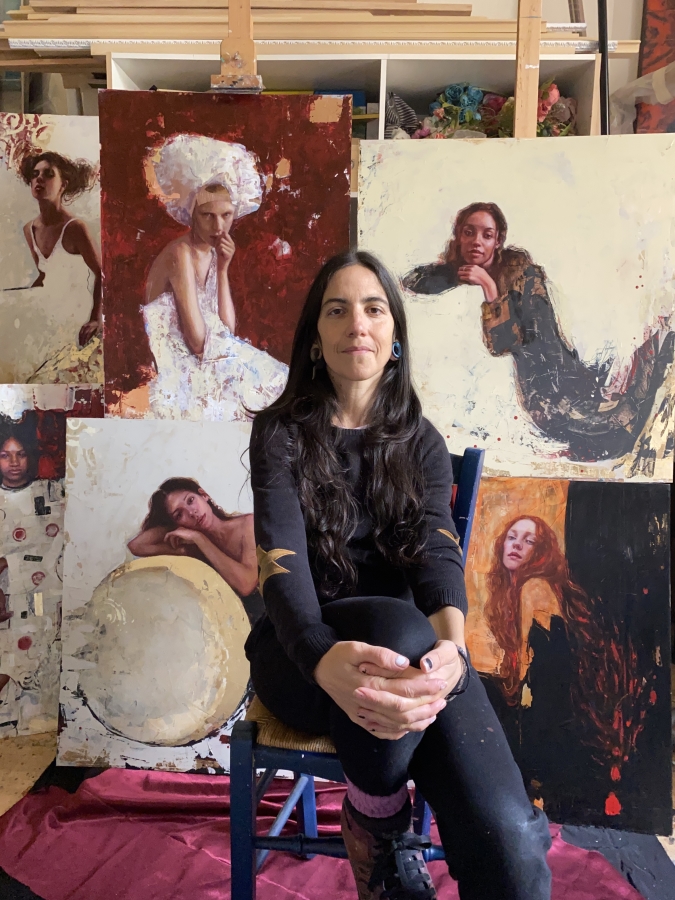
An Interview with Rosso Emerald Crimson
By Carol Real
What images or experiences first drew you toward art while growing up in Sicily?
Growing up in Sicily, my very first art influences come from classical Greek art. The first school- art trip I remember when I was six, was to the Valle dei Templi (Valley of Temples) in Agrigento, where we could see some majestic examples of Greek temples in both Doric and Corinthian style. Because of Sicily’s rich history and connection to the classical era, our teachers in primary and secondary schools were very keen to focus on this specific time in the history of art. I still love it and feel emotional when I visit the Valley of Temples, or the British Museum here in London.
Your portraits often feel suspended between eras—timeless yet deeply personal. How would you describe the symbols and visual language that define them?
My personal iconography is about women who feel contemporary yet classical at the same time, present yet ethereal. Women who evoke a plethora of emotions and with whom the viewers connect at different levels of the subconscious mind.
Stylistically, it’s a mixture (and sometimes, a clash) of cultural influences that I have been exposed to throughout the years. In my formative years, my art was full of symbols and references to traditional and contemporary folklore and, now and then, even religious iconography. As I grew older, my interests changed and so has the external depiction of my subjects. Yet I find their essence remarkably similar.
How do you approach your days in the studio? Is there a rhythm or structure that helps you stay connected to your work?
I would say an “office routine”; with tons of extra and overtime! Getting to the studio by 9 am, ending at 7 or 8 pm, sometimes even 9 pm, depending on what I am working on. Coffee and biscuits to keep me going, and very few breaks in between. I take alternate weekends off. A lot of extra time goes into running my Instagram and Twitter accounts.
You’ve said that your process begins with intuition and dreams. How do these first impulses evolve into a finished painting?
My creative process starts with a combination of brainstorming with intuition and dreams. This I reckon is the most difficult and emotionally intensive phase, full of clashes between a rational mind that plans in terms of commercial value, versus the very emotional irrational part that dreams of grandiose compositions that transport me as an artist and eventually the viewer. It can take weeks to come to a solution and a visualization that works, at least potentially. Once the idea is more defined, I start collecting sources to create it, including models who pose for it. Then there is the actual realization of the work, which is what I really enjoy most. To me, when a painting starts flowing, is like being in a fun fair.
Oil painting demands both precision and freedom. What do you consider essential when beginning a new piece?
Having a good source is fundamental. Not only in terms of lighting and composition, but also the subject we intend to depict must truly inspire us. Only then can we get into the magic of the painting process, be absorbed by it, become connected.
You’ve lived in London for two decades. How has this city shaped your way of seeing, and how does its energy find its way into your art?
I have been living in London for 20 years now and one main reason I love this city and decided to move here in my twenties is for its cosmopolitan character. For me, crossing the park daily and coming across such diversity and richness of cultures and lifestyles is invaluable. I think it is very clear how this environment has influenced my art and the choice of my subjects. I always wonder how and what I would paint if I was living in the countryside or where I was born, in Sicily.
Are there tools or materials that you feel especially connected to—objects that have become extensions of your hand?
My lovely brushes, and, recently, my collection of different sized spatulas and palette knives. Spatulas especially have revolutionized the way I work.
What words or advice have stayed with you over the years?
The best and truest advice: Don’t wait for inspiration to start working, rather, work to get inspired. I cannot recall any bad advice, luckily.
Is there a thought, phrase, or piece of wisdom that you return to when you need courage in your creative journey?
“If you feel safe in the area you’re working in, you are not in the right area. Always go a little further into the water that you feel you are capable of being in. Go a little bit out of your depth. And when you don’t feel that your feet are quite touching the bottom, you are just about in the right place to do something exciting.” ~ David Bowie
Editor: Lisa Portscher
https://www.instagram.com/lisaportscher/