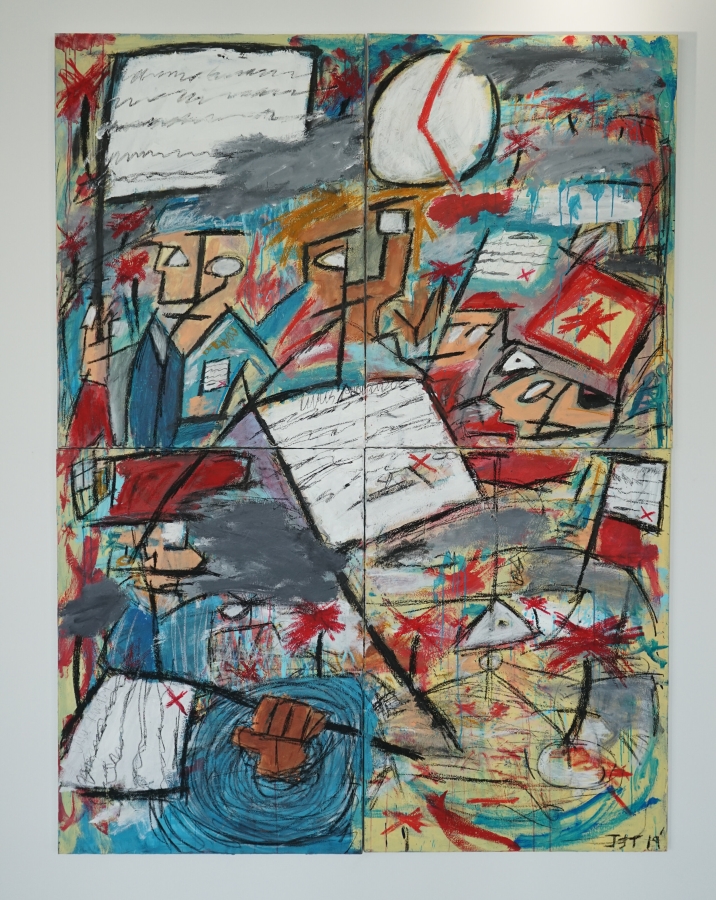
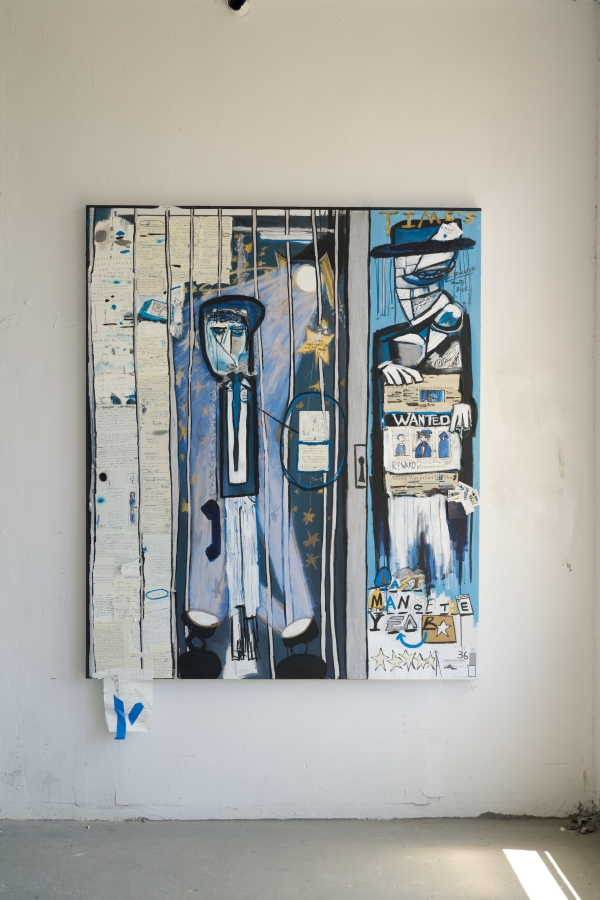
There is something magnetic about mystery in the art world, and Jet Le Parti has turned that mystery into form. Refusing sales, galleries, and the machinery of fame, he exists almost entirely outside the visible art system. Yet, his work circulates quietly through private collections and underground spaces, building a following that feels more like a movement than a market.
Le Parti’s practice operates at the intersection of philosophy, science, and image-making. His paintings and mixed-media works don’t seek to explain but to question—each piece a field of inquiry into perception, time, and consciousness. He builds visual systems from fragments of sound, language, and data, where abstraction becomes a form of research.
In this rare conversation, Jet Le Parti opens a window into that process: the intellectual discipline behind his chaos, his skepticism toward the contemporary art spectacle, and his belief that meaning is something to be constructed, not consumed. It is a glimpse into an artist who remains, by choice, a brilliant work in progress.
An Interview with Jet Le Parti
By Carol Real
How did your early environment shape your cultural perception, and what fragments of that upbringing continue to echo in your work today?
I grew up in a small military town in the American south. I did not have any strong cultural references, just general American television, books, sports, and the local museum we’d visit once a year for school trips. I lived most of my day- to-day life behind a television screen and a family computer. I’ve primarily experienced my relationship with the rest of culture and art through this.
After earning a degree in philosophy and physics at the University of Pennsylvania, how did you switch to the arts? How did it influence your process?
I actually only received a degree in Philosophy. I studied physics passively through alternative electives and independent learning. The connection between my academic background and my art practice was seamless, as art and philosophy are inherently symbiotic. Both disciplines are deeply engaged with representation philosophy represents the world through language and knowledge; and art portrays the world through visual depictions or other forms of expression. With this, exploring the creation of art while exploring different concepts became a relatively natural process. I definitely had some challenges when I first began learning the rules of working with paint on canvas. However, fortunately, I had the Philadelphia Museum of Art’s collection to refer to regularly for help.
What artists do you identify with, and whom do you admire?
I don’t really identify with anyone. I admire many.
What is the purpose of art for you? What role does art play in our culture?
Art, for me, has always been about exploring, questioning, and interpreting the complexities of reality.
However, art’s function within culture has become relatively obsolete. The contemporary art world—replete with art fairs, festivities, and public relations campaigns coupled with the globalized shift towards an attention economy, has resulted in an art culture that is increasingly self-absorbed, commercially driven, oversaturated, and subsequently under the whims of artificial extrinsic factors. Under this structural layout, art and art objects have become indistinguishable from other consumer goods, resulting in their value no longer being derived from their intrinsic qualities and cultural significance but rather by the perceived sign value attached to them by the market and reinforced by surrounding media. This emphasis on mass appeal and the homogenization of voices in the art sphere has led to the loss of art’s critical and transformative potential, giving rise to the sterilization of aesthetics.
While it is not necessarily impossible for individuals to create powerful and meaningful work, underneath this current structure, the cultural significance of any and all works of art can be subsumed into a fashionable commercial narrative that diminishes the strength of its intended meaning and reduces it to a mere commodity.
Unless there is a fundamental shift in how artists approach their craft or a structural change in the methodology of the promotion of the arts, we risk remaining in a state of perpetual cultural stagnation, where the original power of art is lost.
It is likely possible that this has already occurred.
In your paintings, we can appreciate moments of spiritual reflection and physical dynamism. What’s your rationale for choosing a subject for your paintings?
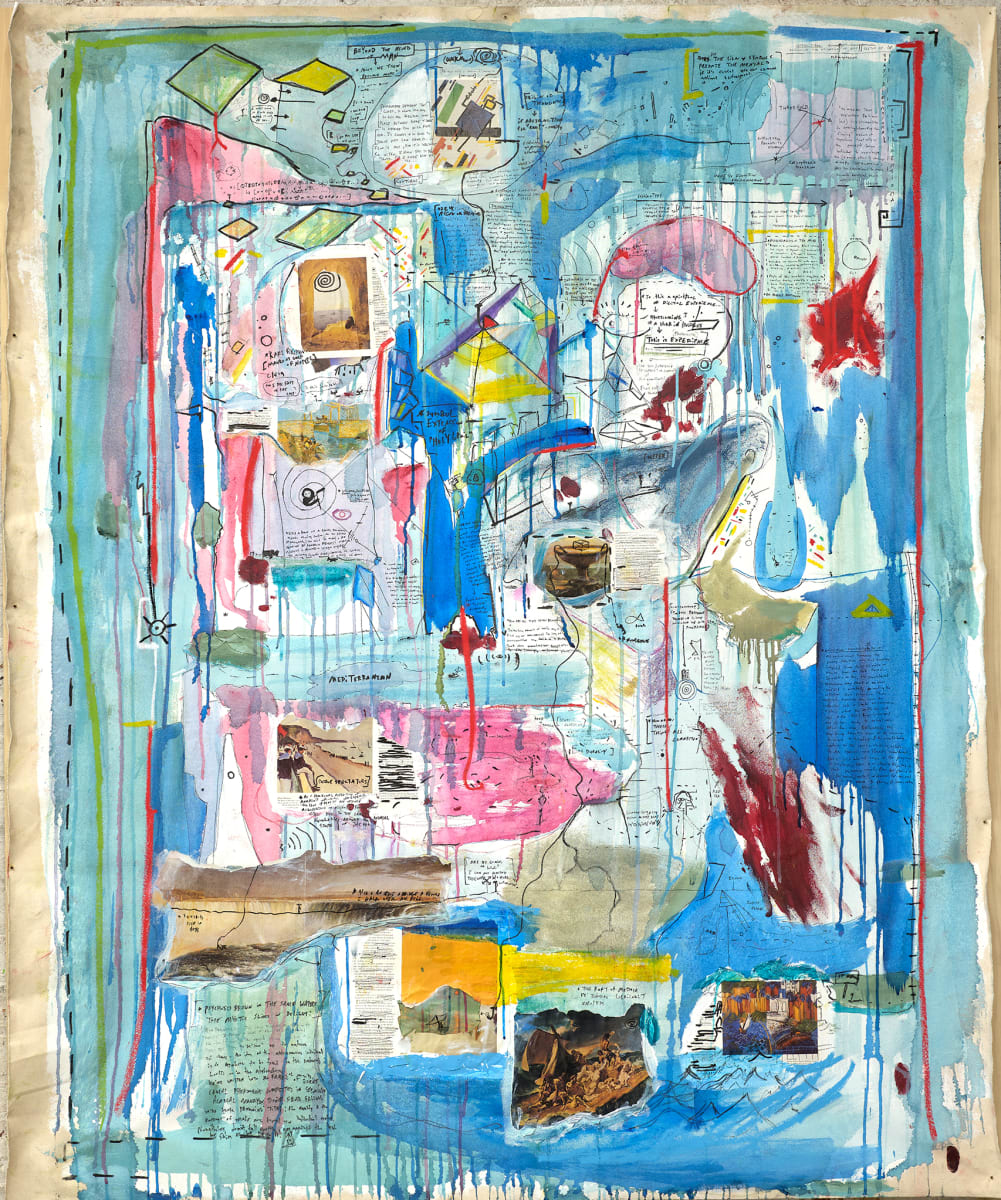
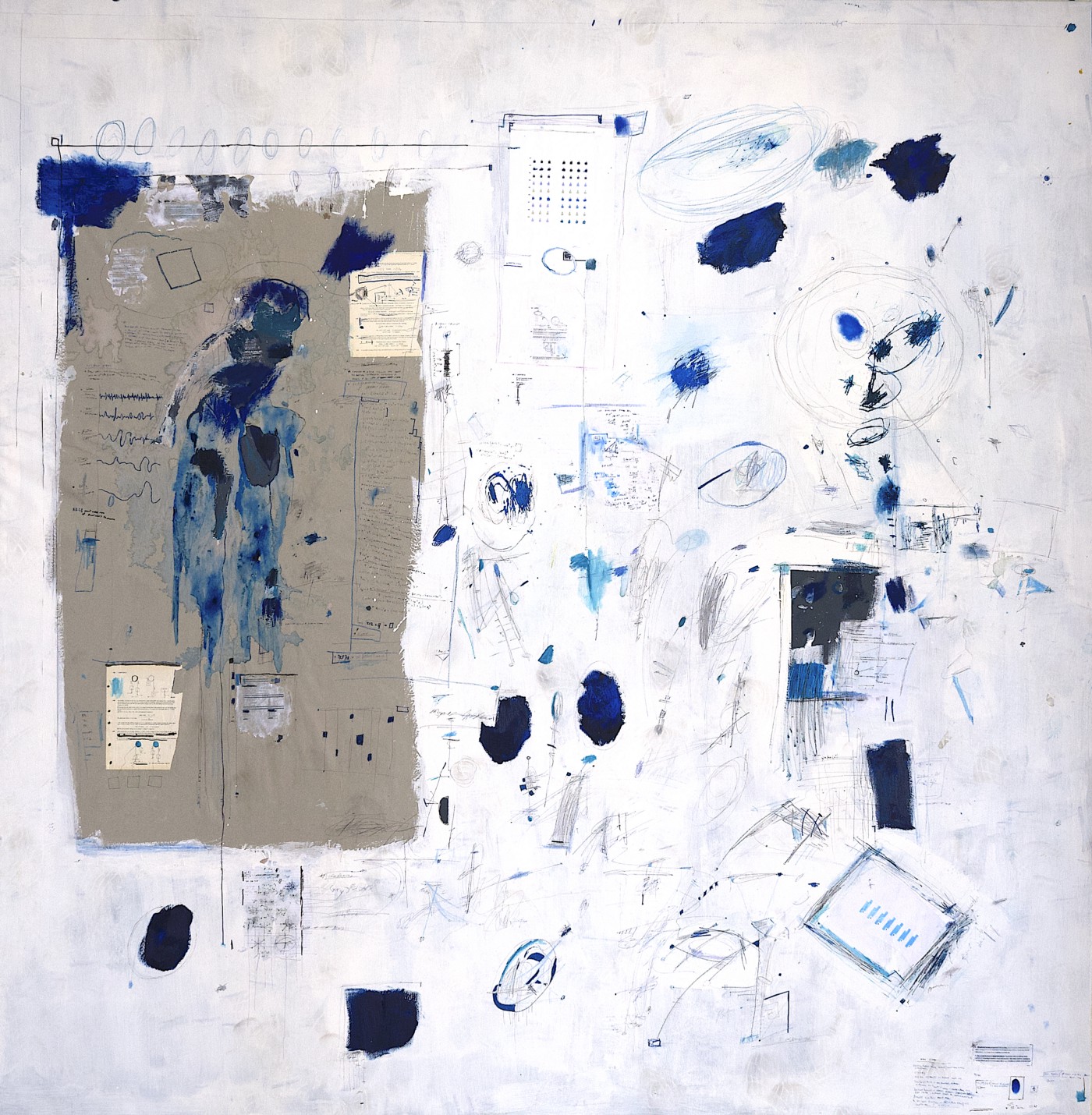
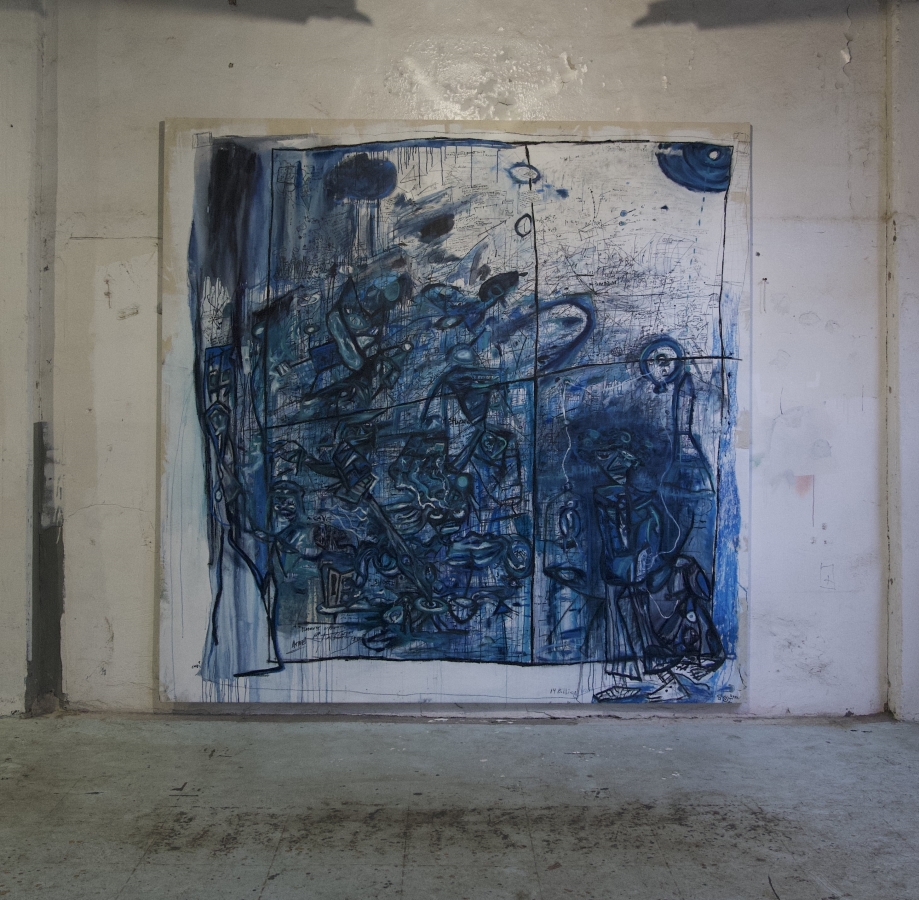
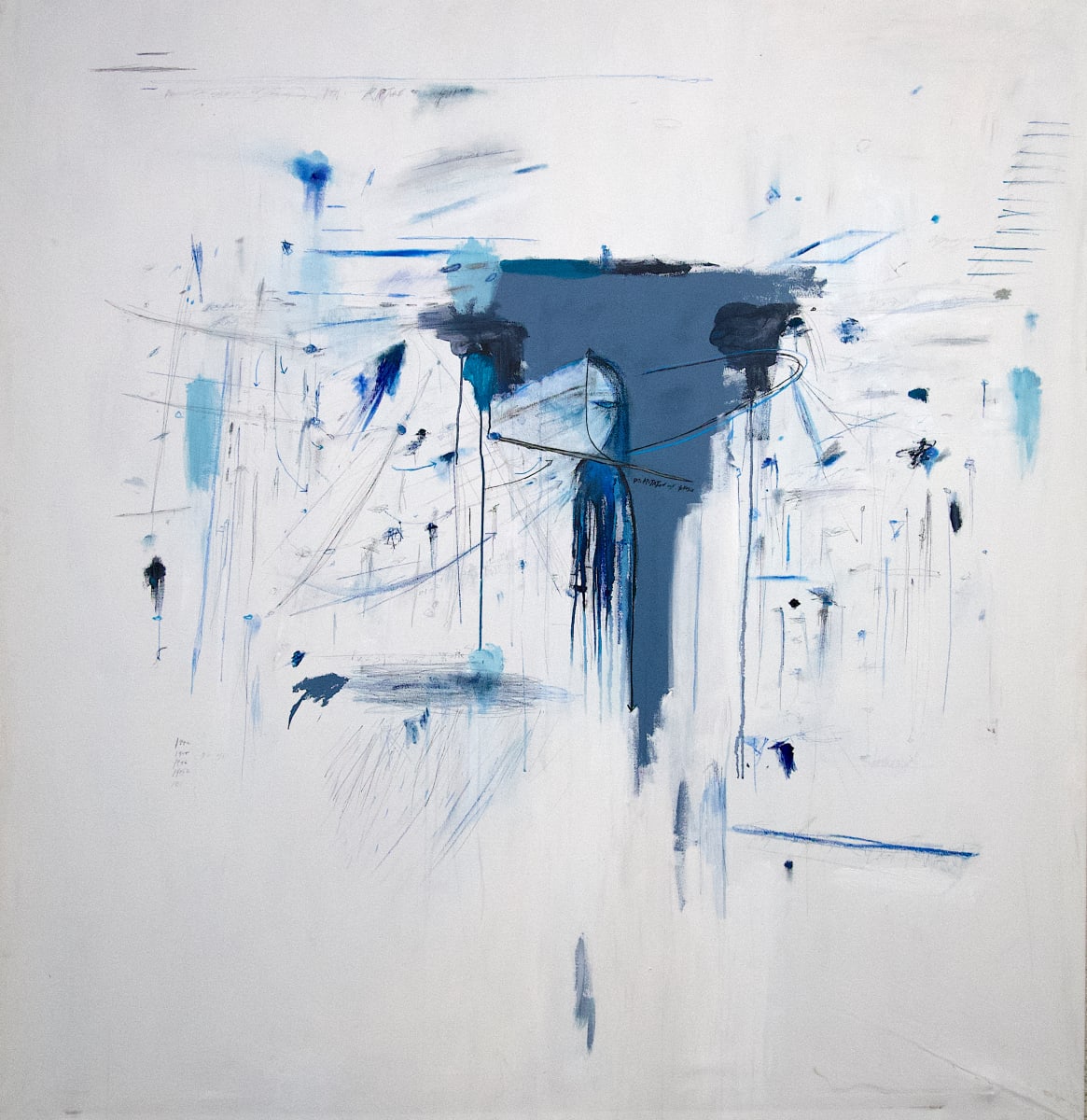
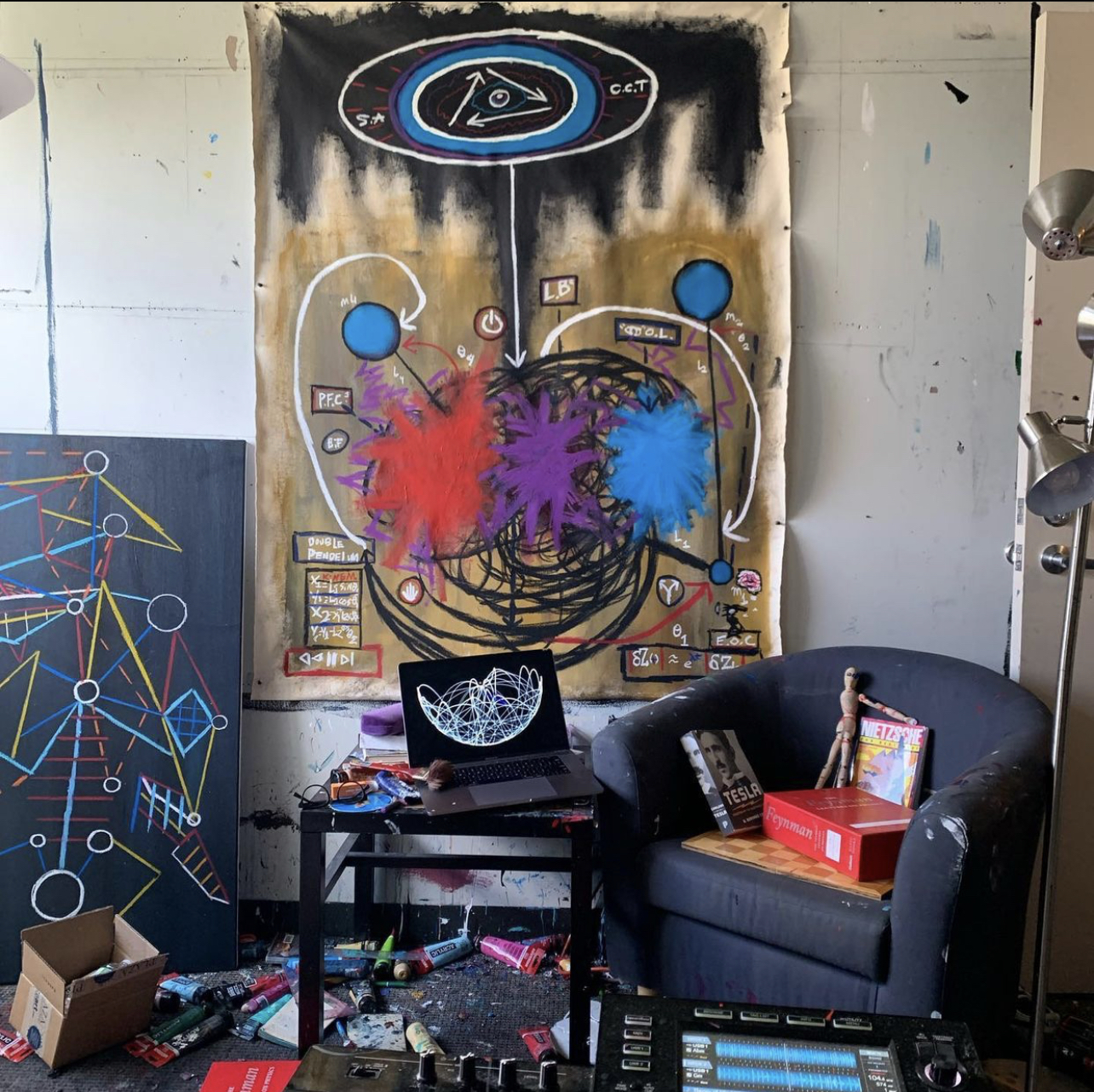
When approaching my work, I follow a process I call ”localization”. It’s a methodology I’ve developed for the introspection on the sort of aesthetic quality of a concept—the sort of phenomenal properties of what the motivating concept conveys or evokes. To gain an in-depth understanding of the direction I should take to explore and portray this motivating idea, I often piece together a series of sounds, images, literary texts, and designs that evoke the mental and emotional qualities of the concept(s) that I’m working through. I then develop a quasi-language around the concept—visually, sonically, and through written text.
The goal is to establish a multi-dimensionally informed understanding of the concept and to create a psychological referential system to loop and meditate on the different qualitative conditions surrounding it. For example, what the concept sounds like, what it looks like in various forms, what emotions it evokes, how it seems to operate functionally in the world, how it structurally relates to other ideas, and so on.
Next, I search through historical archives and media sources to find traces of the ideas I’m working with and how different cultures, thinkers, and artistic movements have explored them. This process helps me gain an anthropological perspective by scraping the intersecting fragments together and establishing a sense of a genealogy associated with the concept.
From here, I try to develop an artistic language to communicate the assemblage of the concepts from my perspective, typically mapping them out into a visual metaphor or portraying them in mixed-media scenes of text references and visual allusions. I process the outcome, note my shortcomings, revise as needed, and imagine where to go next with what I’ve learned.
It’s not a perfect model as it leans heavily onto intuition, but it does help piece together narrative direction and underlying depth into the work.
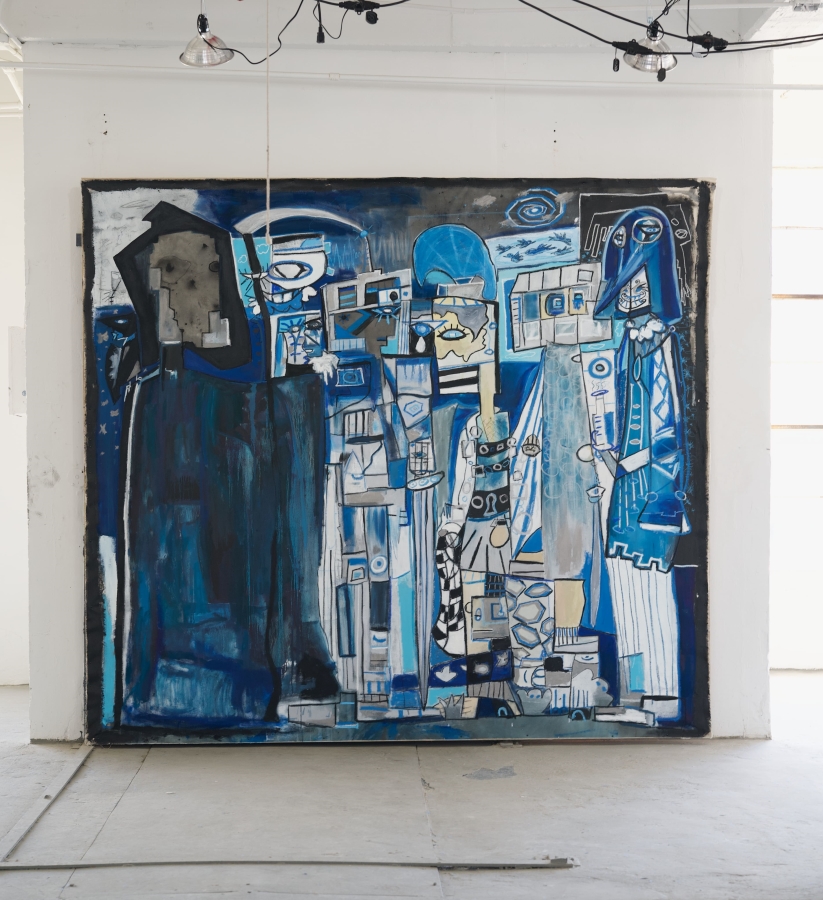
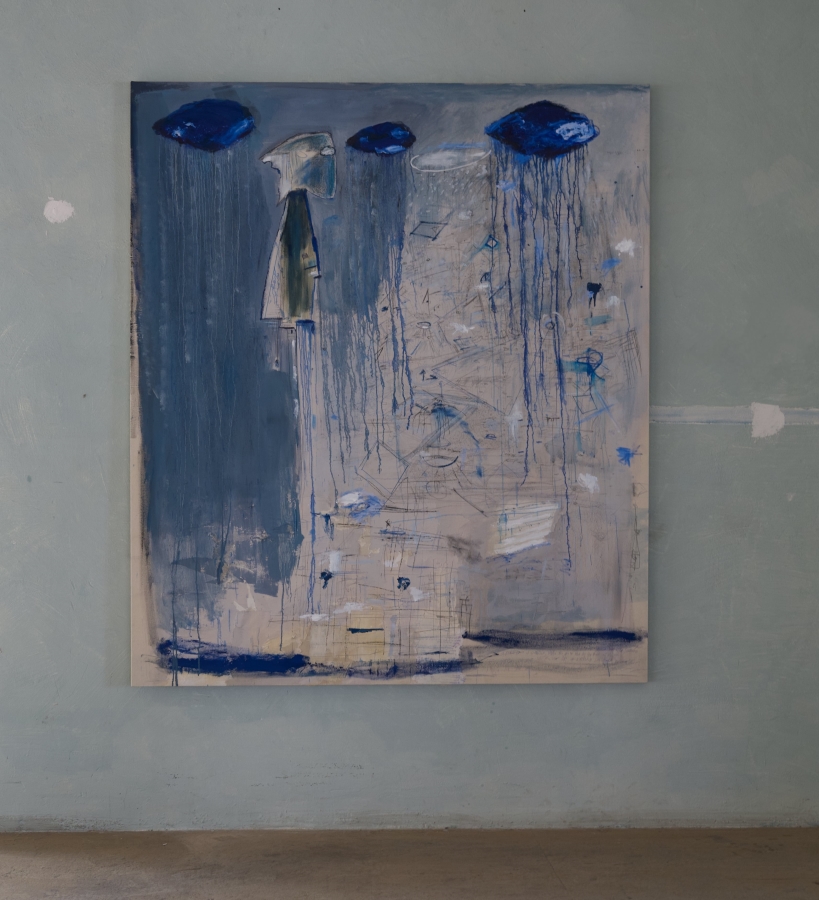
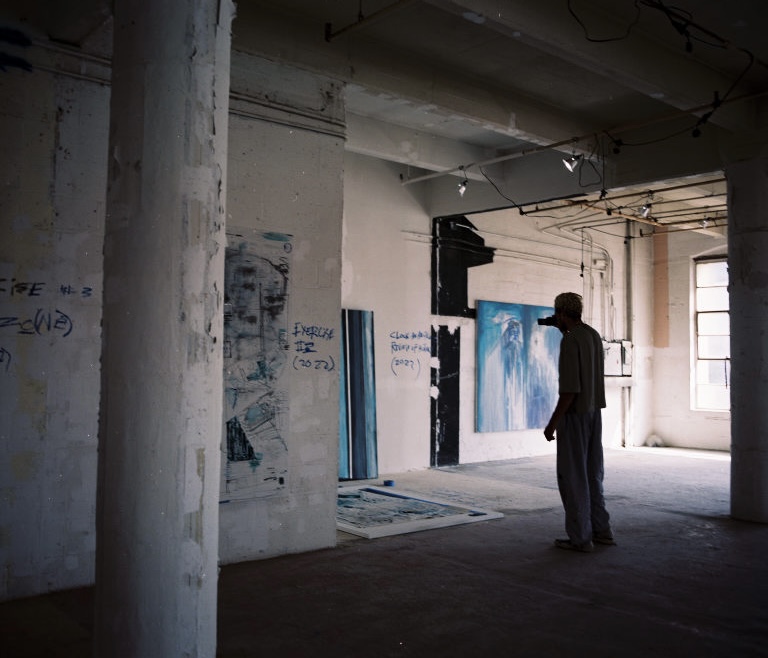
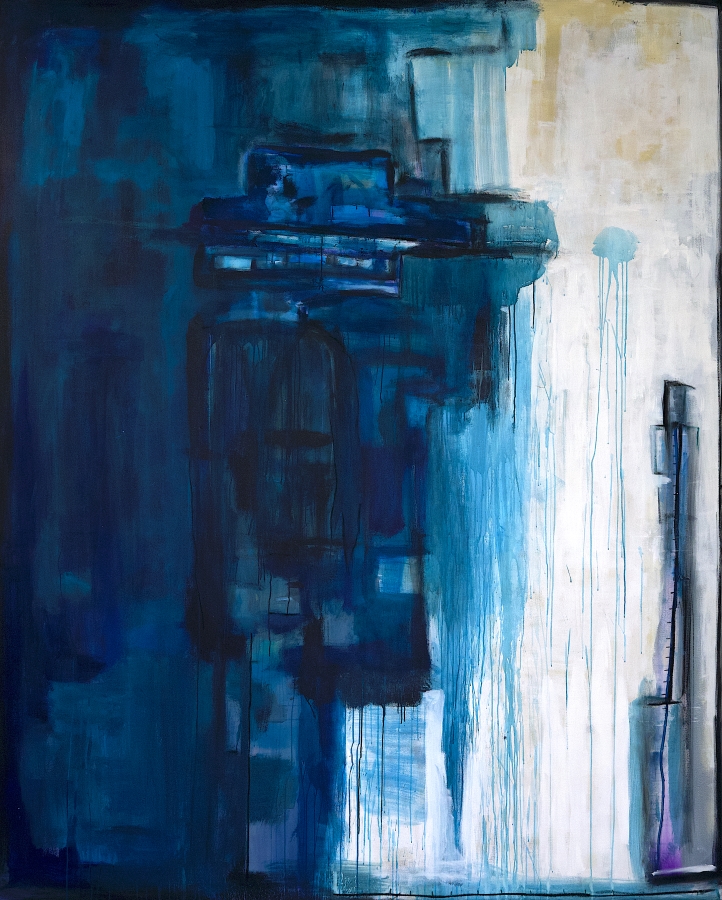
What draws you to work on such monumental scales, and how does color function as part of your visual language?
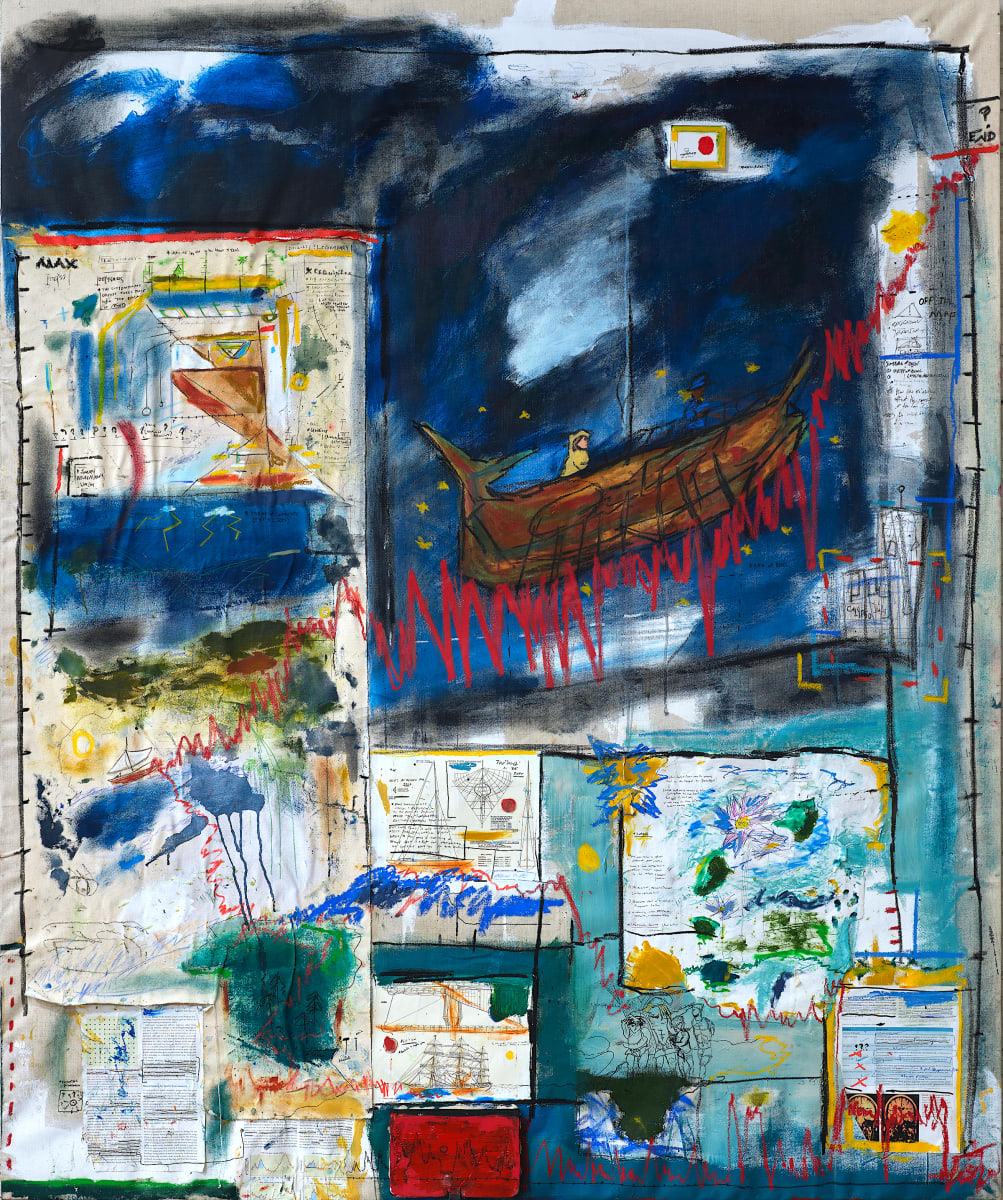
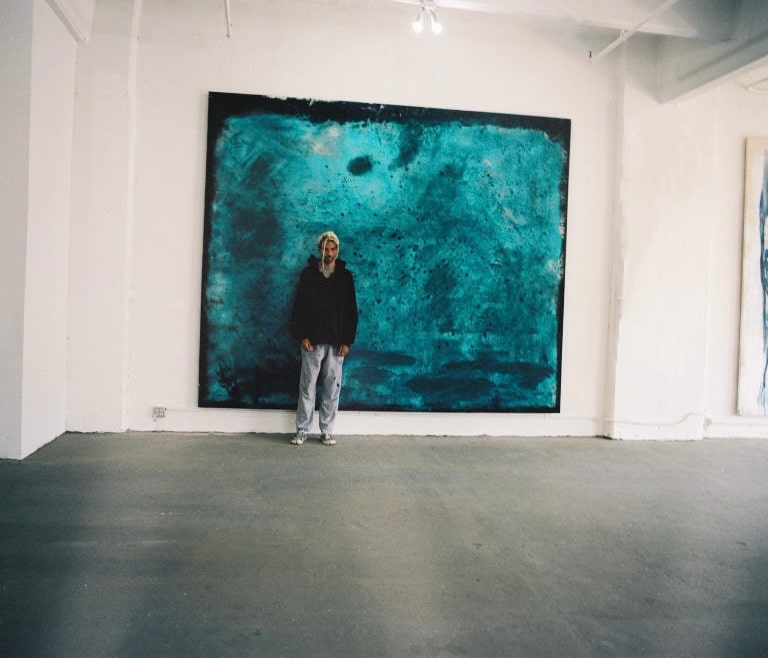
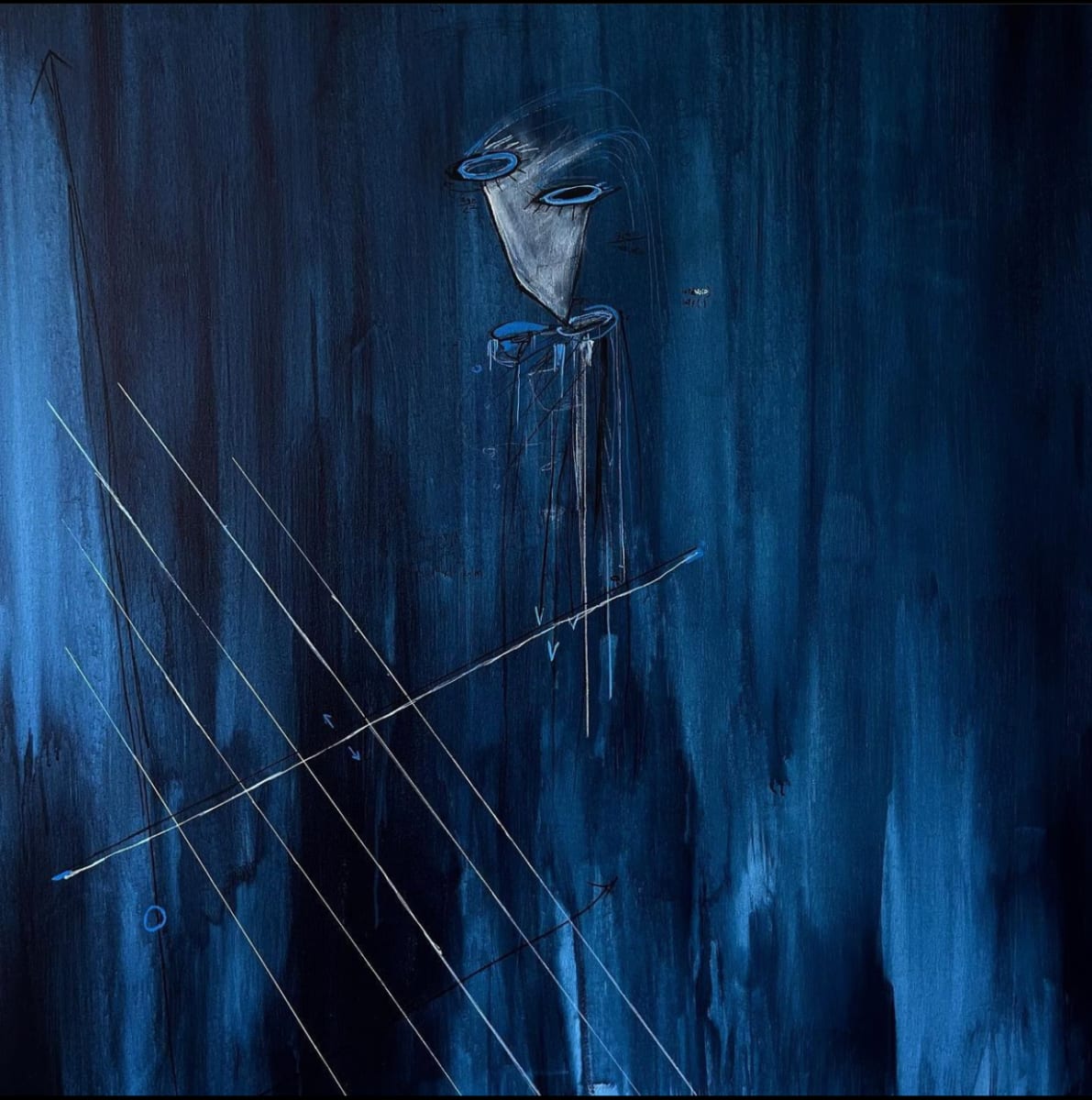
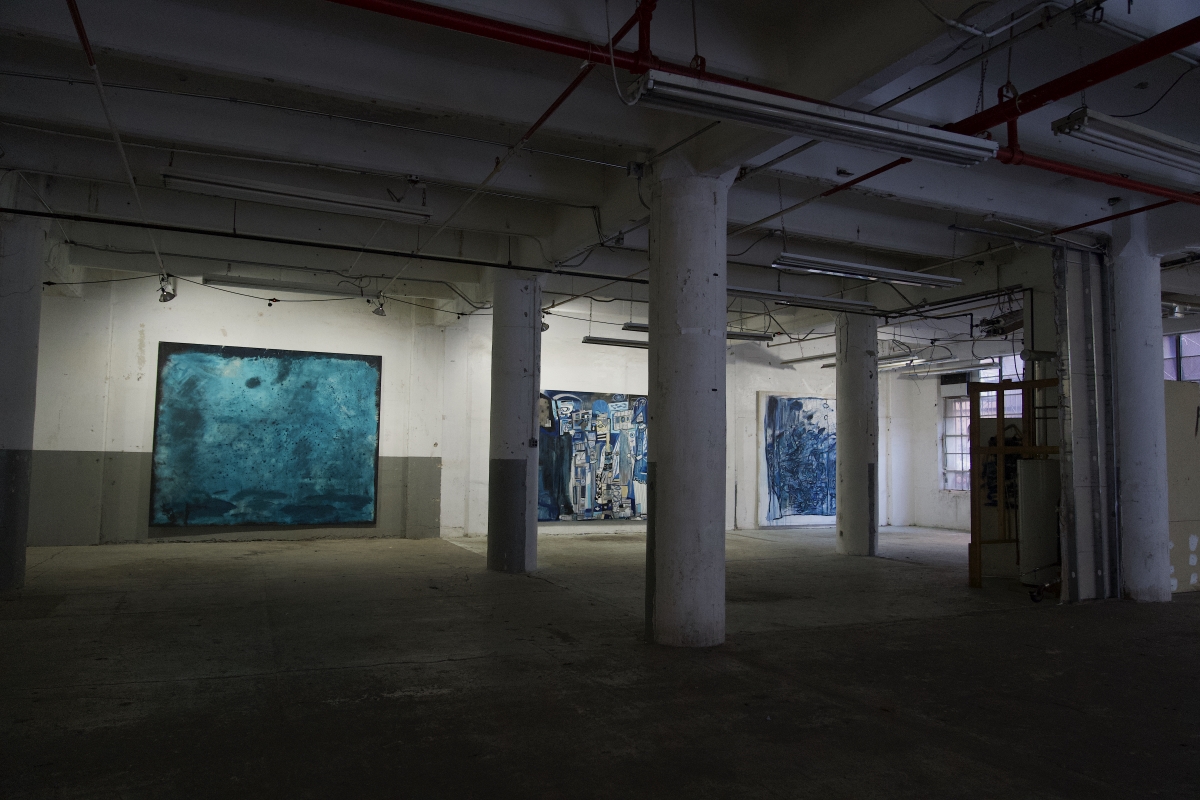
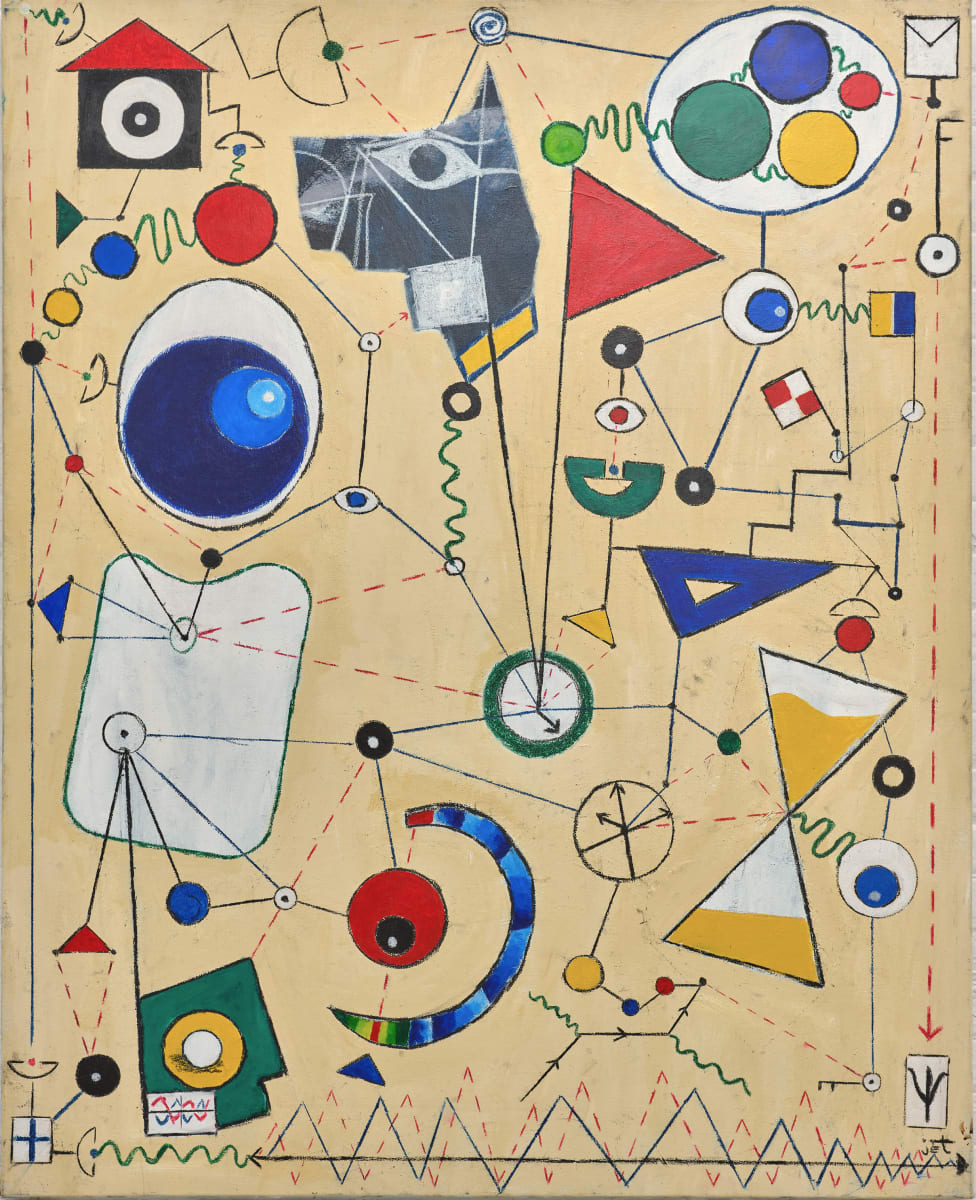
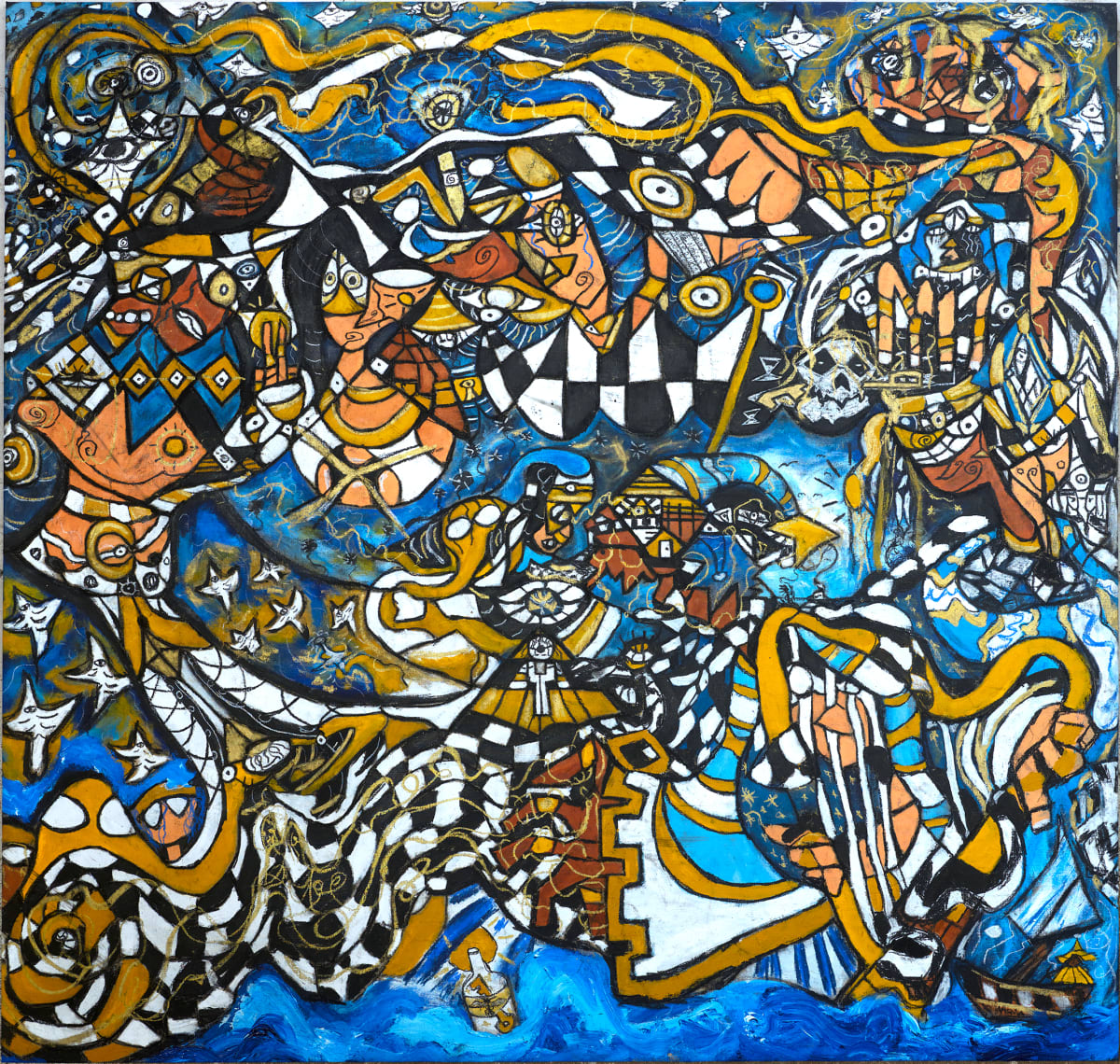
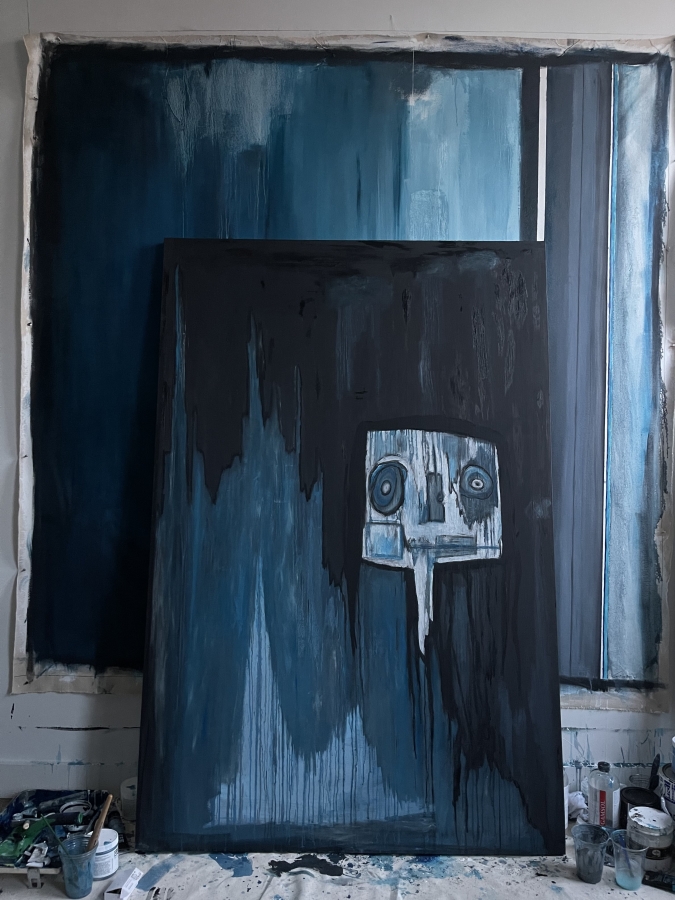
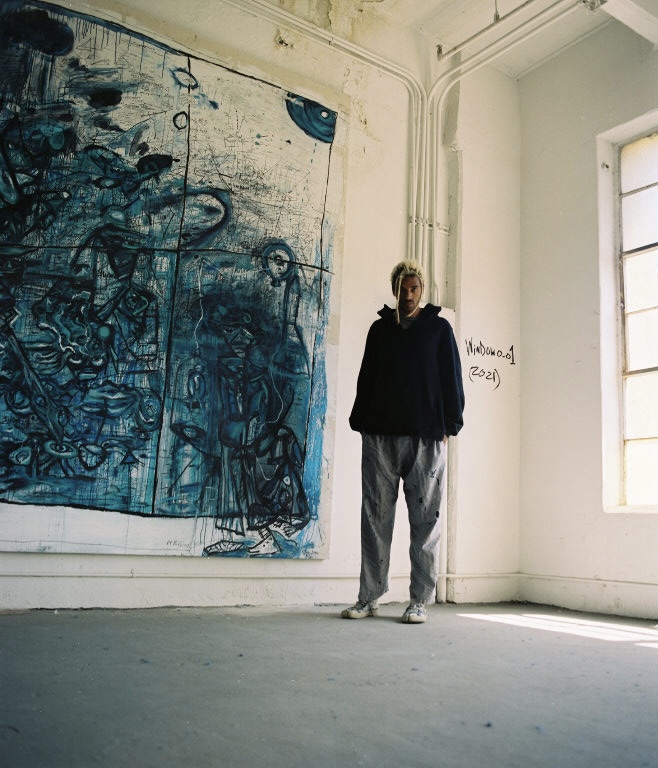
When I first began painting, it felt more natural to work on walls of canvases where I could mark the painting directly and work within a sense of total immersion through world-building the subject matter’s imagery into my scaled point of view. Now that I’ve become more familiar with painting, scale is a secondary tool that serves the source material. For me, color is instrumental in establishing tonality. I approach it similarly to sound, focusing on how it can convey mood, depth, and resonance—similar to how different notes combine to create scenic atmospheres. I also often consider color from a more analytical and scientific perspective, viewing it in terms of frequencies, photons, and waves of information and considering the interactions between light and the mind. This relationship of color, sound, and concept is evident throughout the larger body of my work, especially within my recent thesis, Melting Blues. Here, I explore the theoretical concept of sentient information passing through a gravitational blueshift as an abstract allegory of the end of an era, and a subsequent acceleration towards a near singularity in the future—technologically, culturally, and through the physical laws of the universe.
You have participated in a few shows, but all with overwhelming success. In which setting—gallery, museum, or institution—would prefer your art to be exhibited?
The perceived success is a bit convoluted. On the surface, it may seem that I’ve achieved some notable accomplishments through the progression of my exhibitions. However, the reality is that these milestones were only made possible through tireless efforts in independently organizing, curating, installing, promoting, and financing all of my exhibitions—all while also shouldering the responsibilities of being an artist with only a small inner circle of support. This process has entailed a strenuous investment in physical, emotional, and mental labor and yielded a short-lived celebratory environment for an audience often insulated from my internal struggles, which has made the experience often times more alienating than rewarding. There’s a lot of uncertainty concerning future exhibitions. As I mentioned, the contemporary art scene has transformed into a spectacle environment. With its emphasis on celebrity endorsement, identity entrepreneurship, pseudo-progressive fashionable trends, performative patronage, and self-indulgence that creates nothing short of a Disneyland ambiance, I cannot see myself operating authentically within this atmosphere.
With this in mind, if my work were to be exhibited publicly in the future, it’d likely be best at an auction house, as at least there is a certain level of unforgiving transparency and bluntness to be found in that relationship.
Outside of this, I will continue to exhibit and engage with projects privately at Base 36.
How would you define yourself—as an artist and as a person?
A work in progress.
Is there a philosophy that anchors your vision?
Amor Fati.
Editor: Kristen Evangelista
Jet Le Parti IG
Photos courtesy of Base 36. Exhibition Archives. 2018-2020.