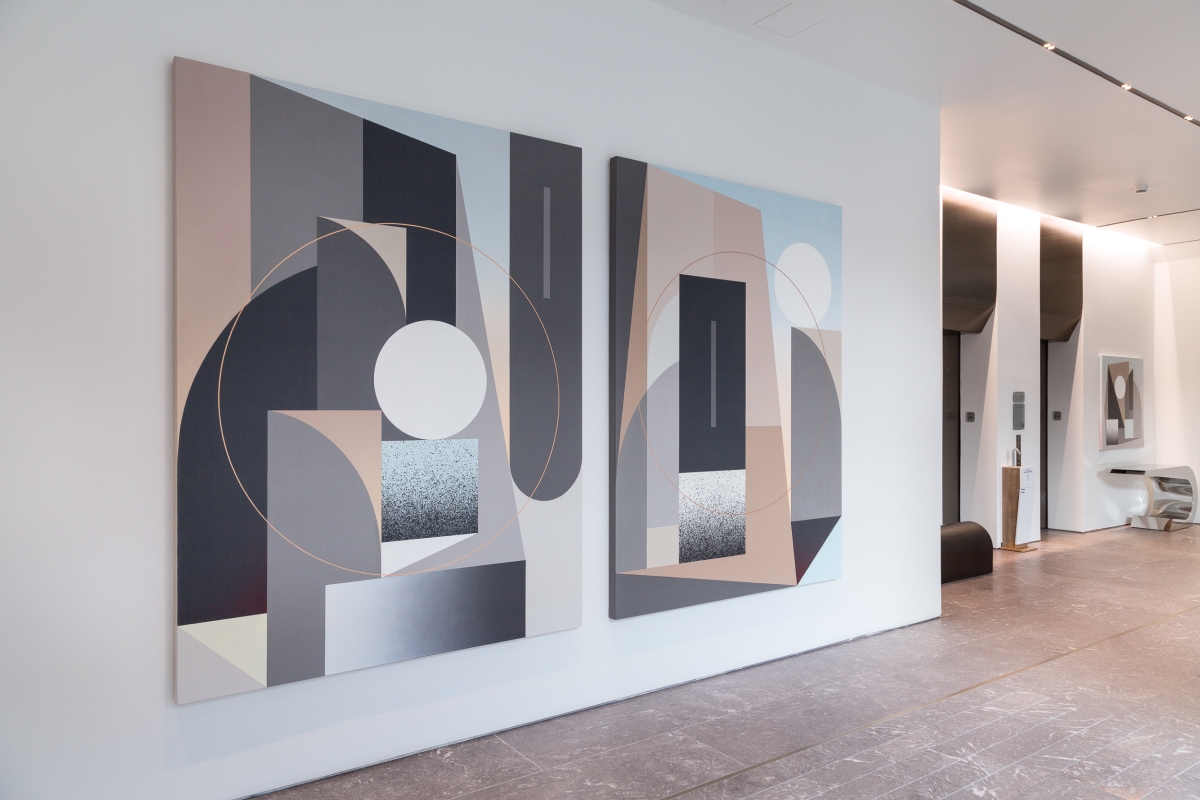
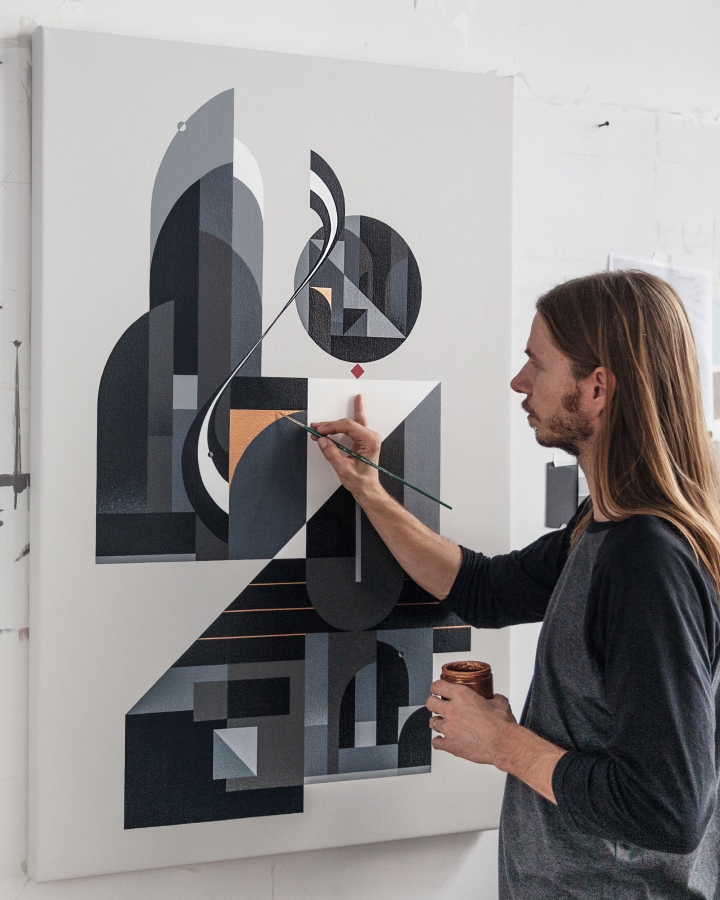
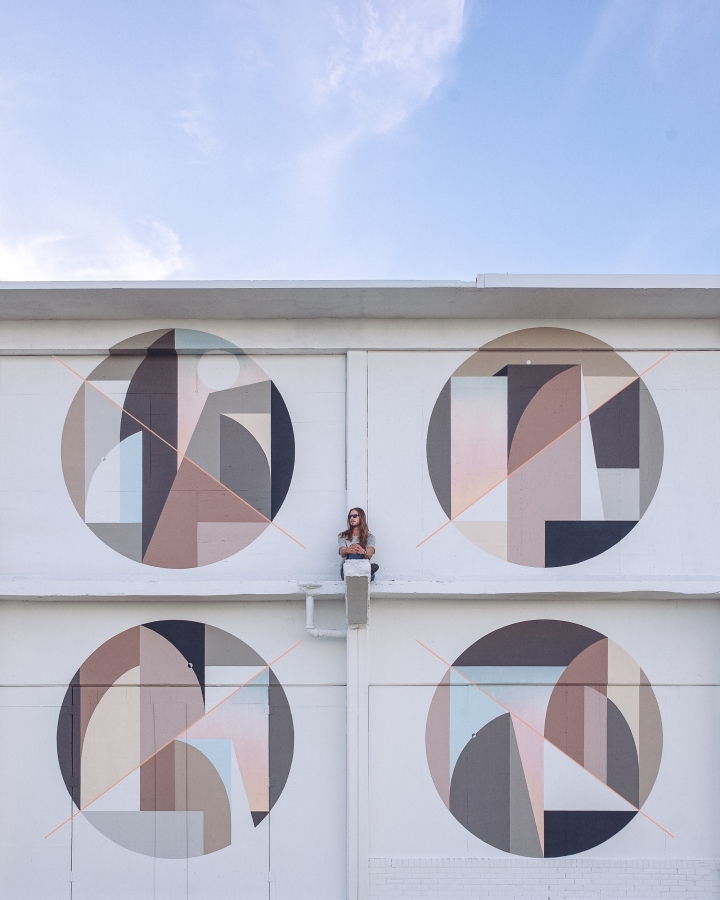
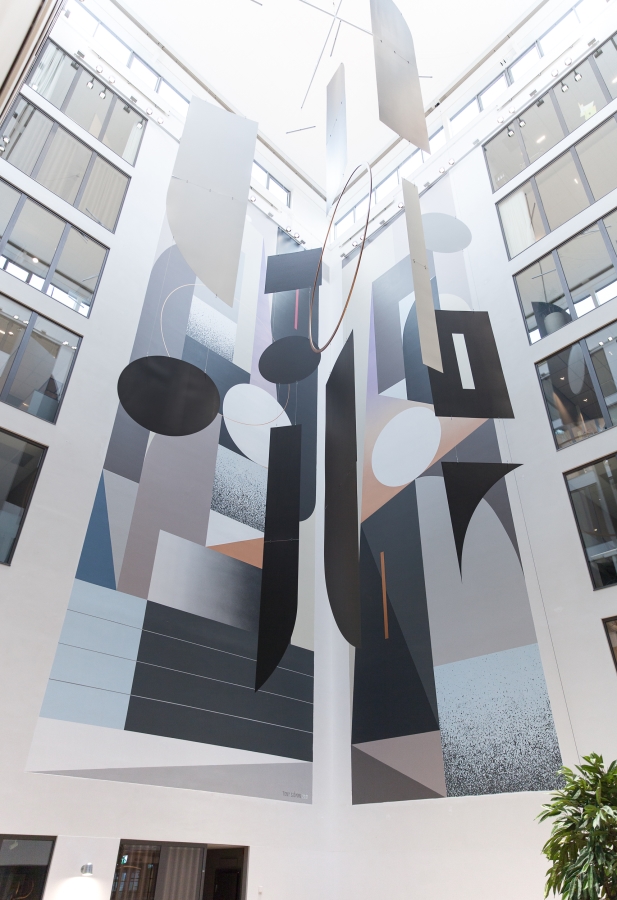
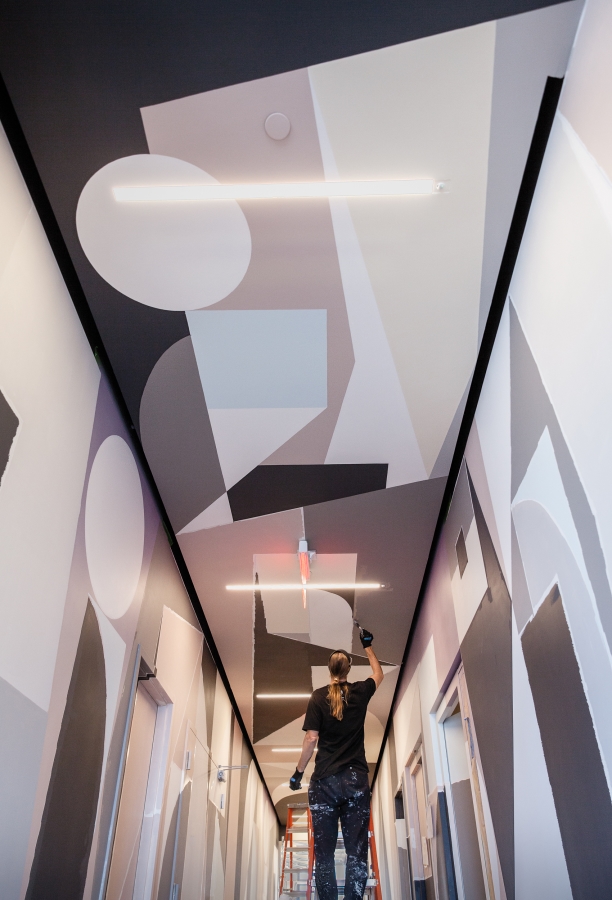
Geometry, for Tony Sjöman, is not a matter of precision but of rhythm. His compositions pulse like music, guided by structure yet alive with improvisation. From the Brutalist concrete walls of his childhood in Finland and Sweden to the gleaming facades of Manhattan skyscrapers, Sjöman has turned architecture itself into a language—one of balance, cadence, and movement.
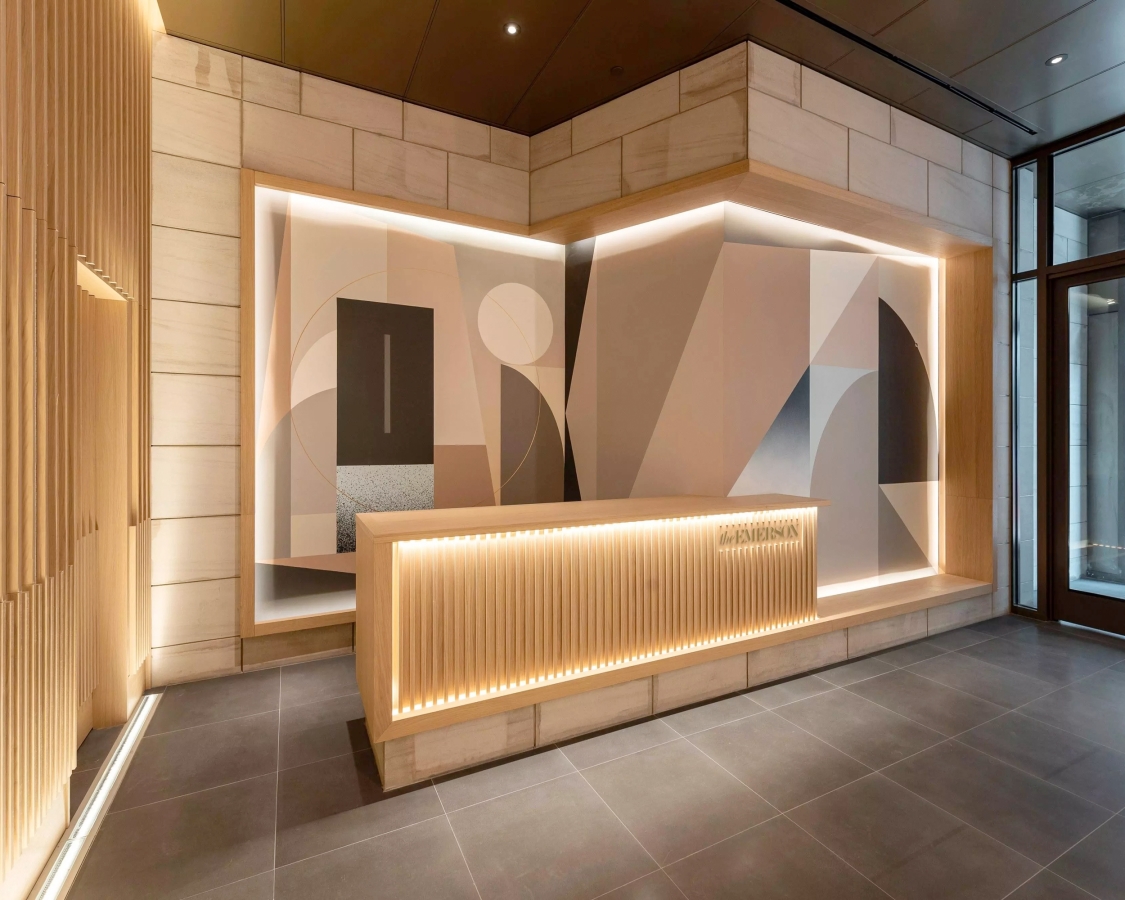
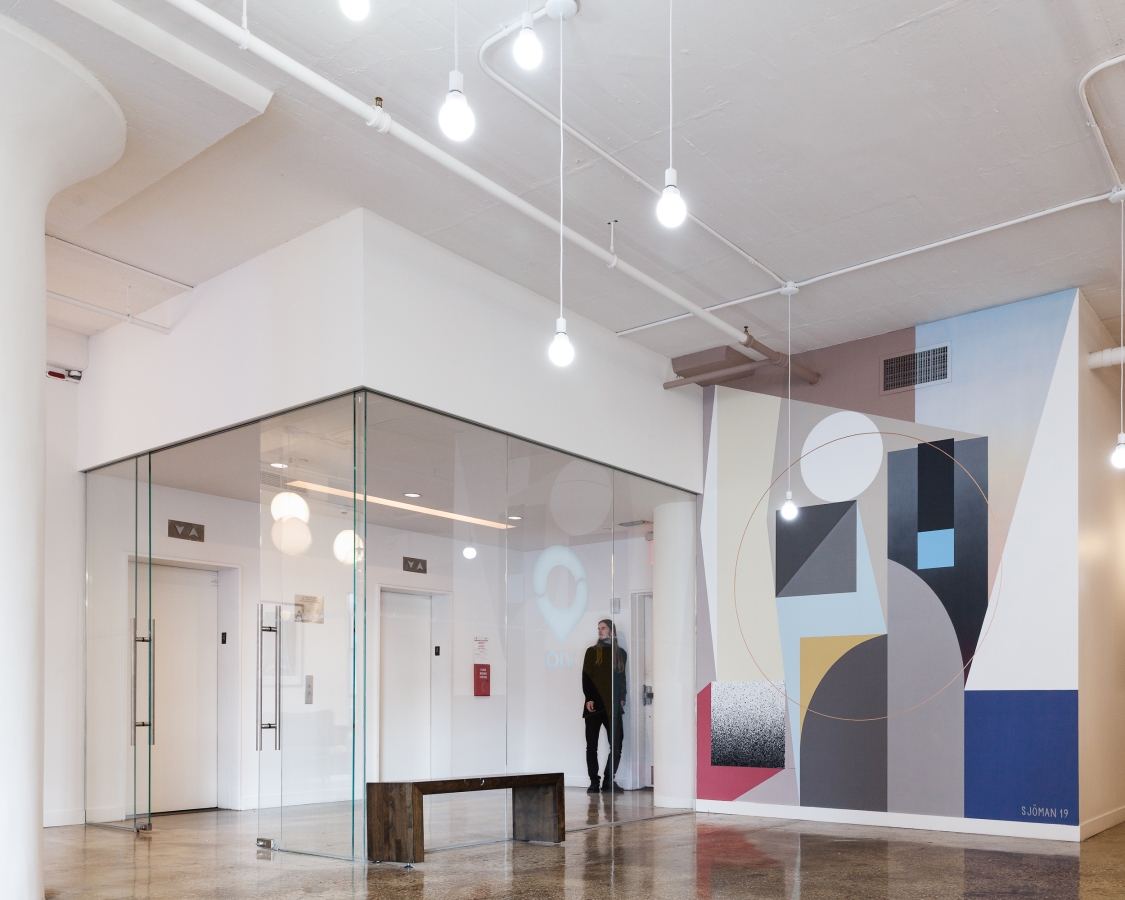
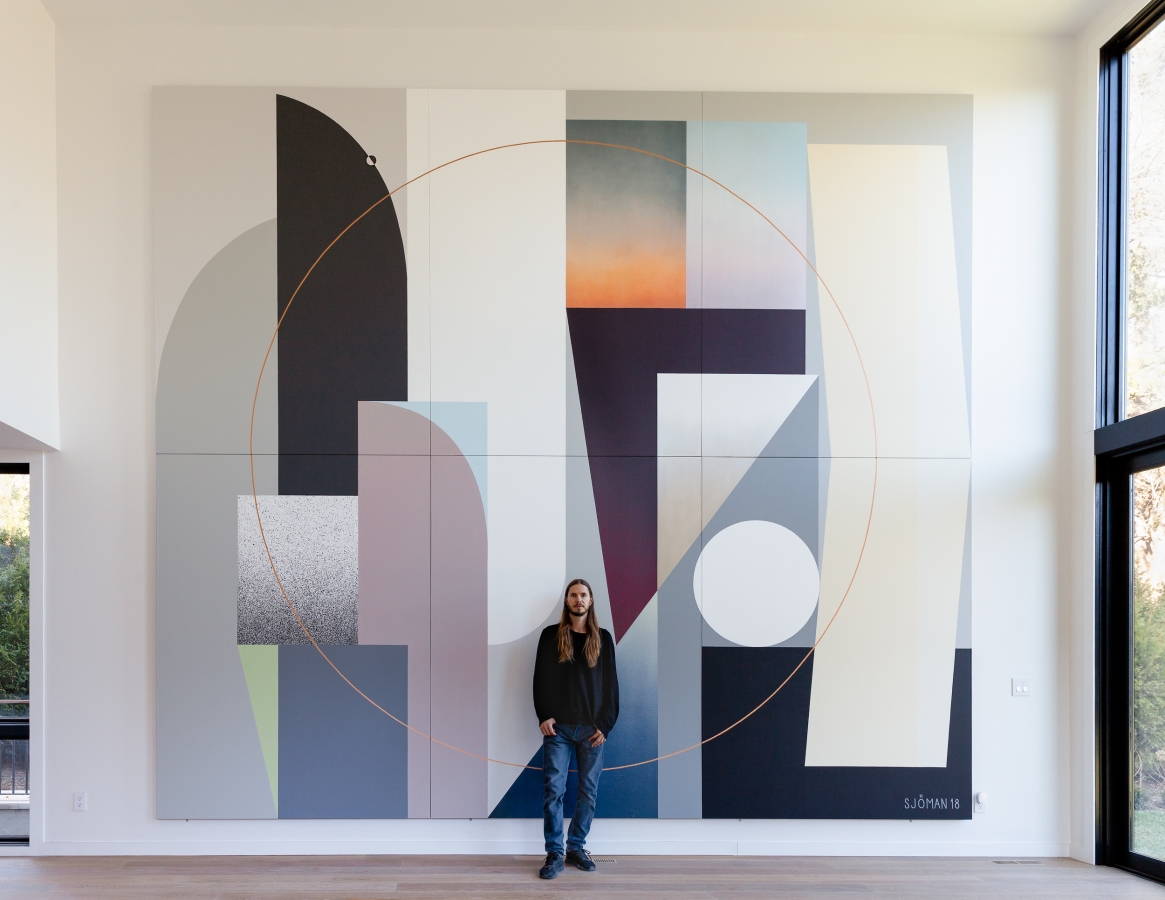
Known in the street art world as Rubin, he began painting graffiti at nine years old, long before he knew that those early experiments with form and abstraction would evolve into monumental murals and refined studio works. Today, his geometric style inhabits two worlds: the urban scale of New York City, where his works rise on church walls, high-rises, and even the 69th floor of the World Trade Center, and the intimate scale of his canvases, where each shape carries the discipline of architecture and the pulse of sound.
In his practice, color operates like tone, composition like phrasing. Trained in classical guitar, Sjöman approaches painting as a musician approaches a score—seeking flow, tension, and release. His works are visual harmonies, built from Scandinavian restraint and the raw energy of New York.
In this conversation, he reflects on the evolution of his abstract language, his process of deconstruction, and the constant dialogue between structure and freedom. What emerges is a portrait of an artist who finds equilibrium not in perfection, but in rhythm, repetition, and the quiet order behind motion.
An Interview with Tony Sjöman
By Carol Real
You grew up in Sweden with Finnish roots and later built your career in New York. What drew you to the city, and what did it represent for you as an artist?
I’ve always been drawn to New York. At nine years old, I started painting graffiti in the public housing project where I grew up. I always wanted to visit the birthplace of graffiti. My then girlfriend now wife, who is a journalist, was also obsessed about New York and we first visited the city together in the 1990s. She got a journalist visa to work in the U.S. about fifteen years ago and that’s when we started our transition to move here. I never dreamt of being able to support my family and myself as an artist. However, New York City is the best place on earth for people who are willing to hustle hard. Here we are, fifteen years later, with two kids!
You began painting graffiti as a child. How did that early experience of working on the streets evolve into a professional artistic path?
I was just a kid when I started painting on the streets so art has always been a natural part of who I am. Growing up in a blue-collar public housing environment, a career as an artist wasn’t in the stars for me. I spent years trying to fit in to the circumstances that were my everyday reality, but there was always that glitch in the Matrix, where I felt that I was at the wrong place, at the wrong time and doing the wrong things. After moving to New York City, I knew that this was it. The city gave me the tools and confidence to pursue art professionally.
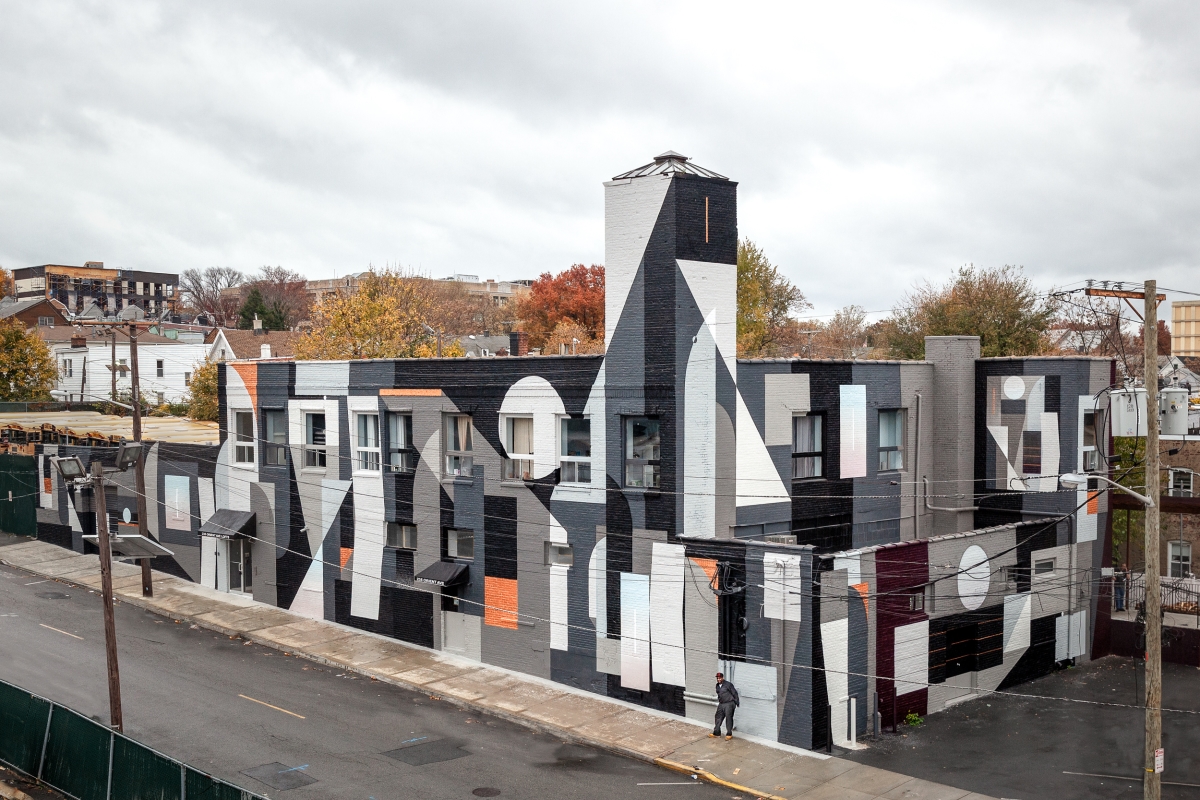
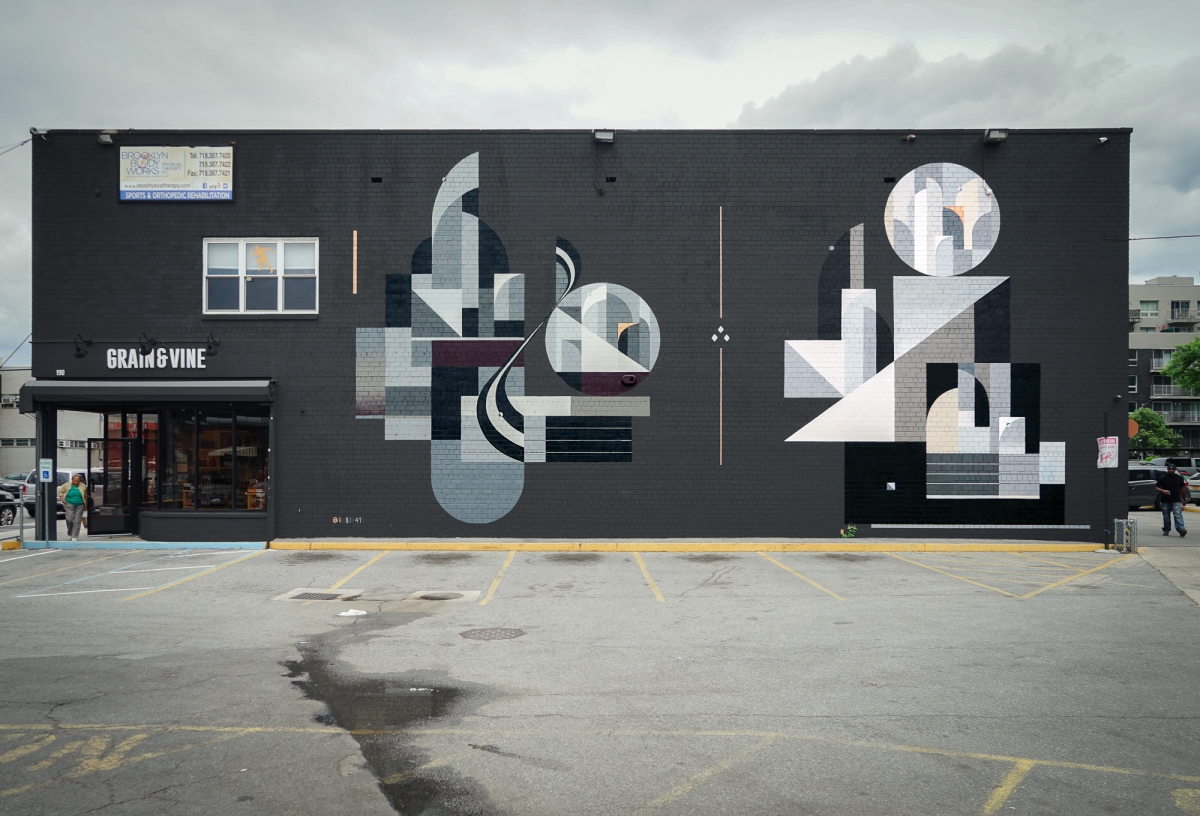
Your geometric language feels deeply architectural. How did that style develop over time, and what influences shaped its evolution?
It’s been a gradual process. The housing project that I grew up in was surrounded by concrete Brutalist architecture. As a kid I hated it, but as I got older I started to understand how much it has inspired me on a subconscious level. I started experimenting with abstract geometric graffiti in my early teens and there are elements in my current work that originate from my teen years. After moving to NYC, I started deconstructing my work and removing elements—mostly colors and shapes that didn’t sit right with me. The deconstruction process led me to finding my true expression.
When composing your pieces, you often balance precision with spontaneity. How do you move from the first sketch to the final palette of colors and shapes?
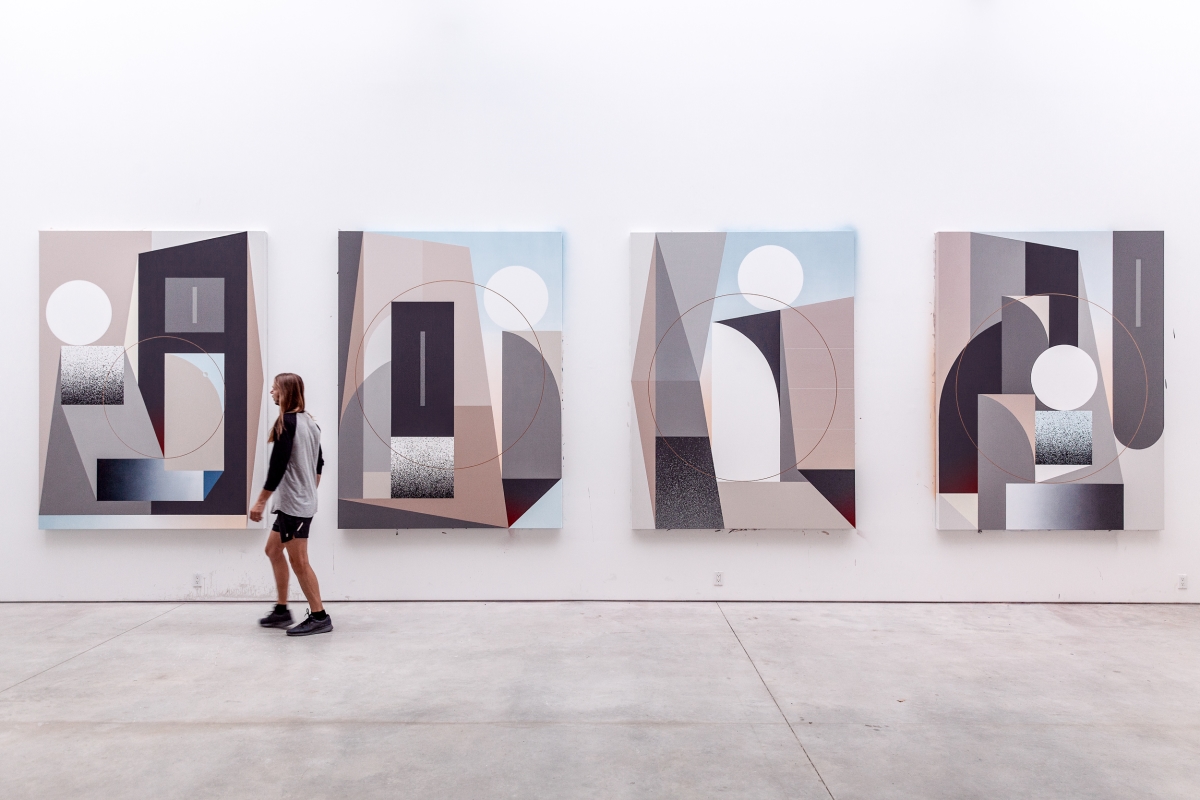
The creative process starts with a thought that I’m trying to visualize and then transfer to paper with a pencil. I make multiple rough sketches quickly. There are no colors, only pencil on paper. After that, I pick the sketches that feel right and refine them until they feel done. I find it easy to overdo things. In the early stages, I like to work more detailed than necessary. I do this on purpose and then kill off some darling elements. After that I move on to the color palette. I usually have the colors visualized in my mind. I used to improvise with the colors while painting both in the studio and with my mural work, but I’ve gradually moved towards doing finished renderings on the computer. It’s nice to not have to mentally drain yourself during the painting process with finding the right place for each color. It allows me to fully focus on the painting itself, which is nice, especially with the murals that are hard labor.
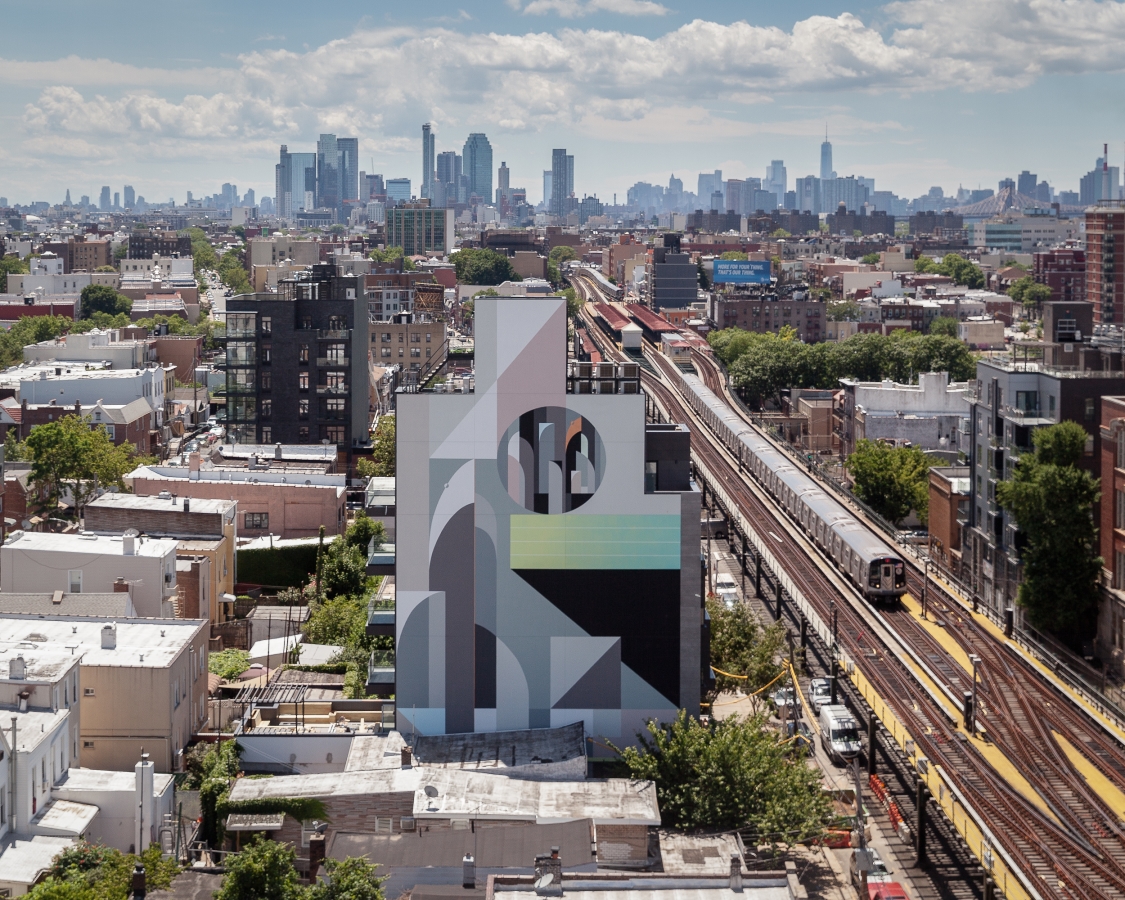
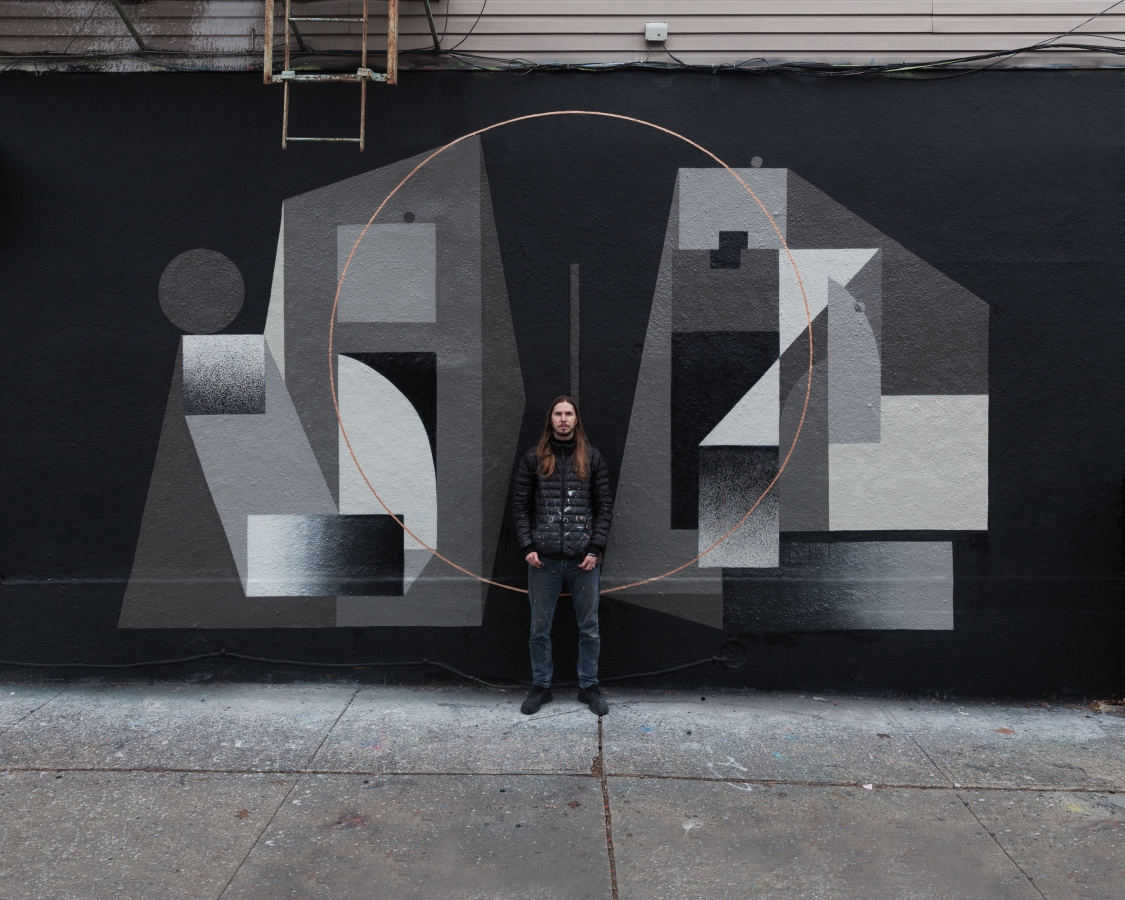
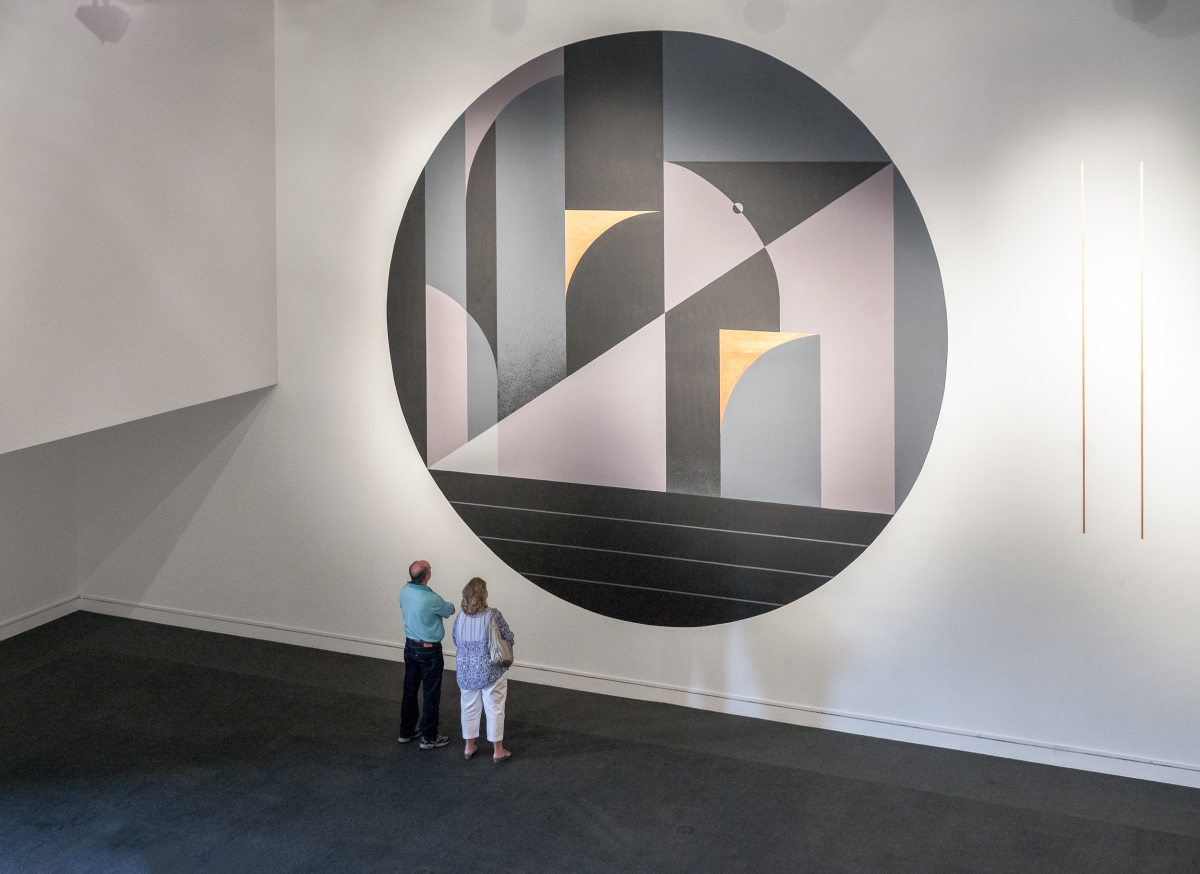
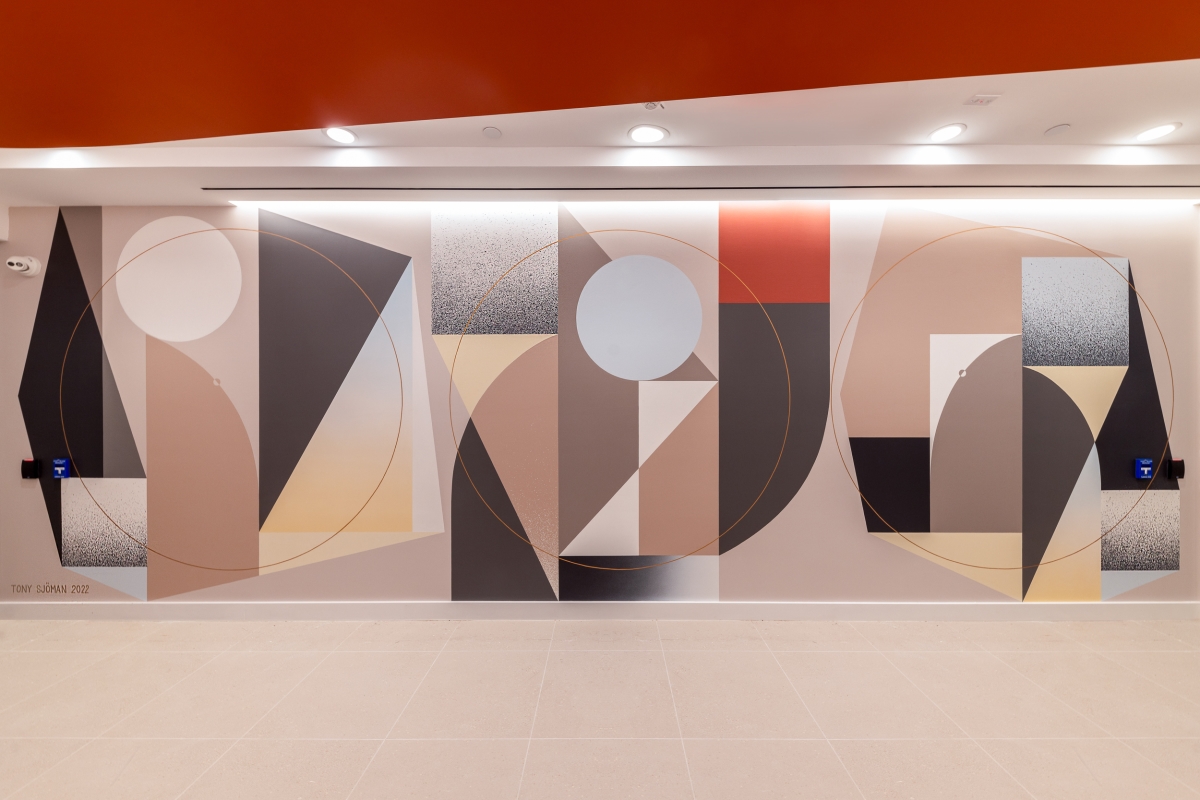
You divide your time between the street and the studio. What kind of freedom or focus does each space give you?
I’d say both. They both have their pros and cons. I’ve painted murals for such a long time that it’s basically part of my DNA by now, but the logistics of mural painting can sometimes drain some of the fun out of it. I find that fun and relaxation while painting in my studio.
Music clearly informs your rhythm and structure. How does sound influence your sense of composition and movement in painting?
I could write a book about all my favorite bands and musicians. Deux is one of them. They were a French duo that made electronic music in the early 80s. I also love Kraftwerk and Nina Simone. Music plays a huge role in my painting. I have a background in music as a classically trained guitar player. I sort of think like a musician when I paint, considering things like composition, rhythm, and flow. Many of my paintings titles are inspired by song lyrics.
Your studio seems to function as both a workshop and a sanctuary. What elements or routines are essential for you to create?
It’s important for me to feel comfortable in my studio. I like to pay attention to little things that make a big difference, such as ergonomics and having everything I need within a comfortable reach. I always listen to music in the studio and having a good speaker is important. I like planning ahead and making sure that I have all the materials I need ahead of time. My non-negotiable studio necessities are good light, total privacy, good music, and a Nespresso machine. I use a limited palette when it comes to colors and don’t have a huge stock of materials. As long as I have Burnt Umber, Ultramarine Blue, Yellow Ochre, Alizarin Crimson, Titanium White and my accent copper paint, I’m fine.
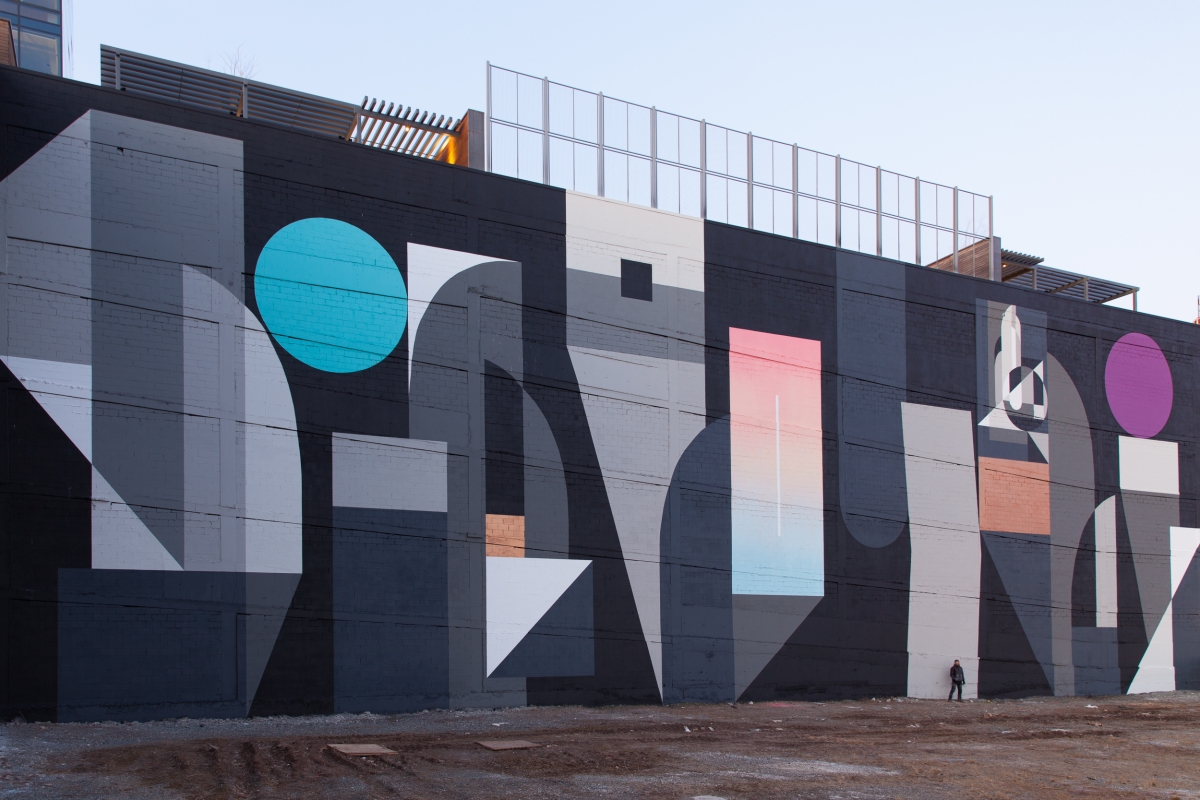
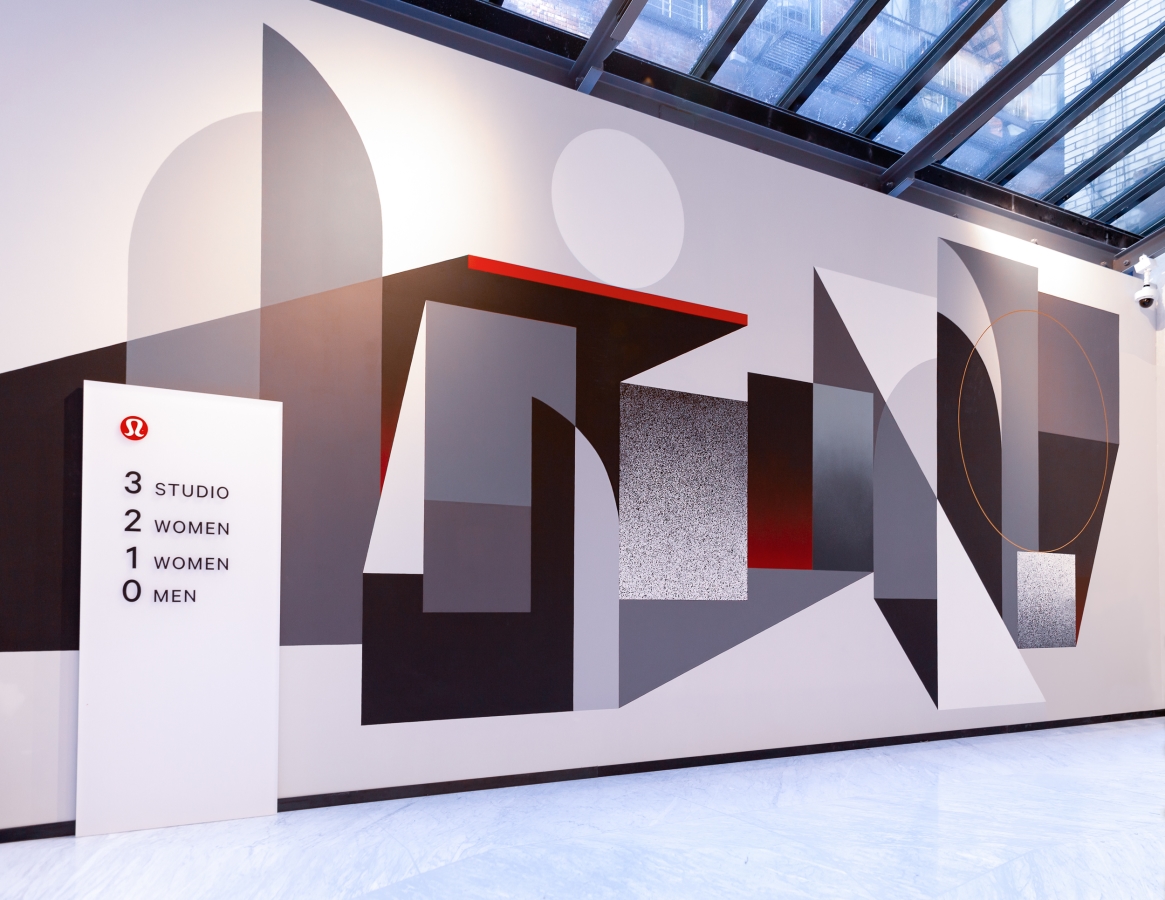
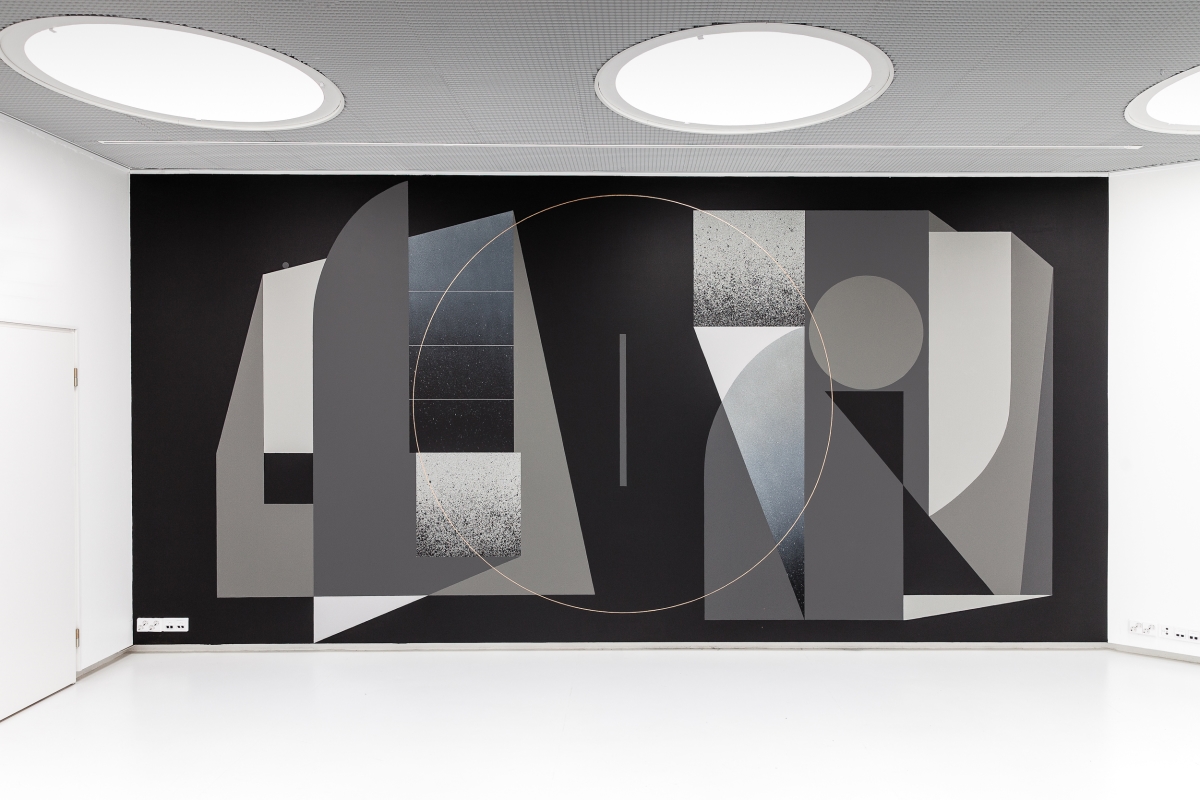
You’ve recently completed large public murals and international commissions. What projects are you most excited about right now?
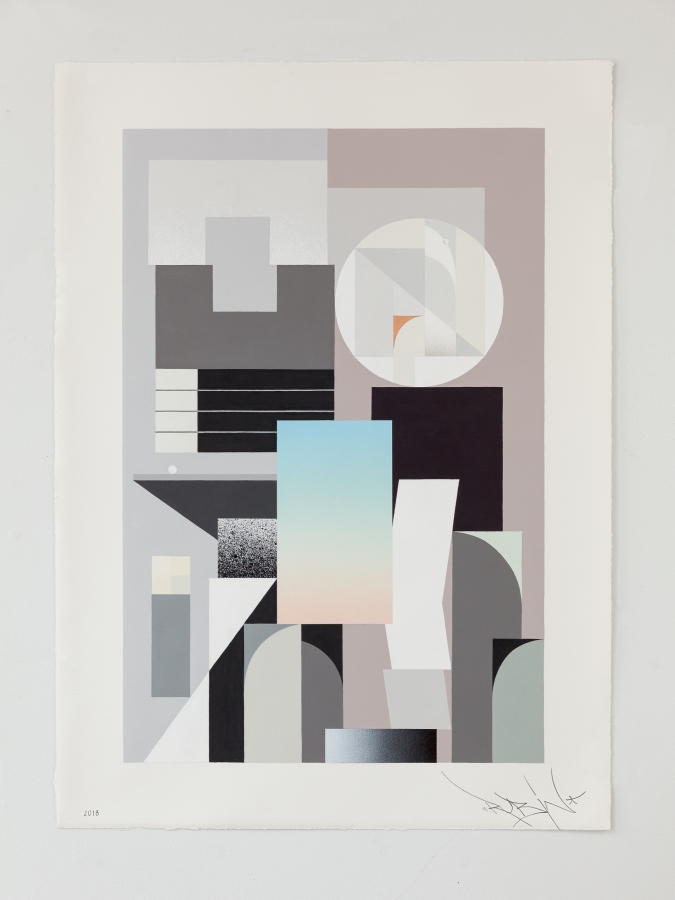
I just finished a mural commission for Starbucks at the new LaGuardia Airport and a commercial mural for Brookfield Properties in downtown Manhattan. Now I’m back in my studio where I just finished a print commission for the Nordic Council in Scandinavia. They recently celebrated their 70th anniversary and commissioned me to produce a print to mark the occasion.
Your upcoming solo show at Highline Nine marks a new chapter in your practice. What can visitors expect from this exhibition?
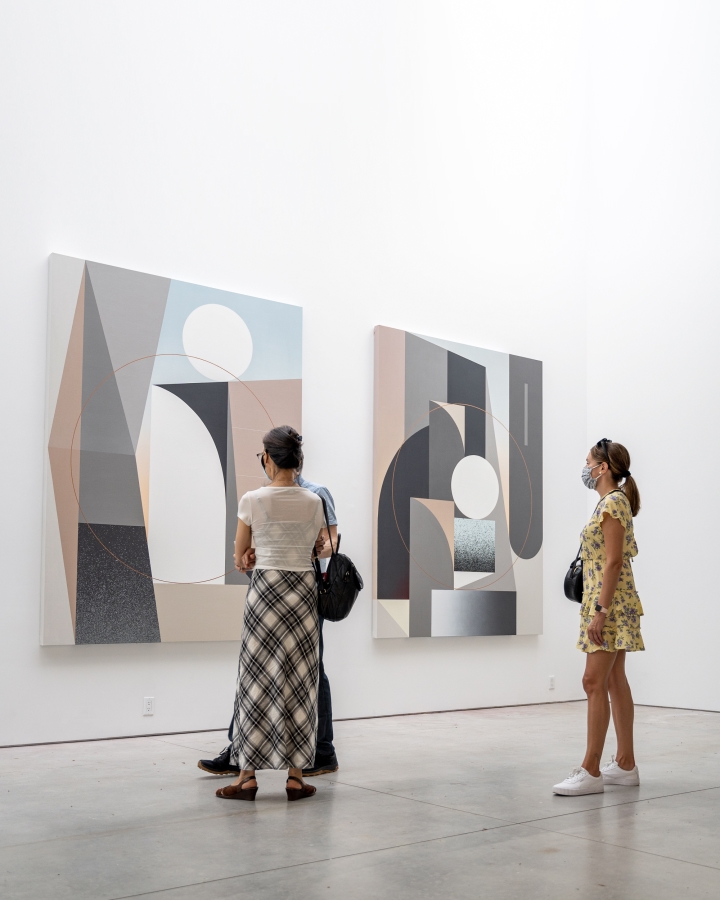
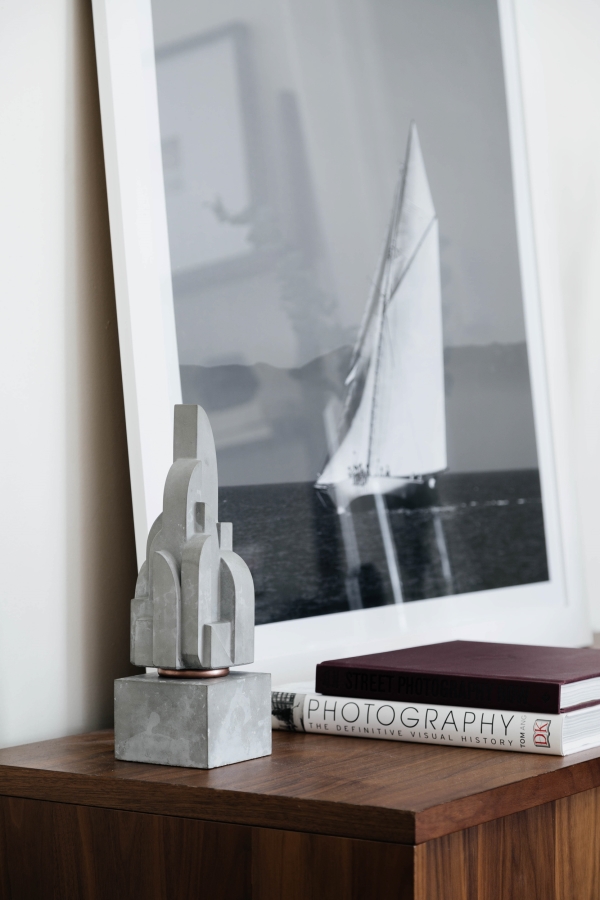
It is a solo show with Sugarlift Gallery at Highline Nine in Chelsea. This will be my first solo exhibition showing large oil paintings. I’m currently working on fourteen large paintings, and I will hopefully work on some sculptures this spring that will also be part of the show.
You’ve quoted both Eckhart Tolle and Charles Bukowski—two very different voices. What do these words mean to you, and how do they reflect your dual identity between New York and the Nordic world?
My American side likes a quote by Eckhart Tolle: “The only thing that is ultimately real about your journey is the step you are taking at this moment. That is all there ever is.” My Nordic side likes Charles Bukowski’s quote: “We are all going to die. All of us. What a circus!”