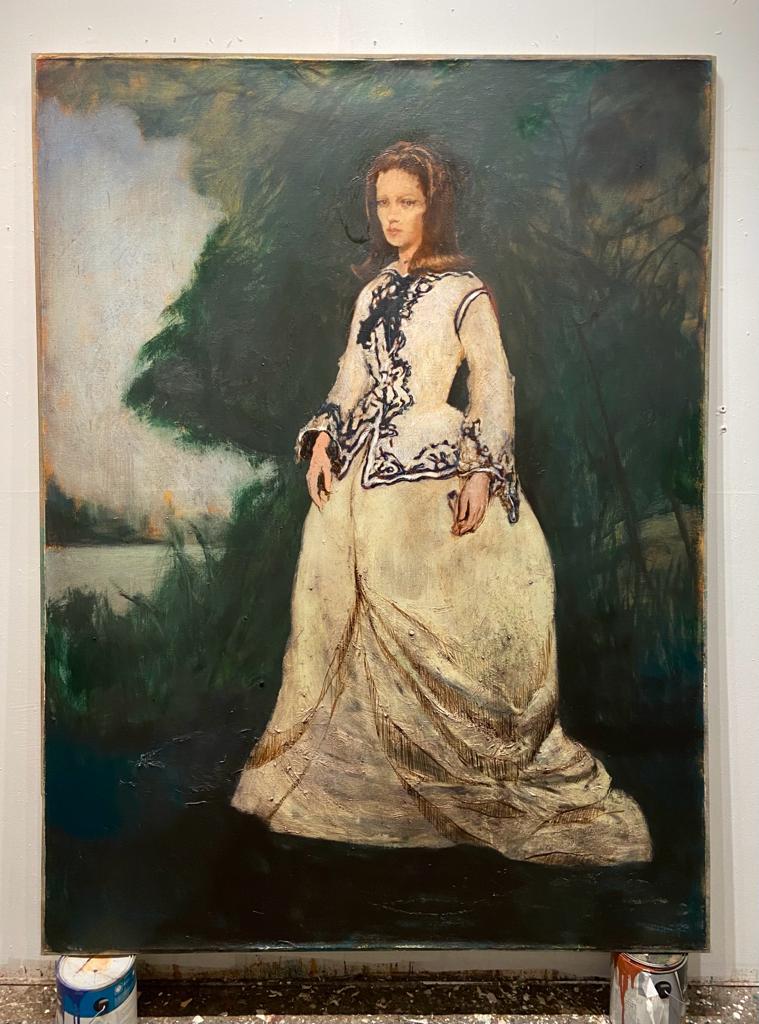
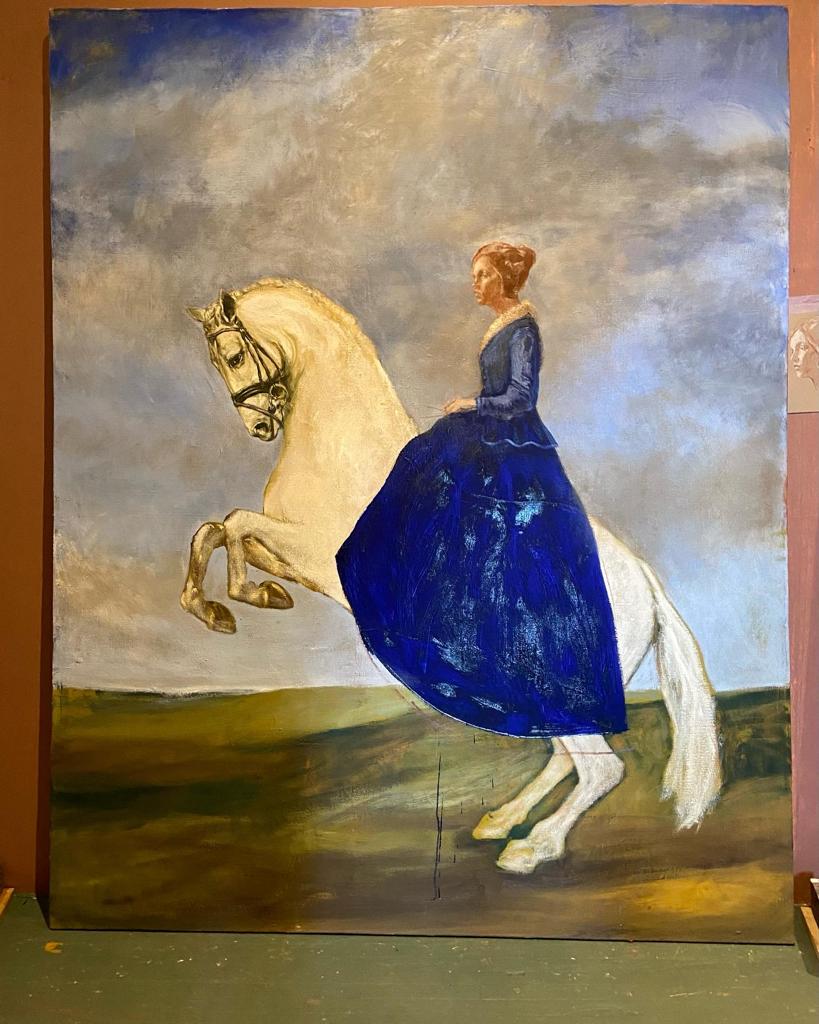
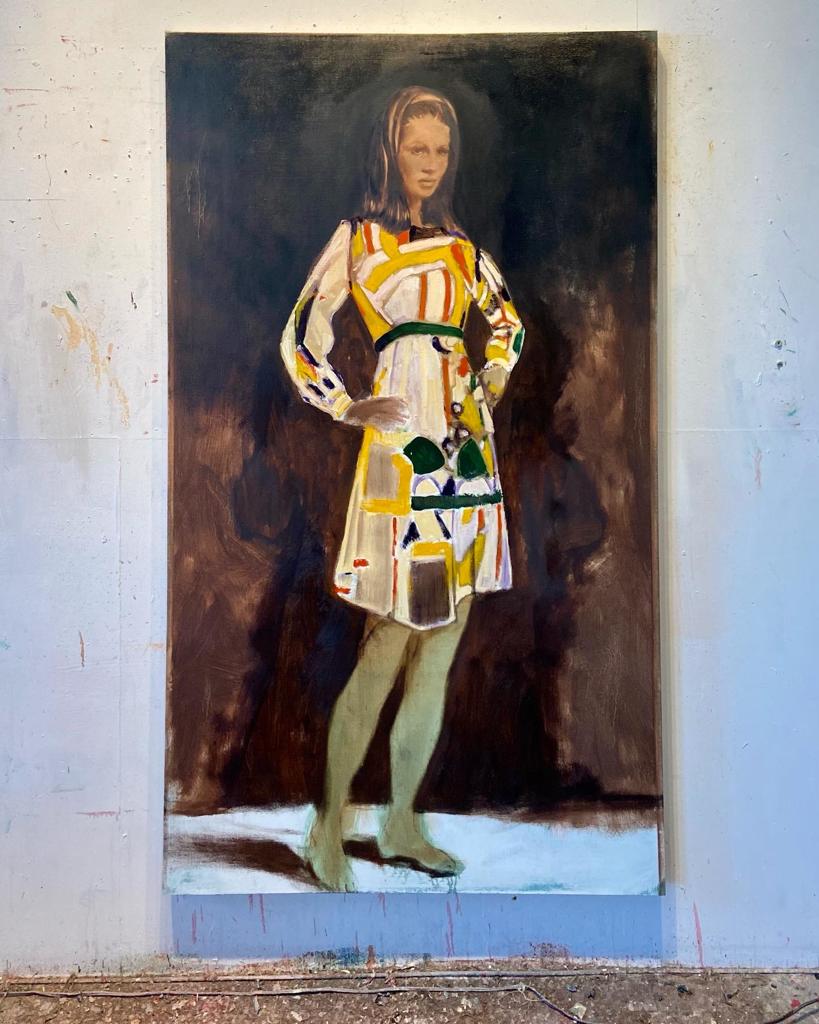
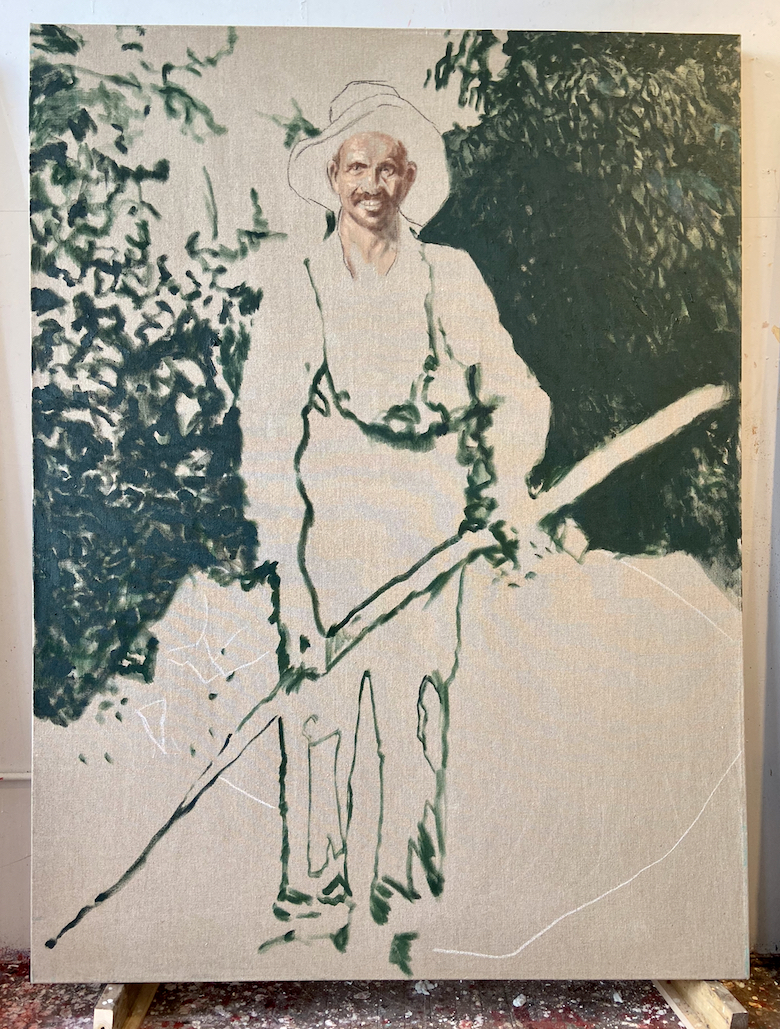
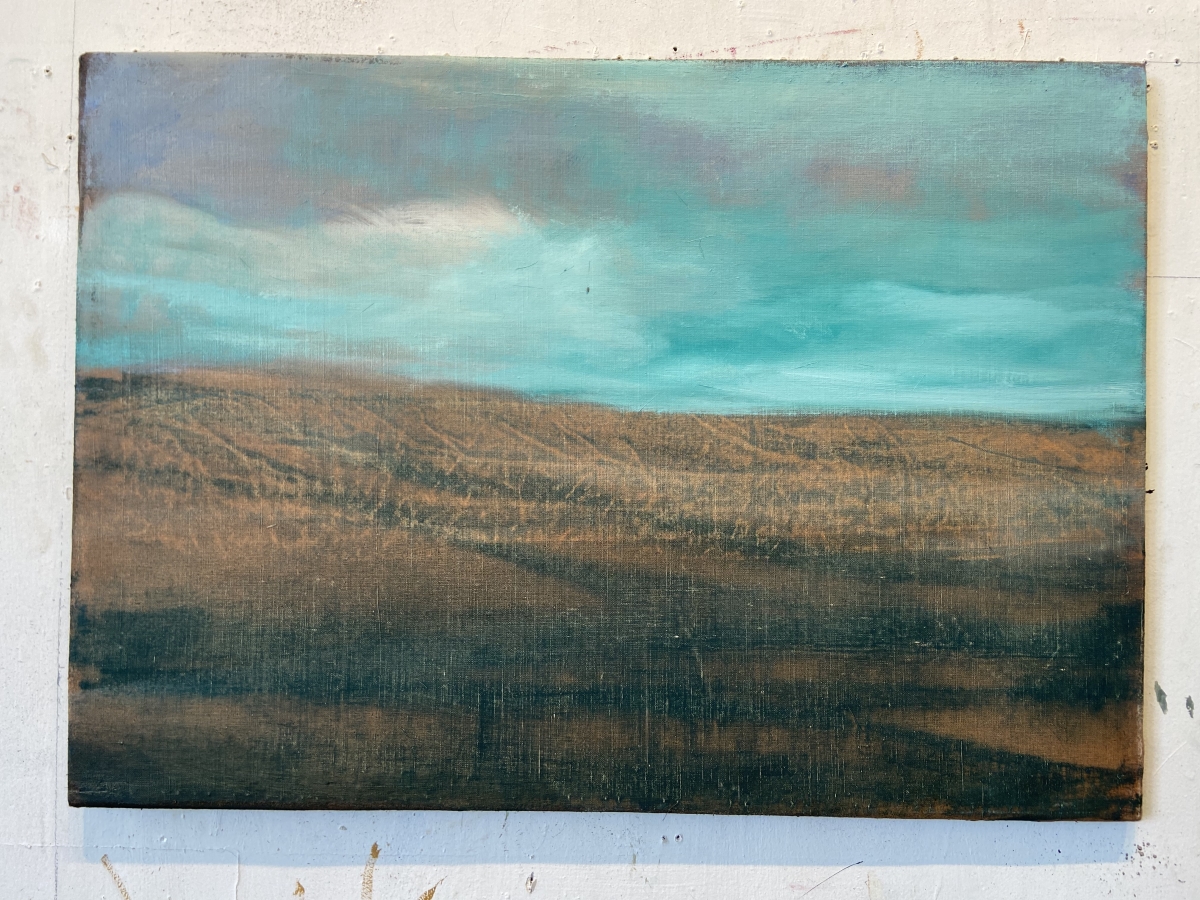
When speaking with Antonio Murado, one immediately senses that painting, for him, is not about depicting but about discovering. Born in Lugo, Spain, and based in New York for nearly two decades, Murado paints as if each canvas were an experiment in perception—where technique, intuition, and emotion collide in unexpected ways.
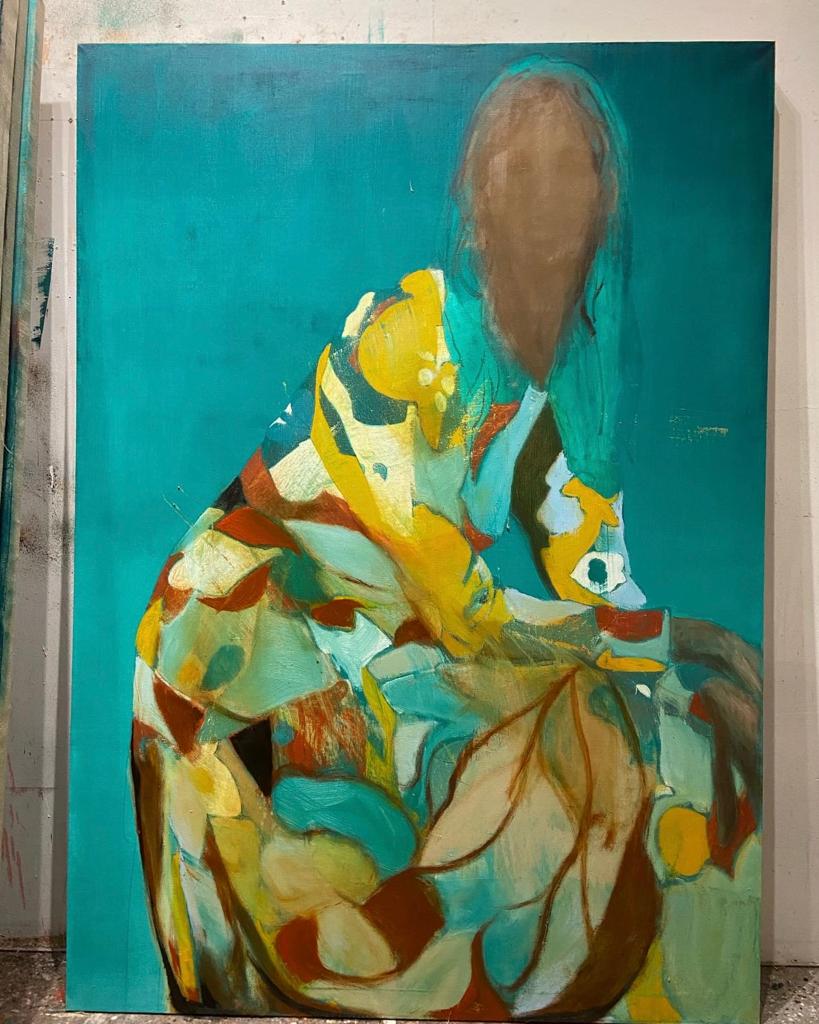
His work moves effortlessly between abstraction and representation. Some paintings evoke mist, memory, or fragments of landscape; others dissolve into pure gesture. What unites them is a deep curiosity, a need to test the limits of what paint can express.
In this interview, Murado reflects on the delicate balance between skill and feeling, on how emotion guides his process, and on his belief that art’s purpose is to transform both matter and mind. Speaking from his New York studio, he invites us to look closer—to see painting not as a finished image, but as an ongoing act of thought and wonder.
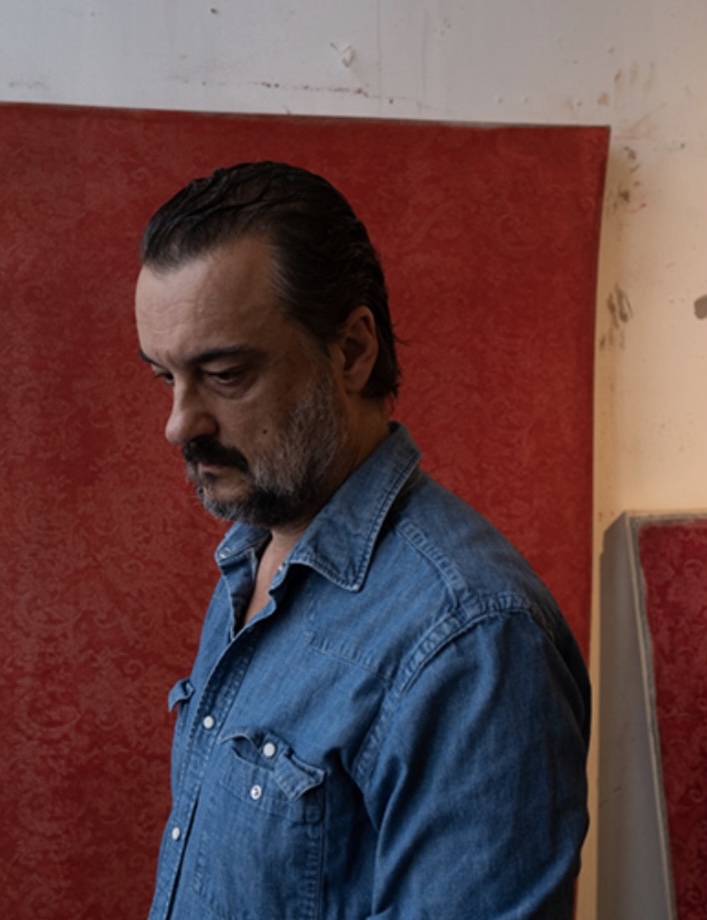
Interview Artist
Antonio Murado
By Carol Real
Can you describe the relationship between technique and emotion in your artwork? How do you balance technical skill with the raw expression of feelings?
This is a very important matter that I’ve been reflecting on for many years. Emotion always remains the destination, while technique merely acts as a vehicle. Every artist possesses innate or acquired technical skills that can be used or not in their work. The key is that when creating something, you must always challenge yourself, whether it’s by using those skills to your advantage or even going against them. You should constantly question your conditions, whatever they may be, and ensure that technique doesn’t become more important than emotion. True creation resides in transcendence, not in mere technical exercise. Techniques already exist, but your creation does not yet exist, and it lies within the emotion it evokes.
Your paintings encompass a wide range of techniques and themes. What drives you to experiment with such diversity?
My main motivation is curiosity. The emancipation of artistic creation from technical virtuosity has led to the value of creation lying in discovery, in finding something new. This artistic philosophy is what I grew up with, and my approach is about pushing directly to the limit of what I already know how to do and venturing into unknown territories where I can surprise myself and, at the same time, surprise the viewer. This is what we know as “avant-garde.” However, it seems that this spirit of adventure and risk is being abandoned in favor of consistency and a focus on the concept of a “product,” which aligns better with a world of fast consumption, a lack of connection with the past, and a lack of interest in transcending into the future.
Mythological and historical references in art often appear in your paintings. How do you choose and incorporate these references into your work?
I would actually like to say that these references are more intentional than they really are. I mean, my approach to the work relies more on spontaneous reactions than premeditated strategies. I feel more comfortable working with a kind of “muscle memory” that must function spontaneously rather than following a preconceived plan. The initial impulse often arises through moments of fascination with various subjects I encounter along the way.
You mentioned that you wish to encourage more open readings of your work. Could you expand on the idea of embracing viewers’ different interpretations?
Yes, that was a central attitude in my career, the idea of creating works that can be appreciated on different levels, from the simplest visual pleasure to the revelation of profound messages for the intellect. However, I now consider that approach a mistake and would not recommend it.
Your paintings range from abstract to representational. How do you decide which approach to take for a particular piece?
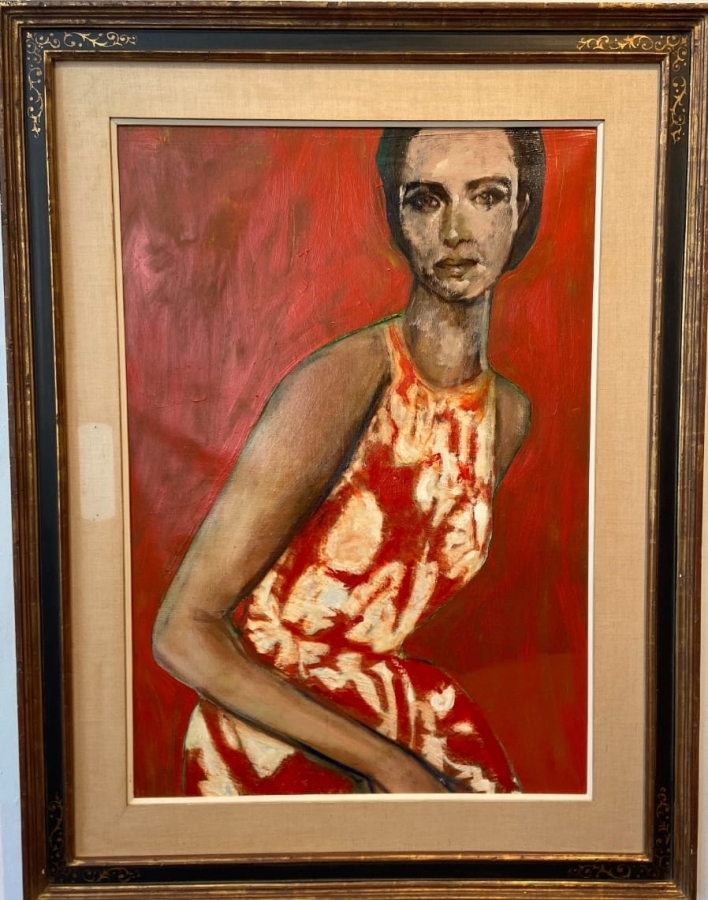
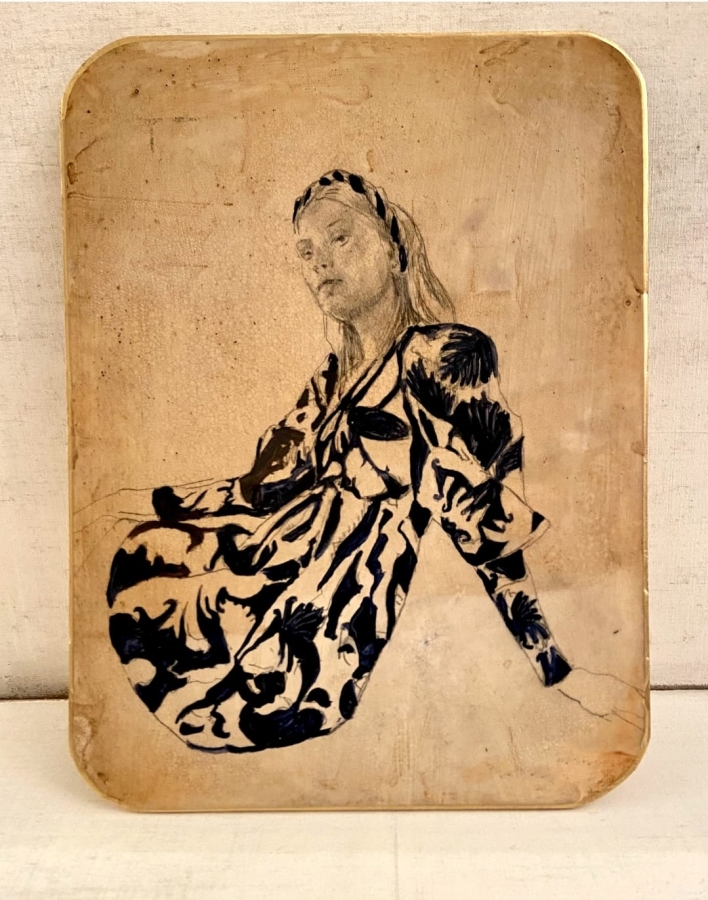
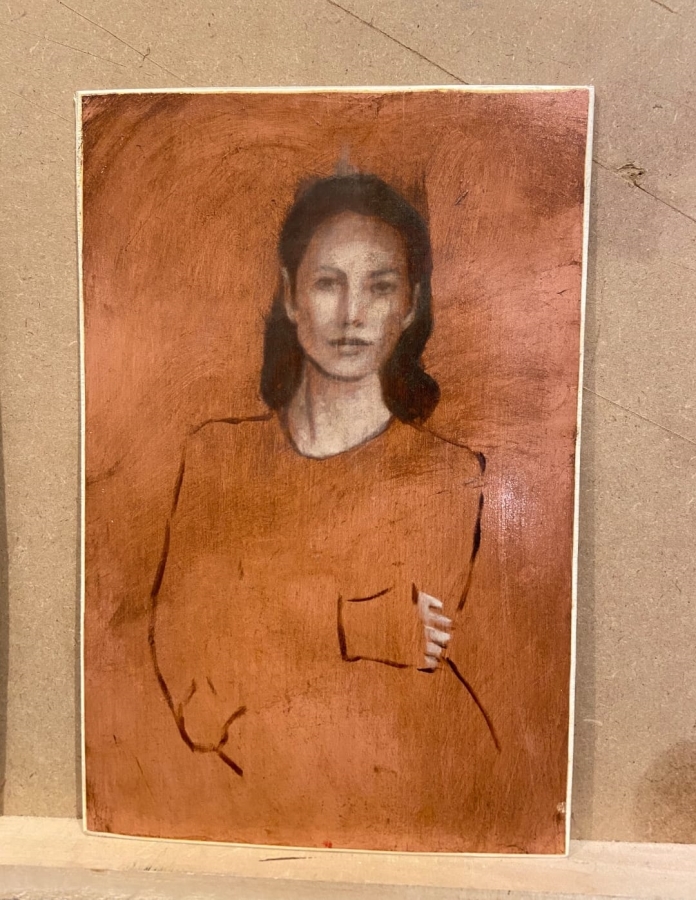
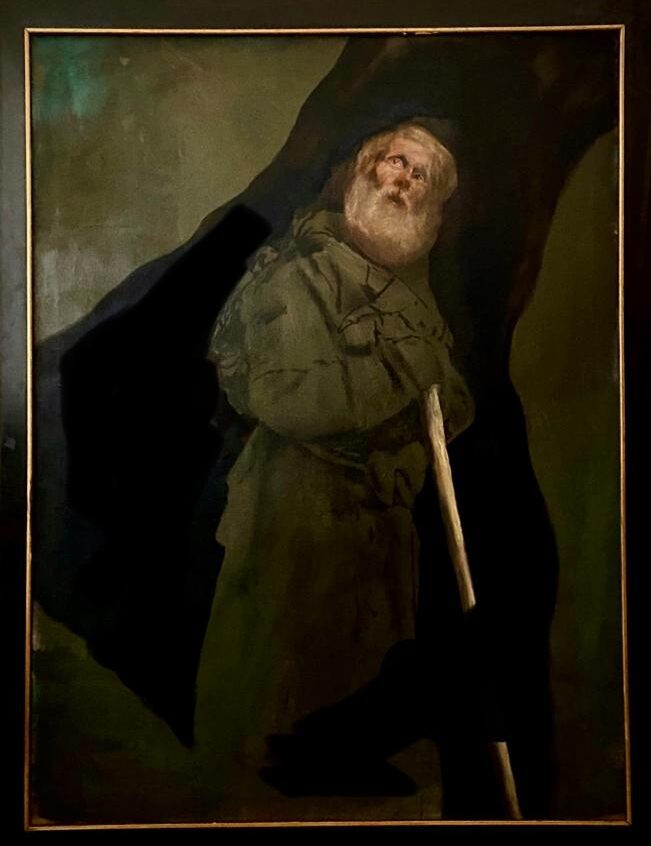
In reality, all my paintings are abstract, as I don’t try to represent something but to create it. Representational painting is the predominant trend today, for various reasons among young artists and educational systems that prepare them to produce a distinctive product. Figurative painting can be taught, but abstract painting depends on each individual and their ability to develop it. It requires the development of a personal language beyond the superficial appearance of the work.
What role do emotions play in your creative process? How do you channel your feelings into your artwork?
At the beginning of my career, emotions arose from the results of my work; they were discoveries, and my moods didn’t have a significant impact on my work. However, over time, that has changed, and now emotions influence my creative process much more. I feel more comfortable using my emotions in my work.
Could you share more about the philosophical foundations of your art? How do you integrate contemplation and thought provocation into your work?
In my view, a work of art should provoke an emotional response that allows the viewer to experience an elevated perception of what they see and know. It should capture and elevate the viewer. This experience of an “excited subject” is similar to a sudden infatuation or a religious revelation and entails a transcendental experience of the “self.”
Nature seems to be a significant theme in your art. How do you approach expressing your interest in nature through your paintings?
I always try to link the technique I use with the result I hope to achieve. Many times, my technical experiments have led me to the theme itself. Painting is done with materials that come from nature, such as pigments, oils, linen, wax, and pine resin turpentine, among others. These elements are already part of nature and behave according to natural laws. My interest lies in participating in this process, observing what happens, and making decisions based on how the process unfolds. I seek to find the moment when this natural behavior transcends and becomes a distinct, untranslatable, and unrepeatable nature, a kind of metamorphosis.
Looking ahead, what themes or techniques are you excited to explore?
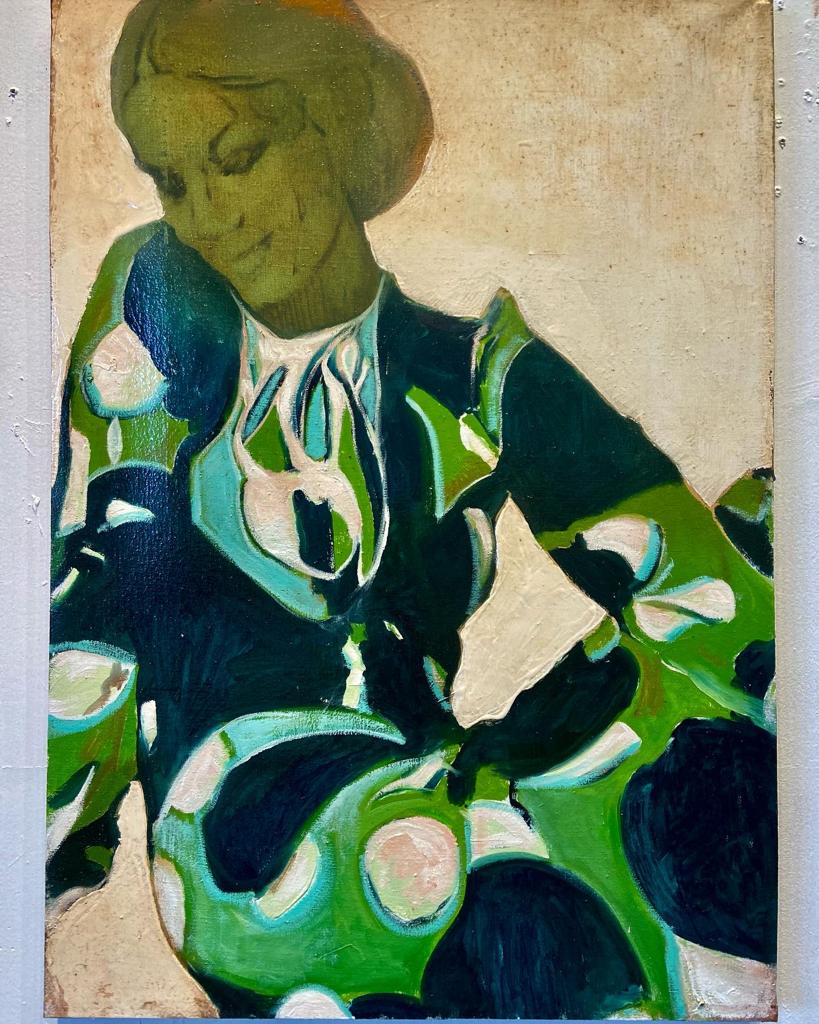
After four years of working, I am about to conclude a long series of portraits in the English tradition, with generic backgrounds. My next project will focus on landscapes, but this time in a freer manner, where I want to explore references from different schools and approaches to landscape, from the proto-Renaissance with its abstract conception of space to the American tonalist school, where emotion and the emotional connection between painting, space, time, and memory are fundamental. It’s about describing a landscape as an emotional experience rather than merely representing it as a physical place.
Image credits: All images courtesy of the artist
Editor: Kristen Evangelista