In one of the most revealing and expansive conversations of his career, David Salle opens the doors to his thinking with characteristic precision and a memory shaped by images. In this interview for Art Summit Magazine, he returns to his childhood in the Midwest helping his father with window displays, the construction of images as scenarios, the tension between inheritance and rupture in modernism, the elasticity of time in the studio, and his recent explorations with artificial intelligence.
Salle does not speak from doctrine but from experience — a visual intelligence alert to connections, to the improbable, to the moments when unrelated elements settle into unexpected coherence. For him, painting is not a mirror or pure representation but a system of relations: a structure unfolding from as if — as if the world could be read through a hidden stage set glimpsed only in fragments.
Through references to Matisse, de Kooning, Kuniyoshi, and a formative encounter with Bruce Nauman, Salle reveals the internal logic of his work while offering a sharp meditation on generational shifts in painting. In an age saturated with signs and prepackaged narratives, his approach suggests an alternative: an ethics of form, a belief in attentive looking, and a commitment to creating meaning where none yet exists.
Without resorting to spectacle or confession, this conversation traces the architecture of his practice: a way of thinking in images, a sensitivity to what remains unseen, and a conviction that enigma is not a barrier but the core of art.
An interview that illuminates not only Salle’s work but also the fundamentally human impulse to see — and to keep looking.
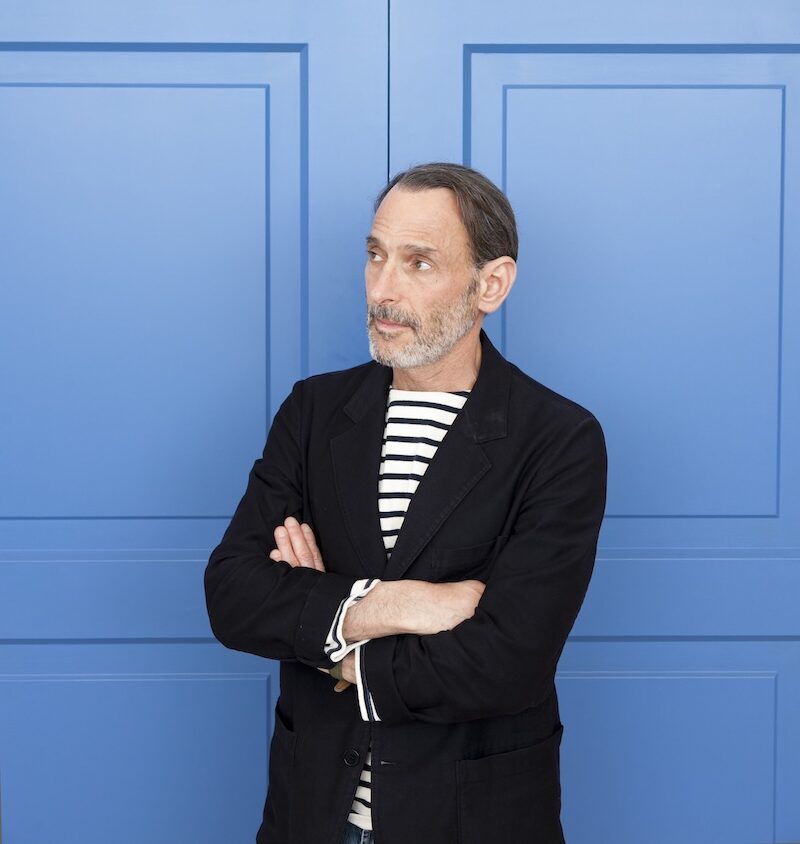
An Interview with David Salle
By Carol Real
Is there an early image—perhaps from childhood—that still lives in your work, even if it’s invisible to others?
There is an aspect of my childhood that still lives in the way I think about pictures and also in the way I work. When I was very young—up until about the age of ten—my father worked in a clothing store. This was in the Midwest in the 1950s, a long time ago. One of his jobs at the store was the window displays. It was called “window dressing.” I would help him with those displays, and I also helped him make advertisements for the local newspaper. I mean, I say that I helped him—I don’t know if I actually did anything, but I had the illusion of assisting in the process of creating the display windows.
I became aware of how to call attention to something, how to appeal to someone as they pass by the store and glance in the window. You have to create a little story within a kind of shorthand theatrical ambiance. How one creates that context is mostly invisible to the viewer; they mostly see the result–that is, the product–but they also, perhaps subliminally, sense the process of creating the illusion.
I was comfortable with the complexity of all that early on, even if I couldn’t have articulated it at the time. The language of presentation, let’s call it, was something I was familiar with from a young age. It became one of the impulses behind my work. It’s something I think about: the presentational mode.
Like a scenario, right?
It’s the mise-en-scène, the setting. You create a scene to suggest something– some idea, or sense-memory. It uses the power of suggestion, and also, importantly, of agreement. If it’s summer and you’re selling bathing suits, you bring in some sand, a beach ball, and so on. Although a beach scene may not sound very witty, there was also at that time some adult idea of visual wit. It’s part of the presentational mind to find a witty way to tell a familiar story.
Do you remember a painting that somehow painted you, or that changed your way of seeing or being? A way of being?
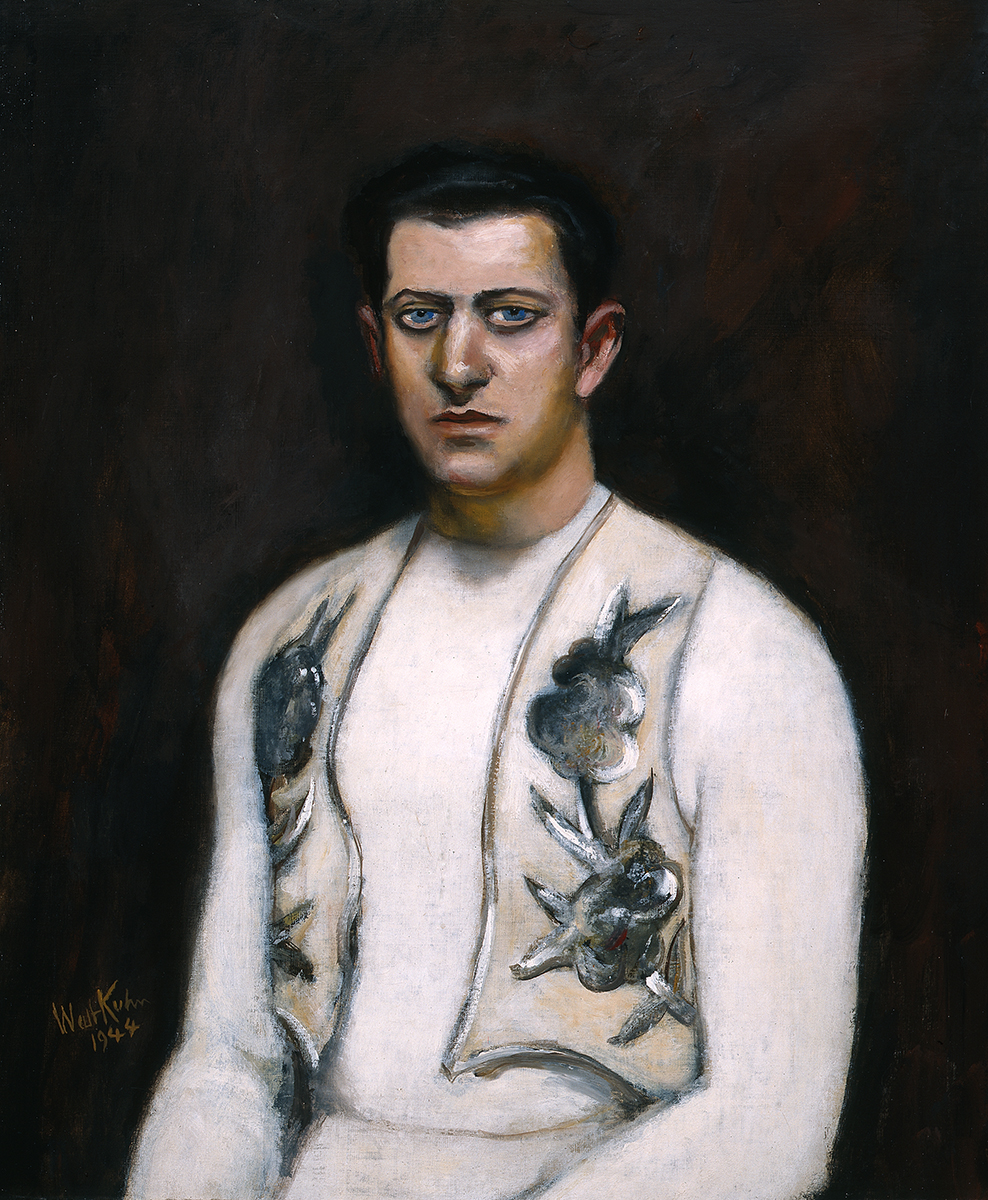
Where I grew up, in the Midwest, the local art museum had a very interesting collection of early twentieth-century American painting—the first American modernists; pre-abstraction painters like Marsden Hartley, Georgia O’Keeffe, Arthur Dove, Walt Kuhn, and Charles Demuth. They were all part of the Alfred Stieglitz group.
I was most impressed by Kuhn and by a Japanese-American painter named Yasuo Kuniyoshi, who I thought was fabulous, and still do. I’m not thinking of one specific painting, but rather the way the work of that group of painters engaged with the idea of a scene. I was struck by how they were involved with the content while remaining true to their modernist principles. That is to say, it wasn’t an illustration. It wasn’t like nineteenth-century history painting, or even Impressionism. It was thoroughly modernist, but there was a sense of the scene, of subject matter, often presented with great theatricality. This opened up the possibility of a more symbolic art.
There is one painting by Kuniyoshi from the 1940s that I do remember: a masked figure, maybe taken from Kabuki theater, with a kind of pennant winding around the body. Another figure is in the background, turned away from the viewer. There is a sense of pageantry, of stagecraft, and also a deep melancholy in the imagery. His style is unique: everything in his work looks rain-soaked, wind-blown, and provisional. That painting haunted me for a long time; I find echoes of it in certain pictures of mine. I can’t explain why exactly, but there’s something overtly theatrical in that painting that speaks to me.
You’ve said that painting is a structure built from signs. Have you ever made one that seemed to build itself—almost without your permission?
Sometimes. On a good day, I might feel that way. More often, the painting is a kind of puzzle, the solution to which often feels just out of reach. I try to listen to what the painting wants. Sometimes a painting is a tangle of all the possible, different versions of itself. I have to untangle them to arrive at the more or less true one, the one that was there all along, waiting to be revealed.
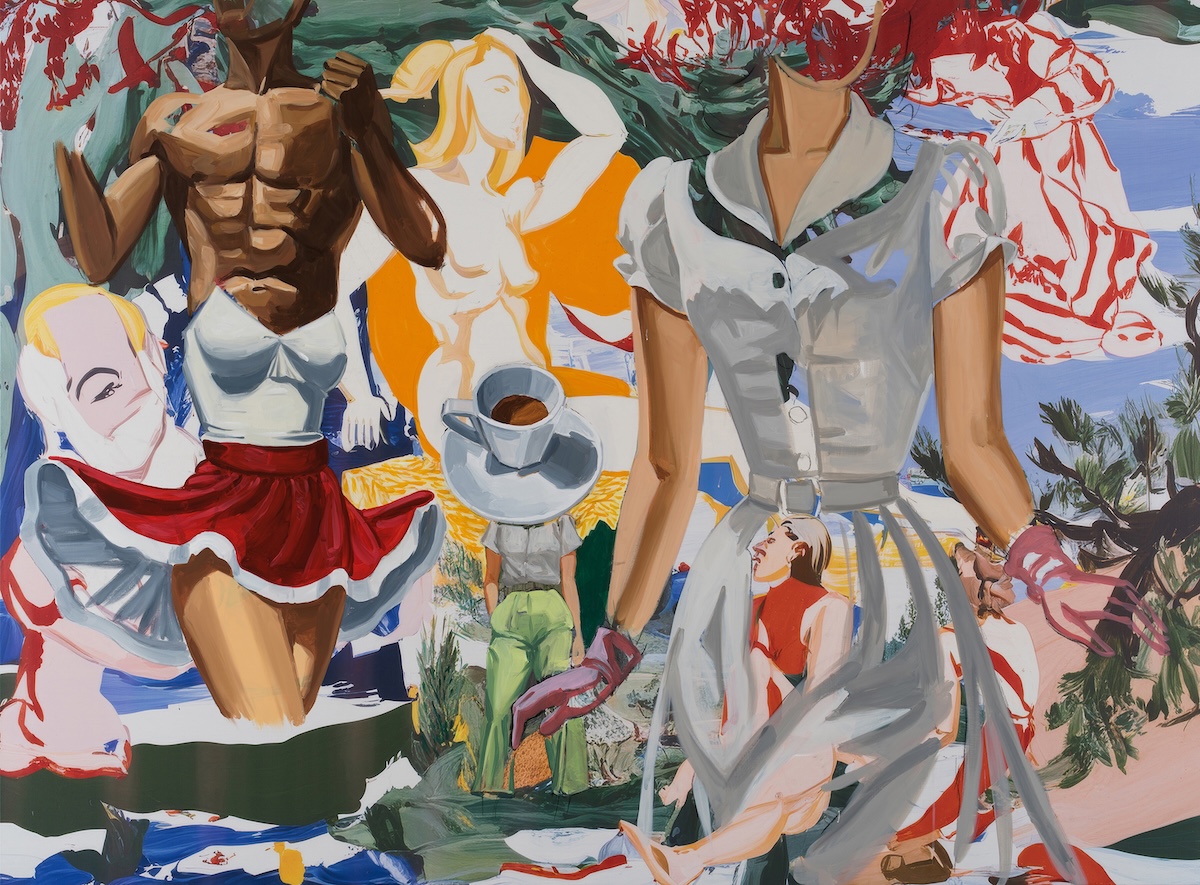
What I’m after is a kind of painting that associative and is loose-limbed, but that is clearly constructed. I’m interested in making the kinds of connections between things, images, that feel tenuous or even artificial. And yet, those connections are presented as inevitable, as if it couldn’t be any other way.
Have you ever struggled with a painting that just wouldn’t work, no matter how hard you tried?
Oh, it happens from time to time. It’s a question of how much energy you want to put into it. I’ve probably wasted—I don’t know—years trying to rescue failed paintings. Some paintings simply can’t be fixed.
Do you often feel unsure while working, and is that feeling helpful for you?
It changes depending on the phase of the work. A certain mental agility is required to make my paintings; as the painting progresses, the complexity can be daunting. Sometimes I know exactly what I’m doing—not that I could necessarily explain it. Other times, I feel like I’m chasing shadows.
When you’re painting, what happens to time? Does it dilate, dissolve, or pause?
When you’re deeply engaged with the work, time goes by without being aware of it at all.
If everything you’ve made suddenly vanished, but you had to begin again tomorrow, where would you start?
I would start with what I’m doing now. I wouldn’t try to go back or remake anything. I probably couldn’t anyway. Certain things you can never do again, even if you want to.
What was lost was lost, and there’d be nothing to do about it.
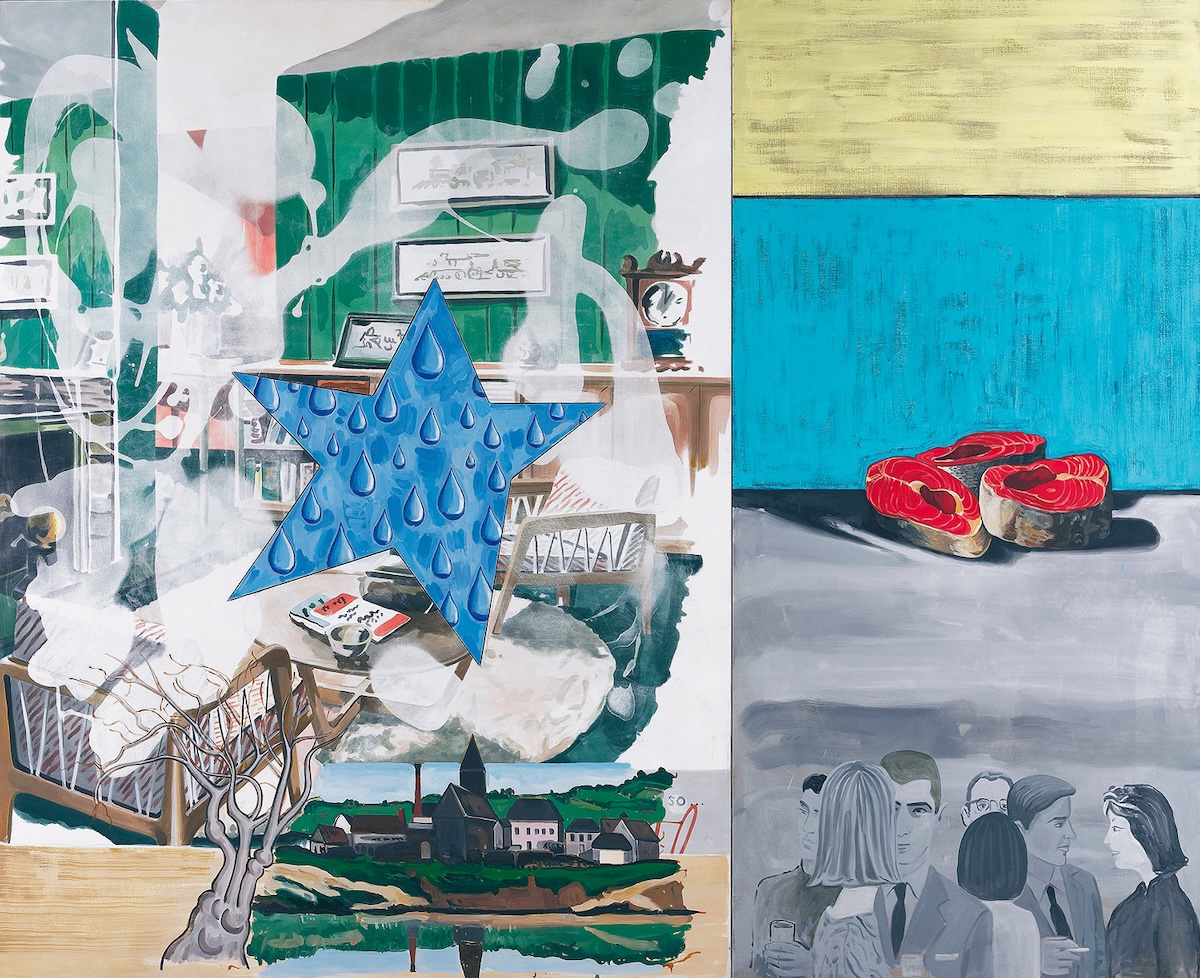
How do you get along with the idea of loss, when people disappear, or a period in your life ends? Do you just keep living, or do you find yourself mourning something?
It’s a complicated question. You can mourn and keep going at the same time. So much is lost to us if we attain a certain age–it’s part of the experience of being alive. You want to be able to say that the experience of loss helps us to live more deeply in the present. I don’t know if it’s true; maybe it’s semi-true.
I sometimes feel that a whole set of cultural values–essentially the world of post-war, modernist painting–is in danger of being lost. The culture, that is to say, young painters now, don’t have much use for it. It’s a strange feeling.
One thing about paintings is that they tend to stick around, whether you want them to or not. Paintings are physical objects; they can last hundreds of years unless someone or something intervenes. So there is always at least the possibility that another generation will see it, and that it will mean something.
I spent a lot of time in the 80s and 90s working with the choreographer Karole Armitage—I designed sets and costumes for her ballets. A choreographer’s relationship to her work is fundamentally different from that of a painter. Choreographers know that very little of their work will survive even one season. It’s almost a certainty that the work will be lost sooner or later.
The poignancy of it can be overwhelming, even soul-crushing. So much artistry and skill, and time and dedication go into creating works that might only be performed three or four times. One was either there to see it or not.
Pat Steir once said that you invented a great deal out of what you inherited. Do you remember the moment when you first felt that shift—when the work became fully yours?
That’s a nice thing to say. Pat is very perceptive. I’m conscious of an inheritance–a privileged swath of art history—just by virtue of when I was born. Let’s call it the aesthetics of the New York School, from Abstract Expressionism to Pop Art, which I consider to be more or less one continuum. Layered on top of that, I was present at the birthing, so to speak, of Conceptual Art.
The legacy of all of that has to do with how you build a picture—how the elements are made to relate to each other. In this type of painting, the energy comes from the compositional syntax. The “how” is more important than the “what” of the subject matter. This is a modernist attitude, which today not everyone shares.
To name just one counter-example, the first time I saw John Currin’s work–it must have been in the early 90s–I thought: This guy owes nothing to modernism. John had a different starting point.
But, I’m getting away from your question. The awareness that I had made something came from other people. It’s not the same thing as validation, but it’s related; being seen as part of that continuum. When people like David Whitney and Philip Johnson–and later, Brice Marden–started to take the work seriously, that is to say when they recognized the continuity, I thought maybe I had made something real.
Are there other artists you used to be close to who still somehow influence—or live in—your work?
Of course, the people who influenced me early on— Jasper Johns and Bob Rauschenberg, and Alex Katz, and John Baldessari–I still feel their presence in my work. I remain close to the ones who are still with us, like Alex and Jasper.
What’s the most unexpected comment another artist ever made to you—something that stayed?
Something Bruce Nauman said to me when I was a student. He came to my studio—it must have been in 1972 or ‘73. He didn’t say much, but one thing stayed with me. He said, “It’s not clear enough what they’re about.”
It may have been the only thing anyone ever said about my work that was actually helpful.
This was from someone whose own work trafficked in very difficult, hard-to-pin-down ideas, sensations at the edge of consciousness. Bruce’s work at that time was enigmatic, even obscure. That made his comment all the more potent.
Have you ever painted something that frightened you, or revealed something you weren’t ready to confront?
Not really. I’ve made paintings that I didn’t understand, that I had no idea if they were good or bad.
I’d like to ask about technology and artificial intelligence. I saw your conversation with Laurie Simmons last year, which I found very interesting. In your recent exploration with AI, has it ever shown you something about yourself or your work that felt a bit too true, or uncanny?
Well, not “too true,” exactly—but uncanny, yes. That’s been the fun part of working with it.
What do you think machines will never understand about painting?
I suppose it’s not impossible, but right now, it’s hard to imagine a machine having any particular reason to make art. It lacks intentionality.
10 or 20 years from now, will a machine possess what we would consider to be feelings? I don’t know. I guess we’ll cross that bridge when we come to it.
What I can say is that, as of now, the machine is not an artist. It’s not making art on its own initiative.
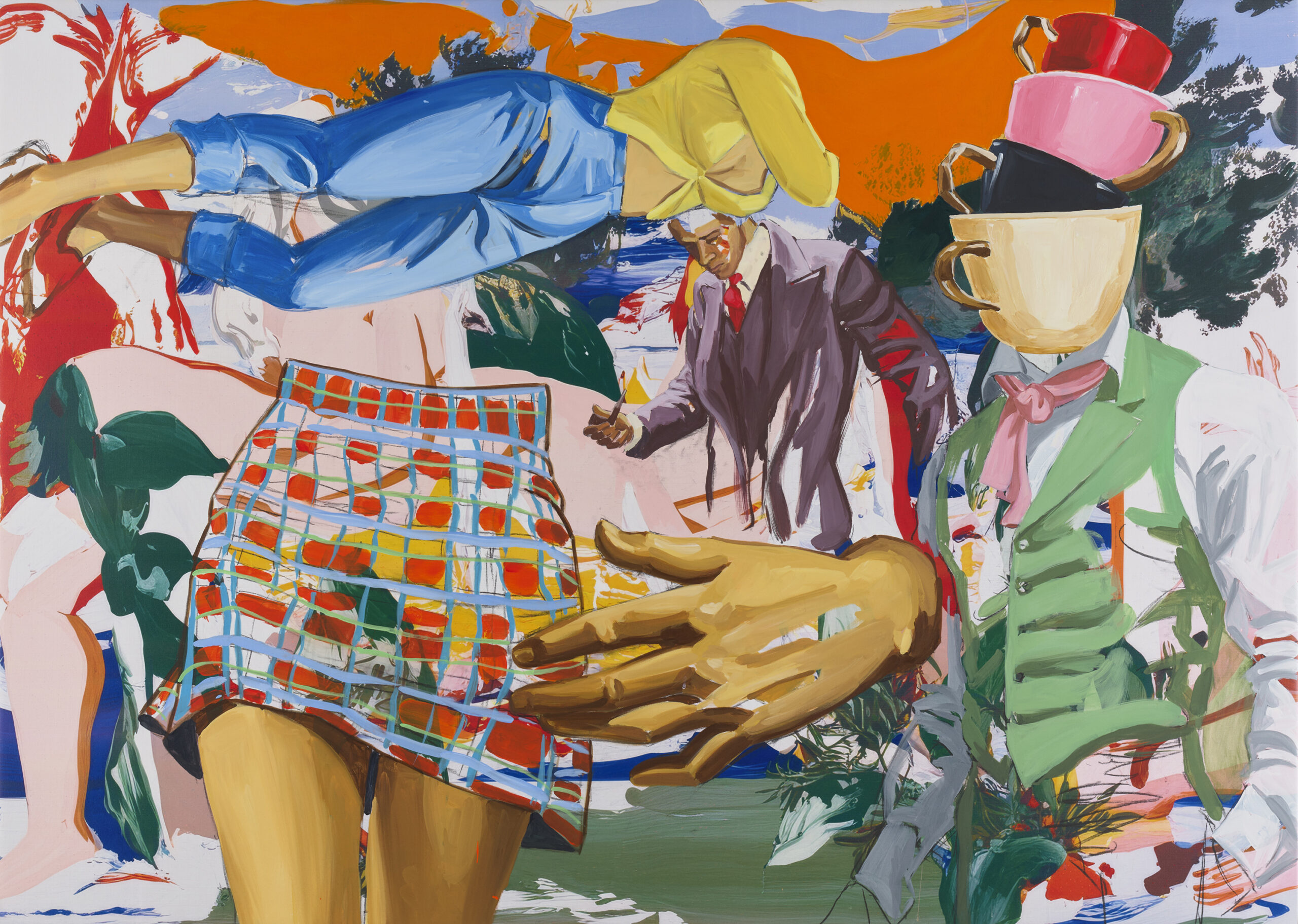
Who could have imagined, even ten years ago, using these technologies to create art in this way?
It’s kind of funny—I’m not technological at all. I don’t care about these things in any abstract way. I only care about what they can do for me today.
Despite that, this is actually something I kind of imagined 40 years ago.
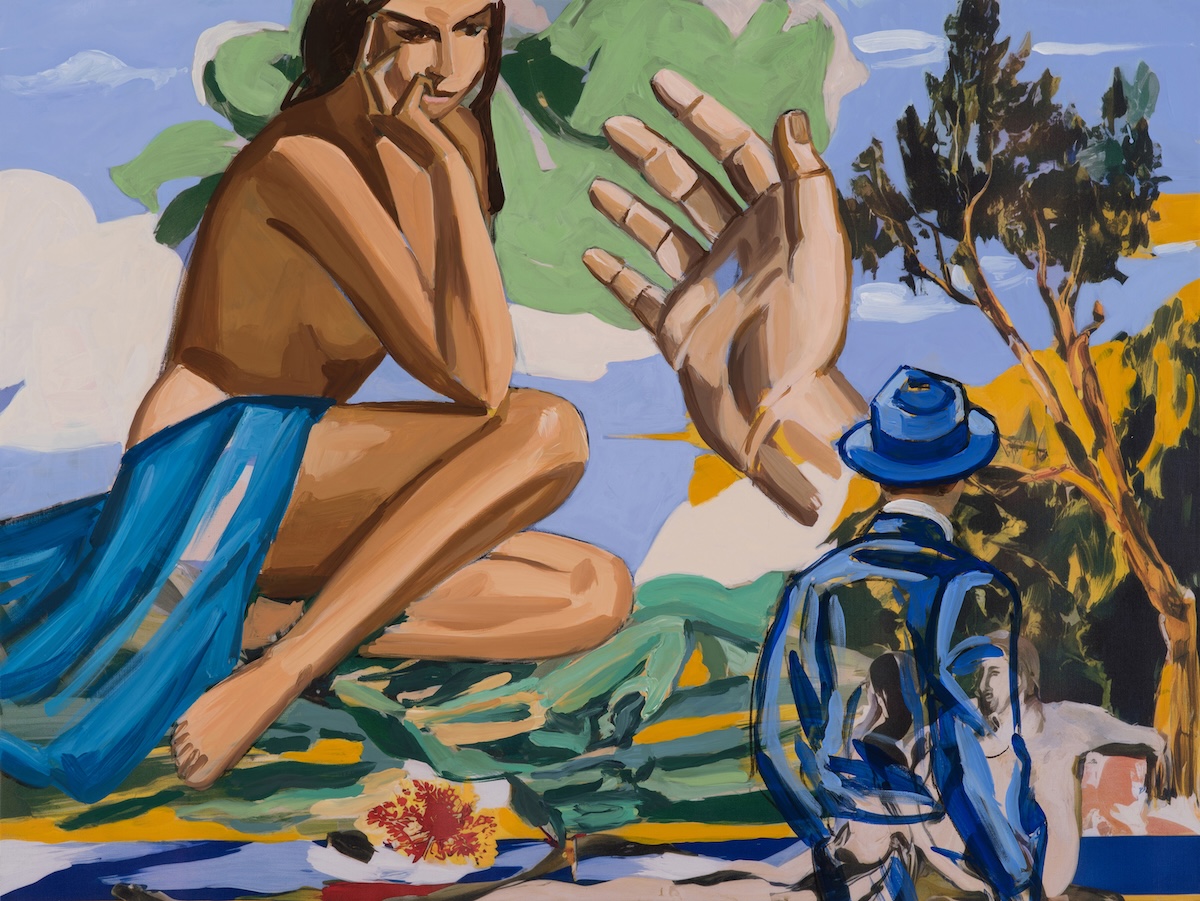
I wanted to be able to take figures and locate them in a kind of illogical pictorial space, one with a minimum of gravity.
I’m not saying I predicted AI, but the reason I’m using it now is that it allows me to see something I’ve always wanted to see, where the rules of spatial logic were suspended.
Looking back at How to See nearly a decade after its publication, is there a line or a conviction you would now rephrase—or even reject? Has time changed the way you understand what it means to look at art?
I haven’t re-read it in a while, but I doubt if I would change anything.
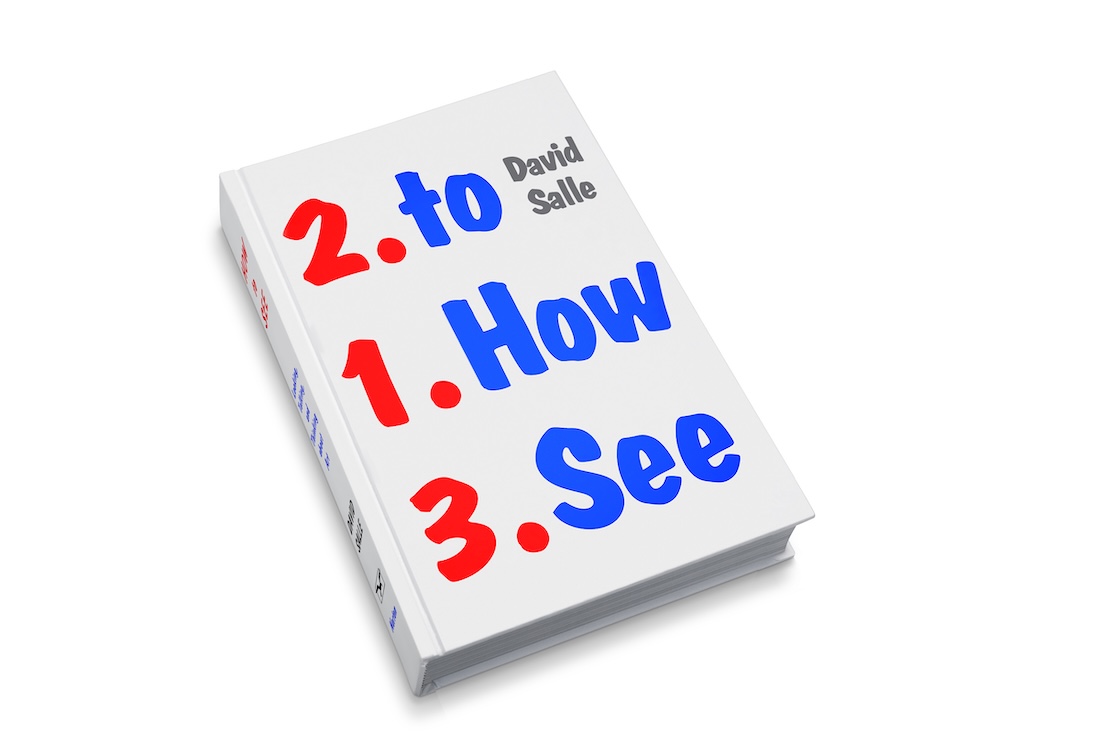
The book was, in a way, an invitation to think with a painter’s eyes. If a reader were to discover it today, in 2025, what do you think they would see? Do you feel the act of looking has changed in some essential way?
It depends on who you ask. It hasn’t changed for me. I think the kind of looking that I wrote about in the book is something people welcome; they want to have that kind of relationship to art.
Some people are just now coming to the book–they tell me they find it very helpful.
The purpose of the book was to make it easier to access serious thinking about art. There is a lot of information today–loads of websites and magazine coverage and whatnot, but that’s not the same thing as understanding. People want to understand; they want to be able to have an authentic response, which is very different from what the wall label tells them.
It’s a very useful book, and it’s accessible—very easy to understand. It feels like an invitation.
Thank you.
Have you ever lost a friendship because of art, or saved one?
It happened once, when I was young.
It was quite common when I was younger for people to fight over aesthetic differences. They would get into heated arguments–their sense of identity was somehow tied up with it.
This was a million years ago. There was a young painter about whom everyone had an opinion—you could hardly go to a dinner party without the name of this painter coming up. People argued about him; a lot seemed at stake.
Let’s just say I was pro and someone I was very close to, someone I’d gone to school with, was against. It became political, existential, even.
We had a heated argument in a restaurant about this other painter’s work. I still remember it—I overturned a dish of ketchup on the tablecloth to make a point. We didn’t speak for two years. It’s hard to imagine that happening today. I don’t think today you would lose a friendship over aesthetics.
Is there a work of yours that feels like a private confession, even if you’ve never spoken about it?
I think a fair amount of my work has that feeling. Not so much a confession, exactly, more of a psychological reality. I strive to make the paintings as truthful as possible – that is to say, to show the different facets of a question, but I’m aware that other people may see them very differently. For them, the work might be opaque, or even cold. Or, a little less pejoratively, they might say it’s “enigmatic.” From my point of view, my paintings are an open book.
Who’s right? Maybe both things are true.
If you could choose only one painting to represent you a hundred years from now, which would it be—and why?
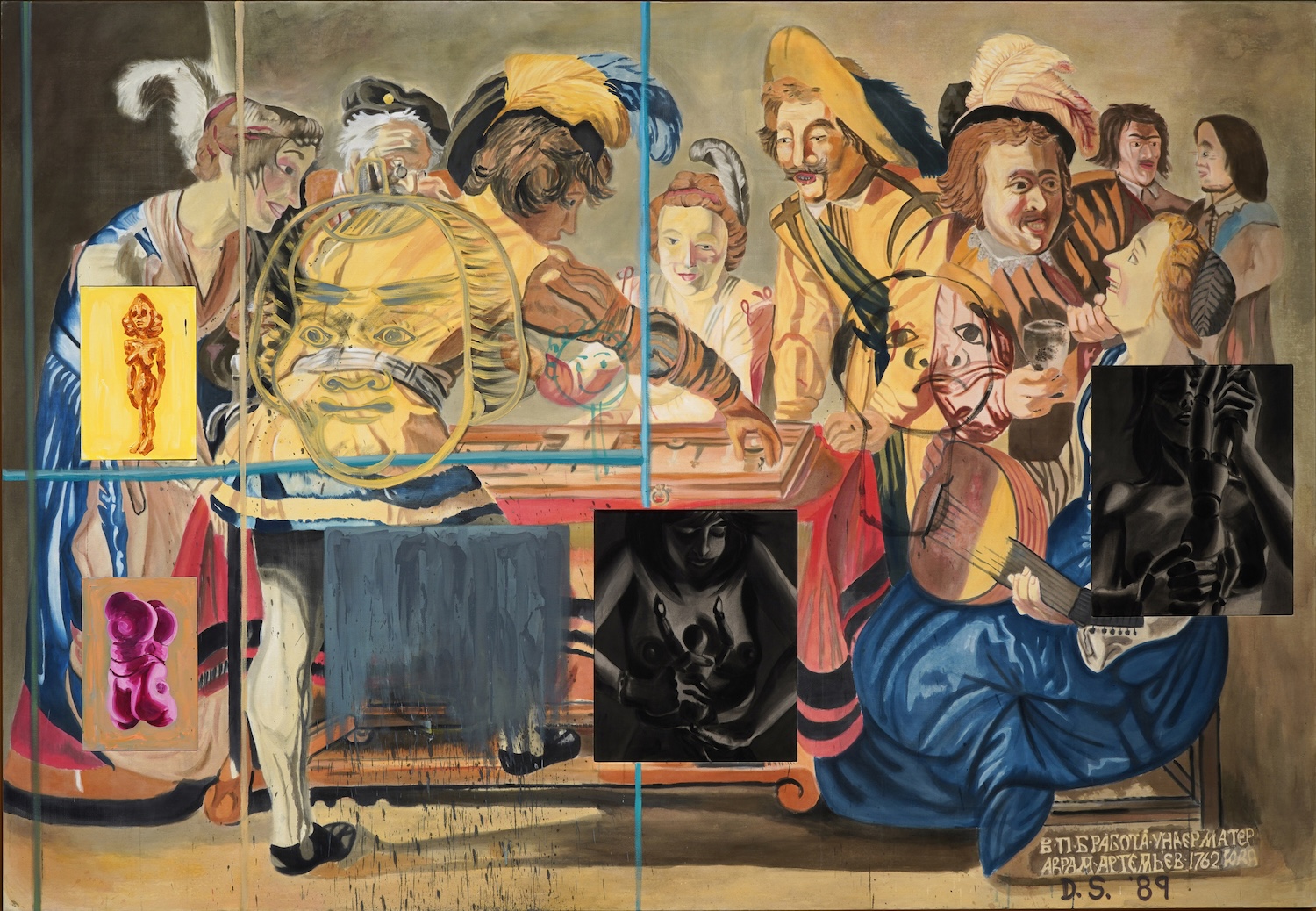
I can think of one from 1989, called Tiny in the Air, from the series of “Tapestry Paintings.”
It exemplifies what I mean by “relational painting”; every element in the painting relates to every other element. There are about five or six paintings in one, all in different modes of depiction, different scales, etc. And it’s so improbable–a painting of a tapestry, punctuated by other inset paintings. It practically wears its improbability on its sleeve. At the same time, the painting behaves as if what it’s doing is completely normal; the sheer unlikeliness of it is kind of hilarious.
That is what a lot of my paintings do, to one degree or another; they proceed from a kind of as if. A painting starts with a question: What if this were true?
All images courtesy of the artist.
Green Vest, Thoughts, N.P. Intrigue Images: Courtesy of Galerie Thaddaeus Ropac © David Salle/Artists Rights Society (ARS), NY
All other David Salle images © David Salle/Artists Rights Society (ARS), NY
Editor: Kristen Evangelista
This interview was conducted in June 2025 and has been condensed and edited for clarity.