Julie Mehretu speaks much like she paints — with clarity, urgency, and a deep engagement with complexity. In our recent conversation, we moved across many terrains: gesture and silence, painting and politics, abstraction, ruins, memory, sound, and the unstable experience of time itself.
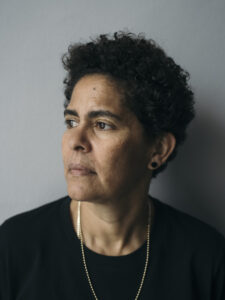
Throughout her career, Mehretu has expanded what painting can contain. Her large-scale compositions compress distance, history, and sensation — layering fragments of architecture, blurred documentary images, and marks that flicker between agitation and stillness. In dialogue, that same restlessness is present: a rigorous openness to contradiction, to intuition, to not knowing.
She spoke about the liberation of the mark, the ethics of erasure, and the need to hold tension — between beauty and discomfort, presence and disappearance. We discussed the limits of criticism, the pressures of the market, and why abstraction, when fully inhabited, still carries political and emotional weight.
At its core, Mehretu’s practice insists on attention — on slowness, on risk, on the long labor of looking. In a world of speed and spectacle, she reminds us that painting can still hold space for uncertainty, complexity, and the unspeakable.
“I hope the paintings are relevant and haunting,” she told me. They are.
An Interview with Julie Mehretu
By Carol Real
I’ve been looking closely at your recent exhibitions — Venice, London, New York — and I keep coming back to how alive the gesture feels in your latest work. There’s a real sense of looseness, of energy that feels new and very present. If you’re open to starting there, I’d love to ask: do you feel something has shifted in how you approach painting lately, especially in terms of that freedom in the mark?
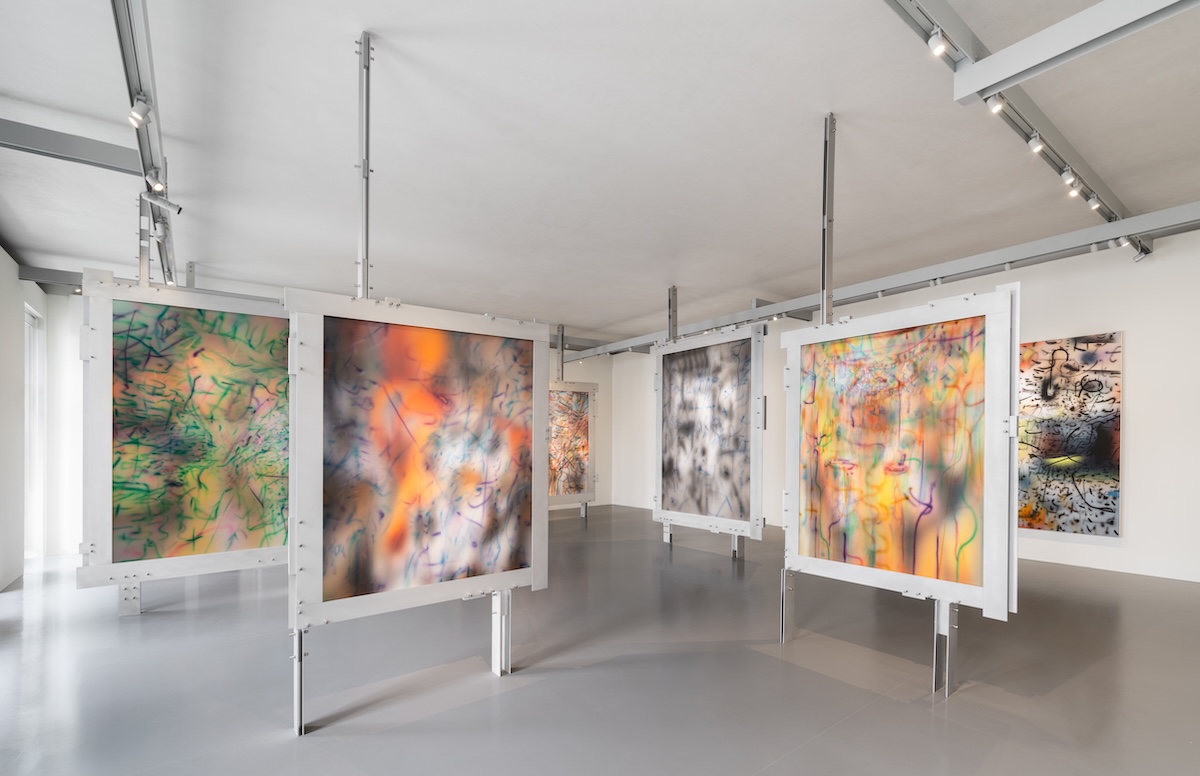
After I started to leave the architectural language and liberate the mark from the social construct of architectural space, there was a different kind of possibility for what the marks could be. A different approach emerged. It was such a rich and instructive time for me because it really opened up so much that had been restrained due to that architectural framework.
In the earlier work, I thought of architecture as this construct and the mark as a kind of challenge to it. And yet, the construct still somehow maintained a certain kind of dominance—or not even dominance, but a restriction, a limit—because it gave a sense of scale.
The moment the mark was able to exist outside of that, and I could actually invent space through the marks—not only rely on constructed space but trust it as part of our experience—the paintings could move in a completely new direction.
Many of the ideas and impulses behind the paintings are still coming from the same place. But since around 2014 my mark began to become liberated.
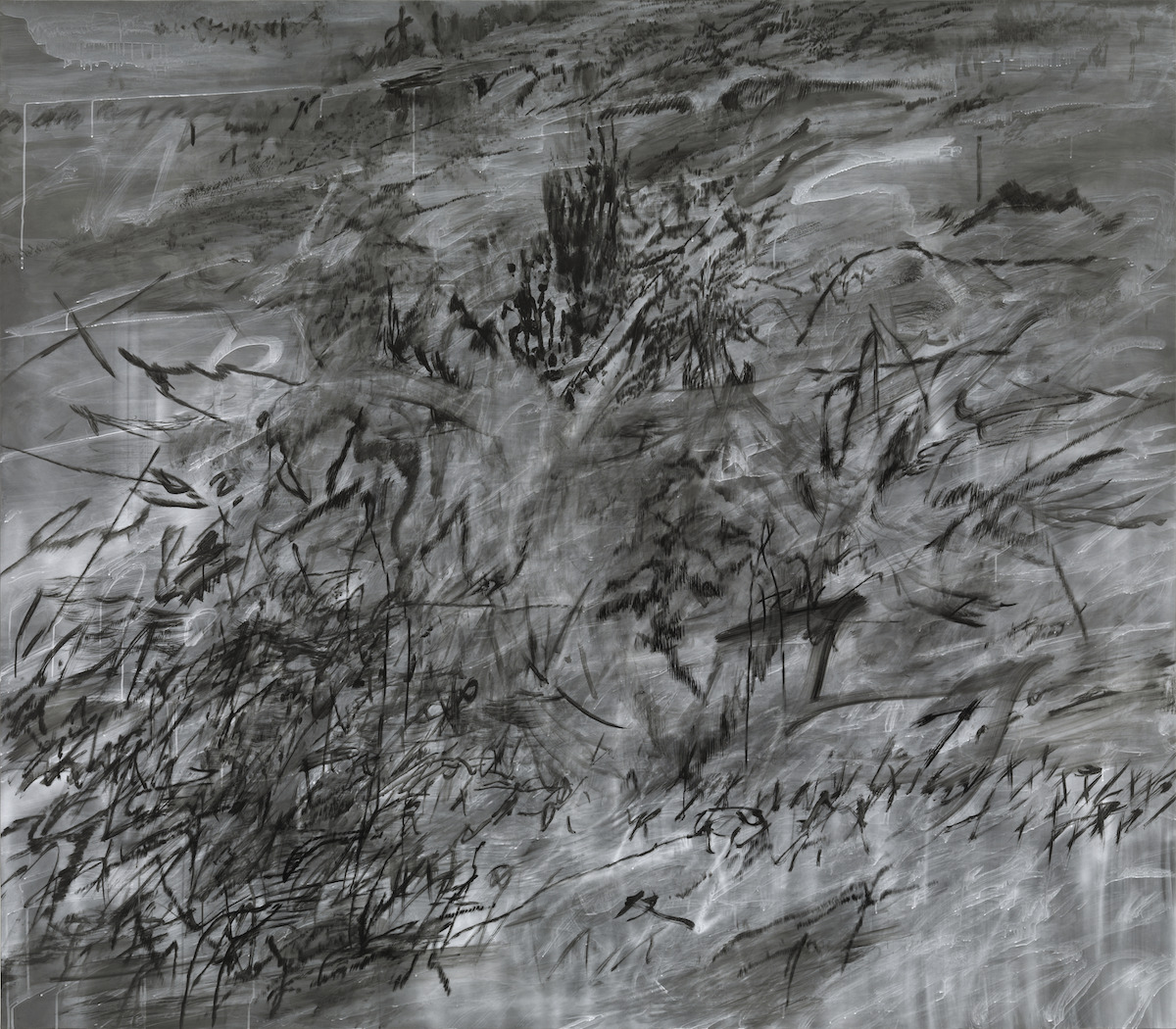
This became more apparent after I finished the big paintings for SFMOMA [HOWL (eon I, II), 2017]. When I started to work on the blurs, there was this whole new explosion of possibility in what I could do with the mark. Then I began moving into using airbrush techniques, combining erasure and traditional brushwork—all in conversation with one another—to further push what could happen in the space of painting.
In your latest works, erasure feels just as important as mark-making…
Because the erasure actually creates as much of the mark as the mark creates.
And what about silence—what kind of role does it play in your painting?
Silence is a really important space, especially in terms of how erasure can feel—or what can constitute stillness, and what can create disruption. Despite the obvious movement of disruption, there’s far more happening in the space of silence. It can be its own kind of disruption. There isn’t just one tenor of silence, as we often assume. I’m interested in that idea, and in the relationship between silence and sound. When you talk about silence, you’re also suggesting sound, pointing to the in-between space.
I remember hearing someone say recently, “sound is the architecture of space in time.” And that really struck me, the idea that there’s this other dimensionality to what we hear. These paintings operate in a very sonic way, at least to me. They feel like they’re made with sound. That’s something I’m very drawn to, and I’ve collaborated with artists working in sound. So there’s been this ongoing exploration—less analytical and more experiential—of that sonic landscape within the paintings.
You’ve collaborated with Jason Moran, right?
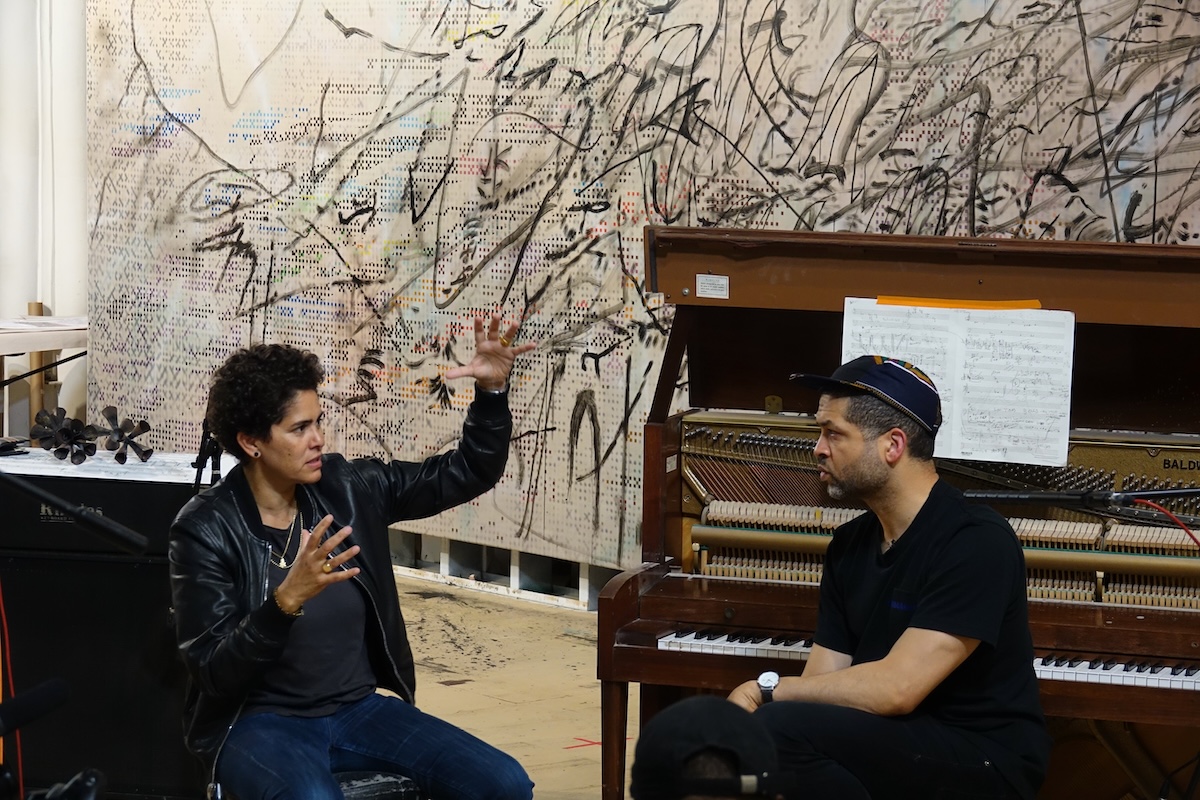
Yes. Jason Moran and a few others as well. And it’s always been so instructive, and I learn a lot from working with these musicians. But I’ve also always been interested in the perception of painting and sound, and if there is a way to perceive sound when perceiving something visually.
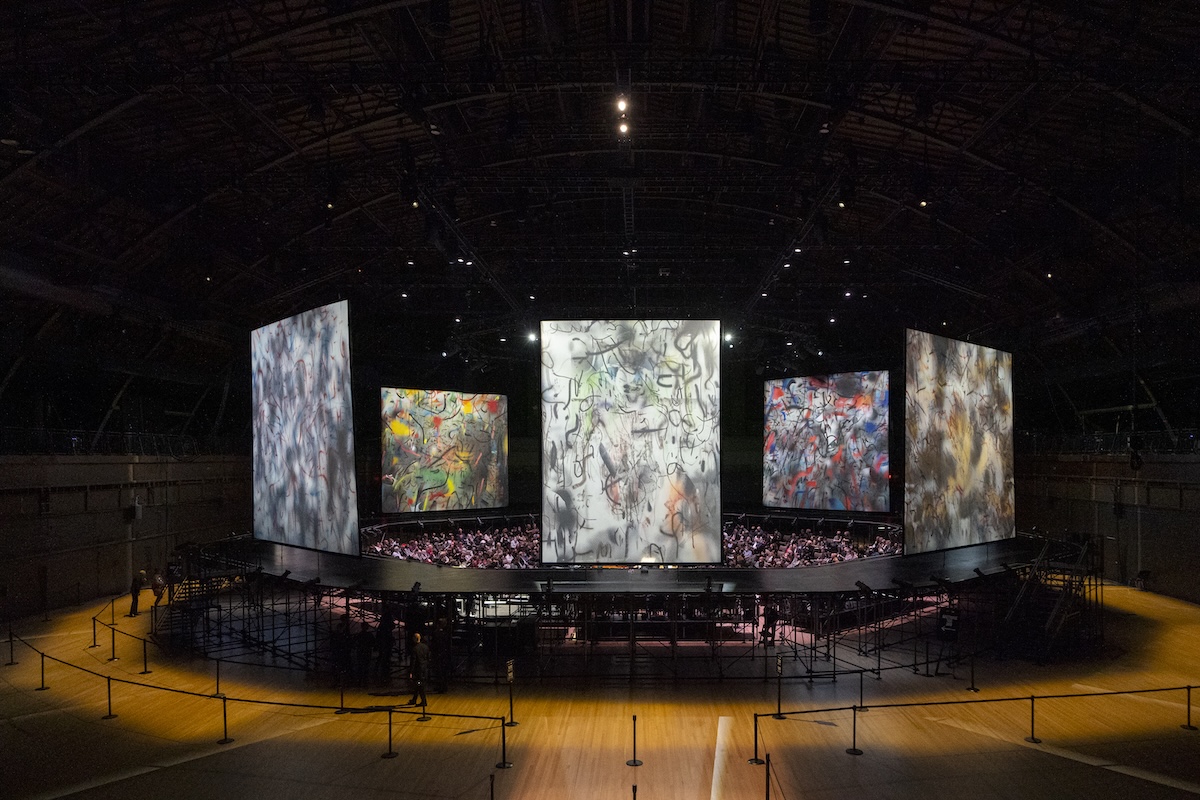
How much room do you leave to accident or the unforeseen in your process? Does chance have a role in how a work unfolds?
When I first start each painting, I’m trying to conjure something from within whatever the blur or architectural space is. I spend a long time looking at the painting, whether it’s a gray blur, a chromatic field, or a translucent mesh (the monofilament polyester material that’s the base of the TRANSpaintings). The first marking and impulse to work in the painting is in response to what is there and in response to what that image evokes.
And then from there it’s this constant play—working between conjuring something and then erasing—trying to recover, find it, maybe take it too far, then trying to recover it again. Within this constant dance of appearance and disappearance—almost the way one might think of a ghost of some kind— the sense of understanding, the sense of presence, and then the disappearance of that, the kind of mining of that, and knowing when one is actually able to capture something.
The paintings have always evolved that way. And even when I started on the painting behind you now, which is a painting that I had built from the architecture of the stadia, I did not know what the full image would be in the end. When I start a painting, there isn’t this kind of clear ideation of the finished work; it’s more of a conceptual idea that moves into it.
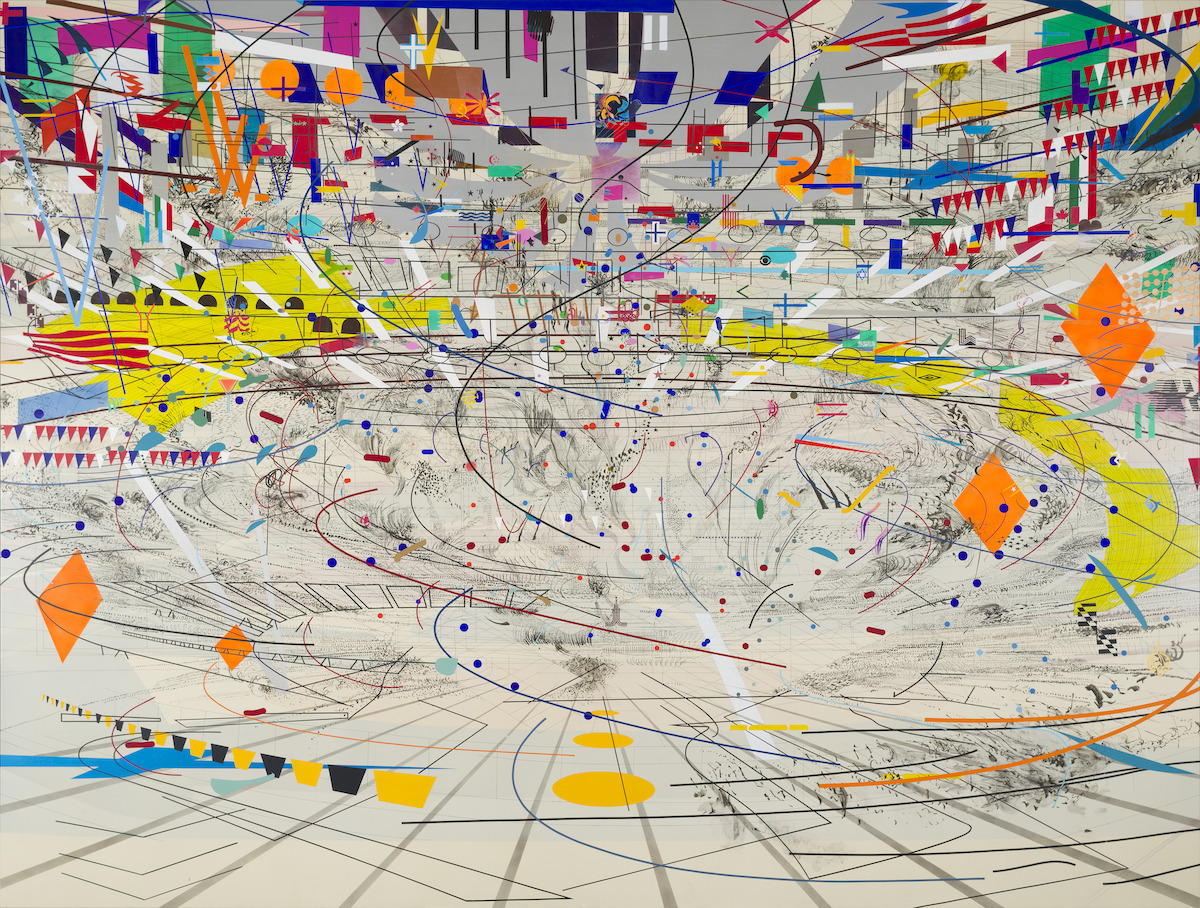
When you start from documentary images—especially those tied to crisis or violence—what holds your attention more: what’s visible, what gets erased, or what manages to survive the erasure?
Once the image becomes blurred, there’s this other sensorial experience that happens when I’m looking at that image and that painting, and my mark-making responds to that. So when the viewer confronts the final experience, what survives? The erasure is part of what survives, right? There’s all of this perceptual stuff that happens in the paintings, but what becomes the most important thing is the experience—the visual experience.
And that isn’t necessarily directly related to the original image; what happens to it informs and is present constantly in the experience of the final painting.
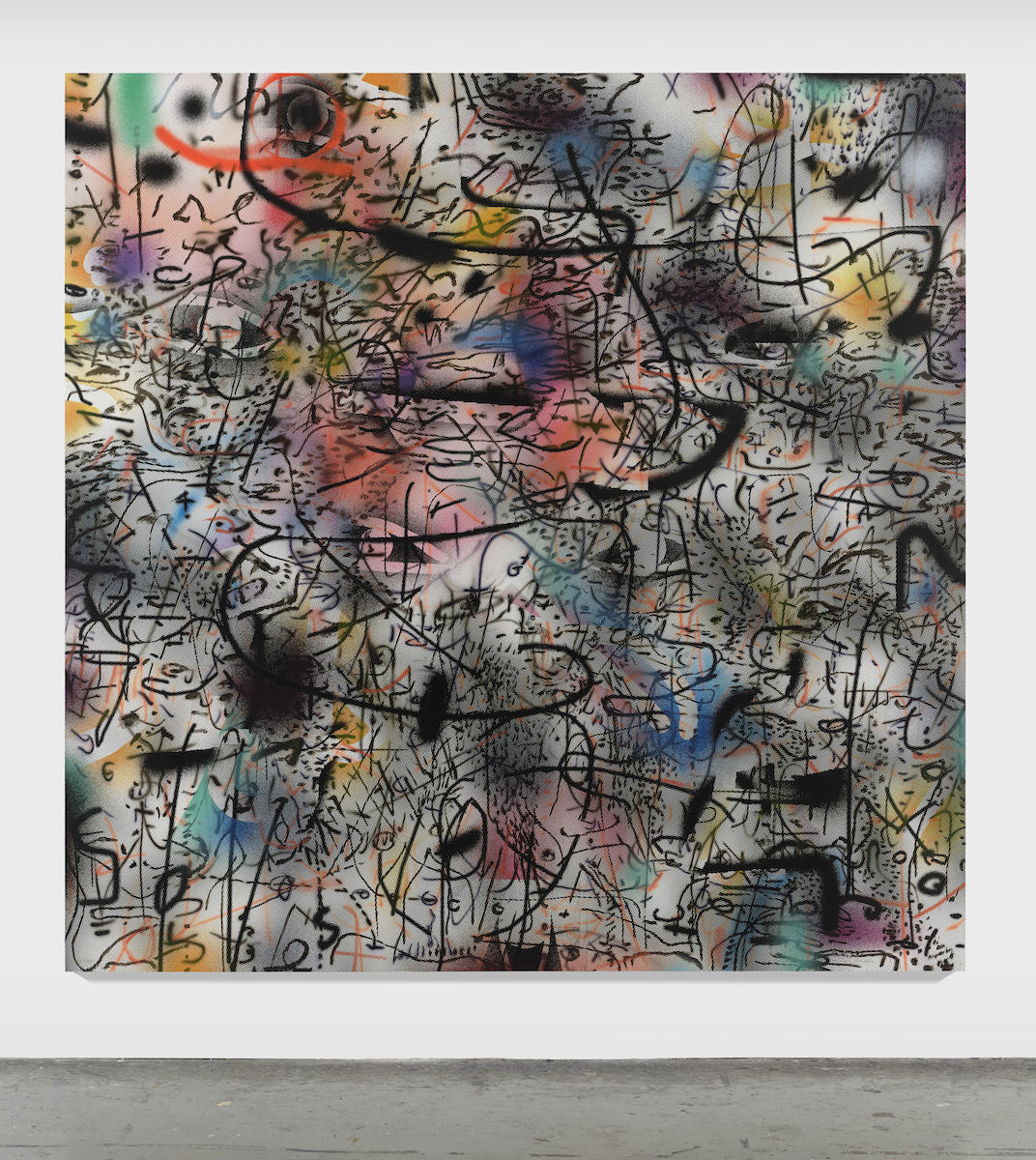
How do you know what to leave visible and what to let disappear beneath the surface of a painting?
That’s a space of unknowing, of not needing to know where one is, but trusting an intuitive sense of what is working and what isn’t. Again, it’s this kind of mining, an effort of excavating and conjuring at the same time, which is a really different process.
Your work feels like it holds both the velocity of now and the depth of excavation. How do you think about time when you’re painting?
When I’m painting, time becomes something that I’m not very aware of. But I do think about this a lot—we tend to understand time as this linear motion. And we’re now also realizing that’s not necessarily the case, especially with any form of quantum mechanics. We understand that things are much more cyclical and much more relational.
That’s really how I think about time. In the architectural paintings, I would consider time as this space where you could compress so much into a place—where you’re seeing all of this emerge through different architectural languages.
But now, the sense of time—the kind of ephemerality, the solidity, the viscous quality of it—feels different. All of that is present in the experience of the painting. Sometimes it feels fleeting, other times it feels really graspable.
So it’s both. And sometimes it also feels more anxious, more frenetic. It really depends. All of that plays into this more cyclical and relational sense of time.
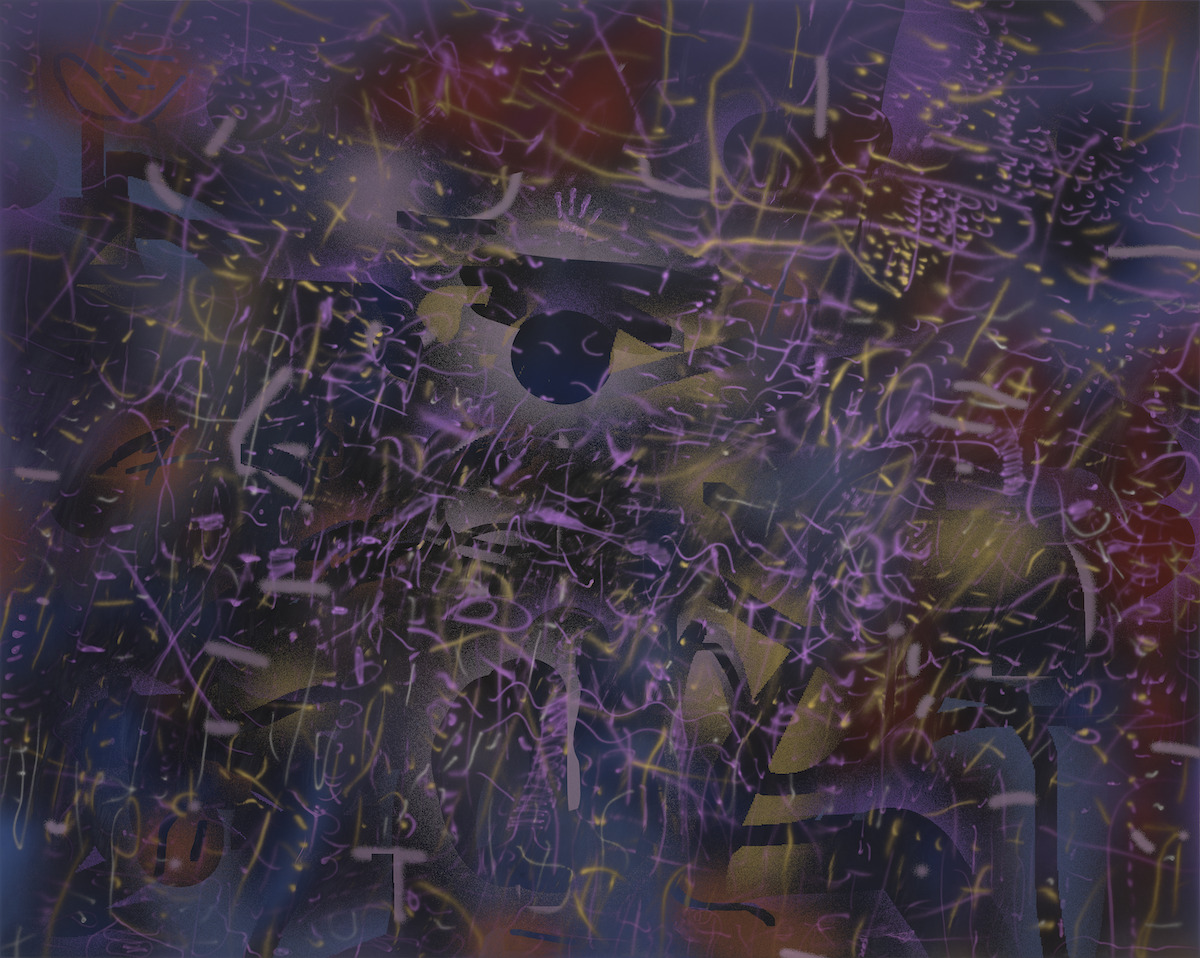
Would you say that painting, for you, is a way to slow time down?
Definitely. We consume images rapidly now—more rapidly than ever, within a quick swipe—and we believe we understand what we’re seeing in that instant. Painting is the opposite of that. It’s something that takes time, that requires a lot of decision-making, a lot of looking, a lot of study.
Many relationships and decisions emerge very specifically over time. And to really experience a painting fully, one has to spend time with it. It’s a time-based medium in that way.
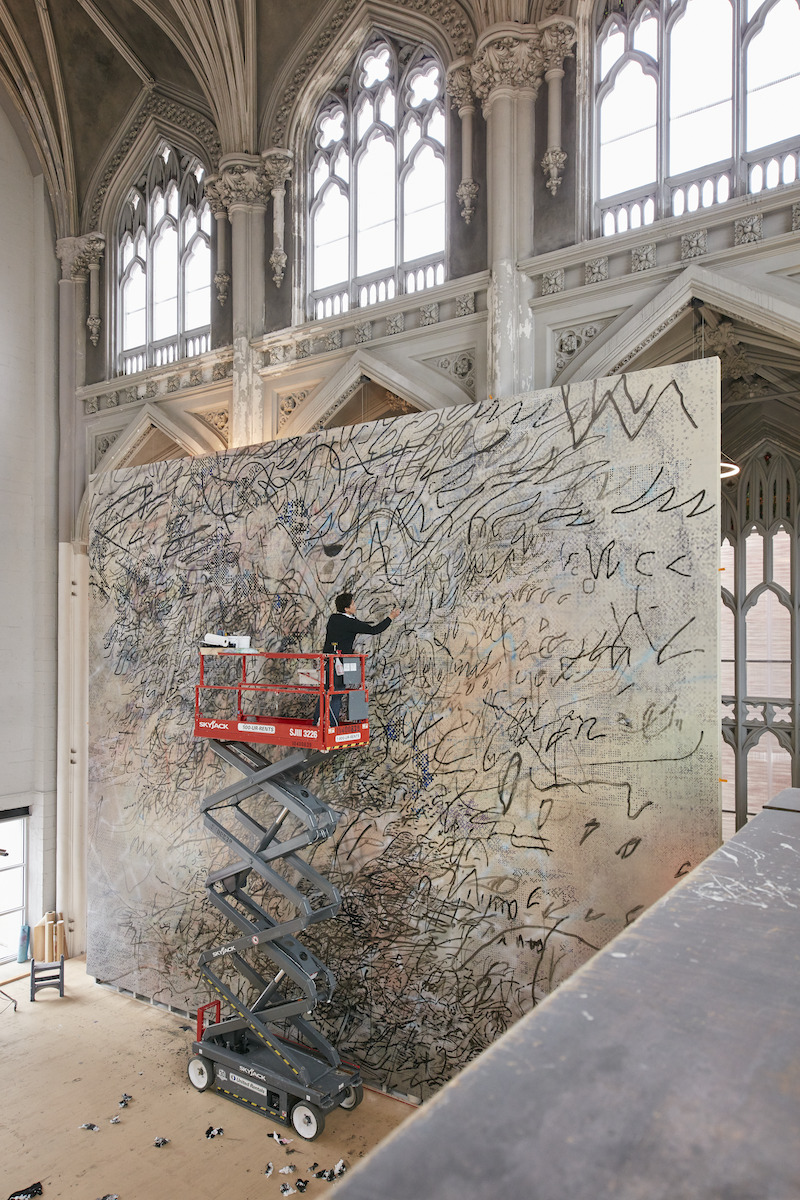
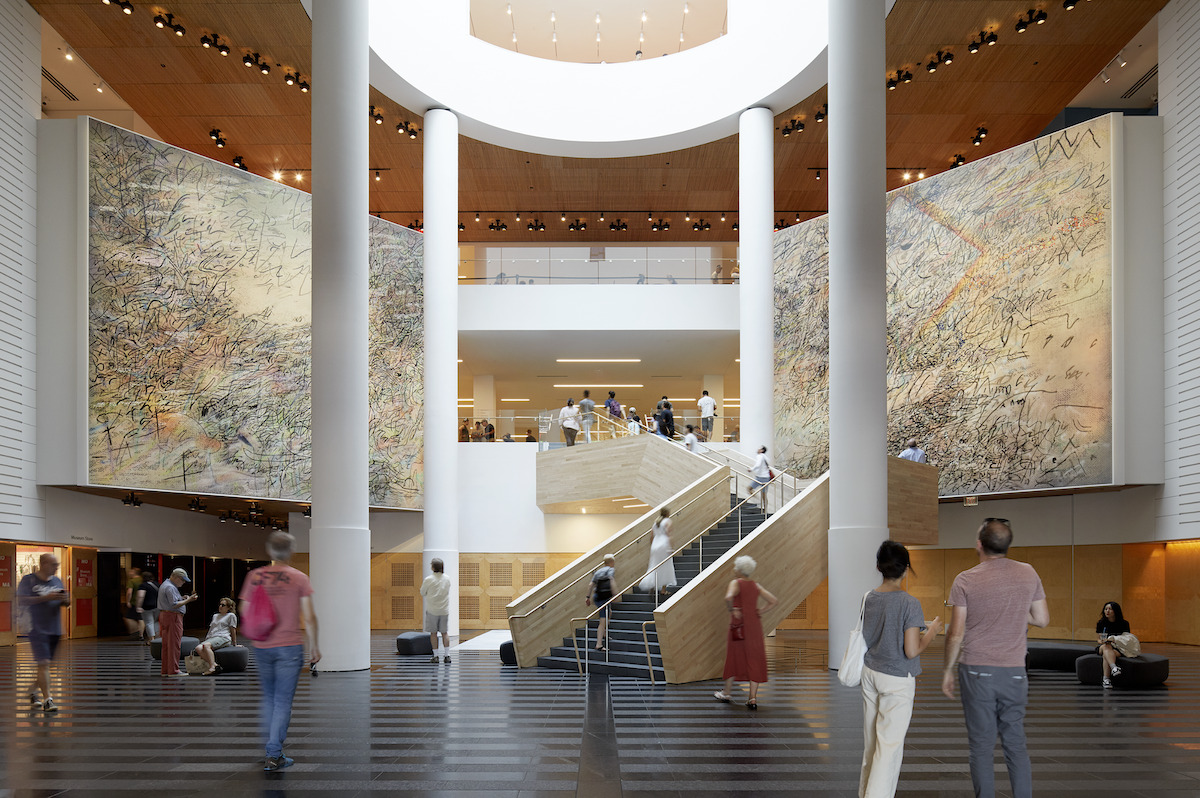
Working on such large-scale paintings—like the Goldman Sachs commission [Mural, 2009] or the SFMOMA paintings [HOWL (eon I, II , 2017)]—what did that slower rhythm teach you? And how does scale shape your relationship to the body?
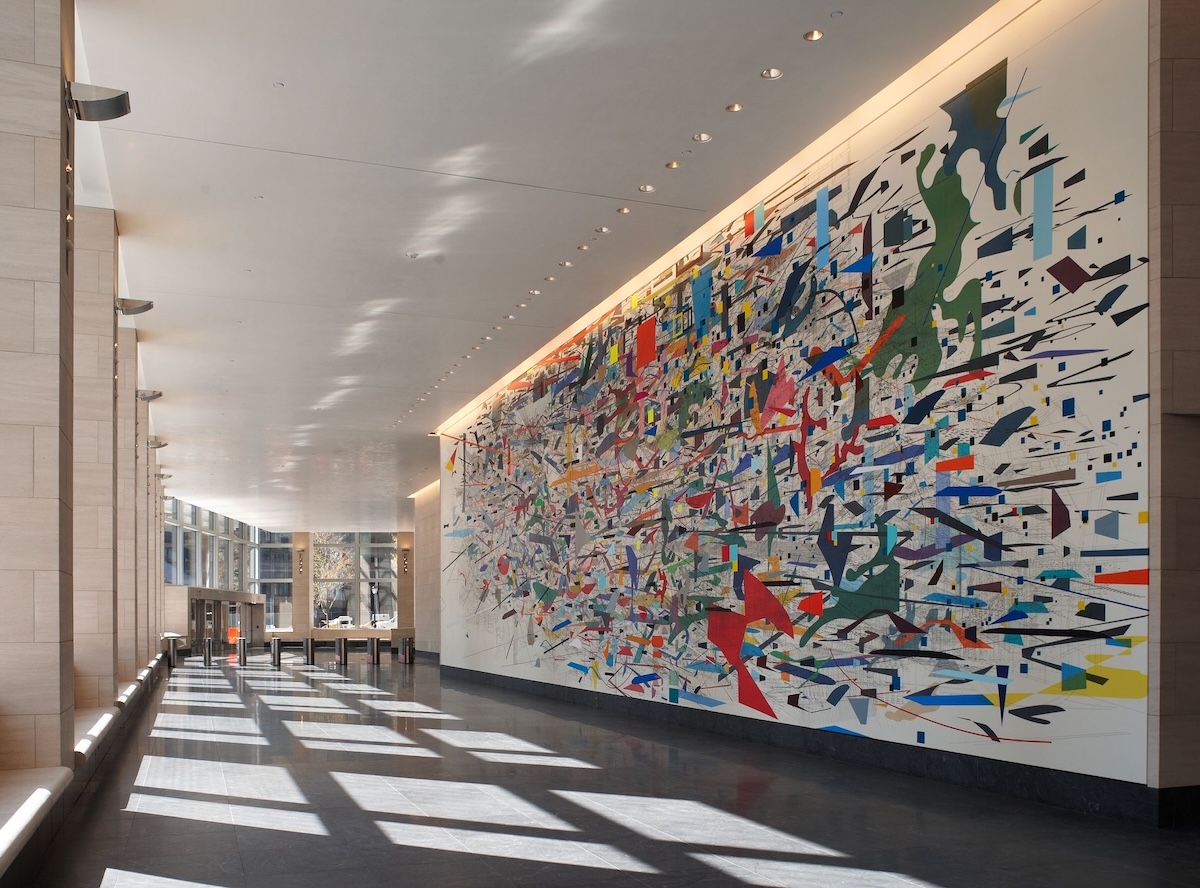
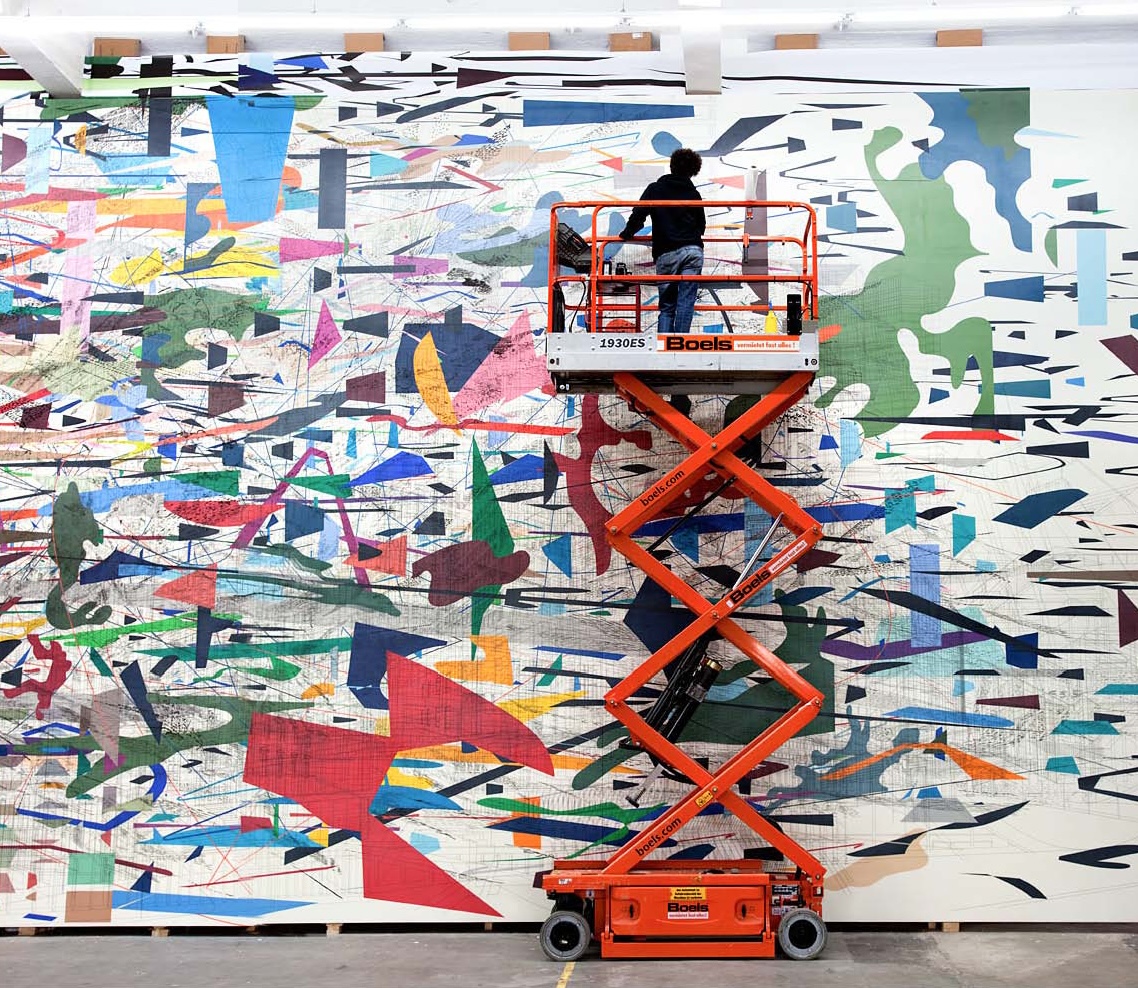
I used to work much more slowly, and the paintings—even leading up to that—used to also take me a long time because I was working by myself. But with that painting [Mural], I was working with many people who were helping me. And because of the scale, it took a really long time. What was really interesting is that I spent a lot of time in front of that painting as I was working on it in situ in Berlin. We rented a space large enough to work on it all in one piece.
It turned out that the drawing in Mural really evolved into something else. The geometrical shapes and the color became more supreme in a way, and a different kind of energetic abstraction could happen with that. The mark-making started to mimic the shapes.
It was a really incredible experience to work on that scale. I learned an enormous amount from working on HOWL (eon I, II) for SFMOMA. That’s where the marks really found their liberation from architectural space, from the previous way I had been working, and where the marks could then really determine what was happening in the painting. The visual neologisms—all of that started to really take off in a different way when I started to work on that scale.
How long did it take you to complete such a huge scale?
HOWL (eon I, II) took about 18 months. Mural took a little over two years from inception to completion.
Some of your paintings seem to echo places that have been destroyed or feel close to vanishing. What’s your relationship to the idea of ruin?
The ruin is always a fascinating space. People are fascinated by the trace of the past. We’re excited by the understanding of how close we are to people who lived on the planet long before us—and by the kinds of inventions and creations they made. There’s this very romantic notion of the ruin, and that continues on many levels—the mythic, the romantic, the sublime—but also, the instructive.
For me, we don’t really have any standing here without that history. We’re all aware of that. It’s one of the reasons we flock to different parts of the world to see these important markers of our past.
I am interested in dealing with collective systems that people have created—empires that have fallen, civilizations that have been buried—but it’s a very different reality when you’re actively working on the destruction of place. And at the same time, we’re always engaged in constructing space.
In the contemporary context of capitalism, we’re in this high-speed cycle of construction, construction, construction. But simultaneously, there’s this enormous engine of destruction and devastation. You can think of them as parallel processes. And when you consider the sensitivity of the planet, our disregard and insensitivity toward it—while we continue to fight wars—it feels so backwards. We have the intelligence and capability not to do that, and yet we still do. That’s a space worth interrogating.
The ruin and these spaces of tragedy are a marker for something. But on the other side of that are the disempowered—the fugitive, the enslaved, the oppressed. Despite all odds and all efforts to extinguish whole communities, there’s a resilience and a capability of invention within that tragedy.
That, to me, is incredibly moving—this insistence on the capability of being, of existing, an internal self-knowledge of one’s own right to exist, to have a place on this planet. That’s the space I’ve tried to work from, to invent from, and to return to.
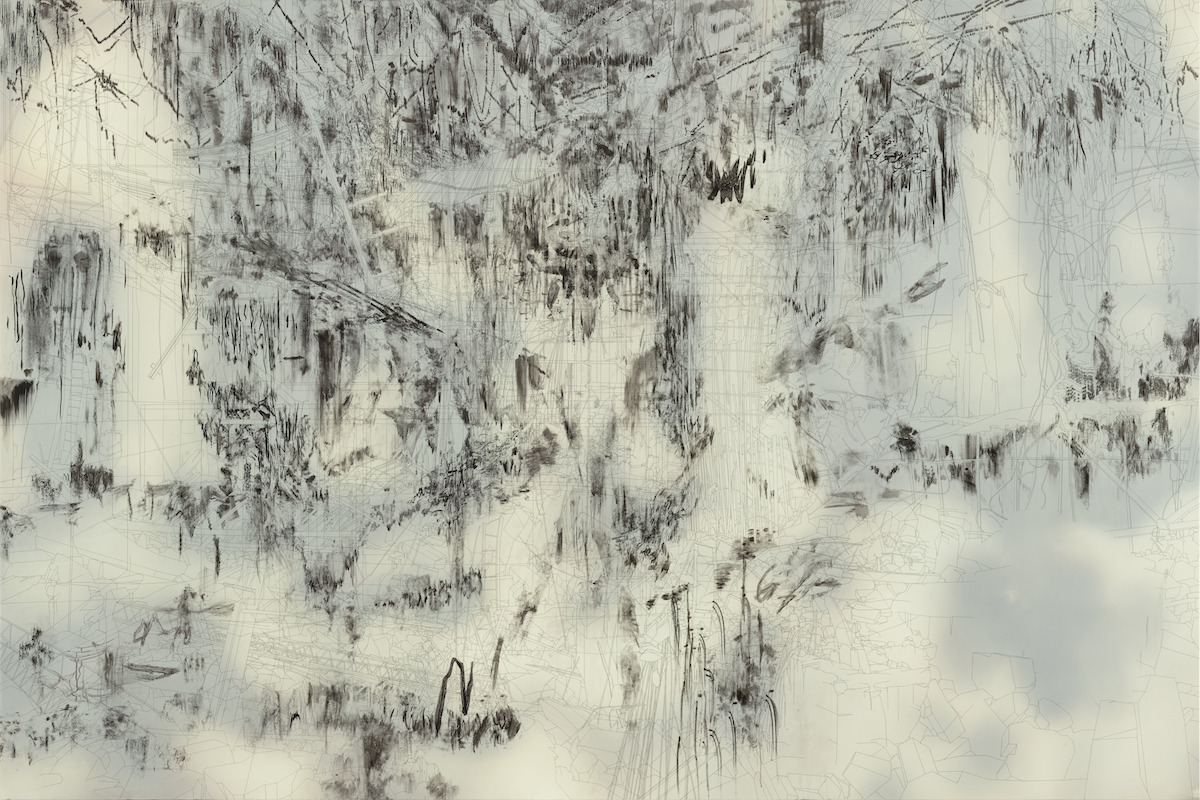
Your abstraction is dense—visually, emotionally, politically. How do you keep its beauty from smoothing over the discomfort you’re trying to provoke?
The paintings can sometimes feel like they have this kind of formal beauty, but there’s a lot of discomfort inside them. There’s a lot of anxiety and freneticism, or a sense of discontent and agitation. It’s inside that space of abstraction—and the knowledge of possibility—that invention happens. When I work within that space, I work from an insistence on claiming the space of abstraction’s full potentiality.
I return to musicians who invented and practiced truly abstract jazz, who were finding another language to express not only trauma, but also an insistence on joy, on capability, on possibility, and on connection. This complexity isn’t often discussed right now, but was really present in the last century.
The idea of universalism—an insistence on understanding shared human experiences beyond cultural particularities—feel important, even if fraught. Today, there’s a strong and much-needed focus on what makes us culturally or geographically specific. But at the same time, the reason Coltrane could go to Nagasaki and try to find the sound of Nagasaki in a flute is because of undeniable commonalities across cultures.
I find resonance in the coming together of multiple realities, where what emerges is a range of experience from the violence of cultural clashes to the possibility of invention and imagination. There’s something in that space of cosmopolitanism that Achille Mbembe describes beautifully, especially when he discusses the experience of the multitude, and experience that doesn’t need to explain itself, but simply exists. He’s referring to it through Glissant’s idea of opacity. Those ideas are really important to me as they pertain to what I’m doing in the space of abstraction.
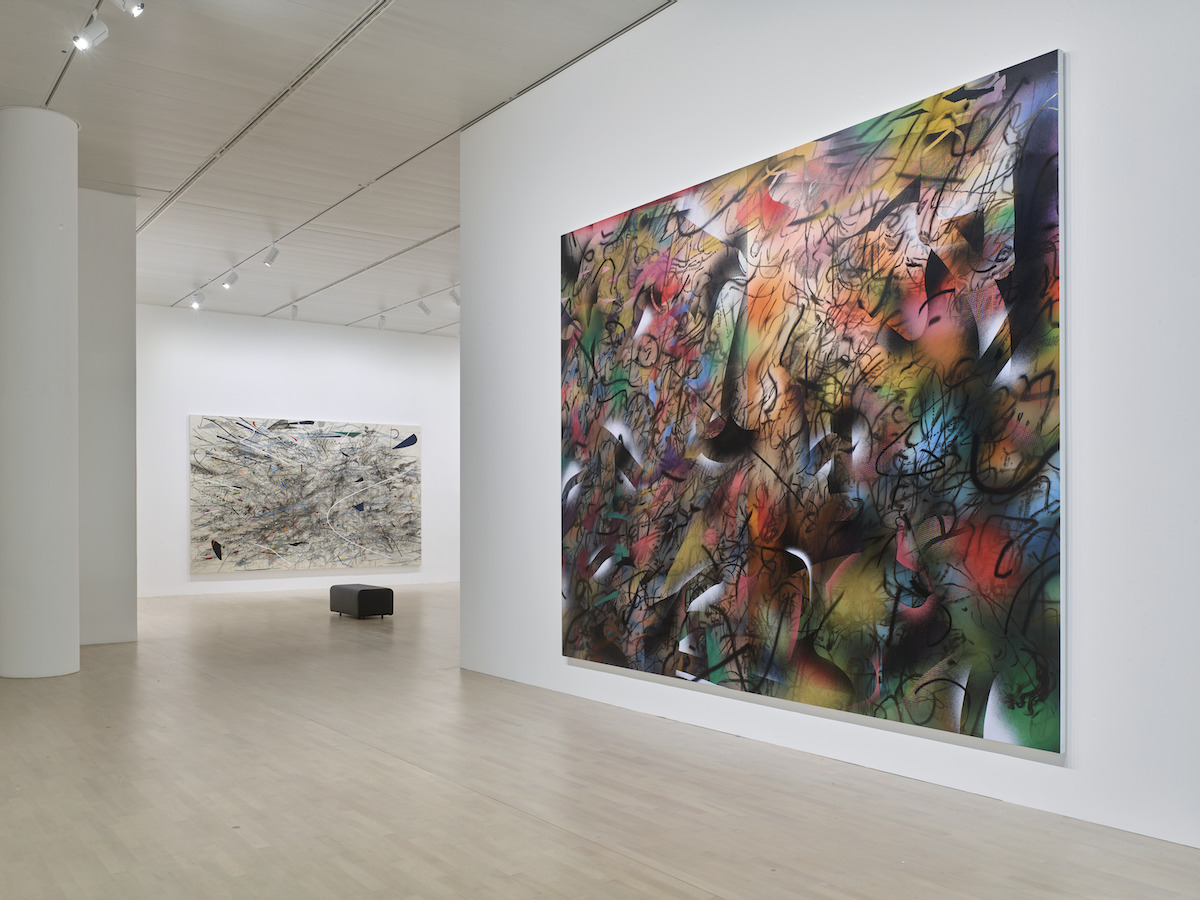
Do you feel abstraction still carries political or ethical weight today—or has it become too easy to absorb?
It does, without a doubt. Some of the most interesting and political work exists in that space of unknowing, that space of potentiality: the space of abstraction. In fact, it’s not easy to absorb.
How has your relationship to Ethiopia shifted over time? And how do your multiple heritages—Ethiopian, European, American—interact in your life and work?
My relationship with the country has evolved a lot since I was younger. Because I was able to go back, I was able to build a very individual relationship with people, with the city, and with the country by doing exhibitions, working with students at the university at different times, and through the friendships and collaborations I’ve formed there.
That’s a very different relationship from the one I had as a child, which was shaped through my family, through visiting relatives once we could return, and through holding childhood memories of family, early schooling, and place.
All of that is part of what makes me, but being here—being raised in the U.S. during the time that I was raised—is also a huge part of what has informed me. Both are equally important in shaping who I am.
I’m not necessarily interested in exploring that as a theme in the work. The work is being made from the place where I am now—in all these different moments.
Are there things that bother you in how your work gets talked about—especially in museums or galleries? Are there stories that don’t feel like they’re yours?
There are times where there’s an ideation of who an artist is. What I find interesting is when you go to a museum exhibition or you go to experience the work of an artist—and you come out leaving with a very different understanding of that artist.
We can have a whole conversation about criticism—the failures of criticism, the promises of criticism, the necessity of criticism. There’s a vacuum in that space on so many levels, but also so much interesting work happening there.
It’s a very complicated space, and a lot of times what’s happening in the art market gets confused with what’s happening in terms of artwork.
This confusion happens far more with people of color, with women, and with artists who aren’t the standard white male artists from the old school model. It’s ridiculous to have to say this in 2025, but it’s still true. Just look at the kinds of conversations happening around artists in New York right now. We have major exhibitions by artists of African descent in most museums across the city, yet much of the critical dialogue has focused on a single gallery that represents four of those five artists.
That tells you something about the vacuum of criticism and discourse. All of these artists have built their own lives and careers, and any given gallery started working with them only in more recent years. So the desire to co-opt at a moment like this—during what is actually a uniquely revolutionary time in the art world—is really revealing. You have a stellar show like Jack Whitten at MoMA, Jennie C. Jones on the Met rooftop, a Lorna Simpson show at the Met, Amy Sherald at the Whitney, and Rashid Johnson at the Guggenheim.
These are artists of different generations and makeups. To focus on a gallery and overlook the historic relationships these artists have had with curators and institutions—to make it seem like they were simply “found”—shows the kind of emptiness in a lot of the critical thought right now. If that’s the discourse, it reflects how vacuous that space can be and how much it fails to engage with what’s really happening inside the work. You wouldn’t see this kind of shallow framing around a Richter show or a Christopher Wool show.
It’s not that we shouldn’t engage our criticality; I’m very comfortable criticizing shows and talking about failures in certain moments of an artist’s work.
Do you think criticism still matters today? Can it still shape the way we engage with art?
Yes, I do. Criticism is really important. As artists, we are interested in—and benefit from—a response to what we’re doing. We make for each other as much as for the rest of the world.
For me, that space is with my colleagues up at Denniston Hill—Paul Pfeiffer, Lawrence Chua, and others. It’s the space of the discursive, which is hugely crucial to what we’re doing, trying to further interrogate where we are, the aesthetics of this moment, and what can happen in that space.
It’s just so much more complicated now. You can’t reduce it in the way things have been reduced in the past, with a linear kind of ideation around what art is, what art history is, and who plays in that space.
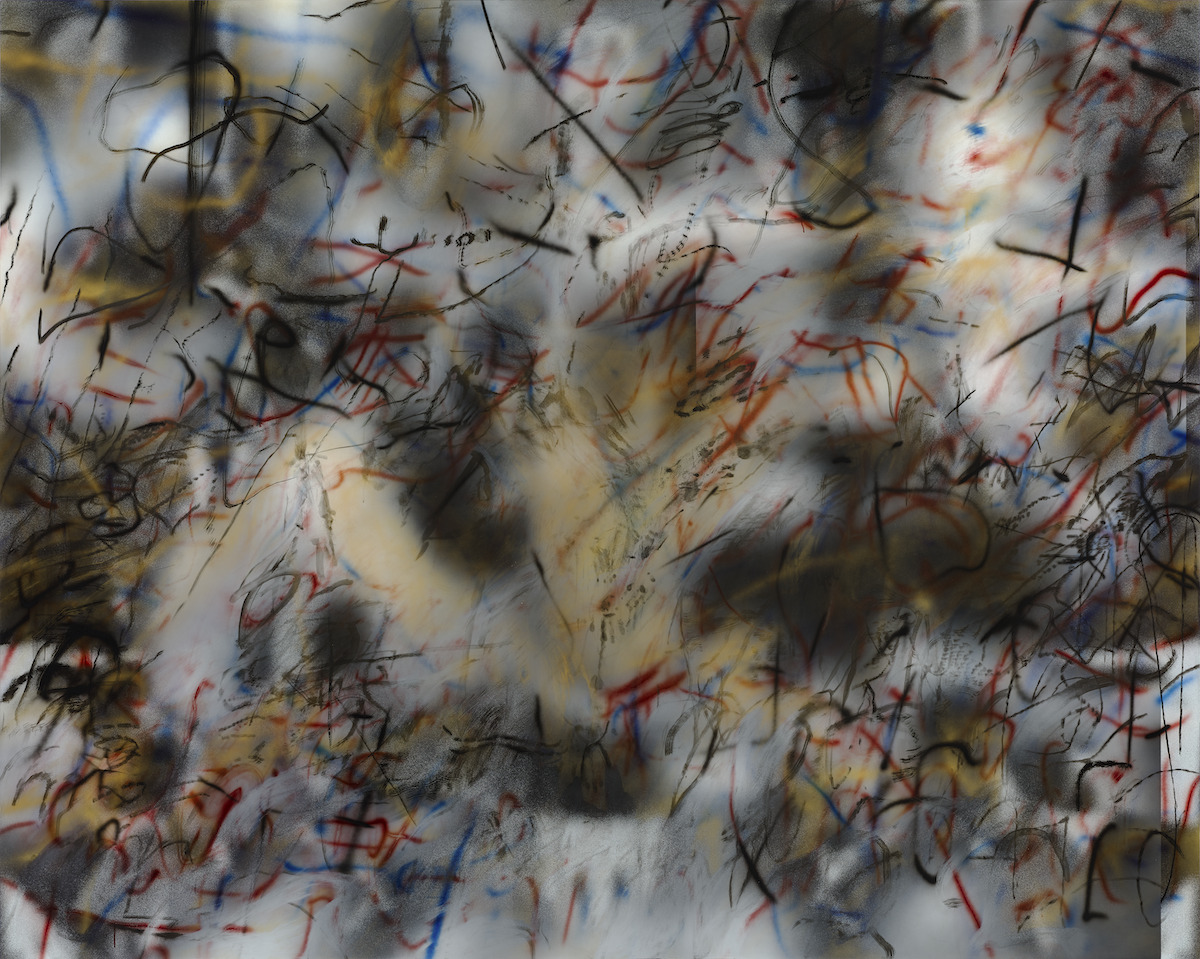
Is there anything about the art world you can’t forgive—certain codes, silences, or habits that still feel unacceptable?
I would like to see us rid the art world of its elitism, especially at it pertains to accessibility for folks of many backgrounds. For example, it would be really wonderful to see more museums become demystified and more accessible. One of the great things about galleries is that they actually are accessible, but how do we make that clearer?
Anyone can walk in, and I didn’t know that when I first moved to New York. I didn’t grow up in that world, so I didn’t know I could just walk into galleries and look at anything. And if you don’t go to art school or grow up around it, how would you know that?
I always tell students or young people around me: go to galleries, go see what’s happening. You can do that in the afternoon—after brunch, after shopping, after running errands—and there’s so much you can experience and learn from that.
But in the museum space, in the broader cultural space, and in the way we still think about art, it’s often positioned within elitism, or perceived to be elitist. There’s still a lot that can be democratized.
And I don’t mean getting rid of the market—it’s always going to be part of the art world. I am referring to how the artwork is experienced. It’s important to think about the way we experience painting.
What keeps you painting now—and what keeps you thinking about painting as part of your future?
Painting informs me. I was very affected by painting and by looking at paintings when I was younger. It’s the space where I have the most potential and potency in actualizing. That’s what keeps me painting.
I travel to look at painting. I study painting. I go back to visit paintings that I really care about over and over. Art and painting are both fundamental to who I am.
Do you ever wonder what your paintings leave behind after someone spends time with them—not in terms of career, but more as a kind of lingering presence?
I hope the paintings are relevant and haunting. I make them as a form of discovery, love and desire, but ultimately, they are subjective experiences. I know which ones captivate and haunt me. I guess I trust in that and the desire and passion of looking at and experiencing art.
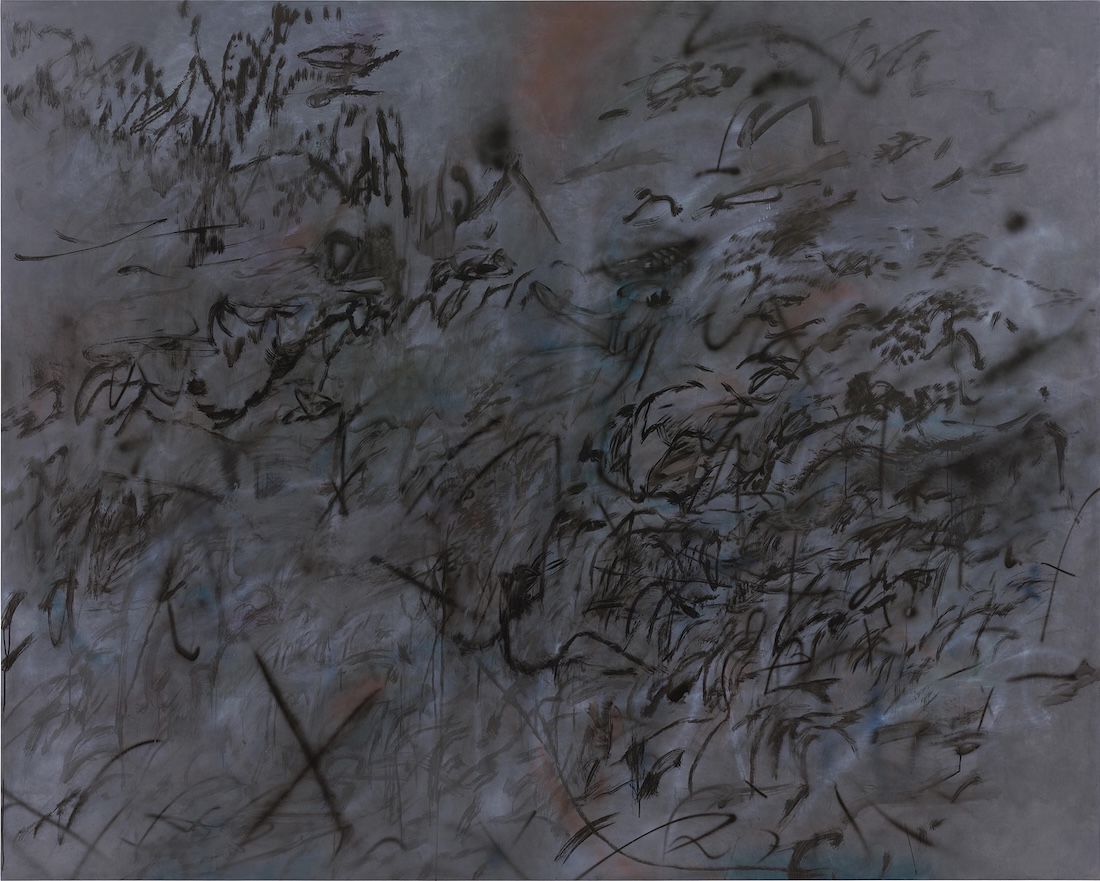
Editor: Kristen Evangelista
All images courtesy of the artist and Marian Goodman Gallery