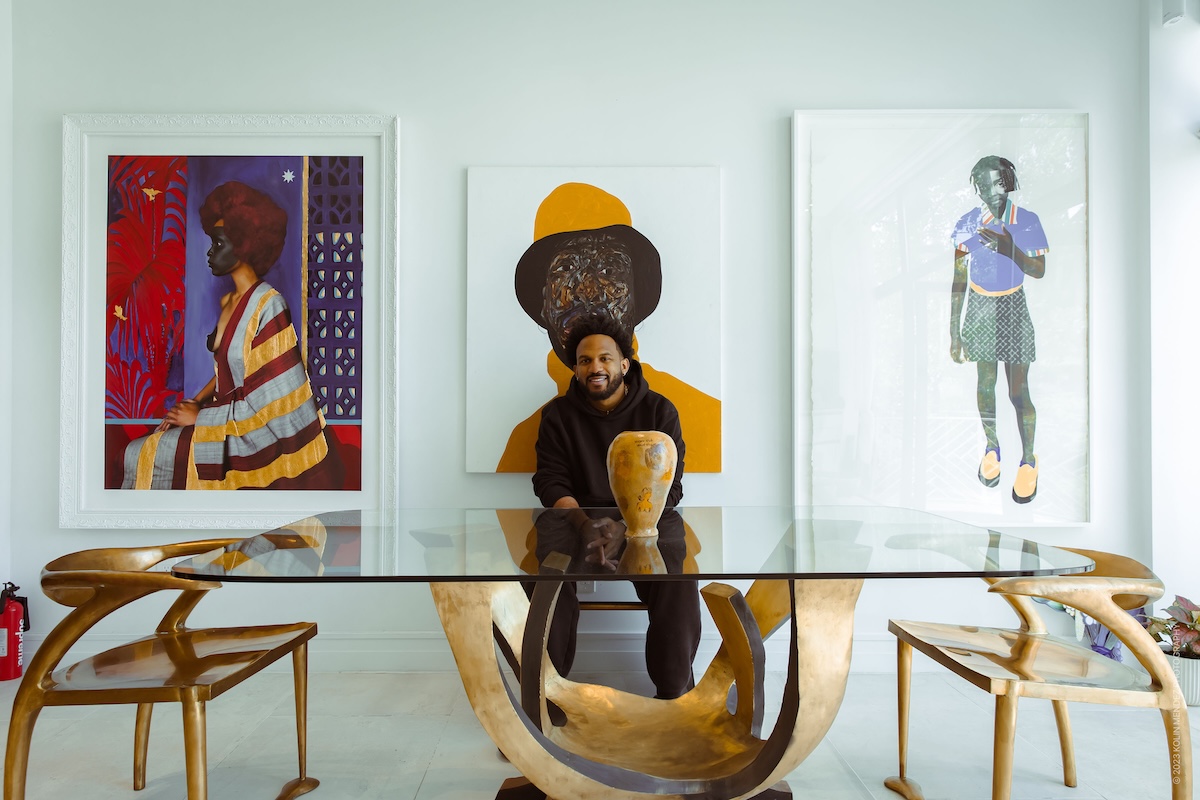
Everette Taylor speaks of his collection as one might speak of a shared life. It is not about accumulating, nor about chasing names that rise and fall in the market, but about living with works that strike an intimate chord. The first arrived by chance: Red Whisper by John Hen, won in a raffle after a lecture in Boston. He did not choose it, he says, but it chose him. That piece marked the beginning of a path where every acquisition responds to a need for connection, dialogue, and memory.
In his home there are no warehouses or storage rooms; every piece breathes with him, reminds him of something, keeps him company. Taylor collects both established figures and emerging voices, guided by the same principle: resonance. That invisible thread linking experiences, affections, and ways of seeing the world. His vision, shaped by close relationships with artists and by his work at platforms like Artsy and 1stDibs, combines personal intuition with a clear-eyed understanding of how the market works.
In this conversation with Art Summit Magazine, Taylor reflects on what it means to live with art, on the importance of integrity in relationships with gallerists, and on how digital platforms and collaborations with fashion are transforming the contemporary ecosystem. He also speaks about what he rejects: empty speculation, rapid forgetting, and the notion of legacy as personal vanity. For him, collecting is an act of care: preserving works, supporting artists, and allowing art, day after day, to accompany his life.
An Interview with Everette Taylor
By Carol Real
The first topic is your collection and personal vision. Can you share the story of the first piece of art you acquired, what drew you to it, and how that moment influenced your philosophy as a collector?
The first piece of art I acquired, I didn’t even choose myself. I was speaking at an event in Boston, Massachusetts, where I was the keynote for the Ad Club. They featured an Afro-Latino artist named Jonathan Henriquez, also known as John Hen.
His work had a Basquiat-like quality, using different materials in a similar way. I’ve always been a big fan of Jean-Michel Basquiat, so when I saw John Hen’s style, it felt street, urban, and authentic to me. At the event, they raffled one of his pieces. I bought a couple of tickets, not expecting to win, but I did. The piece is called Red Whisper, a beautiful work on a canvas shaped in an unusual, almost abstract way.
It resonated with me immediately. The figure reminded me of going to the movies as a kid, whispering to my mom during a scene I was excited about. Even though I didn’t choose it, it connected with me deeply. That was my first piece: Red Whisper by John Hen.
Shortly after, I bought another piece from him, 9 to 5. It’s a long vertical work about the tension between traditional employment and entrepreneurship—questions I was struggling with myself. Those were my first two pieces: one that chose me, and one that I chose.
So how would you define the invisible thread that connects the works in your collection?
For me, it’s about resonance. Every piece in my collection has a personal connection to my life. Even the abstract paintings speak to something I feel or need to feel. I have to be touched or moved by the works I collect.
That connection is everything. It could be the most incredible artist, but if I don’t feel anything, I won’t buy the piece. Every work I own has that personal tie to my life and experiences.
Do you find yourself more drawn to the artwork itself, or to the story and spirit of the artist behind it—or is it a combination of both?
It’s both. First, the artwork itself—I collect pieces from some of the most famous artists in the world, and from people no one would know. What matters is what the work means to me.
But the artist adds another layer. For me, it’s important that the artist is a good person, committed to their practice and in it for the long term. I’ve built relationships with many of the artists I collect because of who they are—their passion, their dedication, their integrity.
When I first started, I focused primarily on Black artists, and later I broadened my scope. Now I’ll buy anything that moves me, although over 90 percent of my collection is still by artists of color.
With so many artists out there, how do you usually discover the ones you collect?
So many artists reach out to me. It’s wild how many messages I get, not just from artists but also from galleries, dealers, and advisors. Once people know you’re a collector—and I’m not exactly in the shadows—they reach out constantly.
But I also look for artists myself—on Instagram, and on 1stDibs, where I’m on the board. I use that platform all the time. It’s amazing, because my love for art has also deepened my love for interior design. On 1stDibs I can explore both.
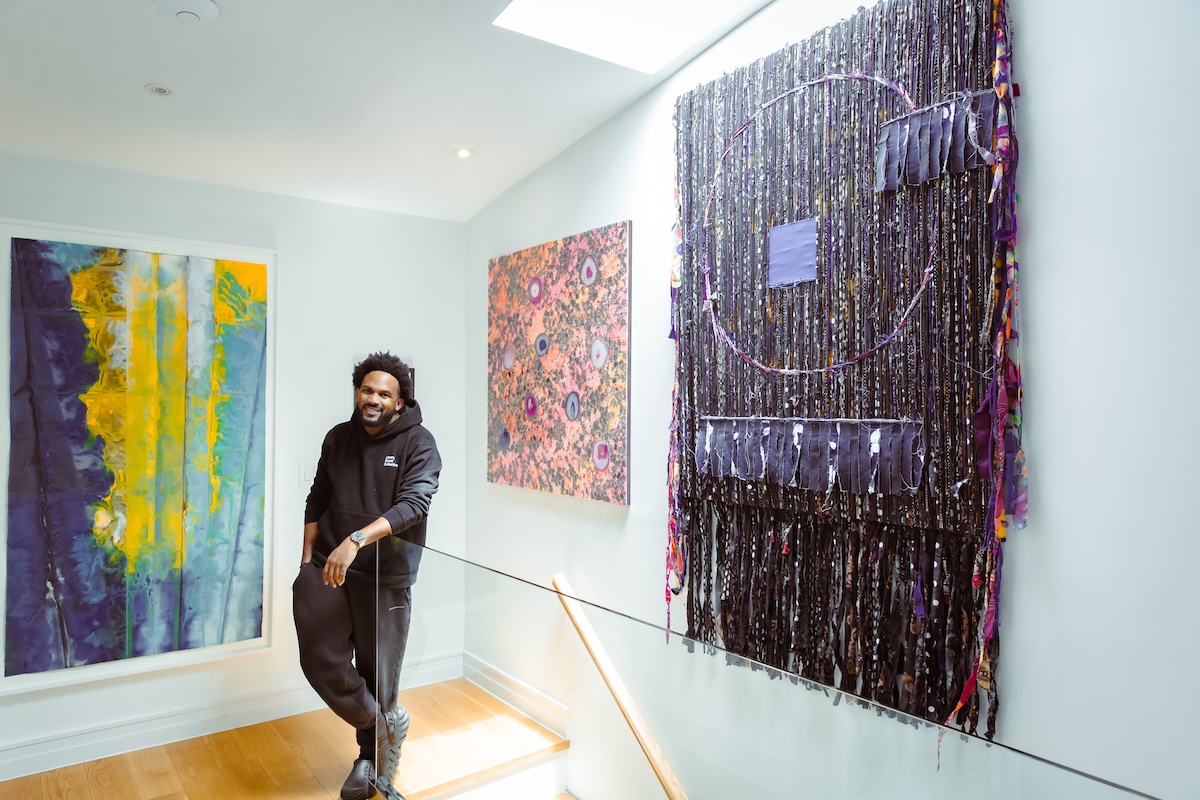
One thing I’ve realized since I began collecting is how important it is to live with the work. I don’t keep anything in storage. Every single piece is out in my home, so I’m always thinking about how a work fits into my space and what furniture surrounds it.
In your view, what makes a successful relationship between a collector and a gallerist or dealer?
Mariane Ibrahim was the first gallerist I ever bought a piece from. I had discovered one of her artists, Lina Iris Viktor, on Artsy—where I later became CMO—and I reached out. Mariane was the first person who really showed me what that relationship between a collector and a gallerist could be. She taught me the value of that support when you’re just starting out.
But it’s important to remember that not every relationship in the art world becomes a friendship. At the end of the day, it’s a business. Friendships can form, sure, but most of the time the relationship is built on transactions—on buying work. And if you stop buying, the relationship can change.
It’s a balance. There’s loyalty, there’s a personal side, but I never forget it’s a business. Trust is key. As a collector, you need to know: Are they advising me well? Are they showing me the best work at fair prices? And collectors also have responsibilities—we need to pay on time, honor commitments, and act professionally. Too many don’t. That’s why I always go back to the same point: it’s a business first.
Do you find yourself collecting with an activist, documentary, or poetic intention?
I’m a creative, so when I buy art it’s an intentional, emotional, creative process. I’m naturally bold, I stand up for what I believe in, and I’m drawn to works that reflect that energy. They have to resonate with me on that deeper level.
How do you decide when to support an emerging artist versus acquiring work by an established name?
That’s a great question, and it’s something that has changed for me over time. As you gain more experience as a collector, your approach evolves.
For me, the first thing is: how dedicated are they to their craft? Are they really committed to a career in art, to getting better? Too often, someone starts out in their twenties, and by their thirties or forties, they’re doing something else entirely. I want to know they’re in it for the long haul and that they’re growing.
With emerging artists, you also have to accept that the work you buy early on may not be their strongest—or it may end up looking completely different from what they do later. You’re really investing in their growth and believing in them as people.
I also look at who else is paying attention—institutions, collectors, galleries—but ultimately, if I love the work, I’ll buy it.
With established, blue-chip artists, it’s all about the work itself. I don’t care who they are or what their name carries—every artist has made bad work. What matters is whether the piece resonates with me and whether it’s a strong example of their practice.
Do you think that shift in your collecting approach came after your experience working at Artsy?
Artsy changed everything for me, mainly because of access—access to data and to a much broader range of artists and galleries. Having that data gave me a deeper understanding of the business of art. It helped me grow as a collector, taught me how to spot trends, and how to evaluate what I was seeing in the market.
The art world is full of trends, and most don’t last. While I was at Artsy, even before I left for Kickstarter, I could already see the market shifting away from the COVID boom of 2020–2021. That closeness to the data gave me a much sharper sense of how quickly things can change.
What’s your take on speculation in the contemporary art world?
The art market is so full of shit. Honestly, I understand it’s a necessary evil of the system we live in. But the truth is, the market ruins careers. It lifts people who may not deserve it and drops others just as fast.
I saw it happen to so many Black artists in 2020, 2021, and into 2022. Their markets shot up, and then suddenly it was like, “Oh, we’re over it.” Collectors moved on without care for the artists.
That’s what I hate most about speculation: so many people don’t have their own taste or perspective. They just chase what’s hot. They treat artists like commodities instead of human beings.
I don’t think most of the people driving that speculative side of the market even love art. I love art. And that’s the difference.
So when it comes to your own collection—do you collect to live with art, to build a legacy, or to spark a conversation with the future?
I think the idea of legacy, at least how most people think of it, is bullshit.
Artists have real legacies. They create something that can live on forever. Me? What’s my legacy? I don’t care about that. I just want to live a life where I support people and do good in the world.
Collecting for me is about supporting artists and protecting important works, preserving history. It’s not about me. Who cares if no one remembers me in a hundred years? What matters is that these artists and their work are remembered.
Can you imagine the future of your collection 30 or 50 years from now—in a museum, a foundation, or something more intimate?
The dream for me would be to build something in my hometown, Richmond, Virginia. To create a space where the collection could live on and be open to the public forever.
That would mean a lot to me—not for the sake of my legacy, but for the preservation of the works and the artists. That’s what it’s really about.
Do you think digital platforms can play a meaningful role in democratizing access to art?
Absolutely. I believe in platforms like 1stDibs and Artsy. They’re incredibly important.
I’ve seen it firsthand. At Artsy, and now at 1stDibs, I’ve watched how these platforms introduce new people to art every day. They help build new collectors, support artists, and strengthen galleries.
The world is changing, and digital platforms are a necessary force in the ecosystem. They make art more accessible, and that’s good for everyone.
What are your thoughts on the growing involvement of major brands in the contemporary art scene?
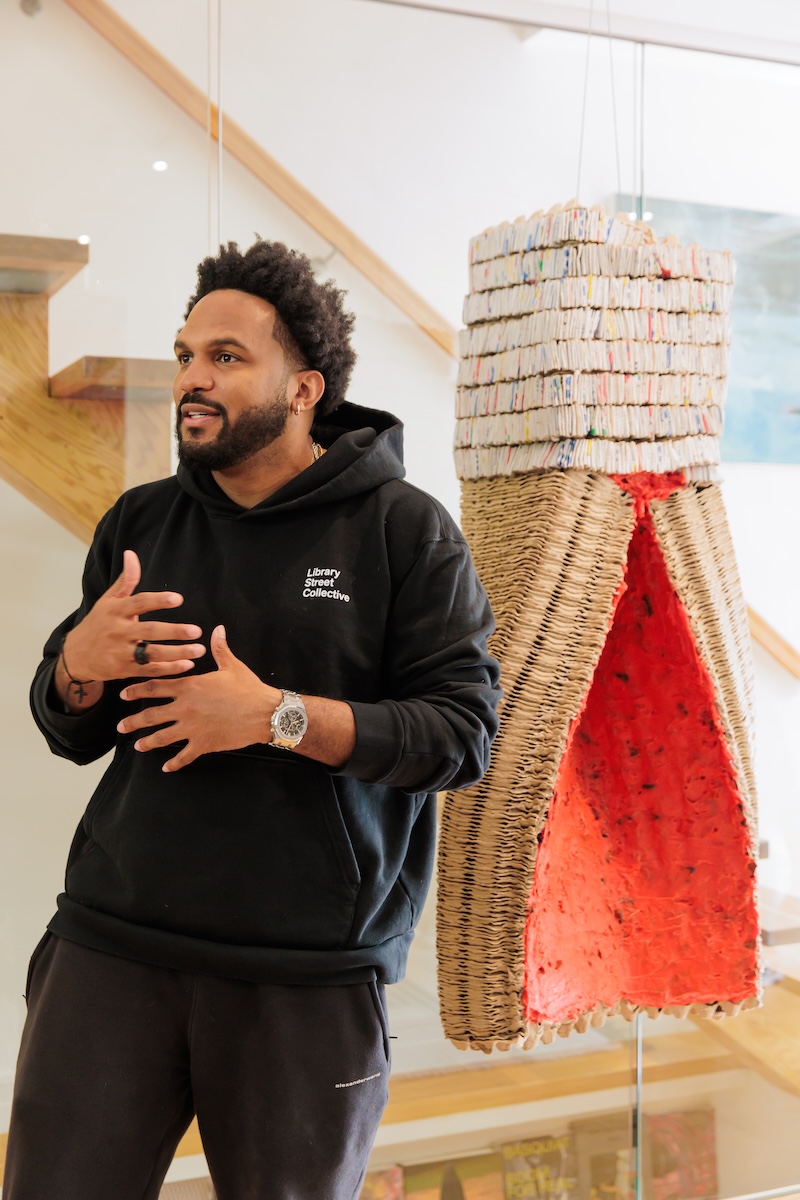
It’s marketing, of course—branding and culture. But I do think fashion is art, so there’s a natural connection there. I love fashion, I go to Paris Fashion Week, and you see it—at fairs, at museum openings—people express themselves through style.
There’s always been a relationship between art and fashion, and I think it’s great. It also creates new opportunities for artists to monetize their work beyond painting or traditional practices. As long as brands aren’t taking advantage, I think the more collaborations, the better.
And what about institutions like the Brooklyn Museum, which are engaging in partnerships with fashion and commercial brands?
I love it. Friends of mine, like Mickalene Thomas and Ludovic, have collaborated with Dior, and the results are beautiful—the bags, the projects, everything.
I enjoy seeing people engage with artists’ work in new ways. It may not be for everybody, but for me, I fully support it.
What advice would you give to someone who’s just starting a collection?
Don’t rush. You have a whole lifetime as a collector, so take your time.
I rushed in the beginning. I bought too quickly when I should have gone slower. The best advice I can give is: see a lot of art, talk to artists, do studio visits, go to galleries and museums. Take time to really learn, and don’t feel pressured to buy something that doesn’t resonate with you.
A random question to end on: if you could meet any artist from the past, who would it be, and what would you ask?
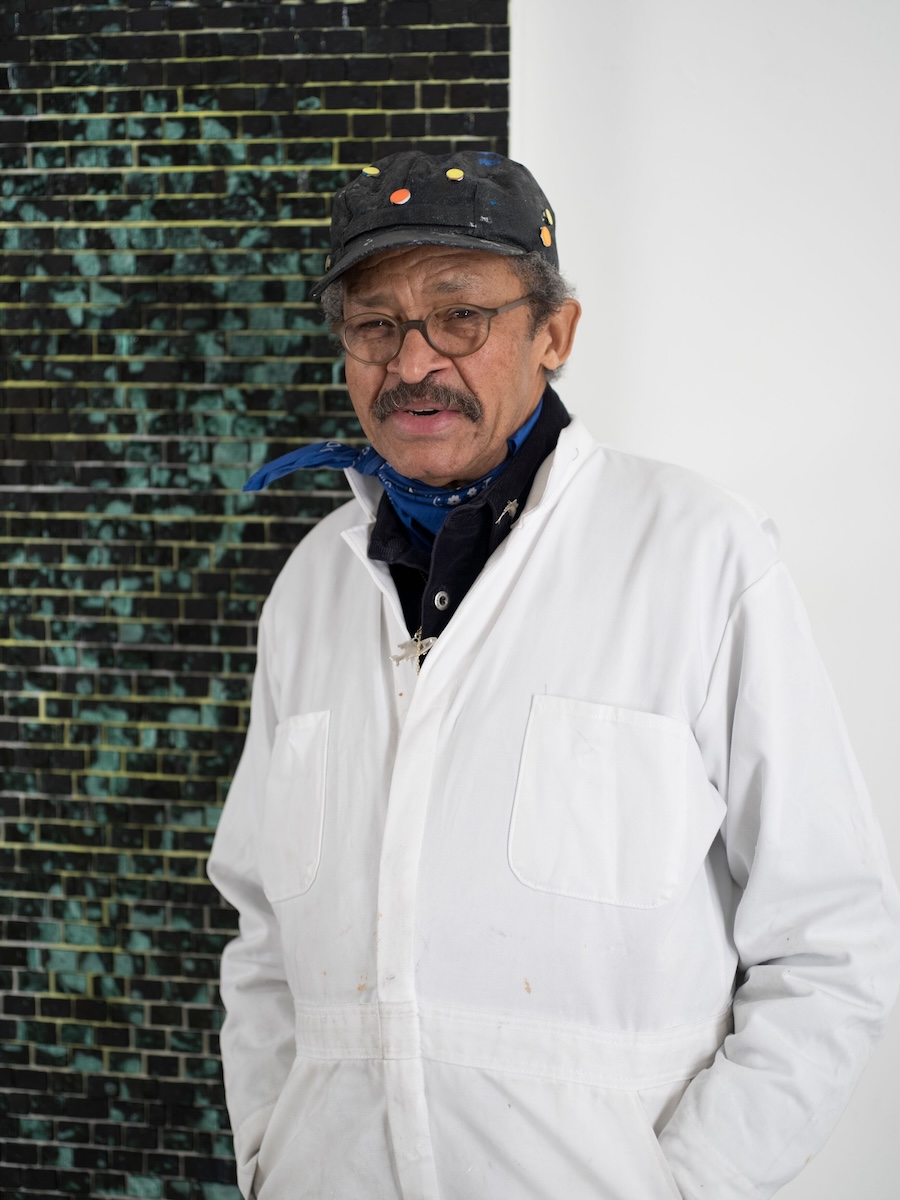
Oh, Jack Whitten—without a doubt. He’s the artist I’d want to meet.
I’d want him to walk me through his retrospective at MoMA and just talk about his life, his process, everything he went through. At one point his studio burned down in SoHo, and he didn’t make art for five to seven years. Imagine that—an artist not creating for so long.
I’m so intrigued by his story, by who he was as a man. Sitting with him and walking through that retrospective would have been incredible.
You mentioned that you live with your artwork—that none of it goes into storage. Is there a specific piece that speaks to you every single day?
Can I tell you about two?
Both are in my living room. The first is a painting by Stanley Whitney. Every time I enter my home, it’s one of the first things I see. It makes me happy, it fills me with joy. Stanley Whitney’s commitment to his style and the energy of his work inspire me every day.
The second piece is in my bedroom by Jadé Fadojutimi, titled I’m Just One Crawl Away. Every time I see it, I feel inspired to keep going. It reminds me that I’m almost there, that life is full of ups and downs but not to settle or become complacent. It pushes me forward, especially during hard times.
Editor: Kristen Evangelista
This interview was conducted in April 2025 and has been condensed and edited for clarity.
All images courtesy of Everette Taylor, ARTNOIR, and Hauser & Wirth