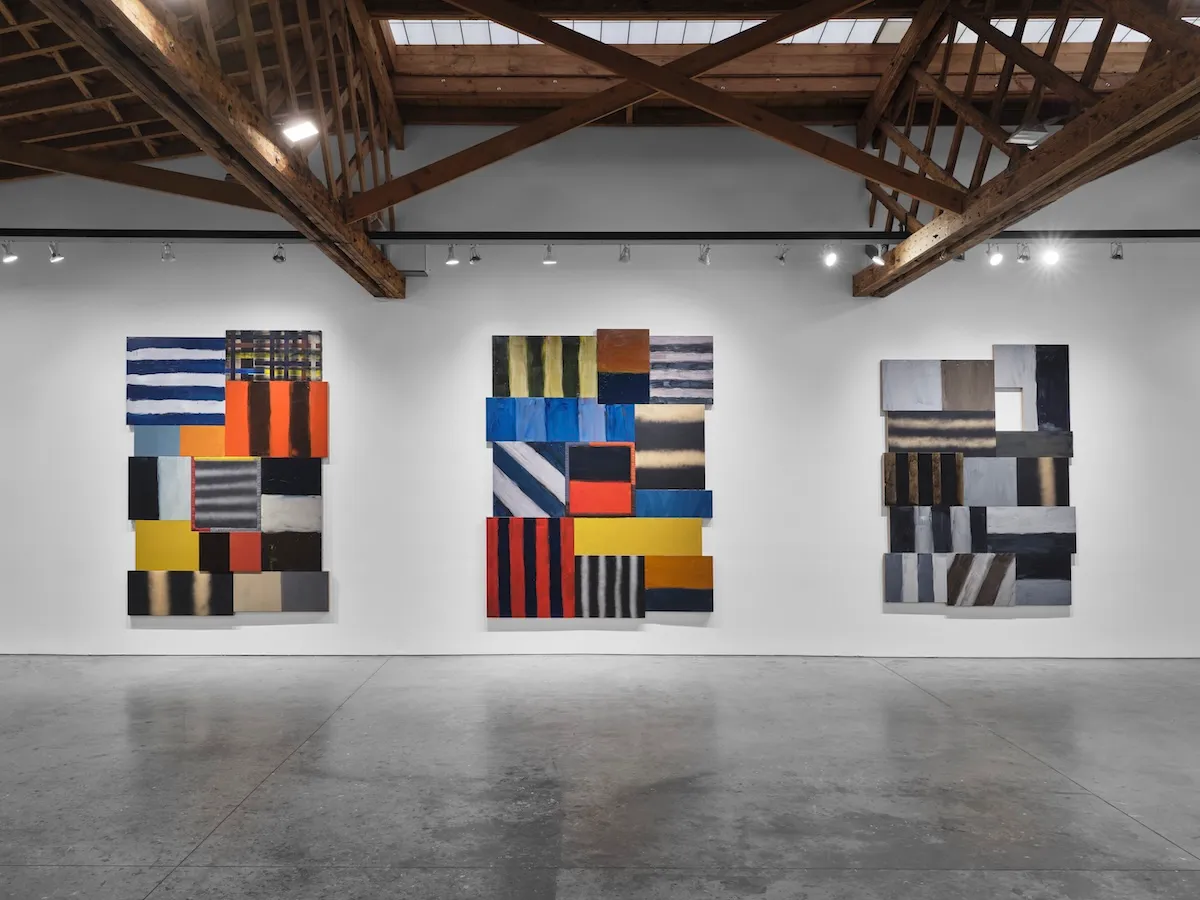
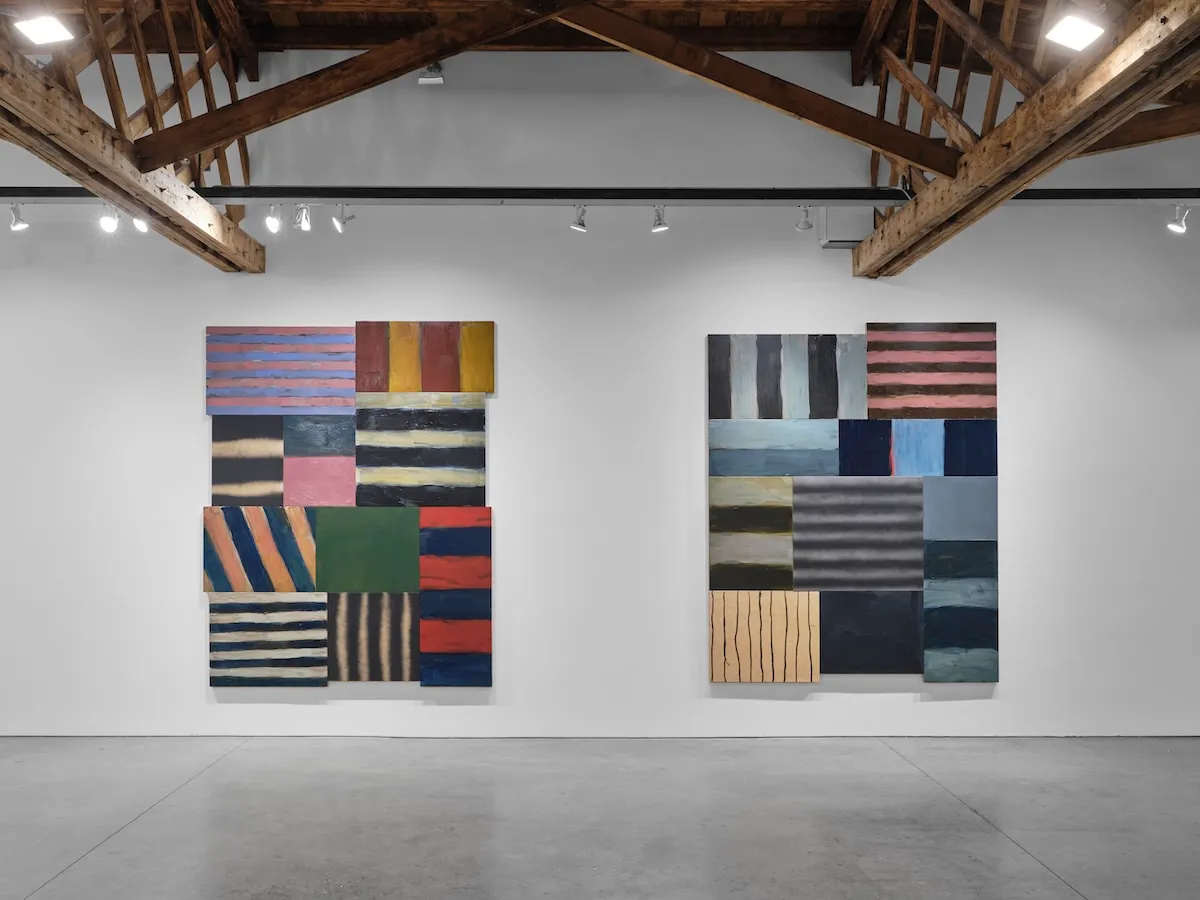
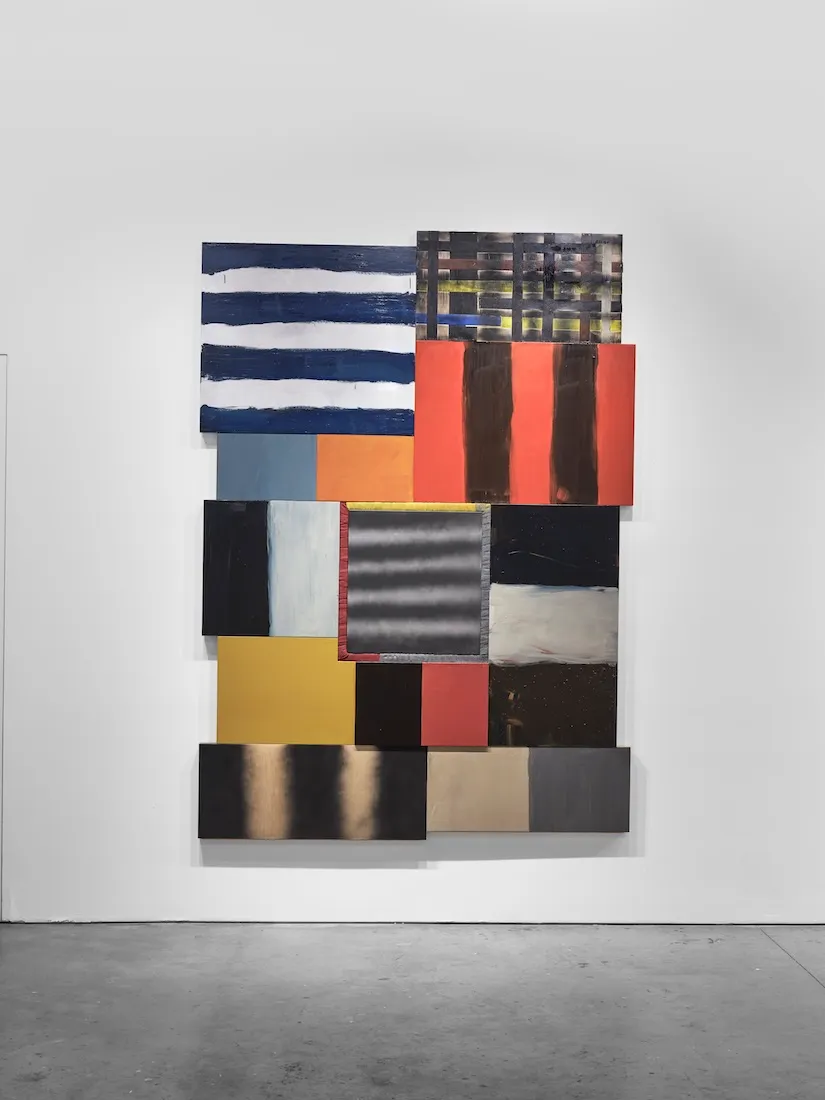
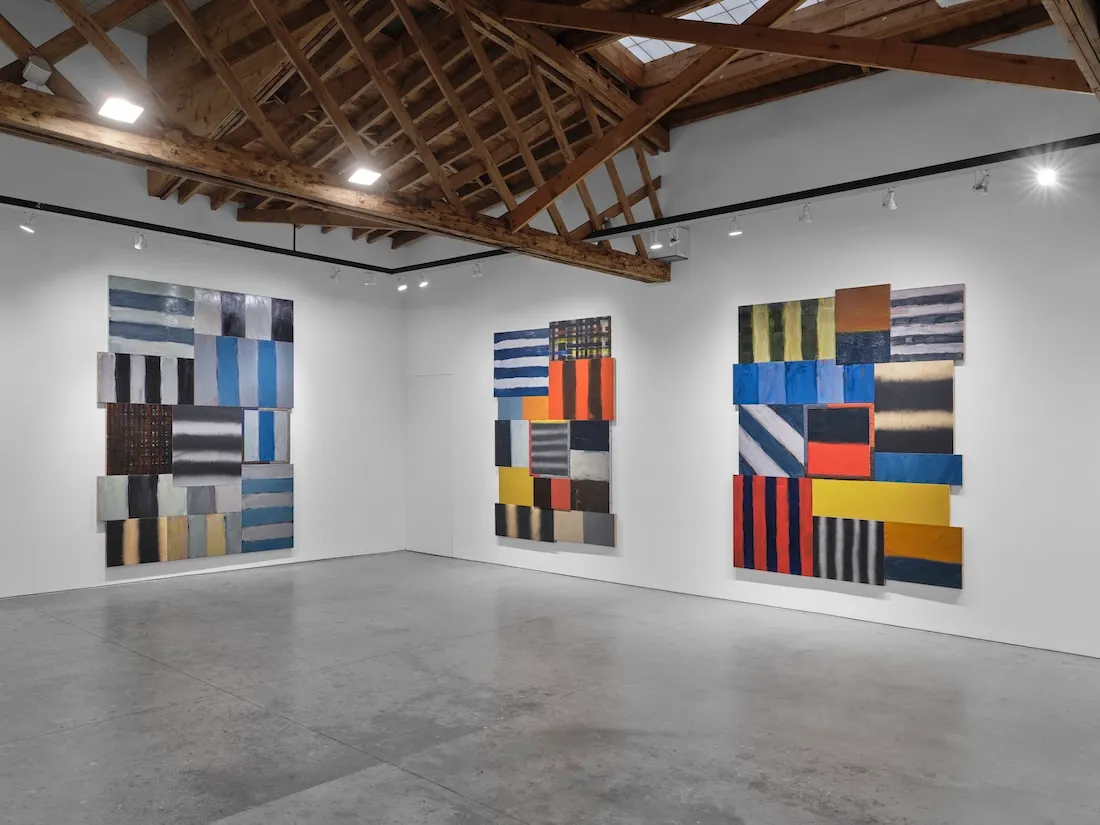
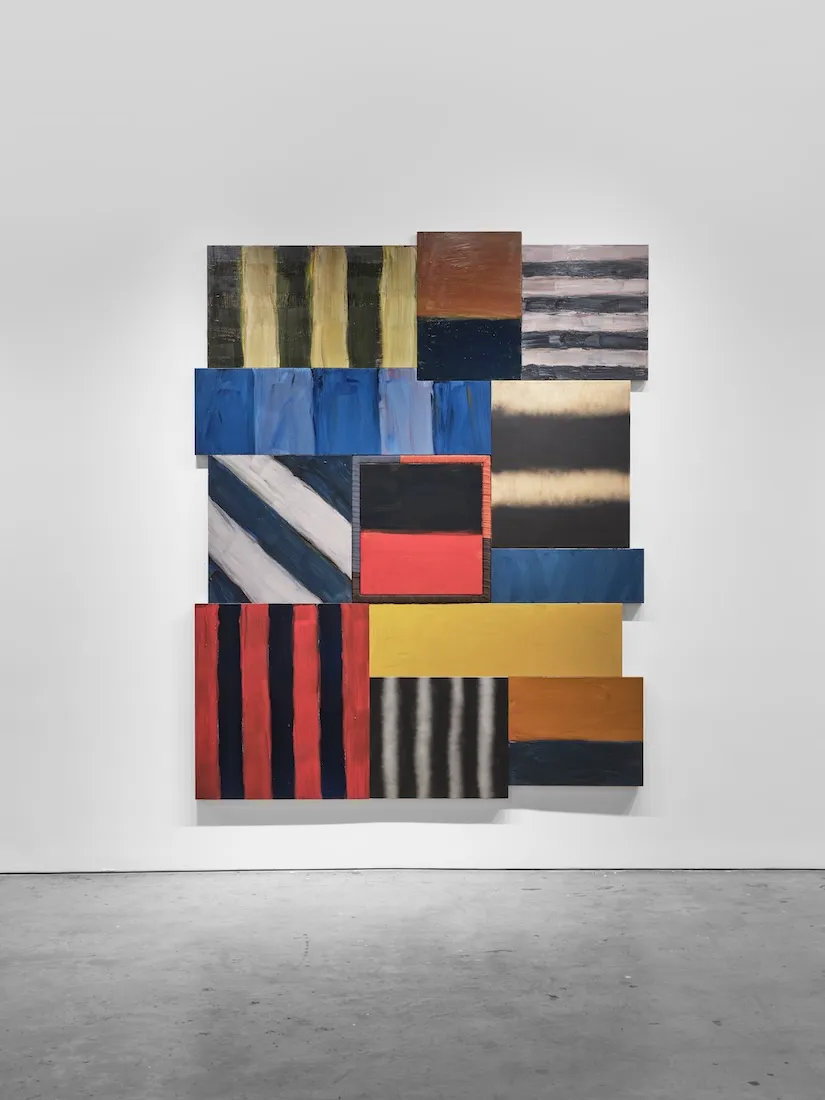
Sean Scully has developed a language that carries the memory of time and experience. For more than six decades, his work has examined the relationship between structure and fragility, between the need to hold together what has been broken and the recognition that every form bears signs of its own instability. The new Tower paintings extend that search. They gather fragments of landscape, references to cubism, industrial discipline and urban gesture, and bring them into a configuration that questions its own authority.
In this conversation, Scully reflects on the origins of the series, the imprint of the World Trade Center, the tension between destruction and repair and the lasting influence of his years working in the factory. He speaks about humor, poetry and history, and about how these elements coexist within a complex present. A portrait emerges of an artist who continues to examine his practice and who understands painting as a way of thinking through the world as it is.
The interview offers a clear view into that process. It shows how his work combines solidity and movement, memory and contradiction, and proposes a reflection on what it means to build forms in a time no longer supported by certainties.
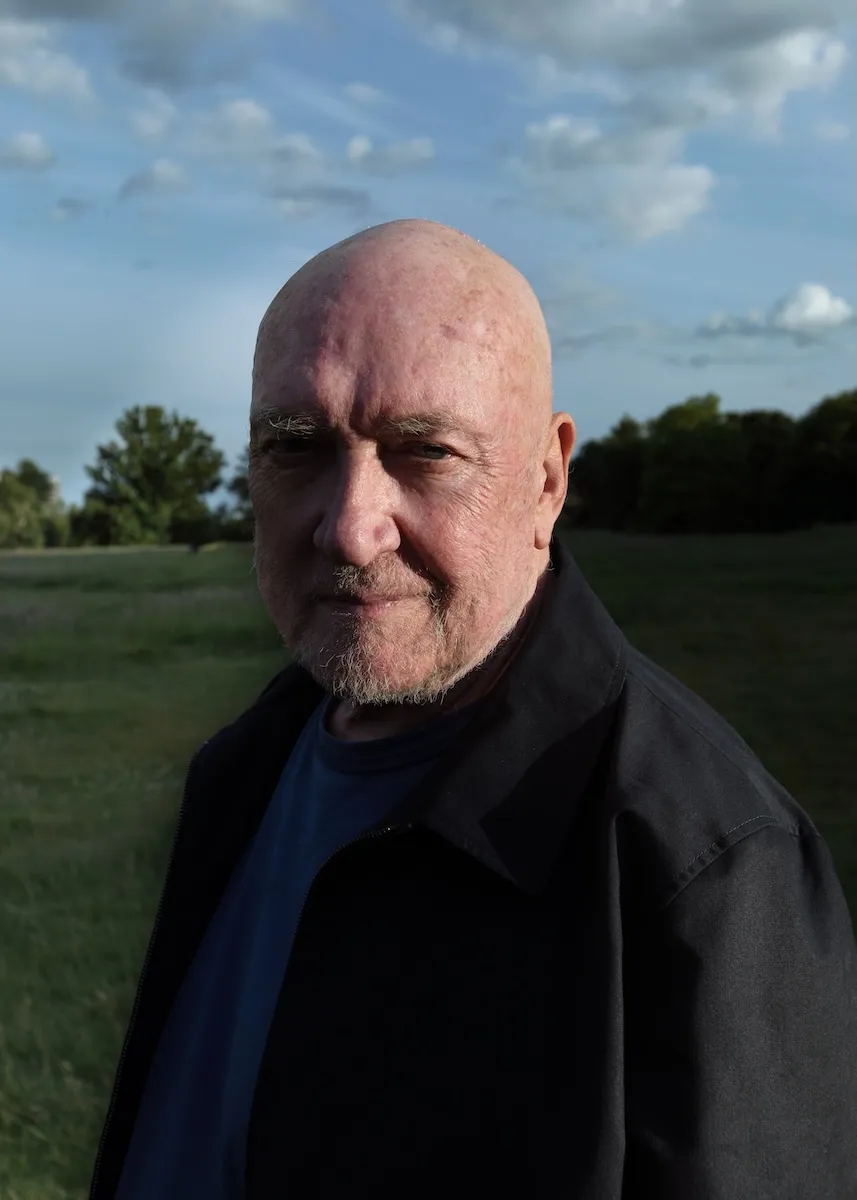
An Interview with Sean Scully
By Carol Real
I want to begin with the Tower paintings, the series you are presenting now. You have said that these works start from the idea that authentic reconstruction is impossible. How do you work with loss and memory inside these towers?
I would say that everything you do, everything that happens in history, is impossible to take out. And the collapse, or the violence, the knocking down of civilizations, is always in the memory of culture. You cannot knock something down and then expect it to disappear, because what remains is the action of destruction. Now, for example, if you go to Mexico and you go to Cobá, it is not very excavated, but you will see all the stelae, the stones of the Mayan people, lying around. You can find them in the jungle, and they are all broken by the Spaniards because the Mayans had their own culture, and then the Spanish came and destroyed it, breaking those stones. Those stones are incredible, and there they are. You find them. If you walk in the jungle, you will find them just lying around. They are broken, but they are there. You cannot make the culture disappear. And then, if you put something back together again, you always have a kind of Disneyland, a reconstruction. My idea was a little bit influenced by Cubism, but also, where this idea came from, with the hole, was an idea of an exhibition for the World Trade Center. I made a sculpture with a hole in it. And also, my Tower paintings are concerned with vanity.
The collapse of the World Trade Center became an early point of reflection for you. In what way did that event shape your sense of vertical form and vulnerability?
It was shocking because it happened maybe 10 blocks from where I lived. I did not see it actually, but I saw it on TV as it happened. I was also a member of the health club in the World Trade Center on the twenty-sixth floor, and that day I was not there. Of course, what it also showed me was how people are willing to destroy themselves for an idea. And this is something very profound in human beings, that they are willing to die for an idea.
I had people in the health club that I was friends with, and I do not know where they are. I have no clue. Also, what is interesting is this idea of the tower, because the tower in human culture is something that defies gravity. It is something that goes against nature. As we do all the time, instead of working with nature, we have made nature do what we want, so we reverse the order. Then, when we build towers, they are monuments to our idea of our vanity.
There is a town in Italy called San Gimignano. I was there. It is full of towers, and the towers serve no purpose. They were just built by rich families to be higher than the other tower. People would build the towers and make them higher and higher until they fell over. It was just will. I mean, obviously, they are the prototype for spaceships. However, they were built very high, and then they collapsed. It is fascinating. The whole idea of verticality is very interesting. In my Tower paintings, the verticality is very powerful, but it is also broken and put back together. So that is the idea. It criticizes its own power.
There is a tension in your work between what resists repair and what finds a new form. How do you understand that tension in this series?
We are exactly as destructive as we are creative. If people ever come from another planet and visit us, they will notice two things about us besides the wonderful art that we can make. They will notice that we kill each other and destroy our own habitat. Then they will think to themselves, wow, these people must have been really stupid, so weird. At the bottom of the ocean, very deep in the ocean, there are giant squid that do nothing but fight. When they see another one of their own species, they kill it. They just kill things all the time. So there is no sense to it. It is really remarkable. There is no sense to our destruction either, of course. Then we try to put it back together again, like Munich, Germany. It is all reconstructed, and you can kind of feel that it is reconstructed. It is very beautiful, but it is like a film set. It is like Disney. Yeah, it lacks, how can I put it, it lacks authenticity.
When you speak about Humpty Dumpty, you suggest that once something has fallen, its memory cannot be erased. How does that feeling enter your process?
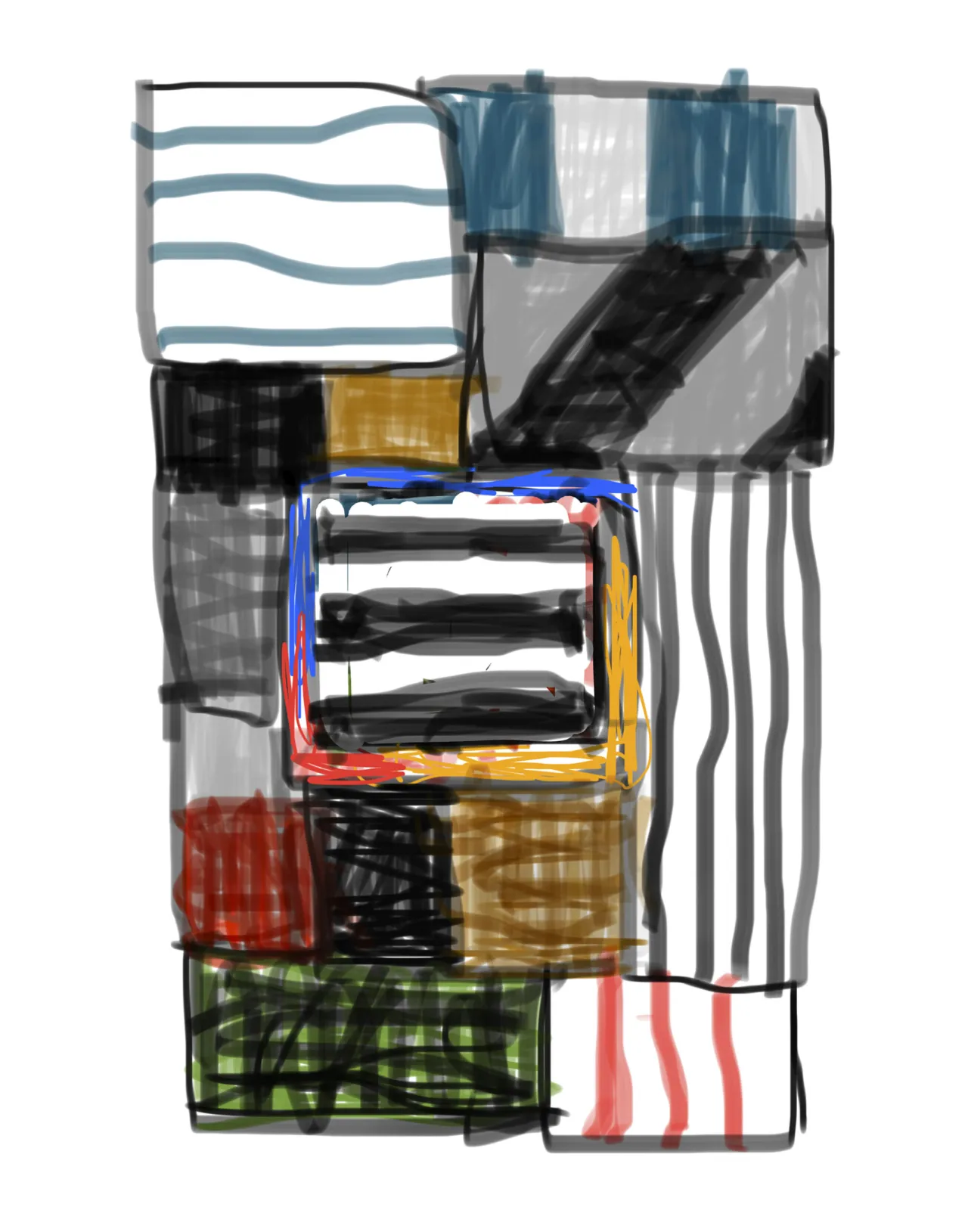
I start with something, with a drawing. I make a little drawing on my iPhone. I make hundreds in my sketchbook. Then, I give them to my pal, my assistant. He is Colombian, and we only speak Spanish all day. They do not speak English. If they speak English, they speak with a strong accent. So we only speak in Spanish. I say, okay, I want this four meters high, three meters wide, or three and a half meters high, two meters wide. This guy is an unbelievable genius, and he can make it for me, and he likes to make them.
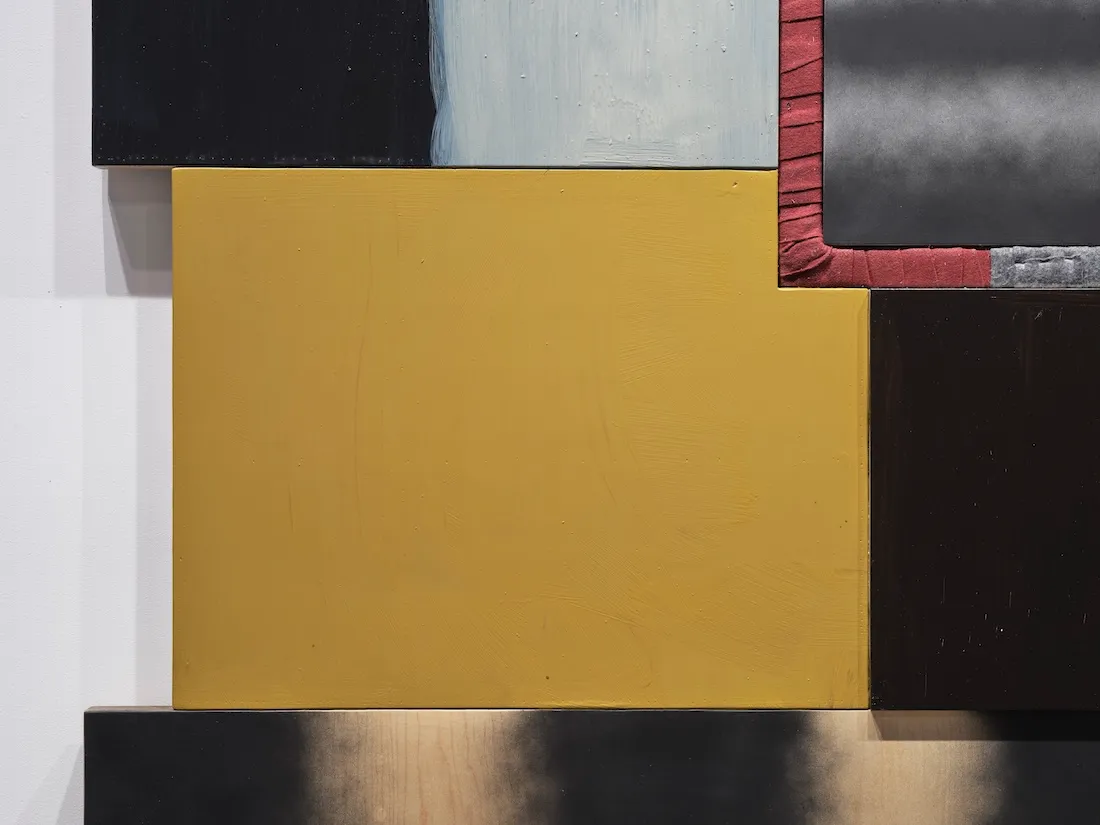
Then we make it. We put it all together, and it is made altogether as a beautiful thing in wood and metal, because I use aluminum and wood. There is no canvas. Then, after it is all put together, we take it apart, and I paint it broken. It makes something precarious and strange. That is the whole process.
The structure in wood and aluminum echoes your early industrial work. You worked in a factory at fifteen. What place does the memory of working in a factory still hold for you?
Oh, it has ruined me.
It has given me several themes, including a strong sense of humor and the ability to fight. I am completely fearless, and I go anywhere I want because I identify with working-class people. I go all over Mexico, like in people’s houses or wherever, because I speak Spanish, so they ask me in. If I need to use a toilet, I knock on someone’s door in Mexico and simply ask; they usually say sí. I have the license to go anywhere, and I like this. That is what it has given me, because I am essentially from the working class. So it has given me that.
However, here is the problem: it mechanized me, because when you work in a factory, you become a machine. Because in a factory, when I was a typesetter, you have to do everything perfectly. You cannot make mistakes. The problem is that art needs mistakes; otherwise, it is not art. This is what amateur artists do not understand. There are people who look who can make a likeness, I used to be able to as well. I could make a likeness. I was a portrait artist. This is not art, because for this we have cameras. Nobody gives a fuck about whether it looks like something.
The problem—my limitation, I would say—is that my work is fundamentally geometric. That sense of the geometric in the industrial sense—not in the Bauhaus sense but in the industrial sense, in the factory sense—this runs through all my work. It means that there is a power to my work, and there is a limitation, because the free expression of moving linearity, so to speak, was beaten out of me by factory work.
You describe the series as post-Cubist. Which aspects of Cubism still matter to you, and how do they connect to your current vocabulary?
Cubism, I think in the last one hundred twenty years, I would say Cubism is absolutely the most important art movement by far. Because it defined the break from the past. It defined the break from Cézanne and Monet. It broke with the landscape, and it also reflects the loss of the sanctity of the landscape and the sanctity of the object, and the breakdown of every structure that we have, like religion.
As I was talking about the Cubist painting in my talk, this thought cleverly occurred to me. By the way, I do not make stuff up. I mean, I make it up as I go along—I notice that in Cubist paintings there are violins, and violins signify high culture. You have all these broken violins. You have this assault on high culture, and on people’s faces, with lines running through them so you cannot recognize them anymore. The object, the reverence for the object—and that includes the human being—is broken at the beginning of the twentieth century, and this precedes the First World War, which was a massive slaughter field on the Somme, Passchendaele. This affects me and affects my thinking to this day.
In a sense, I spent my career trying to put it back together. Most of my work is concerned with weaving, weaving things back together. Also, that is interesting because that is usually female work, right? Weaving is traditionally female. These Tower paintings kind of break with that. Do not worry, I will make plenty of others that do not break with it. I have not given up trying to stitch the world back together again.
You have mentioned fragmented landscapes and a trace of Northern romanticism. How do these references coexist with graffiti and urban language?
Well, they do coexist. I do not have to make them coexist. They are in the culture. They do coexist. You can lean up against a wall covered in graffiti, reading a book about Caspar David Friedrich. Why not? And that is how they exist. I do not need to make them exist. I just represent what already exists. All these things do exist simultaneously. That is the world we live in. We have access to all these different cultures. And of course, we have iPhones. Everybody in that world has an iPhone, so we have access to overlaid information in a way that is different from the past.
What I have done essentially is to represent that simultaneity and that historical contradiction, if you like. However, I insist on making it myself, so I insist on being an old fashioned warrior. There is a dichotomy in it. The subject of the paintings is extremely contemporary, extremely concerned with simultaneity, et cetera, et cetera. It is irresolvable, the inability now to achieve status. It is not possible now. But the Cubists understood this at the beginning of the twentieth century, and we understand it now, because now I am making paintings that use Cubism and use history and use all its contradictions and put it all together in a single work.
So you cannot do that until you get to the beginning of the twenty first century, because Cubism was breaking things down. What I am doing is accepting that everything has broken up and then representing it. That is it. I make it like the gladiator. Instead of a sword, I have got a big paintbrush.
You also use spray paint, framing it in a way that reverses the usual hierarchy between elevated and street-level languages. What are you proposing with that gesture?
I am subverting the idea of power. If we go back to the Humpty Dumpty thing, Humpty Dumpty is very interesting. It is not only that Humpty Dumpty gets broken, but it also refers to extreme power because it says all the king’s horses and all the king’s men. So, in other words, it refers to great power, but even great power is unable to put it back together again. In a painting where you elevate what is usually regarded as street-level art, and you put it above what is usually regarded as high art, like fragments of German Romanticism, you are mixing everything up and causing the painting to fight. What I have noticed about these incredible Cubist paintings is that you can never exhaust the painting. The painting will exhaust you. You cannot conquer the painting.
This is another aspect of my thinking, that if everybody likes your work, you will be forgotten. You will be like one of those lovely singers that nobody remembers anymore, that everybody liked, that was so popular. Because culture is obviously built by change, and you have to do something identifiable. And if everybody approves of you and you have no detractors, you will be forgotten. Because there is no grit. There is no friction, there is no argument. So, therefore, there is nothing to talk about. It is just lovely, lovely. And these paintings that I have made, which you seem to like—yeah, you must like a challenge—these paintings are inexhaustible in a certain way, because they do not attempt to achieve harmony.
Now, going back a little bit in our history, to Clement Greenberg, of course. Clement Greenberg is a very interesting figure whom I respect very much and who I was terrified of. I met him once, and I was so scared of him that I made sure that I was never in the same room as him at a party. He is extremely dangerous to art, as is the next one, the heir, which is Rosalind Krauss. These people try to say what art is, and by doing that they codify it.
Clement Greenberg, in particular, wanted harmony and what he called ‘taste’, ‘good taste’, which only he had, of course. When Clement Greenberg started, he was a follower of the Abstract Expressionists. They were not looking for harmony. They were looking for overwhelming emotion, something that was epic and carried the wounds of the Second World War with it. Gradually, over time, he took all the problems out of art. Then what you have left is color field painting, which is nice painting, I am not saying it is not, but it is decorative. This is taking all the problems out of art and trying to make rules for artists to follow. This is really what I have never accepted. I am always willing to be difficult, let us say.
That gives me the thinking of a structure that you use, like your frames. Frames suggest wrapping or bandaging. How do you think about the relation between care and containment in these works?
Exactly. The frames are neurotic because you use the word yourself, bandaging. There is something neurotic in them, that I constantly use this way of bandaging. It is as if they are trying to hold something together or repair something, repair damage, like a nurse.
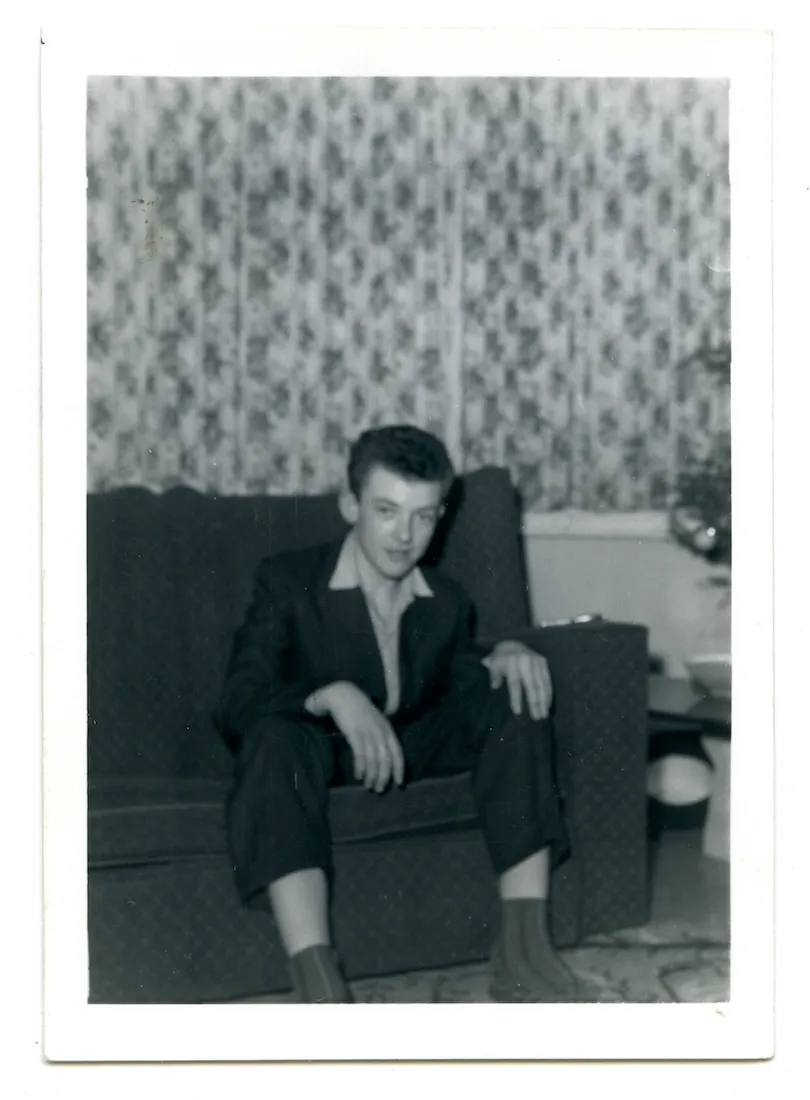
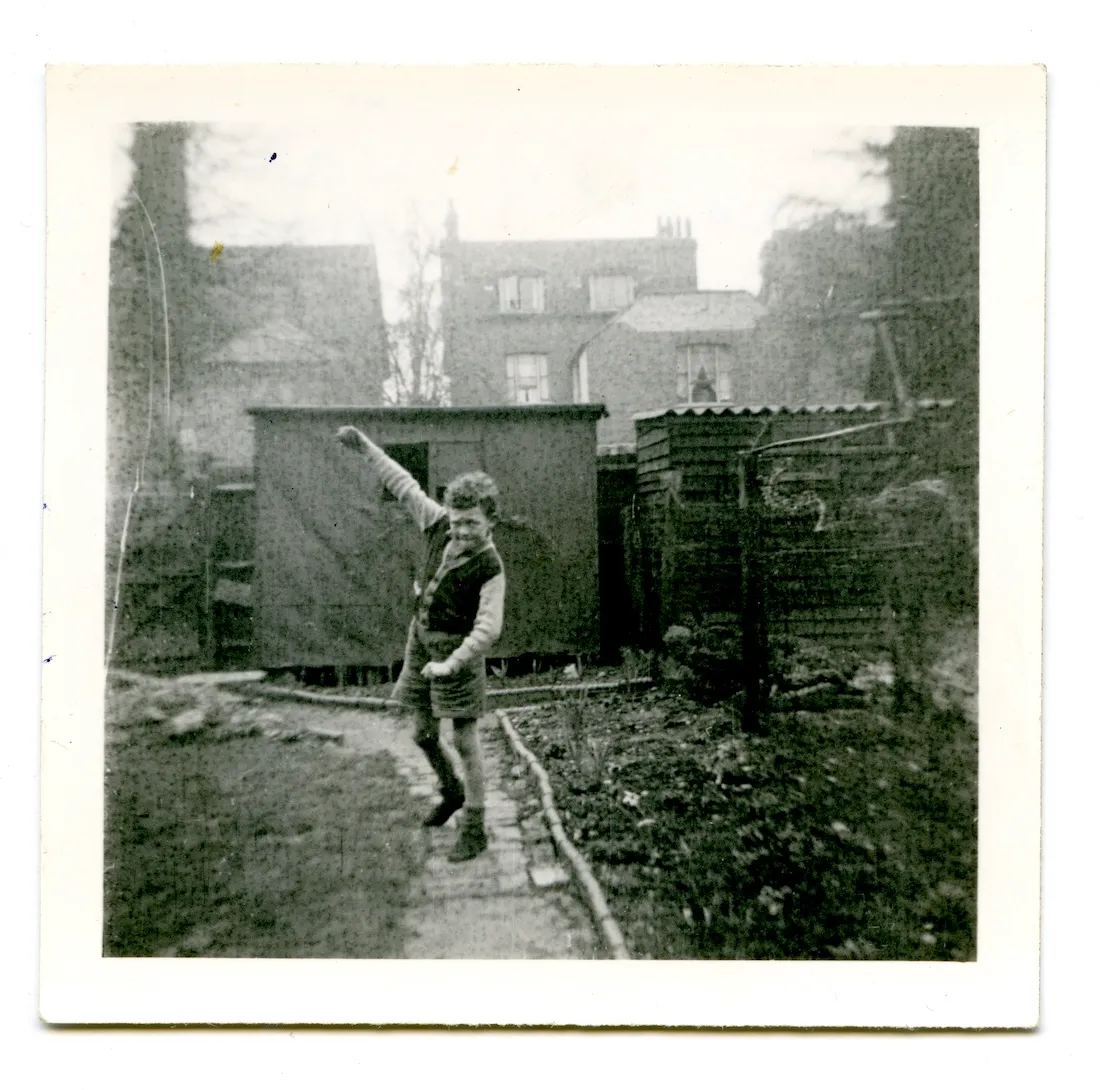
You know, this is an important point. It may seem unrelated, but when I was a child, twelve, thirteen, fourteen, I had an animal hospital. I learned all these tricks from a woman who lived on my road, who was the officer for the Royal Society for the Prevention of Cruelty to Animals, RSPCA, and she taught me lots of information. She was a strange English lady. Anyway, she took a liking to me, and she taught me all these techniques to save injured animals, wild animals, which I did. We had a small greenhouse at the back of our house, two meters by three meters, and I always had it filled up with injured animals. Of course, it was a disaster most of the time. I think this idea of bandaging partly originates from that experience.
There is something in it that is very neurotic, but it is also about imprisonment. If you look at the little girls in Velázquez’s paintings, the Infanta, for example, they are exalted and imprisoned simultaneously. If you are a member of the royal family, you can see this playing out in the UK. You are exalted, but you are also in prison. So the question is, what is a frame? And in fact, the other day I wrote a poem about what a frame is. Is it a way of protecting, or is it a way of imprisoning? Or is it a form of elevation? Because when you frame something, you make it special. You have a drawing, and then you say, Oh, I love that drawing so much, I am going to have it framed. However, in English, you can also say, I would like to frame a question. In addition, you can say, I am not guilty, I have been framed. The frame is complicated.
And also about separation. How does framing emphasize fragmentation for you?
Separation. Because you make a hierarchy. When you frame something, you separate it. Well, you do that when you take a photograph because you separate something from the rest of the world and you turn it into an image. So that is so interesting. That is why I take photos, I guess.
After so many decades of work, I wonder what is true about yourself as an artist that feels unavoidable now, even if you resisted it before.
I allow myself more freedom now because I am not in the same kind of fight that I was in earlier. So my true self, my humor and my gentleness, my vulnerability, my sense of poetry, is more evident now. It is coming through much stronger now. I am writing poems, certainly one a week. I did not start writing about art until I was fifty. Because I think I wanted to wait until I knew something, because I do not really like it when people just have opinions. Everybody has got an opinion, everybody has got a nose, but it does not mean that your opinion is worth a damn. I wanted to write when I lived, when I had some knowledge. I would say now I am a lot freer than I was because I had to fight to be an artist from the very beginning. It was so difficult.
Do you feel your work holds an unresolved argument, either with history or with yourself?
I think that my work is consistently, relentlessly restless, and at the same time, it is extremely solid. That is what I notice about my work, that it is very, very grounded. Yet, at the same time, it is restless, it travels, it moves, it migrates, but it is always connected to my beginning. It is always in some way industrial. I have been using a spray gun, for example, since 1969. So that is, let us see, that is fifty-six years ago when I made my first spray gun painting.
Can you recall a conversation that changed the direction of your thinking in a lasting way?
I will give you three, and I will give them to you in chronological order. Once I was at a party, and I was nineteen, twenty, and I was at kind of a hippie party. I was a hippie. This girl came to me and she said to me, come in this other room and sit down and look at this, look in the mirror. She said, You are going to do something. Is that not amazing?
Another time, when I was at art school in Newcastle, a student said to me, your sense of color is amazing, but the question is where to put it. That really affected me deeply because then I had to think about where to put it, and I had to think. Then the issue of subject, content, and structure had to be answered.
And the third example was by the great Arthur Danto who said, there is almost no space between Sean having an idea and acting on it.
This new body of work brings together different modes of painting, from the black square to drawing to spray. What interests you about letting these languages coexist in one work?
As I said before, they coexist anyway. We do not live in a singularity anymore. I think they are just true. They are not just true of me. They are true now. That is what they are. They are very reflective of now. Art that becomes important has to be useful in the sense that it has to reflect, and it has to reflect and embody the now. Even work that I do not like in art, I acknowledge its importance. There is a difference between important and nice. I like lots of things, but they do not matter. Things that matter somehow put their hand on the heartbeat of the culture.
Now, I made a painting in the 1980s, another slightly broken up painting, but not as much as these ones, not like the Towers, and it is called Now. It had this incredible nowness about it, about the condition of painting and the possibility of continuing to paint. And so I called it Now.
What kind of presence or immediacy does the idea of Now open for you in these paintings?
If you look at, let us say, Jackson Pollock, it is not that I particularly like Jackson Pollock. I mean, I do not know if I like it or not, actually. I do not really think about it like that. However, the dance above the canvas and the release of the hand from touching the canvas was very much their moment. That kind of marked liberation from old Europe. That was very much about Now. That is why they are so iconic. These paintings that I have just made will or will not become iconic, but that is not up to me. That is more up to you.
What feels possible to say now, at this moment in your life, that you could not have expressed before?
Oh, I could not have painted the paintings I make now because I did not have the infrastructure. I did not have the money. Art takes money, takes a lot of money. I did not have the studio. I did not have my two wonderful Colombian heroes. We say nice things to each other all day. I say, sí, culpa tuya. Then he says, and then I say, this is how we talk to each other. Because in Spanish, you can be very ironic. It is a very nice ironic language for that.
These paintings I make now, I could not have made before. Meanwhile, the ones I made before, I cannot make now. They are so physical. My paintings from the Eighties are unbelievably physical, and I cannot make that. I cannot paint like that anymore with that much heavy paint. The paint now gets more liquid. And it is very interesting.
There’s an exhibition that opened recently, trying to say that Berthe Morisot influenced Édouard Manet. I’m not convinced this is the case. All artists, as they get older, get kind of looser. That is human growth. You can see it in all artists, all great artists like Rembrandt. You see this journey from the early work, which is linear, to the late work. You can see in Baselitz, too. The paintings are more fluid than they used to be. They do not have so much body. I am not saying they are better or worse, but they are different. And you see it in Renoir, too. Late Renoir is very, what is the word, what should we say: informal.
This is part of life’s journey. The work I do now, I do not put so much heavy paint on like I used to. You could say they are less physical, even though they are still very physical.
All images courtesy of the artist © Sean Scully
All exhibition images © Sean Scully and Lisson Gallery. Photo: courtesy the artist
Edited by Kristen Evangelista.
Interview conducted in New York in November 2025 and condensed for clarity.