William Kentridge does not produce images in order to explain the world. He constructs situations in which thinking becomes visible. Drawing, film, theatre, sculpture, and shadow are not separate disciplines in his practice but different conditions through which time, material, and uncertainty are tested. His work does not present conclusions. It exposes the process of arriving, hesitating, erasing, and beginning again.
In recent years, the shift in Kentridge’s work has not been a matter of rupture but of deepening. The studio remains central, not as metaphor but as a physical site of friction. Paper, charcoal, erasers, tables, drawers, fragments. This insistence on material presence stands in quiet opposition to the frictionless logic of the digital image. For Kentridge, thinking happens through making, and understanding arrives late, often through others. The work, as he suggests, frequently knows more than its maker.
What might appear as repetition in his vocabulary, animals, silhouettes, glyph like forms, erasures, is closer to a method of thinking through return. Images recur not as fixed symbols but as unstable carriers of association. They are handled again and again, altered slightly, placed in new relations, asked different questions. Meaning does not sit inside the image waiting to be decoded. It emerges in the space between fragments, and in the viewer’s active work of assembling them.
Recent explorations into miniature theatrical structures, projection boxes, and layered illusions of depth extend this logic into space. These new forms do not replace drawing or film. They expand the grammar through which an image can inhabit shadow, reflection, surface, and depth at once. Even here, the questions remain practical before they become conceptual. How dark must the room be. How many layers can coexist. How much can be seen. Meaning is the residue of these negotiations with material and light.
Across media, one principle persists. The viewer is not asked to receive a message but to participate in constructing sense from fragments. Narrative remains partial. Politics and history appear as traces rather than declarations. What is offered is not certainty, but a field in which thought remains in motion.
This conversation unfolds within that terrain. It moves through studio practice, erasure, rhythm, theatre, collaboration, sculpture, and doubt. What emerges is not a theory of art, but a sustained commitment to making as a form of thinking, and to uncertainty as a necessary condition of meaning.
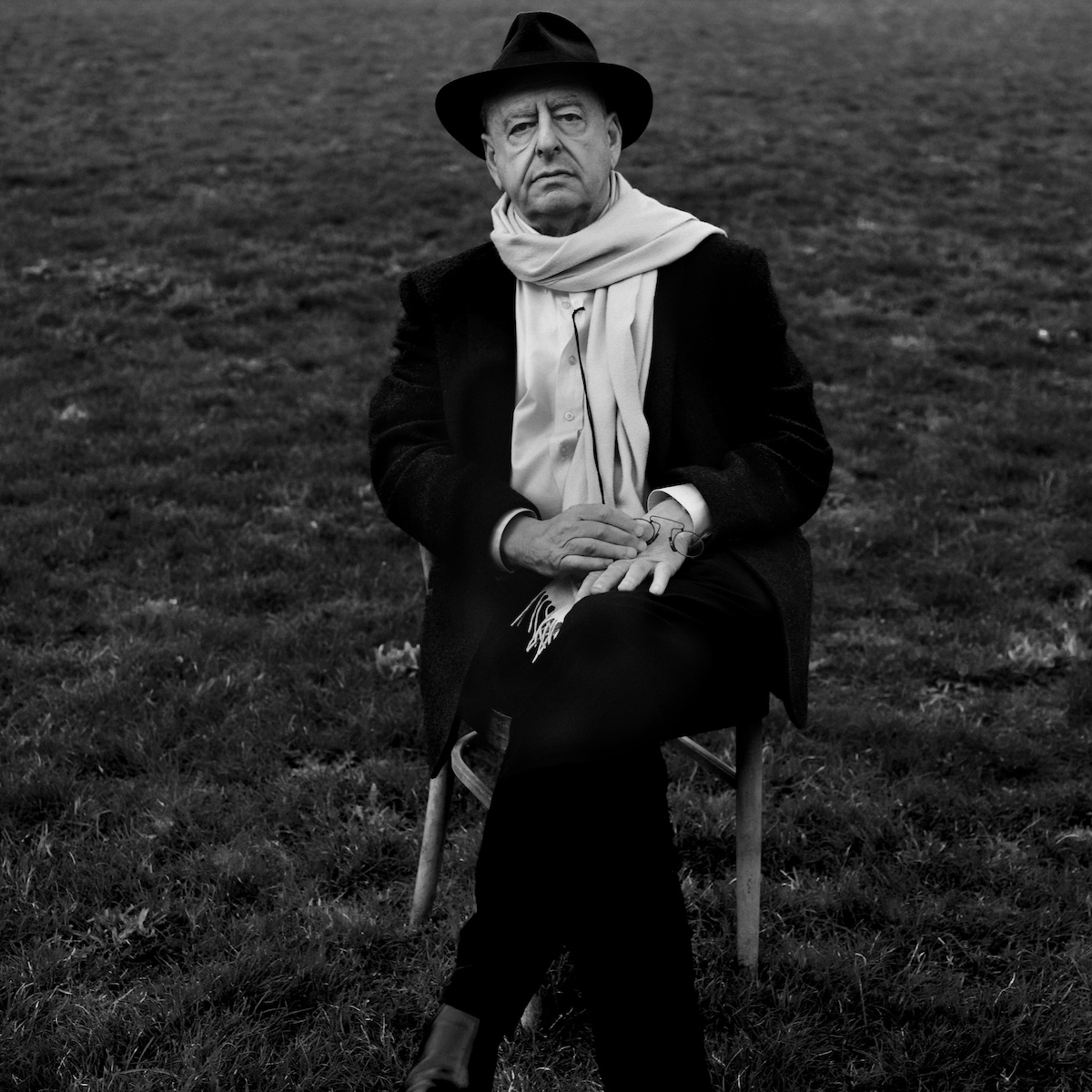
An Interview with William Kentridge
By Carol Real
Studio, Process, and Uncertainty
When audiences leave your recent presentations, what do you most want to stay with them, not as information, but as a feeling?
It’s very hard to anticipate what an audience will take away. I suppose I’m most interested in them having a sense of the agency of making. You can see the way things are made, whether films or drawings. If there’s a sense of: “Oh, I can see how that was made. I could imagine doing that.” Or: “I understand all the associations that come from looking at it.” That sense of being actively involved in making the meaning of what you see, that would be a pleasure if people left with that, but I don’t anticipate they need to do that.
In your most recent work, the studio feels less like a place and more like an organism, memory, routine, disorder, thinking. What is your studio teaching you right now?
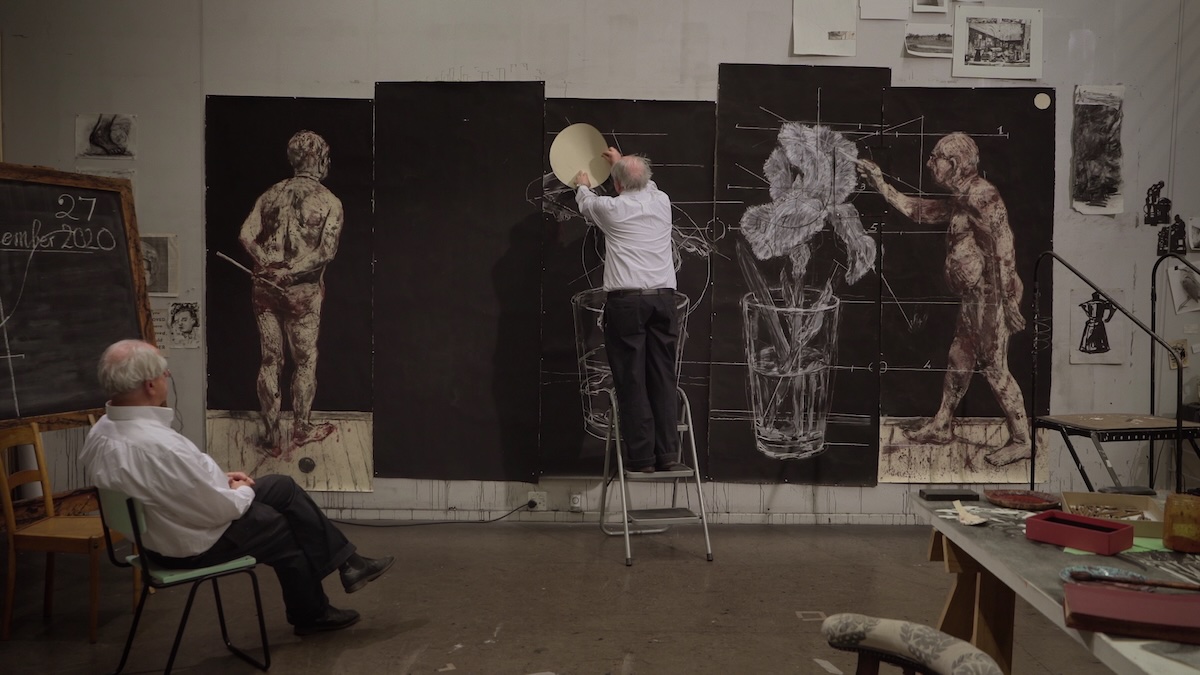
I think it’s very important my studio is a space. It is a physical space. A space of familiarity: the walls, the table, the drawers in the room next door where different materials are stored. It is a way of being able to call on material things that often stand in for larger thoughts, like the kind of erasing you can do with charcoal on paper.
I’ve tried working in other spaces, or in other rooms which aren’t studios, and I immediately run up against: “I just need this particular paper, or this particular kind of eraser, or this material that’s not there.” So the specificity of this particular space is important, but also its privacy: it’s a room where I can mess about without necessarily knowing how something will end. For me, it is always the physical object and the physical making that defines the studio.
What does my studio teach me? I only discover that long after it’s been done, and almost always when somebody else points it out to me. That is one lesson I’ve learned over many decades in the studio: to hope that the work understands more than I do. Usually that means other people have to show me.
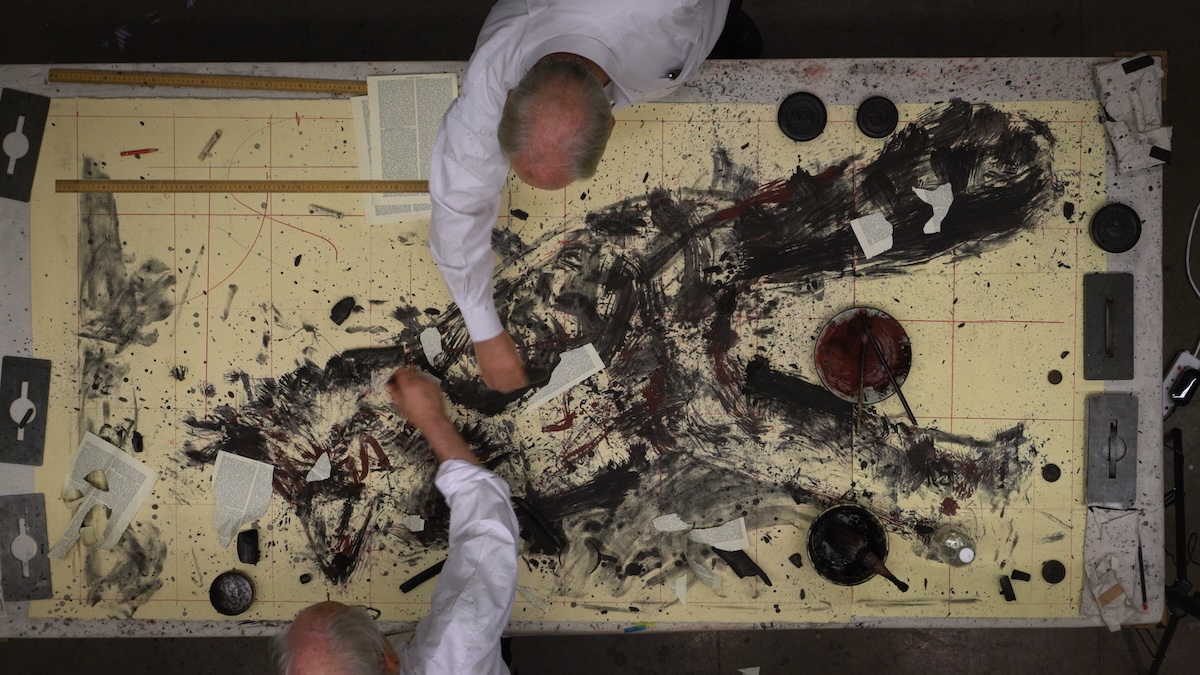
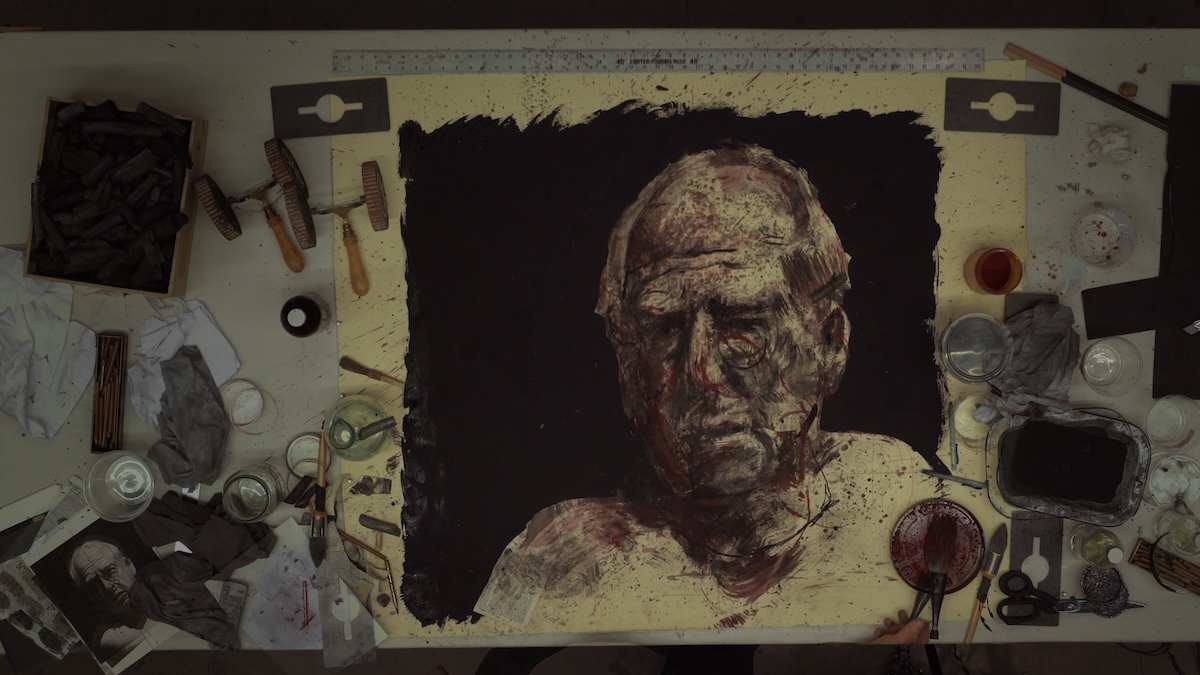
What has changed in your practice over the past two years, even if it is not obvious from the outside?
Not a sense of collaboration, that’s been there much longer. I suppose it’s the specifics of different forms we’re exploring, and discoveries made all the time. In particular, a kind of diorama: a miniature Pepper’s Ghost box, partly like a miniature theatre, partly like a theatre model, partly like a projection screen, where one plays with illusions of depth and the mixture of projections and real objects.
When one finds a new direction like this, it’s both the pleasure of not knowing what you’re doing, and the activity of learning the grammar of how the discipline of the medium works. How busy, how simple can it be? Can we have two different projections at the same time? A back screen and a front screen? How dark does it have to be for things to read? How much do we see the three dimensional objects? Do we split the sound? The whole question of meaning dissolves into a series of practical questions.
What feels genuinely new in your work at this point, something that was not there before?
It’s new in the sense that it’s a new medium, but it’s not a new approach to thinking about the work. The idea of constructing a text out of fragments found as a collage, for example. I’m working with text from Kafka for a new project, but it’s not a new way of setting about writing.
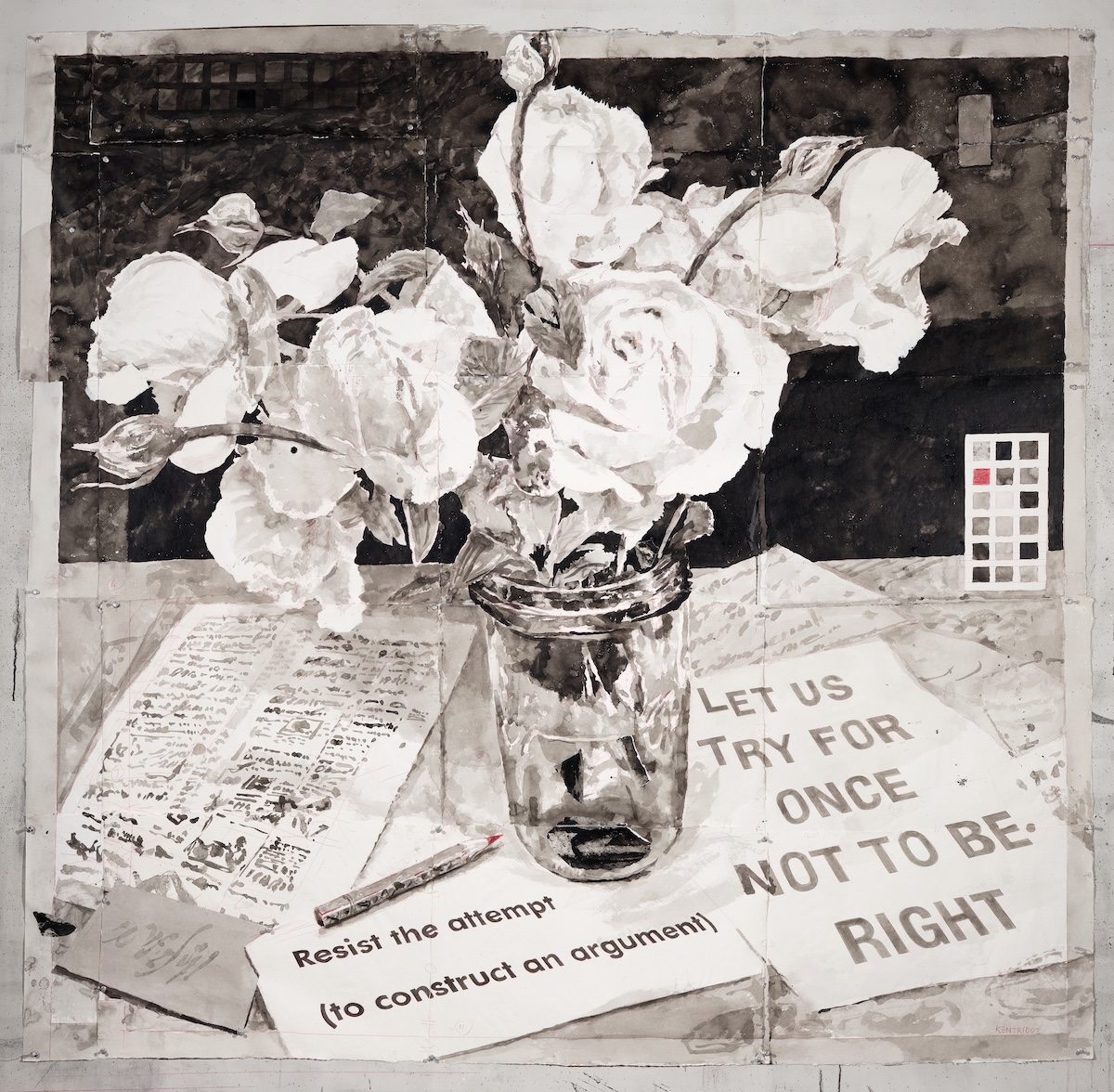
At this moment, what are you most interested in pushing further: drawing, film, the stage, or a form you have not named yet?
I’m interested in pushing further with these boxes. You can see a couple of different ones here, the concerns in them ranging from historical events to much more abstract form of playing with light and reflection. We’ll see what that becomes.
There’s also a big theatre project, Monteverdi’s Orfeo at Glyndebourne. Most of the work has been done in the studio now, but we have the pleasure and the difficulties of rehearsals in a couple of months’ time.
There is preparation for exhibitions next year, which will involve some new forms of sculpture, some new materials. We still have to see what they will be. There’s also a rough animation based around Karl Marx’s essay The 18th Brumaire of Louis Napoleon. That’s a text I will read as a starting point.
How does a work begin for you today, honestly, without romanticizing it, with an image, a sentence, an irritation, an accident?
We’re in the middle of projects rather than new projects starting today. The discovery of the diorama boxes using the semi silvered Pepper’s Ghost technique, and an invitation to do a project in Prague, combined to say: well, let’s find a connection to Prague, which in my case would be Kafka. But not simply make a film of one of the stories, rather play with what the box might offer.
So: cutting out a rough shape of a figure from a drawing, or a photo of Kafka’s face, and other elements. Then using a new motion capture camera which our editor discovered, using this, you can perform and the camera in the device recognizes body parts, and you can map onto these body parts drawings or collages or pictures. Trying to see what kind of Kafka emerges from this combination.
That would be a starting point which takes a couple of days to get going. Then we have enough to see: is it interesting, is it worth pursuing? Then the real work begins.
Then: tracking down and reading lots and lots of Kafka short stories, finding phrases rather than stories. I tried to find a story that would work in itself, but couldn’t find one I could imagine doing directly in this box. So we’ll see how this amalgamation of different phrases works. In the end, it becomes a kind of murder mystery.
What is a better kind of workday for you: the one where everything flows, or the one where something resists?
In retrospect, often the resistance is the strongest push forward. When a drawing moves too smoothly, you know where it’s going, you know how to finish it. That’s fine. A lot of drawings are done that way.
But when something really goes wrong and it’s really bad, and you know you really have to destroy what you’ve done in order to see if it’s worth keeping, there’s a balance between: abandon it, it cannot be rescued; or radically destroy it and see what can come from the fragments. That’s the most interesting, when you come out the other side.
You erase and revise constantly. For you, is erasing a way of removing, or a way of writing?
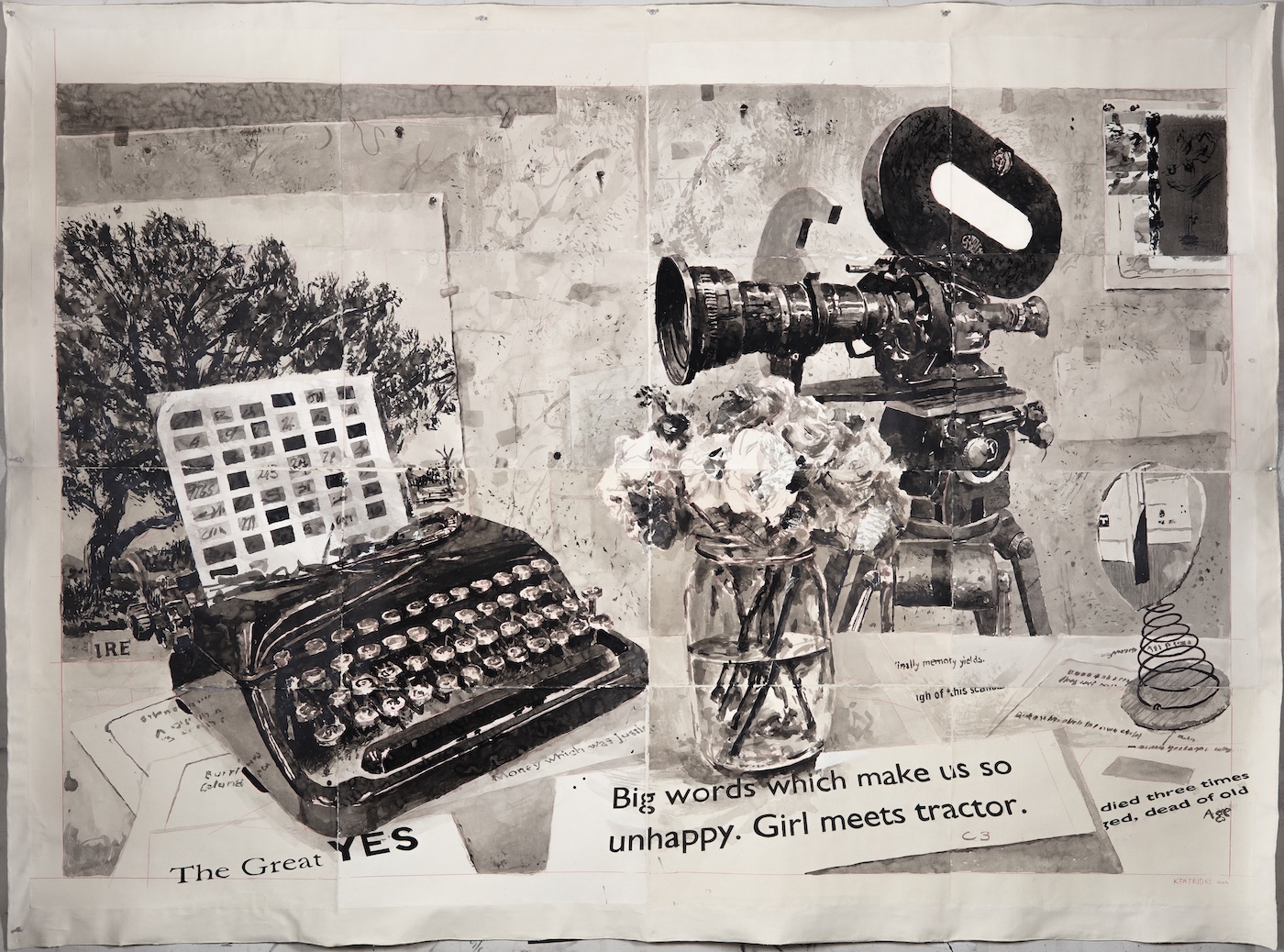
When I’m making a drawing, erasing is one of the ways of making a positive mark. If you start with a grey smudge, you can pull an image into being not just by making dark shadows but also by making things lighter. Erasure has always been central to drawing.
For animation, charcoal animation, erasure is essential. For films and theatre, erasure in the form of editing is vital too. Removing lines, paring down video images and projections, is part of the process. Often you start by assembling a lot, for example putting together a libretto as a collage of different lines by different writers. Then a lot of the writing is done by removing what is not needed. Like removing the bits of marble you don’t want, to be left with a sculpture.
How do you know when something is finished? What signal are you looking for?
With animation, when the sequence has reached its conclusion and you’re ready for the next scene. But most drawings go through a stage of being when they should have been left and haven’t been left, and they go one stage further. If one could pull back the last ten percent of a drawing, in most cases they would have been better drawings. At a certain point you have to say: stop, stop, stop, this will only get worse.
What is hardest for you: starting, continuing, or stopping?
With animation, there’s a sense of: I know this is going to take X number of hours or days. There’s nothing for it but to get on with it. The continuation can be hard because you know the length of the work ahead, and it’s not as if there’s a new discovery automatically there.
Often there’s pacing in the studio, gathering energy, hoping your thoughts will coalesce for something to begin. Usually there’s a walk or a swim, something meditative. Then quick notes in a notebook: lists of ideas. Then there’s a beginning, which is very often not what’s been in your list or what you were thinking about while walking.
Politics, Meaning, and the Refusal of Message
Your work engages politics and history without becoming a message. How do you create that distance, so the work does not collapse into the literal?
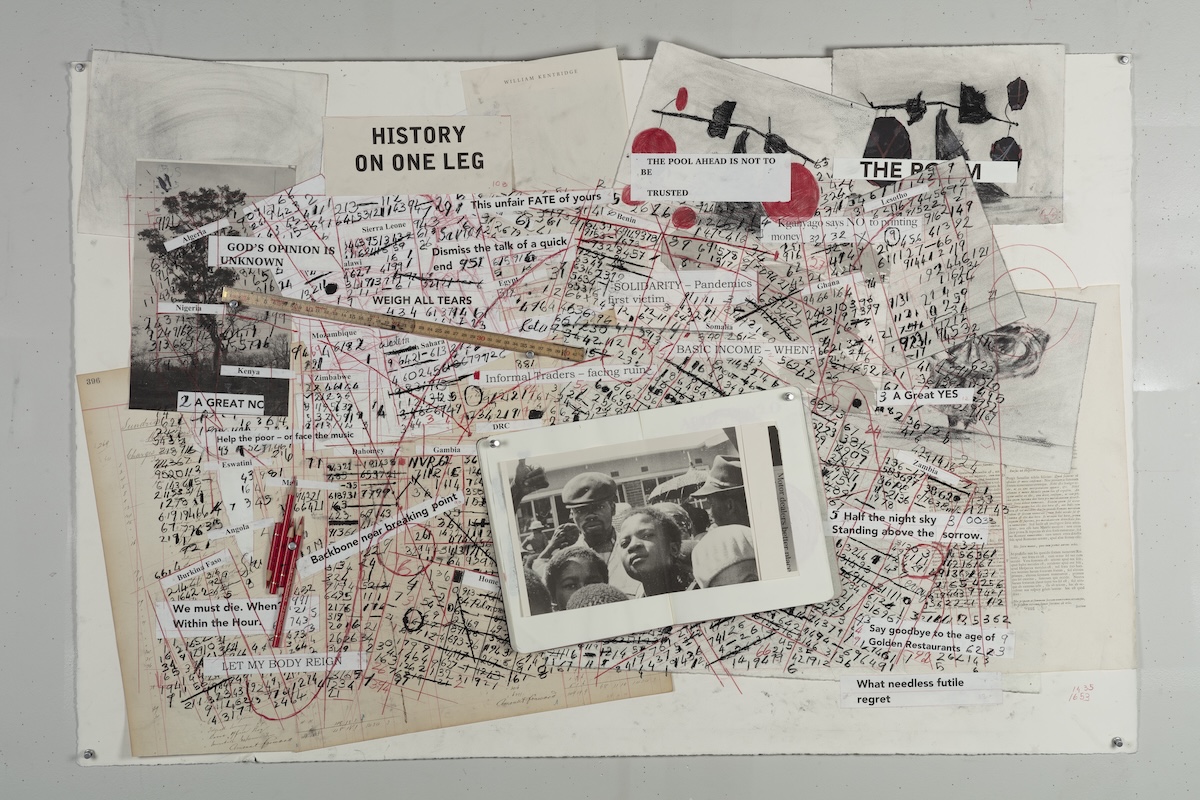
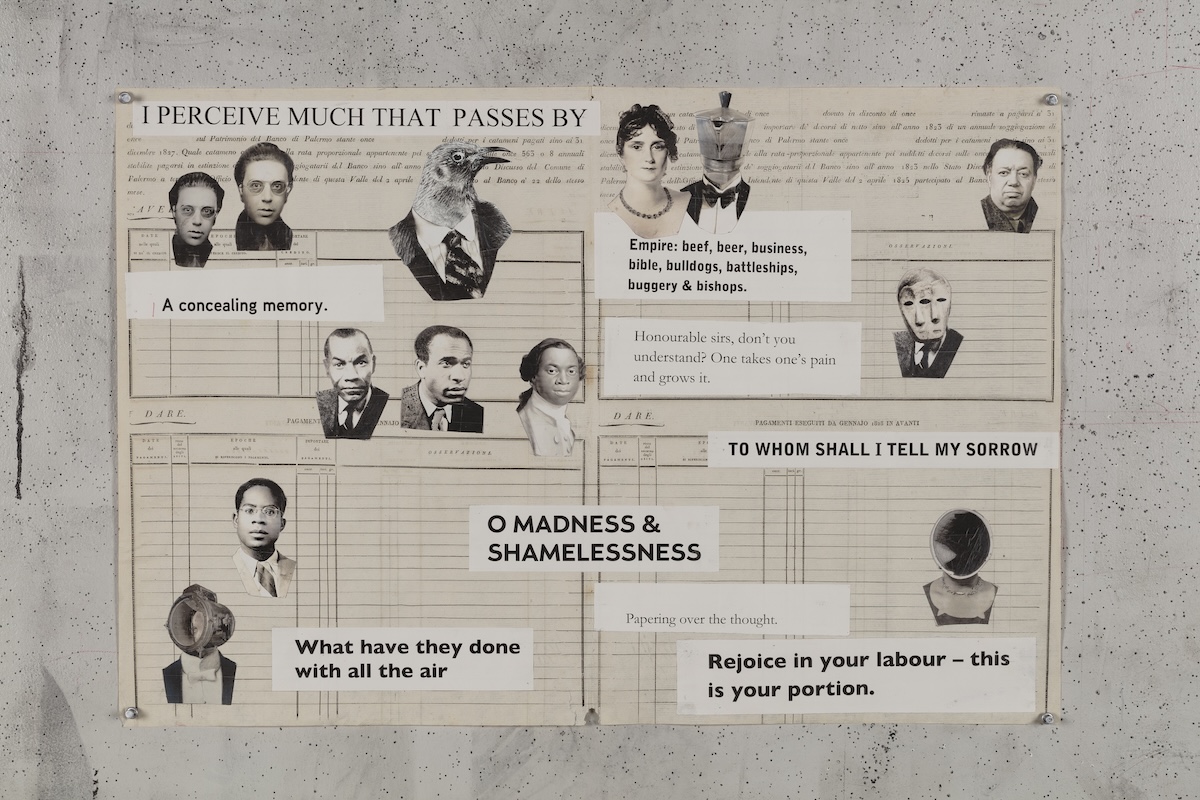
I think it doesn’t collapse into the literal because I’m not good at either narrative or clarity of story. There are fragments which I put together, but which an audience really has to complete: “Oh, this could be this.” “It’s as if it might mean…” In that, as a viewer, you’re active in completing and constructing the fragments into a provisional whole.
Sometimes I wish I had a clear narrative, a clear argument, a clear line to disperse.
Do you feel art today has to be clearer, or more complex?
There is lots of very recondite, impossible to understand art, as there has been for a long time. Some artists are moved towards complexity and a lot of thinking, something where you have to read the artist statement to understand. Others say: no, it is what you see. Just look at it. The meaning is the work, don’t ask for further elucidation. I’m sure I fit somewhere between the two.
Do you care more about the audience understanding, or about the audience continuing to think?
I wish there was something concrete to understand, something like: “Ah, this is the key, now I understand it.” There are reference points that can be useful for an audience to know if it’s an unfamiliar context. But there isn’t an answer at the end. So I’d much rather they continue to think, or even be aware of their thinking in the moment.
Is there an idea you no longer feel compelled to defend artistically, even if it once served you?
I never say to myself: “This is a theoretical idea I need to defend artistically.” I’m sure there are interests and lines of enquiry and questions which were more present when I was younger that aren’t here, but they don’t feel utterly different, the questions and the ways of working. There’s always doubt about the answers.
The only thing I’ve become more confident in is the way of working, and relying on the work to explain itself or find a shape rather than being known in advance. That comes from experience doing many projects, and the ones that have worked were often the ones I had the least sense of at the beginning.
Language, Repetition, and Image Vocabulary
Many artists try to change languages constantly. In your case, repetition can feel like a form of thinking. What do you discover by insisting?
There are different kinds of repetition. Some artists: you feel they’ve got their one idea and they keep working with it. Others say: I have that idea and I’ll play with it for a week or a month or a year, and then I’m done, I go on to something different. Both have virtues.
Then there’s repetition which comes from a lack of imagination. You’d love to do something new, but you do it and discover you’ve done it before. It’s a bit like a neurosis: symptoms endlessly repeated in the hope that at some point it will jump off the track and something shifts, something new emerges. I think many artists fall into that neurotic category.
It’s not a question of what I discover, I try to shift and change, but I discover instead of drawing a hippopotamus, I draw a three hundredth rhinoceros. Partly because it’s part of a vocabulary that stands for many things and can be used. Partly it’s pleasure in the animal, in the drawing, and its associations. Partly it’s simply what object comes toward drawing to be drawn.
Your signs, silhouettes, and “glyphs” feel like a private vocabulary that becomes public. Do some symbols arrive before you know what they mean?
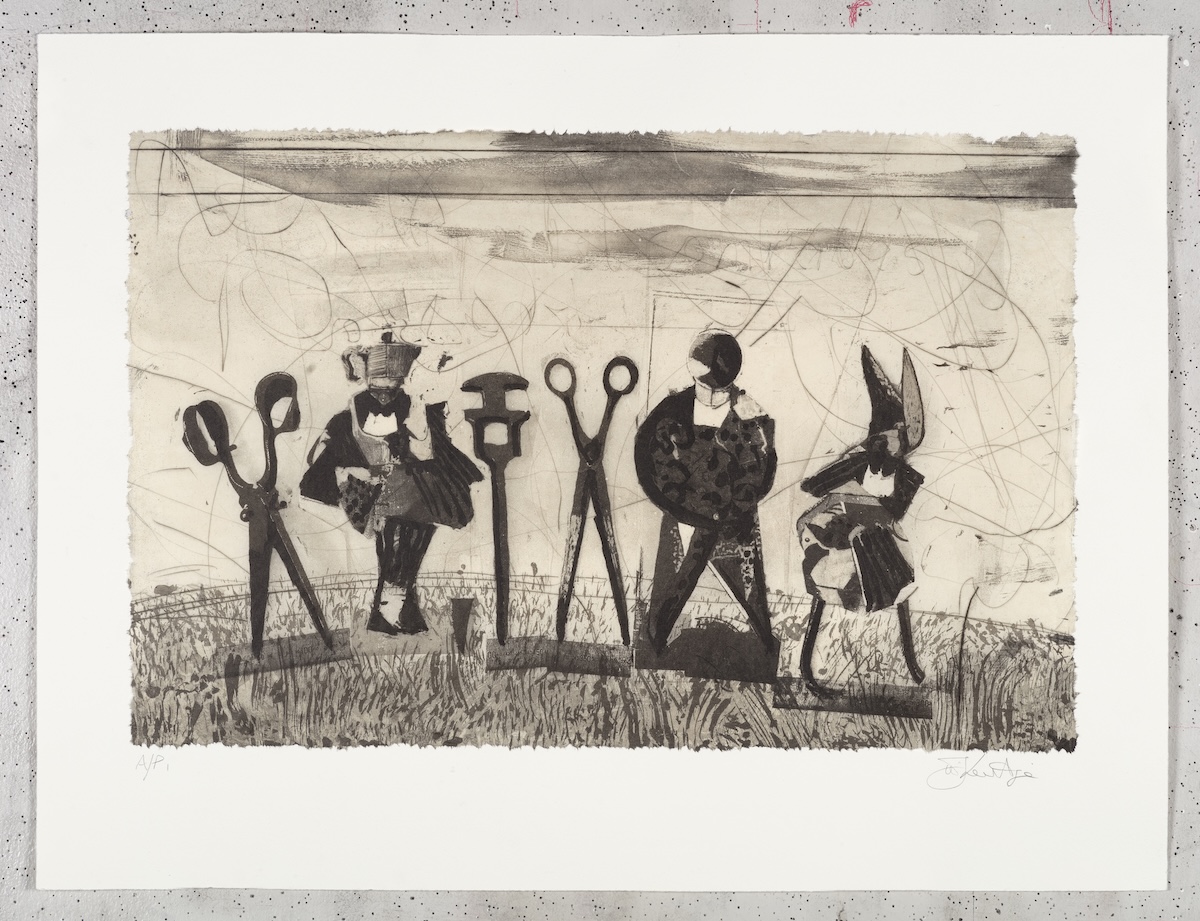
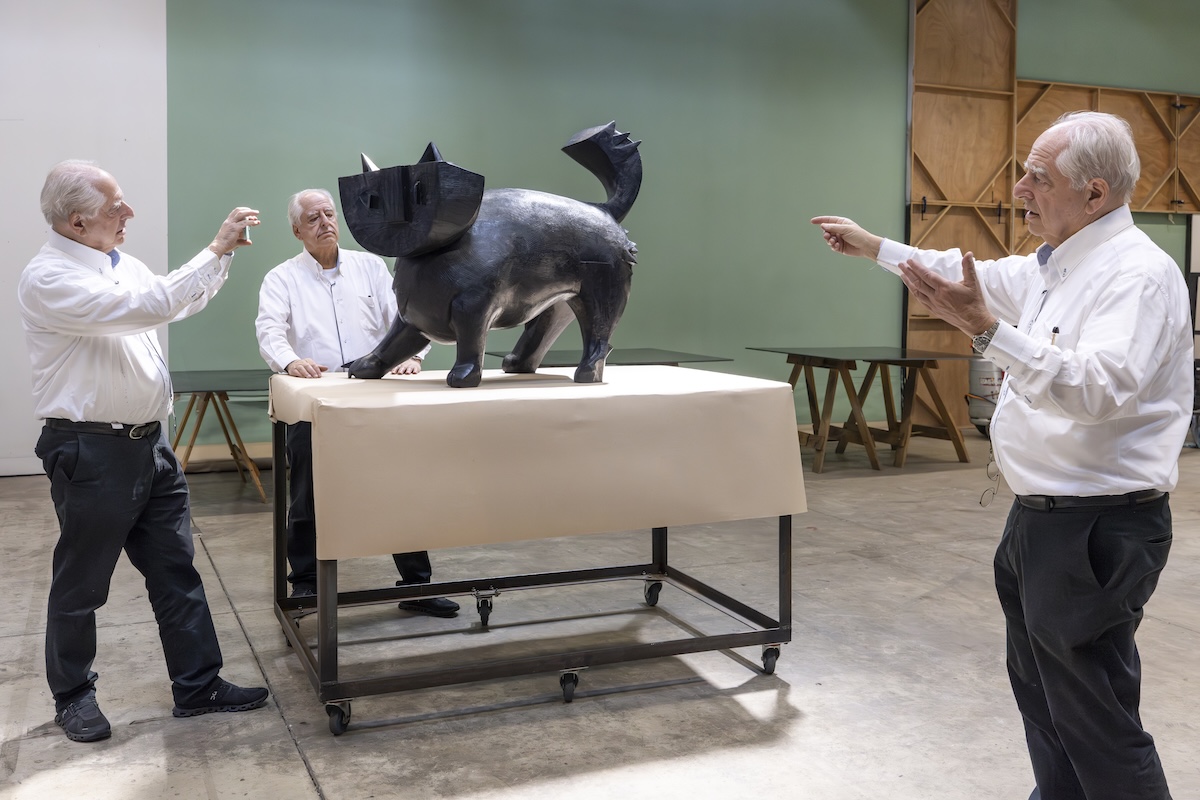
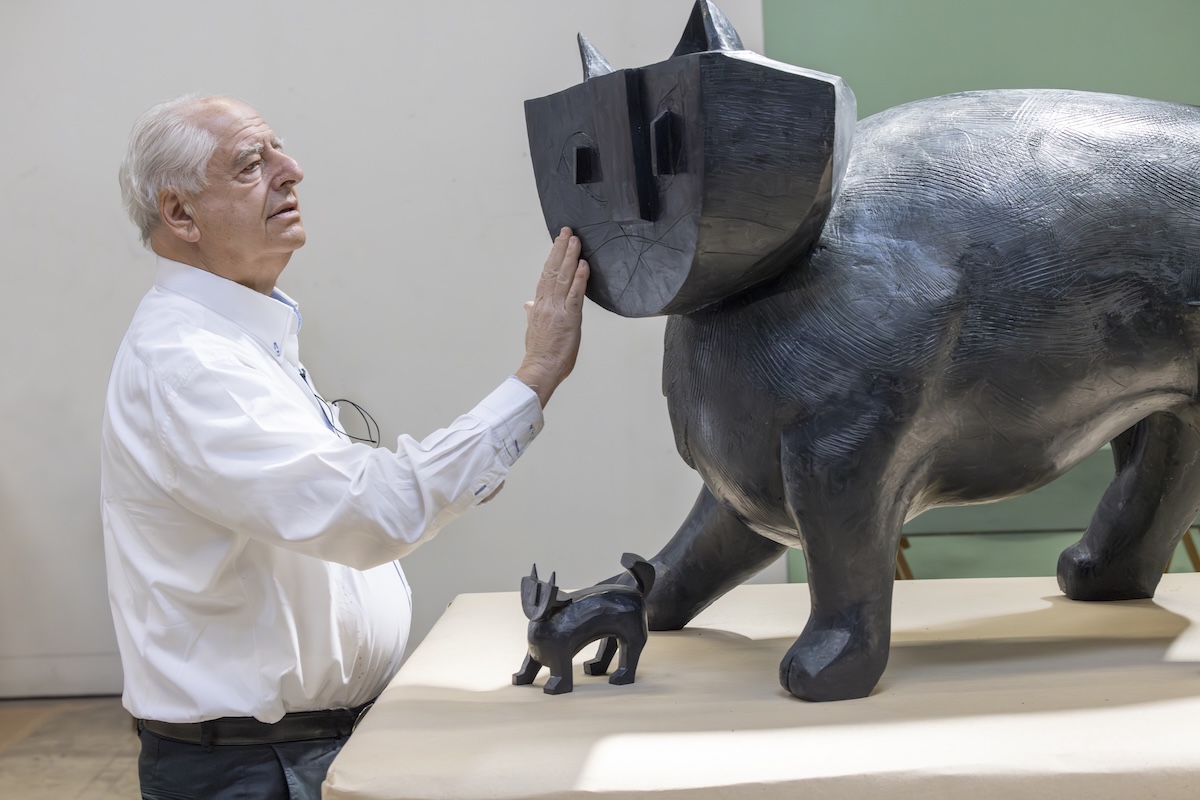
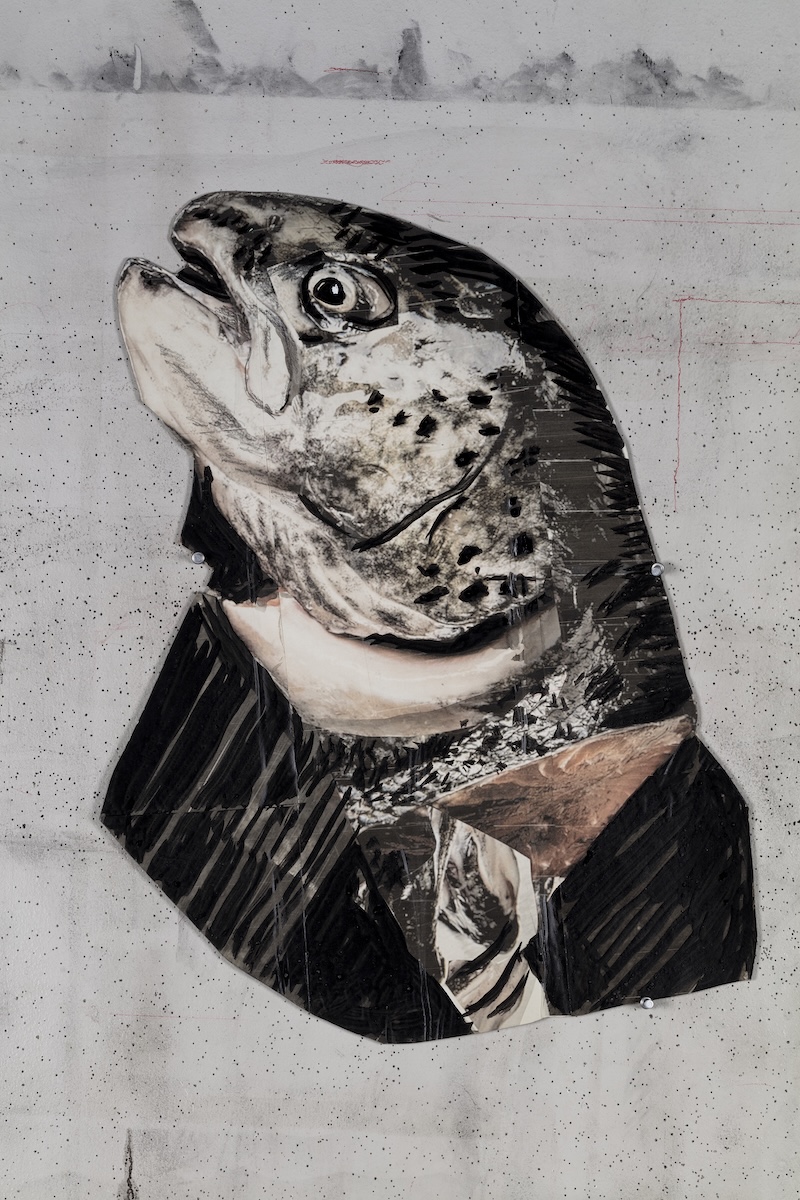
Yes. The glyphs, particularly in small paperweight sized sculptures, start as maybe a note in my sketchbook, then become a torn paper silhouette. The torn paper gets depth and heft in wax and foam and eventually turns into bronze.
They often start as a diary: objects or shapes or references to sculptures I’ve seen over the course of the year. I put them down and ask: what do they add up to? Not whether they add up to a meaning, but they act as beacons: thoughts I’ve had. They’re like hieroglyphs, as if they had specific meanings you could put together. This is how we make meaning: putting different things together.
If you rearrange a sculpture in a different order, it’s as if you’re writing a new line of text. They’re like hot letter press, assembling lines of meaning, but lines that do not have a meaning: they refer to meaning but resist it.
If your work were a language, what part would be grammar (structure), and what part would be accent (personality)?
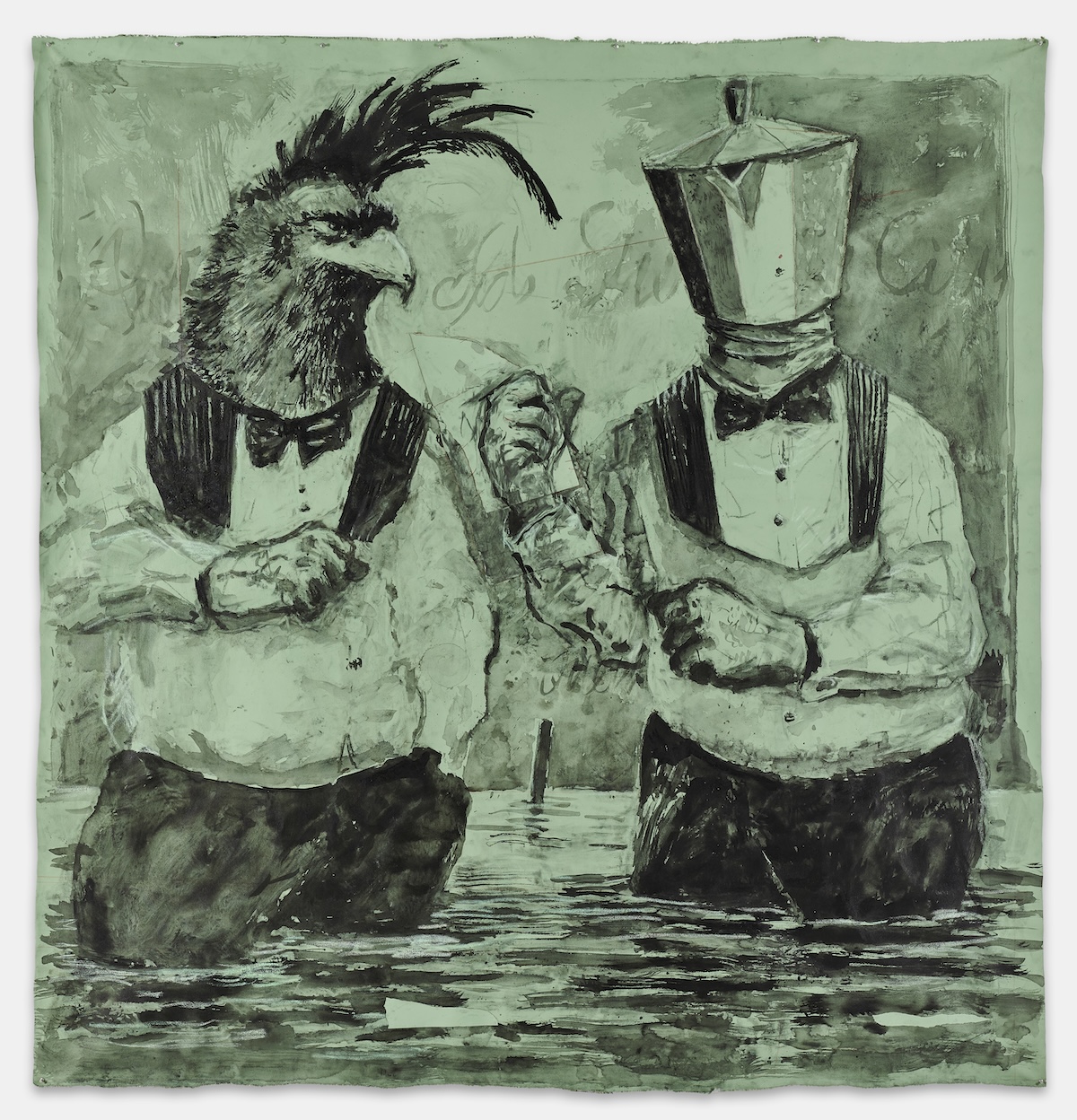
There’s always a grammar to learn. If you’re working with puppets, for example, there’s a grammar of stillness between movements. A grammar of retreat before forward movement. A grammar of lifting before a line is spoken, like a breath of air. These are things you practice; they shape the work and are invisible to the audience.
Then there’s the particularity of the puppet: the carving, the drawing, the way it moves. Both are vital.
With animation, the grammar is: should this move every two frames, or four frames, or one frame? How big are the gaps? When does the ghost of the previous marks work towards meaning, and when is it just an irritation? Those are the things one spends most of the time learning.
Time, Performance, and the Body
When an image moves from drawing into film, the drawing becomes time. What scares you more: freezing an image, or letting it move too far away from you?
I’m interested in the inauthentic origins of many elements in the artwork. Things don’t arrive because you’ve had a clear idea; they come out of the moment.
In animation, there’s a sense of time pressing behind you. It’s slow and you have to keep moving. If you don’t really know what the image is, one thing you can do is mark time by having grass move slightly or a bird fly across. It works like a clock. You gather time like a miser, second by second, to make the film.
You find it changes the nature of time: your time as a viewer looking at a static image, or time moving into the film, or into the drawing through movement.
There are drawings that remain conventional drawings. Others shift into movement. Some start as fragments of animation, then get repeated, redone, or left as a final drawing. Many drawings, as they’re being animated, reach a point where you think: I could stop now, this is an interesting drawing halfway through the transformation. But it has to continue to complete the sequence. Occasionally I go back and try to remember what it was halfway, and make a drawing of that halfway stage.
Your films often feel made of thought, not only of images. How do you know when a film has found its inner rhythm?
It’s only when you put it on the editing table and look at it that you start to see what it is. If it’s a short loop, eight seconds, you look again and again. It shifts a lot once you try sound: different pieces of music, calypso, an African hymn, whatever it might be. Sometimes something that feels dead or jerky finds a rhythm when the music talks to the image.
It’s astonishing the range of music that can work with the same images. Not all, thankfully, so it’s not random. One becomes good at finding the rhythmic connections between different pieces of music and fragments of film.
For the rhythm of the whole film: watching and watching as it gets edited, taking pieces out, slowing things down, going back and redrawing sequences.
What can the stage give you that paper never will?
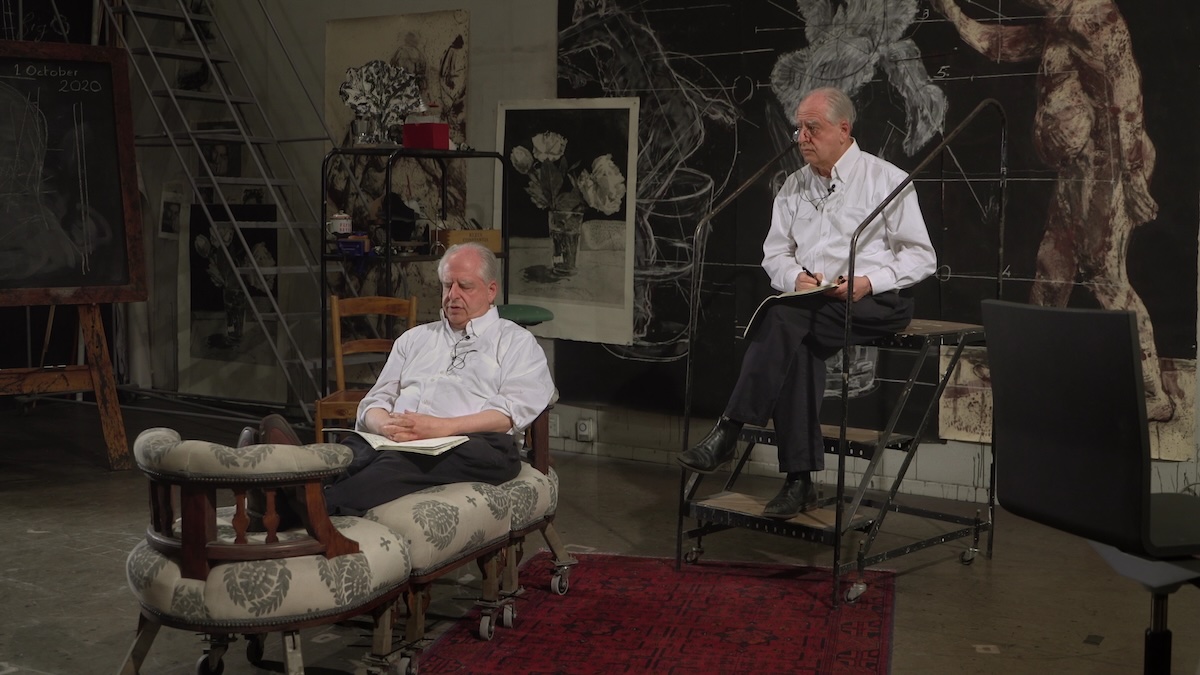
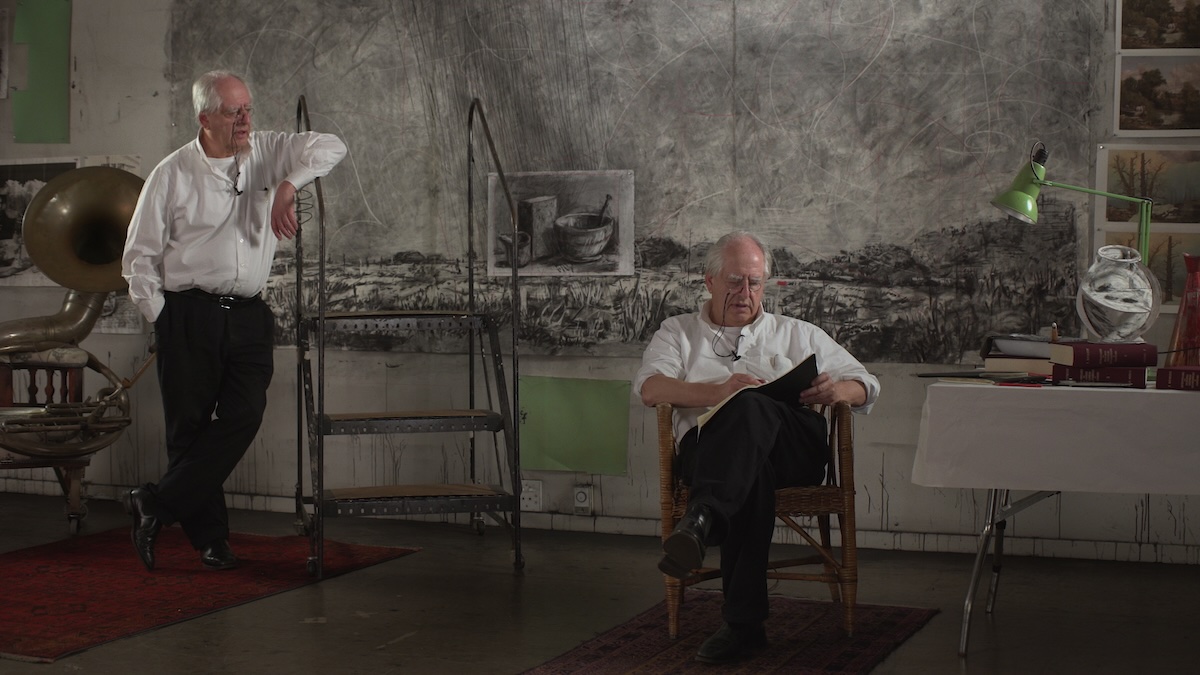
Depth, of course. The liveness of performers. But also: a gathering of people together, watching at the same time, aware of themselves as part of an audience.
In an exhibition, looking is usually solitary. People arrive at different times, stay for different lengths, and leave. In theatre there’s an insistence: now it begins, now you sit and watch it, now it’s finished. There’s a collective sigh, a groan, a sense of quiet communication in an audience together. That is different.
In works with music, voice, and performers, how do you negotiate control? Where does your authority end and someone else’s freedom begin?
I have a lot of trust in the collaborators I work with, and by now they know me well enough: when I resist, when they need to fight back, or when they need to walk away and wait a day, and come back when I’m more open to what’s being suggested.
Temperamentally, I’m bad at conflict or confrontation. So I generally work with collaborators who have openness and uncertainty, allowing things gradually to be consolidated and confirmed.
The projects are very slow, much slower than opera houses or theatres would wish, which makes them more expensive. But it’s the only way I can work.
If at the beginning a singer asks: “Tell me what to do. Where must I stand?”, I will always give them the wrong answer. They need to have confidence that at the end of rehearsals everyone will know exactly where to be. Some performers can deal with it and some hate it, but it’s the only way. A pretence of certainty doesn’t work for me, and in the end it won’t work for performers either.
What did theatre teach you about vulnerability that later returned to your drawing practice?
Theatre taught me thinking from the neck down: understanding meaning that the body brings to gesture and performance, rather than instruction from your brain. There is an openness in that. It can be rubbish what you’re doing, and very often it feels like that. Sometimes it ends like that too. It can be a disaster. There’s no guarantee.
The work can reveal things to you, but you still have to shape it as it goes along. There’s a vulnerability in saying: I don’t really know what I’m doing, but this way of working has worked in the past, so let’s try it again.
There’s always a 3am panic: Yes, it worked last time, but this time it can only be a disaster. And in retrospect, not all the work has been wonderful.
Sculpture introduces an unavoidable condition: weight, body, gravity. What interests you about gravity today, not only as physics, but as an idea?
I suppose it has to do with the easy transformability of the digital world: editing text, film, images, or creating through AI, the weightlessness of that. There’s no trace of what you’ve done unless you artificially put it in.
The resistance of material, the shadow as something fleeting that can be turned into a paper silhouette, then into dimensionality, then into the thickness of a glyph, becomes a way of giving weight to the word. The consideration that you spent a week on one word rather than four keystrokes and then it’s gone.
What do you think is more dangerous for an artist: repeating oneself, or becoming correct?
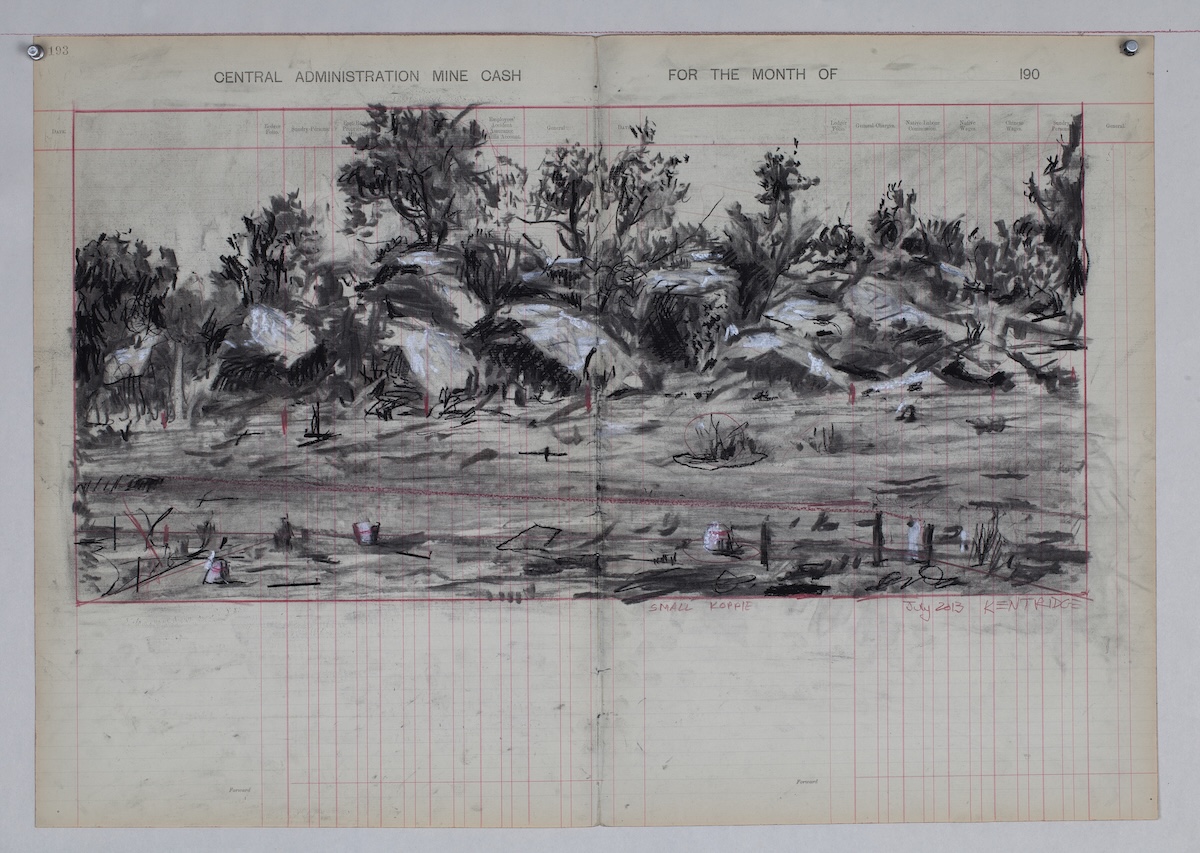
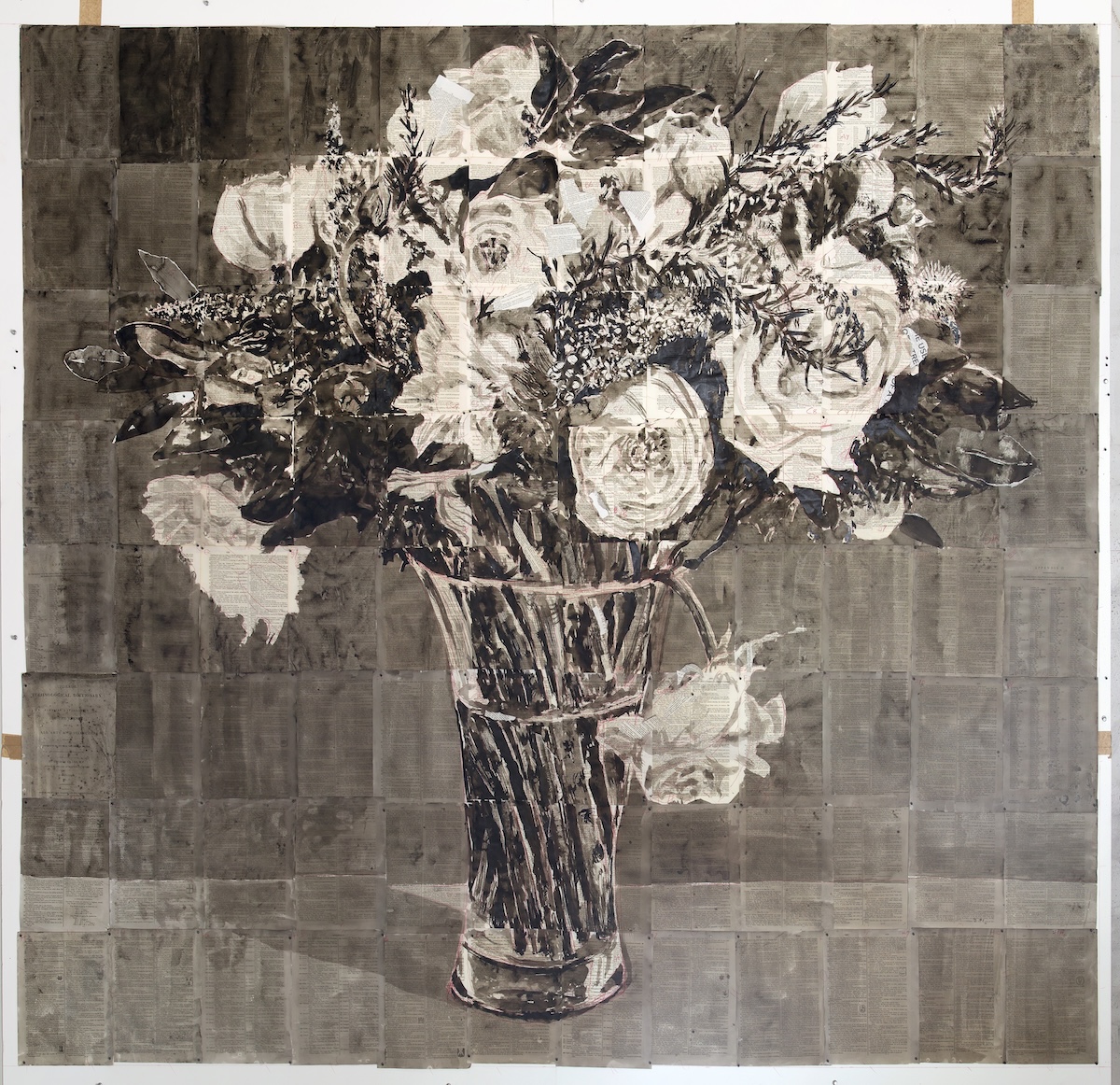
A repetition endlessly of things that are known becomes dull, so there’s a fear of that. I’ve drawn a lot of different trees. They started with an idea about brushes, but there are many different trees. If I spent the next years of my life just drawing trees, that would feel like a bad repetition. But insofar as a tree can represent many things inside a film, I’m sure the trees will continue to be made in the studio.
I have no idea what it means to become correct.
And there are things which slowly accumulate. Medium sized bronzes, larger versions of glyphs, there must be 20 or 30 different sculptures now, but there’s never been a place to see them all. Theoretically, it would be a good processional piece to see at some point in the future. It’s repeating a form and scale, but bringing different items to it. It doesn’t feel like simple repetition, and I certainly don’t know that it’s correct.
There are painted miniature sculptures as well: there were six and now there’s a seventh, and two others will join. That continues. It has to do with bright colour in nature, for things to be seen outside.
There’s a different film we’re thinking about for the end of this year and next year, which will take off technically from some of the ways we worked in the last film, but will be something different.
I hope one doesn’t simply become correct.
What would you make if the idea of “a Kentridge style” did not exist as an expectation?
Some friends of mine, art teachers, taught me to paint in oil some years ago. We’d buy an object at the market: a piece of salmon and a bunch of asparagus. I’d spend the morning painting it conscientiously, then we’d eat it at lunchtime. I realized I could become a happy weekend painter, a Sunday one. Although I’m sure I would not, but the idea was there. So I might do a bit more of that.
Sometimes I think: let me work within a theatre production that is just three actors on a blank stage, an empty space, as opposed to the machinery of projections, costumes, sets. I start that way but soon the other elements come in, not out of expectation, but out of what the projects call forth.
But sometimes I think: let’s do a series of three short plays with no projection at all.
What part of your work do you still feel hesitant to show, and yet you know you must?
You’d have to be my psychoanalyst for me to discuss that thoroughly with you.
Image Credits
All images courtesy of the artist. © William Kentridge
Editorial Credits
Edited by Kristen Evangelista.
Interview conducted in January 2026. Edited for clarity.
Special thanks to Anne McIlleron and Natalie Dembo, William Kentridge Studio.