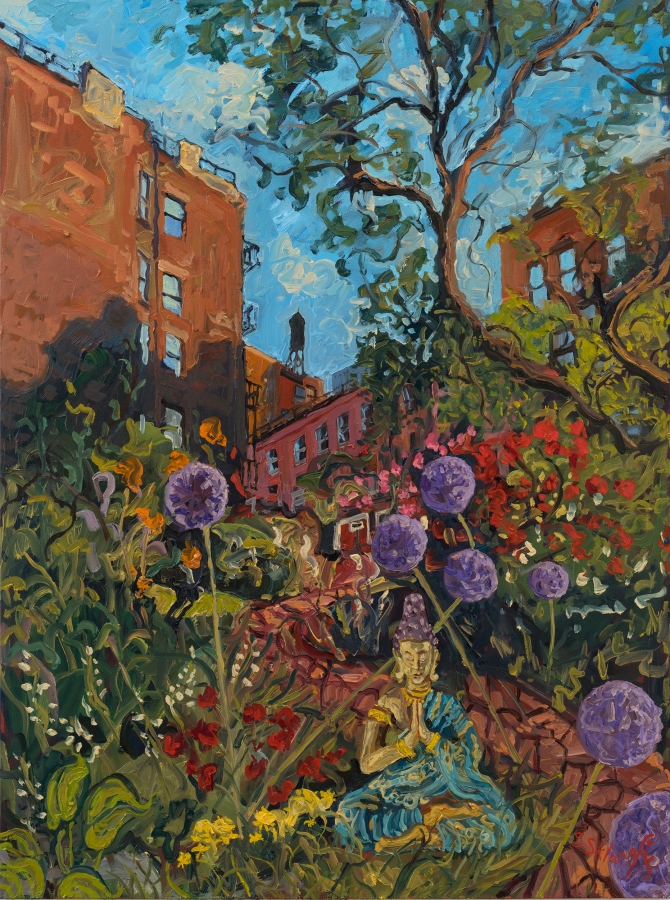
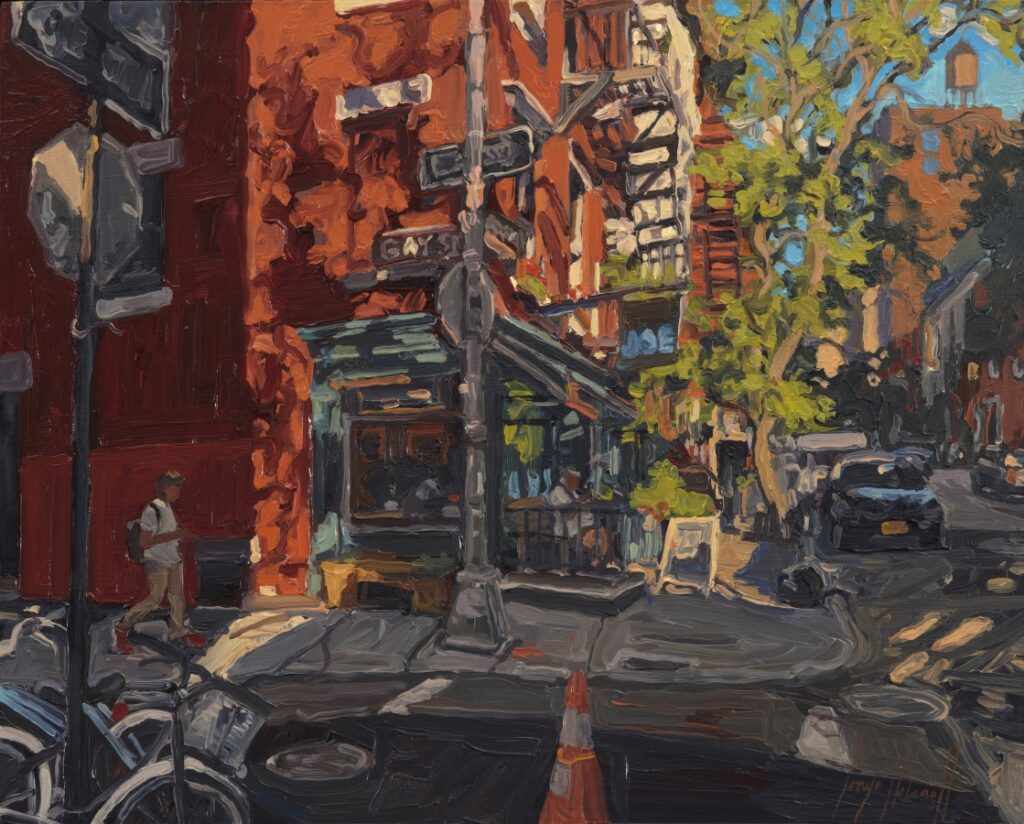
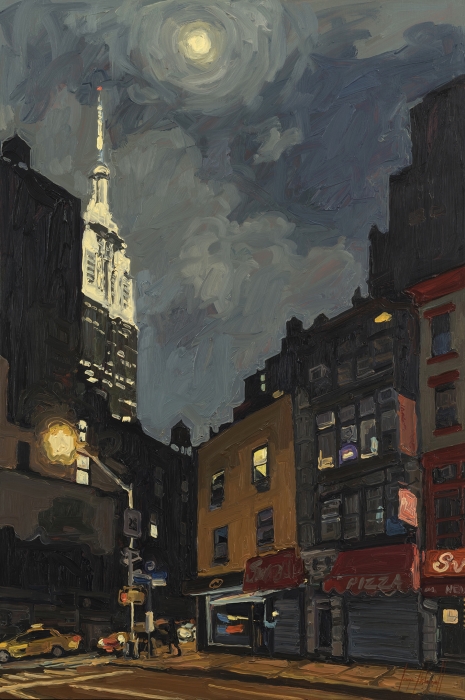
Sonya Sklaroff has spent over three decades moving between two worlds, the quiet corners of New York City and the private homes of collectors across the US and France, where her paintings live alongside centuries of family history. Trained in the classical tradition, she has shown in galleries and institutions on both sides of the Atlantic, yet much of her most significant work today exists only within the walls it was made for. In this interview for Art Summit Magazine, she talks about the homes that have shaped her work, her lasting connection to France, and why, after all these years, she still finds as much inspiration in a quiet New York street as she does in a room designed around one of her paintings.
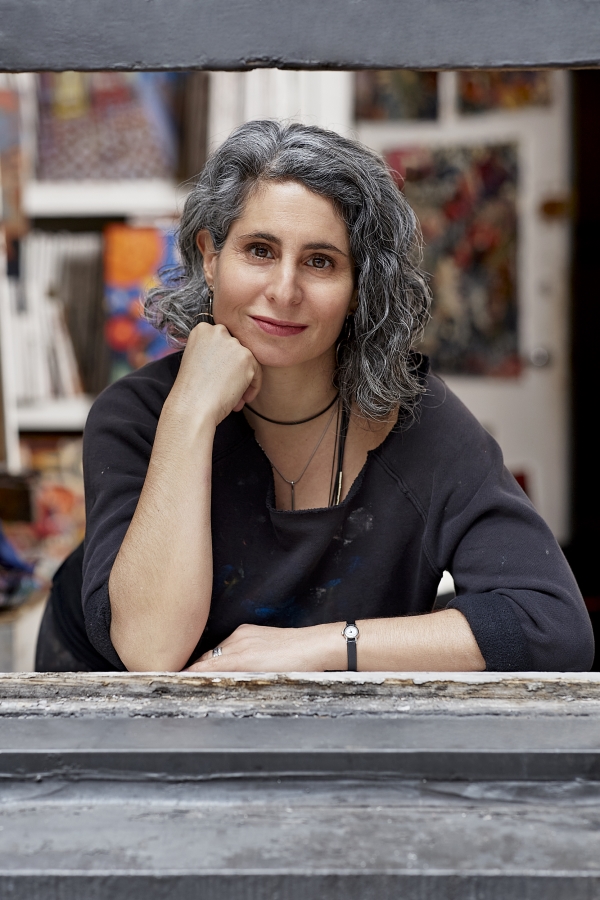
An Interview with Sonya Sklaroff
By Lisa Portscher
Your work moves constantly between New York and France. How did that relationship with both places take shape?
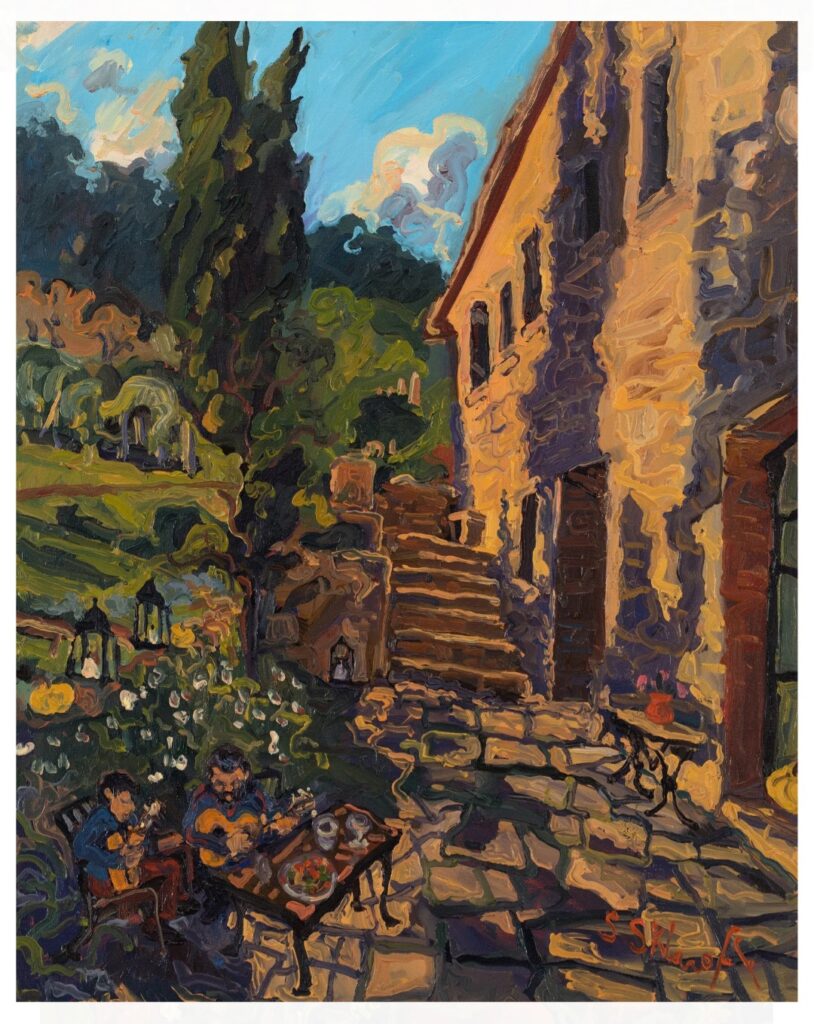
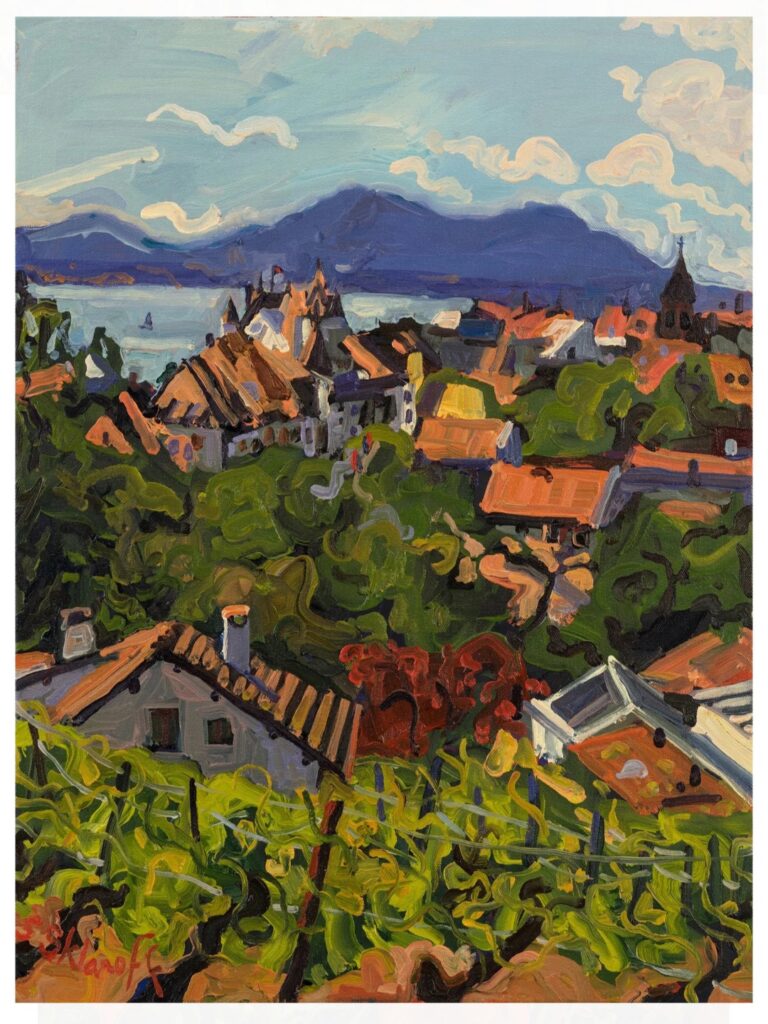
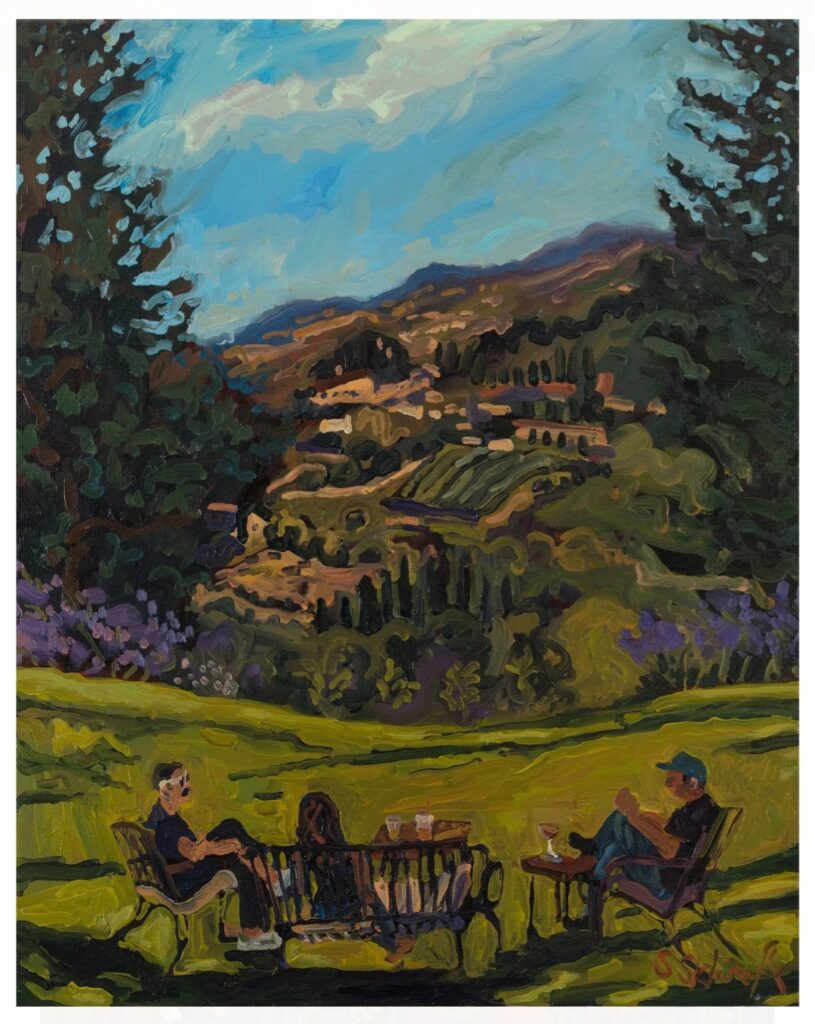
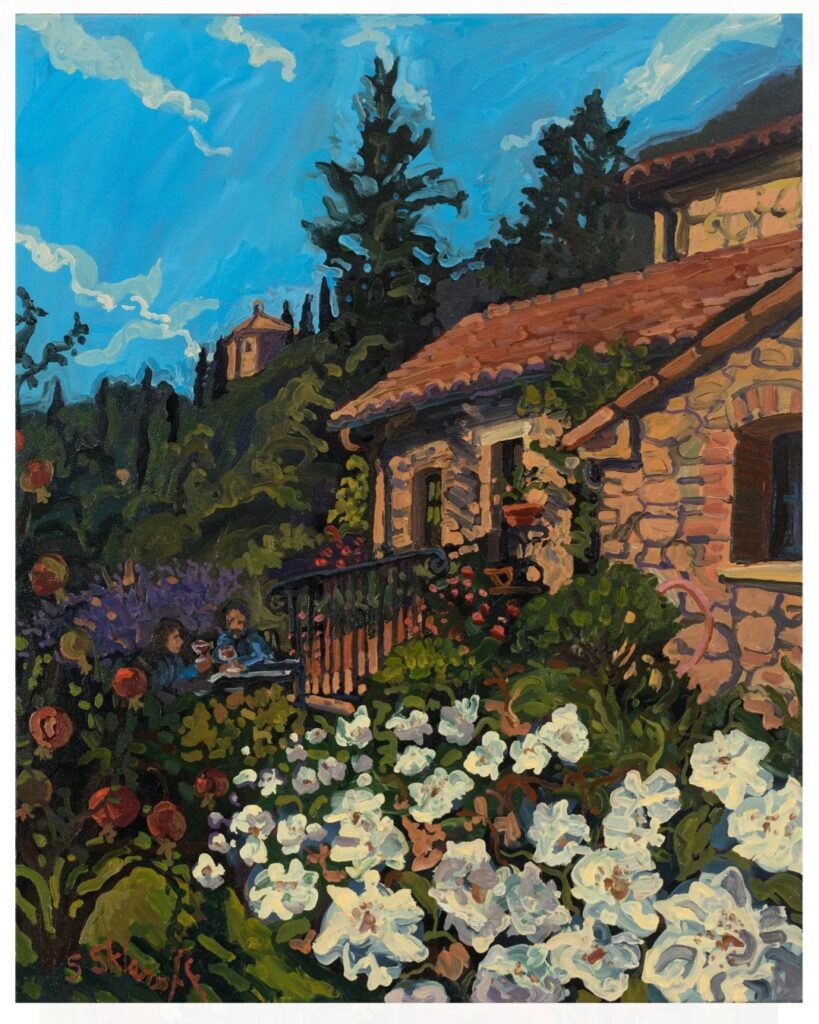
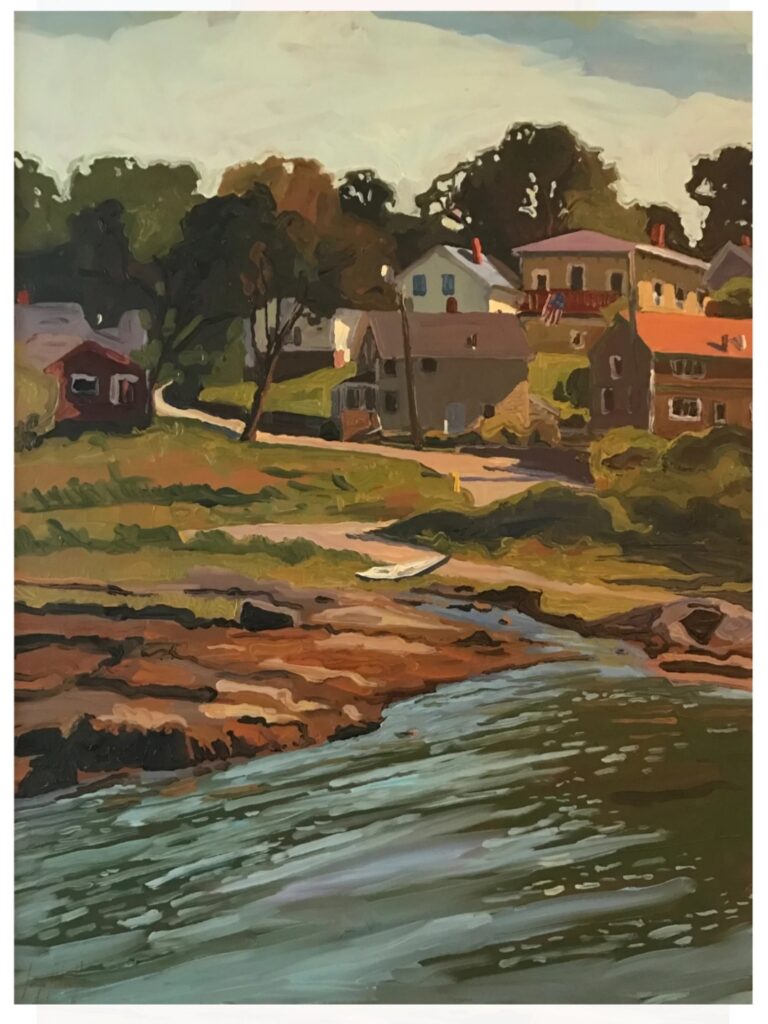
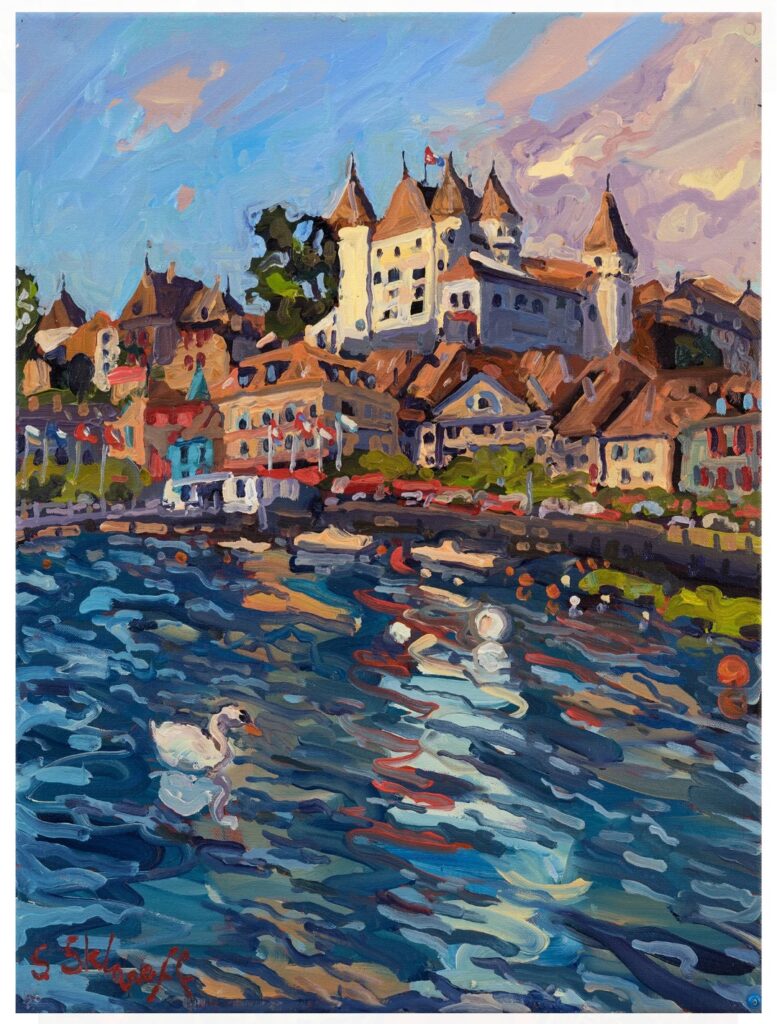
France has been part of my work since the beginning, Paris, Versailles, Bordeaux, the south. There’s something about the light there that keeps pulling me back, and over the years I’ve shown there as much as I have in New York. That dialogue between the two, the density and energy of New York and the openness of the French countryside, ends up in the work whether I’m painting a street in Chinatown or a hillside in Provence.
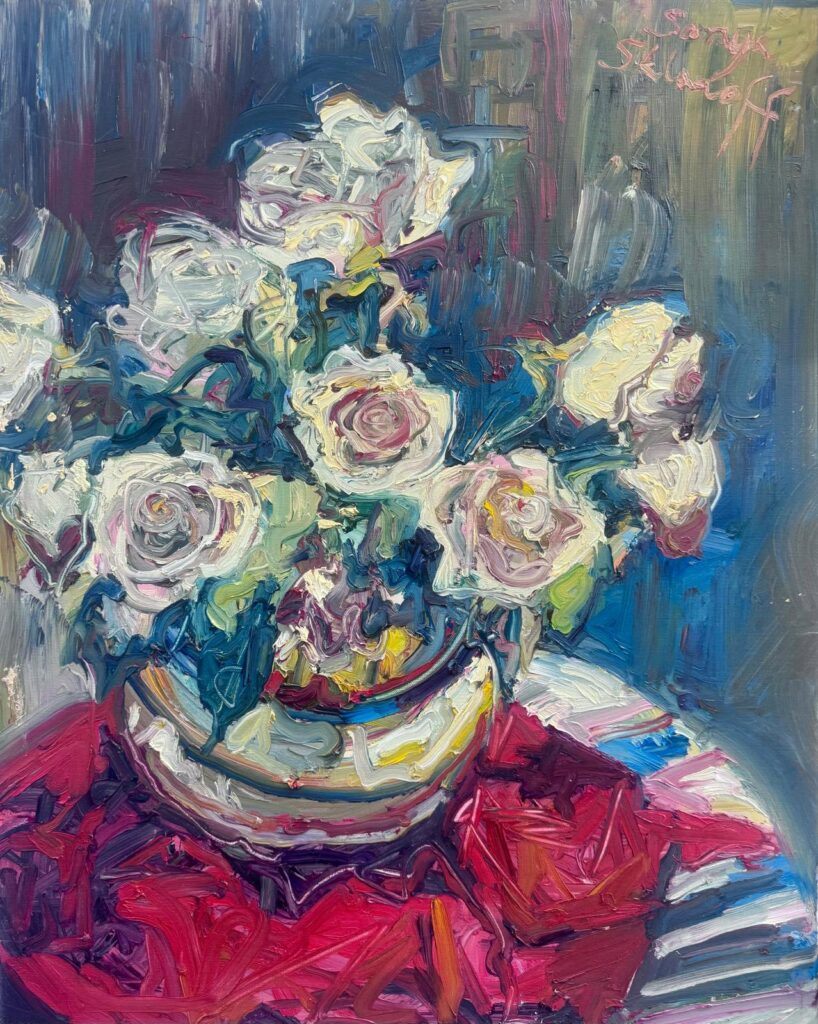
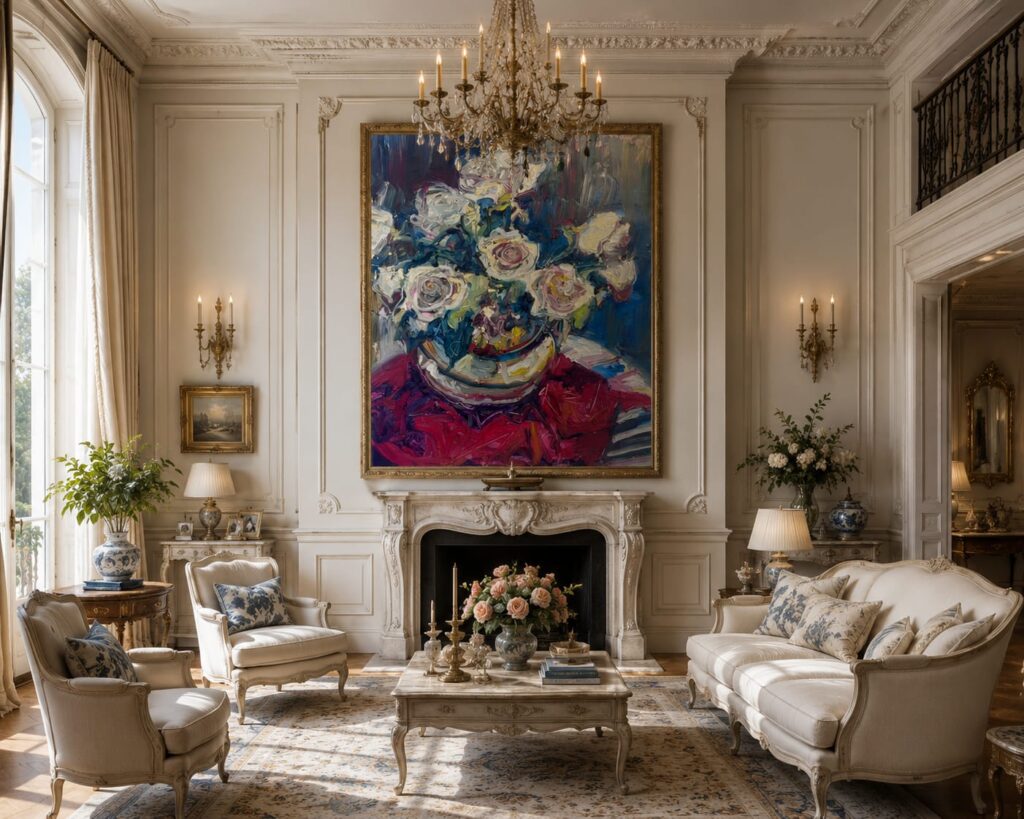
There’s a long tradition, the Rockefellers, the Vanderbilts, of patrons commissioning work specifically for their homes, pieces that could only exist in that space. Do you see your commission practice in that lineage?
I think about that tradition often. Those families understood that a great room deserves something made for it, not just placed in it. When I take on a large commission, I’m thinking about the same thing, how the piece will live in that space for generations, not just how it looks in a photograph.
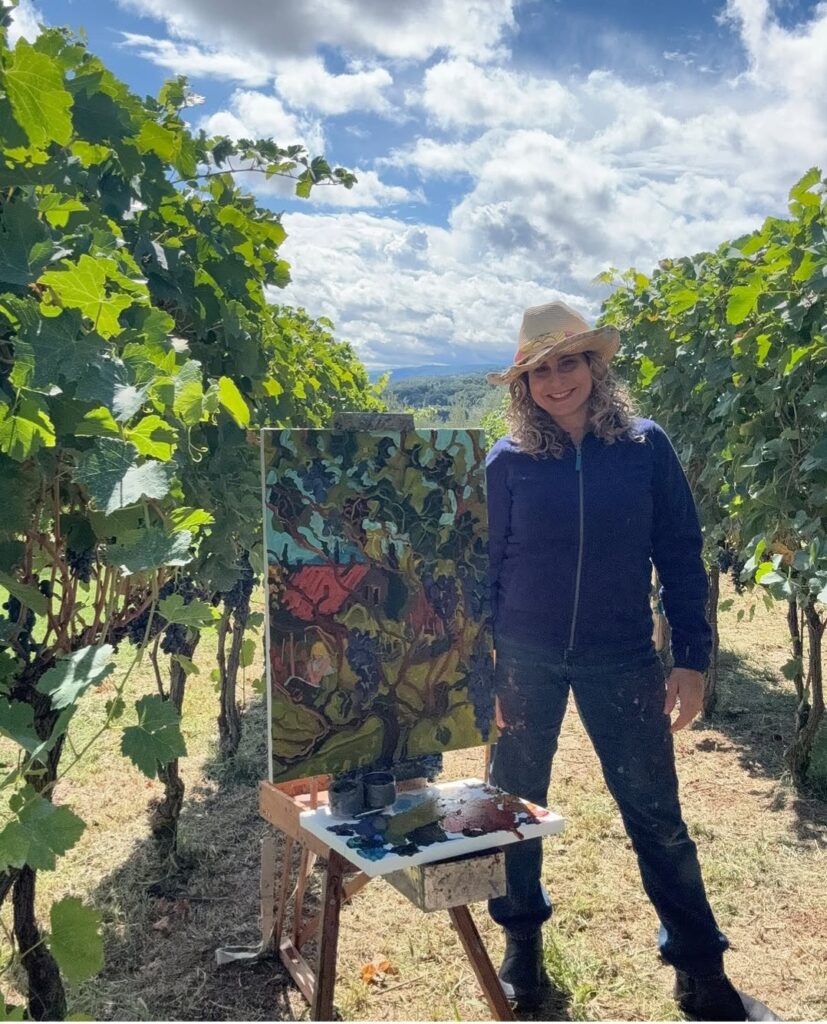
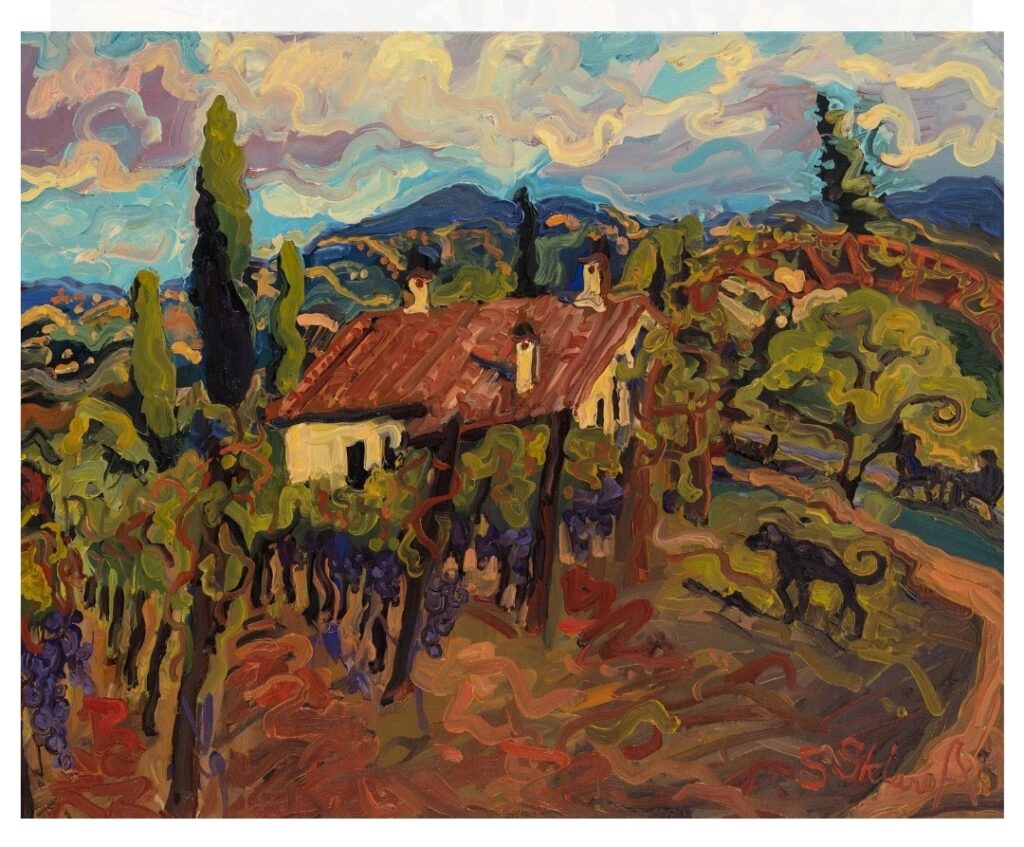
How would you describe your process, from the first idea to the finished painting?
It usually starts with understanding the space itself, the proportions, the light, what the room is for. I never arrive with a fixed idea of what the piece will be. From there a composition develops that feels inevitable for that wall, something that couldn’t exist anywhere else. Oil is my primary medium, though I work in watercolor, pastel, charcoal, and ink as well. No matter the material, I start with loose, broad strokes and build the piece as a whole, stepping back constantly to see how everything is working together. I still travel with a portable easel, and France is one of the places I keep going back to paint.
Is there a painting you made for someone’s home that you still think about, because of the place, or something that happened while you were working on it?
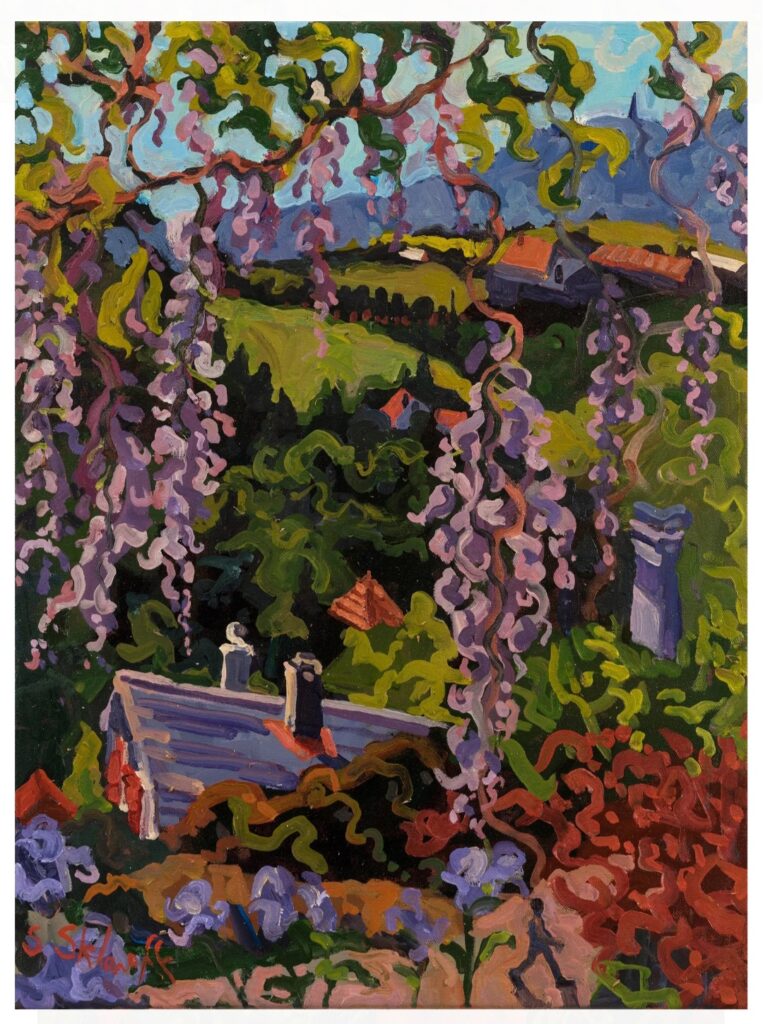
There’s a piece I did for a home outside Bordeaux that I think about often. It was a large floral composition for a stairwell, and the family wanted something that would feel different depending on the time of day, since that’s where the afternoon light landed. I spent a few days there before starting, just watching how the light moved across that wall. When the painting went up, the owner told me her mother used to grow those same flowers in the garden behind the house, something she hadn’t mentioned before. She hadn’t asked for that, it just happened in the work. Moments like that are why I love working this way, the painting ends up holding something the room already had, even before it existed.
When you move from an intimate canvas to a much larger painting, does your thinking change?
The thinking changes before the painting does. At that scale you’re not just composing an image, you’re composing how someone walks into a room and where their eye goes first. The brushwork has to hold up from across a hall, not just up close. But the instinct, the loose strokes, the building up of the whole, stays the same.
Your training began within a classical tradition. How has that foundation shaped your work as it’s evolved?
I trained as a traditional oil painter, studying anatomy, color theory, perspective, structure. For years my work stayed close to that, capturing what was in front of me. Over time it’s become more personal and more vivid, but the discipline never left. If anything, it’s what lets me move freely now. You need the structure first to know what you’re departing from.
Which artists have most shaped your visual language, and how have their ideas stayed with you?
Faith Ringgold has been a huge influence. She spent her life honing her craft, creating monumental, deeply personal work. I had the chance to work with her in graduate school, and the advice she gave me, that an artist has to find and trust her own voice, is something I carry into the studio every day.
How would you define beauty today, based on your experience and practice?
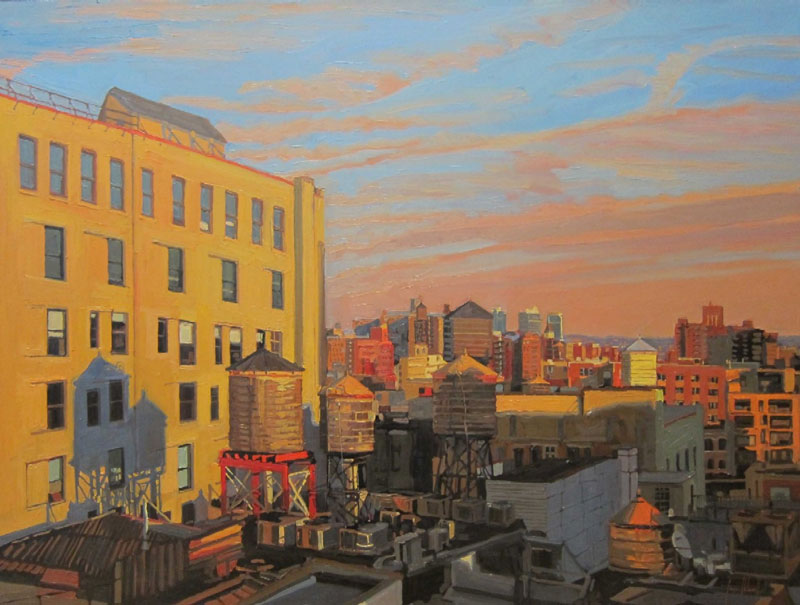
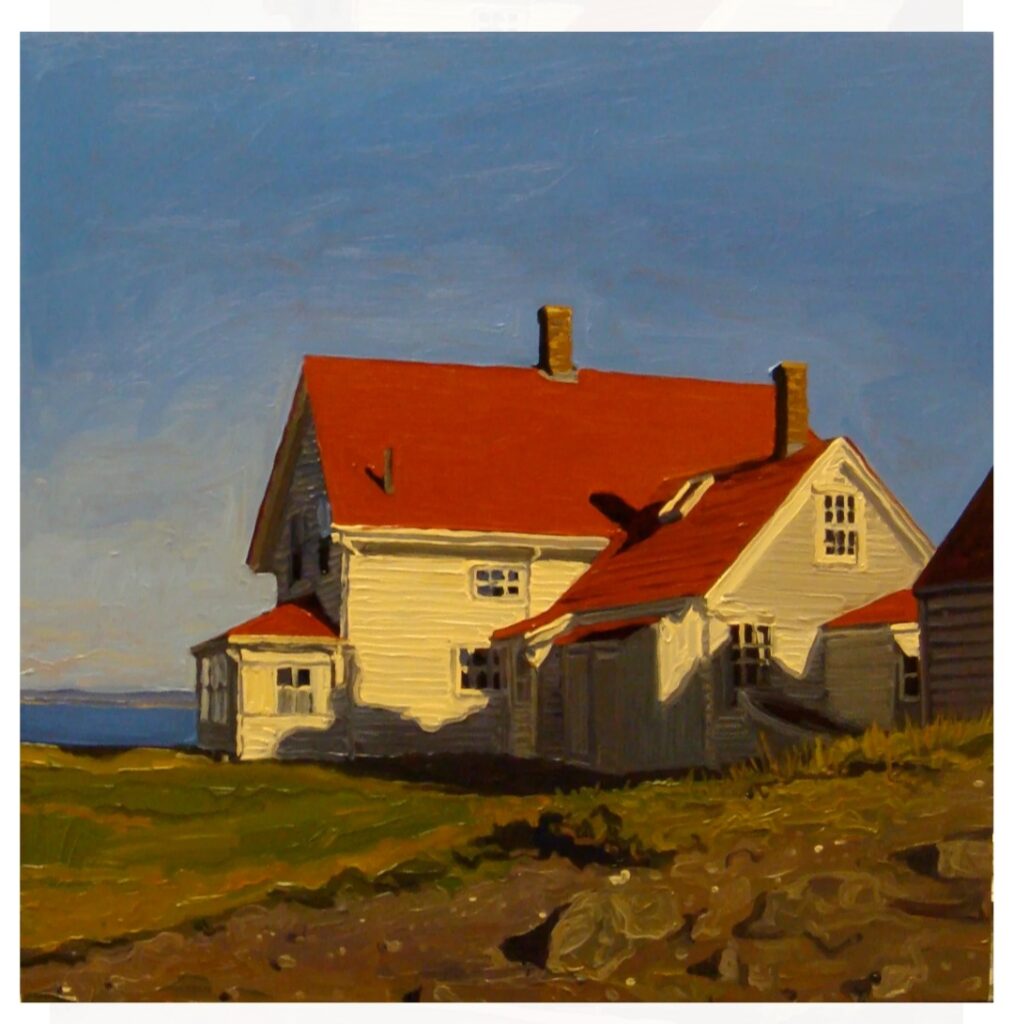
Beauty can show up in the most unexpected places. It’s not always a sunset or a skyline. Sometimes it’s the way late afternoon light hits the side of a building, or a flower coming up through a crack in the sidewalk. The big moments matter, but so do the quiet ones.
All images courtesy of the artist. © Sonya Sklaroff