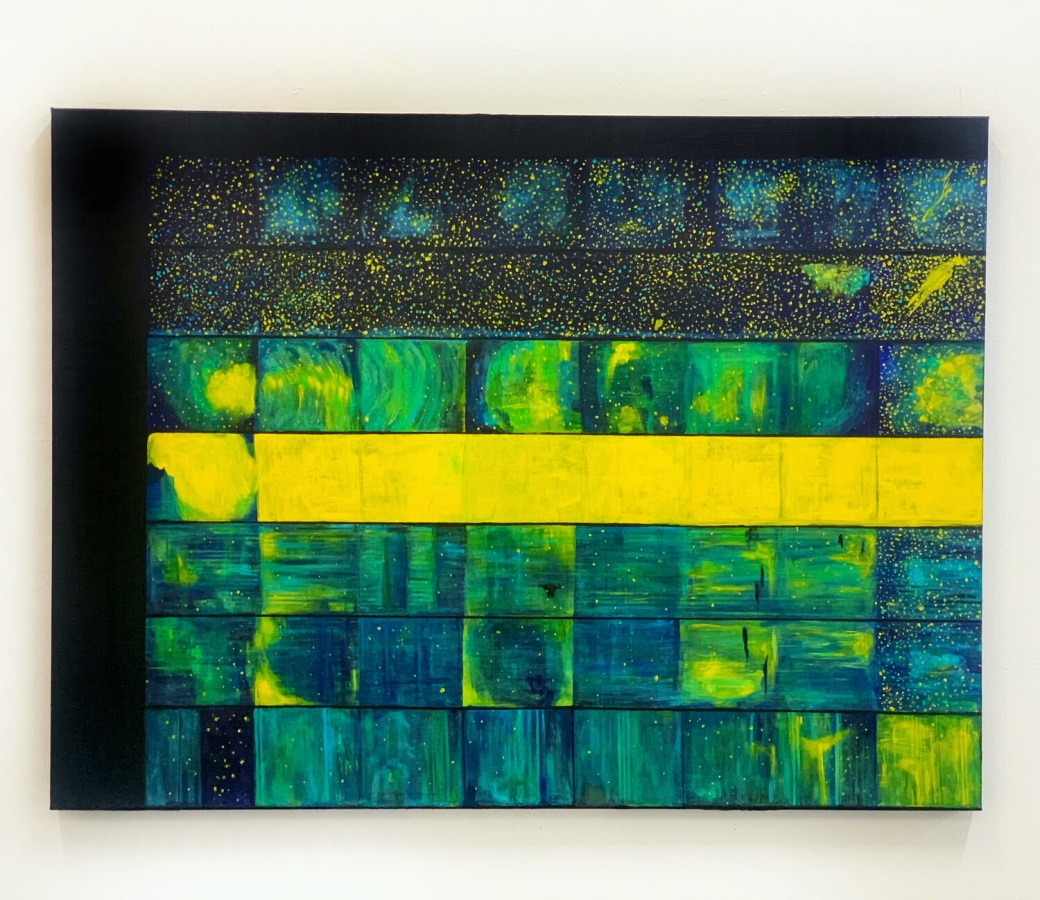
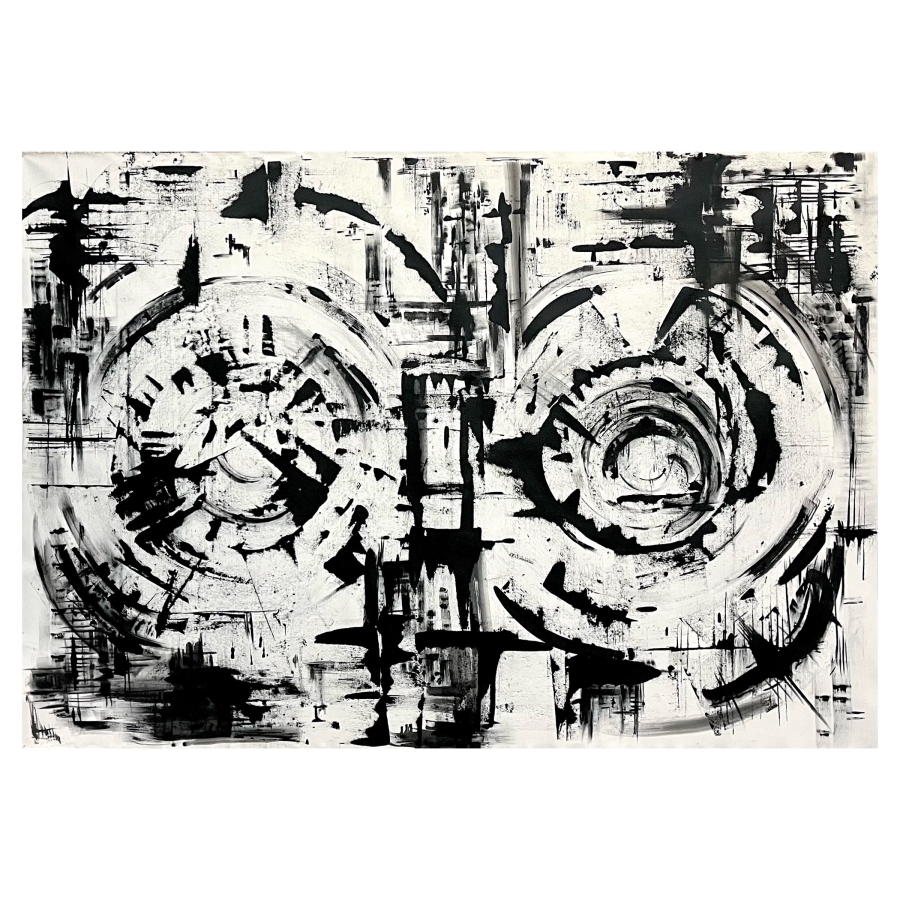
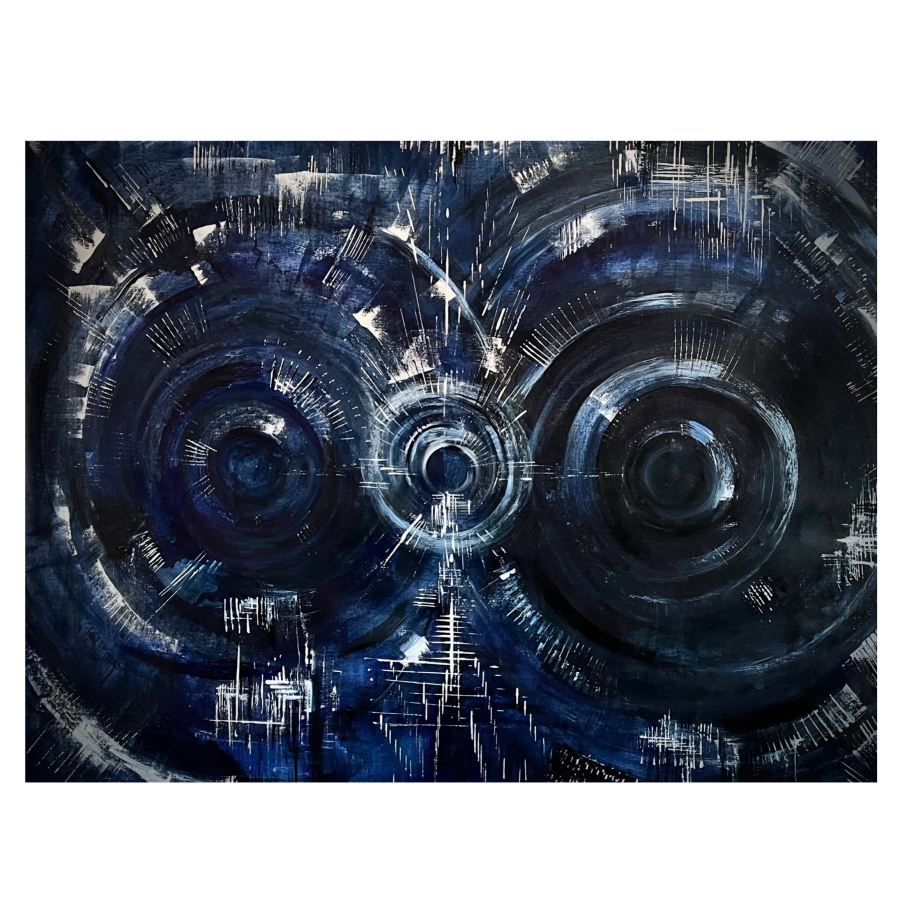
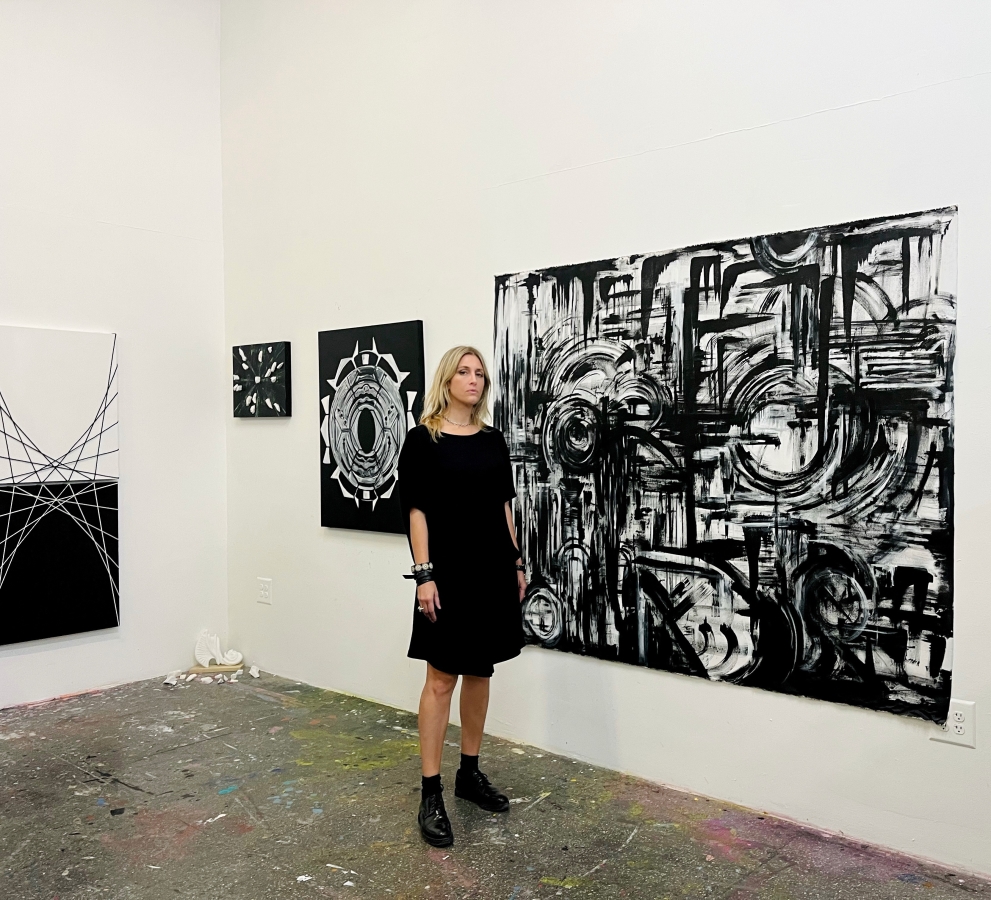
Dalila Pasotti’s work occupies the space where art and science merge into one language of wonder. Born in Turin, Italy, and based in New York, she is a sculptor and painter whose practice seeks to translate the invisible forces of the cosmos into tangible form. With a background in natural sciences, Pasotti approaches creation as both a researcher and a poet. Her sculptures in marble, bronze, and mixed media evoke gravitational pull, quantum energy, and the geometry of time, turning complex scientific concepts into meditations on existence.
After earning a Master’s degree in Natural Sciences from the University of Turin, Pasotti refined her sculptural practice at the National Academy School of Fine Arts in New York. Her collaborations with physicists and astrophysicists at institutions such as CERN, the IAS in Princeton, and NASA have given her access to the frontiers of human knowledge. From these encounters emerge works that balance logic with emotion, discipline with intuition. In Hypatia of Alexandria, for instance, she pays homage to the great mathematician and philosopher, transforming history into a contemporary reflection on courage, intellect, and the eternal pursuit of truth.
In this interview for Art Summit Magazine, Pasotti discusses her artistic evolution, her fascination with marble and the cosmos, and how scientific study fuels her creative vision. Her words reveal an artist for whom carving stone is akin to carving space itself—a dialogue between body, matter, and the infinite.
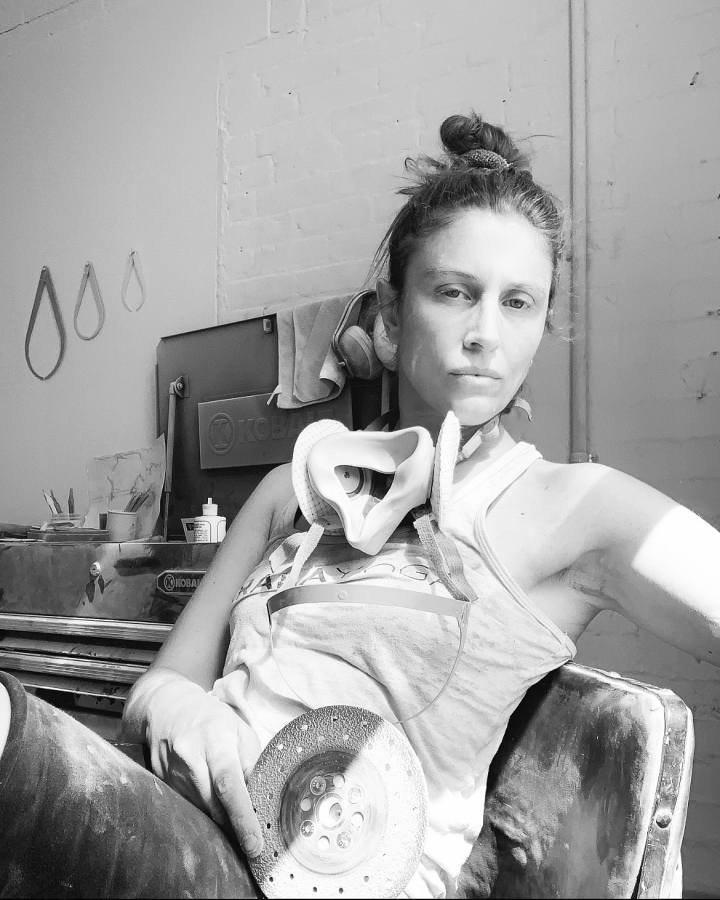
An Interview with Dalila Pasotti
By Carol Real
How has moving from Turin, Italy to New York City influenced the way you approach your art?
I look at my life path as a natural evolution, therefore my view hasn’t changed, just dramatically developed. My story started with a degree in natural sciences at the University of Turin, and several years later I’m making art with a scientific approach, while continuing to study the subject. I’d say, (my approach and study) has deepened. Part of me thinks that it could have happened anywhere, but then here in New York you can find the best of Science and Art in the same place, so I do give this credit.
Your work draws on both art and science. What or who inspires you most across these worlds?
This question is always hard for me as I’m influenced by and love so much art. The idea that ancient civilizations were able to build monumental masterpieces using astronomical and mathematical coordinates is astounding and definitely inspiring. But if we fast forward to the last century, I’m a follower of Constructivism and I’m inspired by artists such as Naum Gabo, Antoine Pevsner, and Vladimir Tatlin. That said, my main inspiration always comes from physicists, astrophysicists, and mathematicians which I consider artists as well.
What is the most indispensable item in your studio?
Tools, from chisels to brushes.
In your sculptures, art and physics seem to coexist seamlessly. How do you bring these disciplines together in your work?
Yes, my work is an interpretation of what I’ve studied in physics. A part is strictly scientific, and then I must add the part made by my own creative brain and make it work together.
How do the physical laws that govern the universe influence your creative process?
It’s almost a mystical process. The ideas come up while reading and studying, or when talking to scientists or listening to lectures during my visits to scientific institutions. Sometimes a theory or discovery haunts me for a while until I visualize something. Suddenly, I just see it, or I see the starting point of a concept. It’s impossible to explain in detail because I can’t really control it. Those moments come when they decide to, but the more I study the more they come. Of course, making these sparks into real artworks is the next challenge and undoubtedly a lot of work.
Marble plays a central role in your work. What makes this material so meaningful to you?
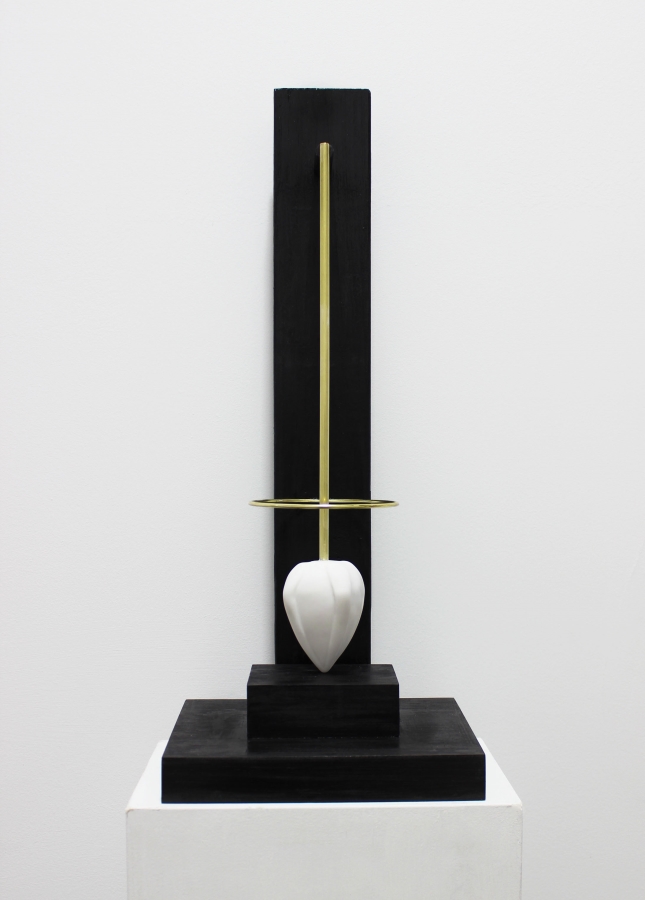
I’m not sure why I’m so drawn to marble. I have a mysterious attraction to it. I love to look at it and even more to touch it. The moment I get myself a stone I know what to do with it. It comes naturally to me; I just see it in the piece. Also, the physical experience – the struggle, the fatigue, the difficulty – it’s all so fascinating. When I carve, I completely lose the concept of time. All my thoughts are far away because I’m so deeply into what I’m making. It’s cathartic.
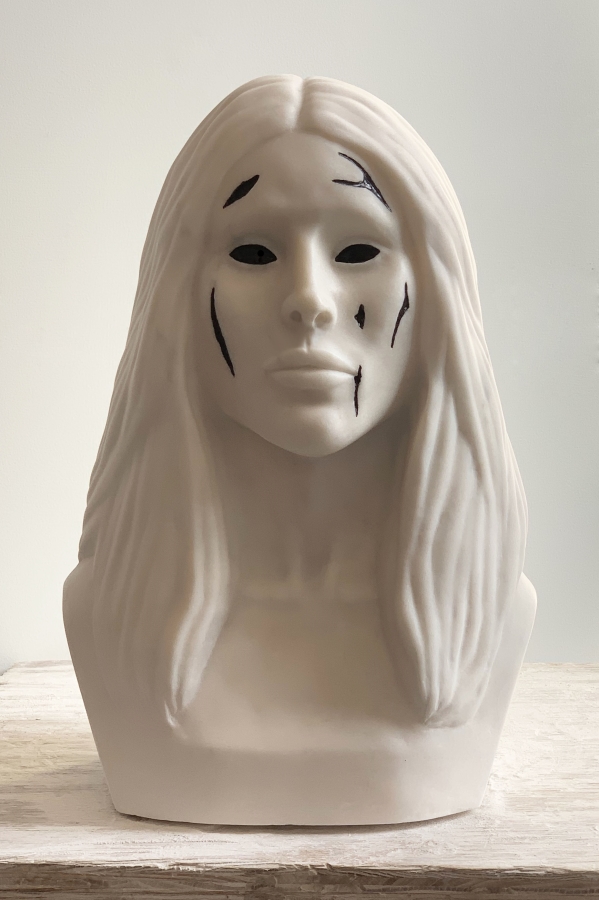
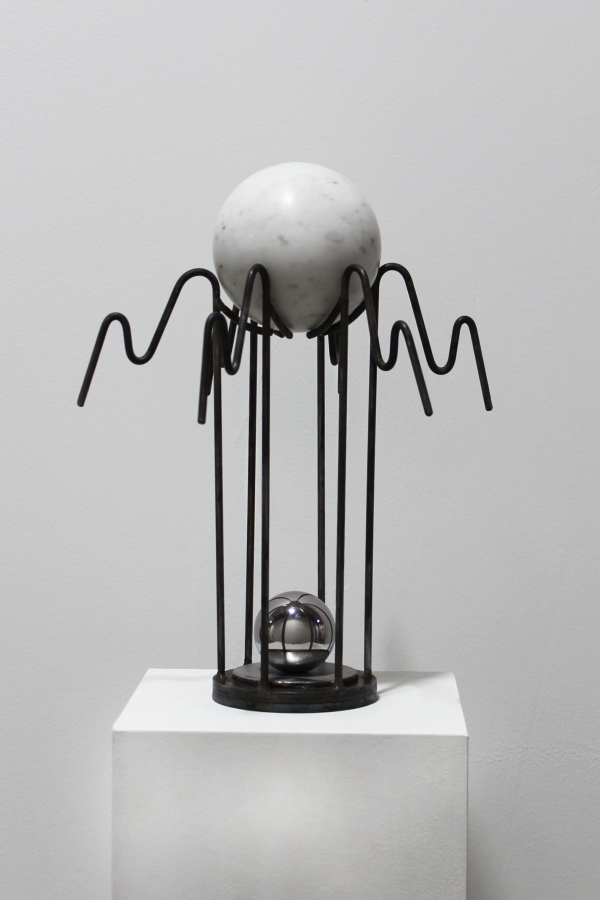
Your sculpture Hypatia of Alexandria pays tribute to a historical figure who represents knowledge and courage. How did you approach this piece?
Hypatia of Alexandria is a very different kind of work from what I usually do, but there is an explanation. Hypatia was the first woman astronomer, mathematician, and philosopher who lived in Alexandria, Egypt between 360 and 415 AD. She was an incredibly gifted scientist ahead of her time who paid dearly for her greatness. She was tortured and killed by the Christians right before they destroyed the magnificent Library of Alexandria. Hypatia was a martyr in the name of science and knowledge and today, every woman in science should be grateful to her for opening the path to all of us with her sacrifice. I felt that a tribute to her was a necessary piece to have in my body of work.
The process is simple and complicated at the same time. You pick your block of marble, start to rough the shape out, and then you move to more precise tools as you get closer to the final shape. The best part is creating the details, which I feel is the real touch of the sculptor; how the bending or the cut of certain parts are carved, how the light hits it, and what kind of shades it will create, are crucial. And then hours and hours of sanding…
I honestly don’t think anyone can teach another person to carve. They might give you technical pointers, suggestions, explain how tools work, and so on, but with stone carving it all comes down to seeing and chipping the extra out while shaping your ideas. You have to feel it inside of you and most likely you’ll develop your own technique.
Your art often explores self-reflection and cosmic mystery. How do these themes connect for you personally?
Everyone is different. We all have a very personal approach to this. My self-reflection and introspections are deeply intertwined with the mystery of the Cosmos, quantum physics, particles, gravity, cosmology. These are the things I think about all the time, and they often lead me to meditate about my relationship with the laws and secrets of the Universe and my role in it.
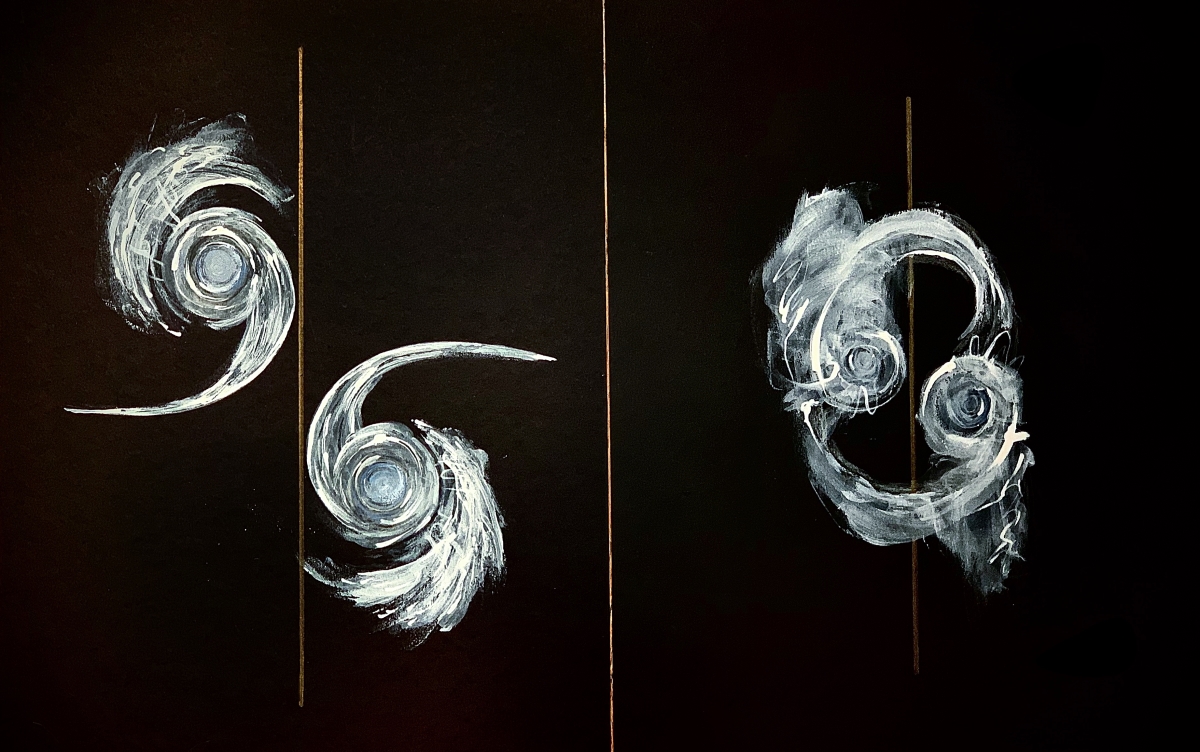
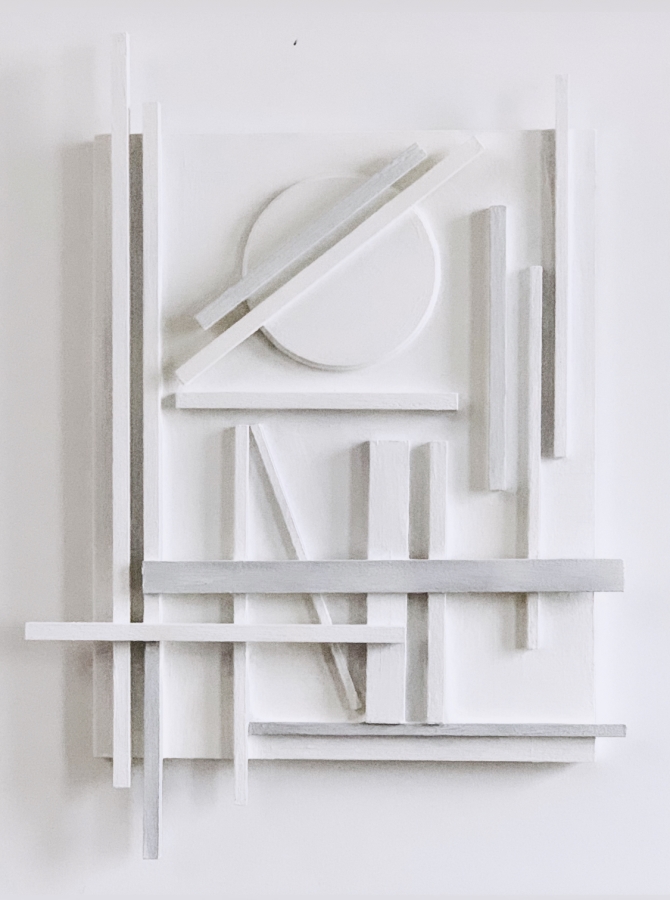
You’ve worked in sculpture, painting, and now video. What new directions are you exploring?
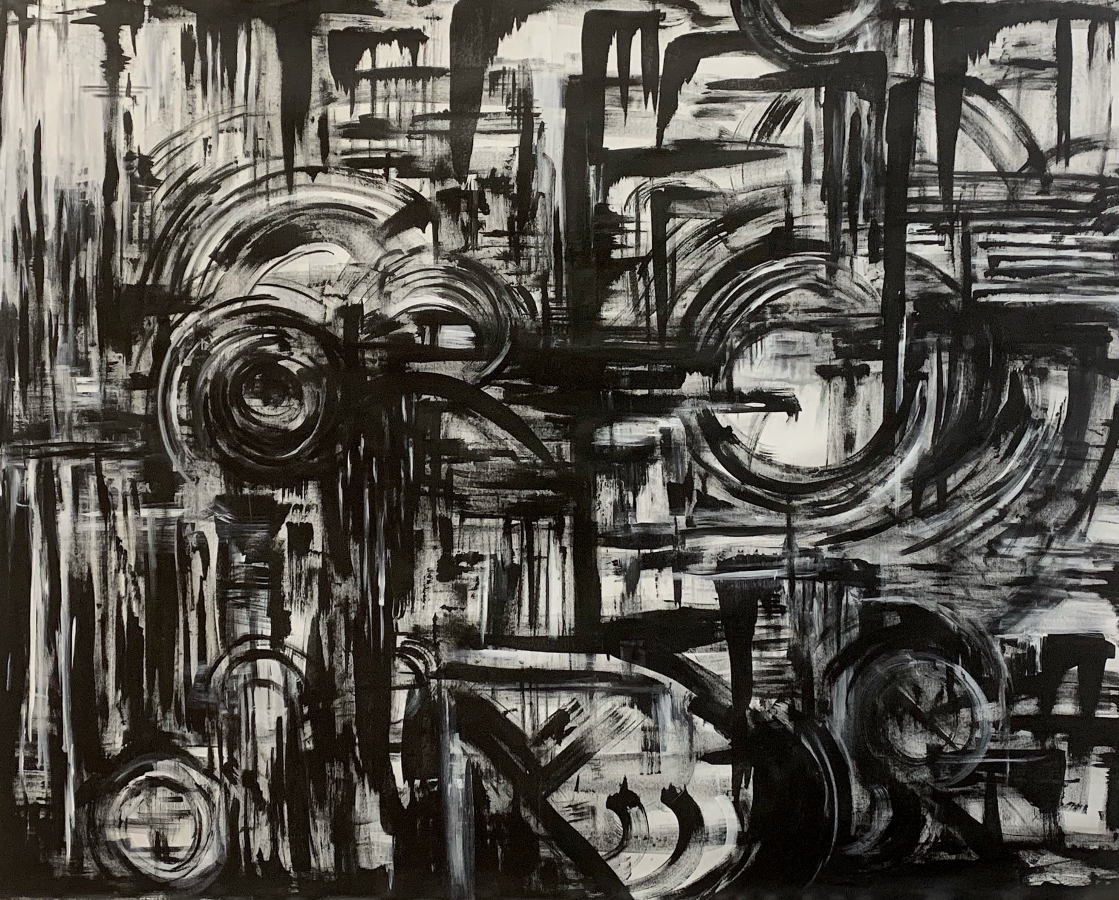
I’m a multimedia artist, and I utilize every medium I can master to express my concepts. I draw, paint, carve, shape, assemble, build… Now I’m considering adding some video art to my body of work. And, as you can predict, it will be documenting my own physics experiments!
All images courtesy of the artist
© 2025 Dalila Pasotti. All rights reserved.
© Art Summit Magazine
Editor: Lisa Portscher