There is a subtle rhythm in Gregor Hildebrandt’s world, a pulse that runs through strips of cassette tape, vinyl grooves, and the faint shimmer of recorded memory. His works, built from what was once the soundtrack of daily life, transform silence into structure. Each exhibition becomes a choreography between sound and form, where recollection turns tangible.
In this conversation, Hildebrandt opens the door to that intimate territory between music and matter. He speaks about the gestures that shaped his practice, from the hidden wax drawings of childhood to the orchestration of magnetic tape into walls, floors, and mosaics. His reflections move between the tactile and the emotional, between nostalgia and invention.
What emerges is a portrait of an artist who turns technology into tenderness, who finds poetry in what others discard. Through this dialogue, we trace how fragments of sound become architecture, how silence can still sing, and how art, for Hildebrandt, remains a way to record time itself.
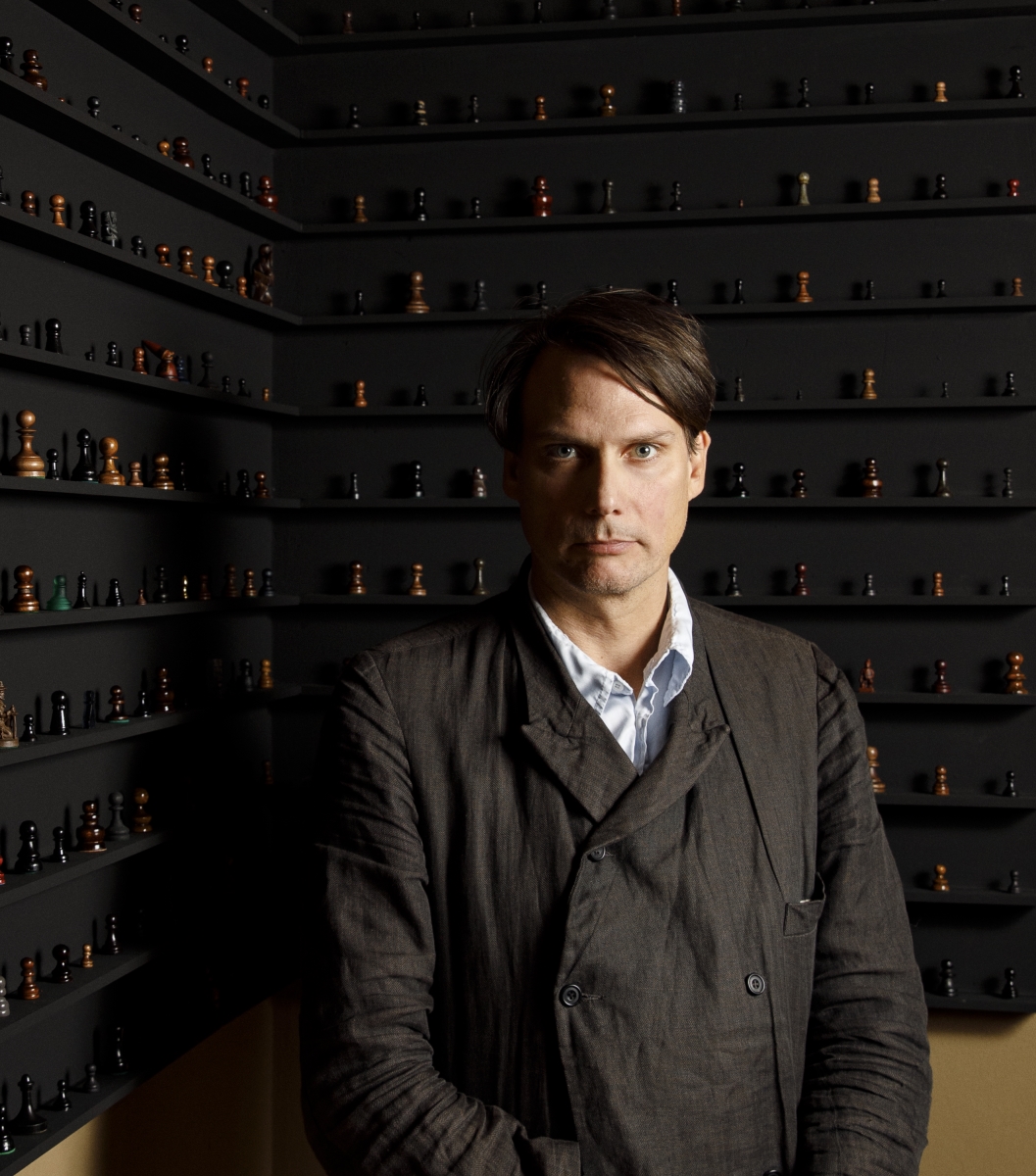 Portrait of Gregor Hildebrandt . Ph Peter Rigaud
An Interview with Gregor Hildebrandt
By Carol Real
What first drew you to the idea of becoming an artist? Was there a moment when you realized that art would be your language?
While I was still in school, I decided to pursue a career as an artist. My academic grades fell short, to say the least, and it became evident that graduating from high school might not be within reach. However, at the same time, painting and art provided me with a nurturing outlet to bolster my self-esteem and a safe space to express myself in a lyrical and poetic manner. Painting, in Germany at least, can be studied without a high school qualification, if you have special talent.
I’ve painted since I was a child. In kindergarten, we created hidden images by drawing landscapes with colored wax crayons, which were then covered in black. Afterwards, we would use a scraper to define the final image and the initial colors would shine through. Known as sgraffito, this technique eventually became a motif in my later work.
Your work often feels like a dialogue between memory and material. Which artists or experiences shaped your visual language in those early years?
Francis Berrar and Thomas Gruber were influential even before I studied at university. I got to know them at a summer academy I attended while in high school. They both lectured there. In 1992, during my schooling, I interned with Thomas Gruber, a stage designer. I then studied with Friedemann Hahn in Mainz and later with Dieter Hacker in Berlin until 2002. The artists I admired at that time were René Daniëls, Olav Christopher Jenssen, Heimo Zobernig, Lothar Baumgarten and Rebecca Horn.
When I came to Berlin at the end of the 90s, there was a lively atmosphere and a feeling of change and transition. Artists from everywhere came to Berlin. In ’98 there was the first Berlin Biennale and it felt like everyone was there. Katja Strunz, who I knew from her studies with Friedemann Hahn, was with Anselm Reyle at the time. He ran the exhibition space, Montparnasse, with Dirk Bell and Thilo Heinzmann. Thomas Zipp, among others, also exhibited there.
Sound feels like both a memory and a material in your practice. How does an idea take form for you, from that first impulse to the final piece?
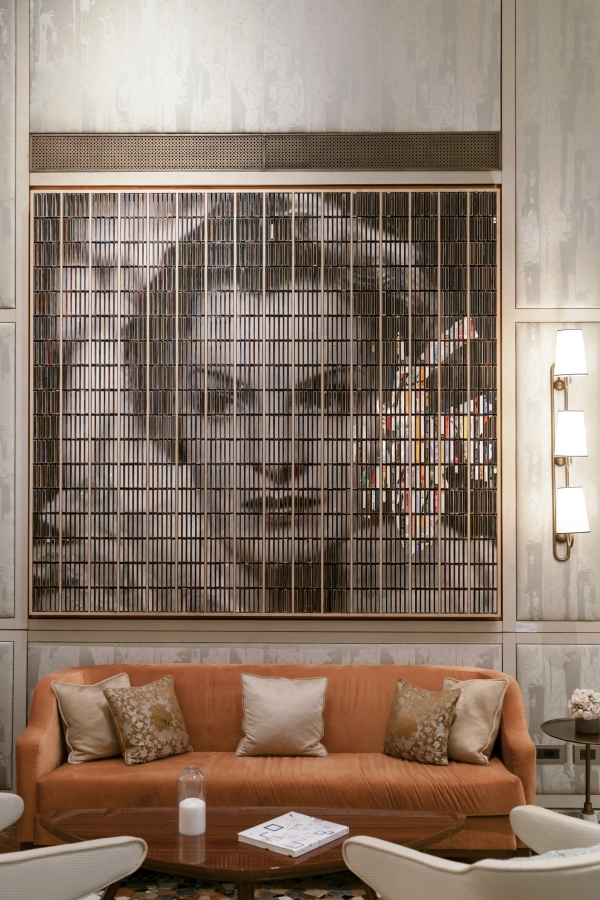
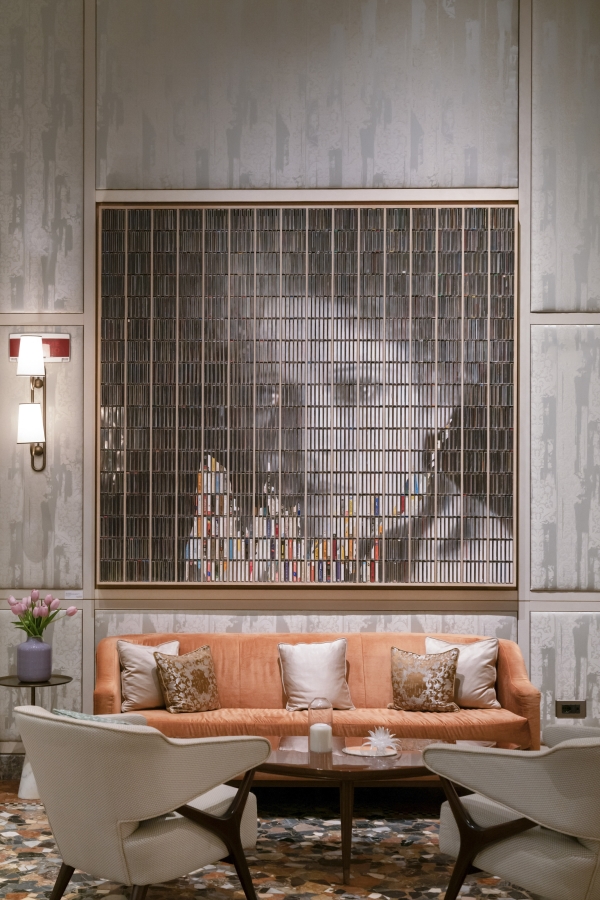
Since the late 90s, I have pursued the concept of “cassette tape collages.” To create these works, I overdub cassette tapes, always using the same tape according to the length of tape I needed to cover the canvas. I found motivation and enthusiasm within my imagination; always searching and looking for motifs and points of connection.
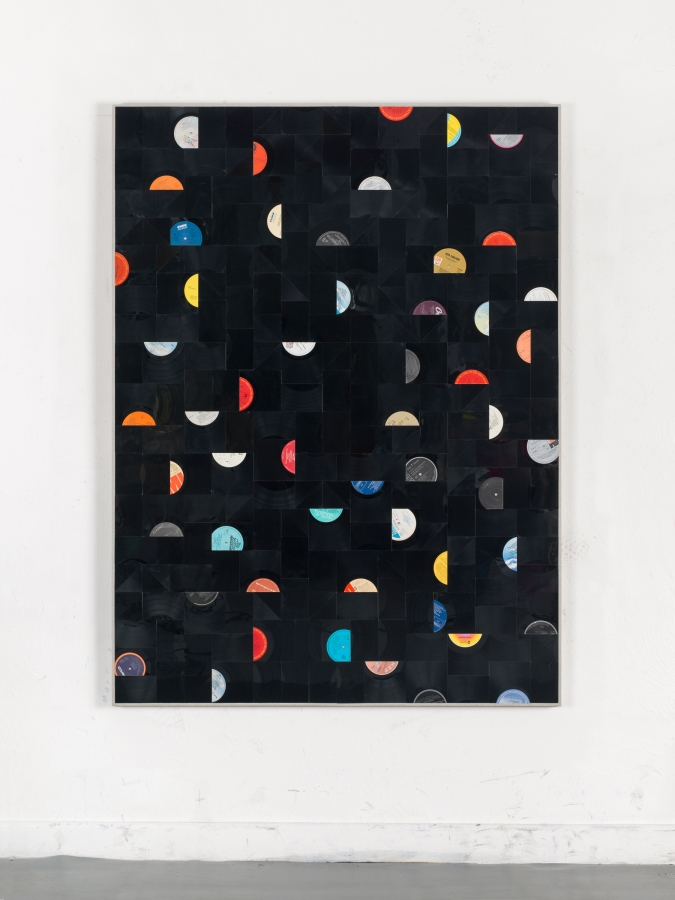
I am currently working on a series of mosaic-like assemblages with colored records based on patterns from terrazzo floors. The inspiration for this group of works comes from the concentrated view of looking downwards—as stated in “Von den Steinen zu den Sternen” (From the Stones up to the Stars), which was the title of my first show in 2005 at the gallery Wentrup. This concept stems from a novel by the Dutch writer Nescio (1882-1961)
In your pieces, sound is present through its absence. How do color, texture, and material translate that musical dimension?
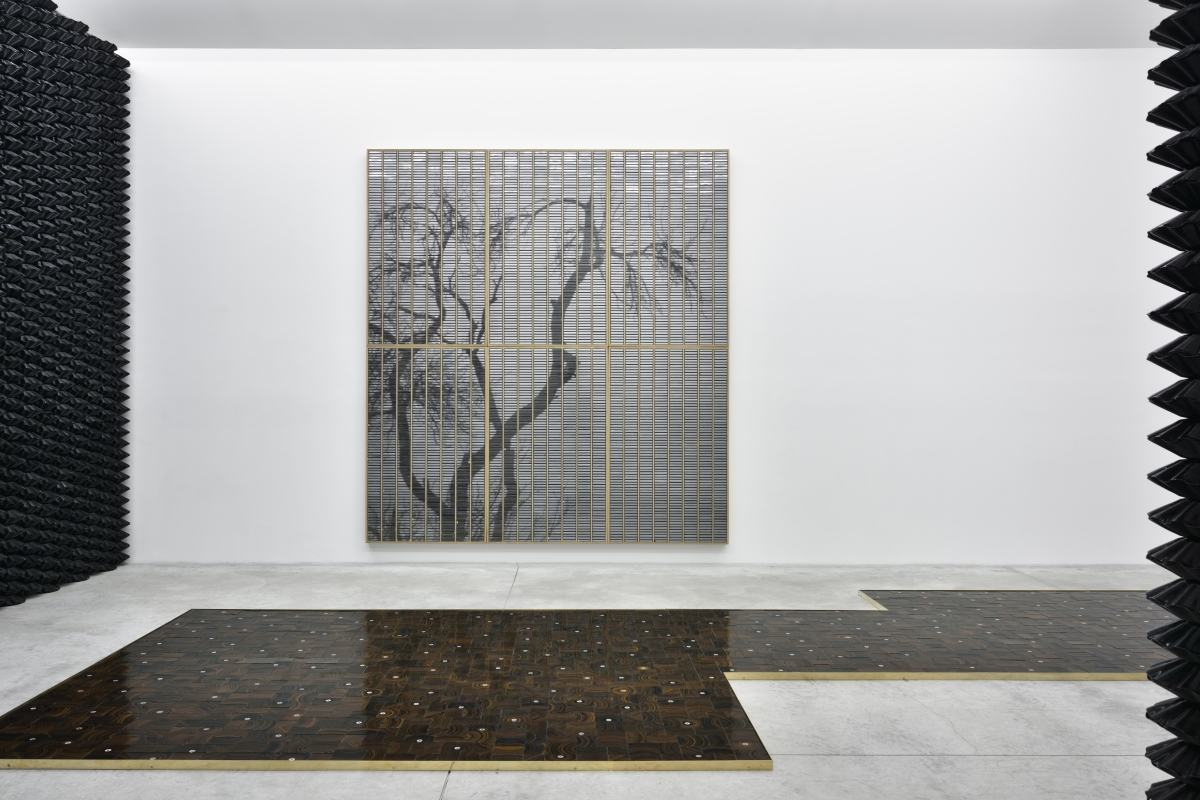
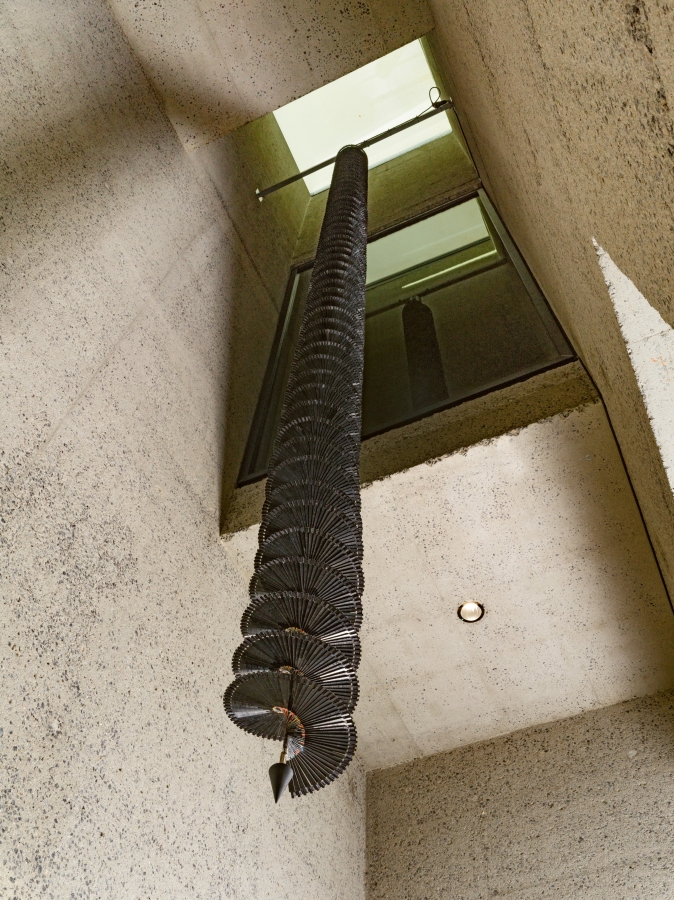
The color, particularly since I started working with cassette collages, is determined by the color of the cassette or the tape itself. The audio cassette tapes have a wide range of shades—from light brown to deep black. Leader tape, which I refer to as tape starters, comes in a variety of colors, with green and purple being the rarest. However, it was only in 2015 that color started to appear more prominently in my work. That year, I created a floor installation using countless cassette tapes arranged in an “end-grain parquet” motif, replicating vinyl record-like discs. As the leader tape colors were not visible or distinguishable in the mass of tapes, I collected them during the process and kept them for future use. This was one of the initial steps that introduced color to my work.
Your practice embraces very different formats, yet each work feels unmistakably yours. How do you navigate that process, from the first idea to the way it takes shape in space?
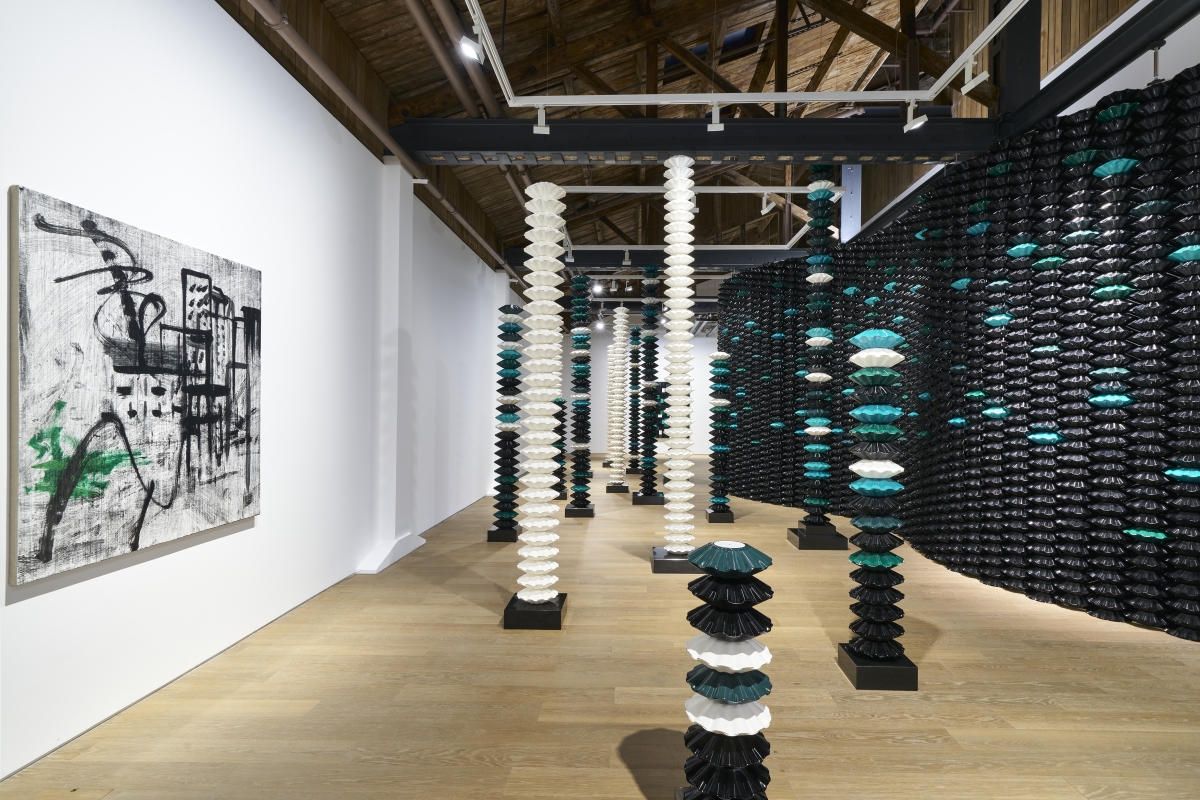
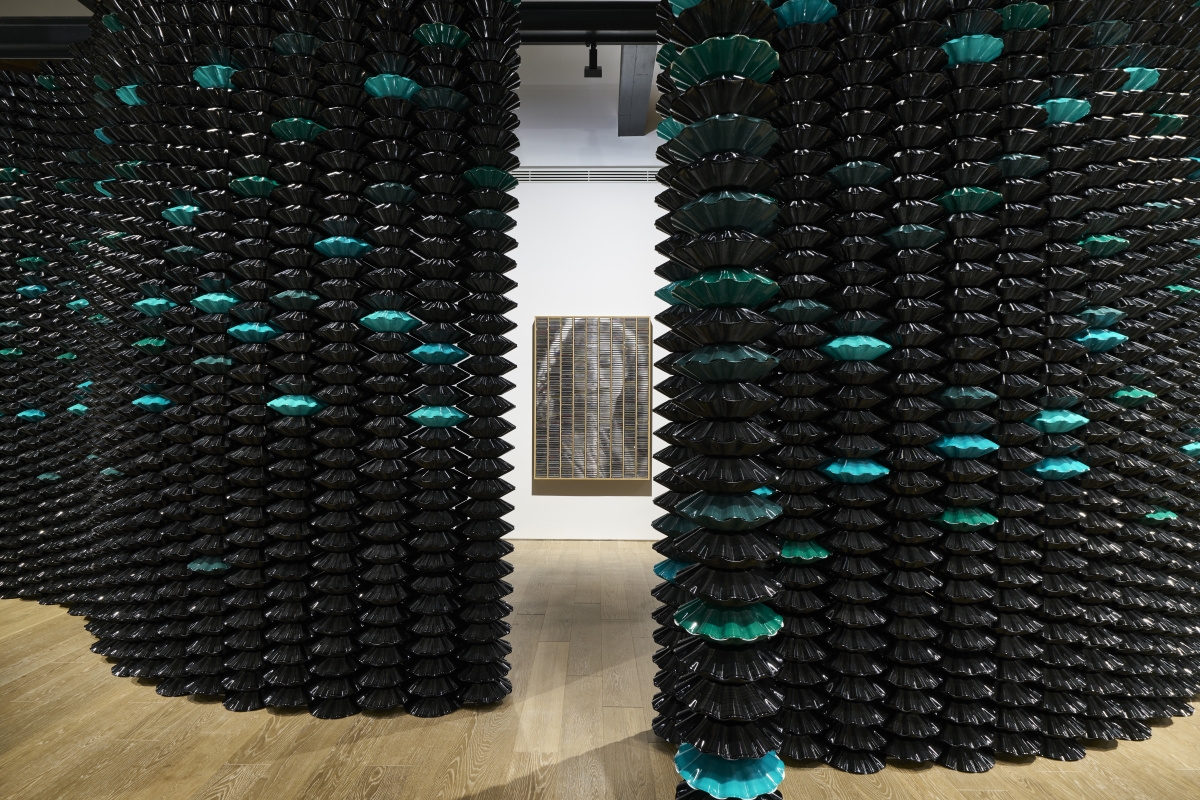
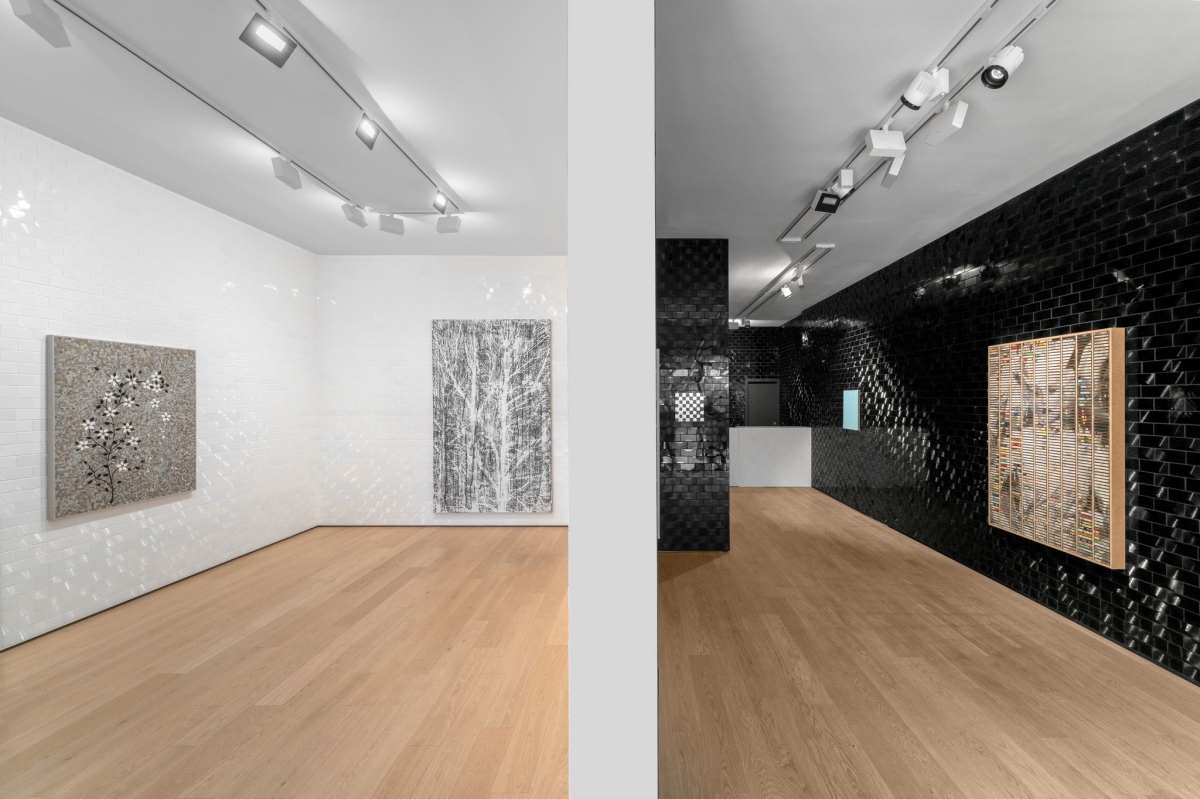
For an exhibition, I typically consider the specific location where it will take place. The physical setting simultaneously restricts and broaden my range of possibilities. For instance, I covered the walls of the ground floor at Almine Rech Gallery on Avenue Matignon in Paris with tiles made from vinyl records. Such a complex work may not have been feasible in a small space. The final focus point is always the exhibition itself.
Over time, your visual language has continued to evolve while remaining rooted in sound and memory. How would you describe the transformation of your work over the past decade?
My work has evolved gradually. Initially, I created cassette tape collages with tape markings, and later I developed tape collages with cut-outs. Around 2009, I started working on what I call the “rip-off paintings.” The first colored leader tape collages, as I mentioned earlier, emerged in 2015, and a year later, I incorporated cut vinyl records into the repertoire of my paintings. Since then, the series of vinyl record paintings has undergone several transformations, leading to the terrazzo paintings I create today.
There’s a quiet rhythm in the way you describe your studio life. Could you share what a day of creation looks like for you? Do you follow any rituals?
When I arrive at the studio, I start by having a coffee and playing chess online, followed by a brief indulgence in social media. I have another coffee and review my emails and messages. I also drink plenty of water. For every exhibition, I build a 20:1 scale model of the exhibition space. It is crucial to establish the right size for the works from the start. With a stroke of luck and the right song, the creative process begins.
Among all your projects, which one feels closest to what you search for in art?
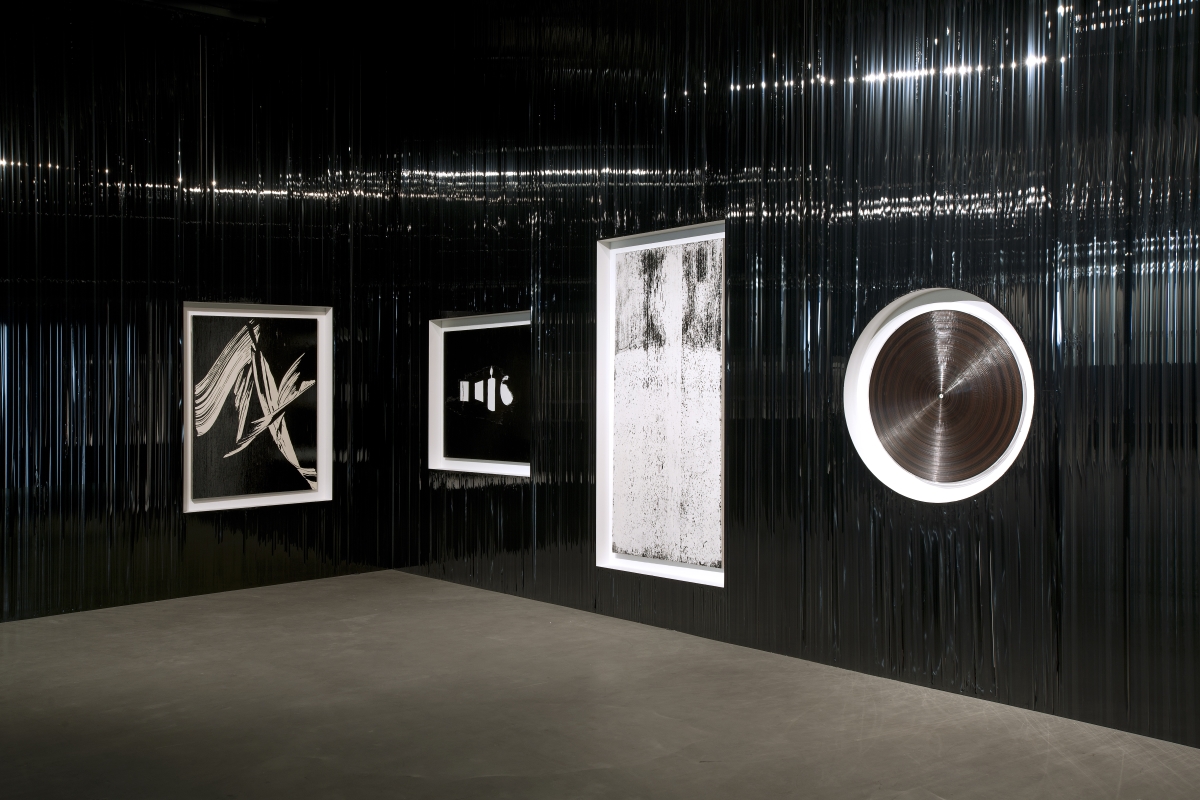
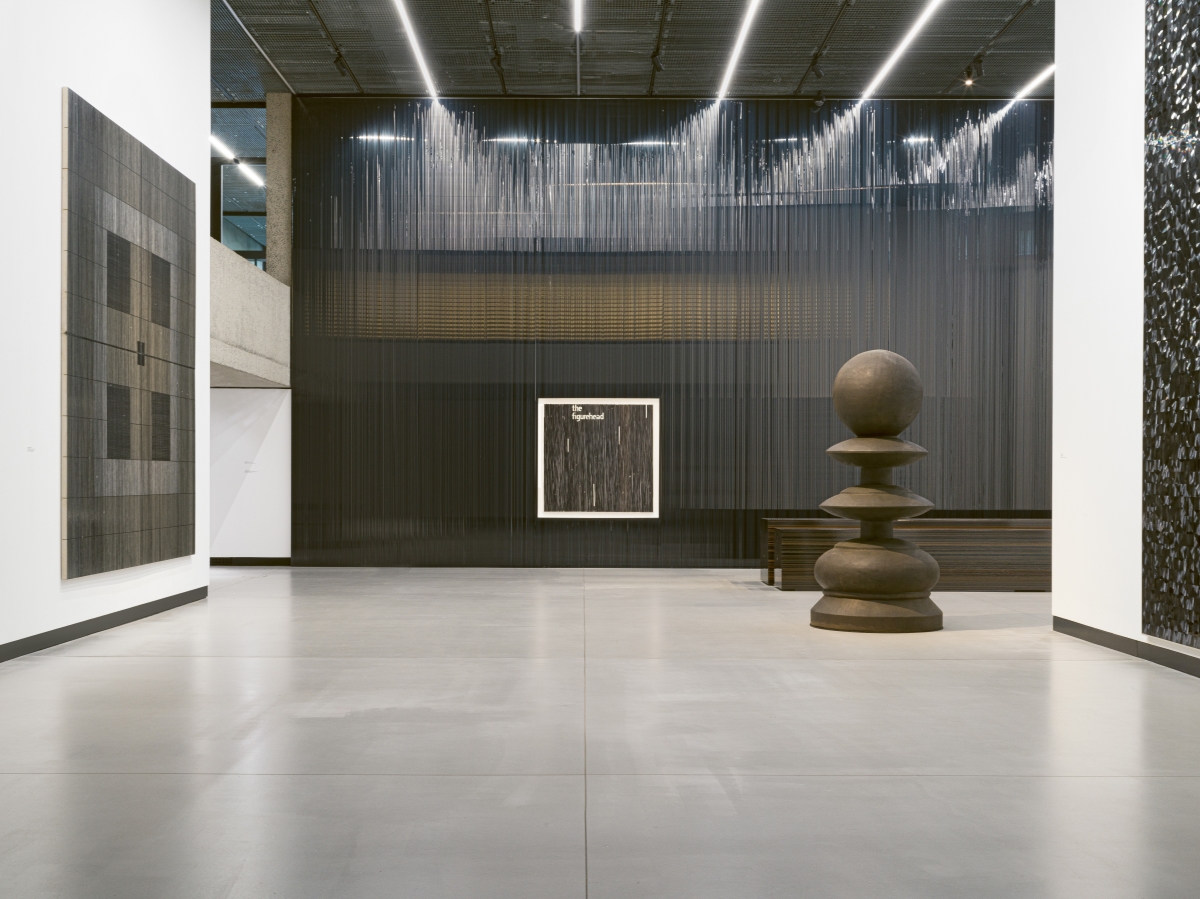
One of my favorite exhibitions is “Orphische Schatten” (Orphic Shadows), presented at Almine Rech Gallery in Brussels in 2013. Based upon a work by René Daniëls “zonder titel” (1987), I covered the walls of the space with videotape strips and created niches for my paintings. The unreeled videotapes were overdubbed with Jean Cocteau’s iconic film Orphée (1949).
I first developed this type of display at an exhibition I curated from Friedrich Gräfling’s collection, “Ein weißes Feld” (A white field) in Aschaffenburg in 2012. For this exhibition, the VHS tape was derived from the scene of the burning house in Andrei Tarkovsky’s 1986 film Offret (The Sacrifice). I then hung works from Gräfling’s collection, such as a photo of the burning gas cooker by Andreas Gursky. I also hung a photo of ignited matches by Alicja Kwade in the niches of the videotape curtain.
In searching for an answer as to why I liked this particular display so much, I remembered a black and white illustration of René Daniëls’ painting in the 1992 Documenta catalogue. I must not have noticed the painting in the exhibition at the time, but even from the catalogue, it had a profound impact. I then conceived a whole exhibition at Almine Rech based on Daniëls’ painting. I recreated the space depicted within the work, but in physical space–a picture within a picture.
Cinema moves through your work almost like a current of memory. What role does film play in your creative universe?
One of the first cinemas I visited was the Modernes Theater in Sulzbach, my hometown.
But the real thing about cinema, for me, is not only that it is the place for film but also a place that opens one up to the whole world. By using a film or even a song, I am using a cultural production, which is part of a collective memory.
A key and moving cinematic moment for me is the scene in Bonjour Tristesse (1958) by Otto Preminger. In this scene, Jean Seberg dances with an admirer and then with her father, while Juliette Greco sings the eponymous song.
Many of your pieces are built from objects that once carried sound. How did analog technology—cassettes, VCRs, and vinyl—become part of your artistic language?
Back in the 90s, it was still normal to use this media; we all had cassette recorders and made mix tapes for and with each other. With this in mind, the progression to VHS tape was quite obvious. It covered larger surfaces more easily, but it was also a way to also include films in my works. On the other hand, using vinyl records occurred to me in 2016 through my catalogue for the exhibition Urlaub im Urban (Vacation in the City). For the book cover, I choose to use an exclusive vinyl pressing of the previously unreleased Homeless Songs by Stephan Eicher.
Is there a phrase or idea that you return to, something that keeps you centered in your practice?
“To live is to build a bridge over streams that flow away.” by German poet Gottfried Benn
Image credits: All images courtesy of the artist.
Editor: Kristen Evangelista.