Across his career, Jairo Alfonso has transformed the act of looking into an archaeology of memory. Born in Havana in 1974 and now based in New Jersey, the artist investigates our material culture through meticulous drawings, paintings, and videos that explore the hidden life of objects. Each work functions as both archive and portrait, revealing the social, political, and emotional layers embedded within things we accumulate, discard, or forget.
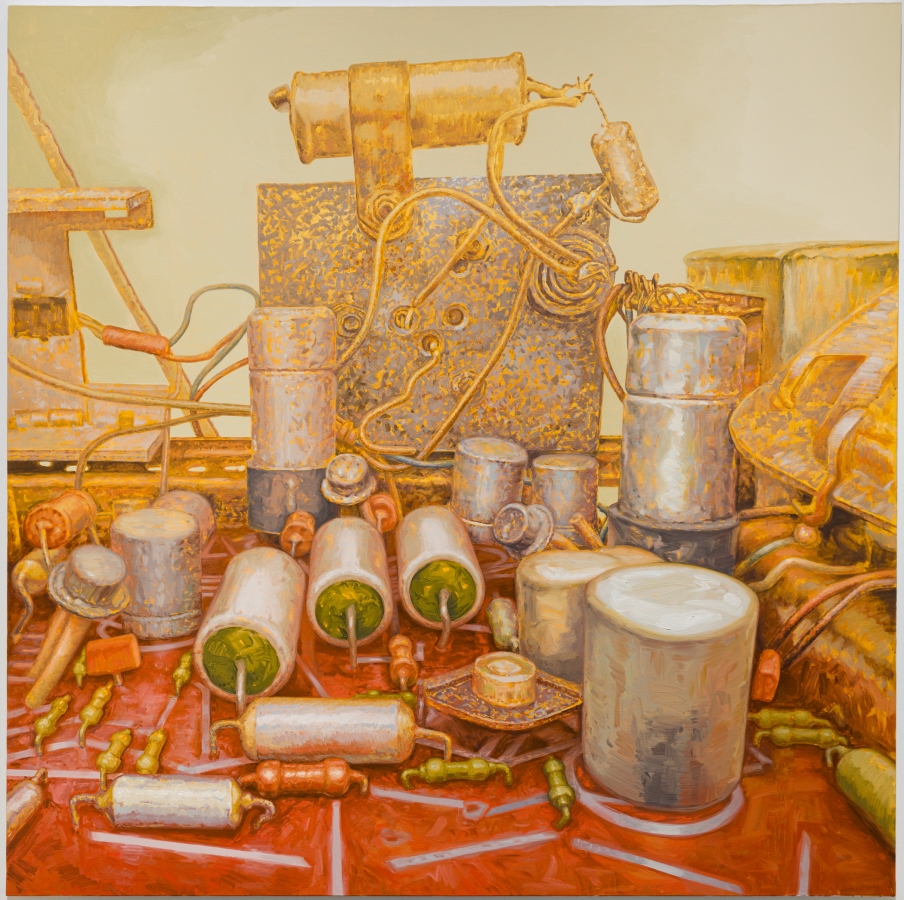
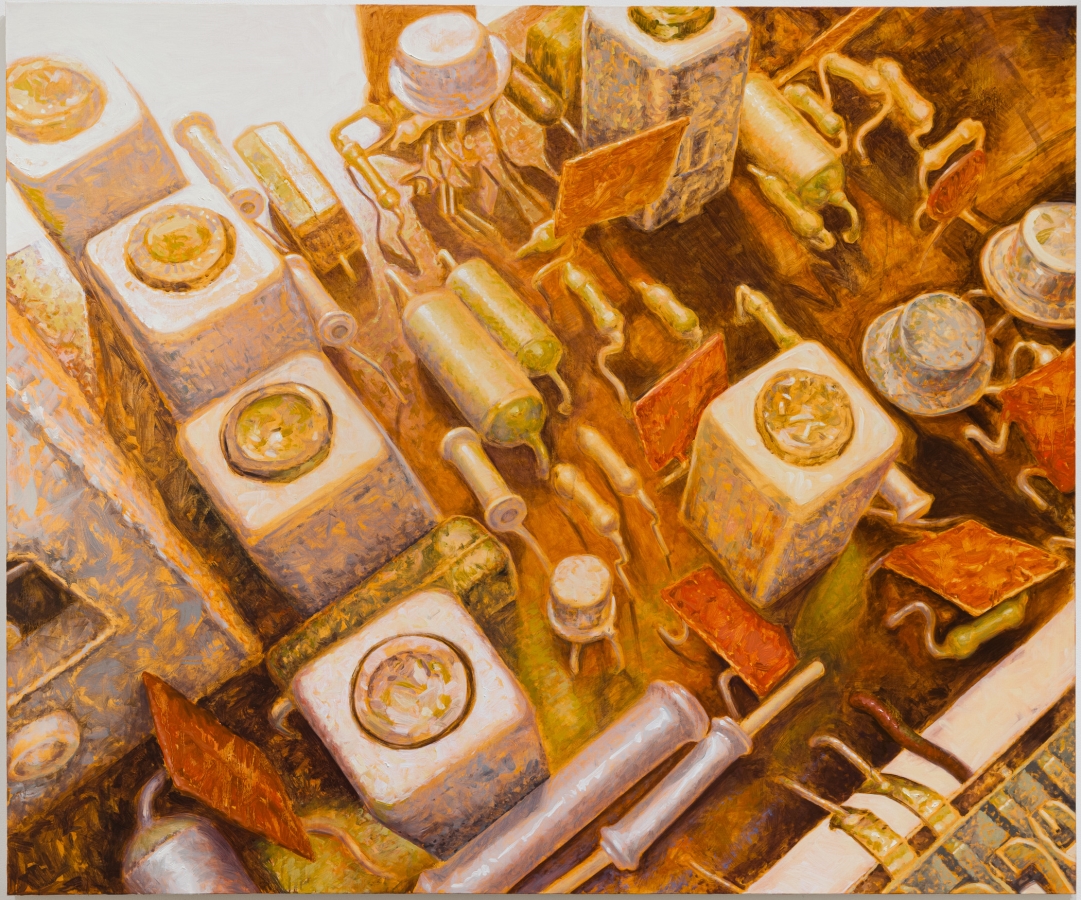
His large-scale compositions—dense constellations of everyday items—evoke both order and excess, beauty and decay. In Objectscapes, Alfonso presents a decade of work that traces our complex relationship with consumerism and history. Objects become landscapes; disassembled radios turn into maps of communication and loss. Through an almost forensic gaze, he exposes how personal and collective narratives intersect in the smallest details of material life.
Speaking from his studio in New Jersey, Alfonso reflects on his formative years in Havana, the transition from scarcity to abundance, and his ongoing fascination with the symbolic and structural nature of objects. His practice, grounded in observation and precision, invites viewers to see the ordinary anew—to recognize in every object a fragment of time.
An Interview with Jairo Alfonso
By Carol Real
Who were your artistic influences growing up in Havana, Cuba?
When I was young, I was introduced to sculpture in children’s workshops that were offered at the cultural center in my hometown, Aguacate, which is 70 kilometers from Havana. My first influences or aesthetic awakening came perhaps from observing self- taught painters in my hometown, who created oil on canvas landscapes of the town and surrounding areas. I remember Arquimides Hernandez and Oscar Rodriguez with special affection. Years later, I studied at various art schools where I acquired varied influences.
In my early education, there was an emphasis on the technical aspects of drawing, painting, sculpture, and printmaking. I culminated my studies at the Instituto Superior de Arte, where I focused on the development of my personal style. Back then, I worked with natural materials such as clay, wood, etc. I am strongly connected to the symbolic meaning of materials, in some cases exploring animistic associations and more metaphysical connotations. Several colleagues from those years and I were fascinated by the work of Juan Francisco Elso Padilla, a Cuban artist whose work was recently exhibited at El Museo Del Barrio.
What did you encounter when you came to New York?
Arriving in New York was and continues to feel like an infusion of cultural energy. I remember my first impression of the city’s diverse architecture, and my initial visits to Chelsea and its many galleries and exhibitions, ranging from the most emerging to the most established artists. The first visits to the city’s museums, the first time at the opera, the first Broadway show, the first trip to Yankee Stadium etc. Since I live on the other side of the Hudson River, every time I return to Manhattan I feel the same fascination as the first time and I return to my studio charged with energy.
What or who inspires as artist? Which artists do you admire?
For many years, I have been attracted to objects, their aesthetics, and what they represent. I am interested in the relationships and interactions we have with them. I like the idea of the archaeologist’s gaze that allows you to distance yourself from the oldest objects to the most recent and later translate various existential reflections in the language of art. It is always difficult to make a list of artists that I admire. At this moment, the painting of Giorgio Morandi fascinates me, the painting of Giorgio de Chirico intrigues me, and the great work of Roman Opalka captivates me.
How and when did you develop your particular style and interest in hoarding and disassembling?
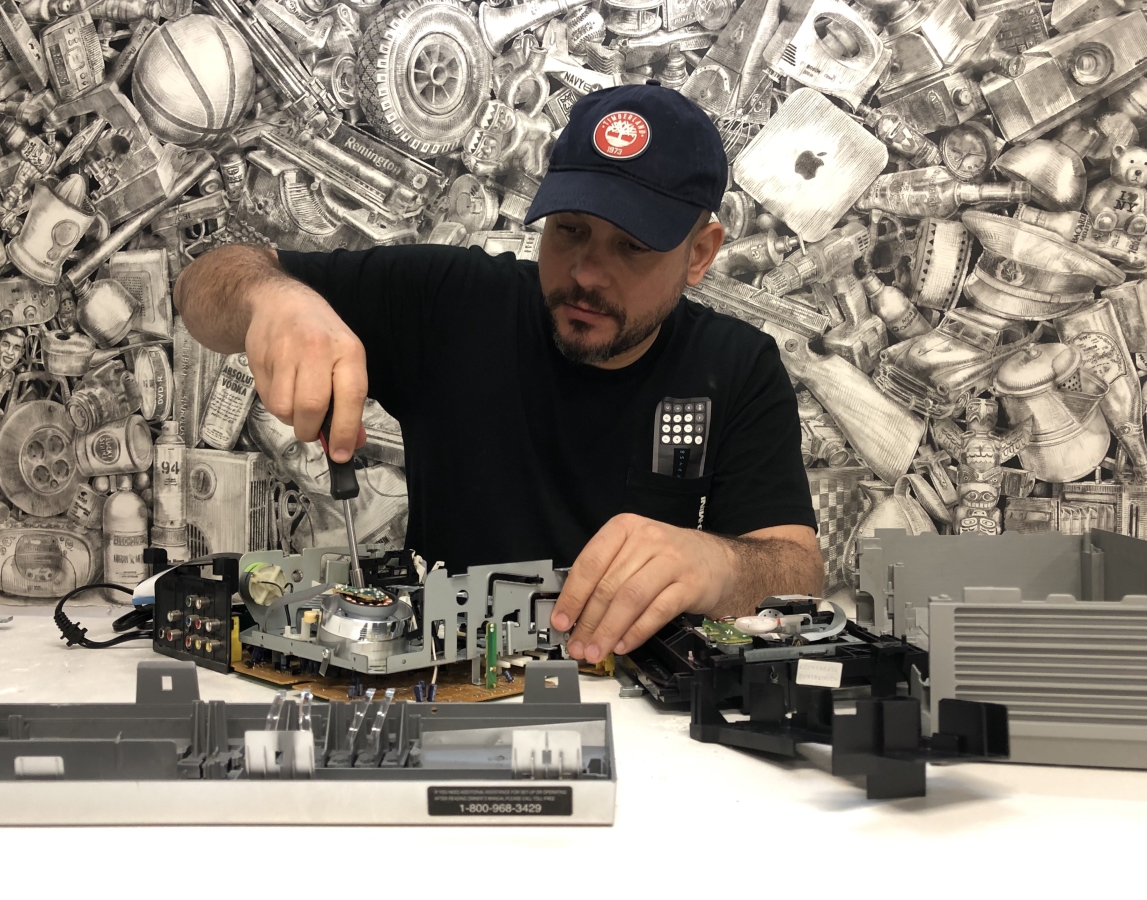
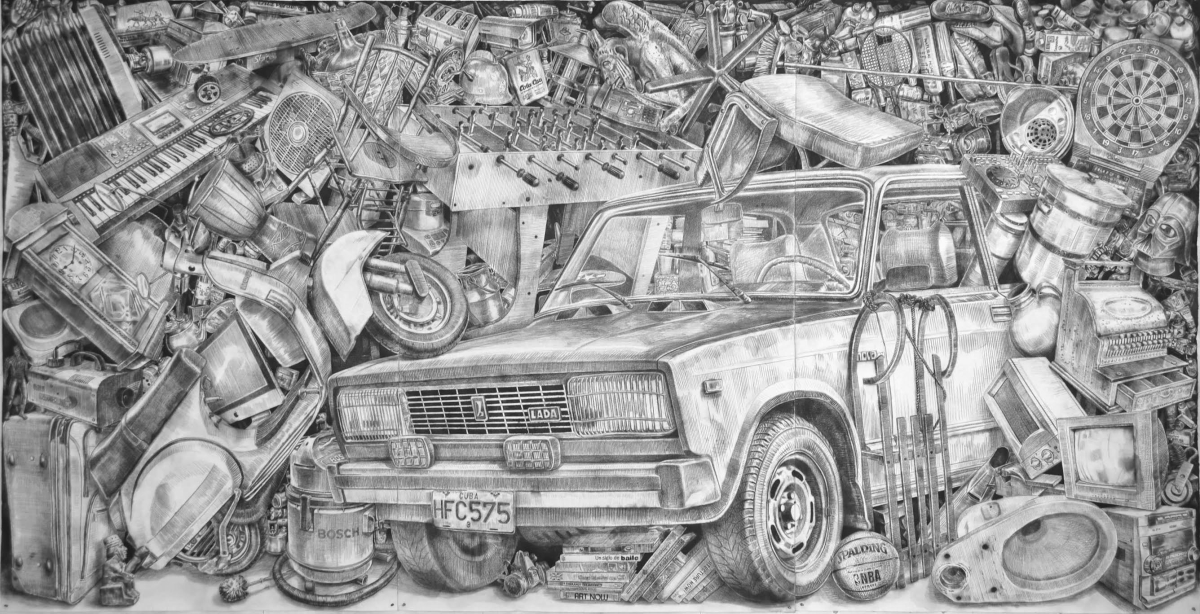
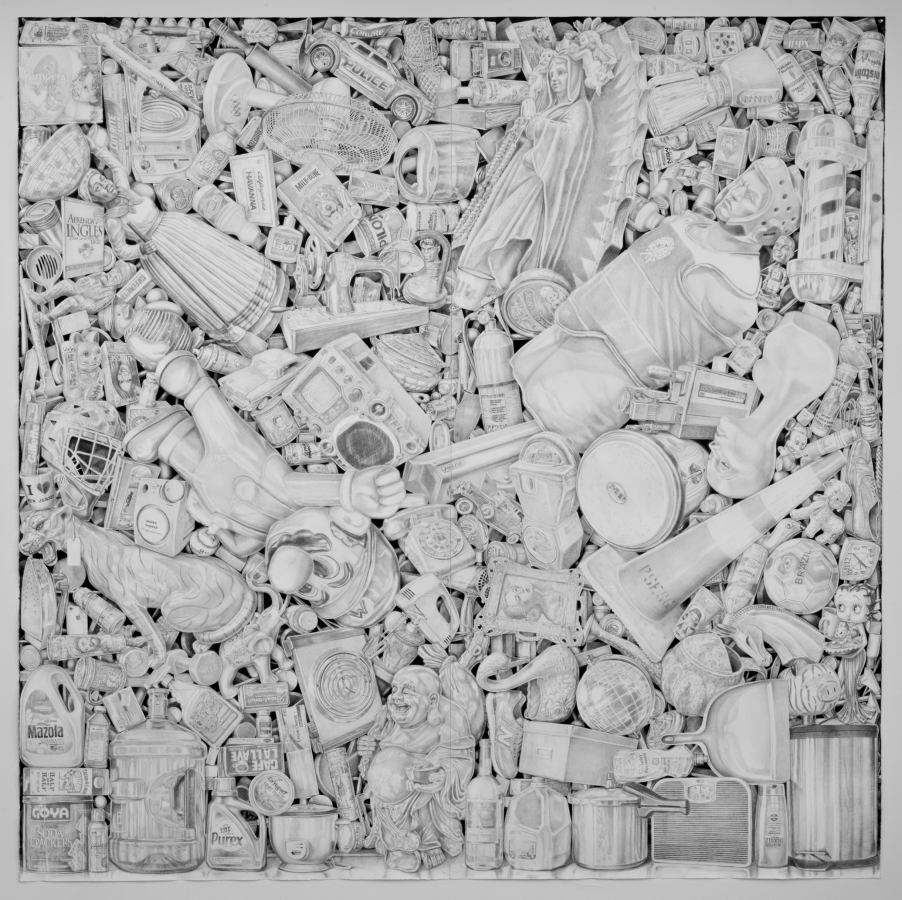
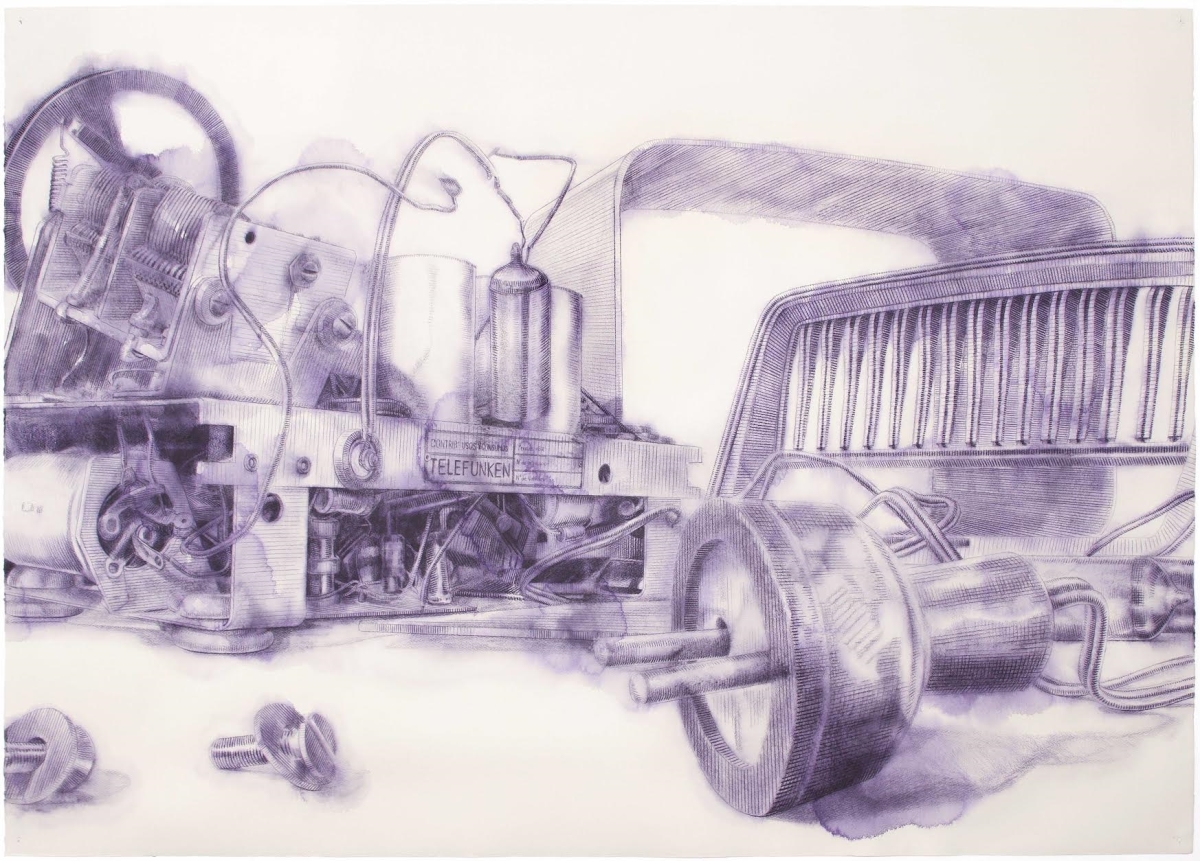
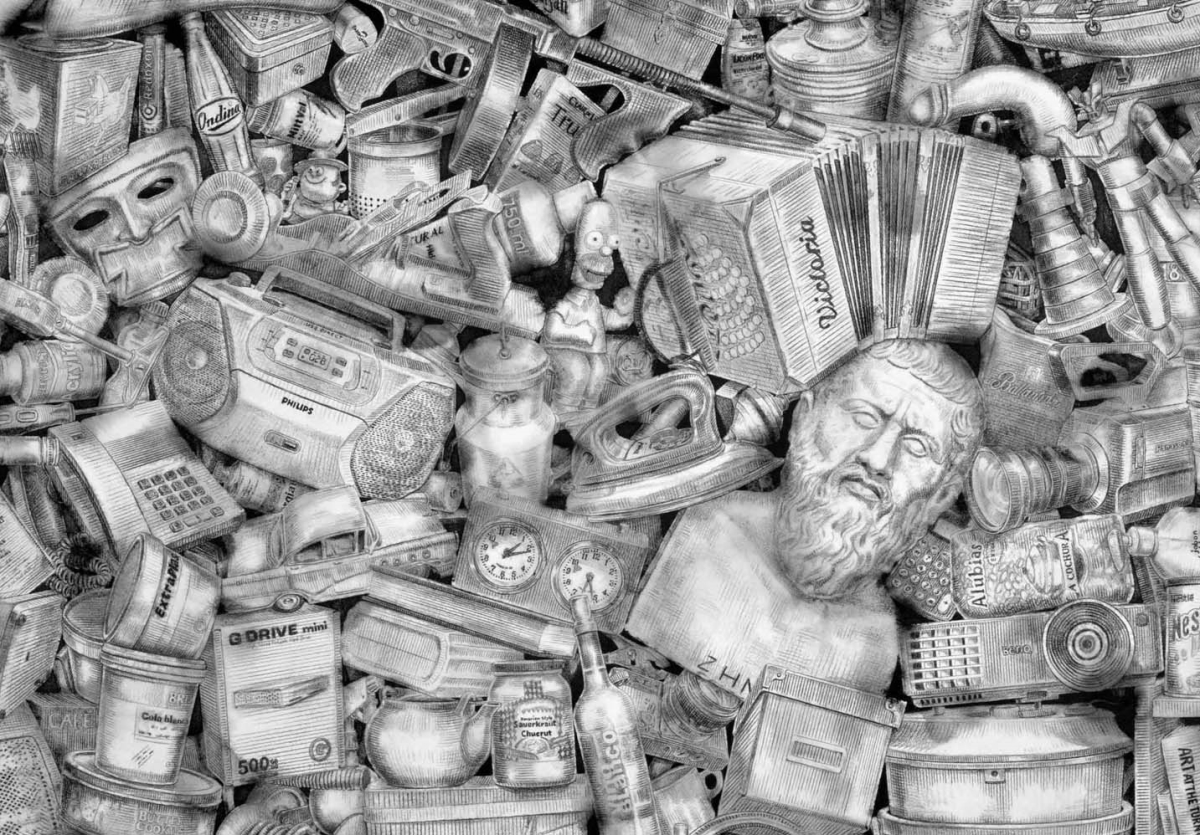
This series began in 2010 when I was living in Madrid. I experienced a significant to transition from an environment of total material scarcity such as Cuba to a city full of objects not only for daily consumption but also so many antique shops and the “rastro” which is a flea market that opens every Sunday in city streets. In this context, I began drawings of life size objects against a white backdrop as if looking inside a box. I became obsessed with owning these objects through these drawing. In that same flea market in 2012, I bought a German Telefunken radio, which I disassembled and later drew in a series depicting disassembled communication devices. I was interested in delving into the“sound architecture” of this device like an anatomical dissection. Later this radio was the subject of a video that chronicles the 1960s through some of its most important political, cultural, social, scientific events.
Describe your creative process. How long does it typically take to create a painting or drawing?
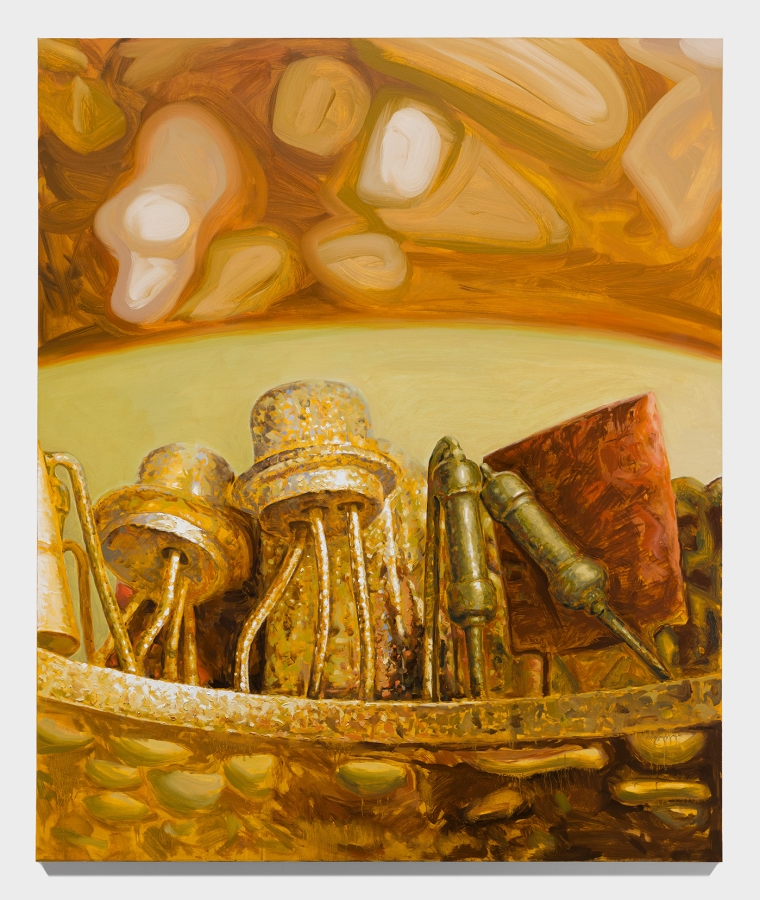
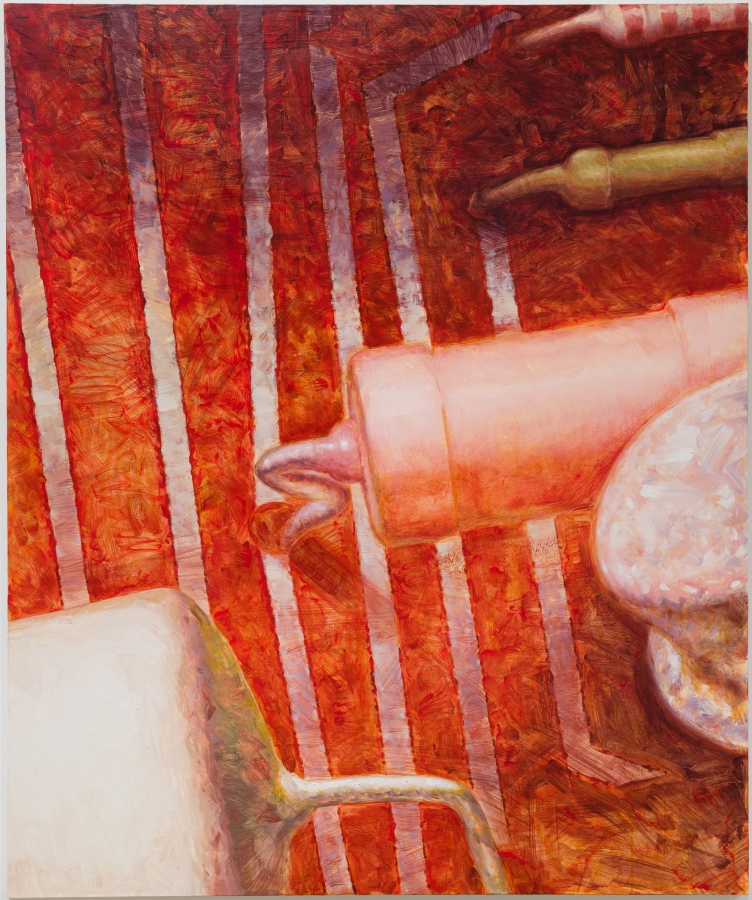
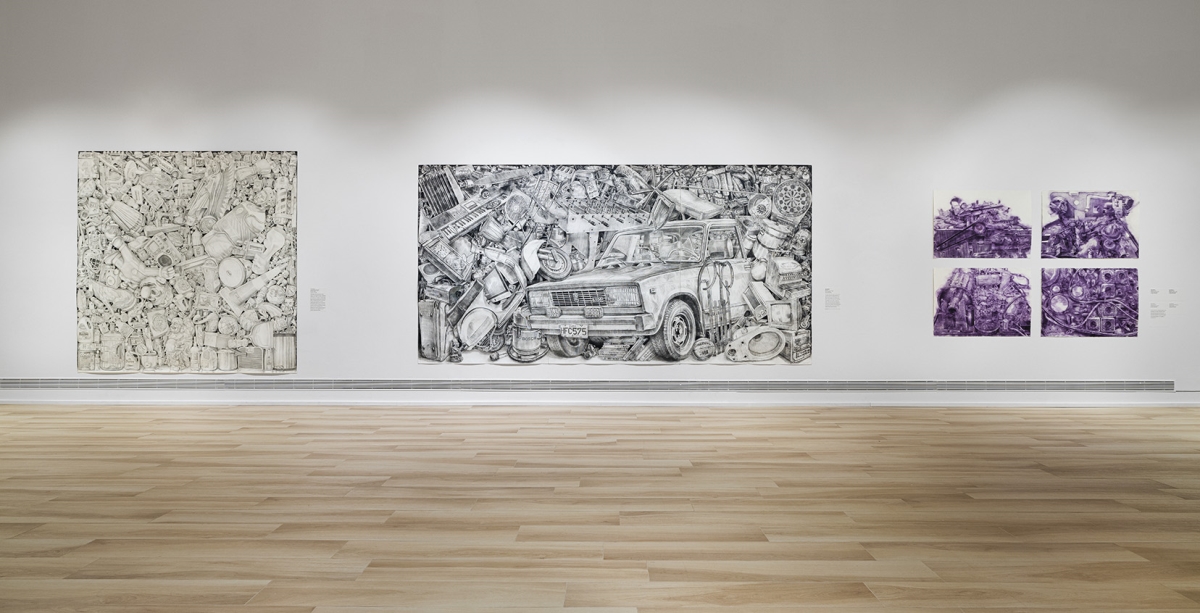
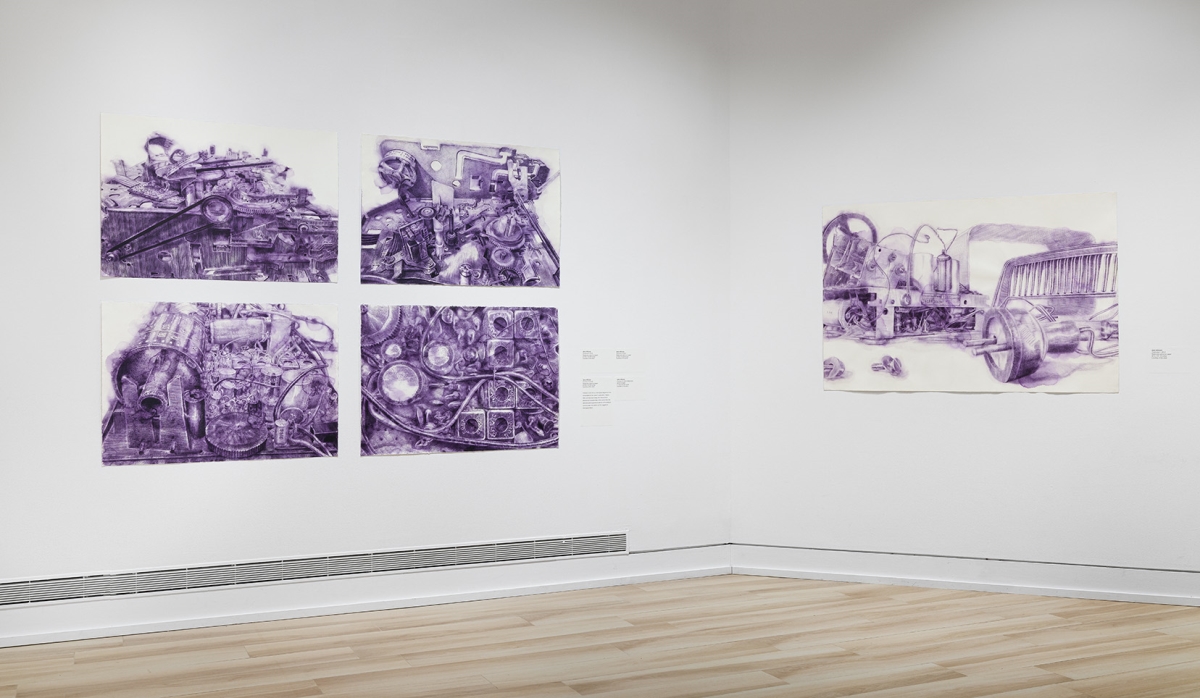
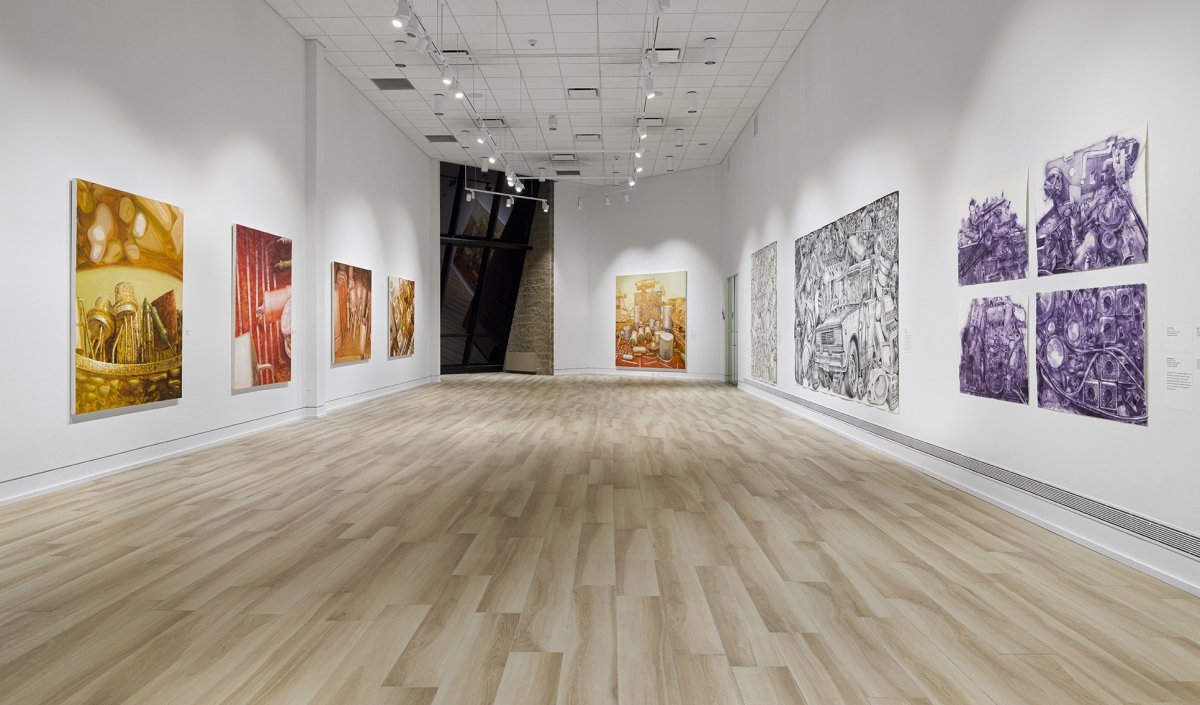
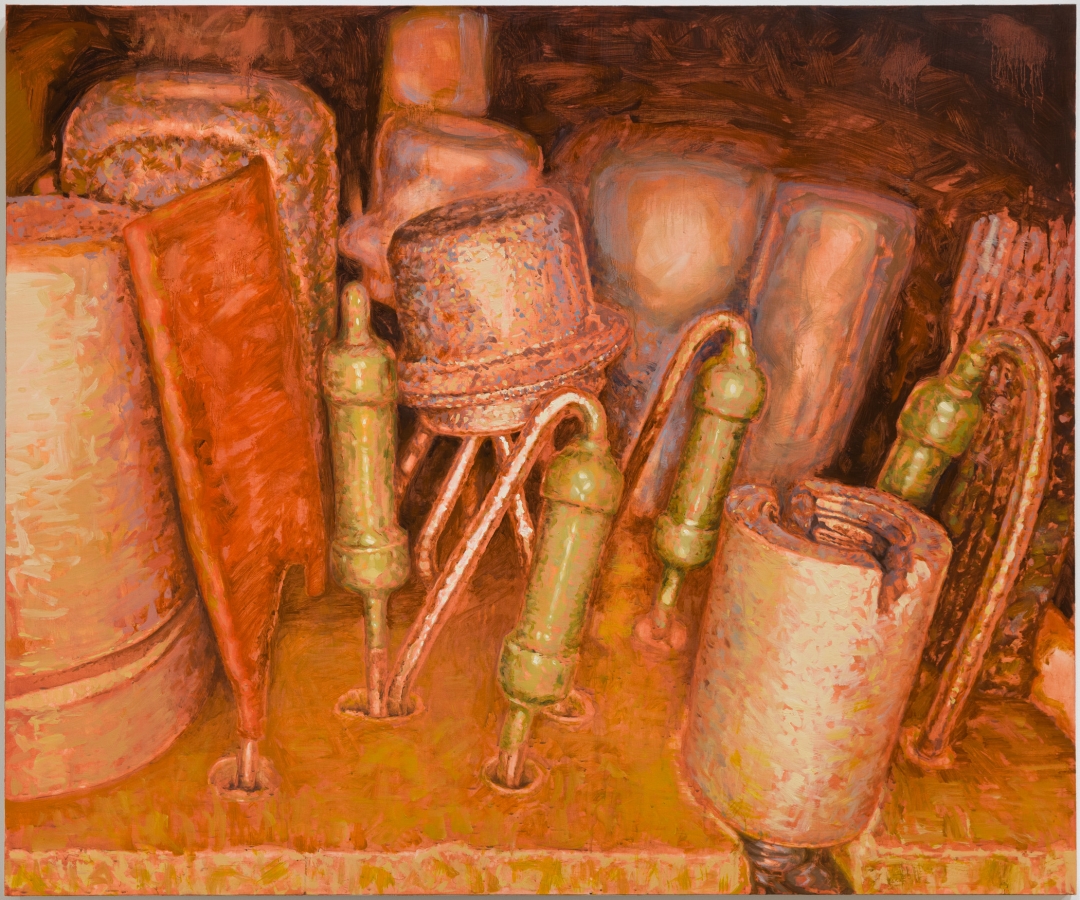
The production of both paintings and drawings takes several weeks and, in some cases, months depending on the size of the work. For the drawings of accumulated objects, I first create a photographic image of the objects and their measurements, and then I fill the pictorial space from bottom to top, drawing each object to life scale like someone who fills a “box.” At the end, the total number of drawn objects is the title of the work. In the case of painting, it is about choosing an object that is later disassembled, then I take a series of photographs with an endoscopic camera. From the selected photo, I erased the numbers and letters that represent voltage and other technical data using Photoshop to achieve a more structural and monumental-looking image associated with urban landscapes. Then, I interpret the image through the medium of painting using the traditional technique of Venetian grisaille. In the case of the works in the recent show, I used a limited palette of only four colors known as the Zorn palette. (The painter Swedish Ander Zorn used this palette in many of his works). I chose warm colors to emphasize the earthy colors suggested by the native names of the brands of the appliances. I could not accurately calculate the time taken to create each work but it is certainly a long process to reach the final result.
Your work oscillates between painting, sculpture, installation, video, performance, and mixed media works on paper. Which medium feels more satisfying for you?
I enjoy all media; they are all tools of expression that I choose according to the subject matter at hand. Installation, sculpture and performance are media that I explored many years ago. In the last ten years, I have become focused on video, drawing, and now painting, which I really enjoy. I am focusing on painting for a year, returning to it after a long time without painting. I feel that I am relearning and learning it. I have become literally obsessed with it for months and consuming a lot of work and theory on the subject.
What can you tell us about your recent exhibition, Objectscapes? How would you like people to engage with these works?
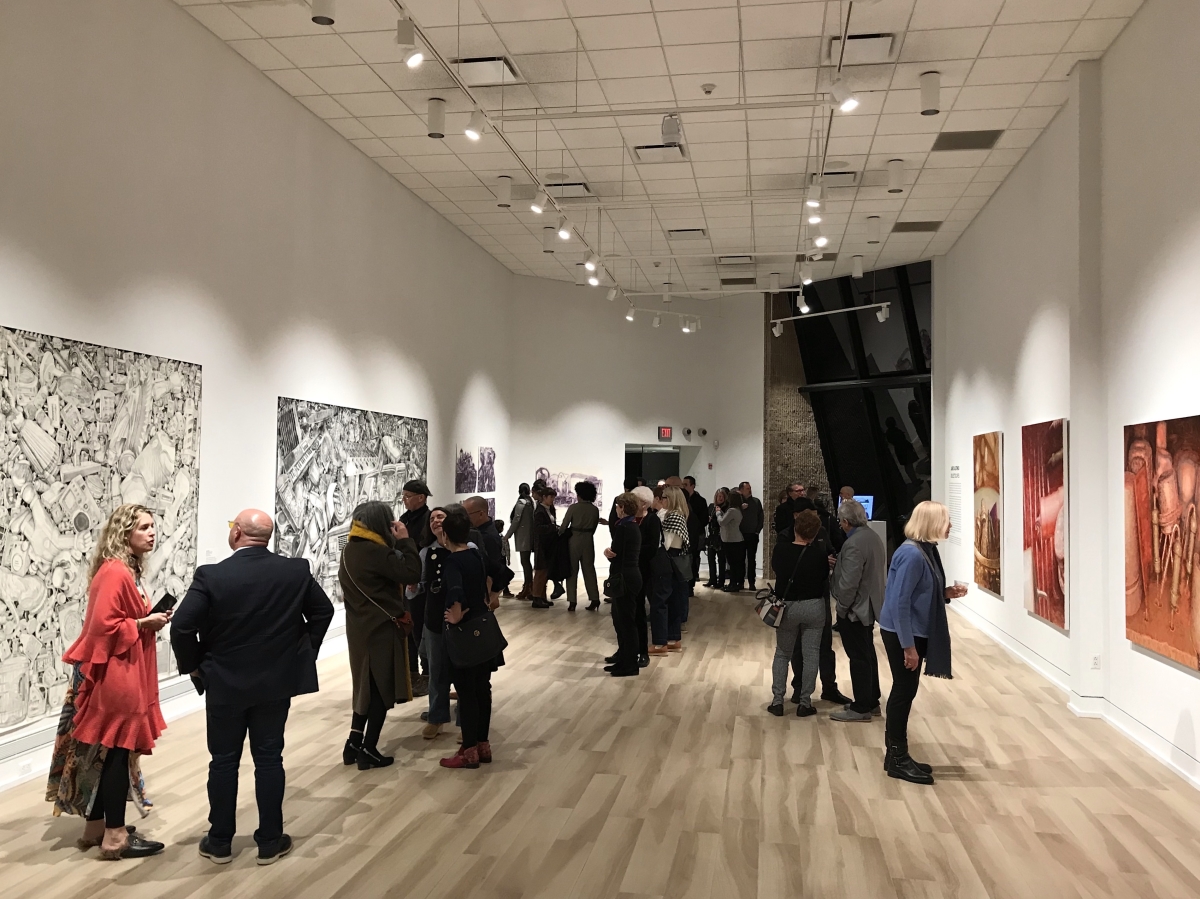
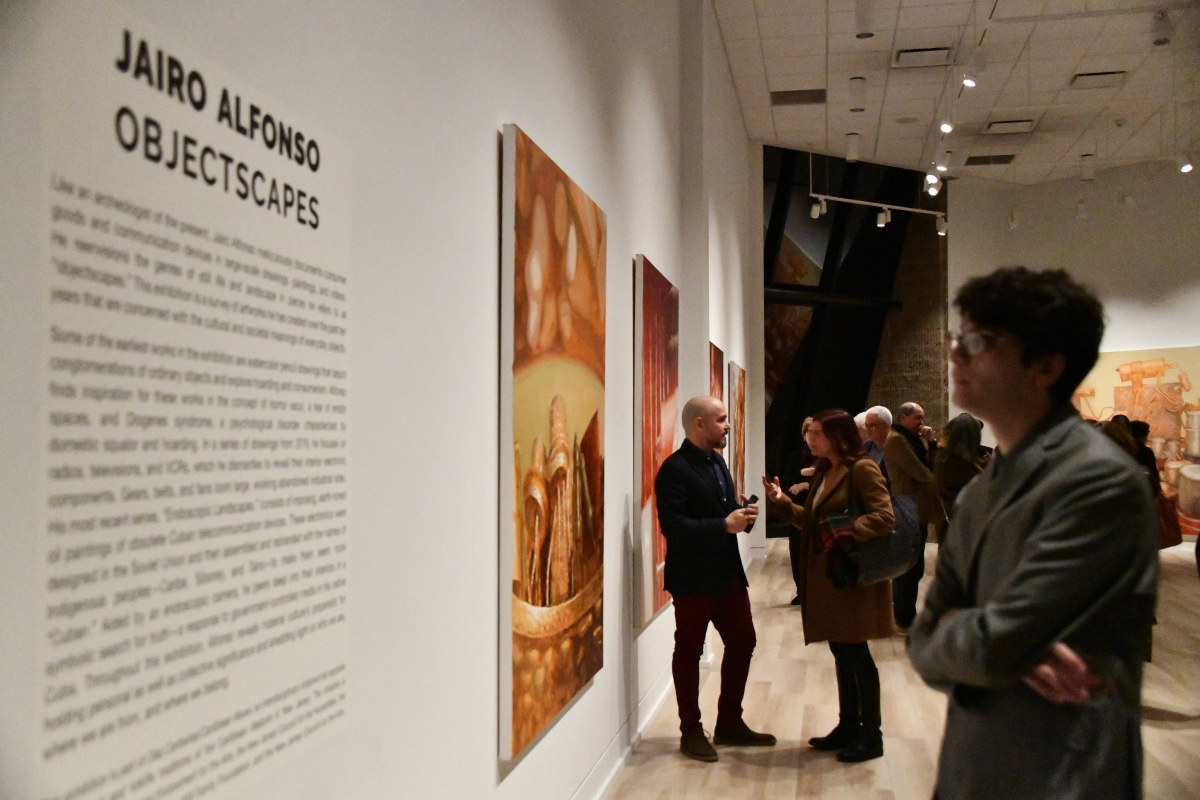
This exhibition brings together a selection of works from the last ten years and includes drawing, video, and painting. It is a selection of works that are concerned with the cultural and social meaning of everyday objects. I hope that viewers can immerse themselves in an experience that, although related to the personal, reveals universal meanings and themes of contemporary life. In this exhibition, one can appreciate works that speak to the consumer obsession of our current life. The video investigates the decade of the 1960s, which was prolific and intense in cultural and political events that formed the basis of what we live today. The endoscopic landscapes series of paintings investigates the control of information through the media, analyzing the period of the Cold War from the Cuban experience, and capturing moments and situations that also possess a universal message.
What are you currently working on? Do you have any ideas for future works or series?
I am currently finishing the series of paintings related to three Cuban devices (Taino/ Siboney/Caribe). I plan to create some videos related to the devices, using the endoscopic camera. In the near future, I plan to develop a series of paintings exploring the “inner architecture” of other devices from different origins and time periods.
Editor: Kristen Evangelista
Ph courtesy of the artist
Ph courtesy of the artist
Ph Etienne Frossard
Ph Etienne Frossard