Jorge Rodríguez, born in Holguín in 1991, builds a world where the human face becomes a field of experimentation. His portraits are not about likeness but transformation. By distorting and disfiguring features, he questions what we recognize as beauty and what we fear as the grotesque.
His fascination with anatomy began in childhood, leafing through his parents’ medical books. Those illustrations, half scientific and half mysterious, left a mark that would define his work. They taught him that the human figure could be precise and unsettling at once.
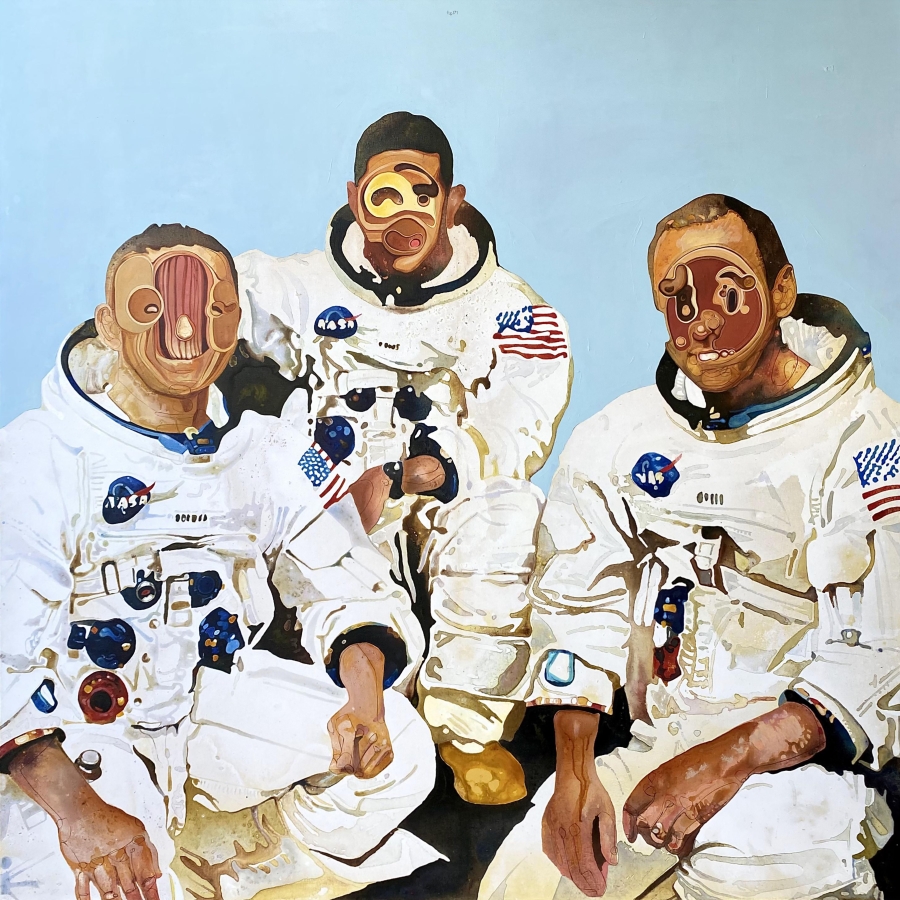
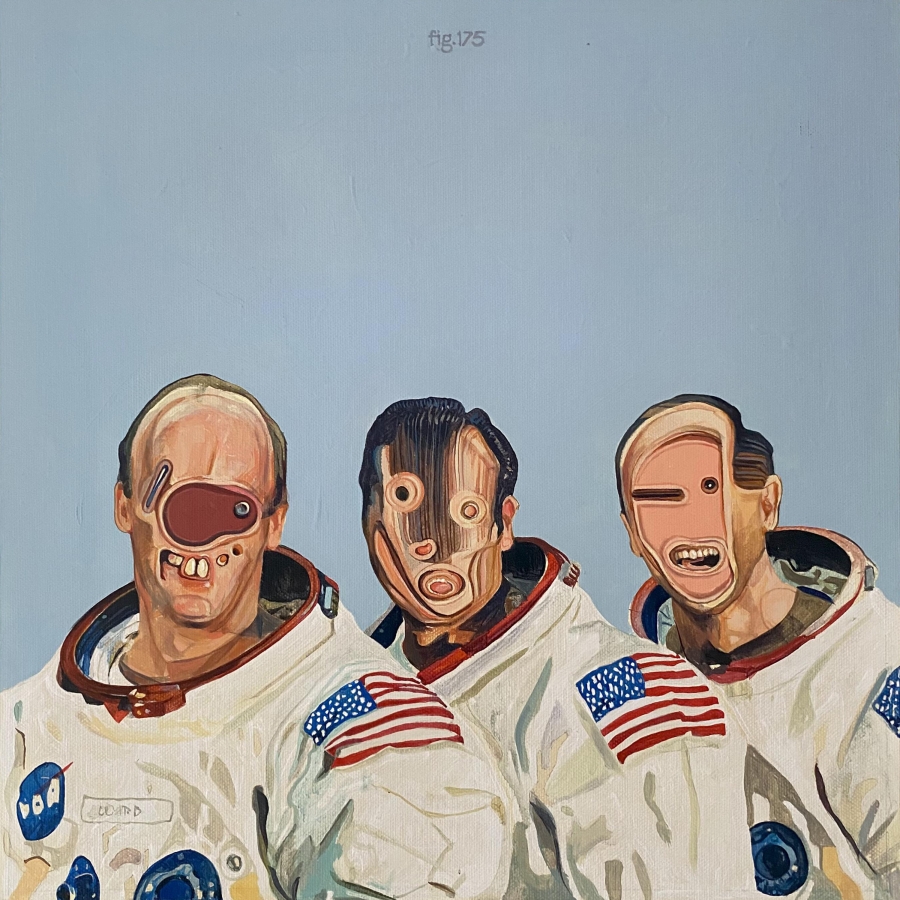
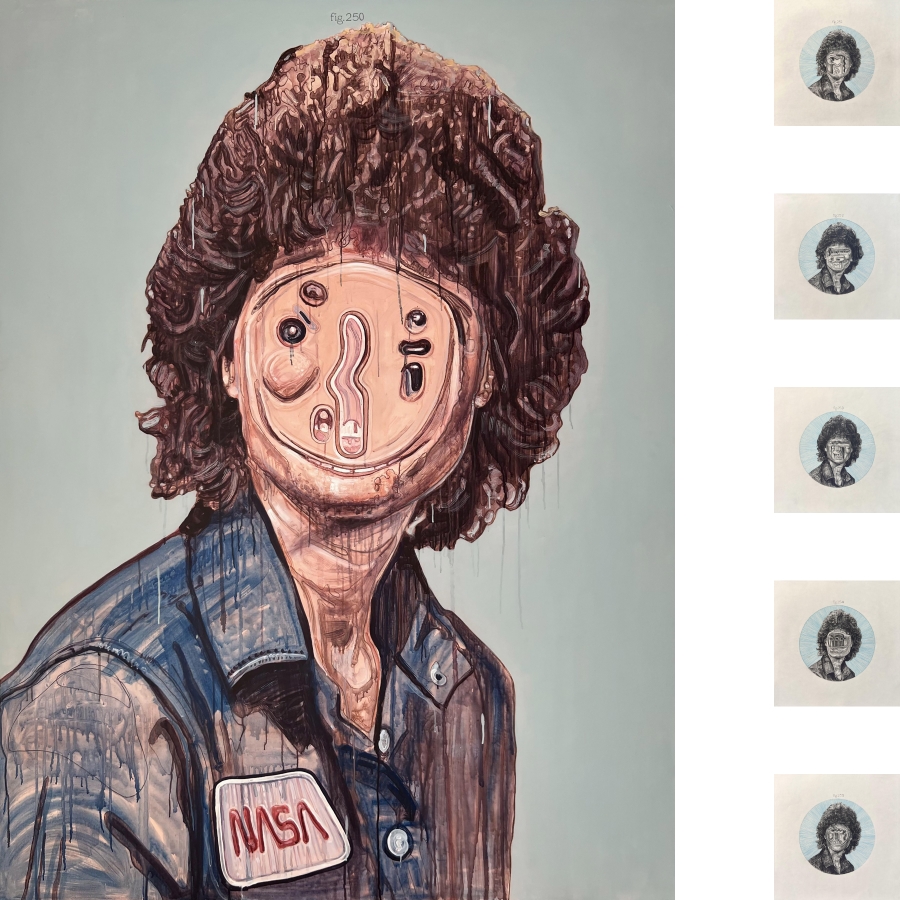
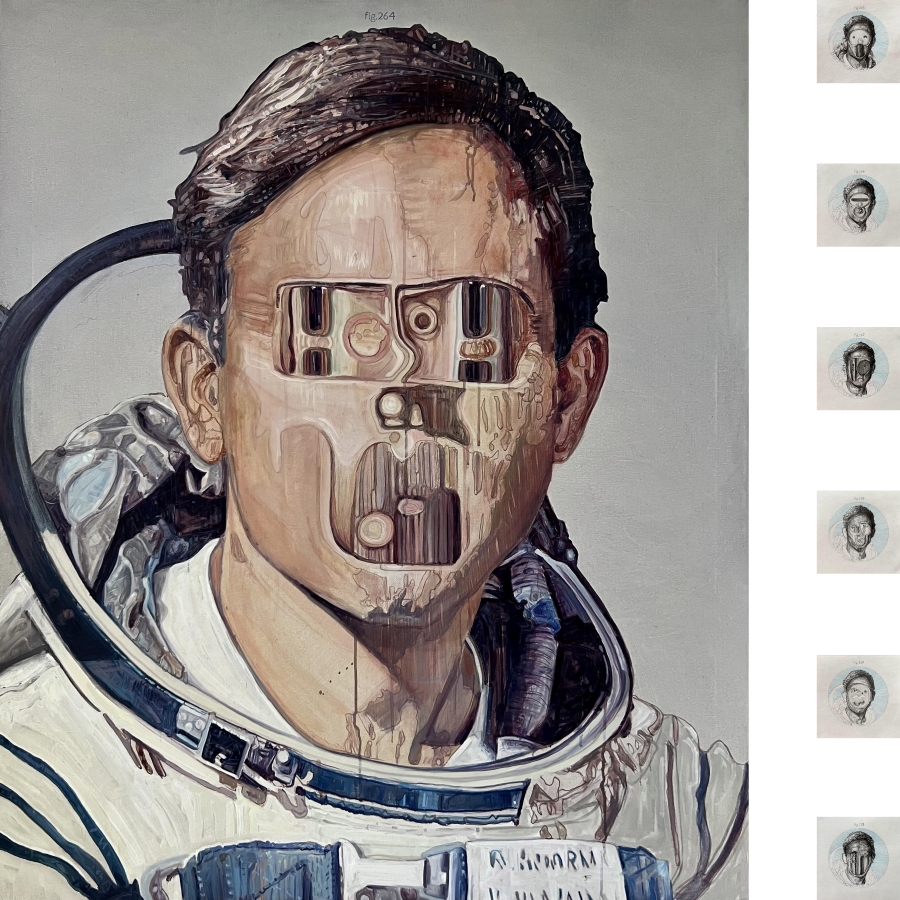
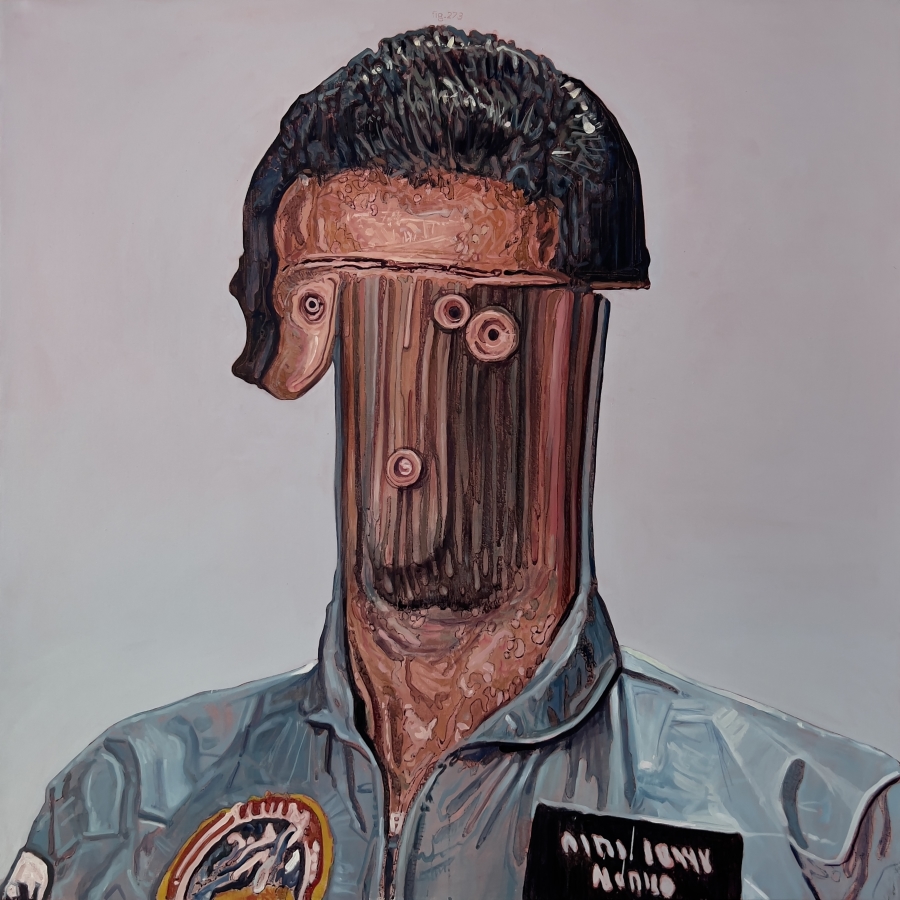
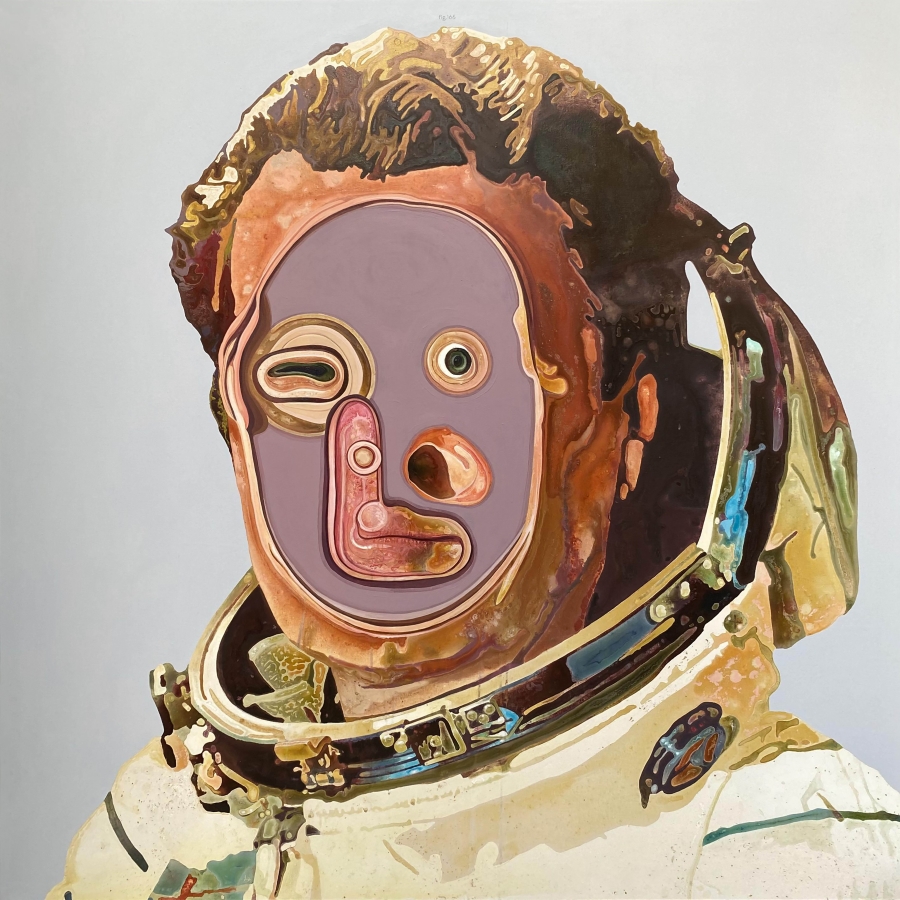
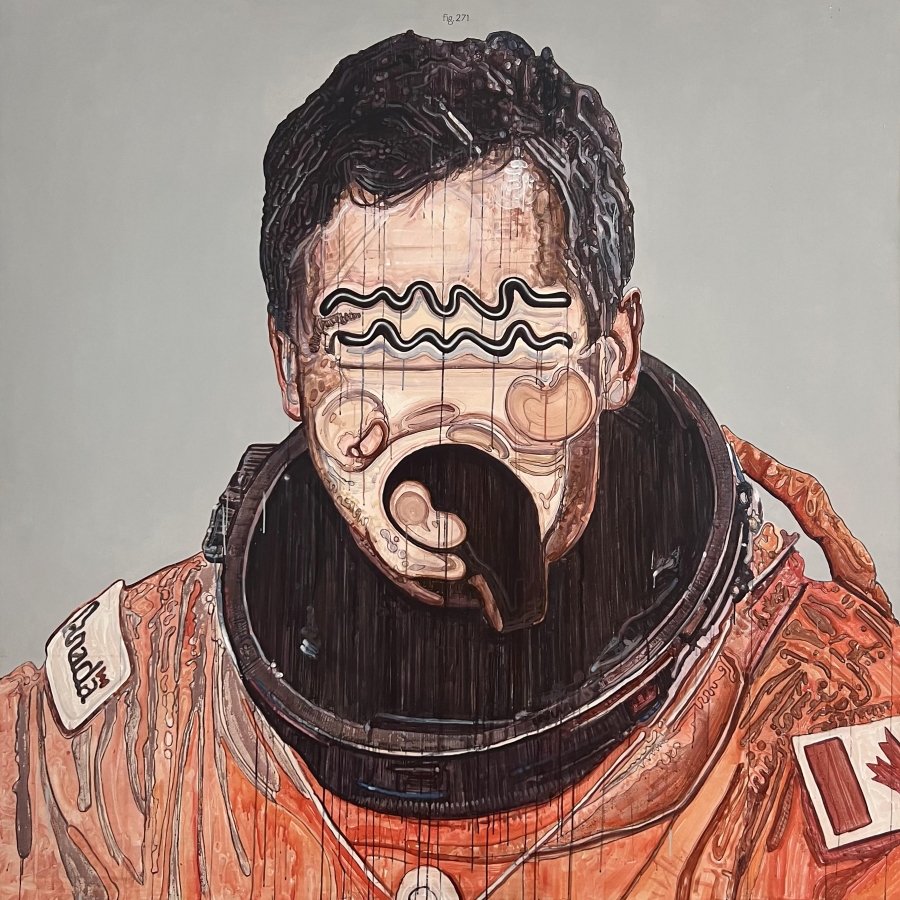
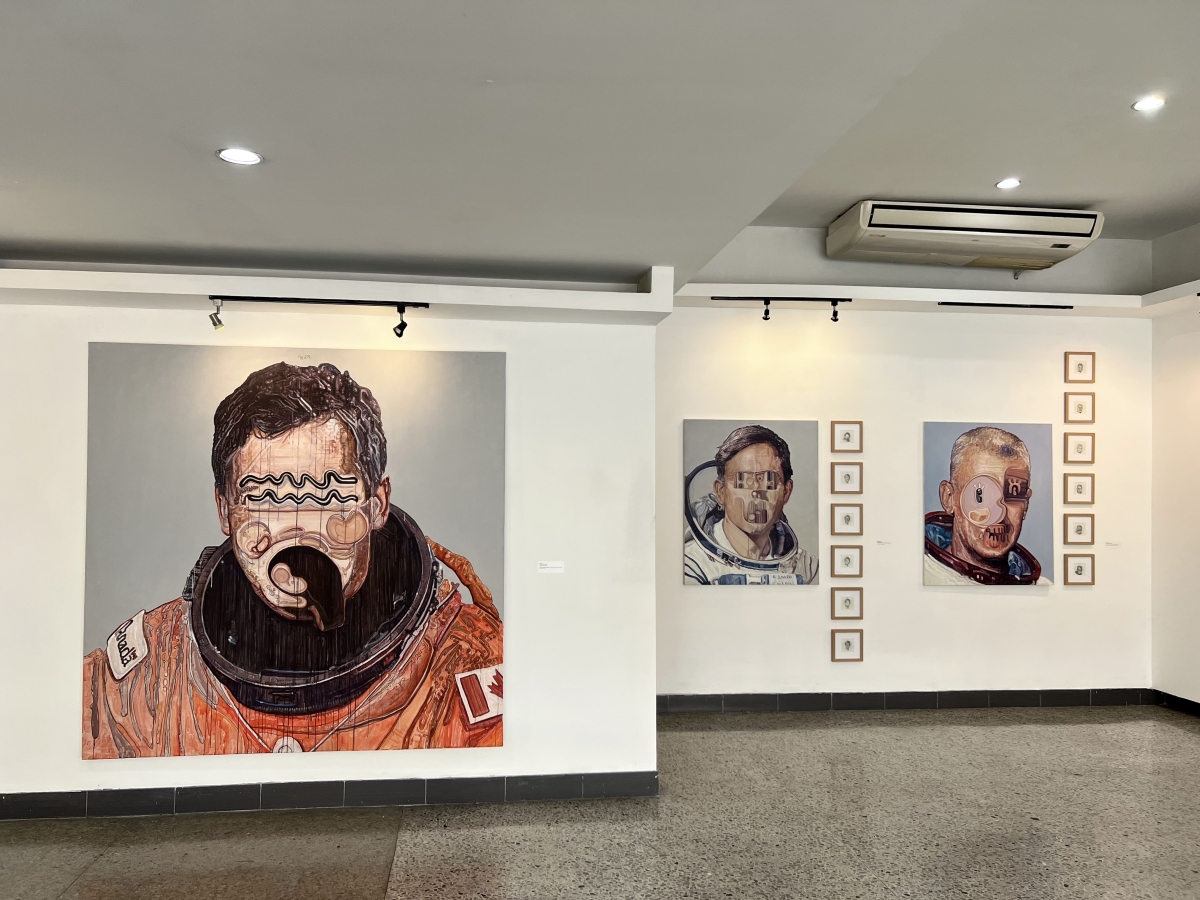
In his series Theratos, Rodríguez revisits official space portraits from the Cold War, deforming astronauts and cosmonauts until their heroic aura collapses into vulnerability. It is an exploration of how ideals fracture under pressure, and how the sublime often hides within the monstrous.
Working with proportion, symmetry, and number, Rodríguez treats each face as a mathematical puzzle and a psychological mirror. His reflections on deformity, perception, and the limits of representation reveal an artist drawn to the edges of comprehension, where form becomes emotion and beauty loses its definition.
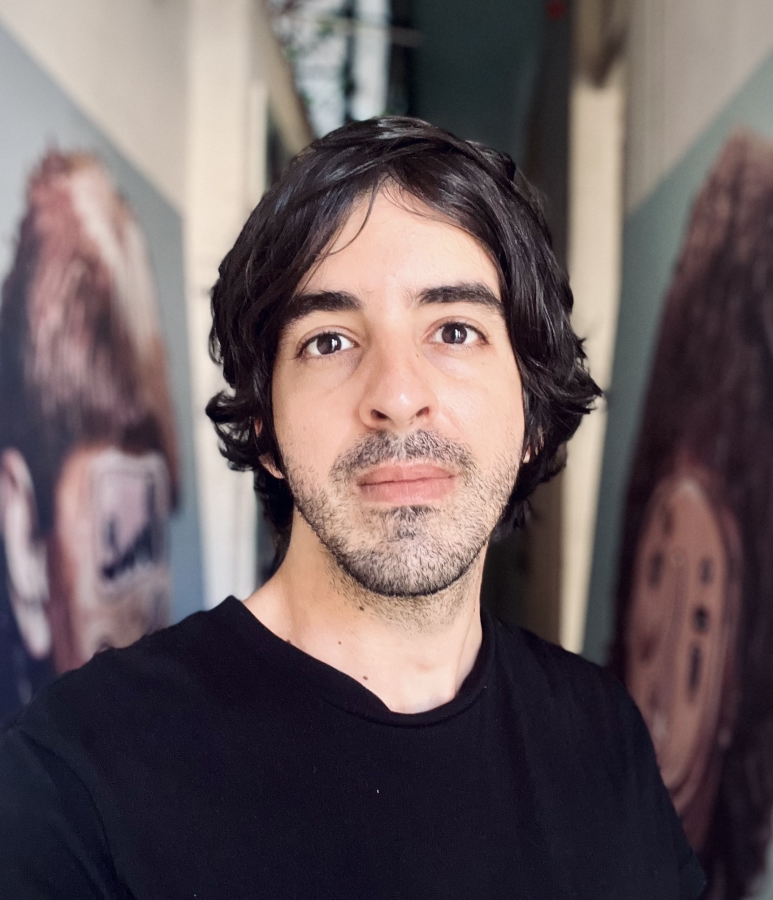
An Interview with Jorge Rodríguez
By Carol Real
What first drew you to the idea of deforming and reimagining the human face in your art?
The human face has very particular proportions, and when altered, it begins to dehumanize these features, creating an alternative being that retains some familiar patterns. For me, deforming is an act of questioning nature and our understanding of the familiar. Disfiguring brings me closer to my standards of creative freedom in art. I am passionate about constructing various facial shapes and exploring endless variations.
Your parents’ medical books seem to have left a lasting impression on you. How did those early encounters with anatomy and medical imagery shape your artistic imagination?
I grew up in a household filled with literature about medical practices, as my parents and other relatives are doctors. Medical books were my first books; I would flip through them in search of illustrations. These were anatomical and fascinated me, but they had something abrupt and incomprehensible for my age. This early sense of the unknown is what I have been trying to emulate in my art–the feeling of discovering something truly new and strange that I found in the illustrations of these books.
Through your work, you seem to challenge our ideas of beauty and imperfection. What do you hope viewers confront when they stand before your portraits?
Distortions in my artistic practice are the fundamental basis for questioning the known in the visual realm, where representations in art play a fundamental role in the concepts of beauty, the sublime, and the grotesque. In my art, I play with these perceptions of our senses and cultural conditioning regarding the patterns of what we see as individuals in my portraits. I believe that what truly makes a work beautiful or ugly is the viewer, and this perception is inherently contained within the viewer.
What was the most demanding aspect of creating the beings in Theratos—conceptually or technically?
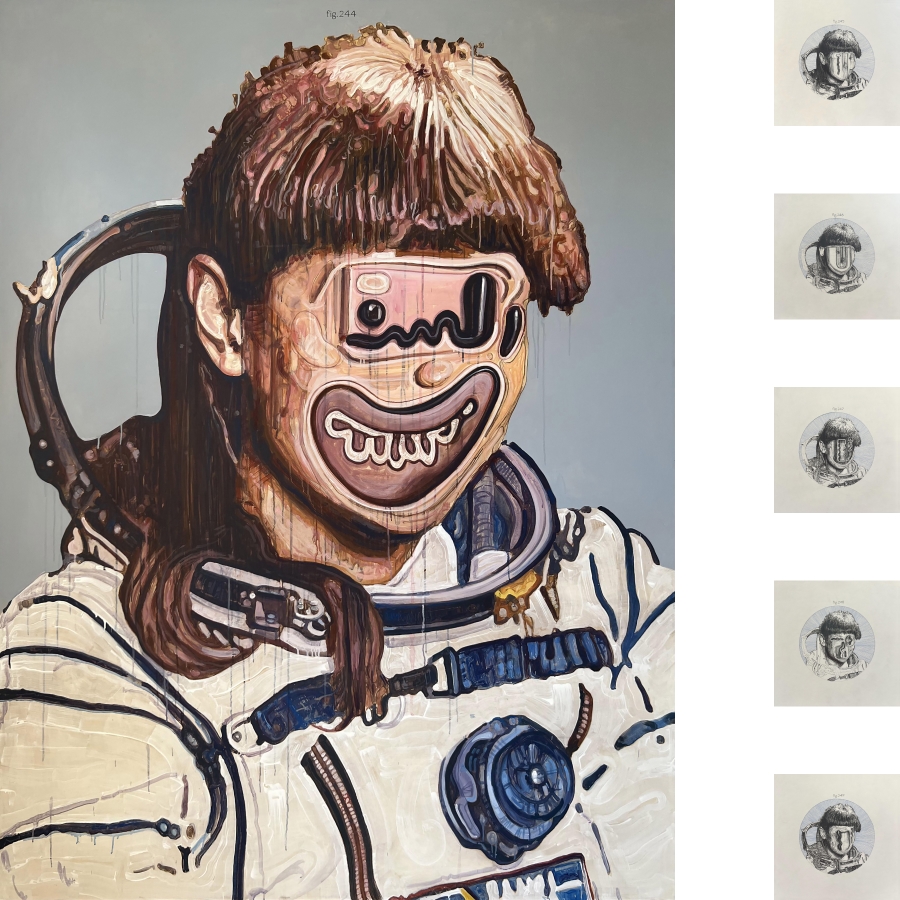
The challenge in my practice lies in finding new forms that challenge and provoke a sense of strangeness and absurdity. It is quite a challenge to create a new distortion in my portraits, as the world of shapes is infinite, and this truth often paralyzes me. Developing numerous variations of the same portrait is an exercise I often undertake, achieving different faces but with an immediate kinship to their original design.
You often speak of rarity and difference as central themes. Where does this fascination with the unknown come from?
My attraction to the unknown and the alternative was the catalyst for my current art. Strange, sometimes inexplicable, and indescribable shapes have always fascinated me. They have an immediate impact on my intellect, questioning and making me aware of the infinite possibilities in which physical forms can manifest. The limits of my creation are in my imagination, which both fascinates and terrifies me.
Your work often touches on the idea of the sublime. How do you interpret that concept within your creative process?
For me, the idea of the sublime is something that sometimes transcends reason, heightening the senses and questioning understanding. It is something of a special nature that cannot go unnoticed, evoking a strange fascination in the viewer. I attempt to build my work around these ideas.
What continues to drive you to explore new forms and visual languages in your work?
My motivation is to explore and develop new forms, continually pushing the limits of my creativity, refining my technique, and delving into new creative formats to create a unique universe.
Your compositions often rely on numbers and symmetry. How did mathematics and metaphysics become part of your visual vocabulary?
In my adolescence, I was fascinated by metaphysics, numerology, and concepts in literature that tried to explain the universe unconventionally, often questioning logic and reason. From here, I began to see the world in a more organized way, where there were mathematical proportions in beings and things. I also started using specific formats in my works, such as measurements that were multiples of 3, 7, and 9 or had some relationship with these numbers. As for the composition of my figures, they tend to be placed in the center of the canvas or paper, giving them a certain symmetry. I have always been obsessed with the square format. This practice began to frame my art in certain patterns, which led me to other peculiarities of my work, such as chronological numbering right in the center at the top of the piece.
Your series Theratos reimagines space heroes through a distorted and grotesque lens. What inspired this reinterpretation of the Space Race?
This series is about the Space Race between the United States and the former Soviet Union. In it, I appropriate the official space portraits of their most prominent astronauts and cosmonauts, distort them, and display them as phenomena of the era. The idea is to question the image of the space hero and examine the differences between these two superpowers during the Cold War.
Image credits: All images courtesy of the artist
Editor: Kristen Evangelista