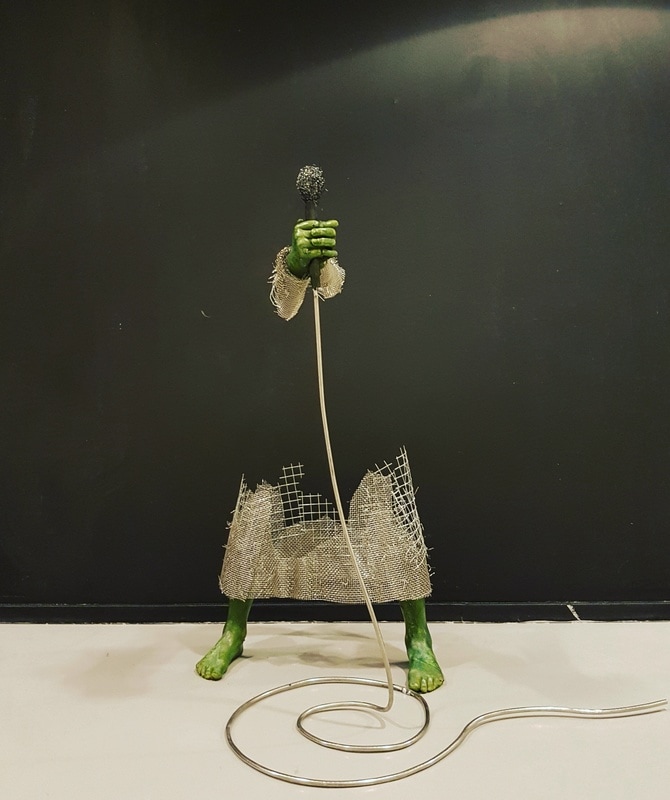
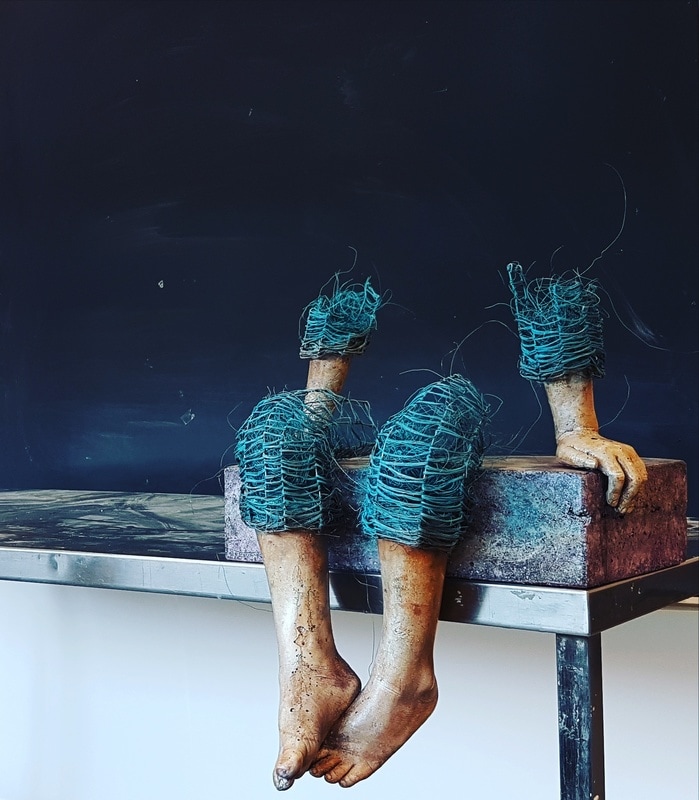
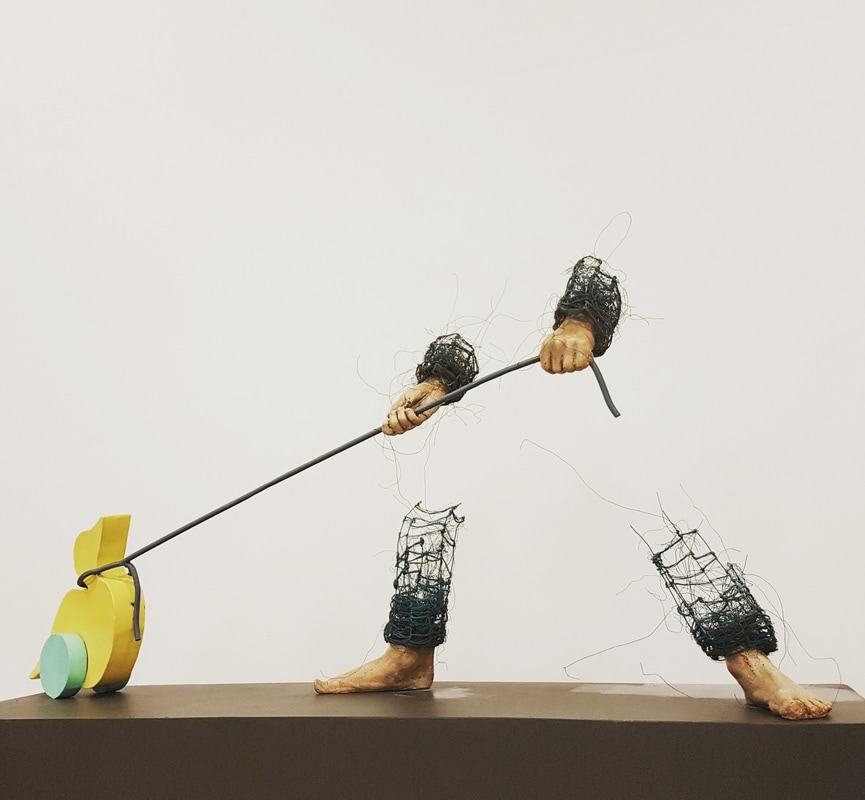
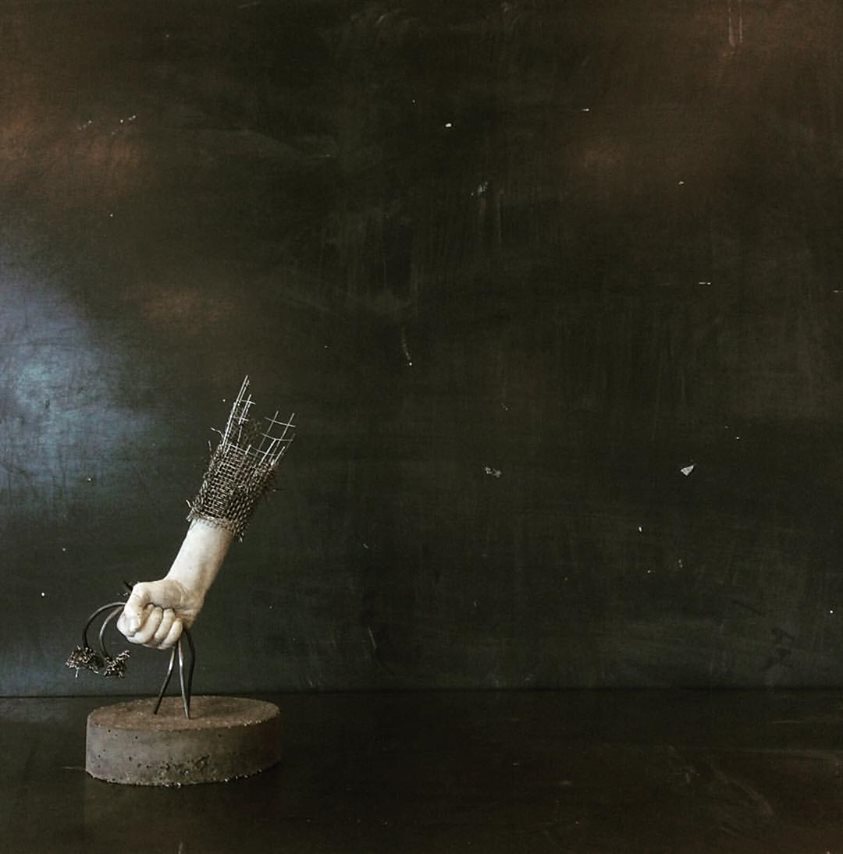
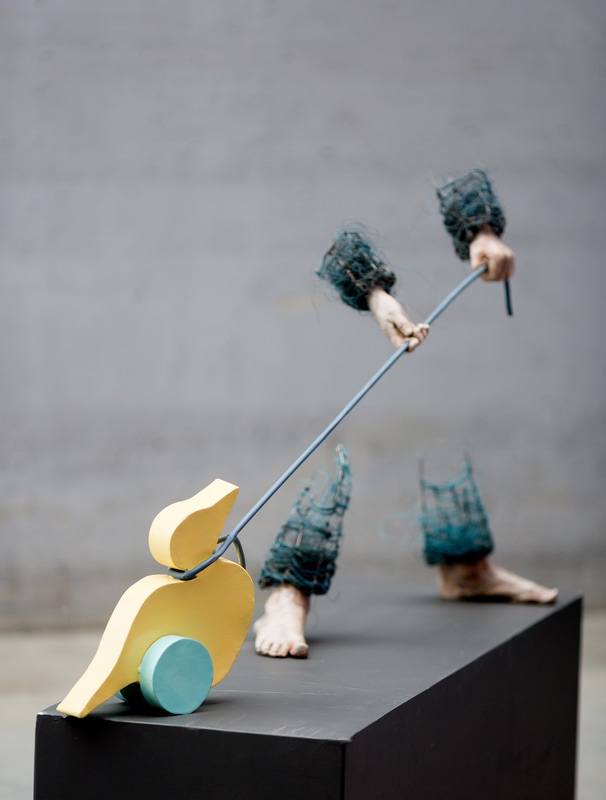
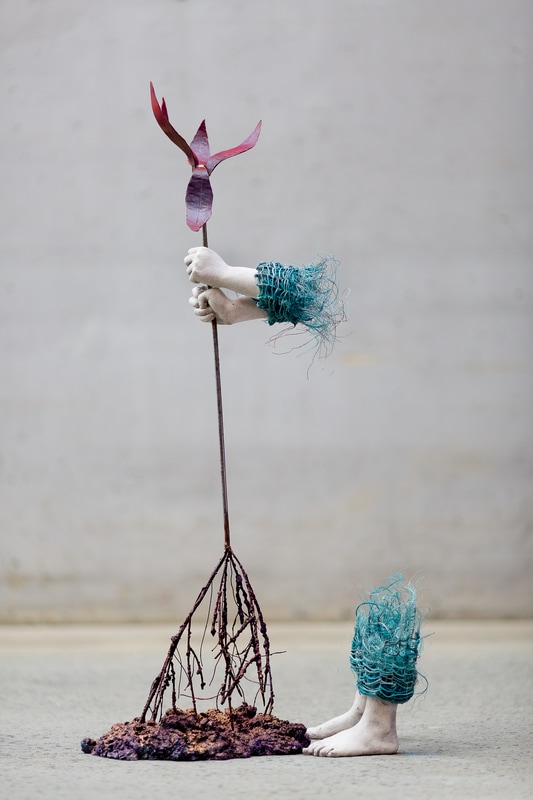
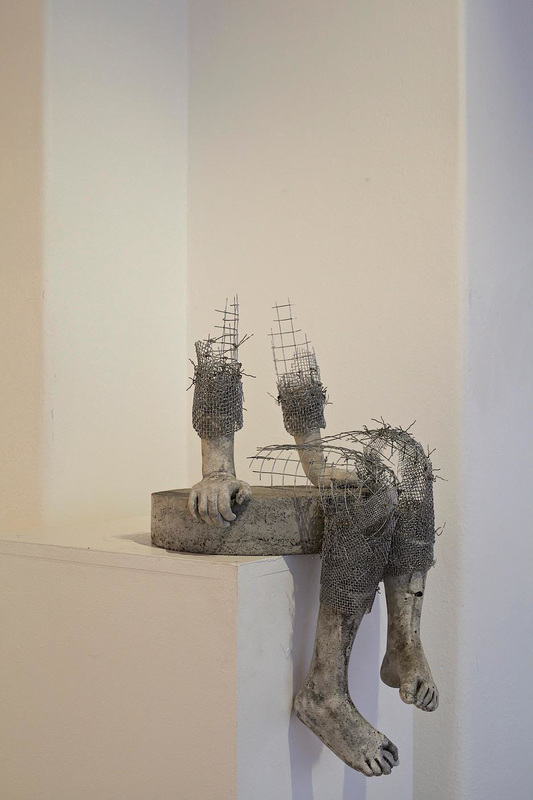
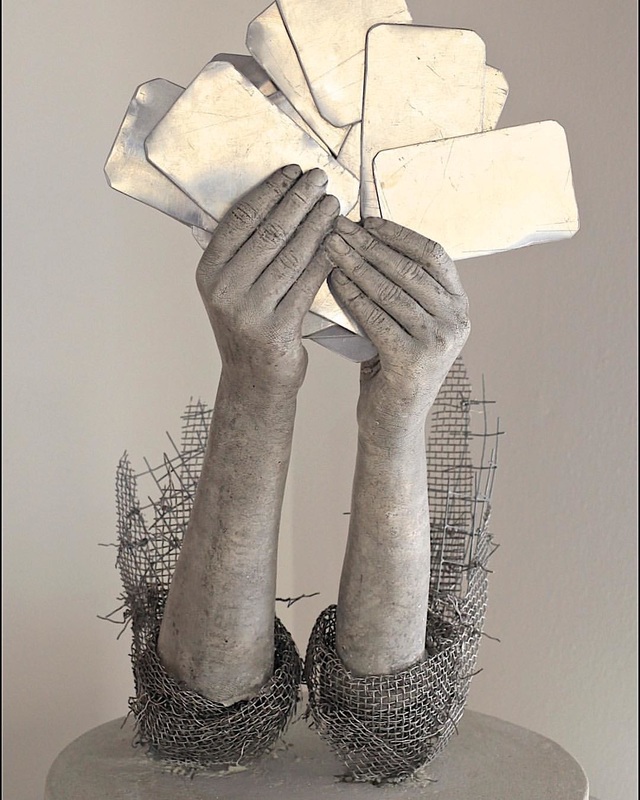
Lene Kilde’s sculptures exist in the space between form and imagination. Made of “concrete, wire, and air,” her figures invite the viewer to complete them—to see the gestures, emotions, and invisible connections that her minimal compositions suggest. Kilde’s work captures the fleeting language of childhood, the honesty of movement, and the unspoken narratives that live within every human gesture.
A graduate of the Oslo and Akershus University College of Applied Sciences, she earned her master’s degree in Product Design in 2012 and received the Norwegian Arts Council’s prestigious three-year work scholarship for young artists shortly after. Her practice has taken her from Norway’s forests to Grenada’s underwater sculpture park, where her monumental Nutmeg Princess stands as both an artwork and a living reef. In this conversation, Kilde reflects on memory, play, and the invisible threads that connect imagination to material form.
An Interview with Lene Kilde
By Carol Real
Your work is deeply inspired by childhood. What was your own childhood like growing up in Norway?
I grew up in a little town close to the capital with my working class family. We lived very close to the forest where we were lucky to experience the “wonders of nature.” I am the oldest of three. We had a very exciting but safe childhood. At that time, I thought that children usually turn into someone else when they grow up. I didn’t want that for me. If identity has an age, I would say that my identity is how I felt when I was six.
When did you first discover sculpture as the language through which you could express yourself?
I guess I have been involved in art my whole life. I was very interested in woodcarving as a child, and when I was five, my parents made me a studio in the basement. I spent many hours there making wooden sculptures and furniture. Becoming a sculptor is something I could not avoid; and if I were to try to avoid it, there would be a never-ending, terrible struggle. My family has been very supportive of my career, which is something very important to me.
How do ideas for your sculptures begin? Do you start with a clear concept, or does the process unfold more intuitively?
I have found children and their emotions a very repeatable starting point, and I like to make a series of sculptures connected to a situation or a mindset. I do make use of my own childhood, but mostly I study my daughter, my nieces, and the children of my friends. Whenever I need a new idea, I make a short visit–and walk home with fifty new ideas just by watching kids and talking with them.
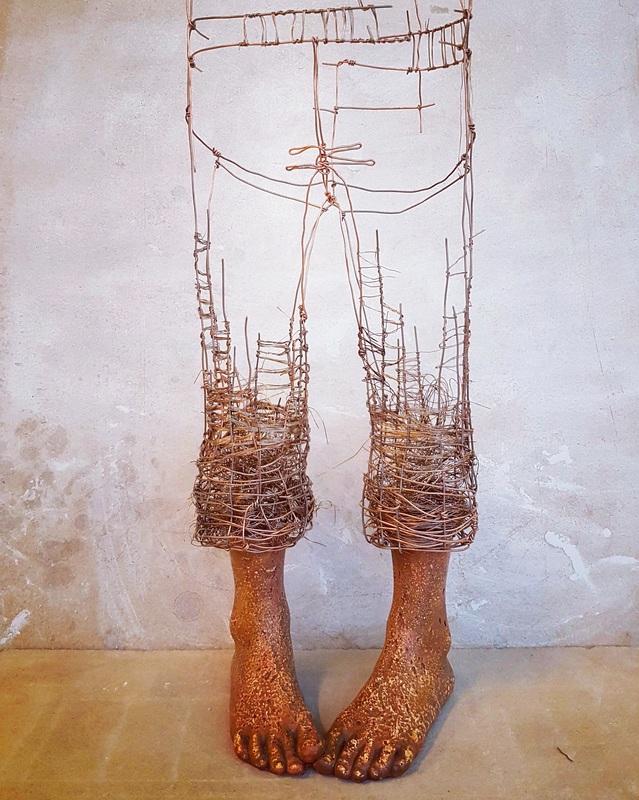
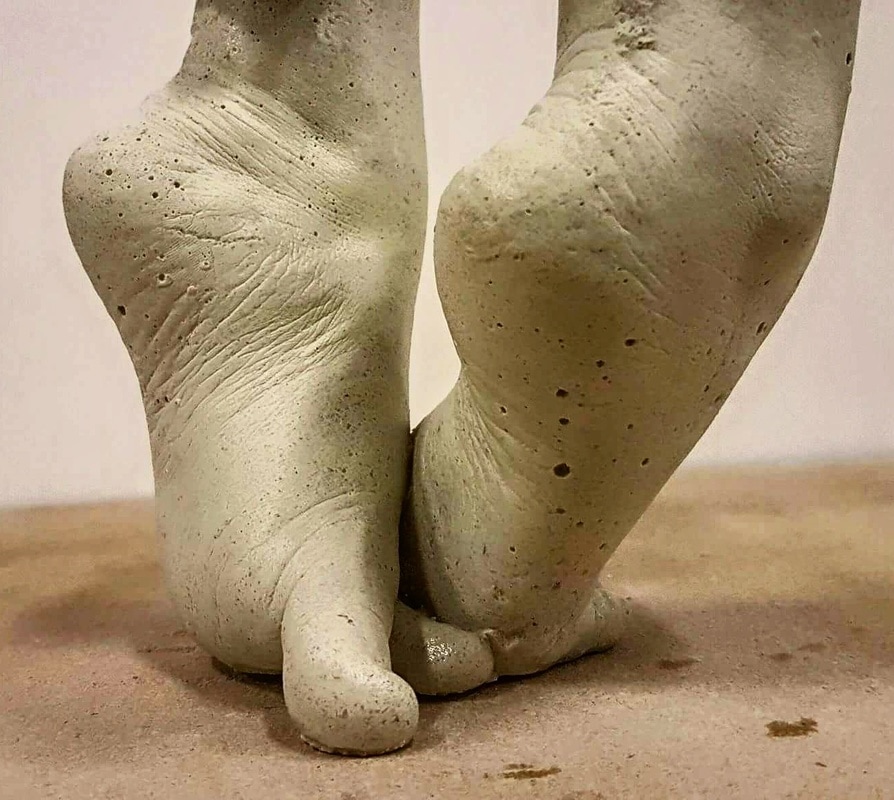
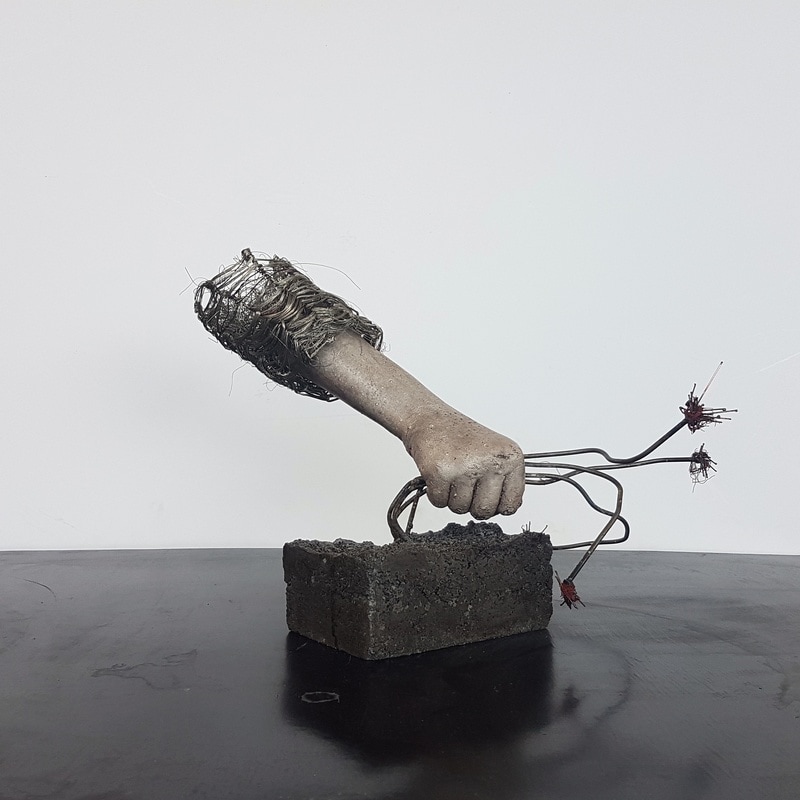
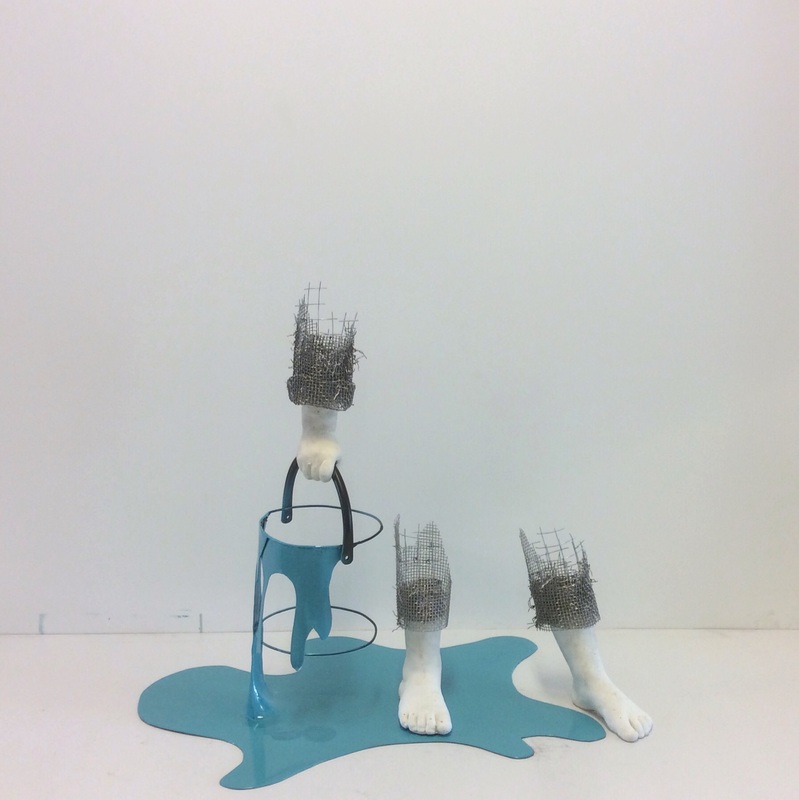
As my bio mentions, I make sculptures using concrete and copper mesh. I show a few body parts, usually only hands and feet, which are then placed in relation to each other using the mesh. I want the viewer to imagine the rest. People add their own stories. I think that the air around the sculpture supplies the things that are not there; and that causes people to believe.
What does a typical day in your studio look like?
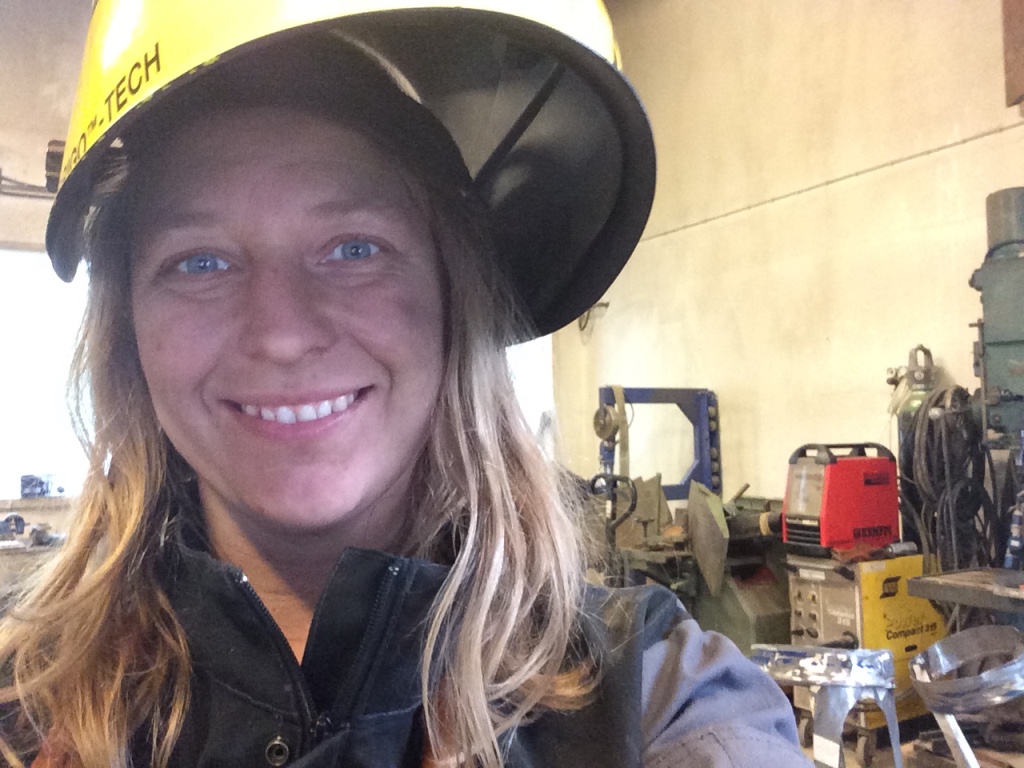
The college where I earned my masters has a very generous artist-in-residence program that allows me and some other former students to use all their workshops. The school has one of Scandinavia’s best machine parks with complete wood, metal, and ceramics workshops. I spend a lot of time there. It is inspiring to talk with the teachers and students. Some times they give me a hand or a good conversation. I have my own area in the ceramics workshop. After every big exhibition, I like to give myself a little present in the form of a trip for a few weeks. A trip to someplace warm.
Your underwater sculpture The Nutmeg Princess in Grenada has become one of the island’s most beloved art attractions. How did that project begin?
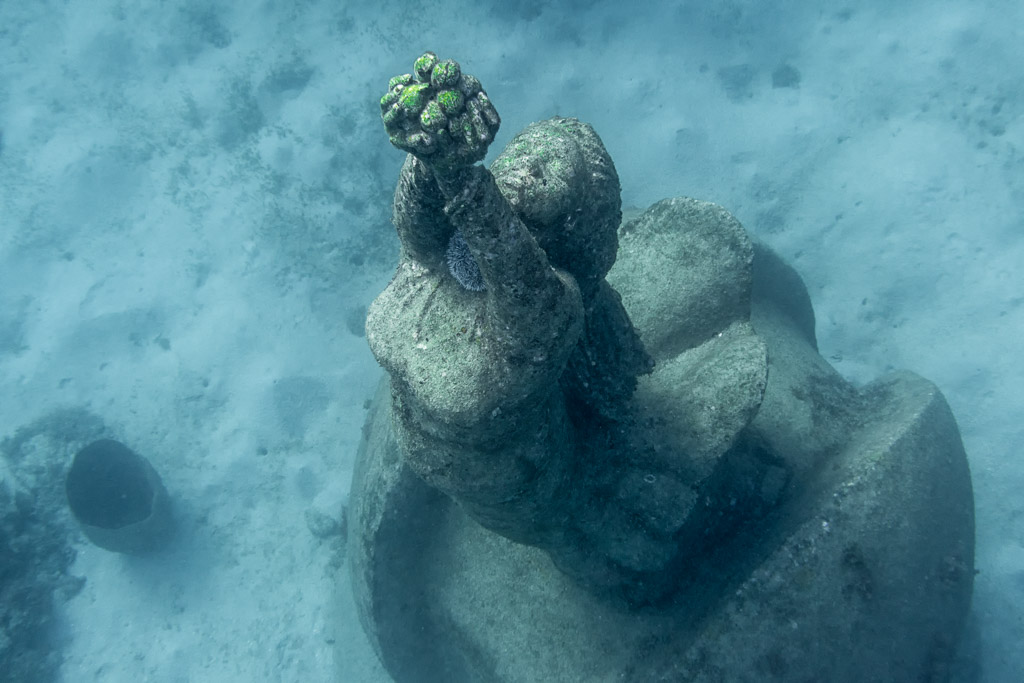
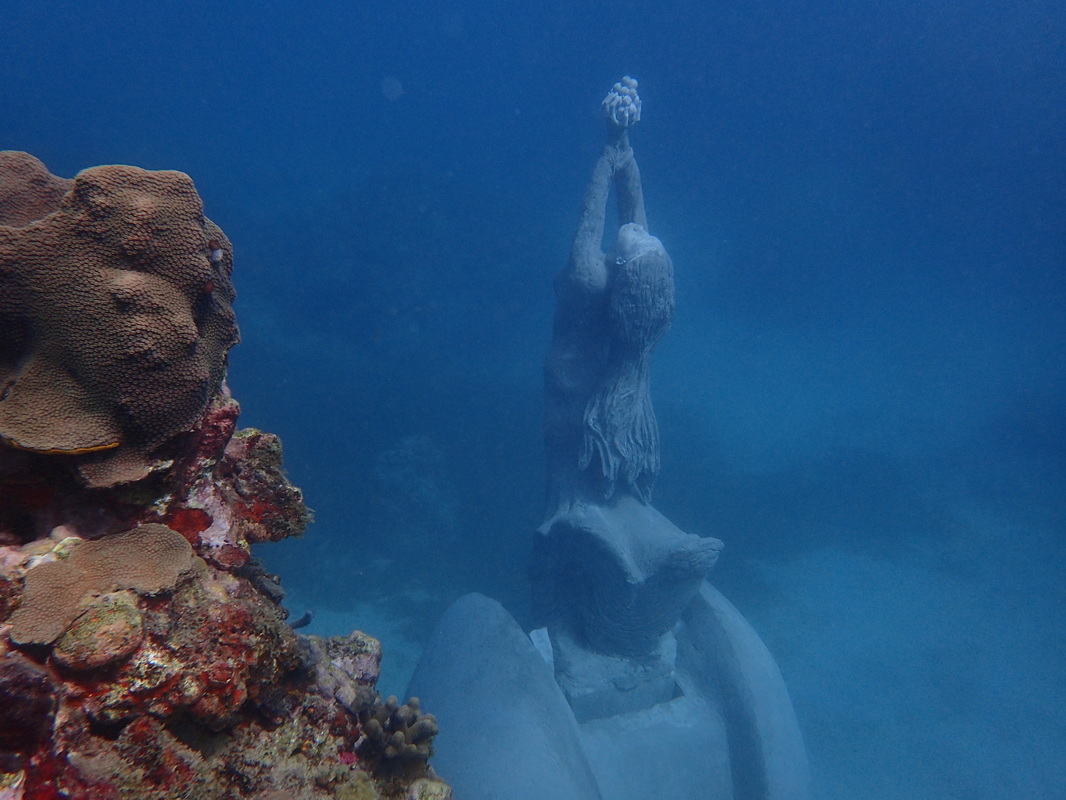
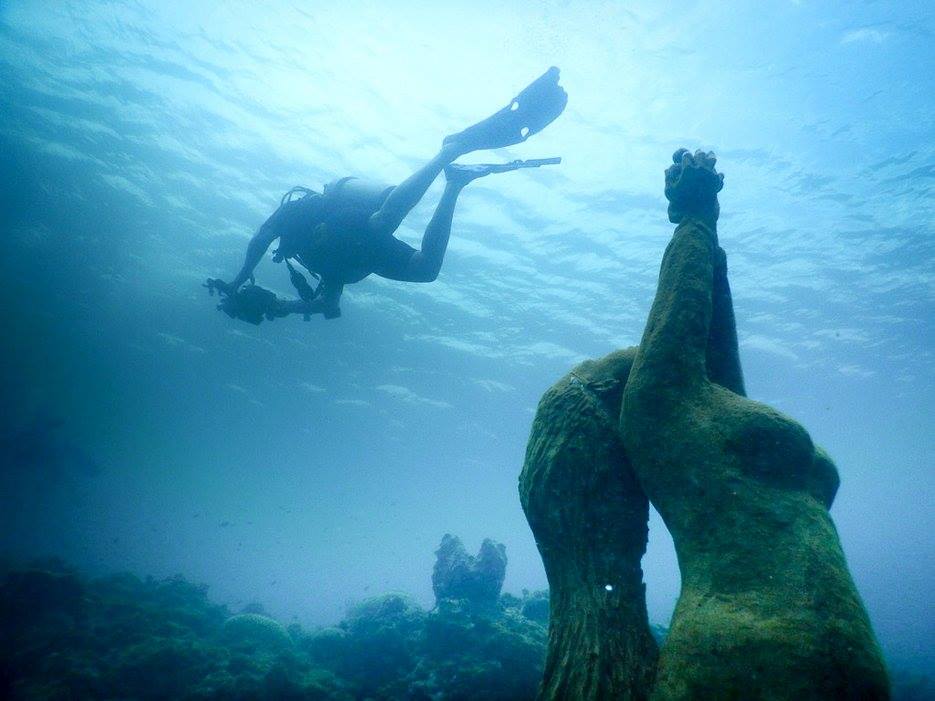
It started with my wanting to visit a warm foreign country to do an art project and then exhibit in a local gallery. A friend of mine told me that she had just been on holiday in Grenada, a lovely island in the Caribbean, and that I should go there. On line, I discovered this marvelous underwater sculpture-park on the island. The park functions as an artificial reef. I am a diver, and I was really keen to see with my own eyes those fantastic sculptures. I was even more eager to place my very own sculpture in that great company of concrete sculptures with sponges and seagrass all over them! I wrote the park manager asking if the park needed a new sculpture.
My scholarship from the Norwegian Art Council gave me economic security for another year, so when the park manager accepted my proposal, my daughter and I moved to Grenada for four months.
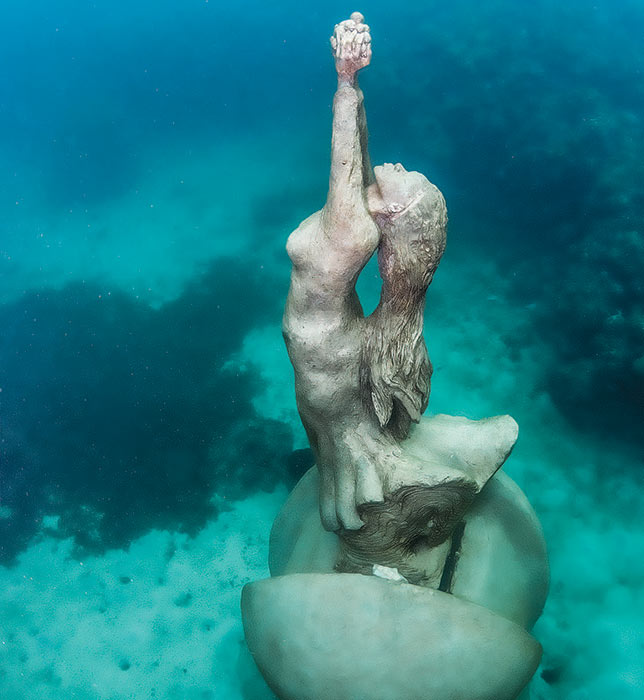
I learned all about Grenada and made many sketches. One of them depicted the Nutmeg Princess, a character from a storybook by local author Richardo Keens-Douglas. The author and people involved with the park helped me decide that a sculpture called “The Nutmeg Princess” would represent the island in a good way.
She is eleven feet tall and weighs about eight tons. There was no crane on the island strong enough to carry her to the pier. We had to rent one from another island. From the pier, with the help of air balloons and professional divers, she was dragged by a boat and sunk into the water.
There she stands, changing day by day, providing hiding places for marine life, and surfaces for corals and sponges to attach and grow.
The whole project was really a big adventure for me, and I would love to do a complex and meaningful project like that again soon.
Looking back, what has been the most important lesson you’ve learned as an artist?
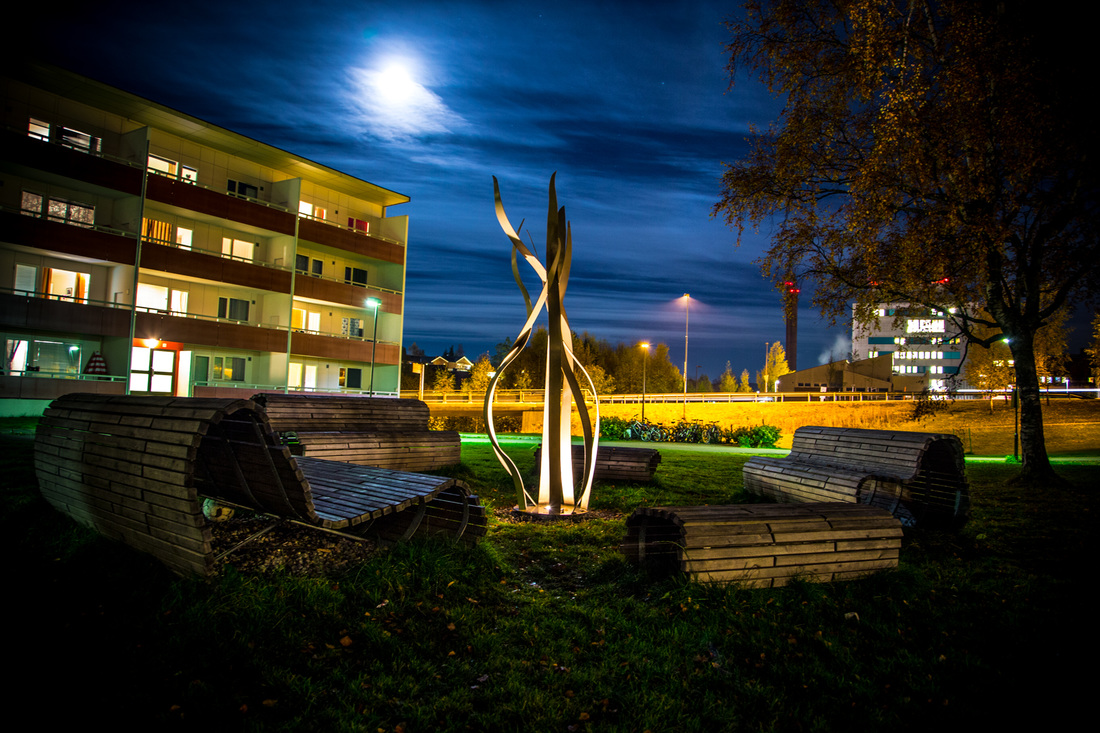
I’ve learned to change my expression, which is very difficult. When I first started working in a professional manner, I was making wire-string sculptures. I called it “To draw in open spaces,” and people loved it. After a few years I started to get bored, but I found it difficult to start doing something else. I did not want to become “the wire sculpture artist,” but somehow it was difficult not to respond to expectations. That was when I decided to go to Grenada.
I think what I am doing these days is a combination between the concrete “Nutmeg Princess” at Grenada and the wire-string sculptures. One of the most important things for an artist (at least for me) is to renew and develop. I don’t want to be stuck in an expression that no longer gives me anything.
When I get a new idea, or when something that I am unsure about turns out to really work, I get that sparkling feeling of happiness. I love that. I am thankful to say that I have that feeling several times every day. It happens if you stay on the edge of your comfort zone, giving yourself a few surprises every now and then!