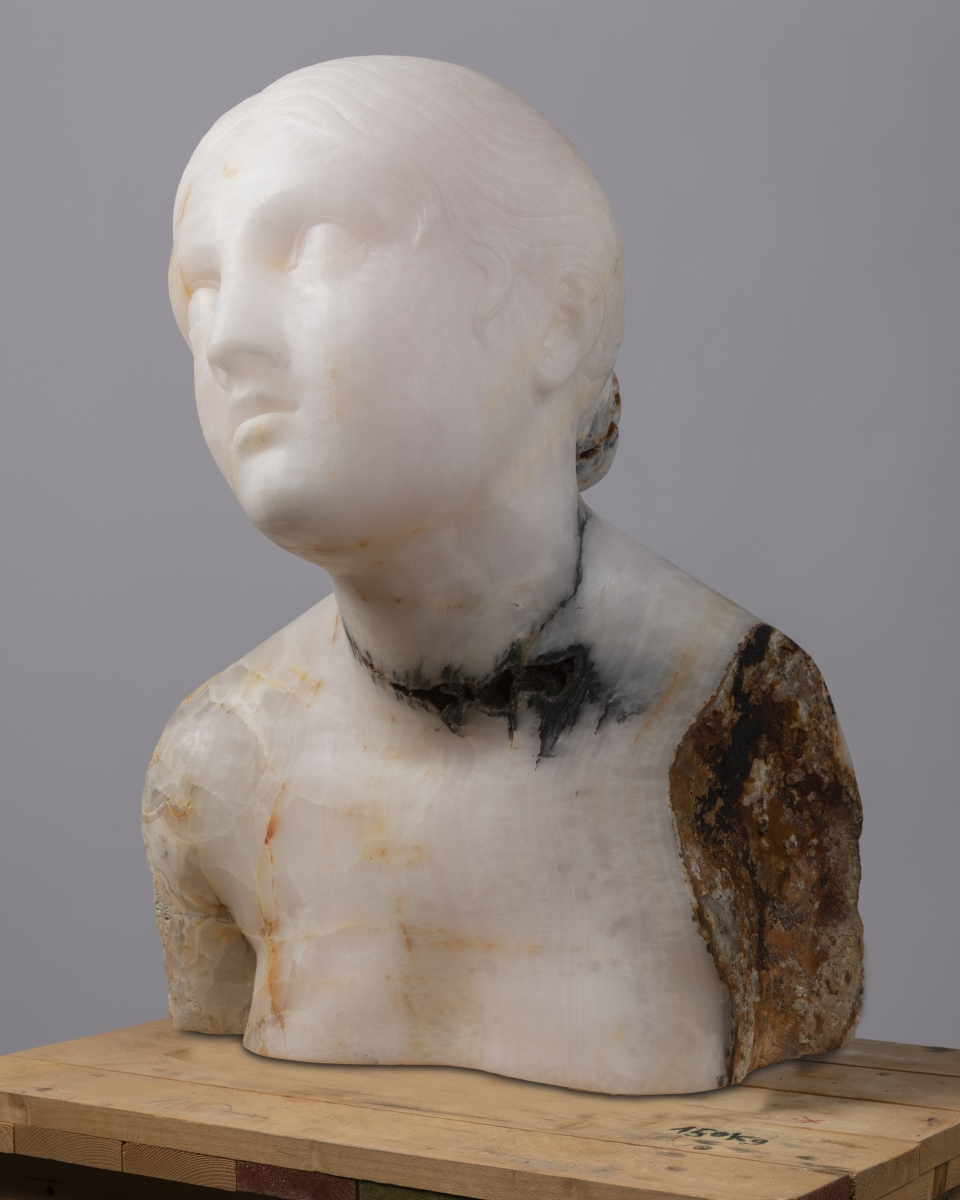
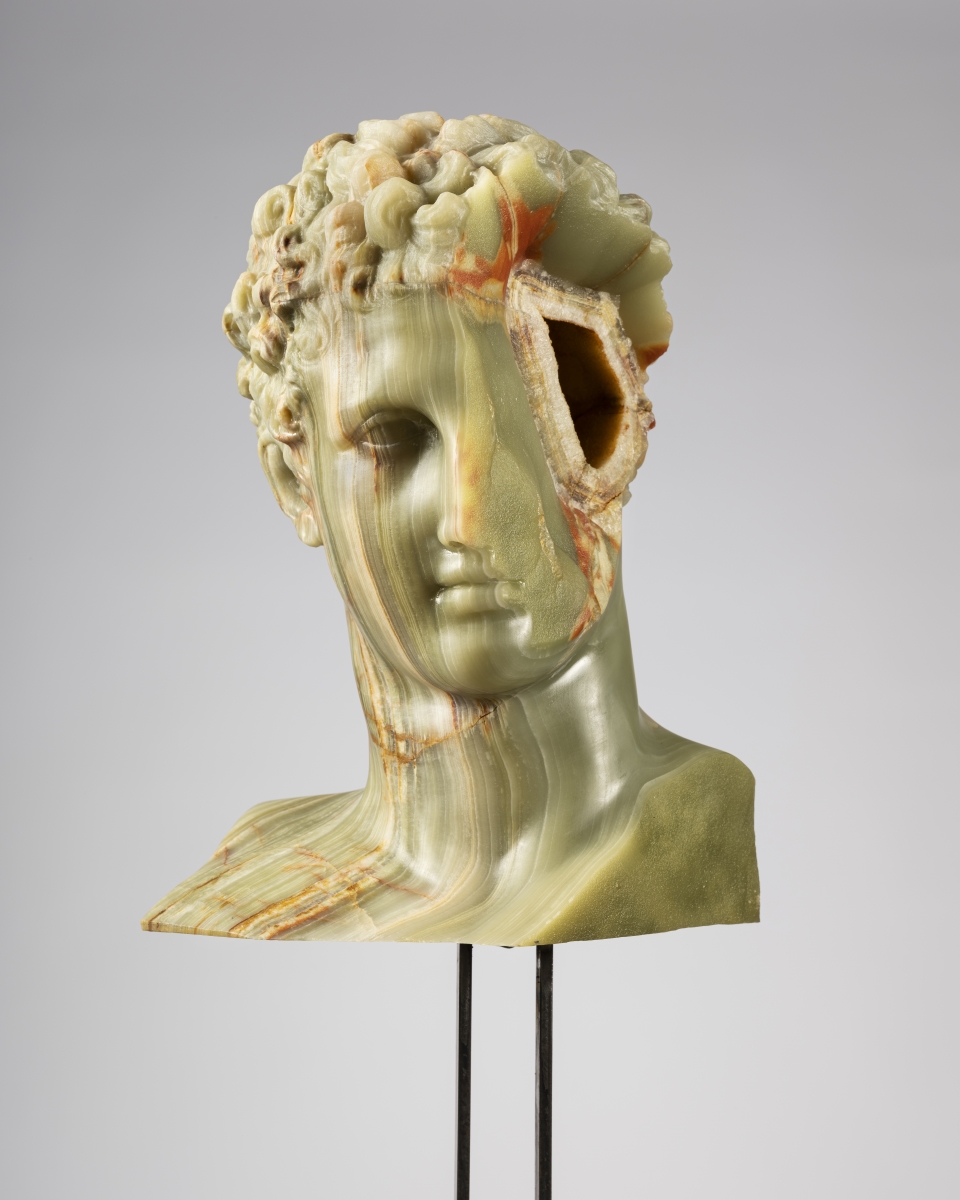
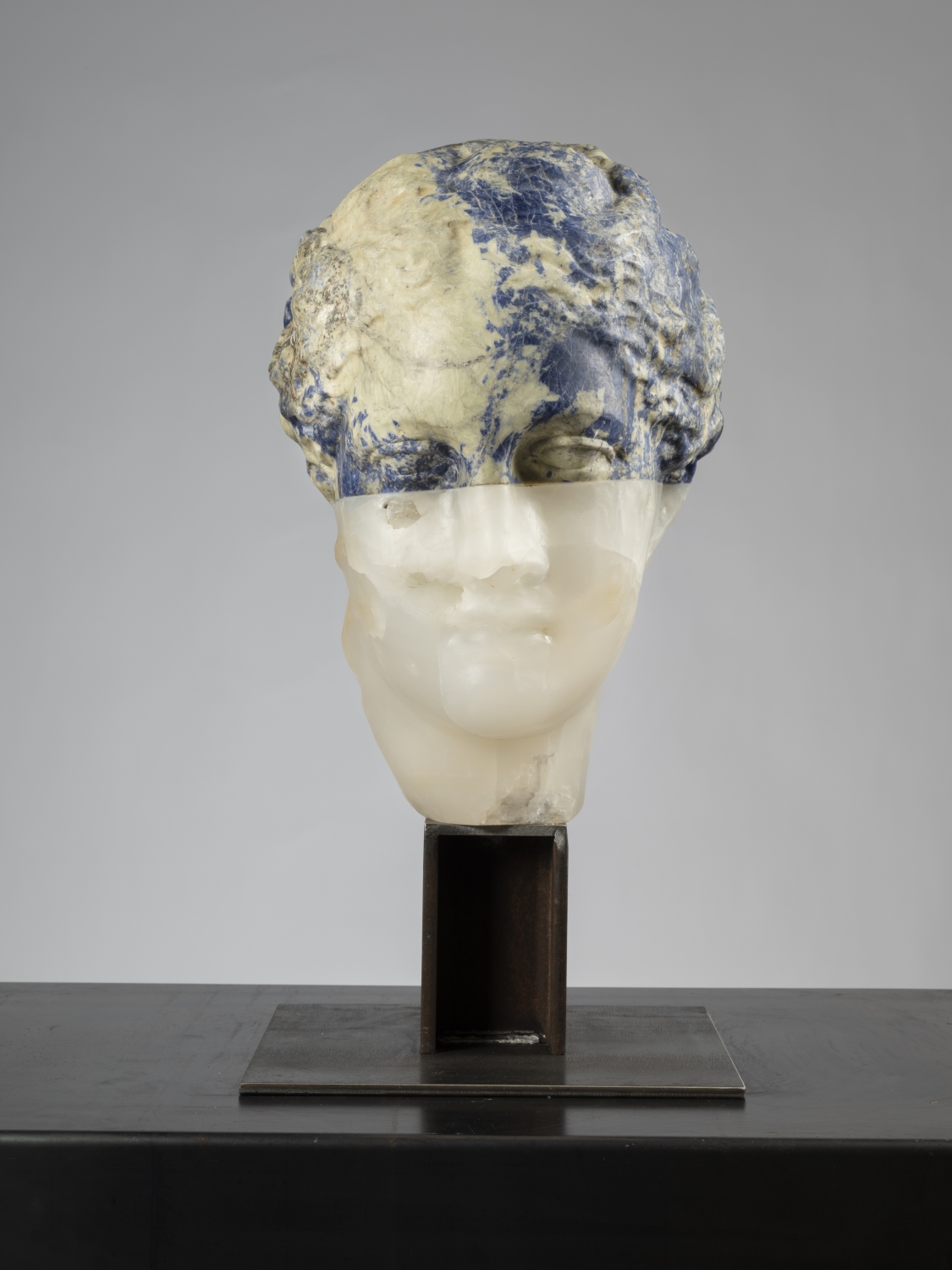
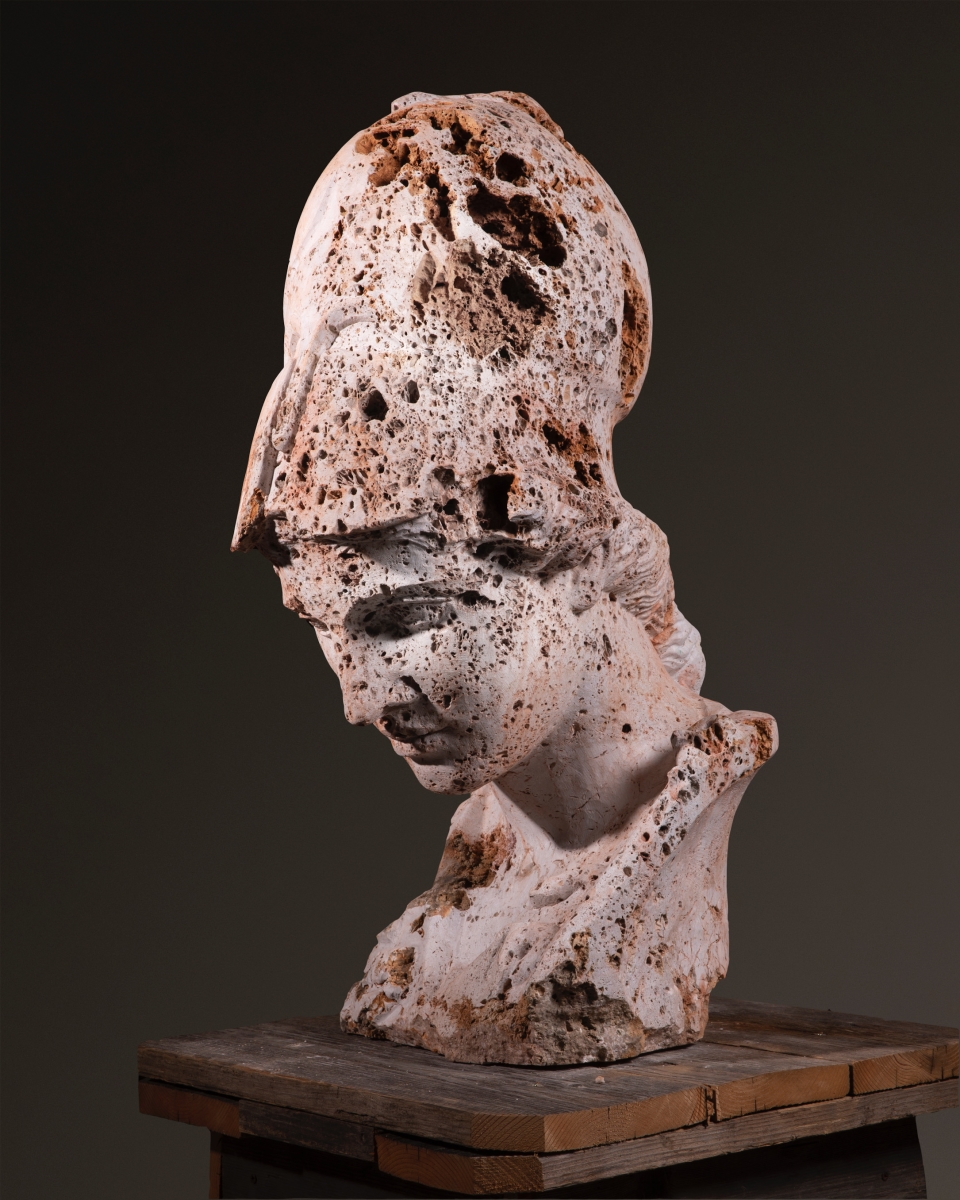
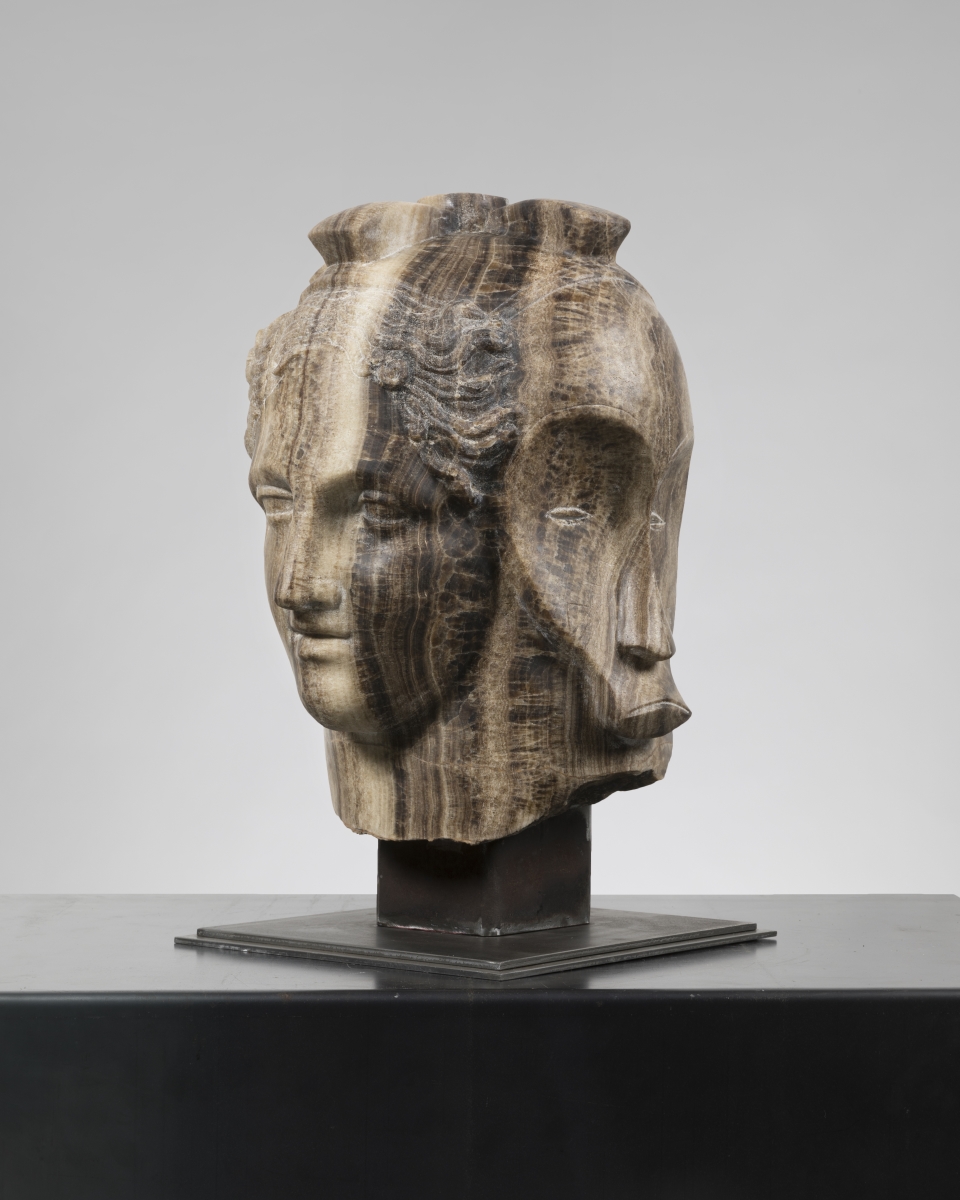
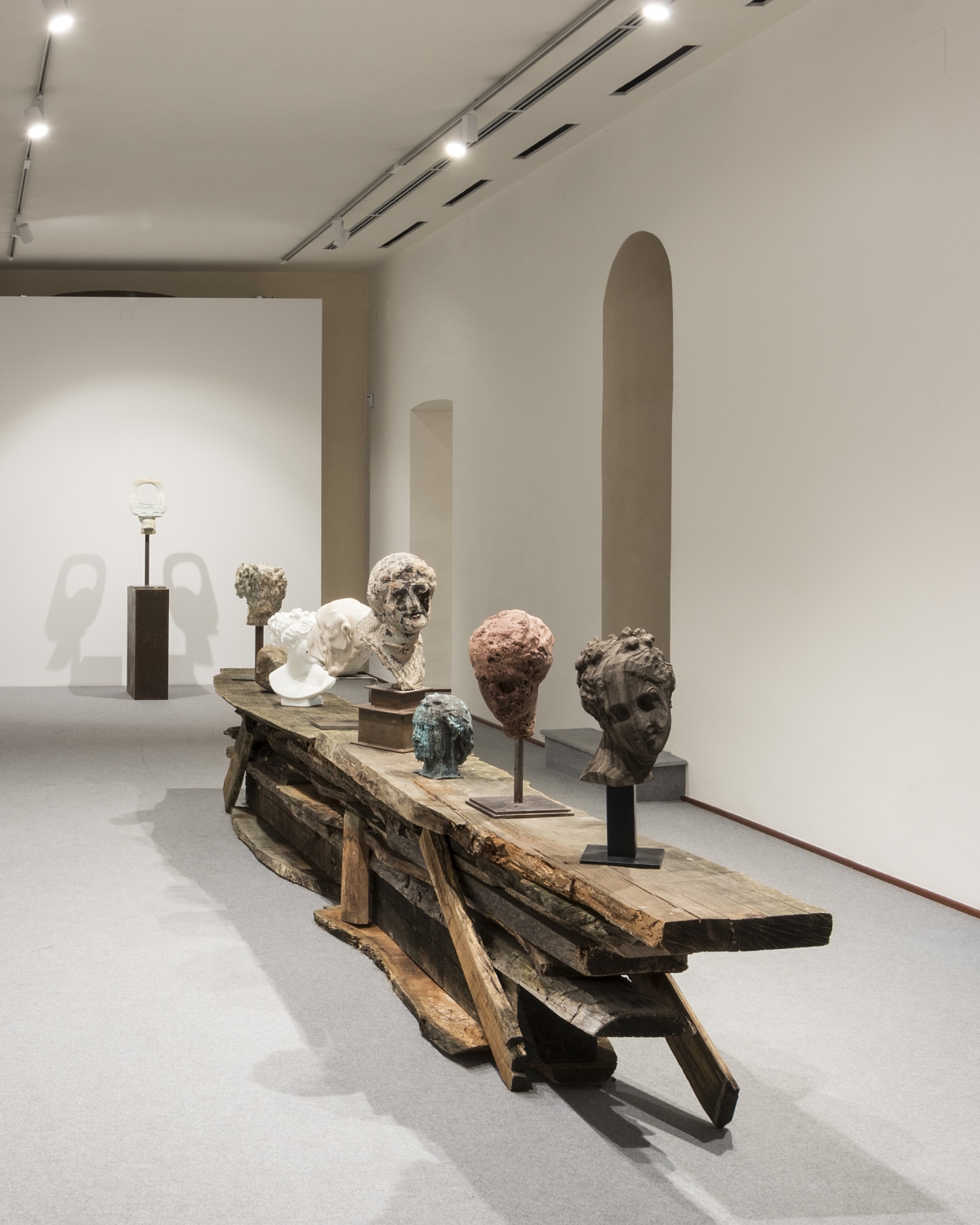
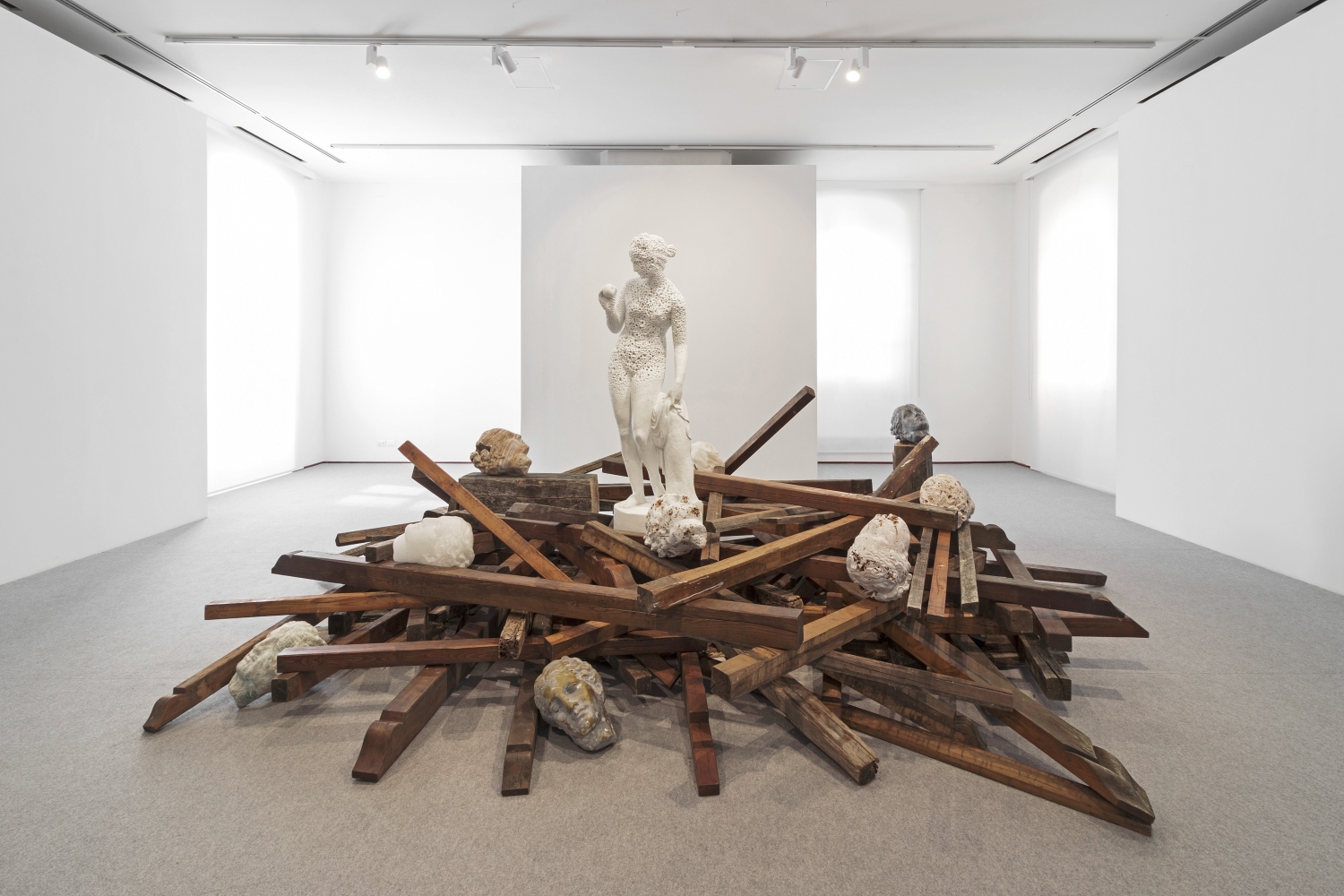
In the hands of Massimiliano Pelletti, marble ceases to be stone and becomes thought. His sculptures, born from veins of onyx, quartz, and fossilized minerals, breathe with the paradox of time—ancient yet newly awakened. Each work emerges from dialogue rather than domination: between artist and material, past and present, reason and intuition.
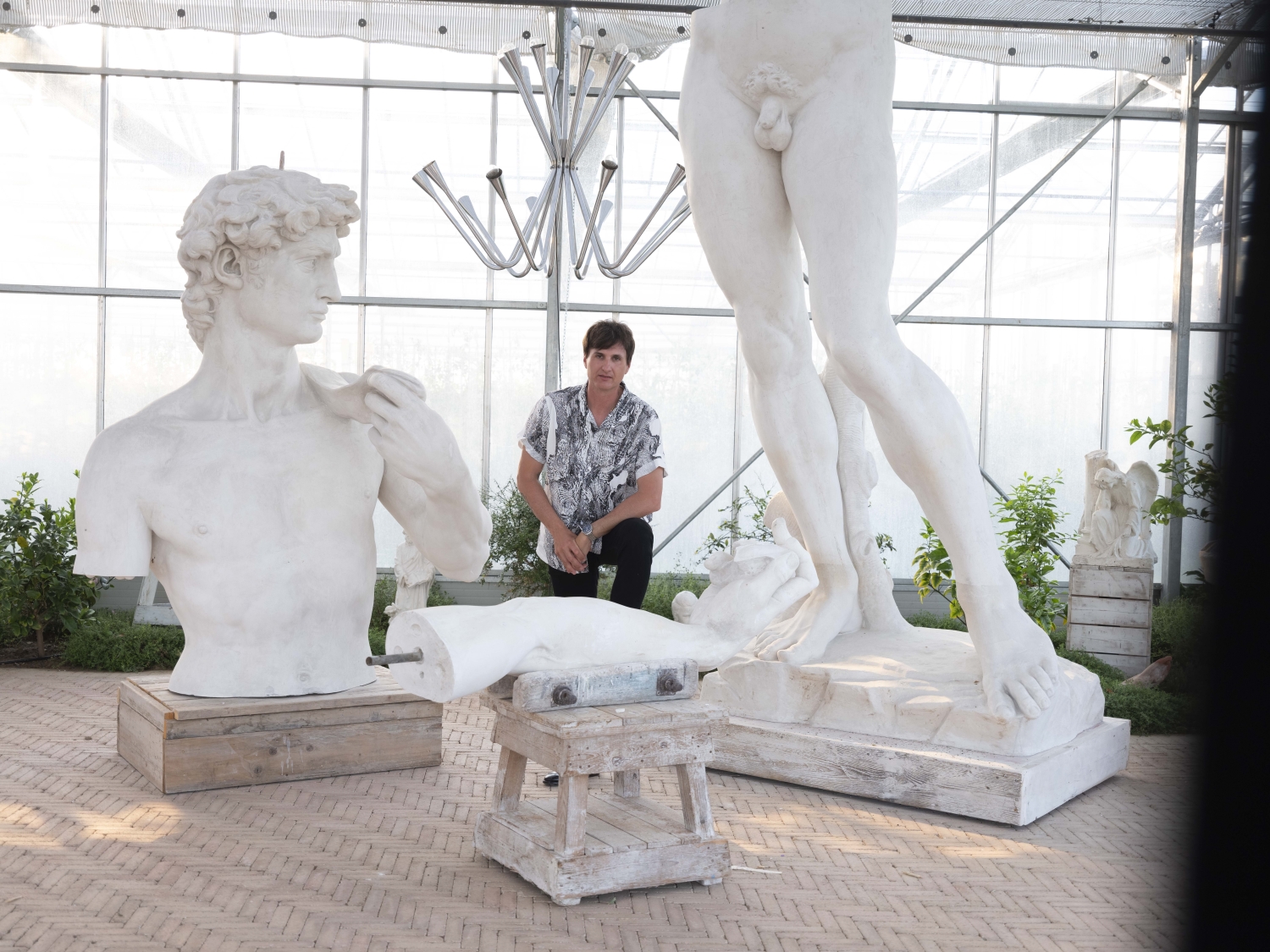
Born in Pietrasanta, a town synonymous with sculpture, Pelletti inherited both his craft and his philosophical curiosity. From his grandfather, he learned the tactile intelligence of marble; from his studies in philosophy at the University of Pisa, he learned to question what lies beneath appearances. His figures, rooted in the classical canon, are fractured, reimagined, and reassembled in unexpected harmony. They retain the grace of antiquity but speak with the tension of our era.
To Pelletti, sculpture is a metaphysical inquiry as much as a physical act. He approaches each material not as a blank surface but as a co-author whose geological history becomes part of the narrative. “When I sculpt,” he says, “I carve the story of a meeting.”
In this conversation, the artist reflects on the intersection of philosophy and craftsmanship, the hidden intelligence of stone, and the enduring pursuit of beauty as a form of knowledge. His work invites us to look beyond perfection, to find meaning in fracture, and to feel the weight of eternity beneath the chisel’s touch.
An Interview with Massimiliano Pelletti
By Carol Real
The story begins in Pietrasanta, where marble and memory are inseparable. How did the environment and the experience of learning from your grandfather shape your artistic language?
I do love his technical experience, his ability to manipulate materials, and his study, rich in plaster casts and tools among which and with which I still love to work. They have always been present. During my childhood, I went down to his studio, and I lived everything as a game and then slowly they became natural extensions of my need for expression that led me to do what I do today.
Philosophy has clearly shaped the way your work engages with matter and meaning. How did that academic journey evolve into an artistic necessity?
To me, art is a necessity, a need. It is translating into material an intimate reflection that includes the self, the nature, and the world. My works are questions even before
statements; philosophy is research of the senses to ask subsequent questions. In the neoclassical era, the theory of art with Winckelmann supported a coincidence between the figure of the artist and that of the philosopher, both able to express a
harmonious composition of passions. My philosophical studies have enabled me to strengthen my need for expression with a cultural background that academic studies would not have allowed me to acquire.
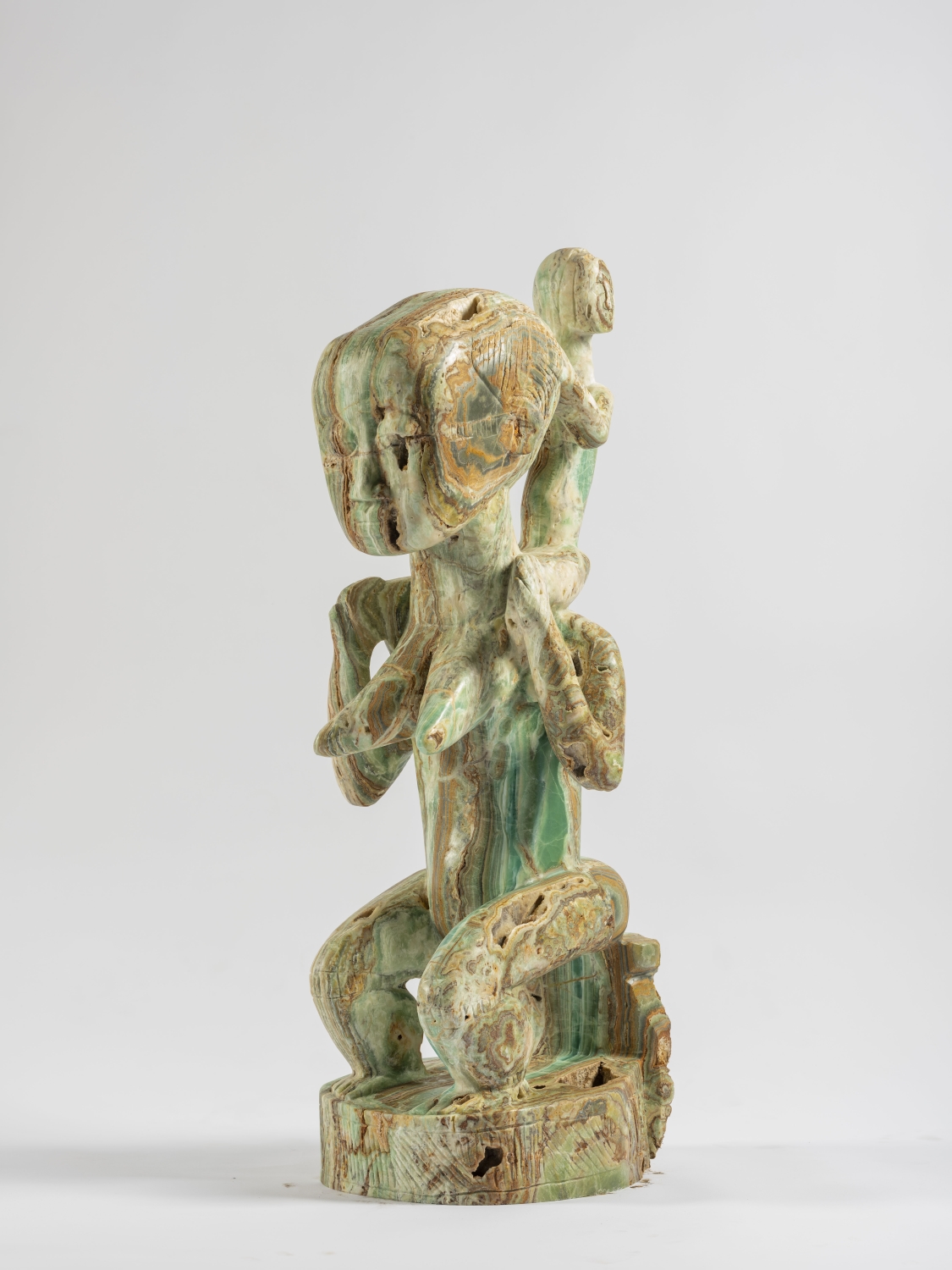
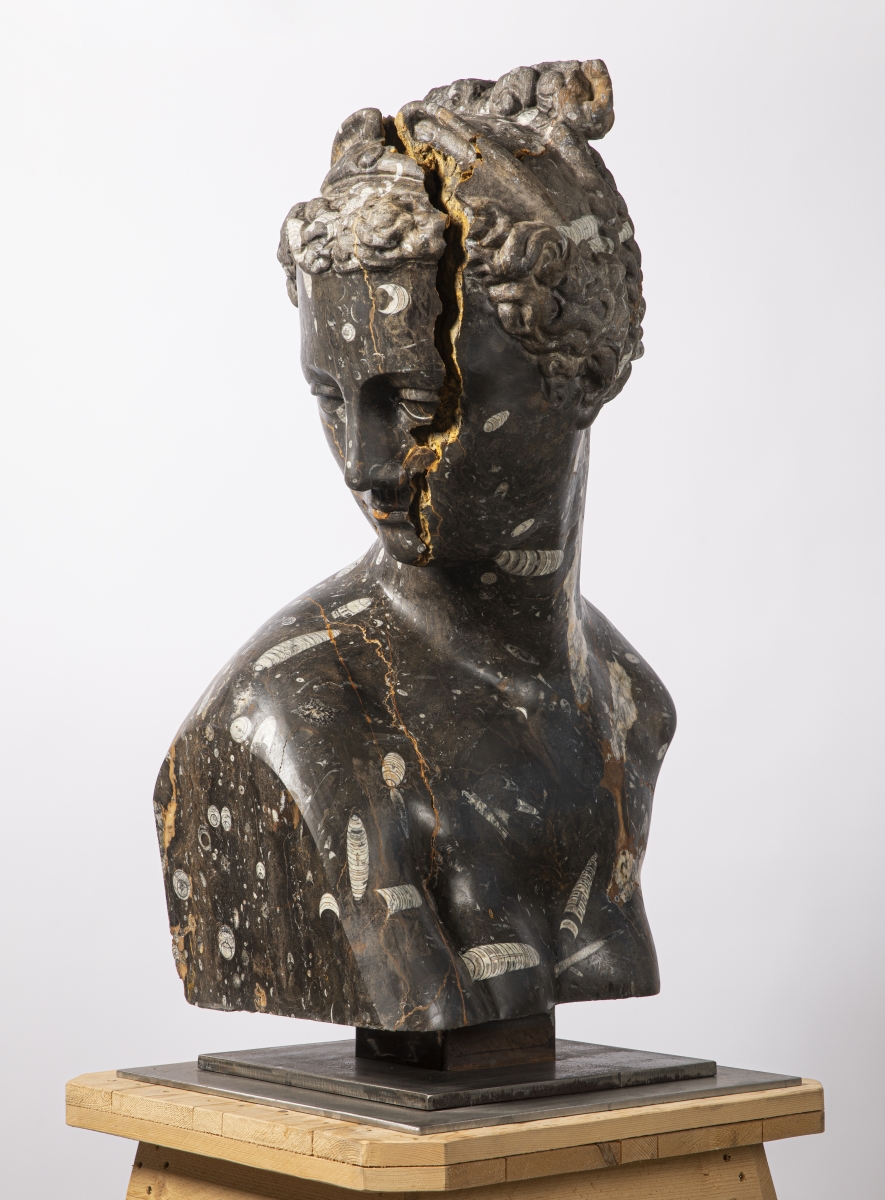
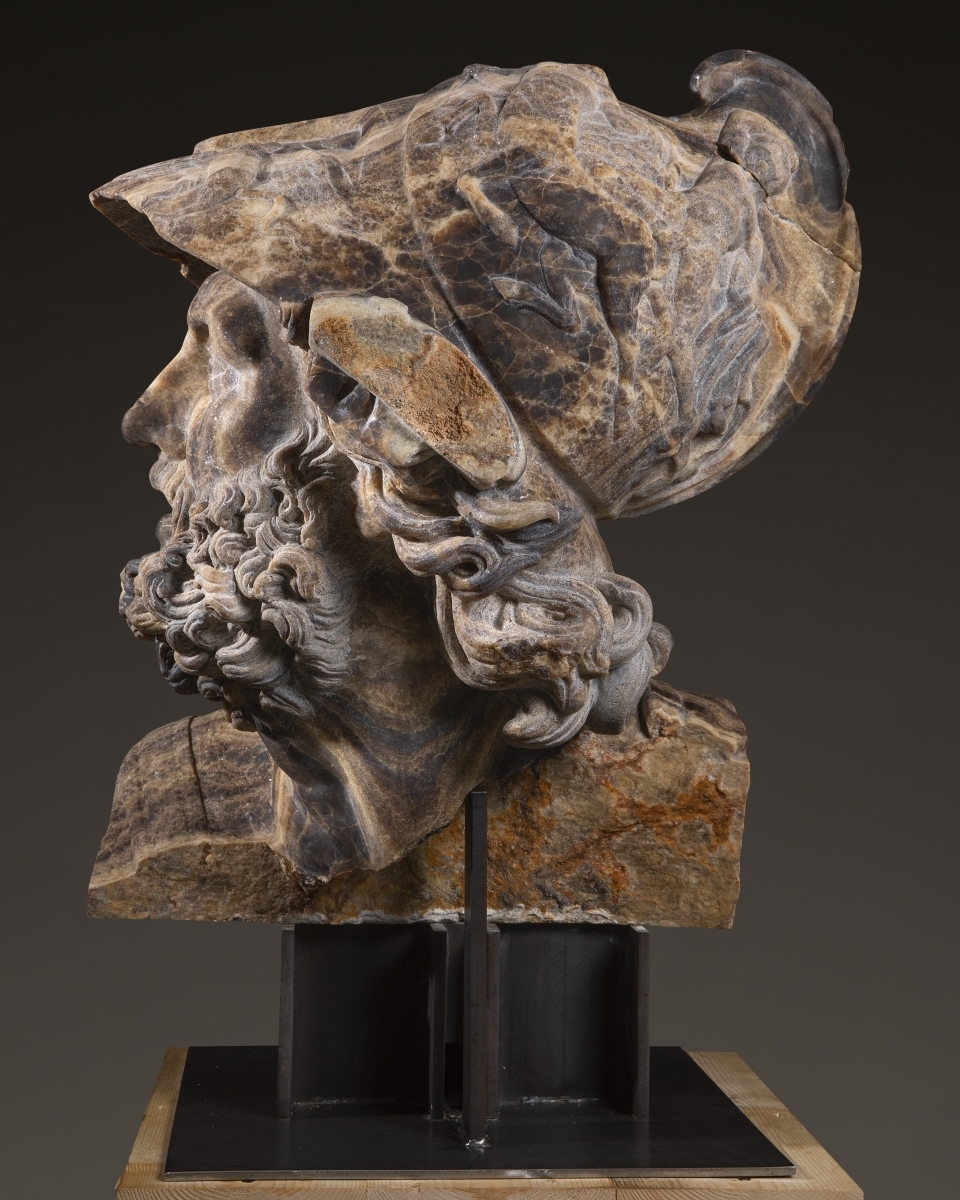
Classical forms are central to your sculptures, yet they appear reinterpreted through a contemporary sensibility. What led you to focus on figural representation?
I was lucky to inherit a large plaster cast library with more than 130 plaster models of classic subjects. My grandfather has always realized that type of sculpture belongs to my cultural heritage but is also generic. It was natural to approach these types of works. I then introduced something else in my research like African art, blending it with classicism.
Marble, quartz, onyx, and limestone each carry distinct histories and behaviors. What challenges and possibilities arise from working with such varied materials?
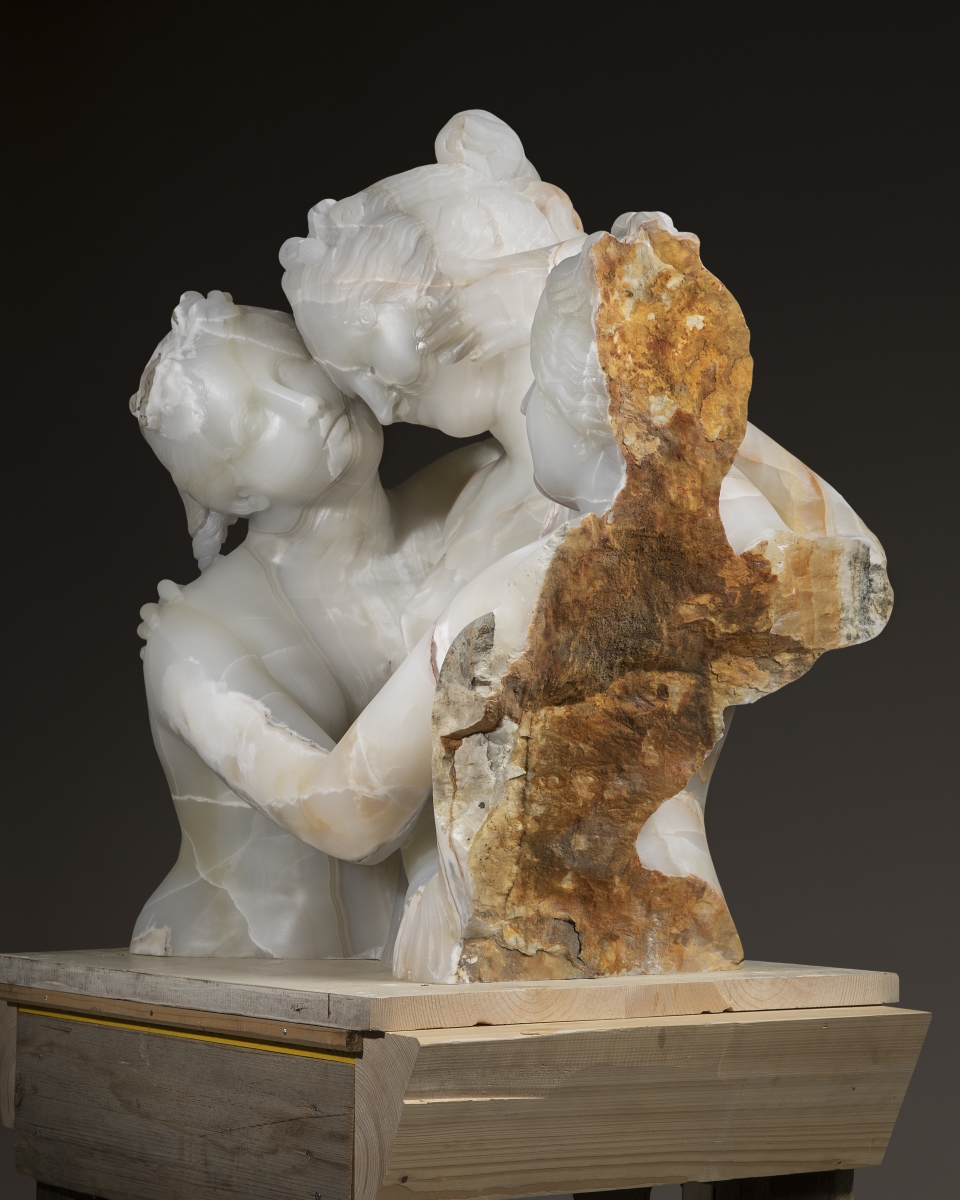
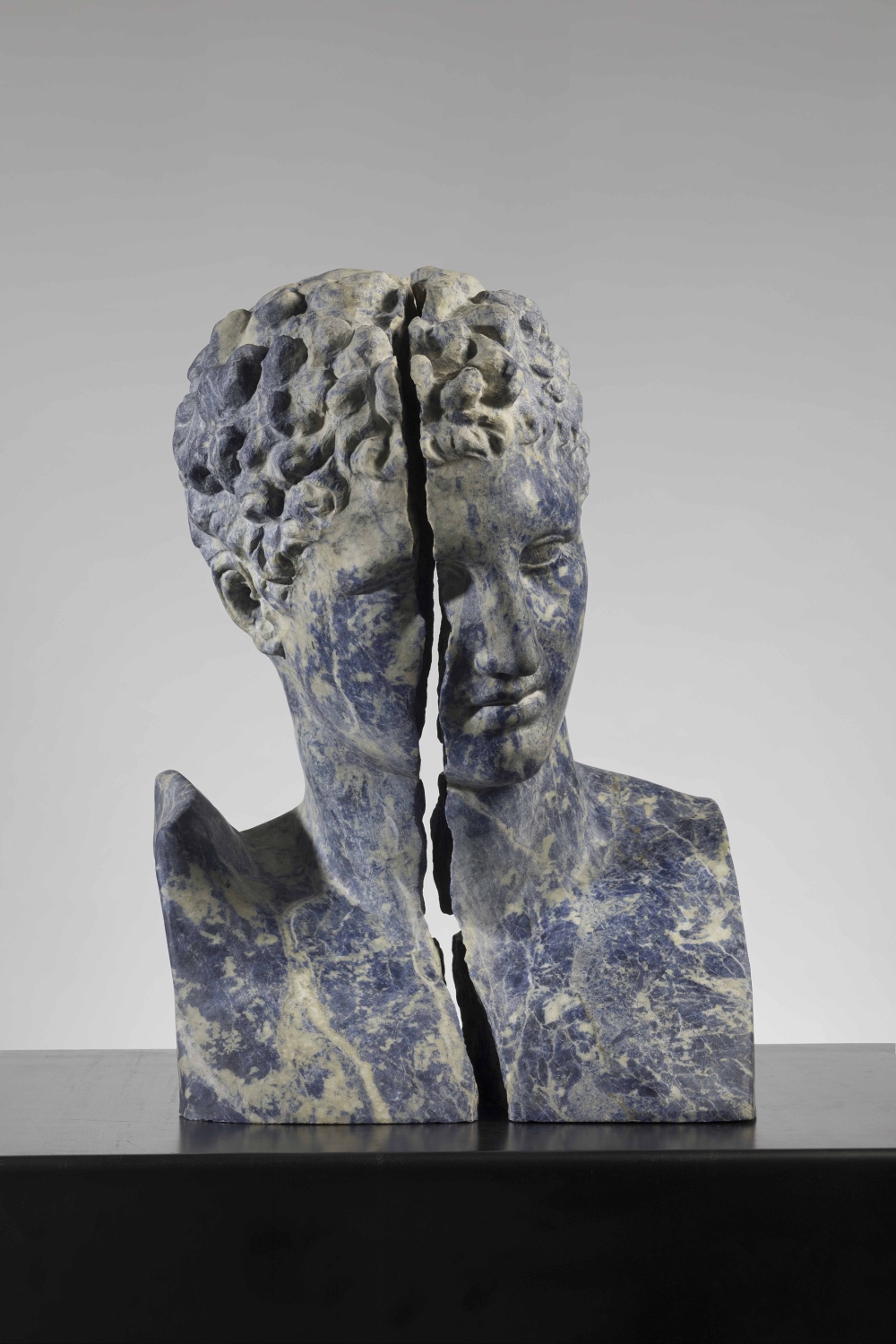
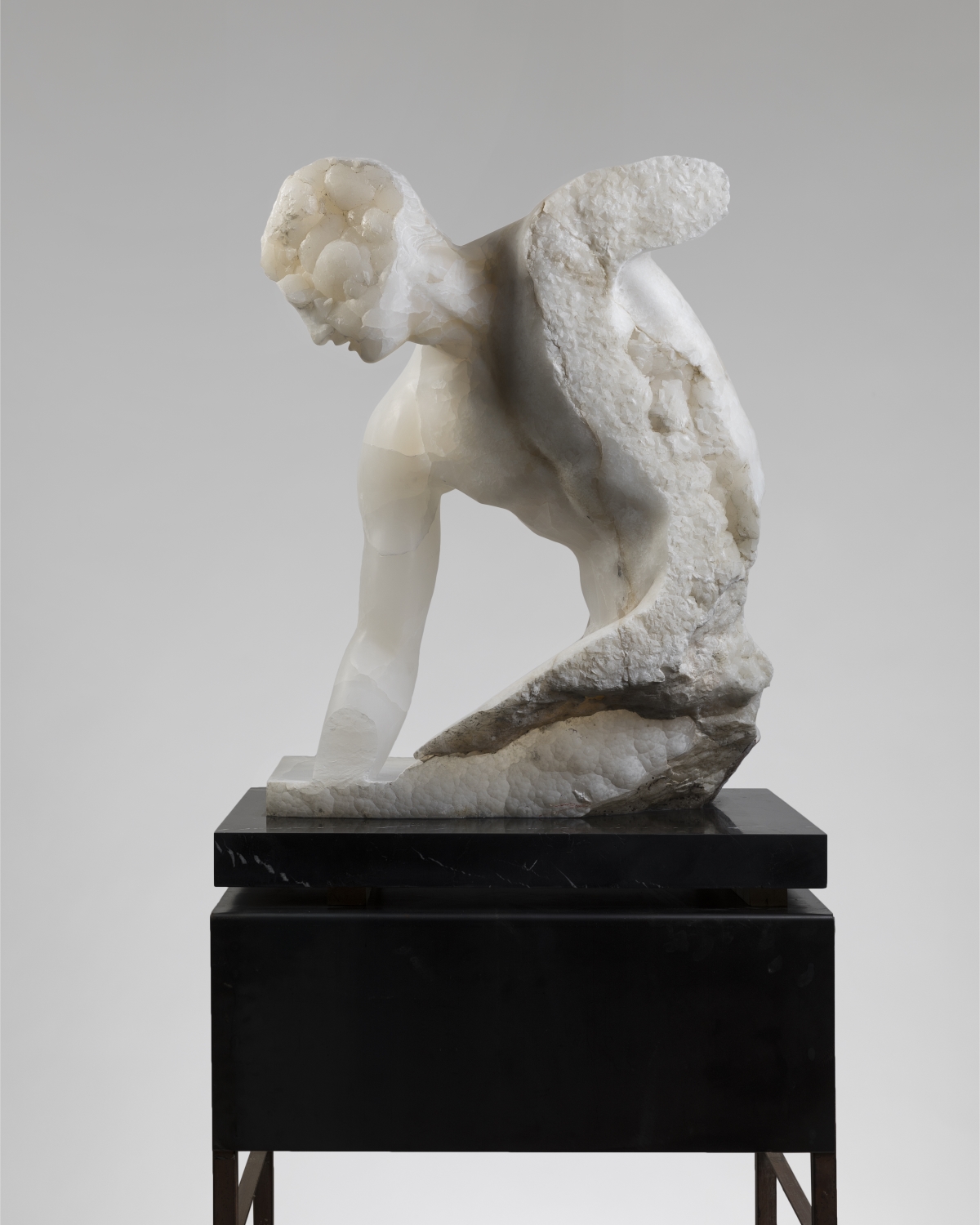
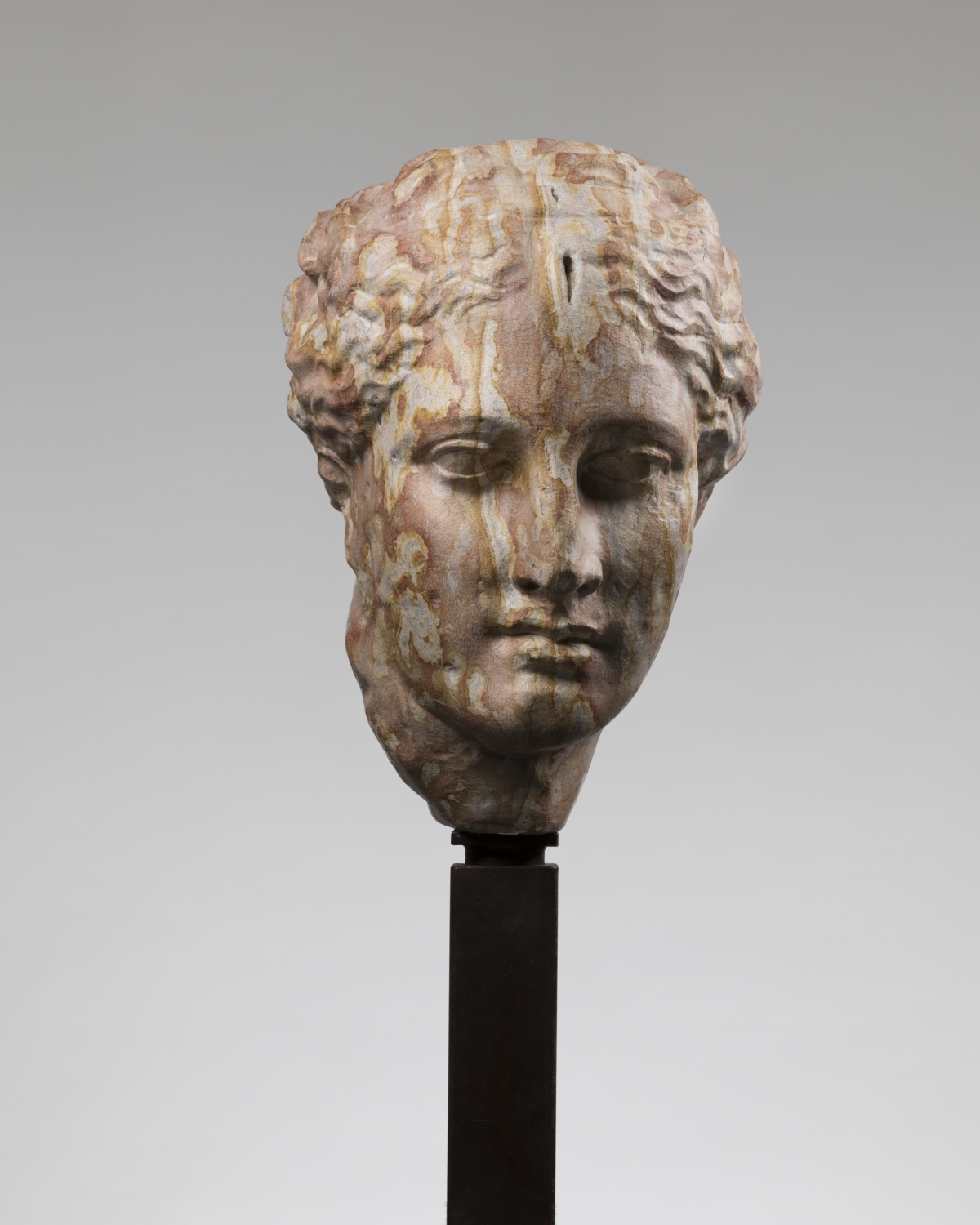
Marble is a compact material; from it you have perfection. At a certain point I had the need to use imperfect materials, not compact with cavities. I am not the only one who imposes itself over the material, but the material also dictates its rules. What comes out is a coauthorial result, between me and the material I use, its history, its geological conformation. All these characteristics become part of the work; not only as a formal part but also as a narrative one. I use, for example, materials that are formed over hundreds of millions of years thanks to a stalactite and a stalagmite that, drop-by-drop, have united and created a block. Sculpting an artwork from that block I sculpt the story of a meeting. That’s what fascinates me.
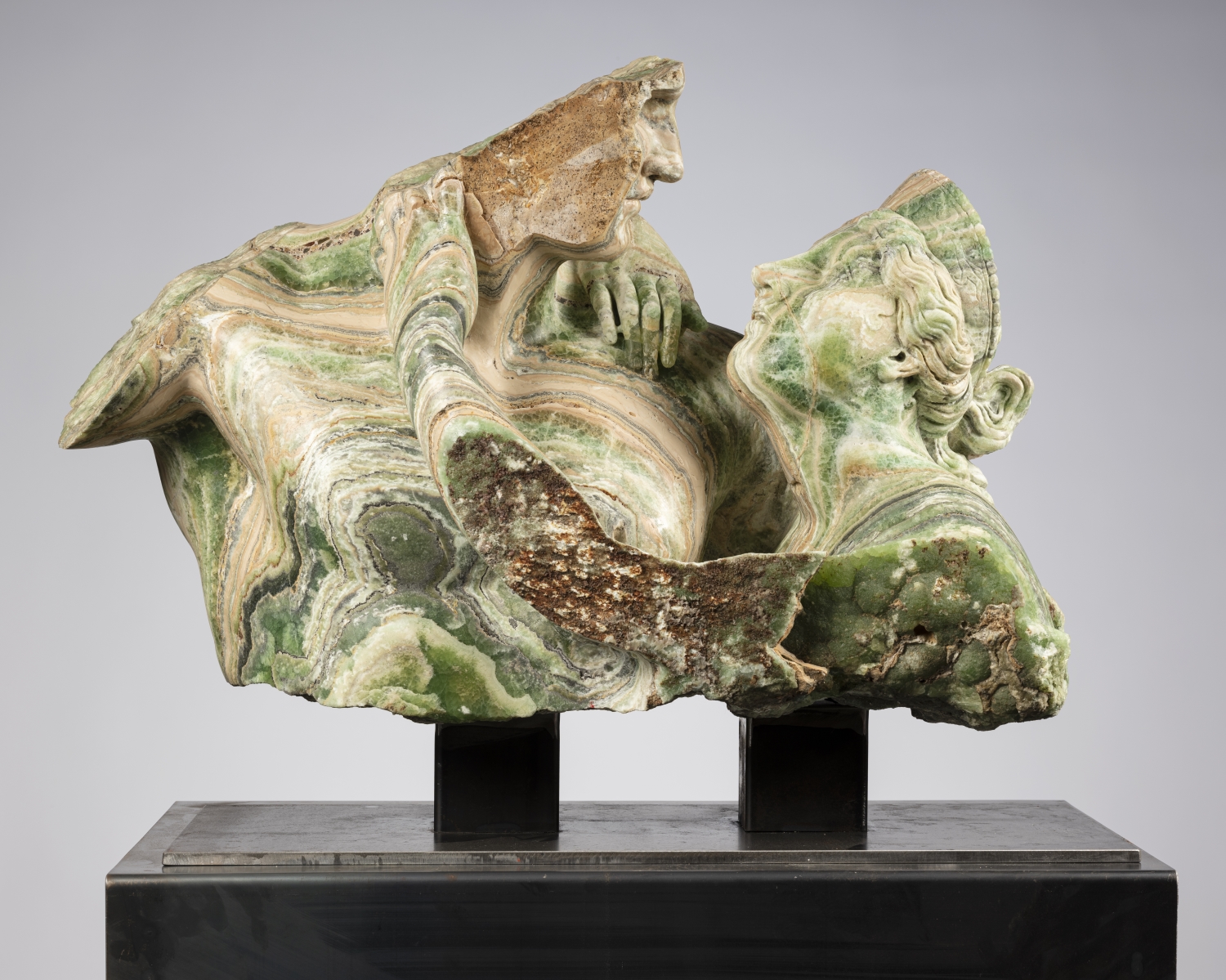
Several monumental commissions have marked recent years. What projects or exhibitions are currently in progress?
I am realizing a new series for a solo exhibition scheduled in May 2023 at a prominent London gallery. I will formalize the collaboration soon. Plus, I am working on a series of public artworks for an important Italian square.
A single line can encapsulate the union between emotion and discipline. Which quote resonates most deeply with your artistic vision?
“I rise like a marble of passion” ~ Giuseppe Ungaretti.
Editor: Lisa Portscher