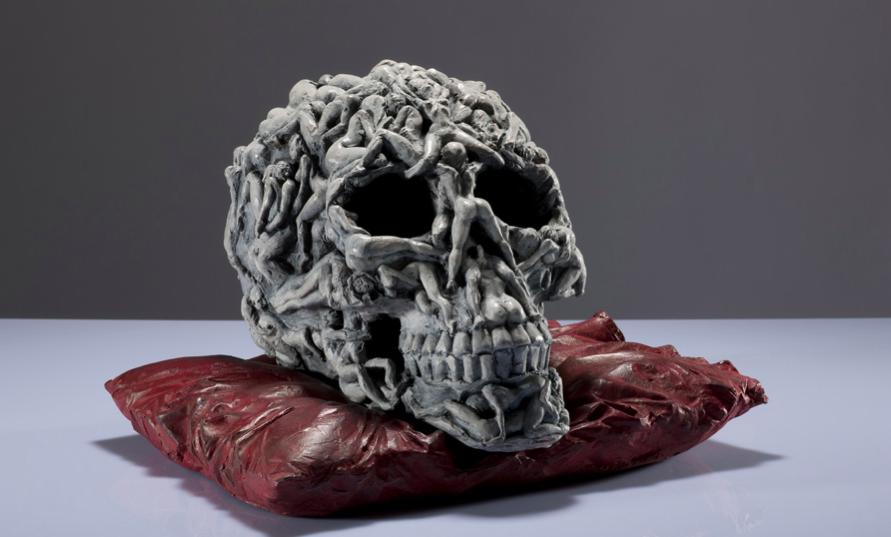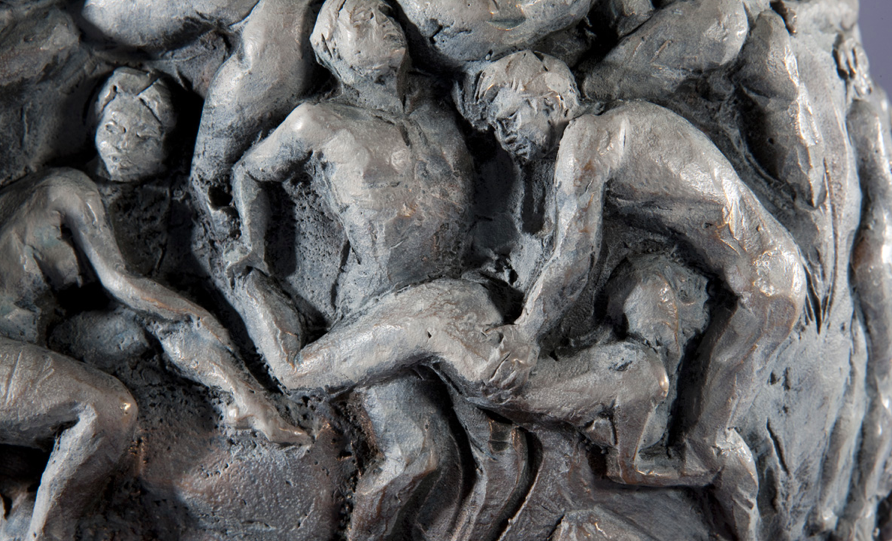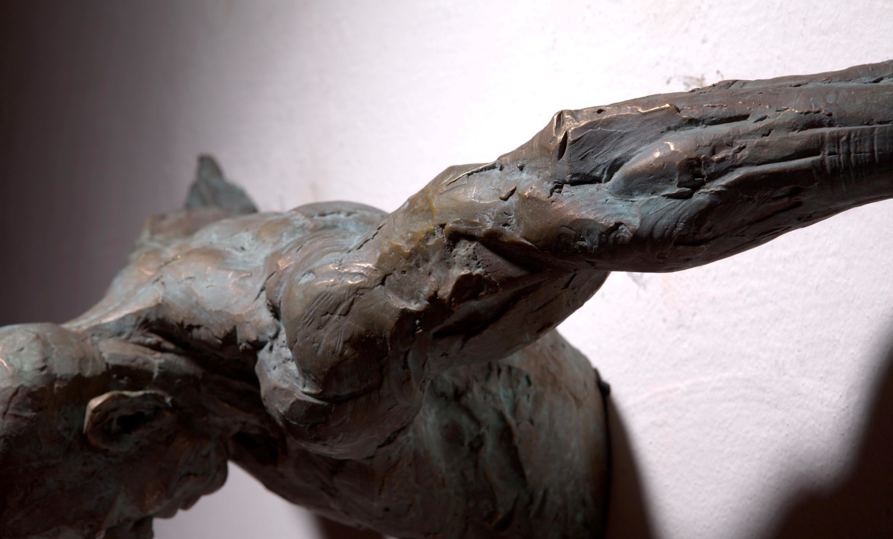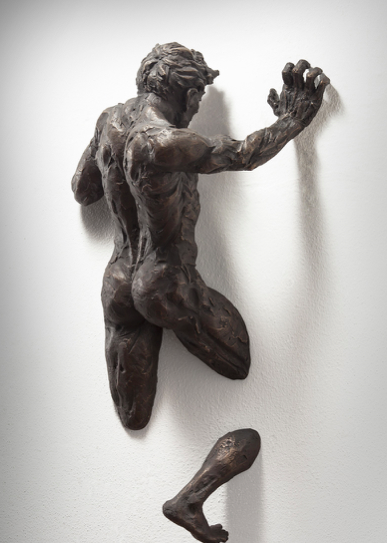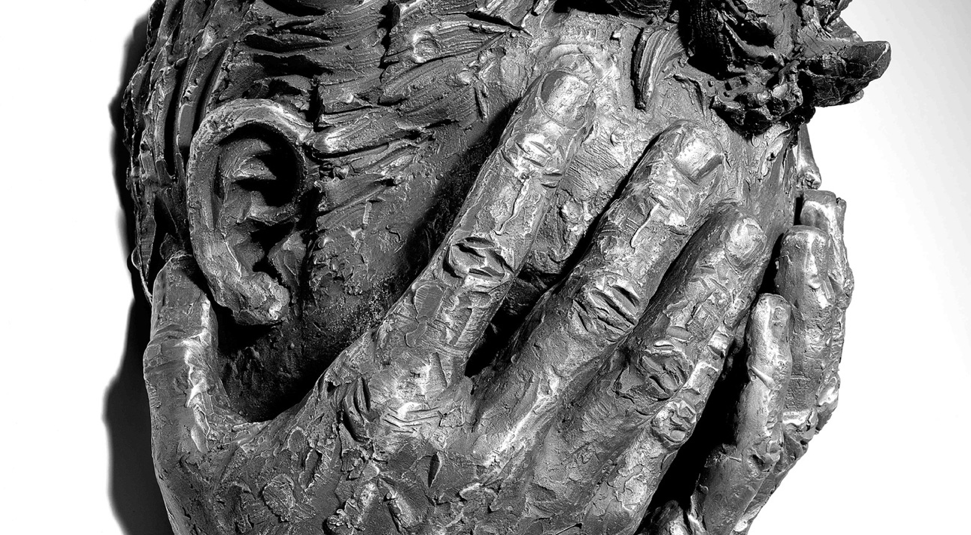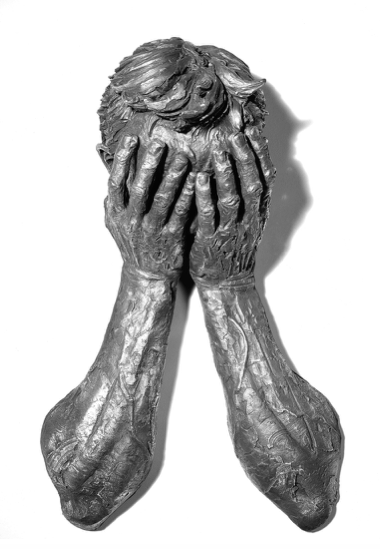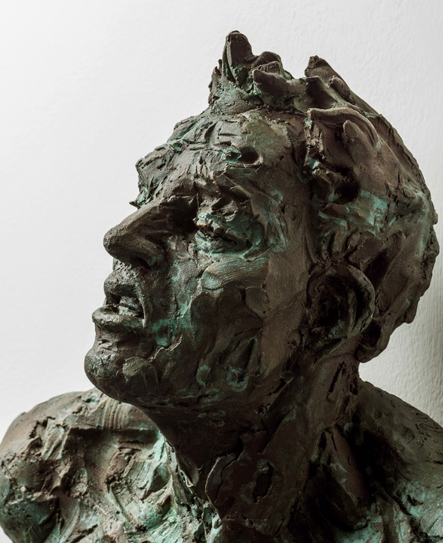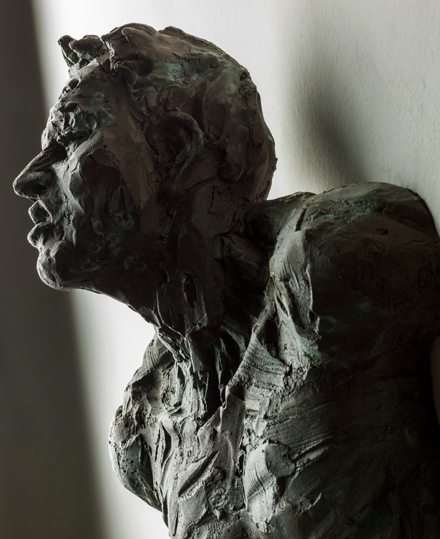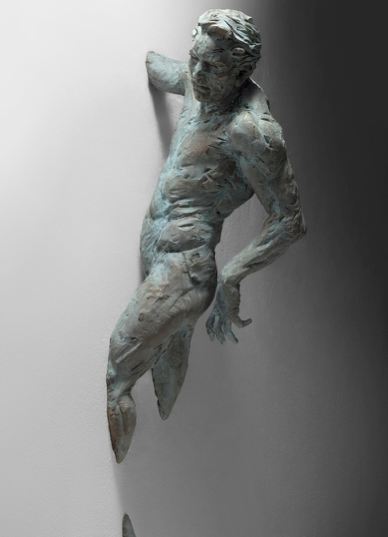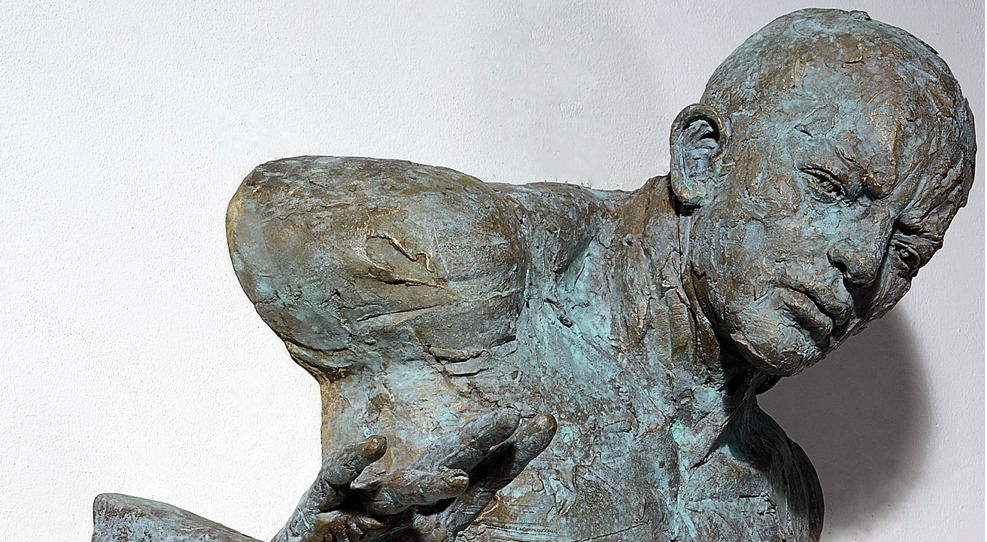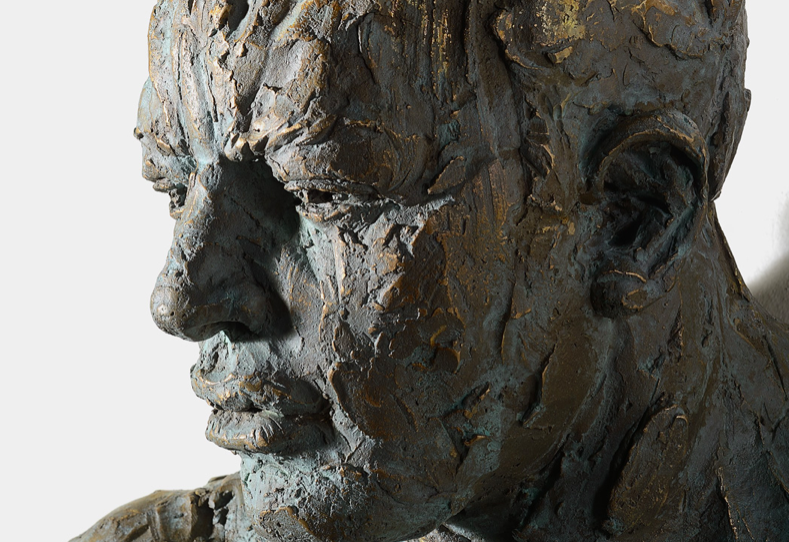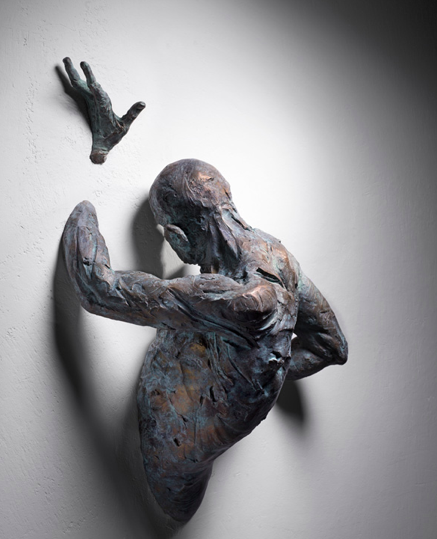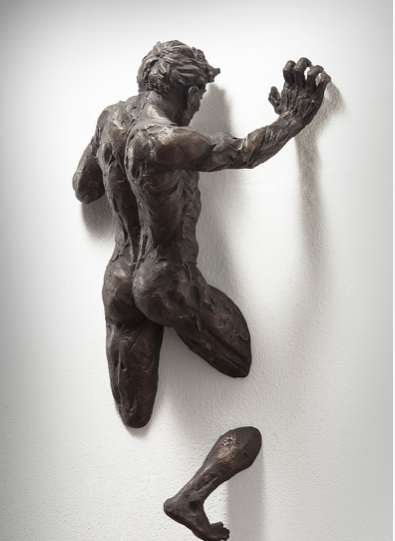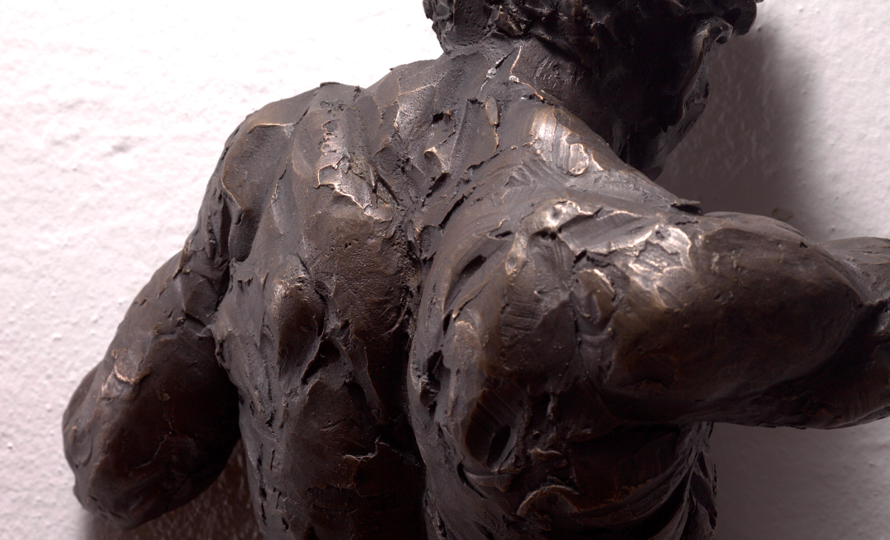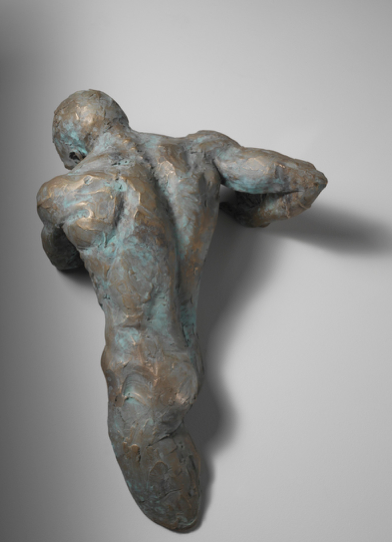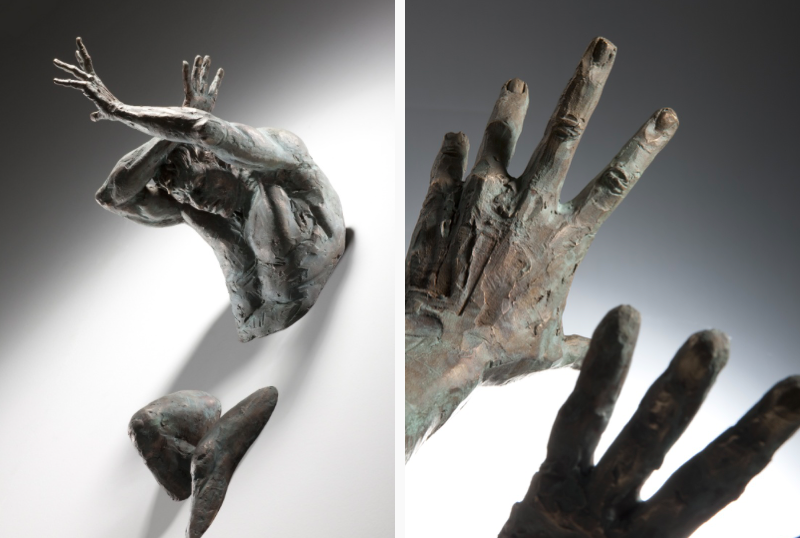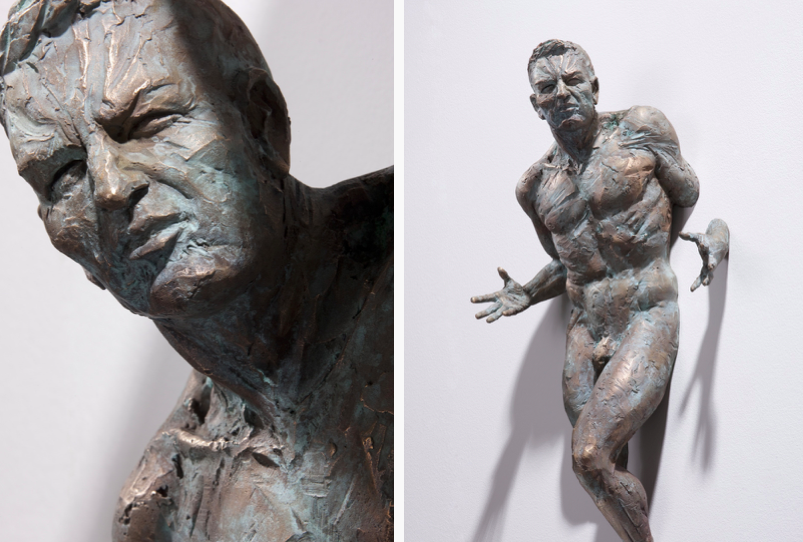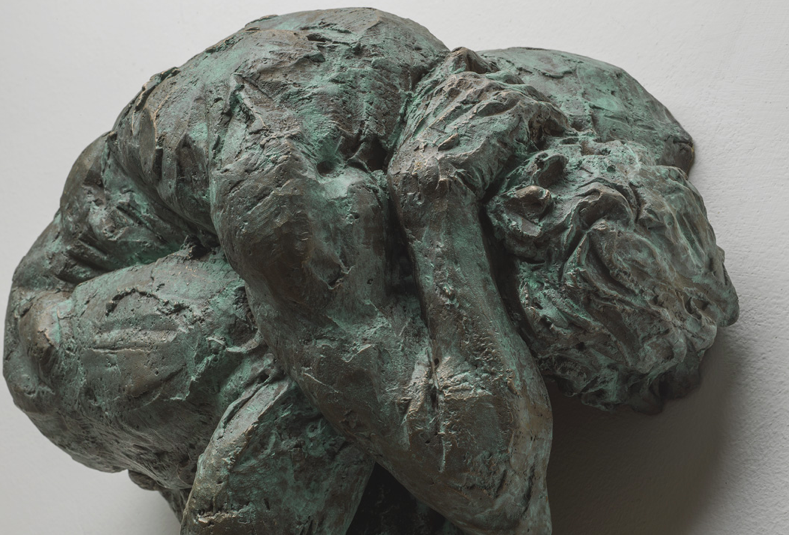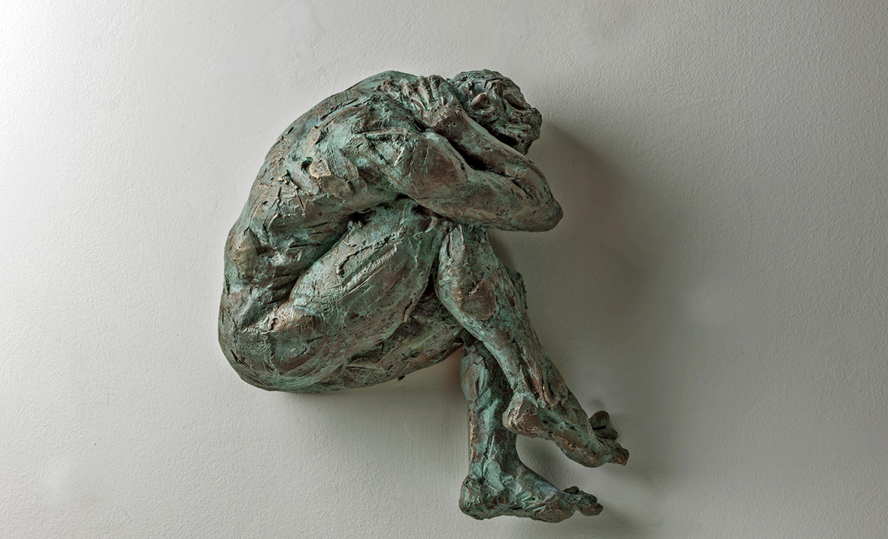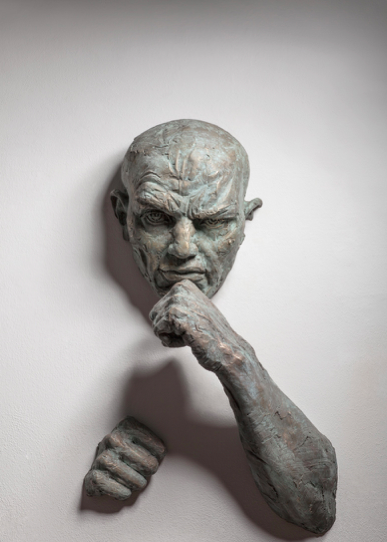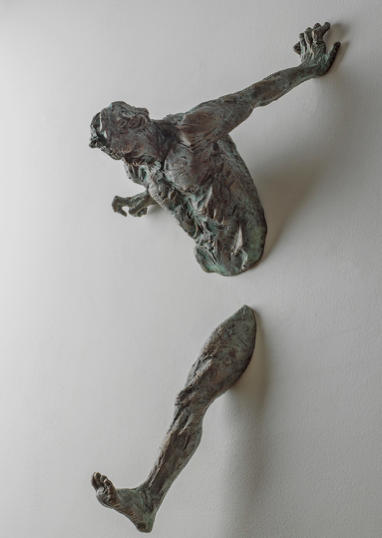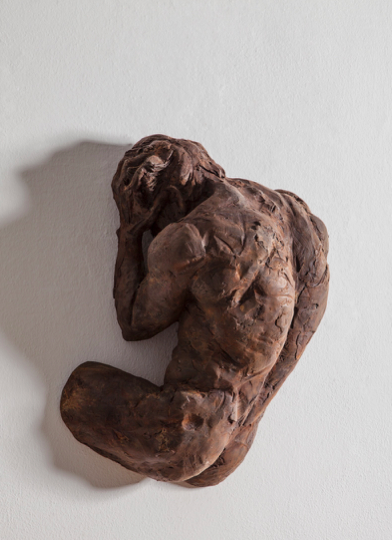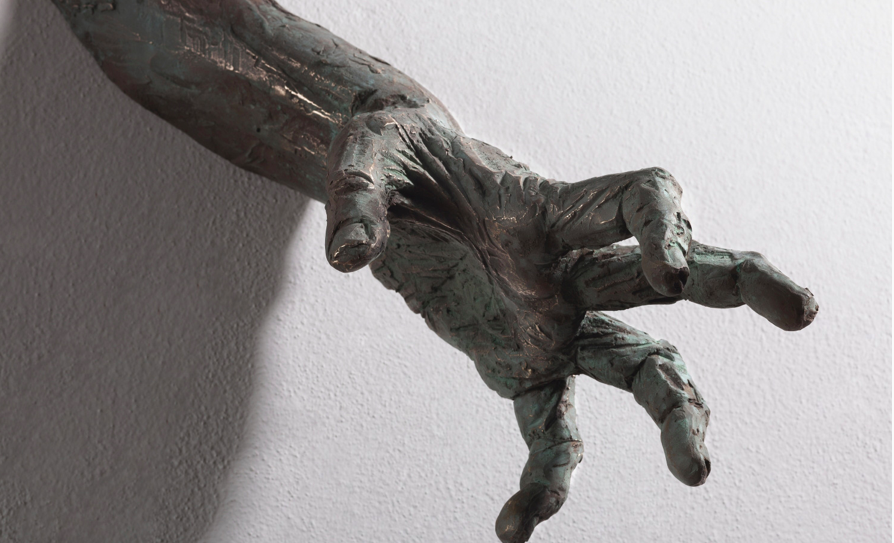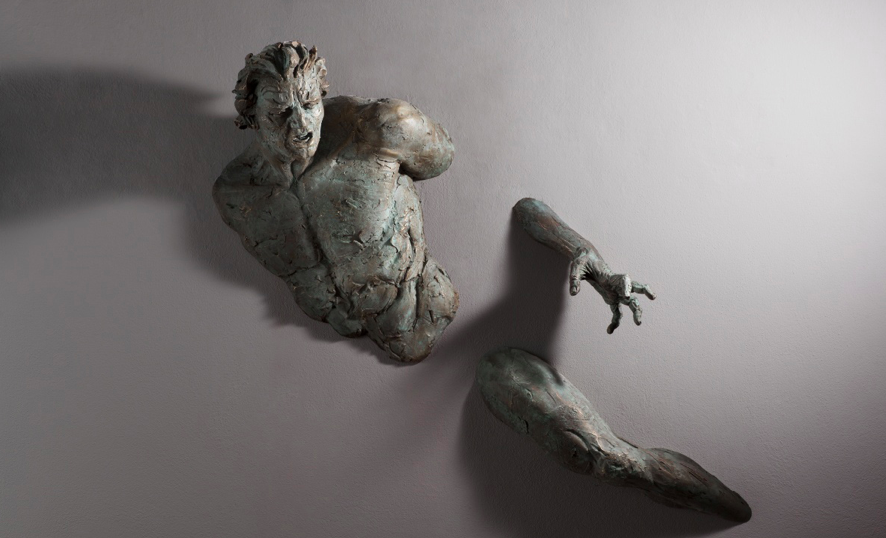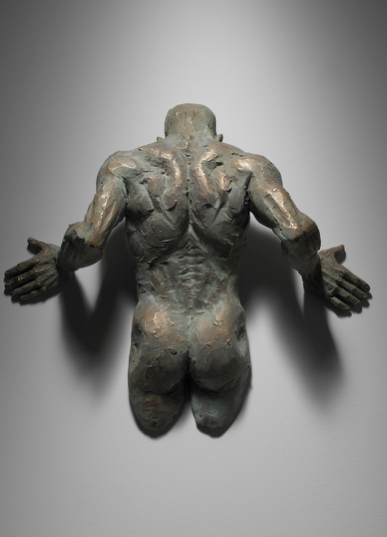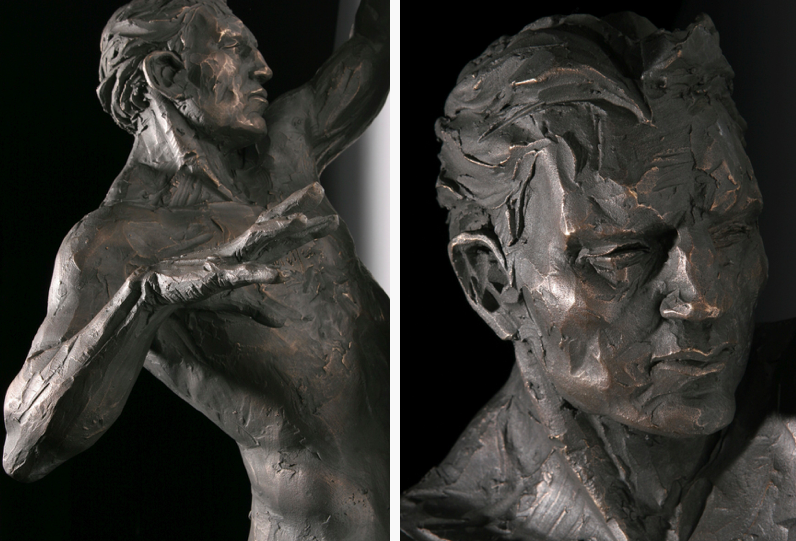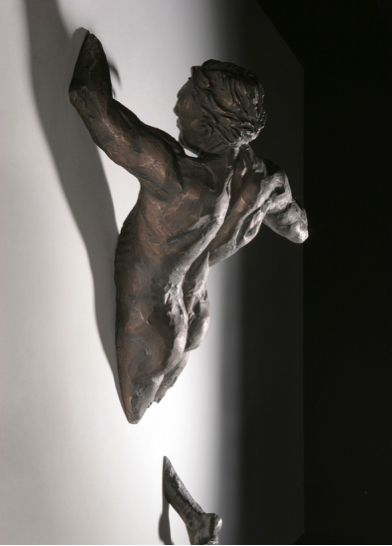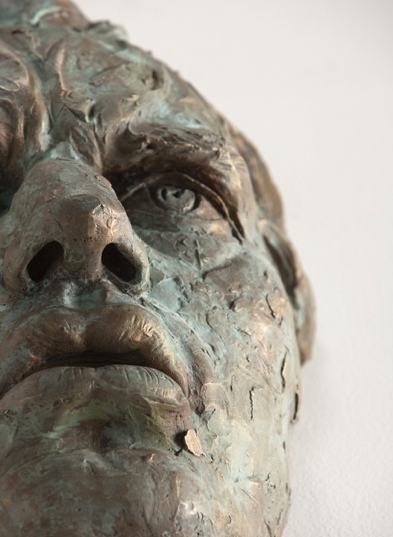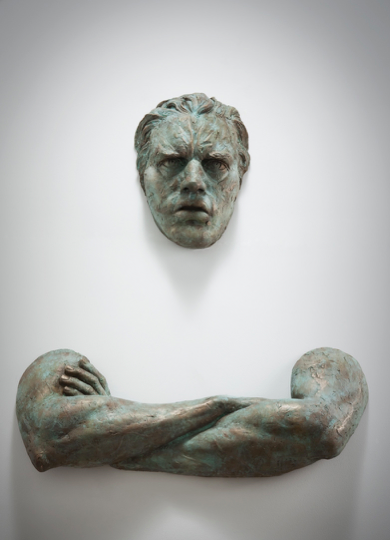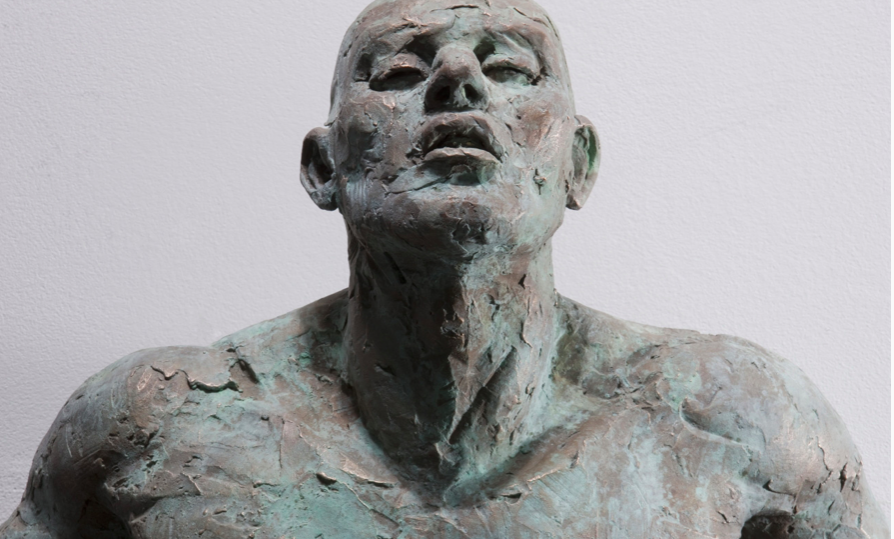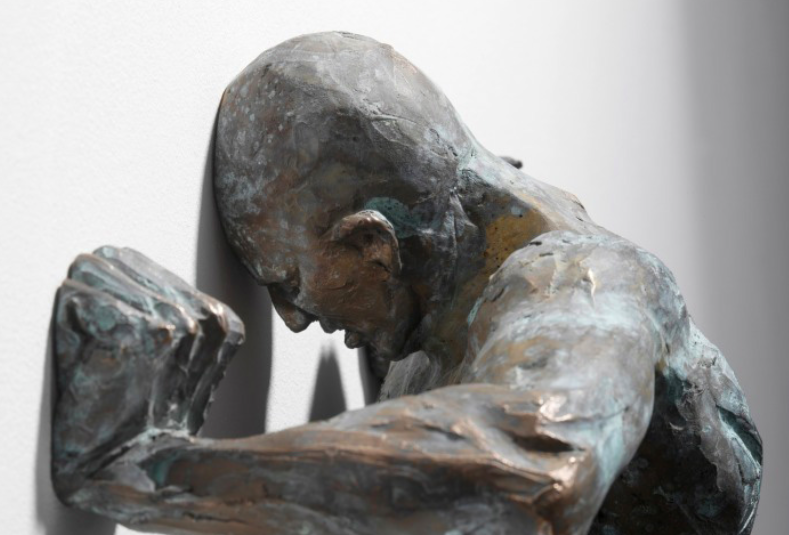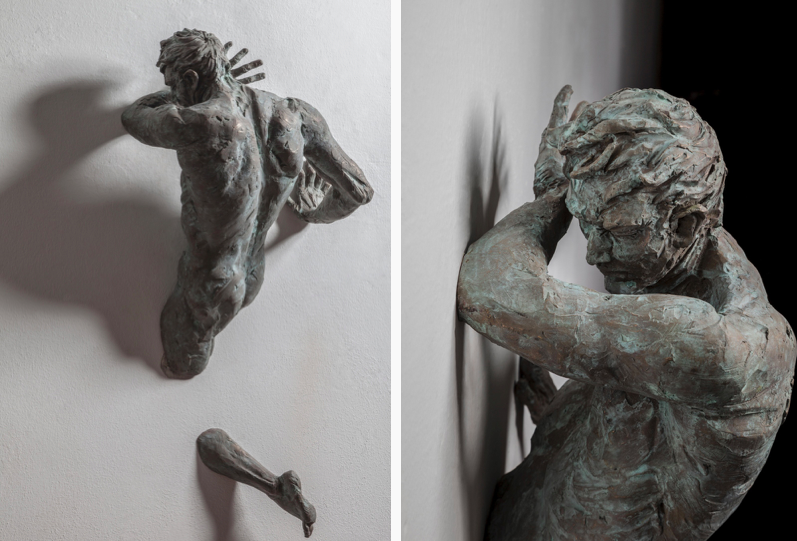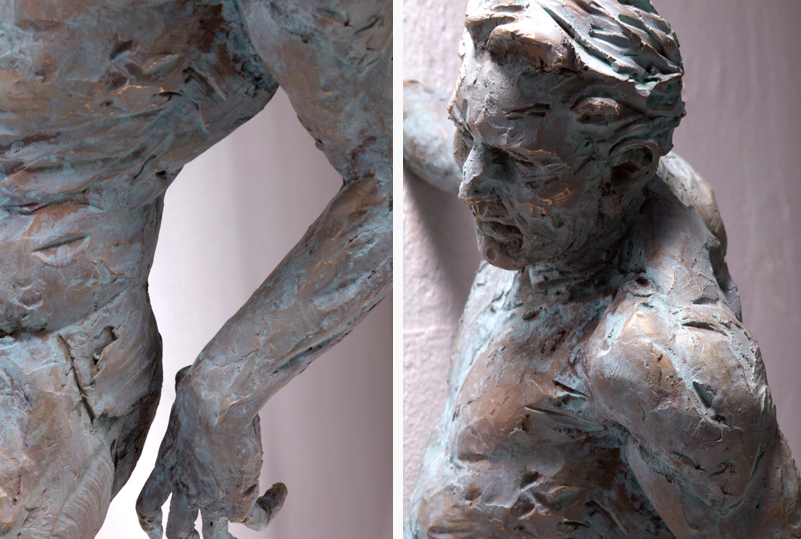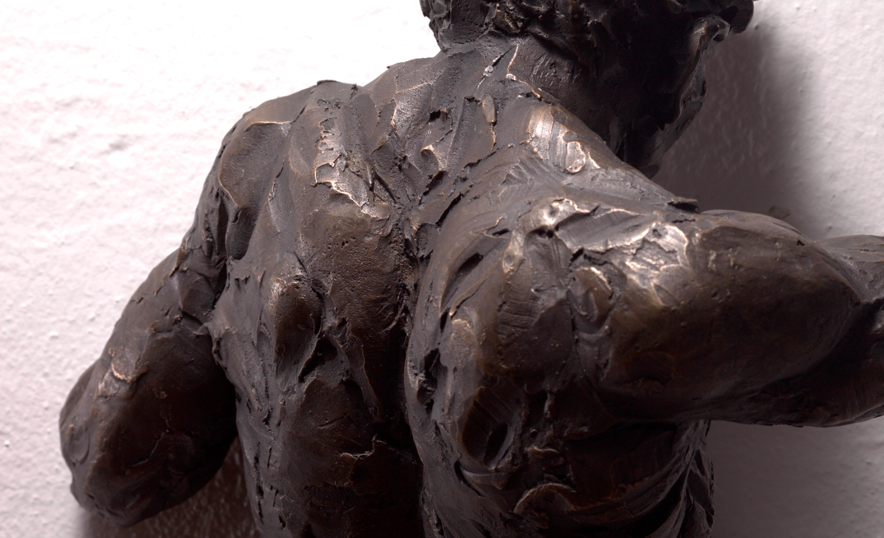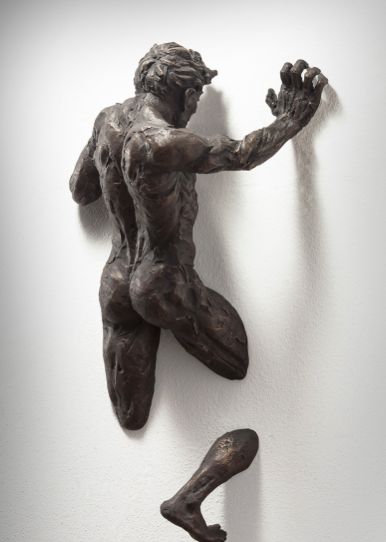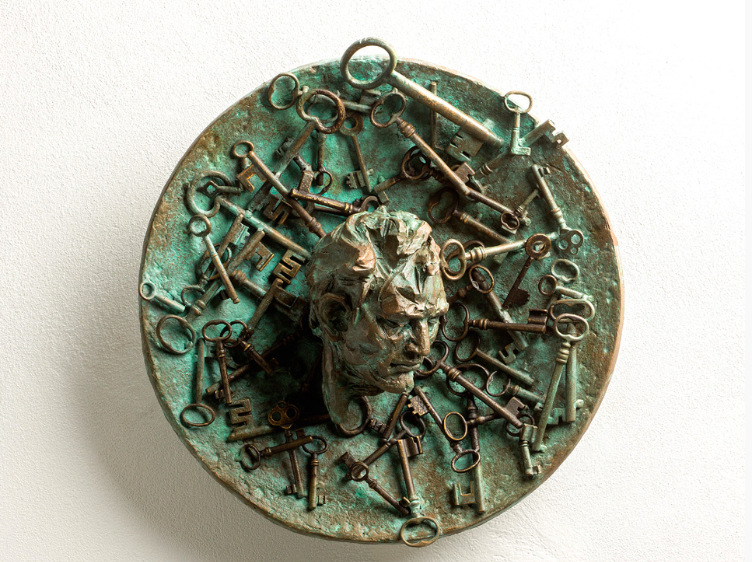
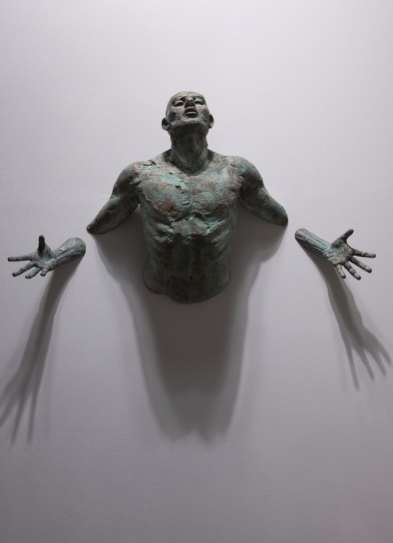
Matteo Pugliese is one of Italy’s most distinctive contemporary sculptors, known for transforming the human body into a metaphor for struggle, persistence, and release. His figures, often emerging from walls or breaking free from invisible barriers, seem caught between confinement and liberation—between what restrains us and what propels us forward.
Born in Milan and shaped by the Mediterranean quiet of Sardinia, Pugliese cultivated his craft outside formal training, guided instead by instinct and discipline. His sculptures reveal a deep connection to classical Italian aesthetics while speaking a modern language of resilience and introspection.
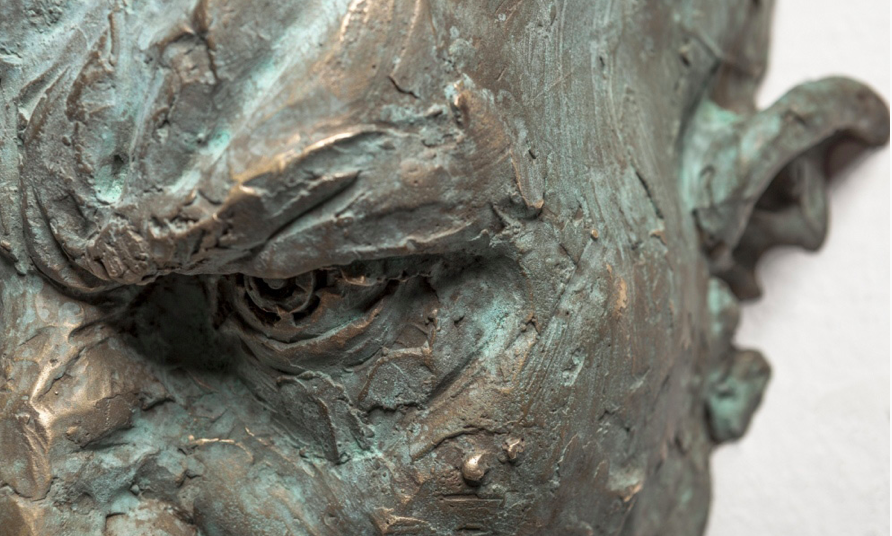
Across the celebrated Extra Moenia series and beyond, his art meditates on endurance, solitude, and the human need for transcendence. Every piece bears the marks of both struggle and grace.
In this conversation, Pugliese reflects on the meditative nature of his practice, the importance of solitude, and the delicate balance between control and emotion in sculpture. What emerges is a portrait of an artist for whom creation is not just an act of making, but a way of being—rooted in passion, determination, and faith in the power of form to set us free.
An Interview with Matteo Pugliese
By Carol Real
How does a typical day in the studio unfold for you? Do you follow a routine, or does each day take its own rhythm?
I’m not a morning-person, therefore mornings are dedicated to answering mail, phone calls, the usual “office” routine. The afternoon is pure creation. The world outside ceases to exist, and I do not allow anyone to interfere with my inspiration. I sort of switch into “airplane mode.”
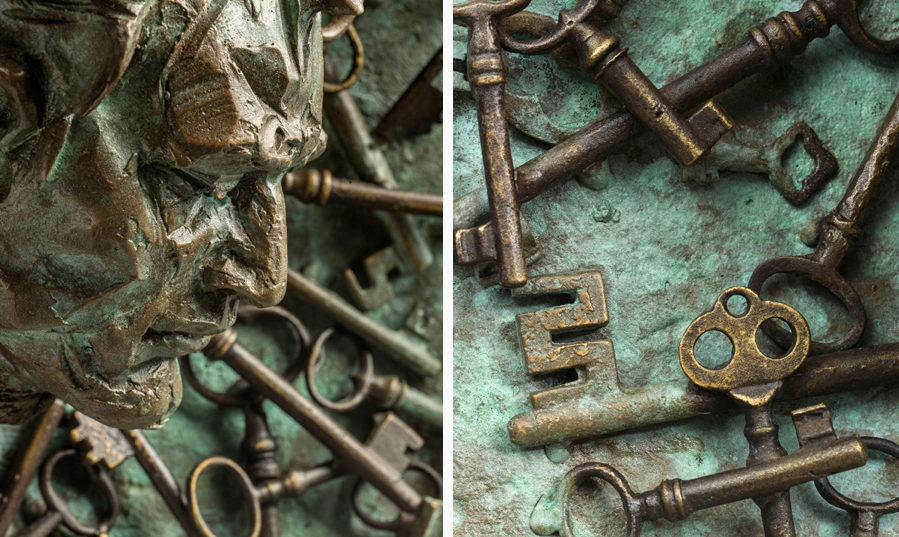
You’ve mentioned that solitude is essential to your creative process. What kind of space do you need to fully lose yourself in the act of sculpting?
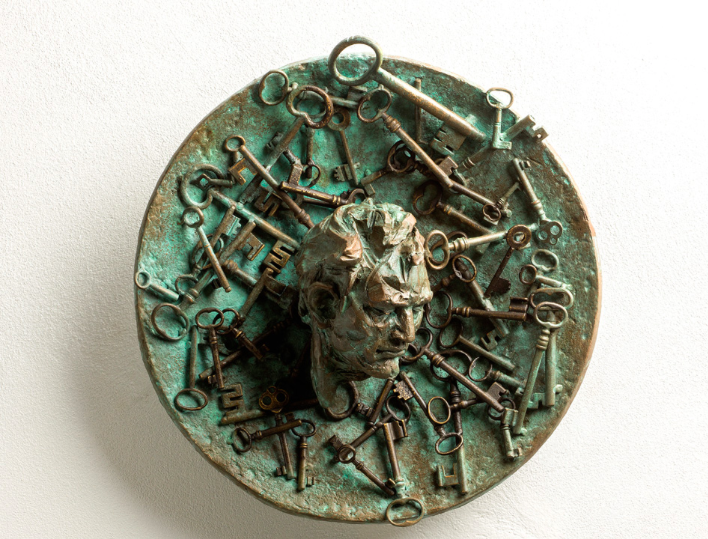
I don’t need any particular item to create. For me, the only indispensable element is solitude. Because I don’t want to be interrupted, and sculpting is sort of a meditation for me, I don’t work with assistants. I am the one who dictates the rhythm and decides when to stop–or start doing something completely different.
Music seems to accompany much of your creative process. How does sound influence the emotional tone of your work?
Music has always been an important part of my life. I have several thousand songs on my old iPod. I love artists like Tom Waits, Leonard Cohen, Bruce Springsteen, Keith Jarrett, Cesaria Evora, Velvet Underground, John Coltrane, Mercedes Sosa, and some Italian artists. This is all music that clearly defines my age. I think that music has influenced me more than other media, maybe even more than sculpture itself.
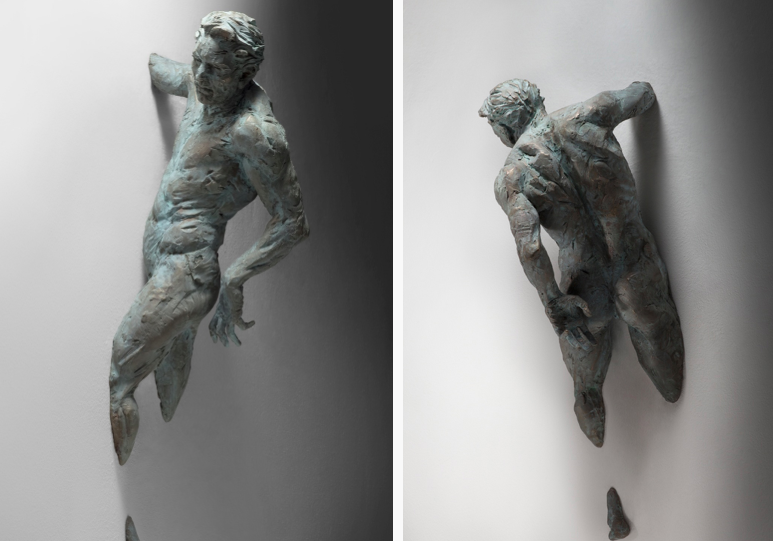
What, in your view, defines a powerful sculpture? Is it technique, emotion, or the risk of letting imperfection become part of the work?
To be unafraid of risks and mistakes and to make sculptures for yourself rather than for the art ecosystem.
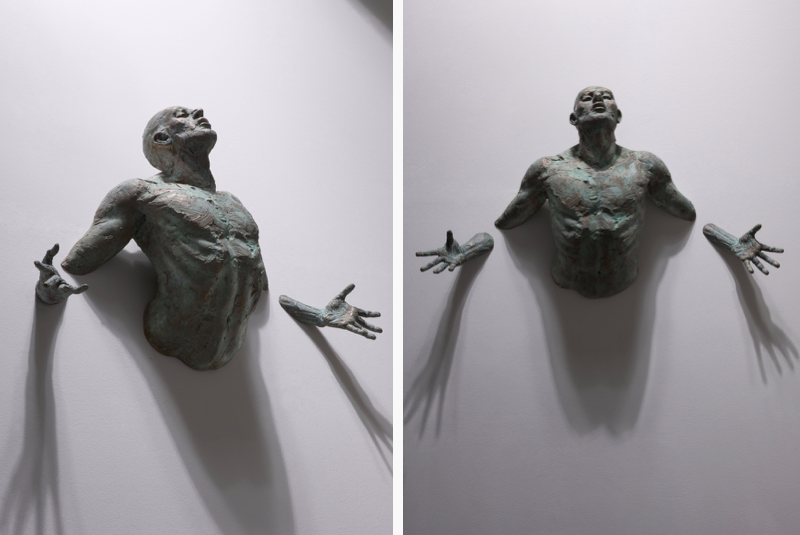
Milan is a city with a rich history. How much does its history, its political and social aspects influence your art?
My family and my country have influenced my passion and style the most. Even at first glance, one can see that my works are strictly linked to Classic and Renaissance Italian production.
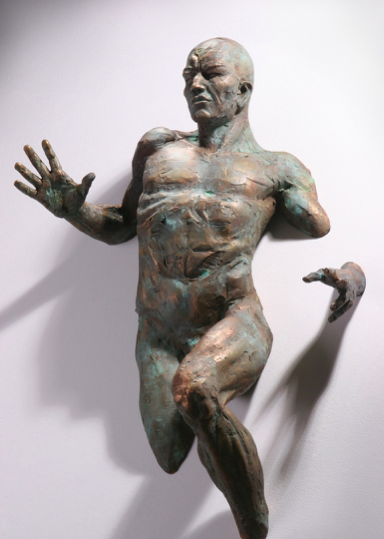
Your “Extra Moenia” series is full of physical strength, and the figures seem to be breaking out of traps and repressions. They overcome imprisonment, obstacles, and boundaries. Does all that relate to your own experiences?
Yes indeed. The theme of imprisonment versus freedom is very dear to me. I have seen around me many people who live lives not theirs, people who unfortunately have never had the chance or found the strength to express themselves, people who deny or fail to nourish their true selves, be it professional, sexual, or social.
When you look back over your career, do you think particular character traits have dominated your work?
Passion for my work–and determination, probably.
Your favorite quote is…
I’ve recently read a quote of Win Borden that I like: “If you wait to do everything until you’re sure it’s right, you’ll probably never do much of anything”.