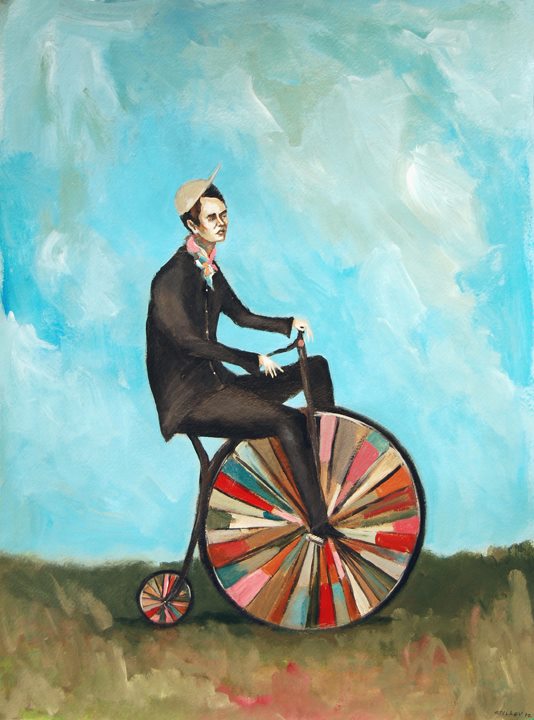
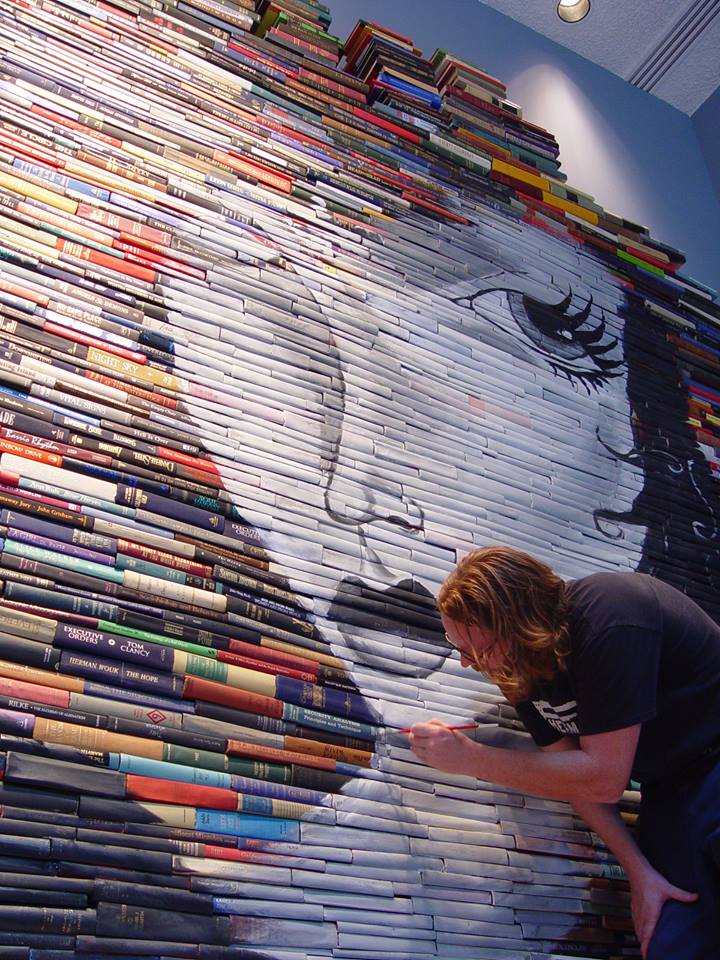
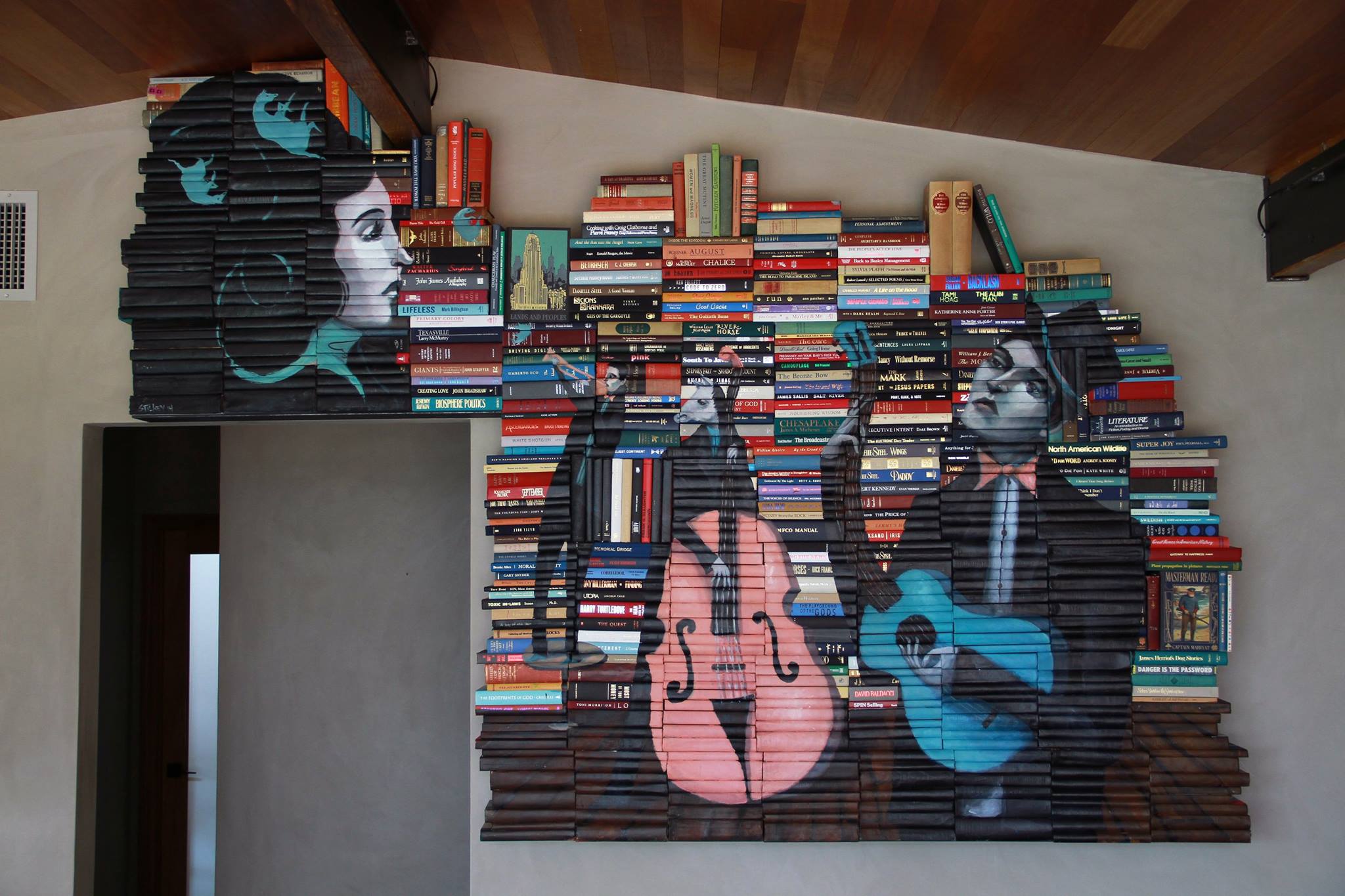
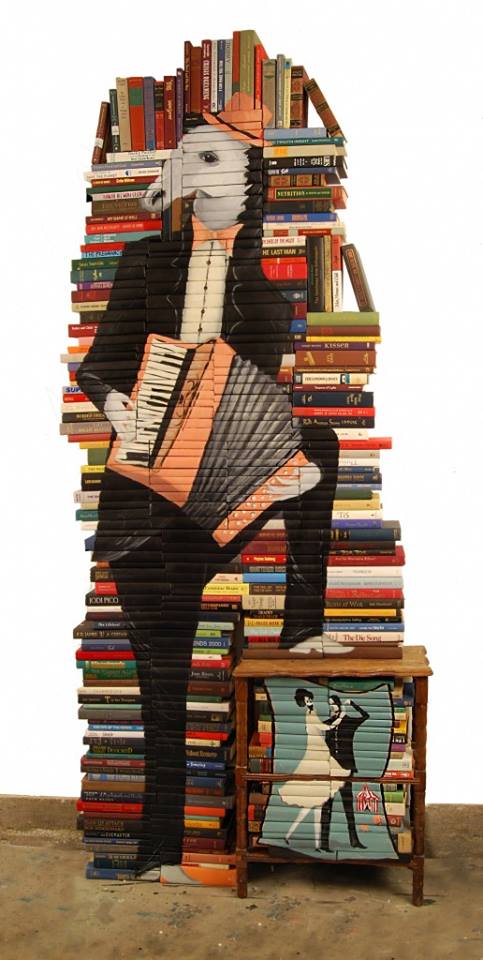
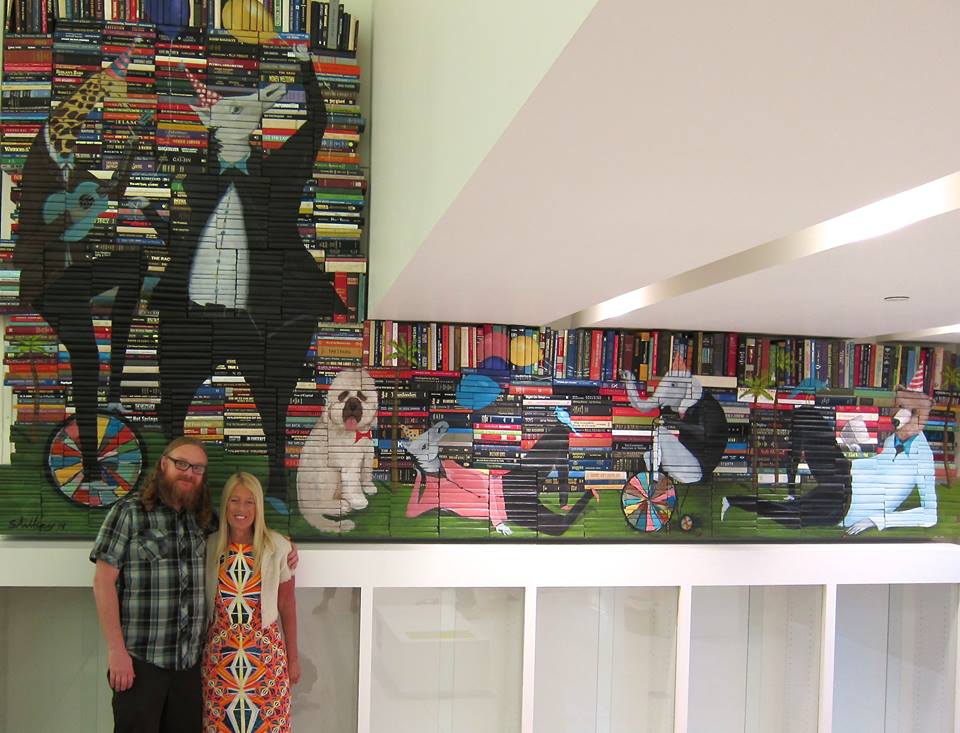
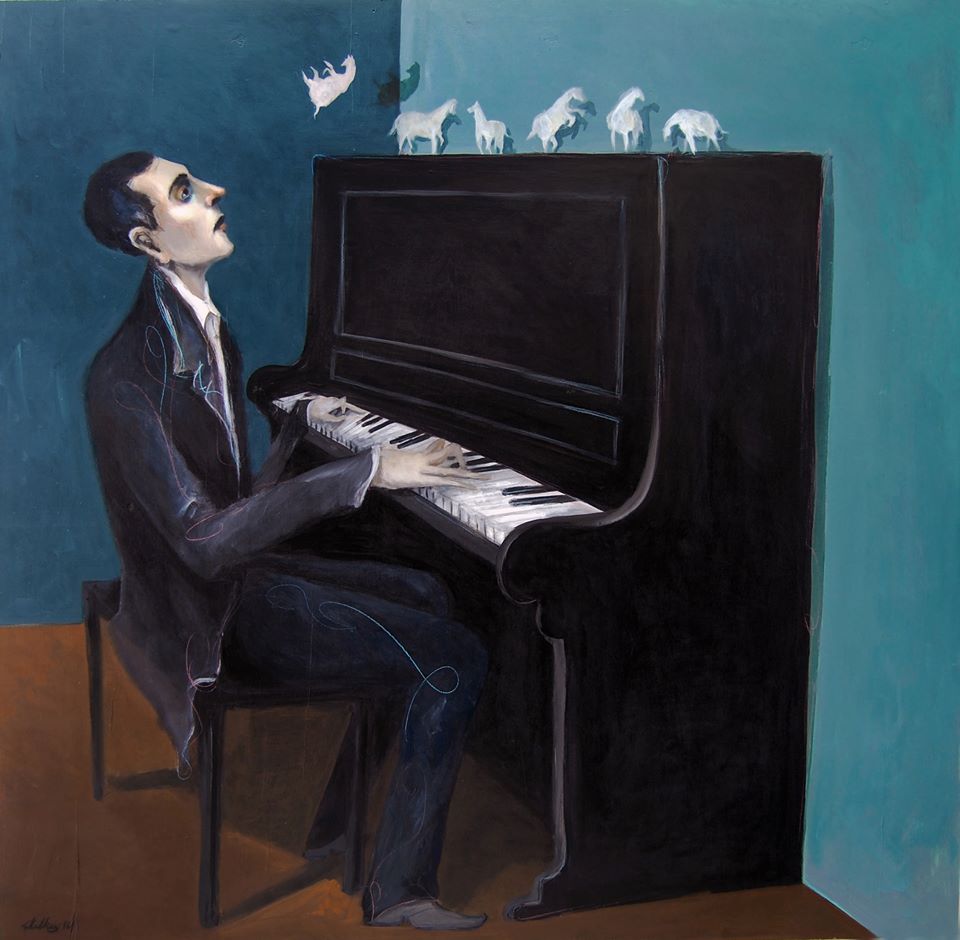
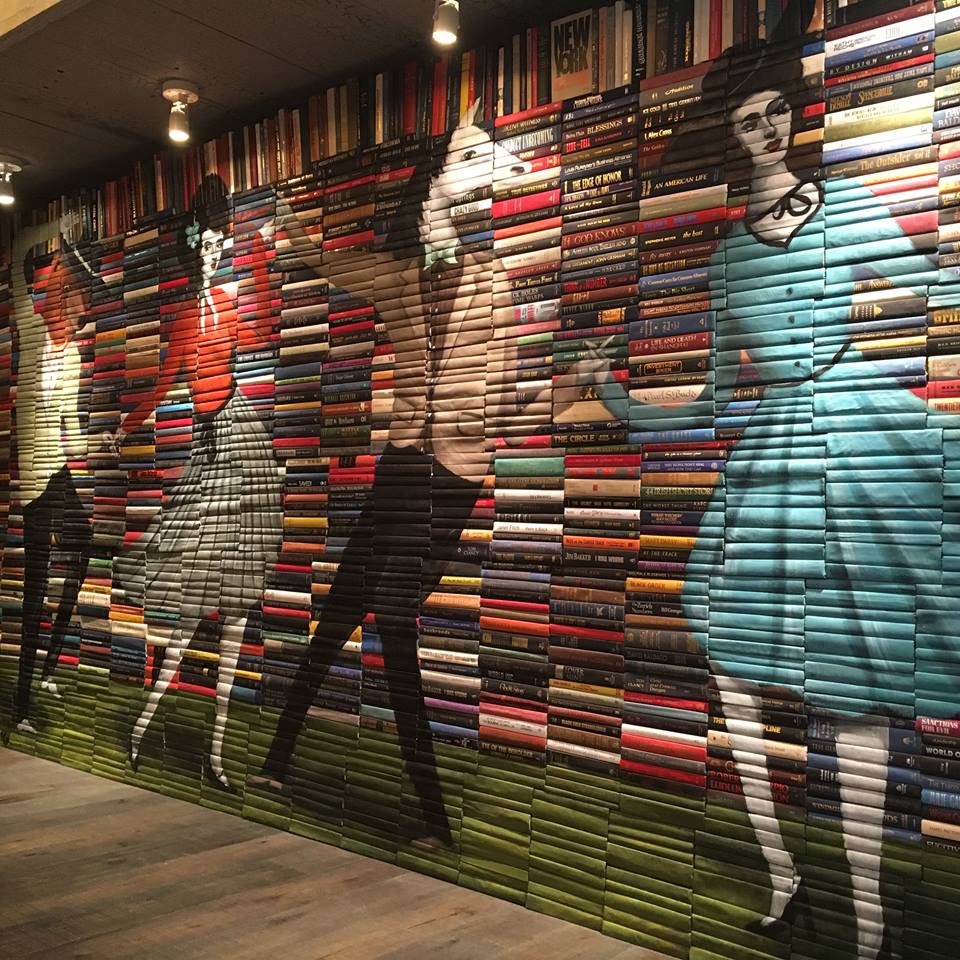
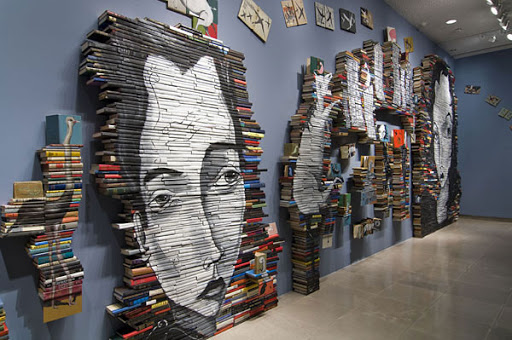
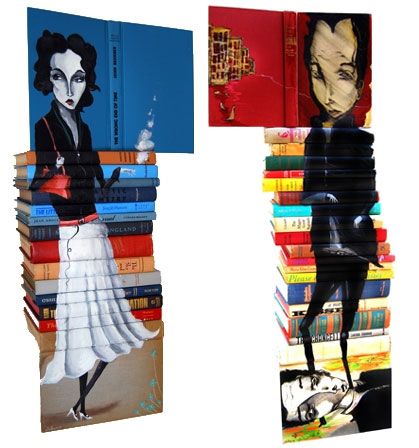
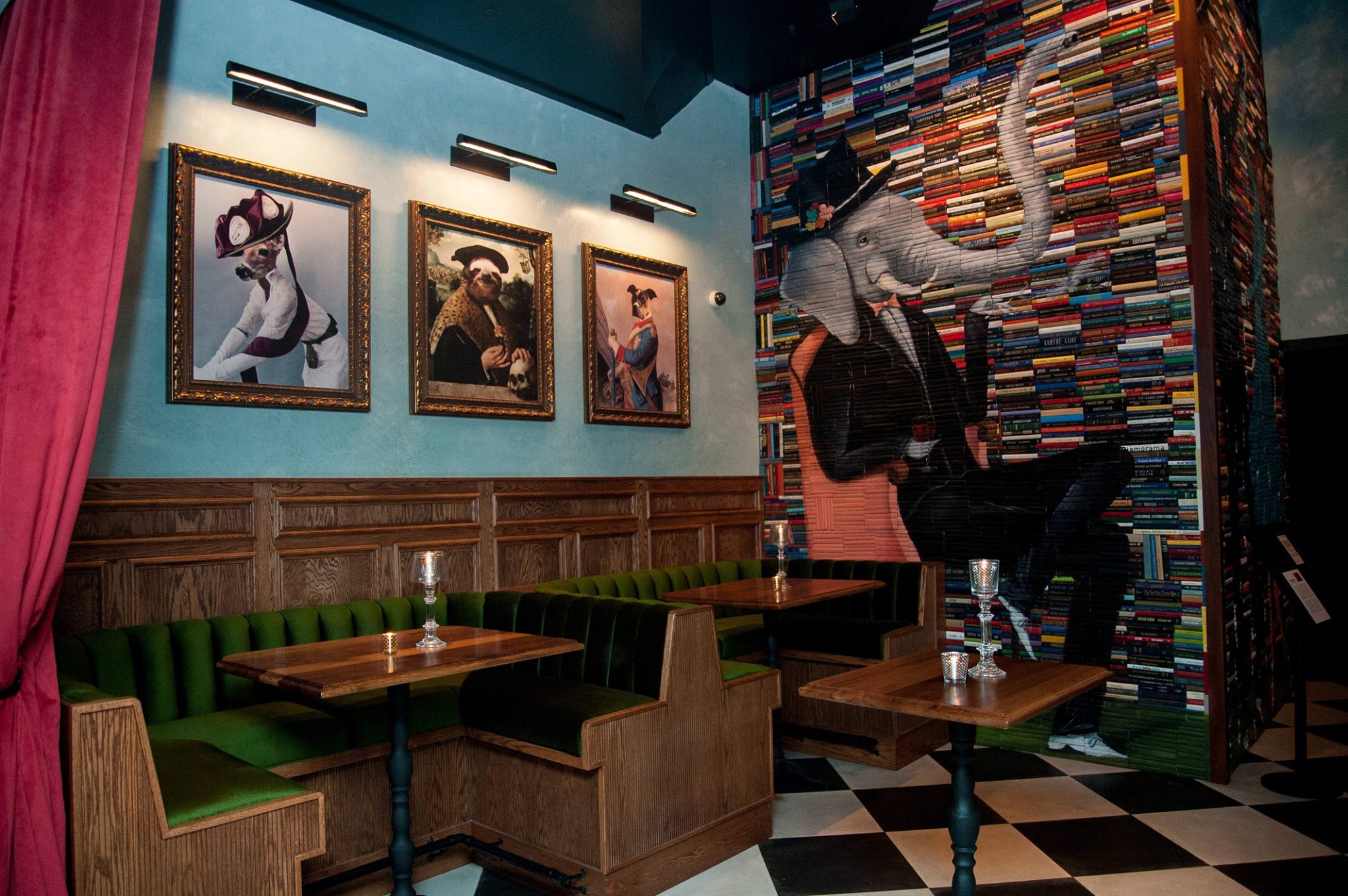
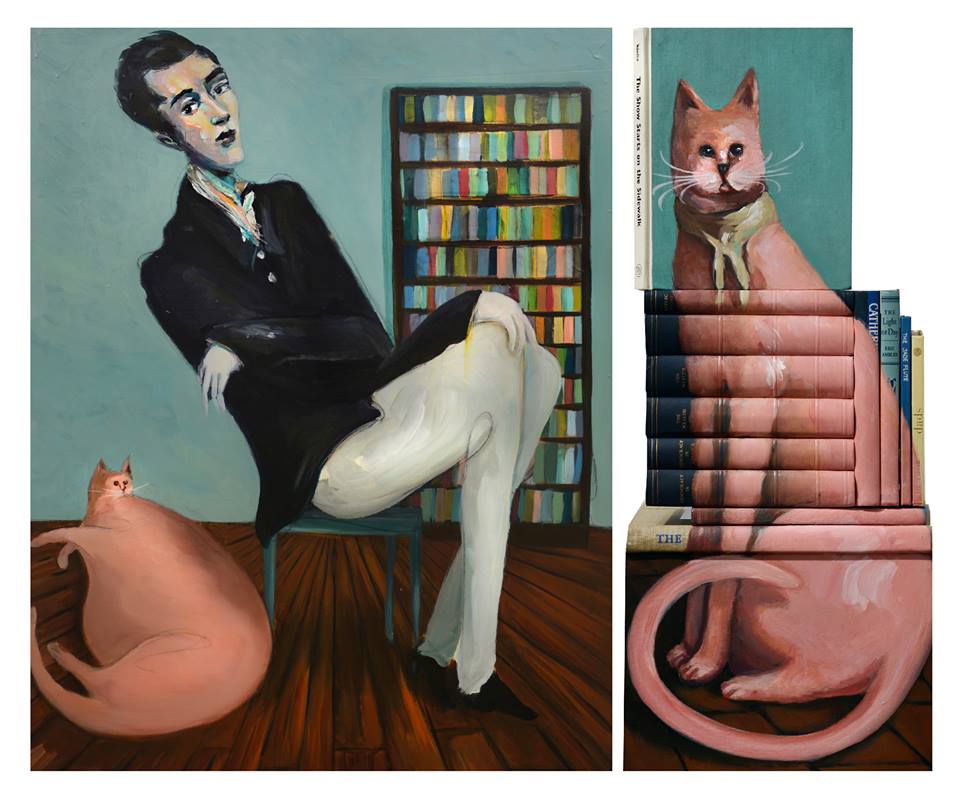
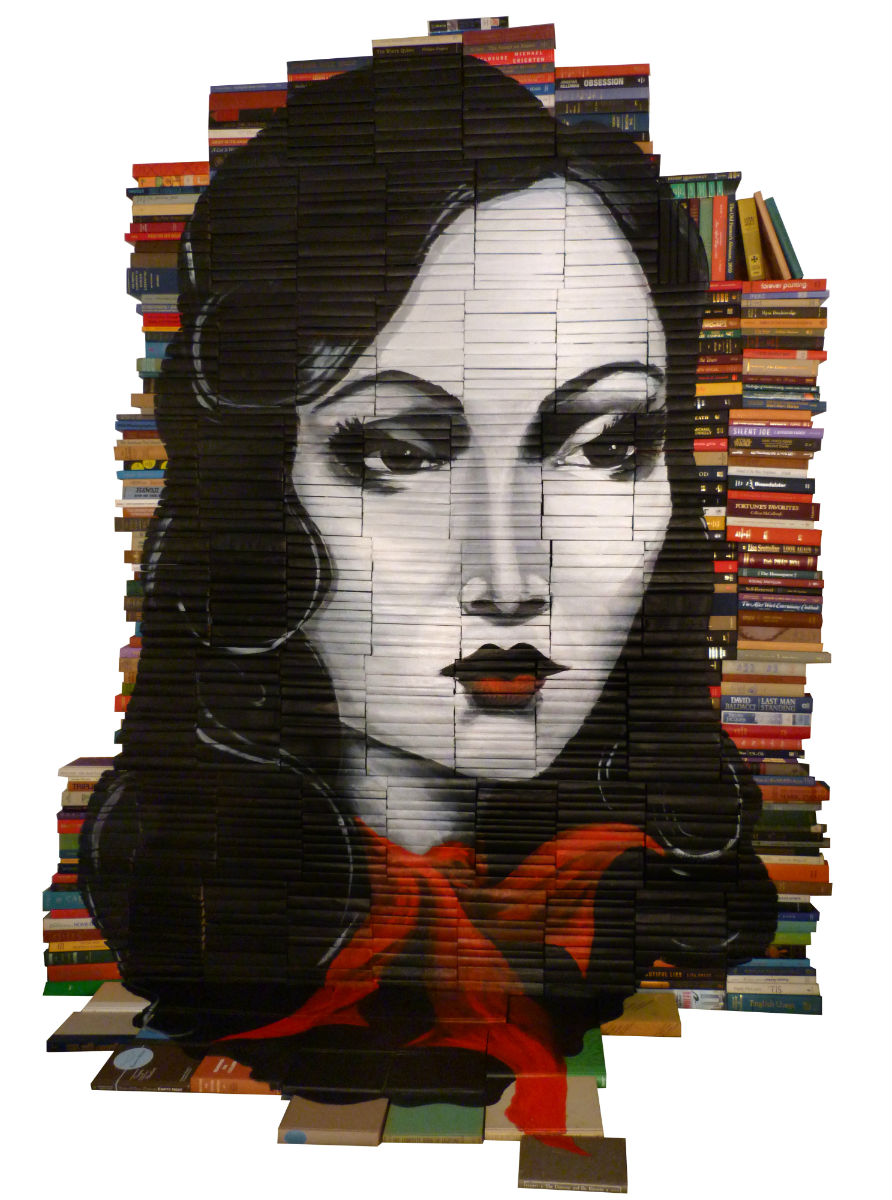
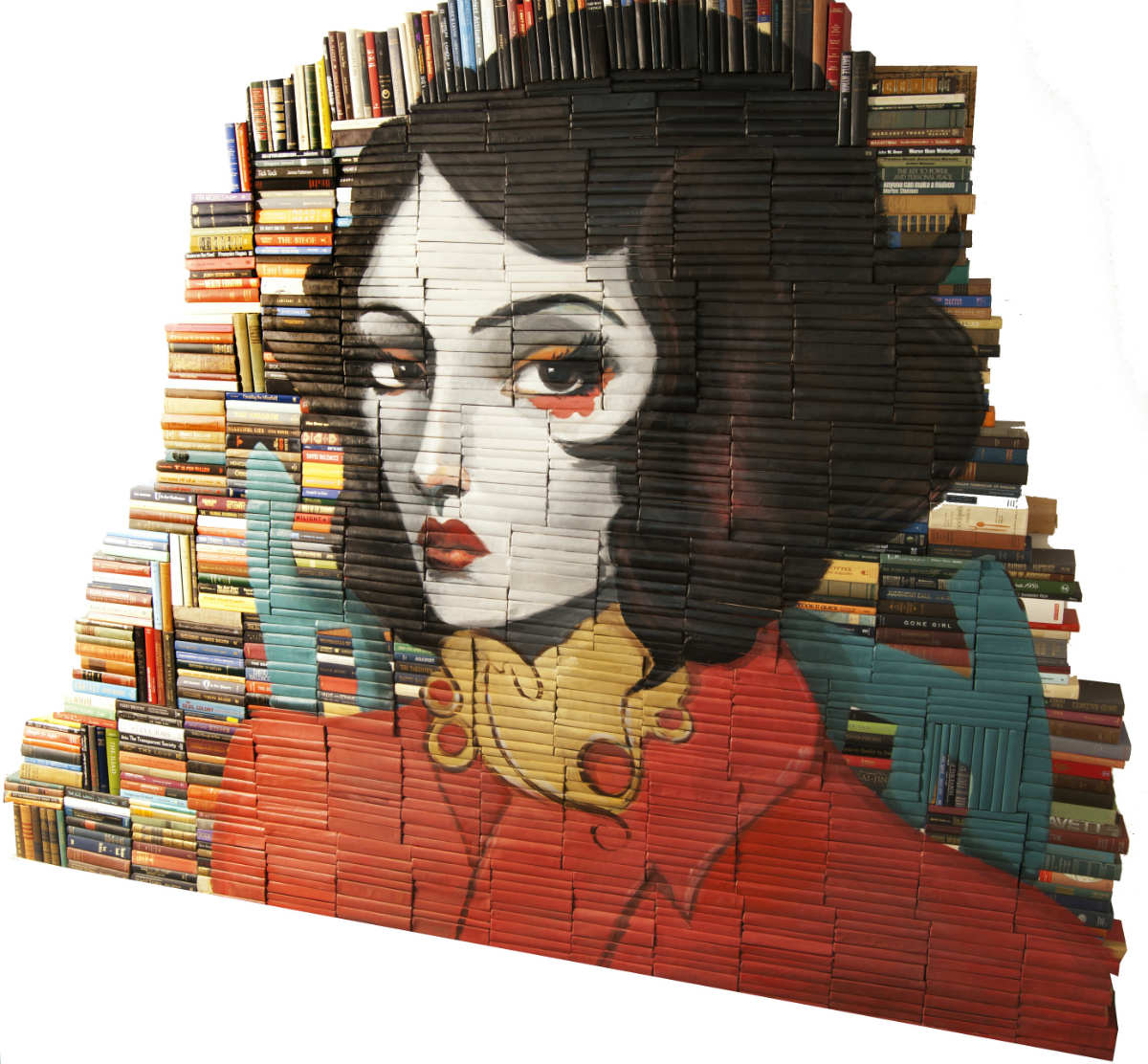
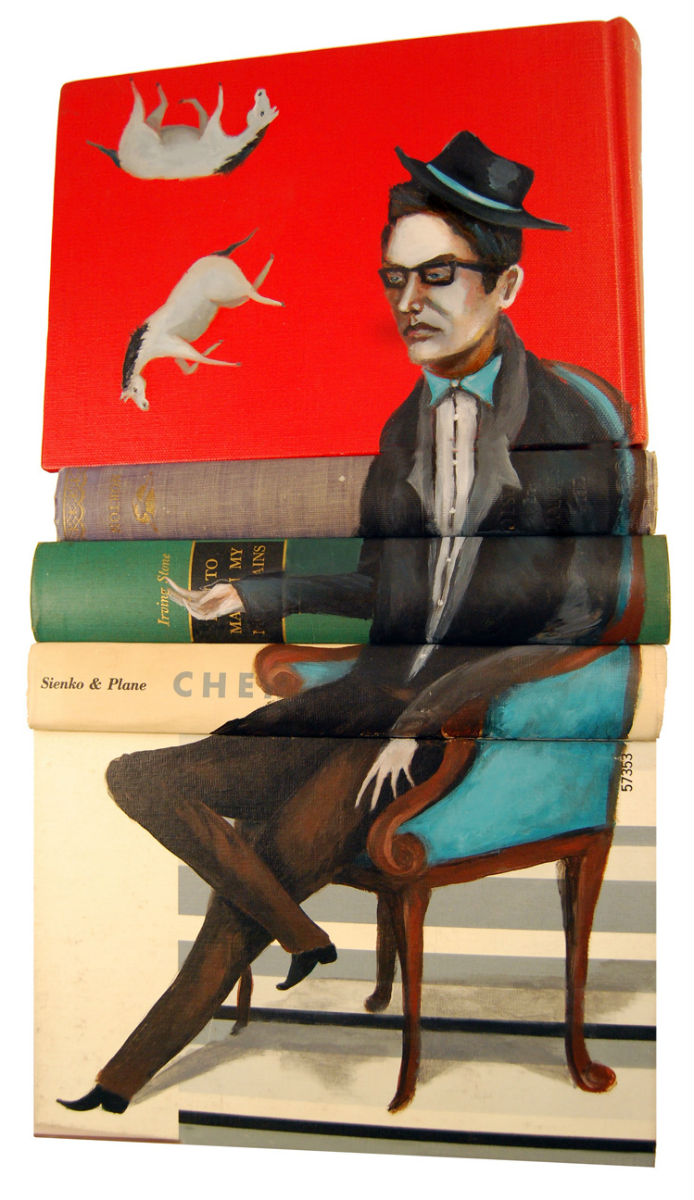
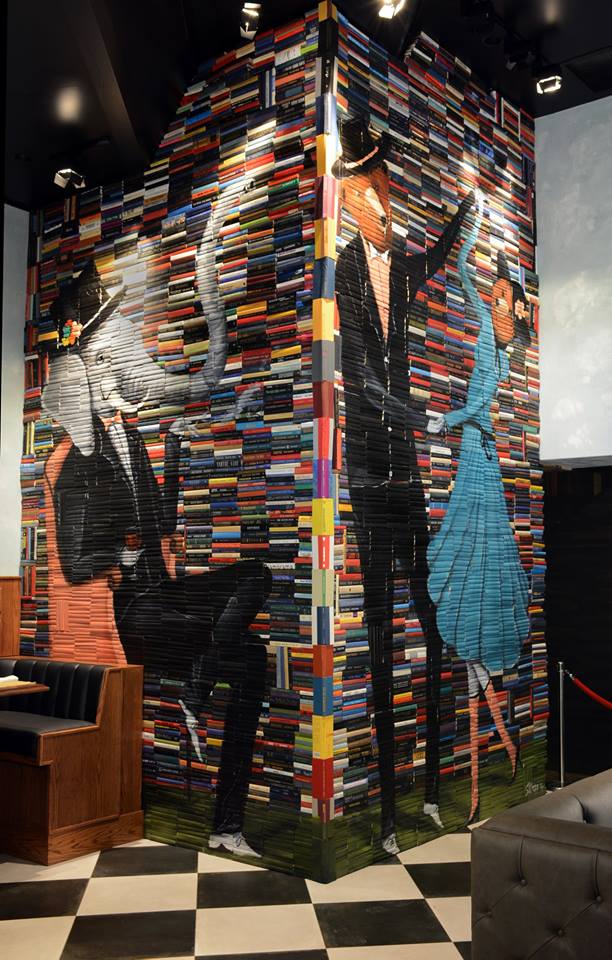
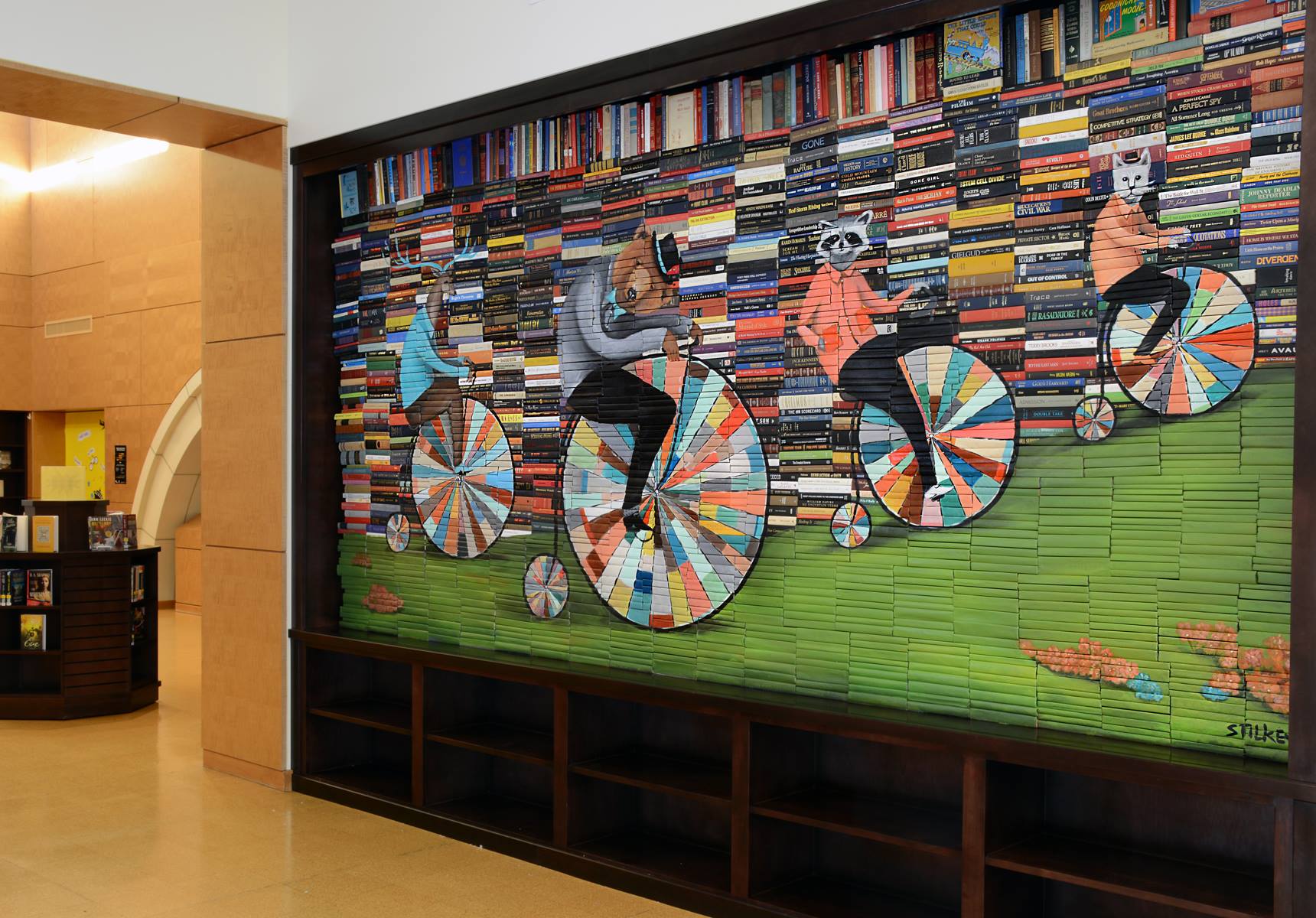
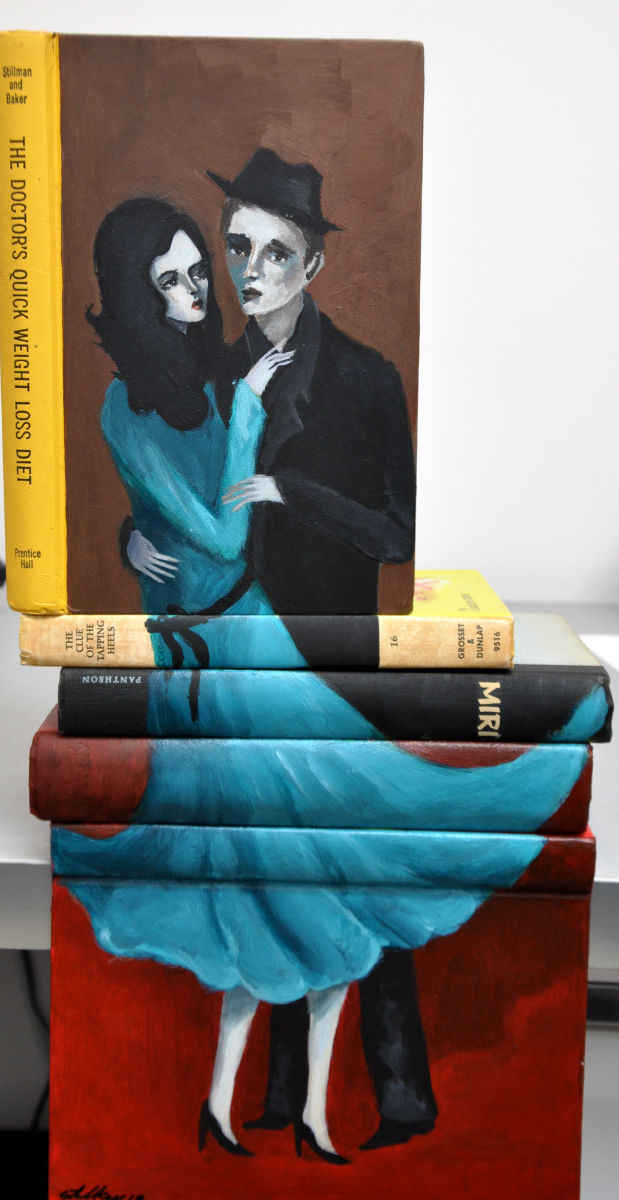
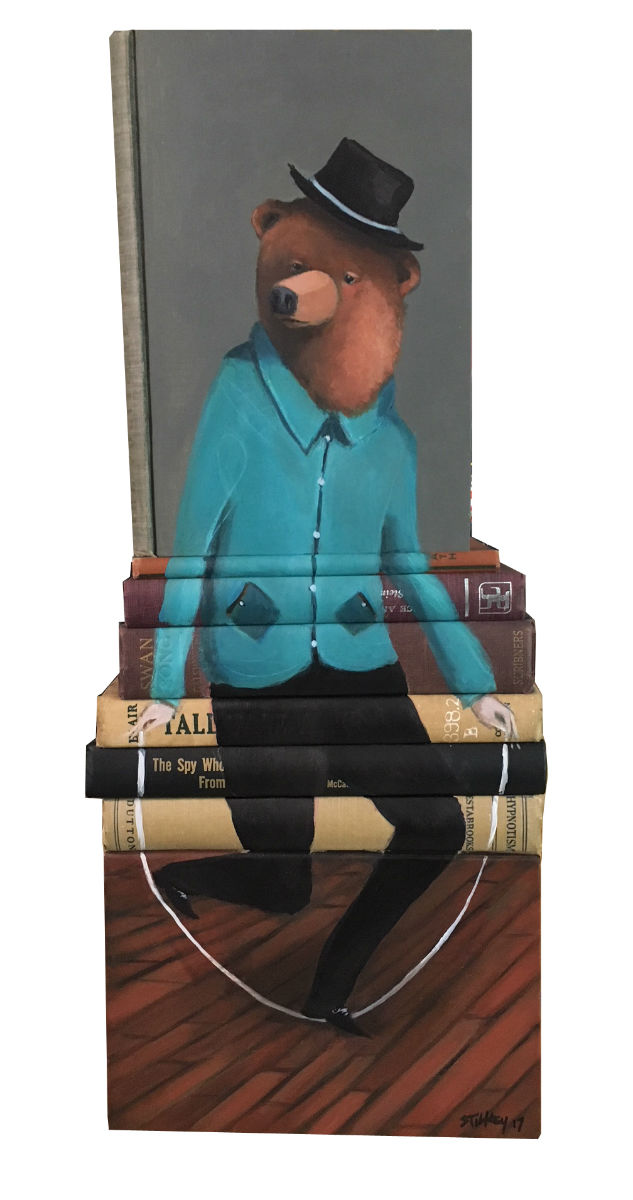
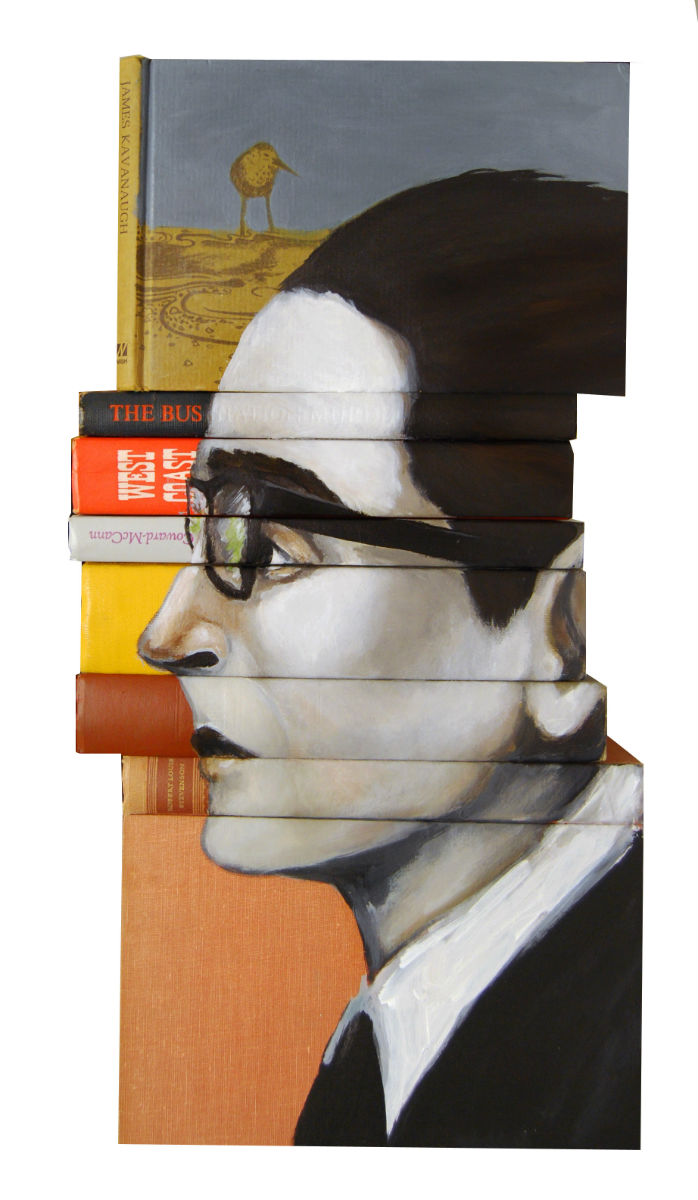
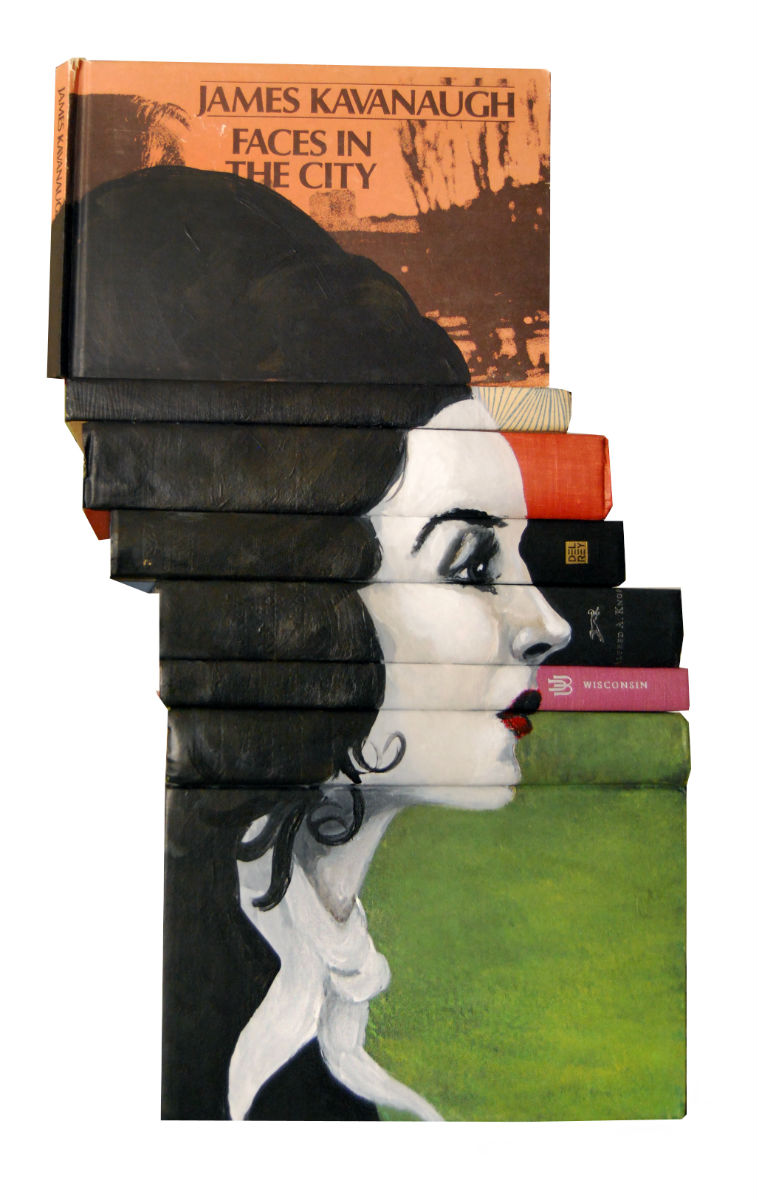
Mike Stilkey’s work exists somewhere between sculpture, painting, and narrative. Known for his melancholic yet humorous figures painted directly onto discarded books, Stilkey has transformed what is often considered obsolete material into a contemporary medium. His compositions, rising in precarious stacks or sprawling across shelves, reframe the book as both object and surface, questioning how culture archives and abandons its own stories.
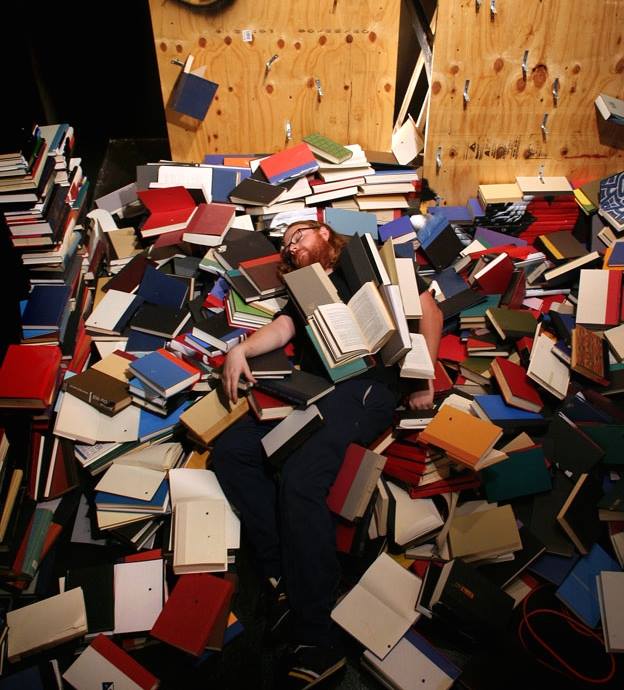
Born and based in Los Angeles, Stilkey’s practice merges personal memory with a quiet form of resistance. By painting on what others have thrown away, he reclaims not only material but also meaning. His characters, often caught between irony and tenderness, suggest a kind of emotional archaeology—portraits of what remains once language fades. “I’ve pulled thousands of unwanted books out of dumpsters,” he says. “This is my way of giving them a second life.”
In this interview, Stilkey reflects on the fragility of objects, the role of melancholy in creation, and the tension between preservation and transformation. His responses reveal an artist for whom art is not a gesture of possession, but of care—a sustained act of revival in a world that forgets easily.
An Interview with Mike Stilkey
By Carol Real
Your sculptures and installations can be found across the world, from public spaces to private collections. How do you personally define success as an artist today?
It means not having to work for someone else. As long as I’m creating and am able to survive off my art, I’m succeeding.
Books are central to your work. Do you remember when your fascination with them began, and what compels you to transform them into artworks rather than read them?
I’m sure I’ve read hundreds, but honestly I have no idea. I have converted quite a few into art pieces, but I tend to hang on to the ones I love. I like to read the same book over once in a while as well.
You’ve said before that “the book is dying.” In your view, does painting on them become a way to preserve or to reimagine their life?
Absolutely. I mean, I’ve literally pulled thousands of unwanted books out of dumpsters. I feel like this is my way of giving them a second life.
Anthropomorphism appears frequently in your work. Beyond your affection for animals, what draws you to their presence as emotional or symbolic figures?
When I was a kid my parents rode horses. I would hang out with the horses, talk to the horses, but I had no interest in riding them. Such personality and soul these creatures have. I was eventually talked into going on my first horse ride. The stable that rented them ran out of horses so I had to ride a mule. We had to follow a trail along the side of the mountain with a 100 foot drop, and my mule would stop and stick his head off the side of the mountain to eat grass. That was the first and last time I ever got on a mule, horse, or pretty much any animal.
You’ve spoken openly about having overcome a difficult childhood. How do those early experiences shape the person—and artist—you are today?
Father, husband, pool player, record collector, vegan, the same guy I’ve always been but with more grey hair.
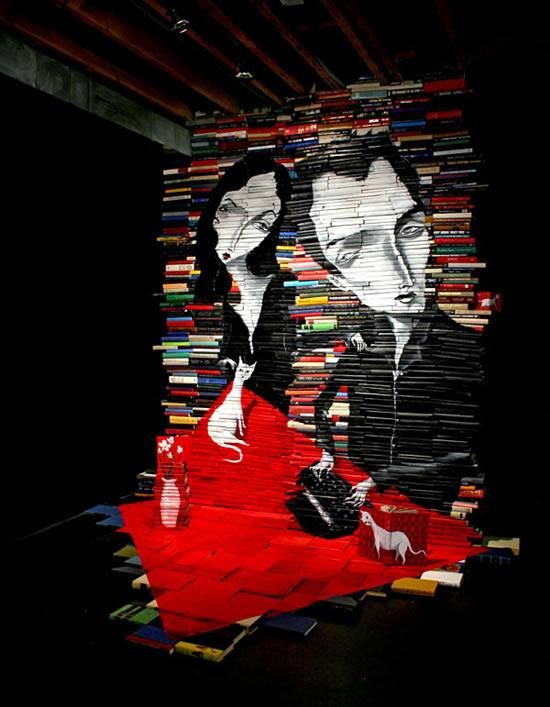
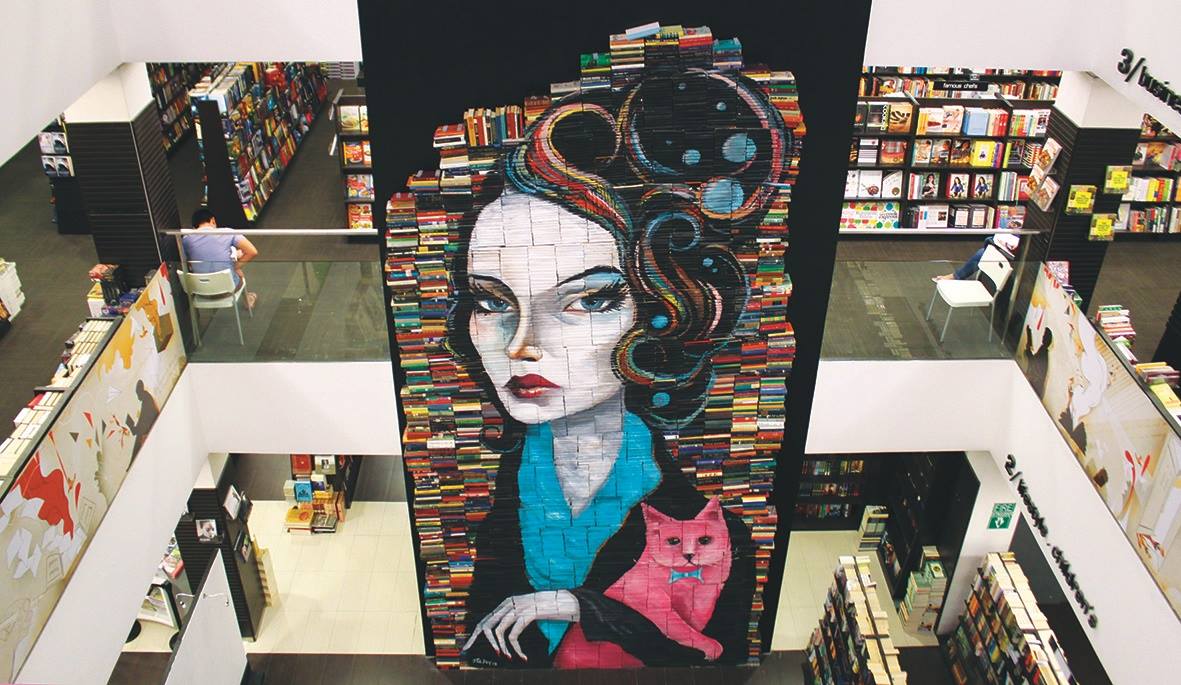
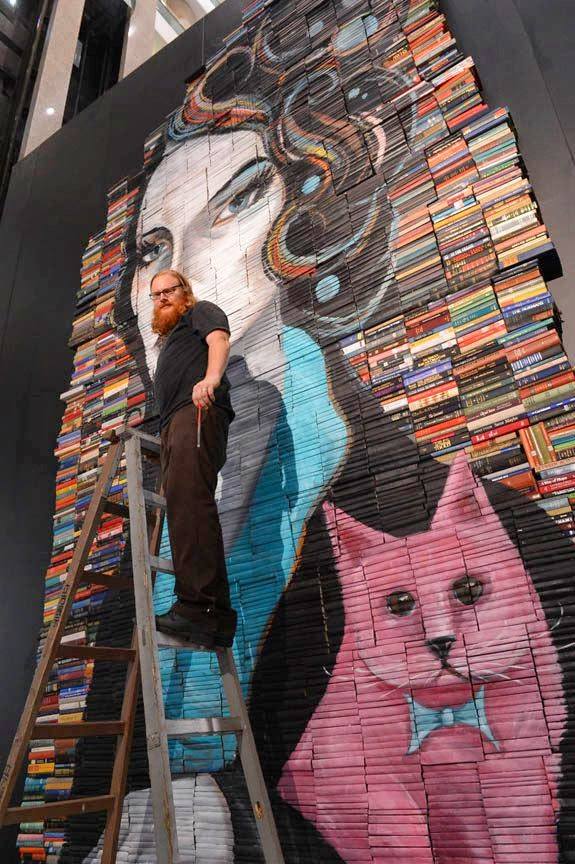
“Discarded Romance” portrays a woman holding a pink cat, a recurring figure in your work. Who is she, and what does this piece reveal about your own domestic world?
This would be my wife Elizabeth. We had 4 cats at the time I painted this. It pretty much summed up our life at the time. The title, “Discarded Romance,” held a double meaning. Not only were these discarded romance novels from the libraries, it was also our love for the feral cats we would rescue.
When selecting books for a sculpture or painting, what attracts you first—the title, the texture, or the story hidden inside?
I’m really drawn to three different things related to the books: the color, the texture, or the title. The titles are most important to me because they’re usually telling another story alongside the painting I’m making. I love playing with words.
Many artists say sadness sharpens creativity. Do you feel your best work emerges from moments of melancholy?
This is certainly true for me. When I’m feeling down, my work just flows like water. All I have to do is follow the feelings and somehow it translates to art, it’s like sad magic.
What kind of music accompanies you while you paint, and how does sound influence your emotional state or rhythm in the studio?
It depends on what I’m painting and what mood I’m in at the time. It ranges from Chopin to Slayer. I have a fairly diverse taste in music. I listen to a lot of jazz, punk rock, psychedelic, and good old classic rock.
Some viewers criticize your use of books as material. Have you had any memorable encounters that revealed how people react to your work?
I had a lady in her 70’s once tell me that painting on books was a sin and that I should find a home for them. I told her that I got these from a dumpster and that no one wanted them. She said she didn’t care and that they needed to go somewhere. I asked her if she wanted them. She replied that she didn’t have room for them, and walked off. Ha, I love people!
If you could choose one superpower that reflects your creative spirit, what would it be?
To fly.
You often compare painting to playing pool—both requiring precision and focus. What parallels do you see between the two?
I love them equally. Both require so much concentration. It’s the constant challenge that keeps them interesting.
Your favorite quote is …
“Responsibility is a heavy responsibility.” Cheech Marin
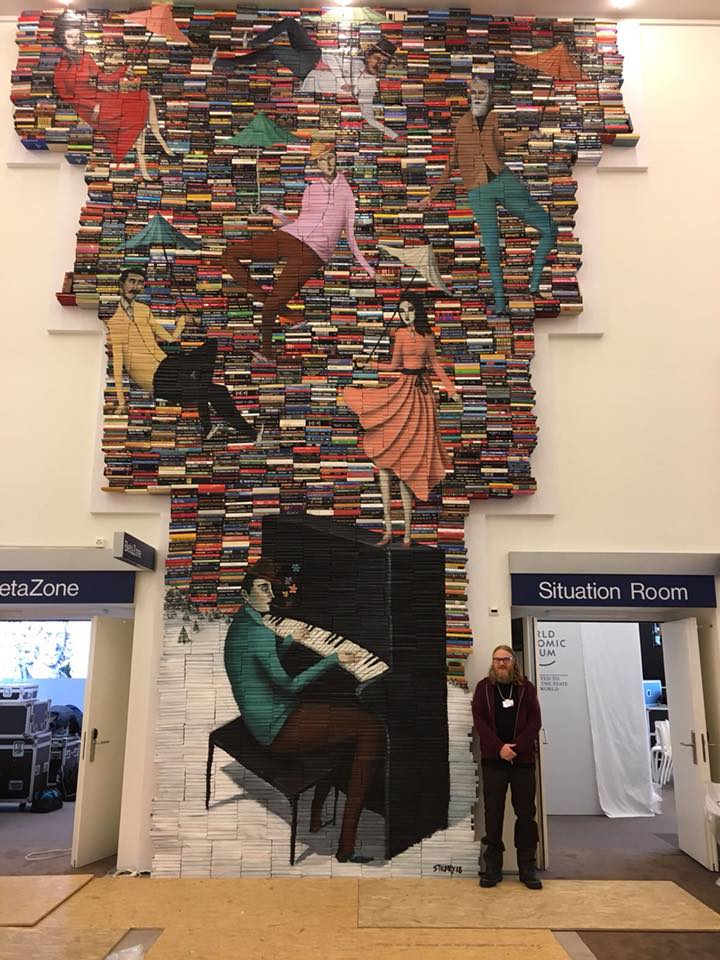
You recently participated in the World Economic Forum in Davos. How did that experience shift your understanding of art’s role in global dialogue?
It was incredible to be surrounded by people who are making a difference in the world. It was truly inspiring and it changed the way I think about the impact I can have as an artist. I feel like I can play a different role and that I can also make a difference.
If you could realize any project without limits—budget, time, or scale—what would it be, and why?
I have fantasies of making a film with my friends – a film filled with art and music. I’ve also always dreamt of having a massive painting show at MOCA in Los Angeles..
When you imagine yourself ten years from now, what do you hope your creative life will look like?
I hope I’ll have a long gray beard and look like a wizard. I will have made a movie, recorded an album, and still be painting as much as I am now.