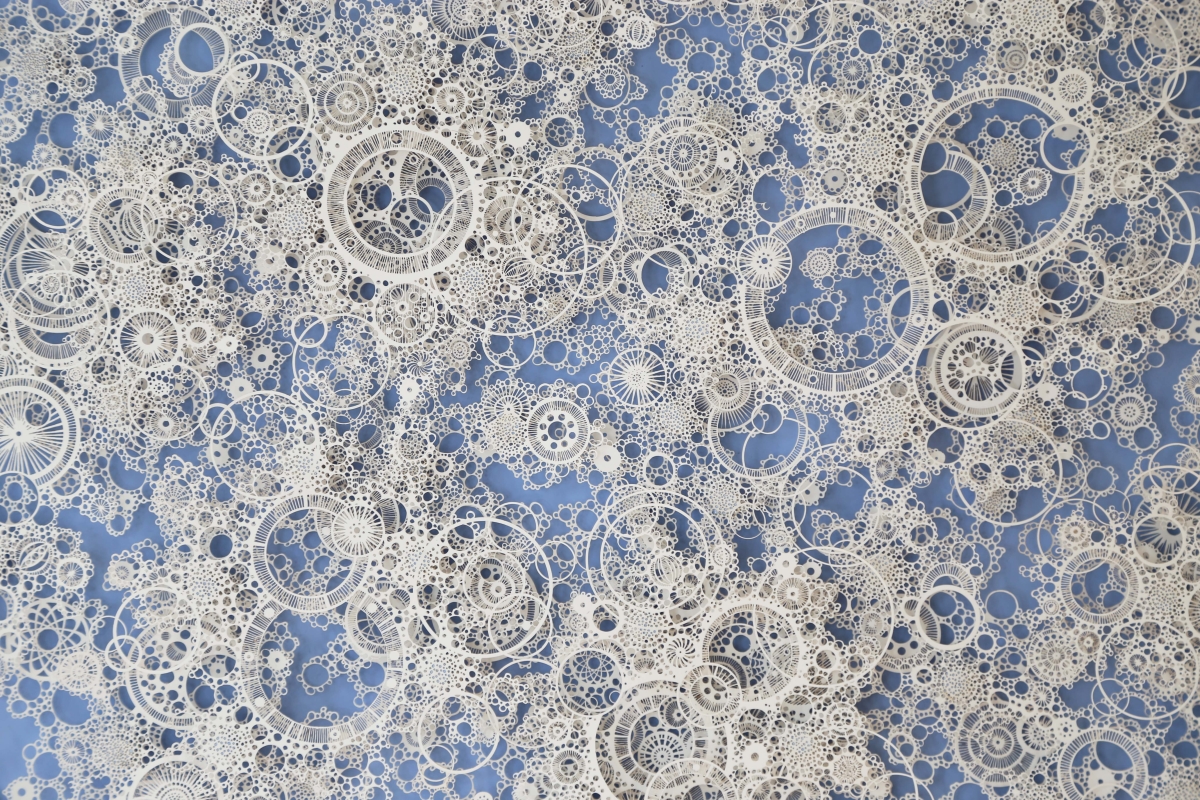
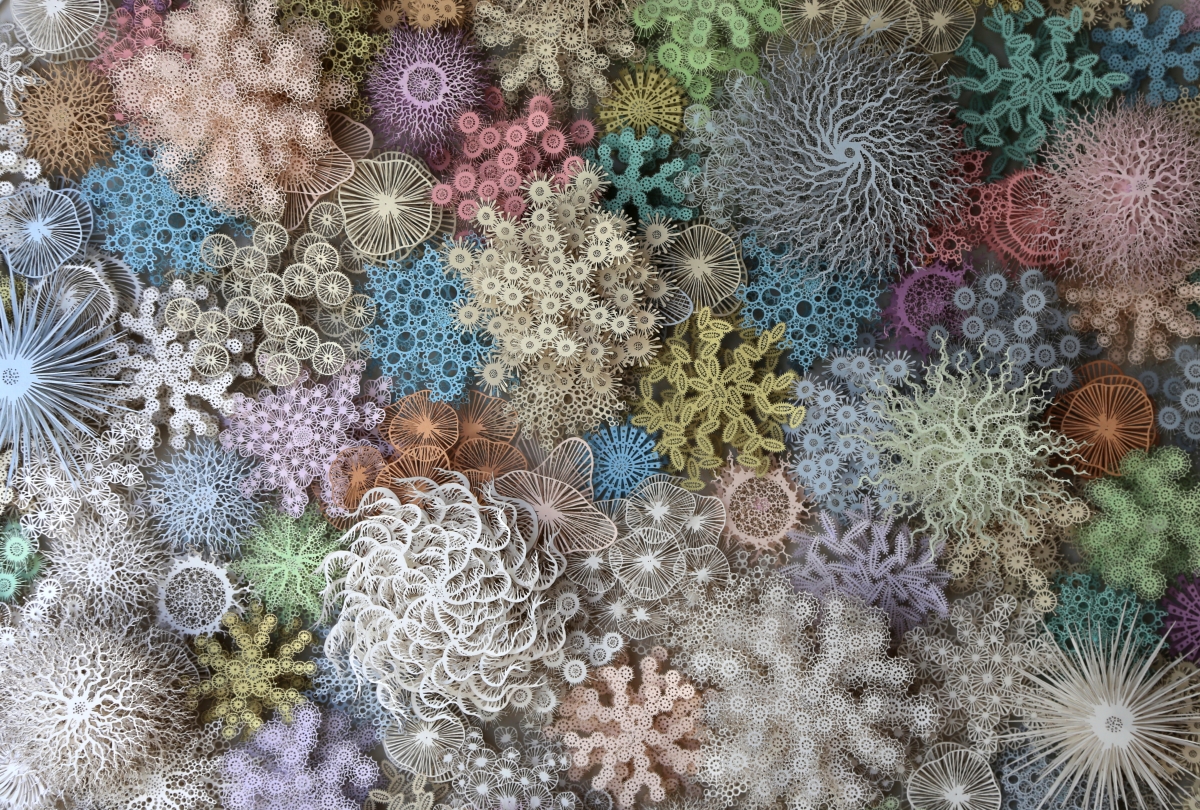
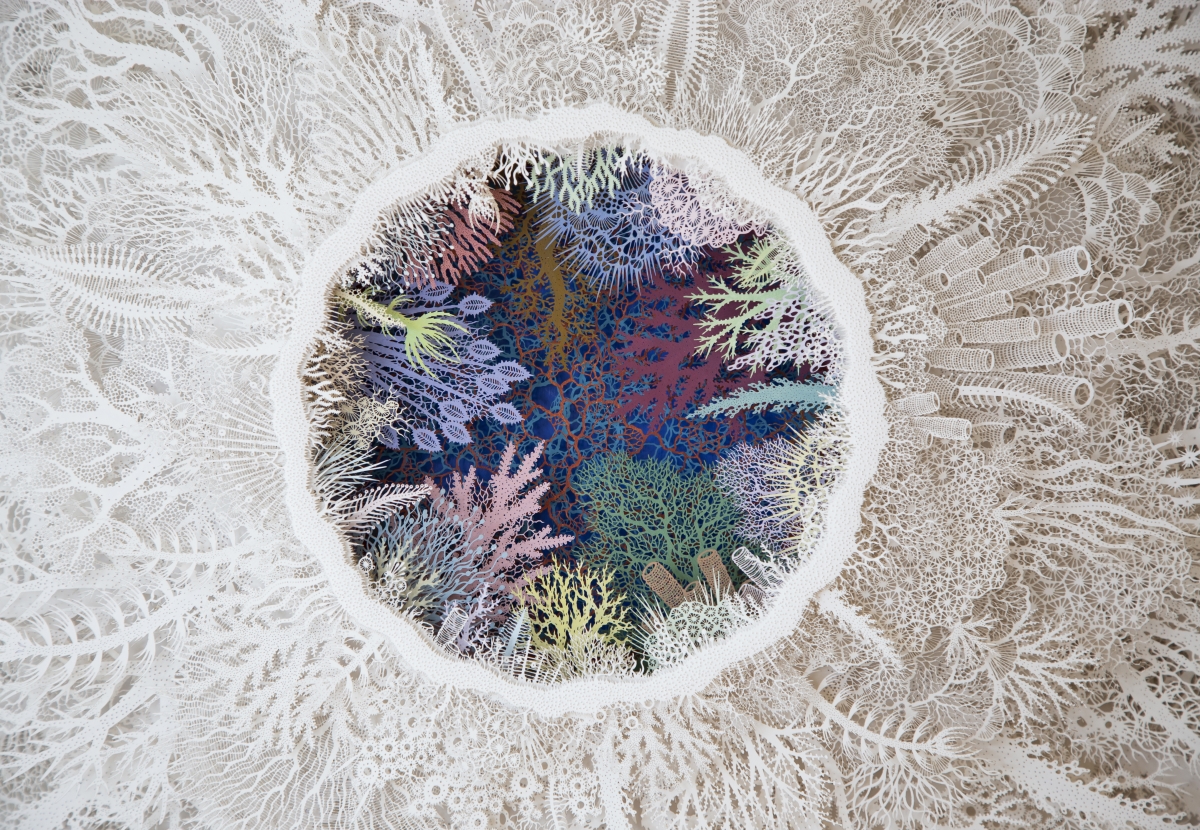
Rogan Brown carves paper as if it were a living tissue, exposing the hidden geometries of nature. His sculptures, intricate and meditative, explore the invisible architectures that connect the microscopic and the cosmic—the branching of coral, the filigree of cells, the pulse of growth itself. Through thousands of delicate cuts, he transforms fragility into structure, chaos into order.
Born in the United Kingdom and now based in France, Brown merges meticulous handcraft with technological precision. His process—beginning with ink drawings that are later translated into laser-cut layers—becomes a dialogue between instinct and engineering, between the organic and the synthetic. The result is sculpture that seems to breathe, a meditation on both creation and decay.
Deeply influenced by Leonardo da Vinci, the Romantic vision of William Blake, and the scientific elegance of Ernst Haeckel, Brown works where art and biology meet. His pieces invite viewers to slow down, to observe the minute patterns that shape all living things. “Focused observation of the simplest aspects of nature,” he notes, “can lead us to an understanding of the sublime vastness of the universe.”
In this interview, Brown reflects on his process, his fascination with scientific imagery, and the tension between fragility and endurance that defines his practice. His work reminds us that the act of looking—closely, patiently—can itself be a form of wonder.
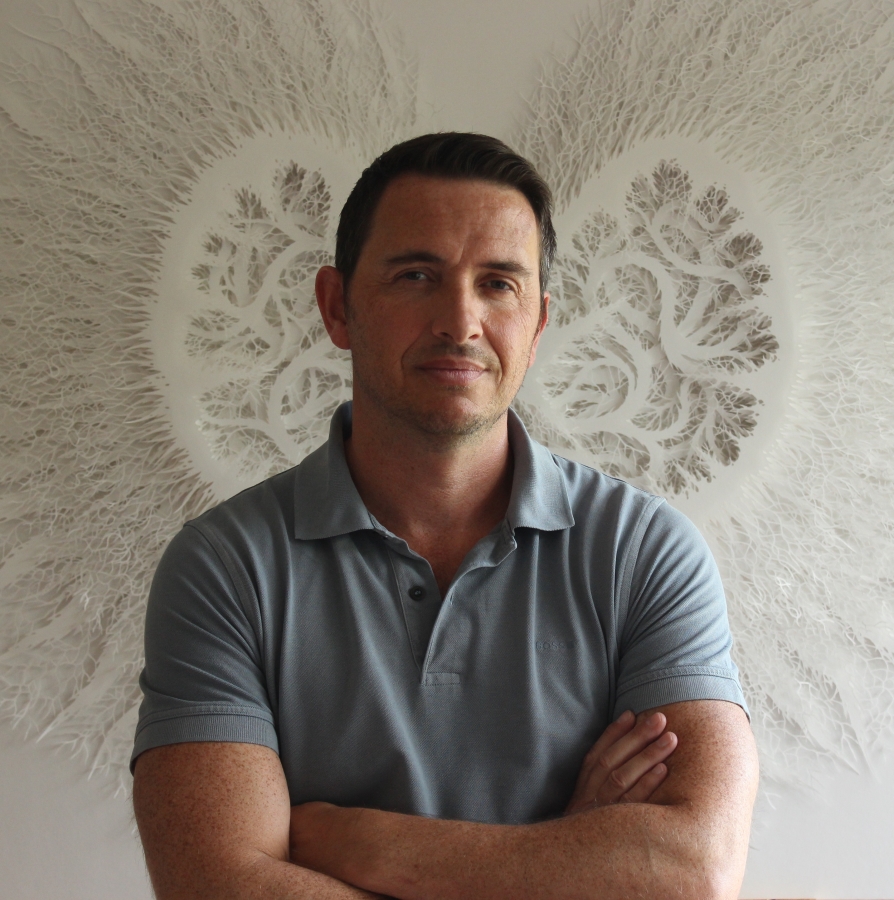
An Interview with Rogan Brown
By Carol Real
Your work explores the intersection between nature, science, and imagination. How did your early environment and discovery of art shape that curiosity?
I grew up in the UK in various places. I started to take art seriously at about the age of fourteen. It coincided with my discovery of the work of Francis Bacon; his paintings, so physical and visceral, so ugly and beautiful, captivated my teenage mind.
Your sculptures merge precision, patience, and technology. Can you describe how an idea evolves from drawing to its final three-dimensional form, and how time functions within that process?
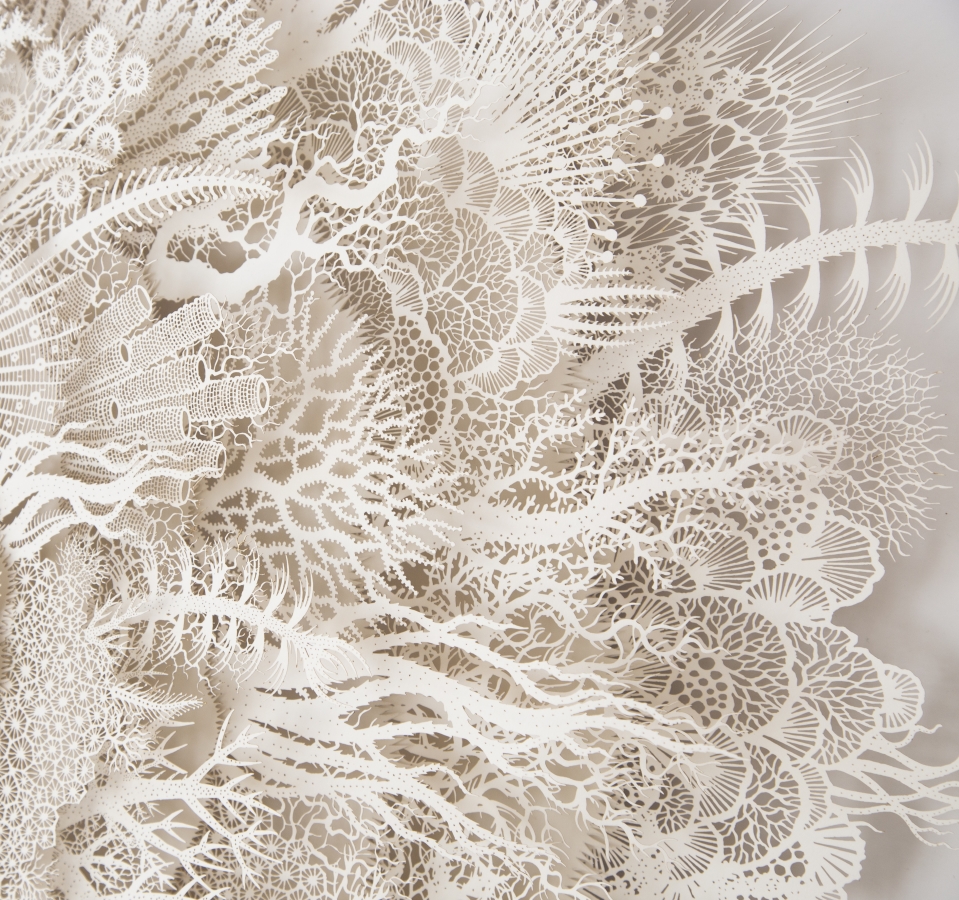
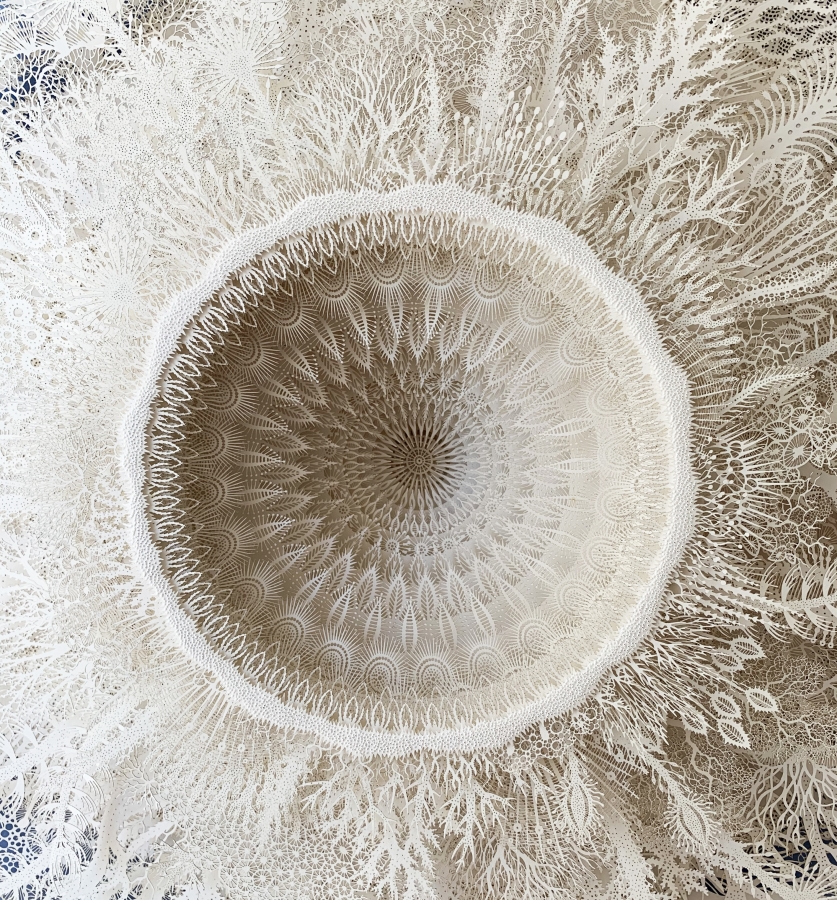
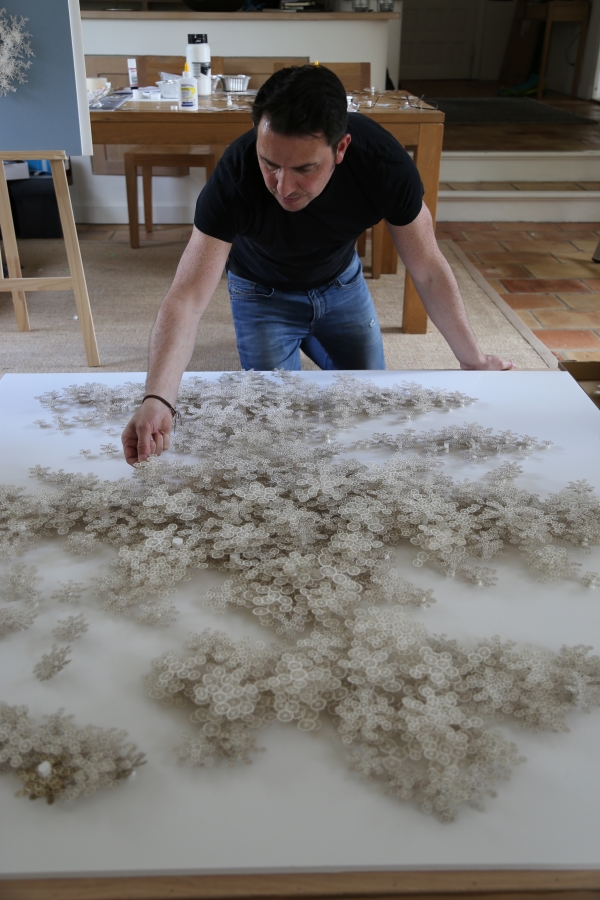
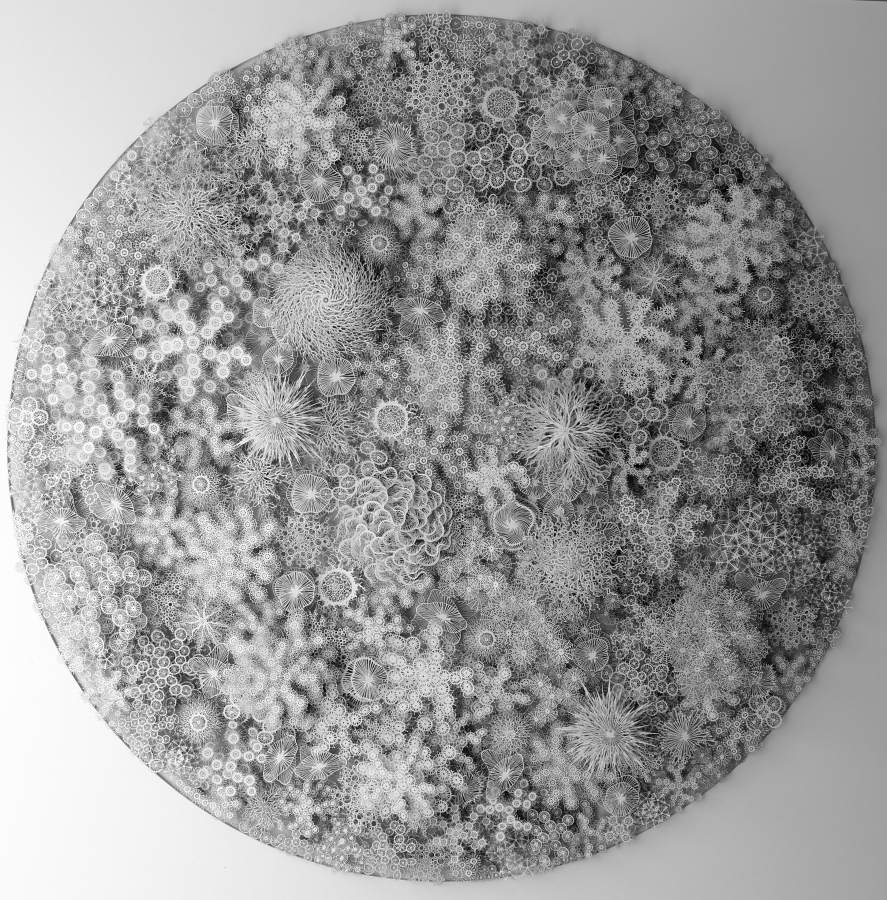
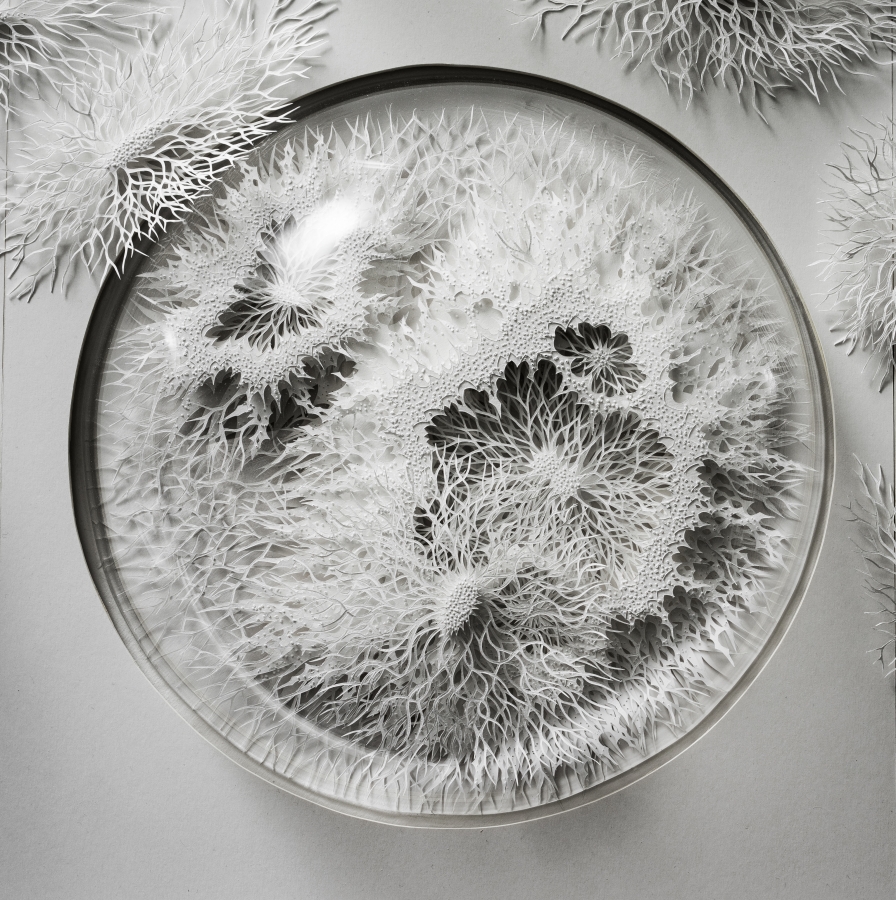
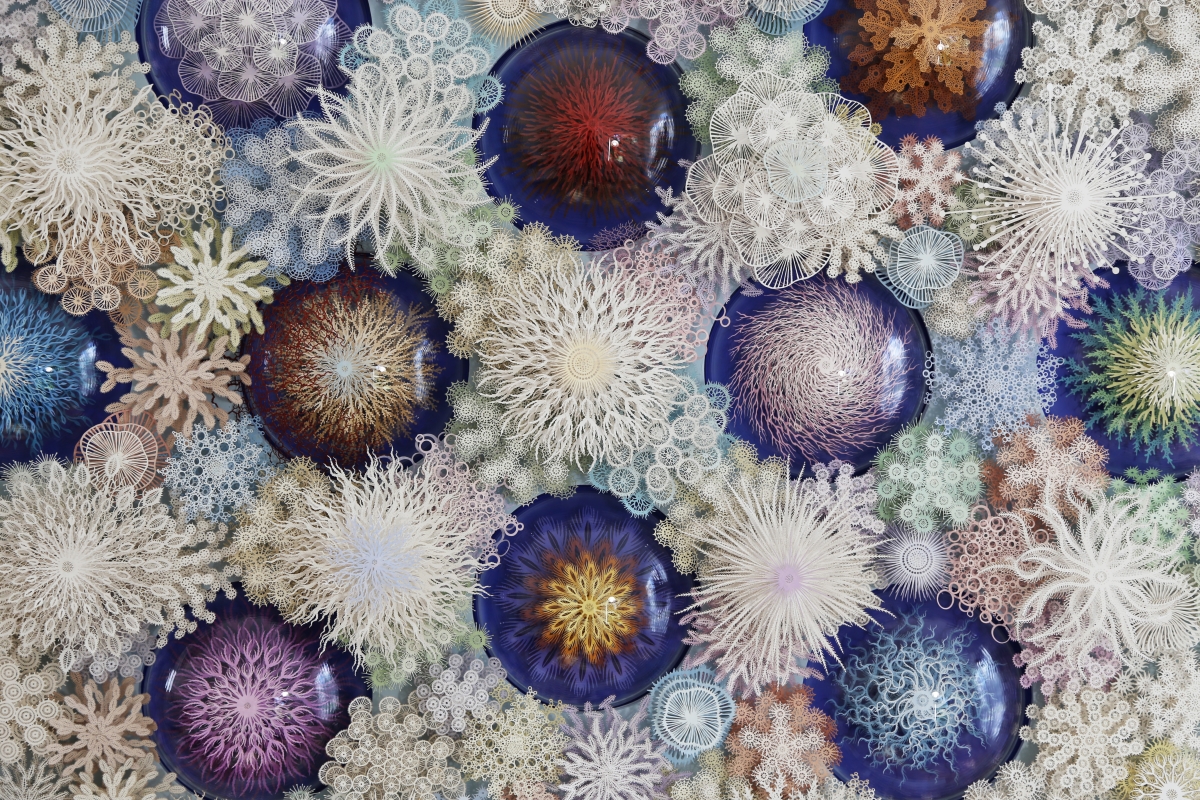
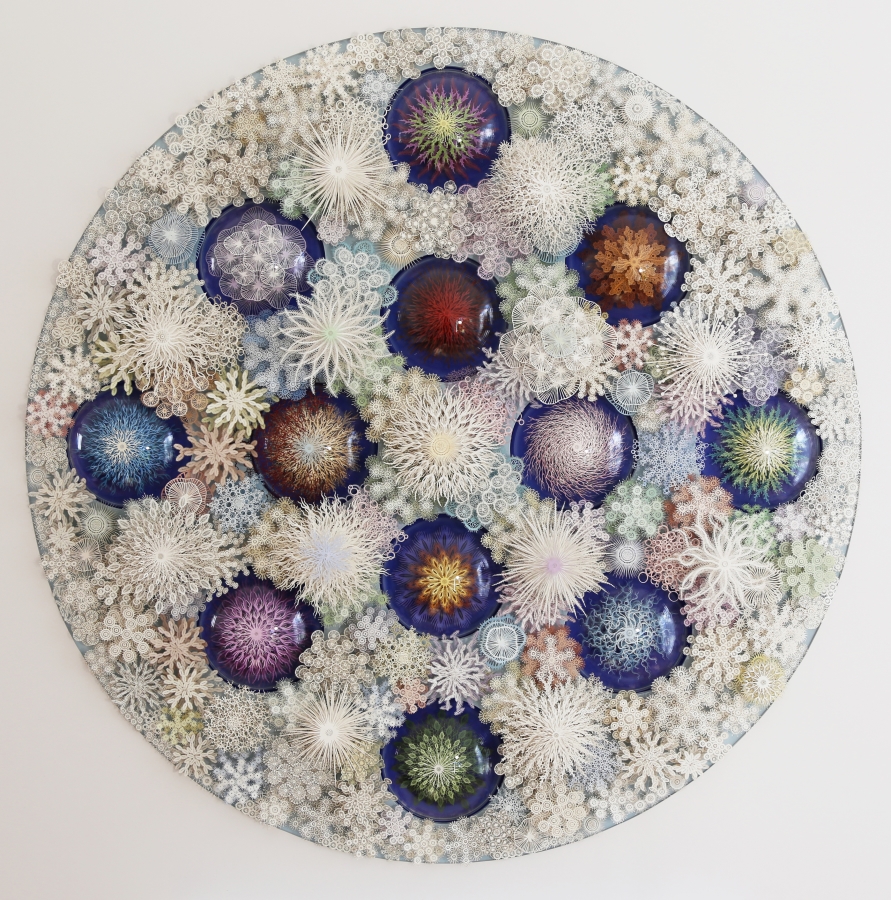
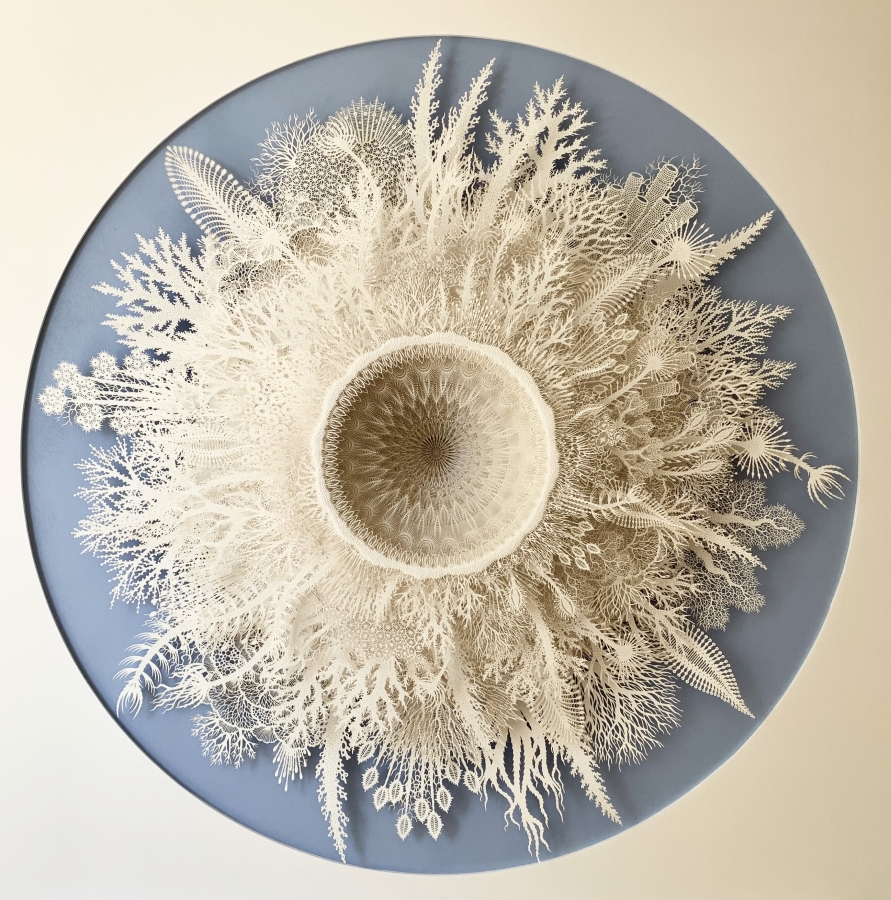
It’s difficult to say exactly how long each piece takes because there are many distinct stages to the process. Everything begins with drawing, intricate, and painstaking drawings first in pencil then in black ink. Those drawings are then vectorized and laser cut from sheets of paper. The process of laser cutting is slow because the drawings are so detailed. In a piece, for example, like Magic Circle with a diameter of 80 cms there are probably 2 full weeks of laser cutting with the machine running 8 hours a day. Those cuts are mounted into 3D elements thanks to hand cut 10mm foamboard spacers that separate each layer. The elements are then glued and pinned into a circular composition. Depending on size the sculptures take anywhere between 4 and 12 weeks
to complete.
From Leonardo to Blake, art and science often meet in the observation of nature. Which creators, artists, writers, or thinkers, continue to inspire your vision?
That’s not an easy question because I am passionate about art from every different epoch and in every different genre. But the artists who have had a direct impact on my aesthetic are those who are in some way inspired by or engaged with science. This of course begins with Leonardo Da Vinci in the Renaissance and the whole genre of detailed observational drawing that subsequently developed. I love the depiction of nature in the paintings of the Pre-Raphaelite Brotherhood (Millais, Holman Hunt, Inchbold) because it is so intricate and forensic in detail. I’m deeply inspired by Ernst Haeckel’s book “Art Forms in Nature” with its beautifully stylized but scientifically accurate representations of the microscopic world. I’d also mention surrealist art in all its manifestations and the strange transformation of the real world through the prism of the imagination that it celebrates. Finally, I’d cite the great Romantic visionary writer and artist William Blake (see below).
Balance and proportion are key to your intricate compositions. What, for you, defines harmony within complexity?
I don’t know. There is something mysterious in art, something that goes beyond rational comprehension and explanation, and which is therefore not susceptible to the development of a universal law.
You work with a fragile material that demands both control and surrender. What are the most significant challenges you face when pushing paper to its limits?
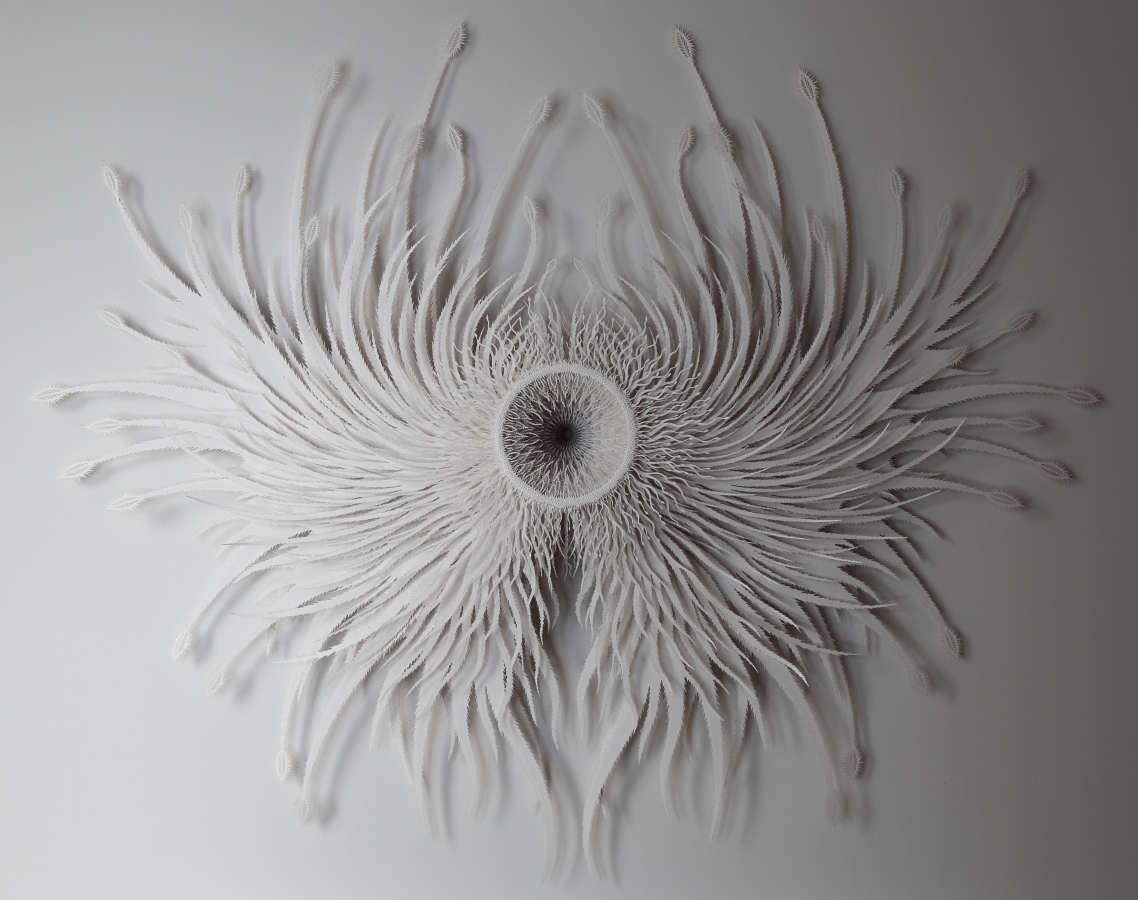
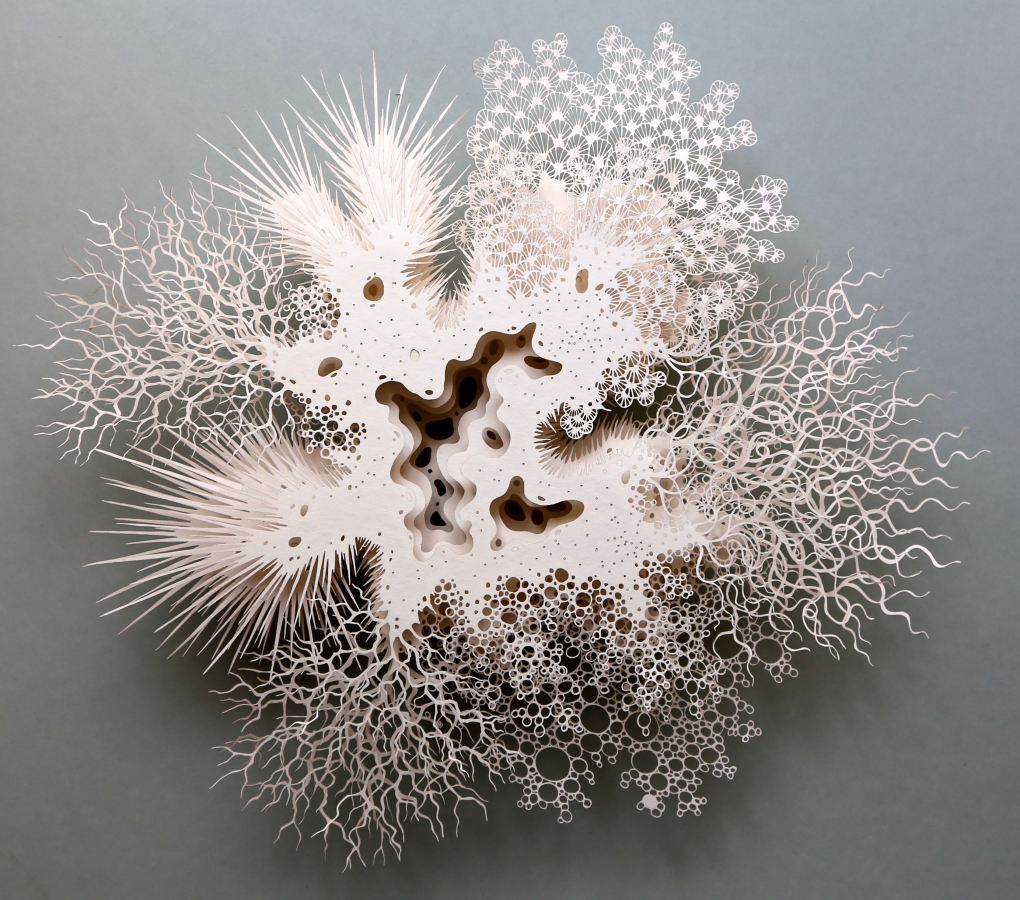
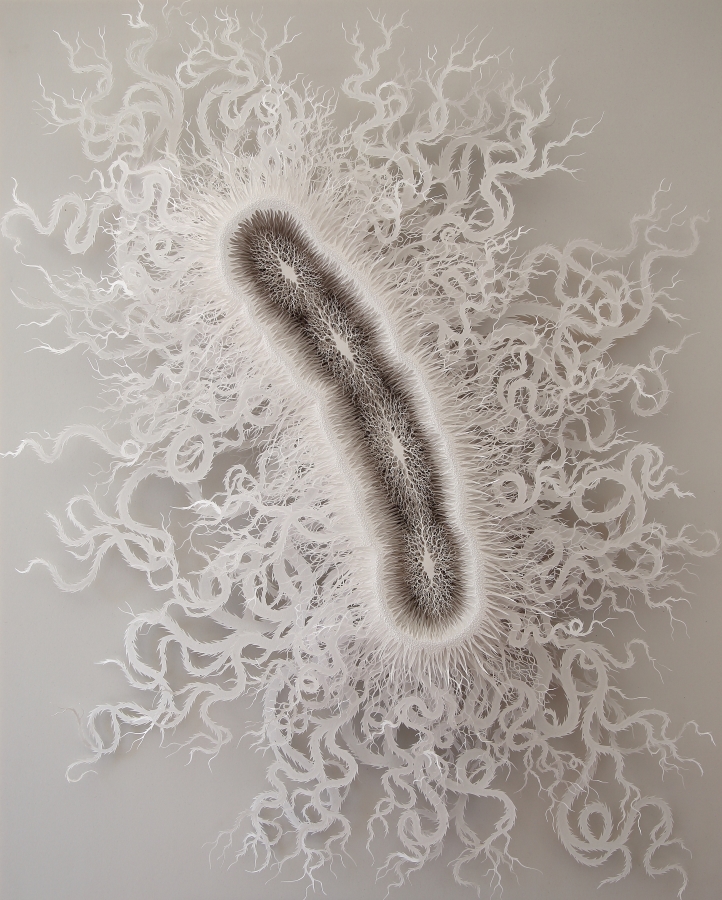
I work with a fragile material whose limits I am constantly pushing, trying to engineer ever greater levels of intricacy and complexity. Sometimes I go too far and when the work is transported and handled roughly, it breaks, and months of work are ruined. It happens rarely but when it does it is crushing. So, walking the fine line between fragility and durability is my greatest challenge.
Scale seems both an artistic and philosophical question in your practice. What would your ideal large-scale project look like, and what possibilities or fears would it awaken?
My dream is to work at a much larger scale and to create pieces 3m wide and 2m high. It would be visually incredible but terrifyingly expensive to transport and exhibit. Maybe one day…
When you step away from creation, what restores you?
Hiking, reading, cooking, and drinking wine.
Your current series imagines a universe at its smallest scale. Can you tell us about “Quantum Cloud” and how it expands your exploration of the invisible?
I’m working on a piece called “Quantum Cloud” which is an attempt to create an imaginative visualization of the world at the Planck scale, which is the smallest level of scale that physicists can theorize. It’s a bubbling, fizzing field of energy with particles bursting in and out of existence simultaneously.
Your favorite quote is …
“To see a World in a Grain of Sand
And a Heaven in a Wild Flower
Hold Infinity in the palm of your hand
And Eternity in an hour”
William Blake “Auguries of Innocence” 1803
Here Blake suggests that focused observation of the simplest aspects of nature can lead us to an understanding of the sublime vastness of the universe. Science achieves this too, cracking open the grain of sand to expose its molecular, atomic, and sub- atomic structure. I think art can do the same by taking us out of our habitual way of looking at the world and giving us the time and space for quiet contemplation.
Editor: Lisa Portscher
https://www.instagram.com/lisaportscher/