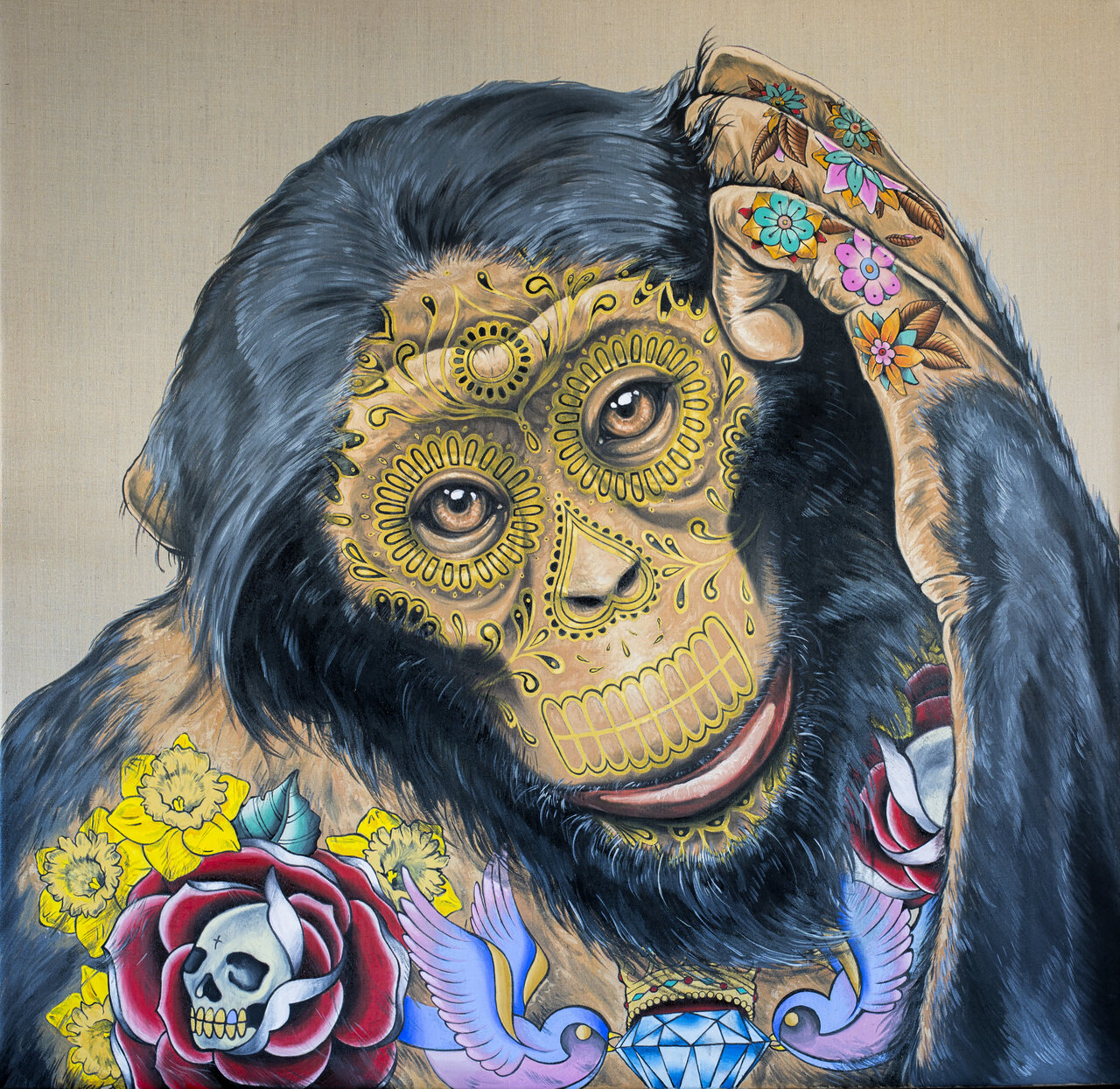
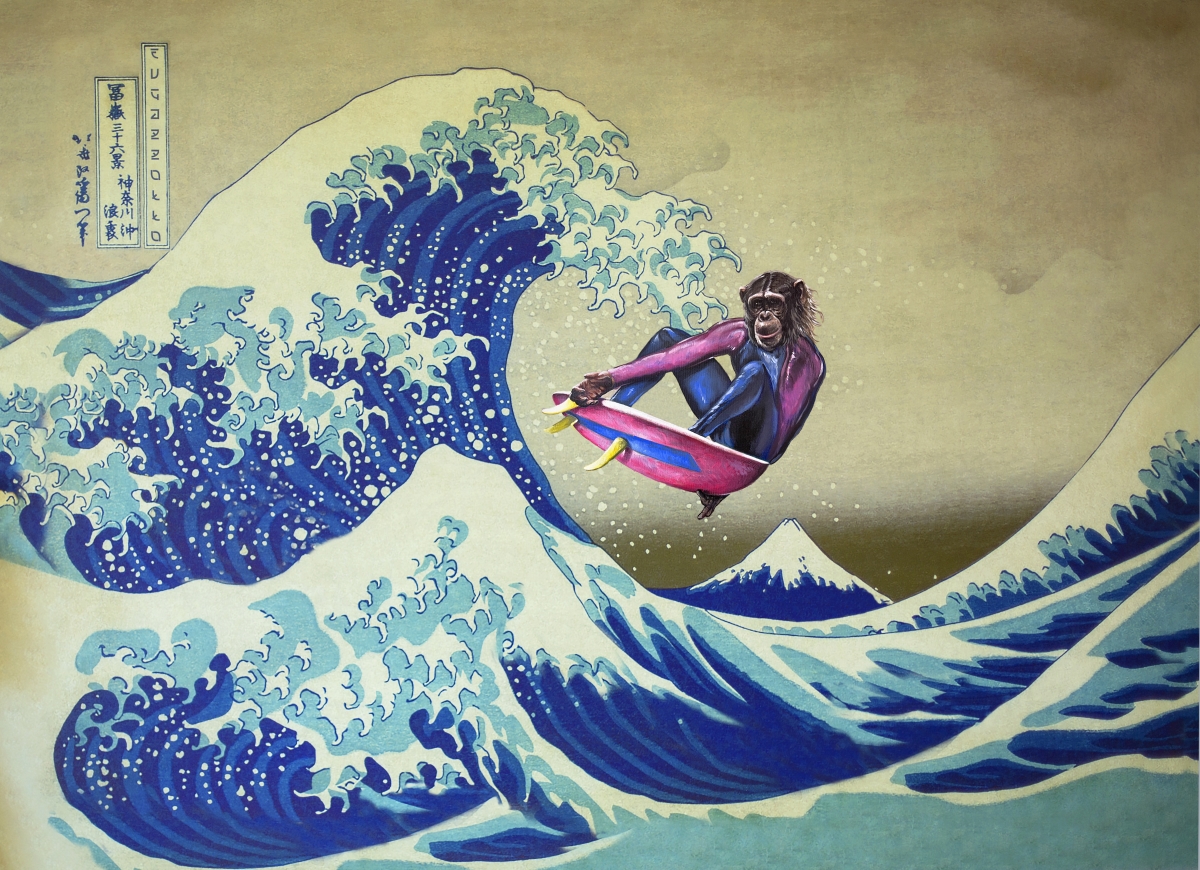
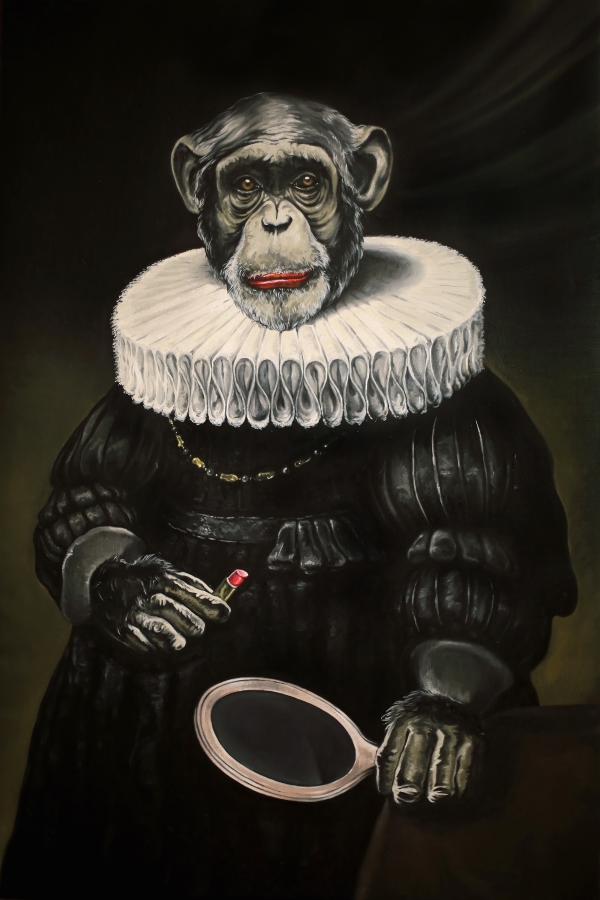
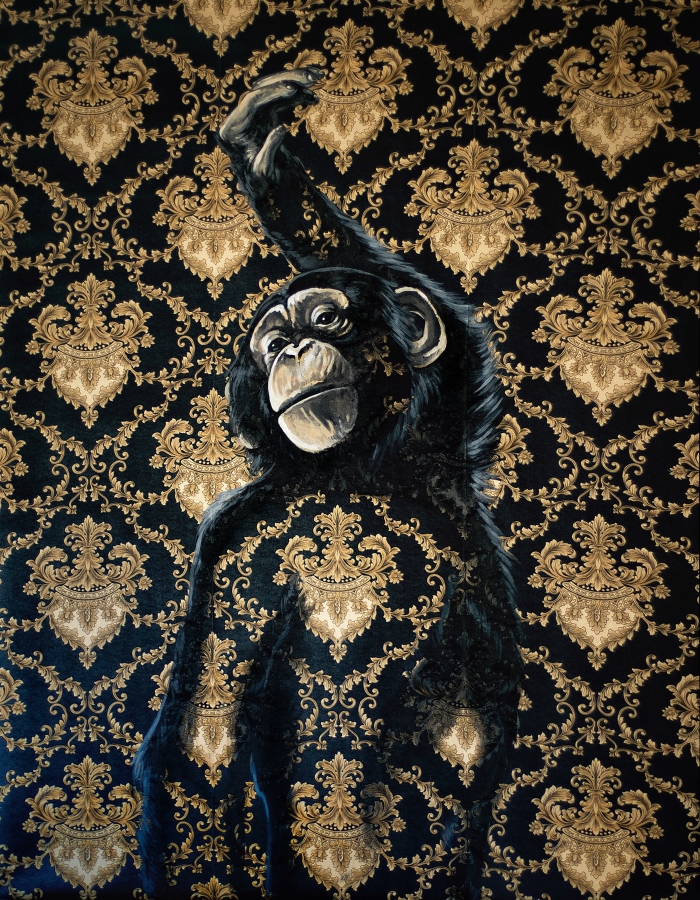
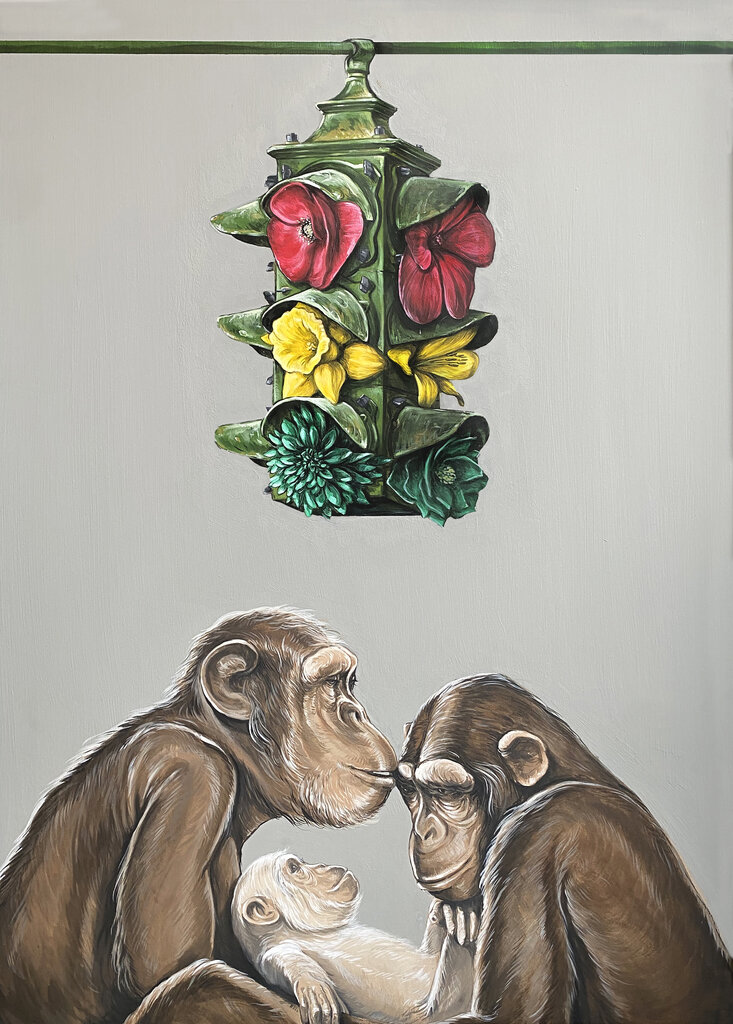
Simone Fugazzotto paints humanity from the edge of its reflection. In his world, the ape is not a symbol of regression but a mirror—an evolved double that exposes our contradictions with brutal clarity and tenderness. Through his figures, half-human and half-primate, Fugazzotto dissects the rituals, addictions, and anxieties of modern life with a biting humor that borders on compassion.
Born in Milan, the artist’s journey from the rough streets of La Barona to the international art scene is a story of defiance and persistence. His work, informed by both Caravaggio’s darkness and Picasso’s vitality, balances classical technique with contemporary irony. Fugazzotto’s materials—canvas, jute, wood, plexiglass, cement—anchor his reflections in the physical world while amplifying the psychological charge of his subjects.
“I paint human beings for what we are,” he says, “as a racist, stupid, poetic, sick, beautiful, and perverse kind.” His apes, endowed with all the pathos and absurdity of the human condition, perform the gestures of our daily existence: scrolling, consuming, fearing, pretending. Each brushstroke becomes both satire and confession.
In this conversation, Fugazzotto speaks about art as a survival instinct, the discipline behind his chaos, and the fragile equilibrium between ambition and authenticity. His paintings remind us that evolution is not a straight line—it is a loop, and we are still learning how to be human.
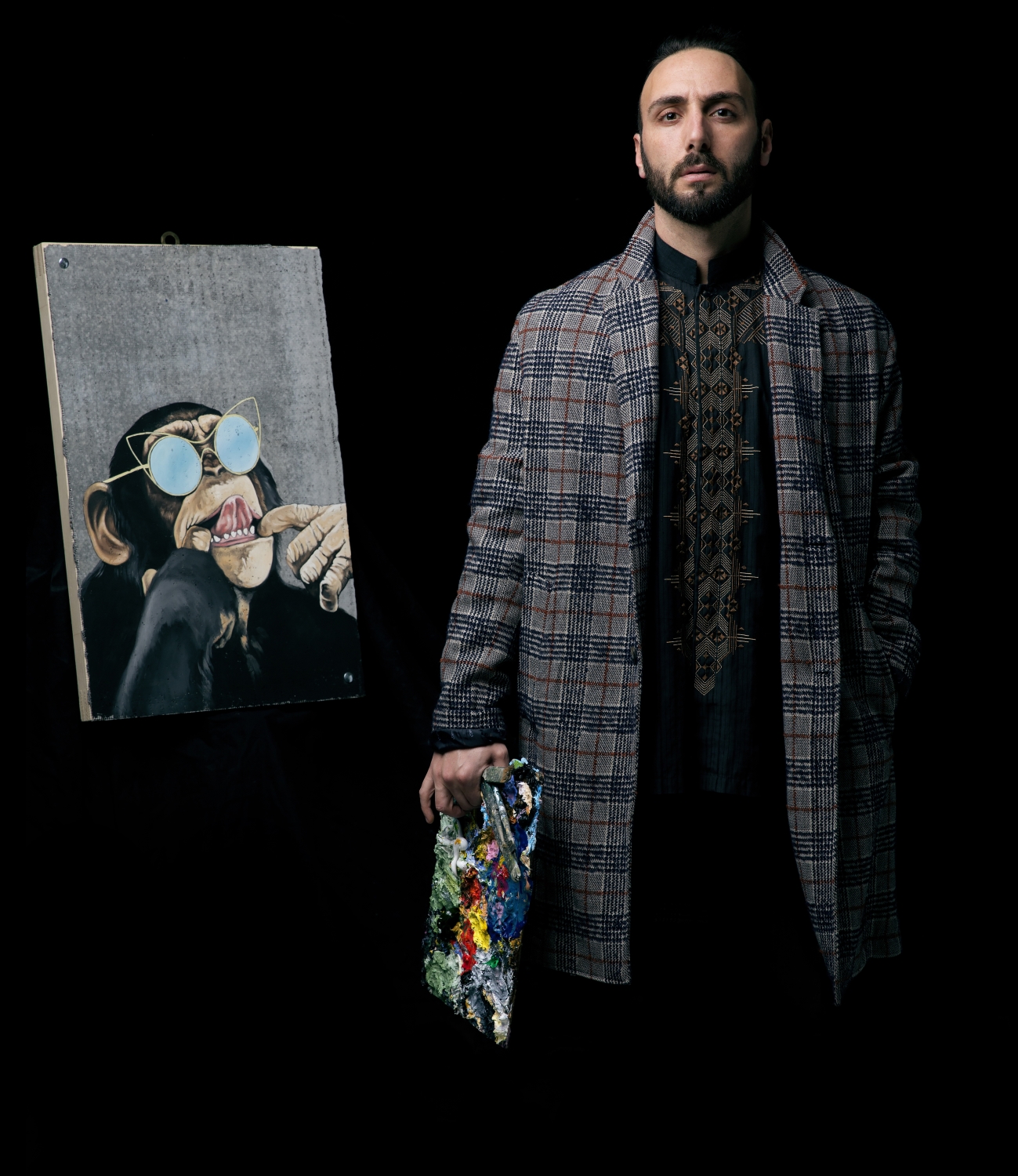
An Interview with Simone Fugazzotto
By Carol Real
You often speak of painting as survival. Looking back, what early experiences shaped that instinct and the imagination behind it?
I come from the poorest neighborhood in Milan, La Barona. When I was a child in the 80’s, surrounded by drug dealers and thieves, I was very shy, always by myself. I already dreamed of being able to become a painter. When I look now at my path from the outside, it seems impossible to me that I managed to get to where I am, especially considering where I started, with no money and no art connections at all.
The strongest memory of my childhood is when I discovered that my father, whom I adored, was a drug addict and alcoholic. It was a huge disappointment that gave me enough anger to get out of the neighborhood and start traveling the world.
The decision to become an artist can feel both inevitable and defiant. When did that awareness first become a commitment?
I have always known since I was a child that I would work with art, but only after finishing art school when I was 17 years old, did I fully realize that I would become a painter. Since that time, every single effort of my life has been spent in that direction. No distractions at all.
Your references range from Caravaggio to Bacon and Picasso. How have these influences converged in your own language, and which contemporary artists resonate most with you today?
My first art crush as a boy was Salvador Dalí. In my 20’s, I went through various phases in which I was obsessed first by Caravaggio and then by Francis Bacon. For years now my favorite painter has been Pablo Picasso. Among current artists, I really love the work of Kehinde Wiley, Obey, Maurizio Cattelan, and Banksy.
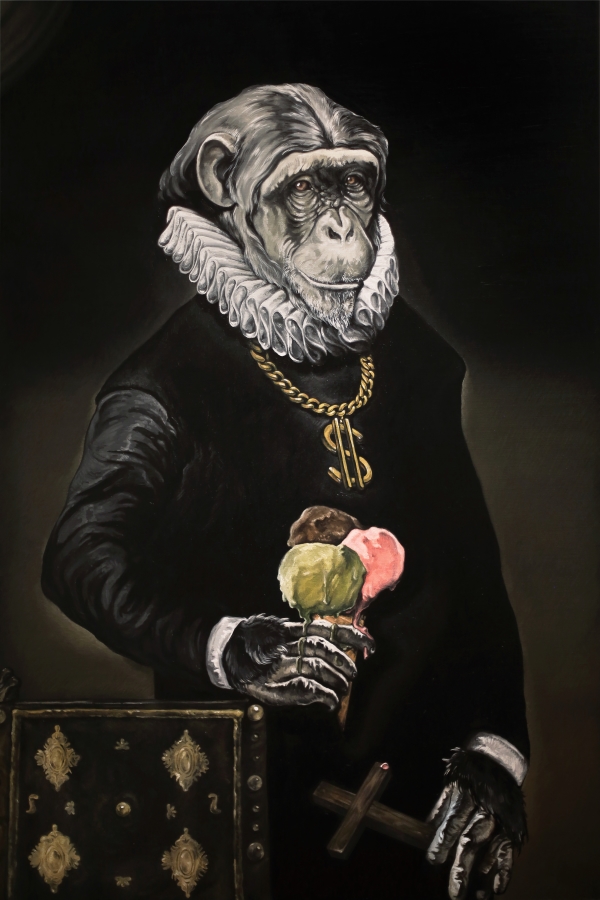
Your first professional project began with an unexpected encounter. How did that experience shape your sense of opportunity and artistic direction?
My first project came thanks to luck. We forget that luck has a big impact on our lives, and we must be ready when it comes. I was on the subway in New York, bringing a picture I had just painted to show to a friend in Manhattan (I lived in a basement apartment in Astoria, Queens back then). Getting off the train a woman handed me a business card and left. She eventually became my gallerist and held my first exhibition in her gallery in Prague a few months later.
Your paintings often capture the small compulsions of daily life. How do you choose a subject and decide what belongs on the canvas?
I am inspired by the little obsessions that mark our daily lives. Almost every subject carries out trivial and repetitive actions of which I too am a slave. Eating junk food, spending hours in front of the smartphone, and buying useless items we don’t need. I look at my life and that of those who live around me, and I have millions of examples that I can transfer to my apes.
Your process seems guided by both discipline and intuition. How does an idea evolve from thought to finished work, and what role does time play in that transformation?
When I was a boy, the ideas came from reading novels or poems. In recent years It happens more often by watching movies. As soon as I have an idea, I try to fix it in my mind and I mentally work on it for a few days, then when I am convinced, I start painting directly on the canvas without making sketches. I can paint all night and finish the picture
by morning or fight for days or weeks; it depends, I guess.
Your relationship with routine has changed over time. What does a productive day in the studio look like now?
My routine has changed over the years. Now I usually take my little girl to kindergarten and go to the studio to paint. I’ve always lived a disordered life with the certainty that a regular life would kill my artistic instinct, but that’s not true. Now I have schedule that help me to work better. Of course, it happens every now and then that I can’t stop and go on painting all night. But what was once a habit is now a rarity.
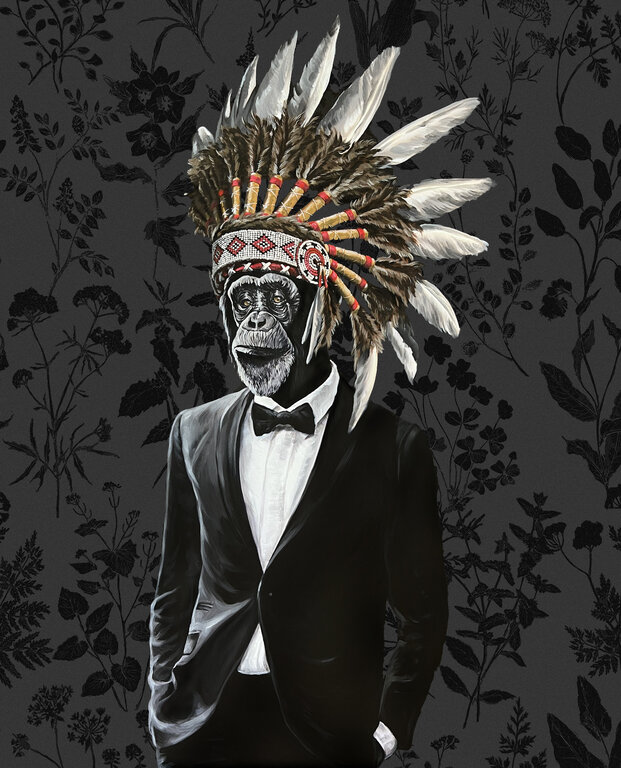
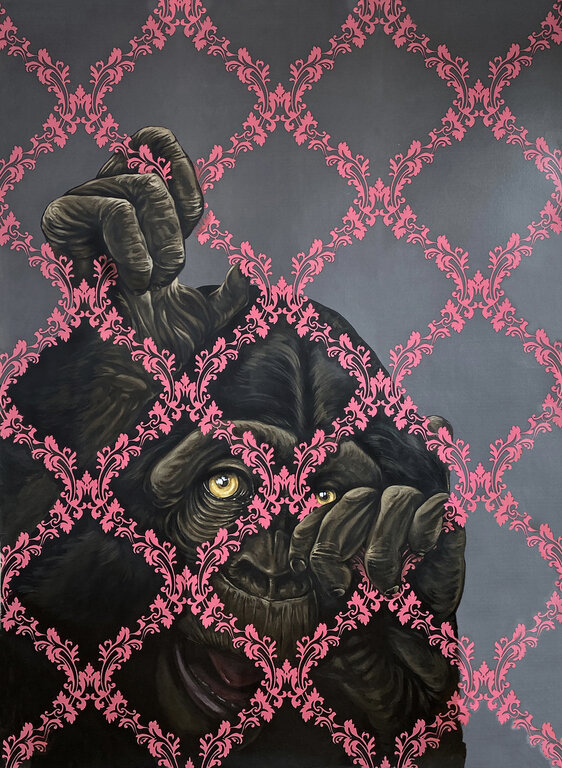
The ape has become central to your visual universe. What drew you to this figure, and what does it reveal about the human condition?
I have always painted about the human being, but 11 years ago I realized that I needed something different, a metaphor, which would allow me to go deeper but be recognizable at the same time. The figure of the chimpanzee changed my life and my approach to art. It was a rational choice. I chose the apes, and for a year no one wanted to buy one of my paintings, perhaps frightened by the subject. Then, suddenly things changed.
Outside painting, what sustains you—what passions or rituals keep you connected to the world beyond the studio?
I am obsessed with cinema and music, but my greatest passion after art is football. I play it on the pitch and watch it in the stadium. As a boy I was good, and I could have possibly become a pro. There was a moment when I had to choose between art and football, and I chose art.
After years of work and recognition, what do you aspire to now as an artist?
The hardest thing is to be in balance. With my art I have gone much further than I ever dreamed. As long as I can go to the studio to paint without anyone telling me what to do, I am happy. I am already where I aspired to be.
What is your favorite quote?
“Inspiration exists, but it has to find you working.” ~Pablo Picasso
Editor: Lisa Portscher
https://www.instagram.com/lisaportscher/