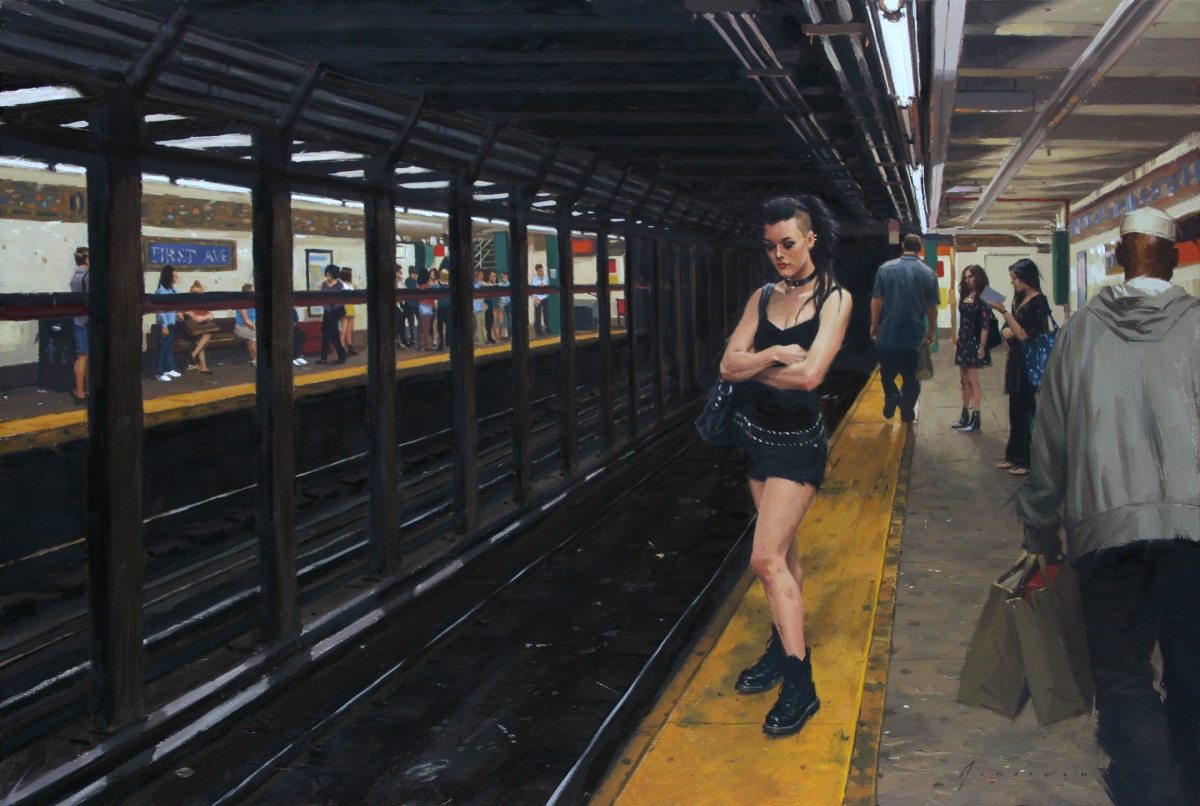
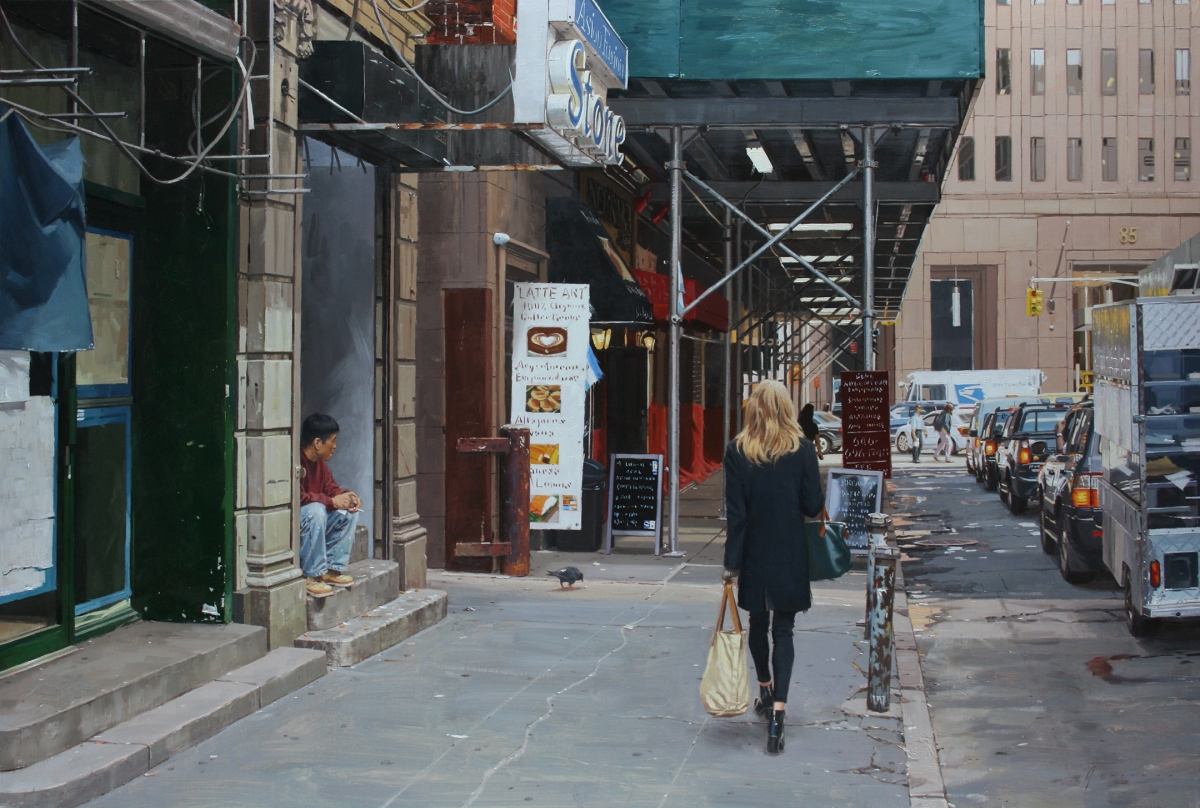
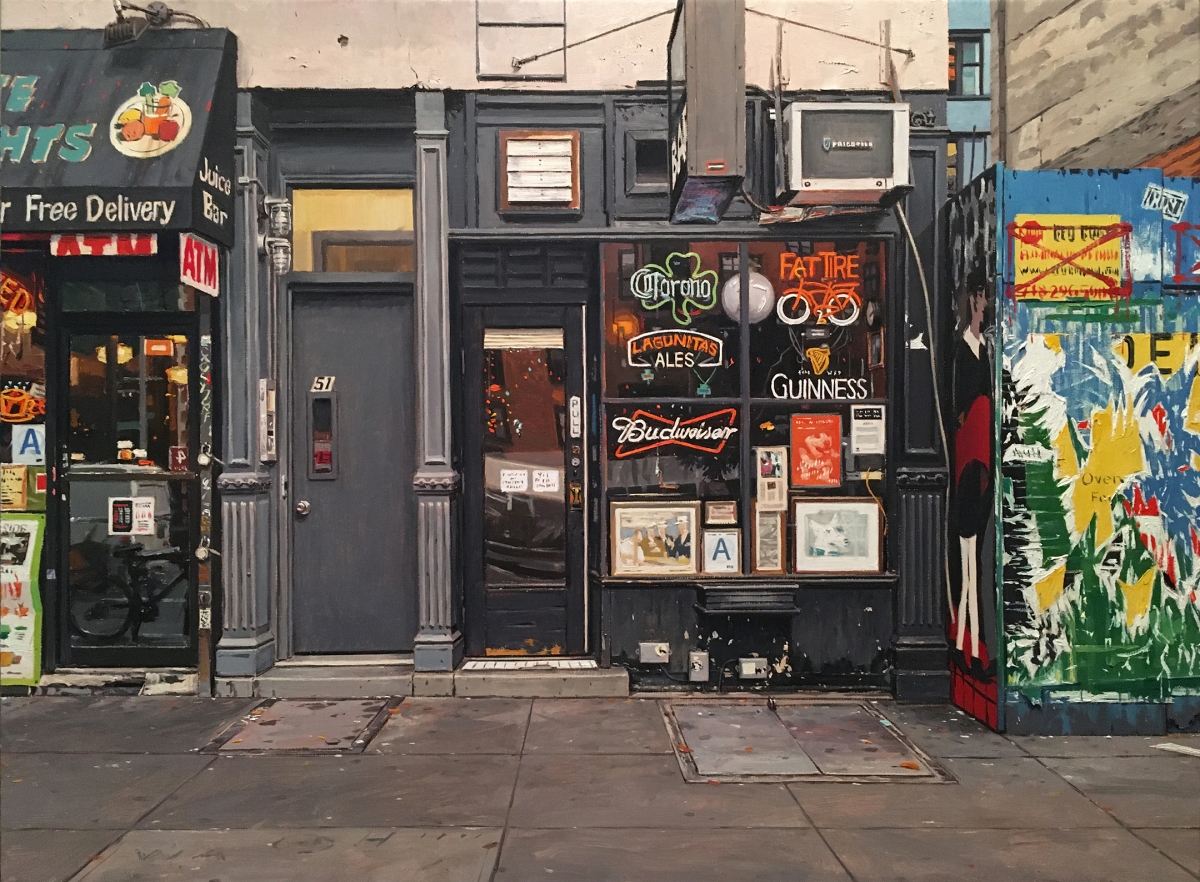
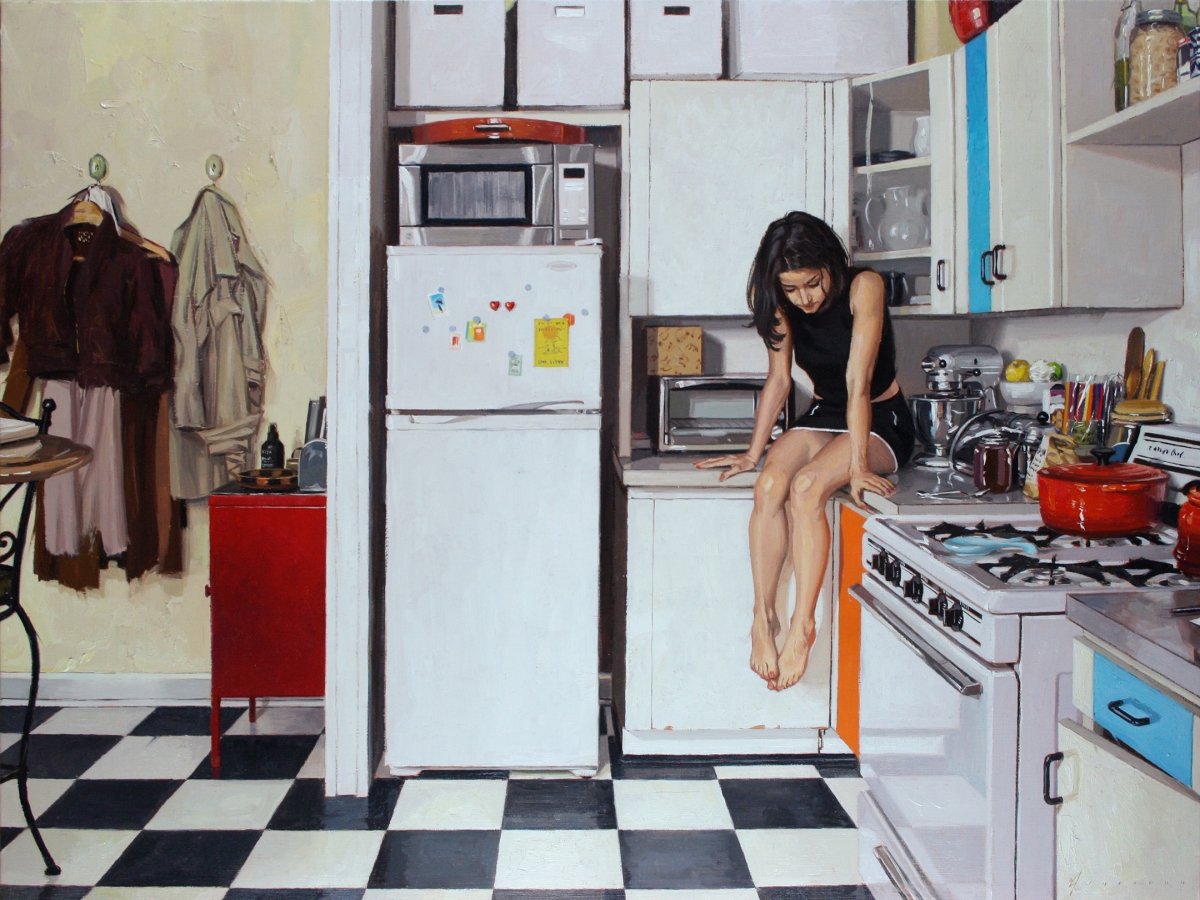
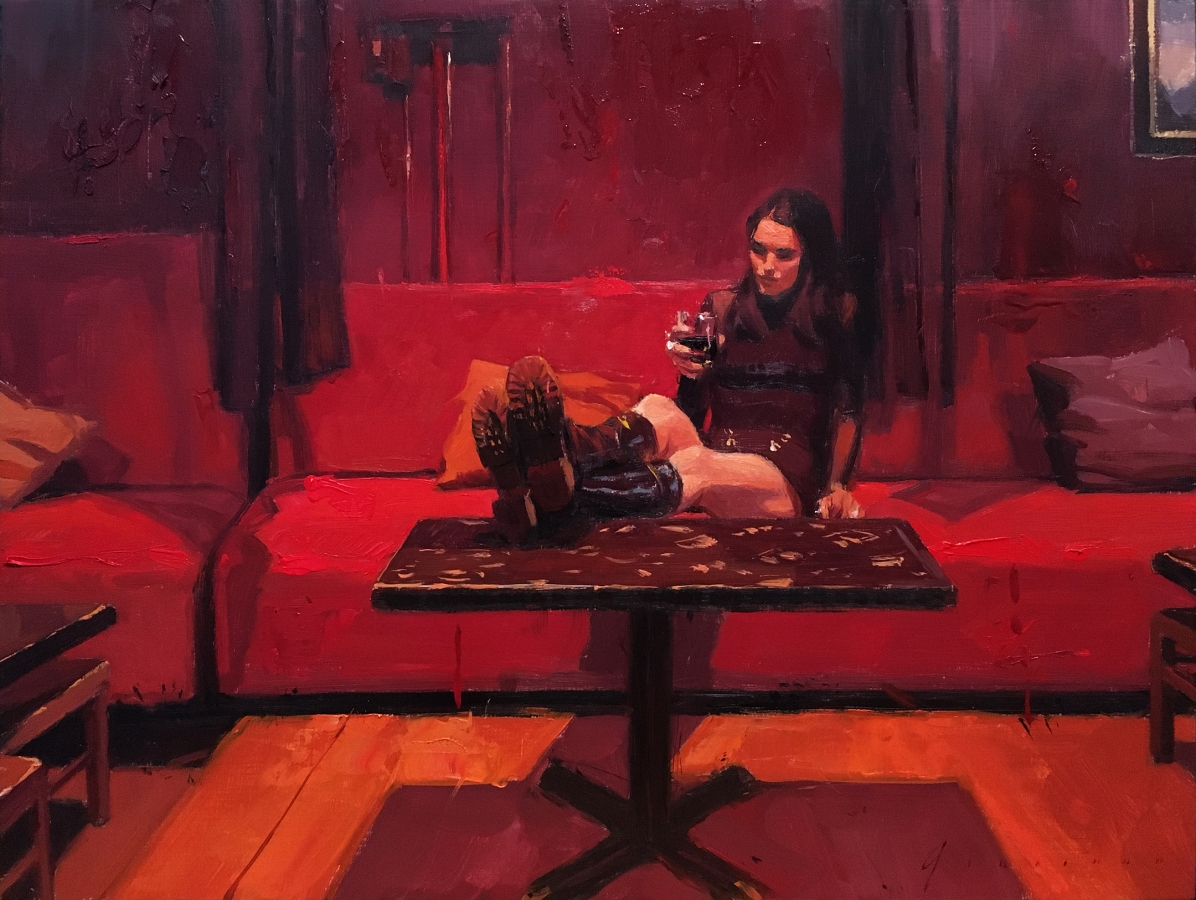
Vincent Giarrano paints the pulse of New York City through quiet moments. His canvases capture not the skyline, but the people who inhabit its rhythm—the solitary figures, the women in cafés, the side streets caught between light and shadow. A realist in both vision and temperament, Giarrano uses paint to document contemporary life with the same intimacy and honesty that once defined the Ashcan School.
Born in Buffalo, New York, and trained in fine arts and sculpture before beginning his career as a comic book illustrator for Marvel and DC, Giarrano’s journey to realism was both unexpected and inevitable. The discipline of comics—its focus on gesture, sequence, and narrative—became a foundation for the contemplative realism that now defines his work.
His subjects, often women navigating the urban landscape, embody an understated strength. They are independent, thoughtful, and present—caught between anonymity and individuality, much like the city itself. Each painting becomes a portrait of place and character, rendered with a cinematic sensitivity to time and mood.
In this conversation, Giarrano reflects on his evolution from comics to oil painting, his enduring connection to SoHo, and the deliberate slowness of his process. His work reminds us that realism, far from being nostalgic, can still speak powerfully to the present moment.
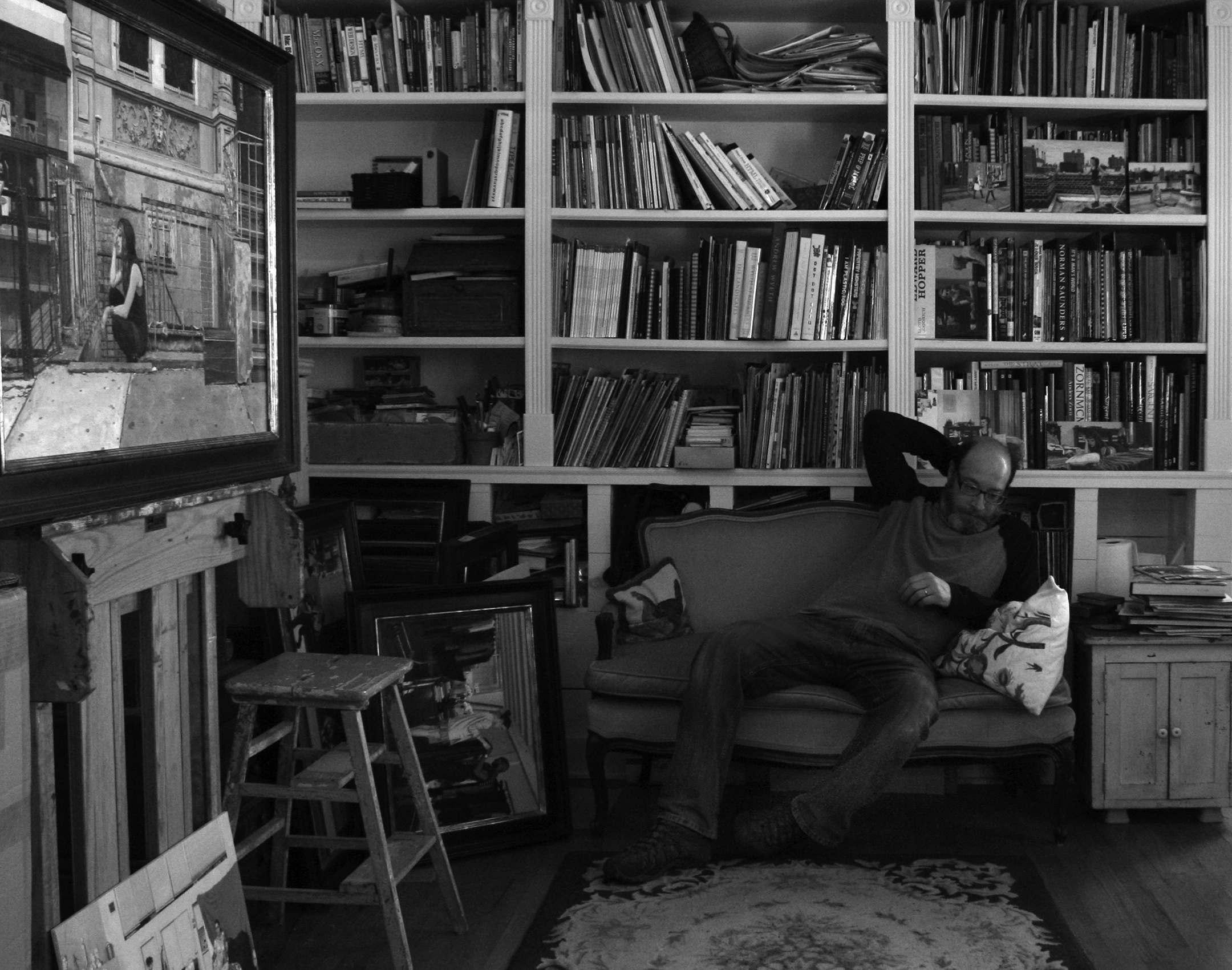
An Interview with Vincent Giarrano
By Carol Real
You often capture the quiet pulse of urban life. How did your early years shape the eye with which you now observe New York City?
I’m from Buffalo, New York. I grew up in the suburbs just outside the city.
At what moment did drawing become more than instinct—a clear decision to dedicate your life to art?
At an early age I started drawing, and quickly found that I got a rush from creating arT From then on, being an artist became my main focus.
You began your career illustrating for Marvel and DC Comics before turning to realism. What did that transition teach you about storytelling and image-making?
I collected comics and drew from them for a long time. In college, I majored in fine art. At first I explored many media , but then I gravitated to sculpture which interested me the most. I studied sculpture in graduate school too, but I continued to develop my comic art as well. I planned to pursue illustration because I didn’t see sculpture as a realistic career. My first comic book was published while I was finishing grad school. It was one of the Spider-man titles for Marvel comics. After college, I moved to New York City and started drawing books for Marvel, as well as DC Comics and Darkhorse. I didn’t begin painting until after I left comics. I felt there was something else that I was supposed to be doing. To figure this out, I started a process of writing, and that led me to painting.
SoHo appears often in your paintings, both as a place and as a state of mind. What draws you to that neighborhood, and what does it represent in your work?
Yes, SoHo was one of the places I worked and hung out in when I got to the city. When I started to paint, my memories clicked for that as a subject. The more I painted it, the more it made sense for what I wanted to say about the city. From there I explored other parts of the city for subject matter.
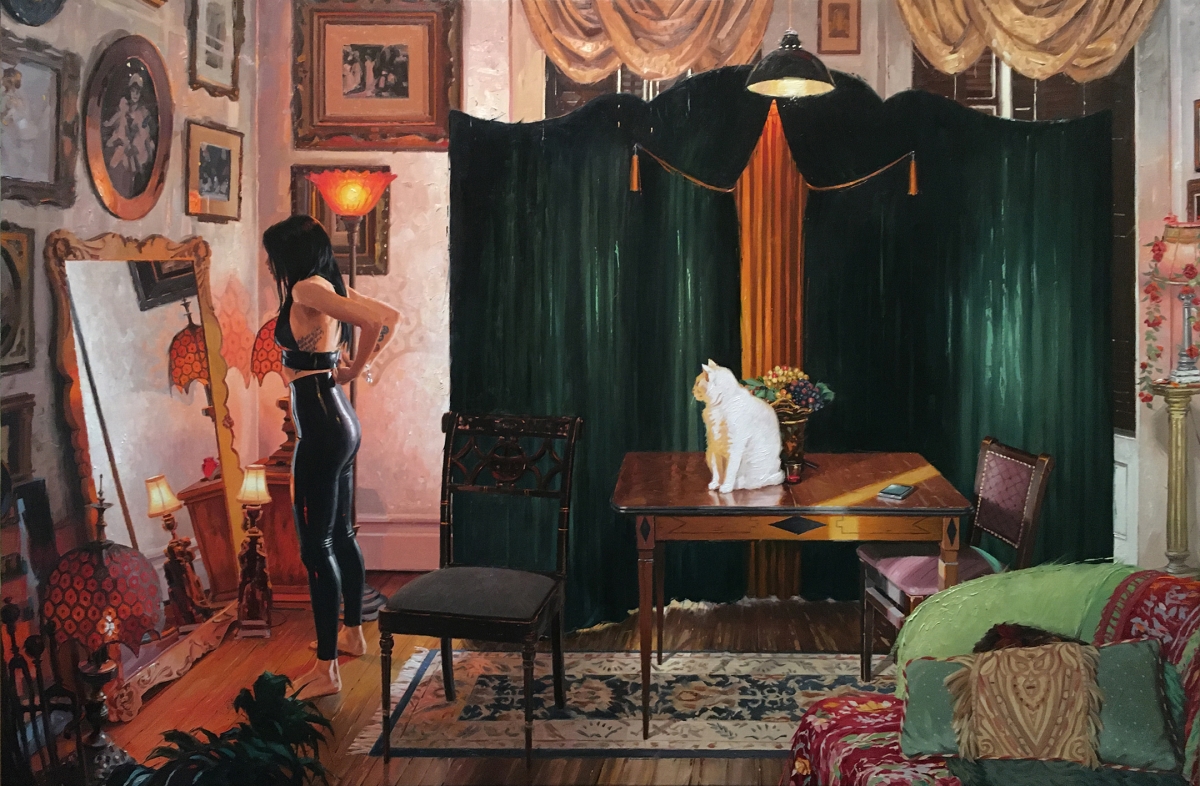
Artists and musicians such as Courbet, Hopper, and the punk movement have marked your journey. How do these influences translate into your vision of contemporary realism?
I strongly identify with art that’s about contemporary life: French painters like Gustave Courbet and Jean-François Millet of the Realism movement, and the Ashcan School artists, like George Bellows, John Sloan, Edward Hopper, and Robert Henri. I love many from the French Impressionist period too, like Édouard Manet, Edgar Degas, Henri de Toulouse-Lautrec. For music, Punk and New Wave has meant the most to me.
The creative process in your work seems both deliberate and intuitive. How does an idea evolve—from initial concept to the final brushstroke?
The amount of time varies quite a bit. I usually start by writing about ideas or who I’m planning to paint. I’m big on planning so I create many drawings and oil studies. Those steps really help me figure things out before I move on to a large finished painting. I never rush into a painting, and I only work on one artwork at a time.
Where do you feel your work belongs—within the walls of a gallery, a museum, or in the everyday spaces it depicts?
I’m happy to exhibit in galleries or museums, wherever people can see my work. I feel seeing them in person is the best experience.

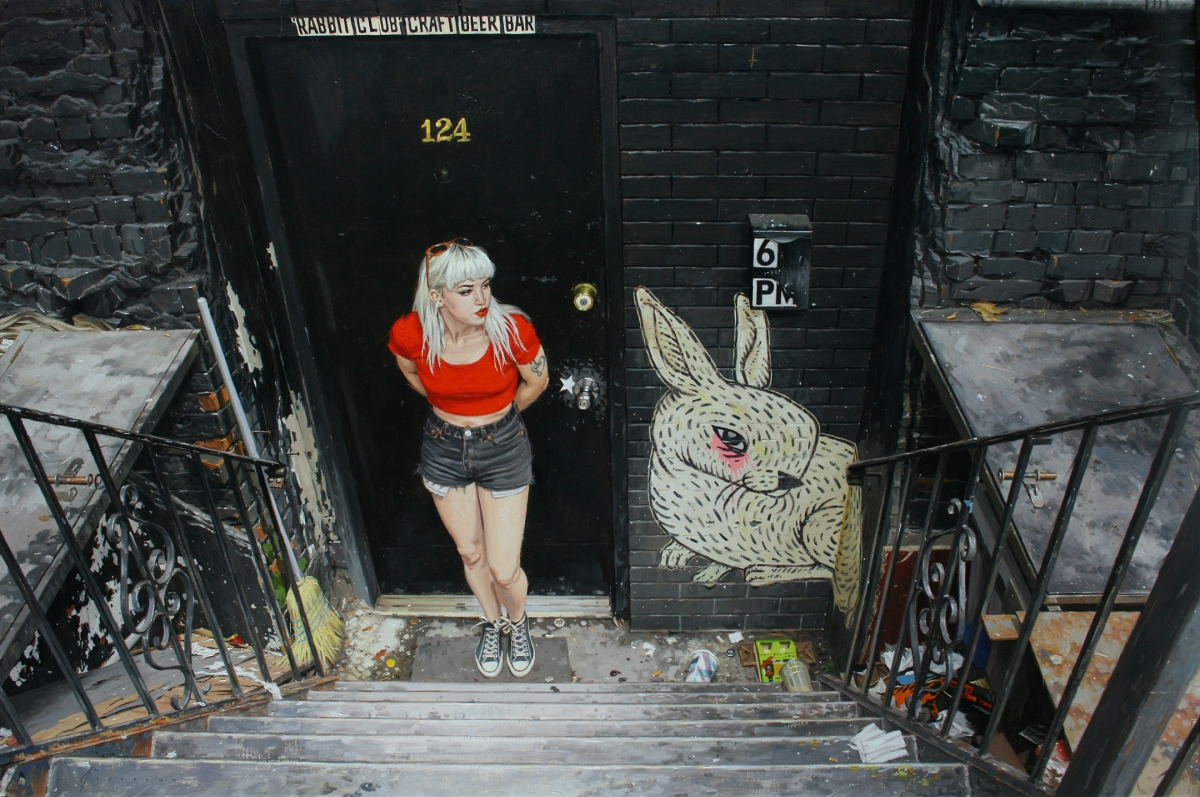
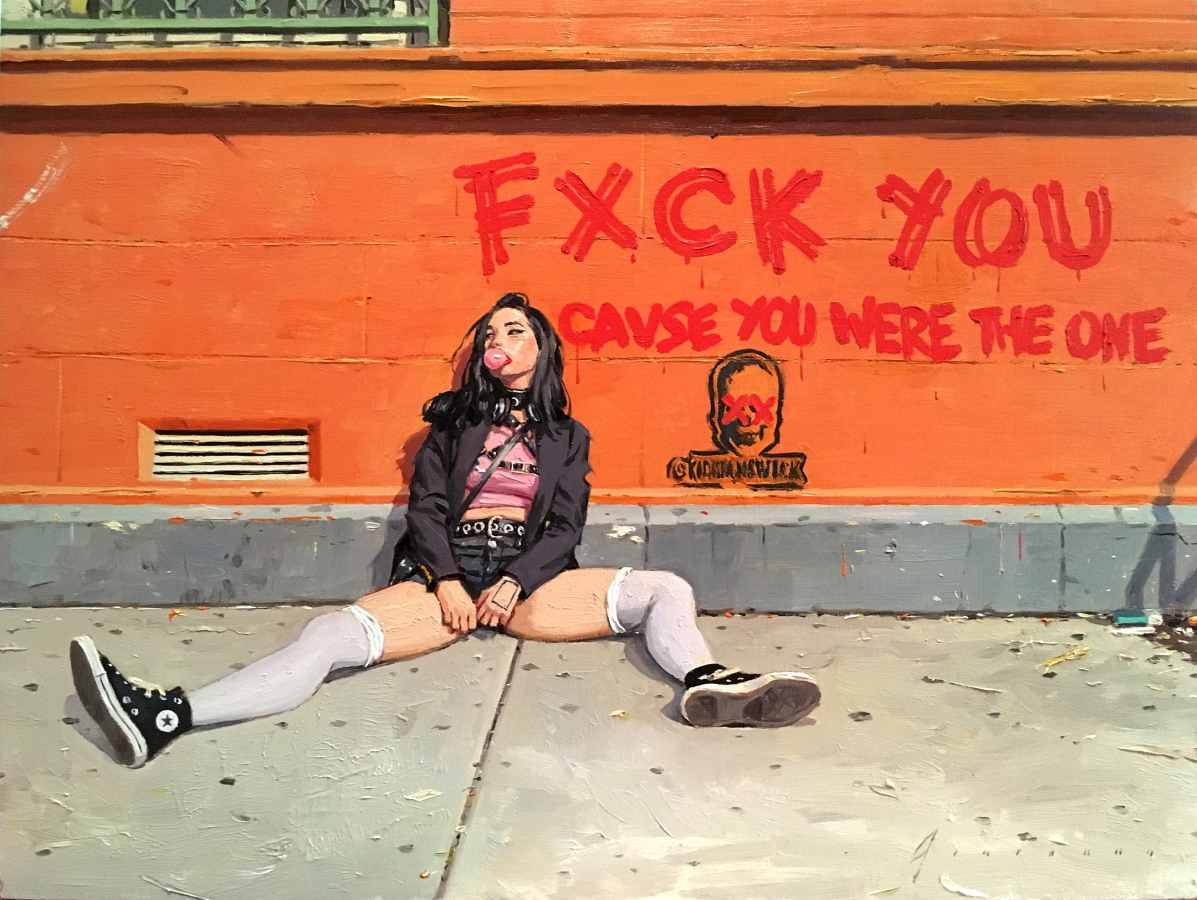
Among your portraits, is there one that holds a particularly personal meaning? What story or encounter lives within it?
I have a lot of favorites, but one I feel particularly good about is a painting of my friend Ashley. I wanted to create something that felt like a true contemporary portrait. I like to work in series, so for this series, I chose limited and definite parameters. It’s basically a full figure against a background.. I think it succeeded quite well. Ashley’s mood and clothing were strong and powerful, and the gritty background echoes her beautifully.
Routine can be both discipline and ritual. What does a typical day in the studio look like, and which tools are indispensable to your process?
My years in illustration helped me develop a routine of working regular business hours. For studio items, I love my Hughes easel. It’s well-designed and many easels just aren’t.
Outside the studio, what brings you balance and inspiration?
Figure drawing with a nearby group is great fun. I also will occasionally create a piece of sculpture. I love cooking too.
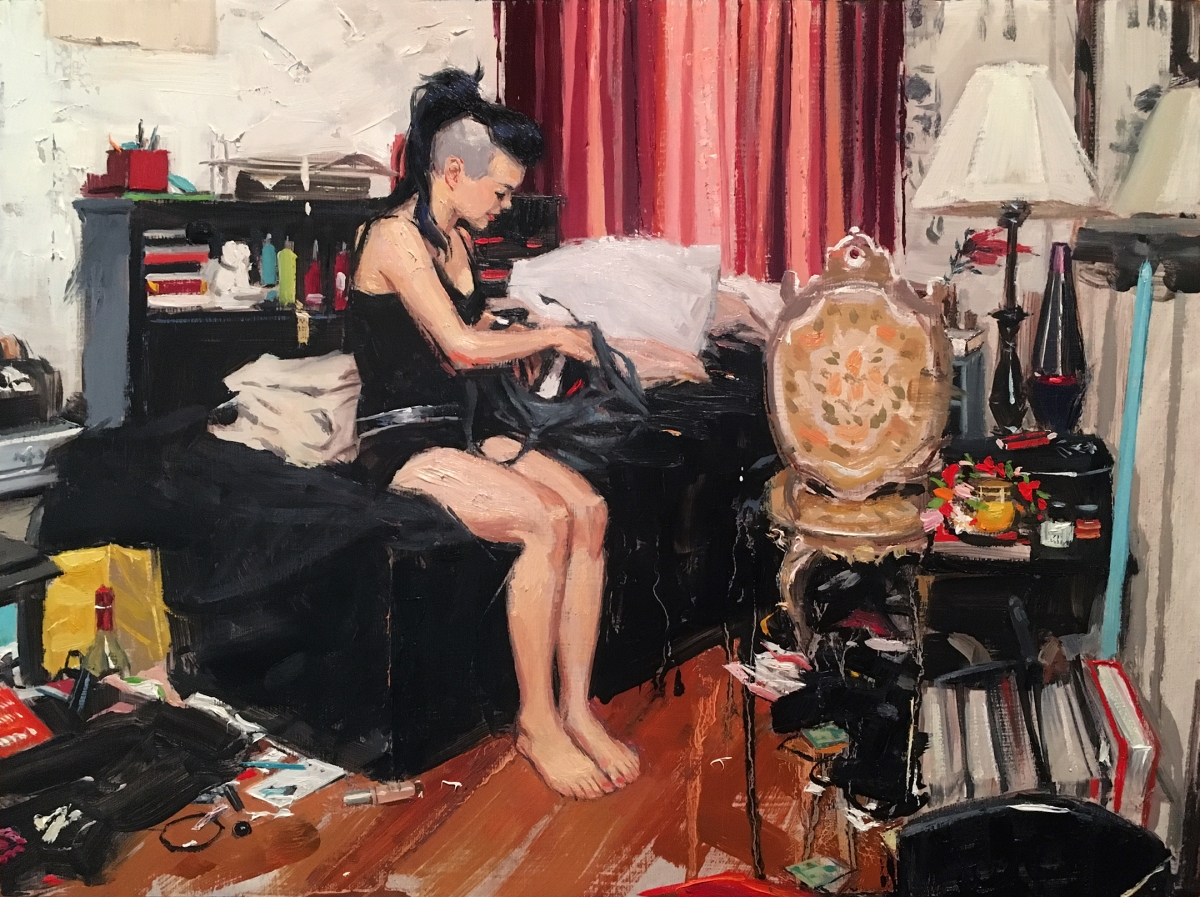
What projects are you currently developing, and what directions do you hope to explore next?
My new project right now is painting a body of work to show in New York City.
Is there a phrase that reflects your philosophy of work and life?
If you’re not enjoying it, then you’re doing something.
Editor: Kristen Evangelista
https://www.giarrano.com/
Editor: Lisa Portscher