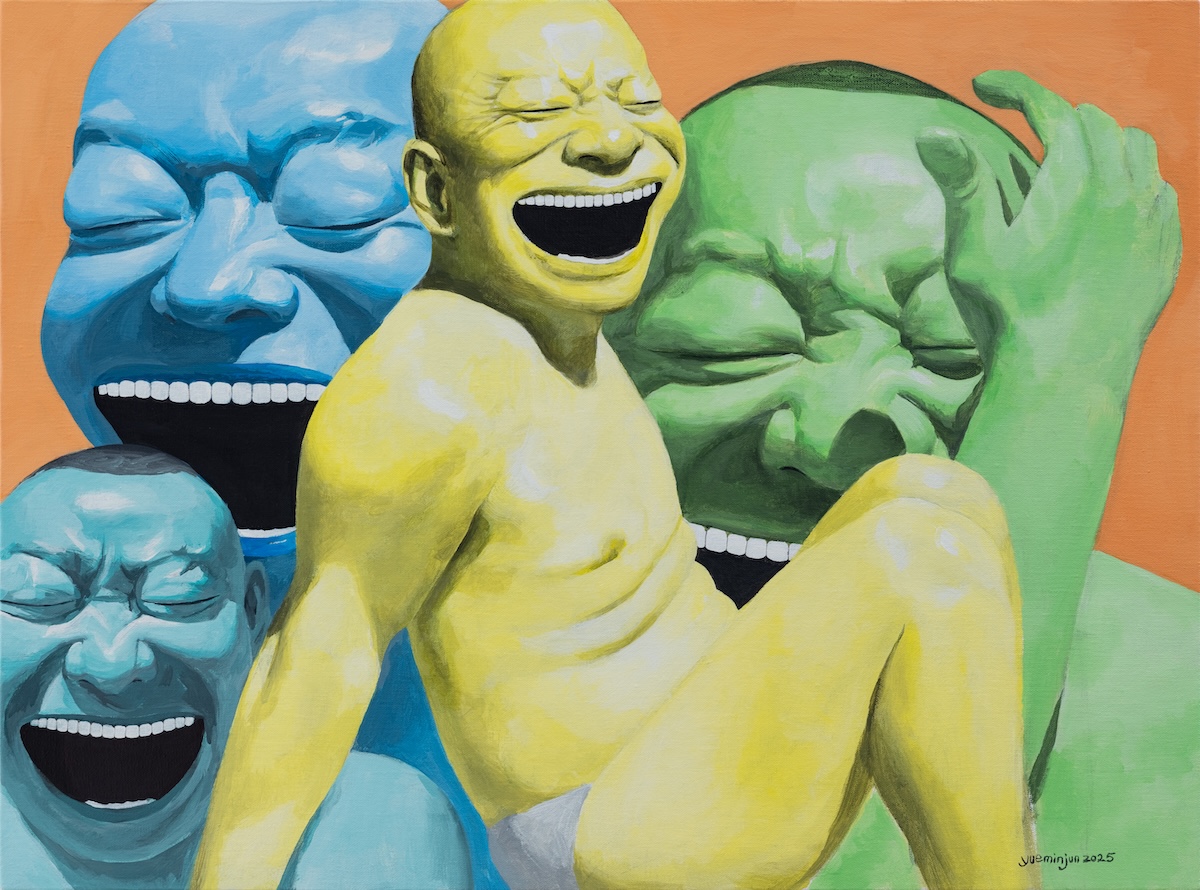
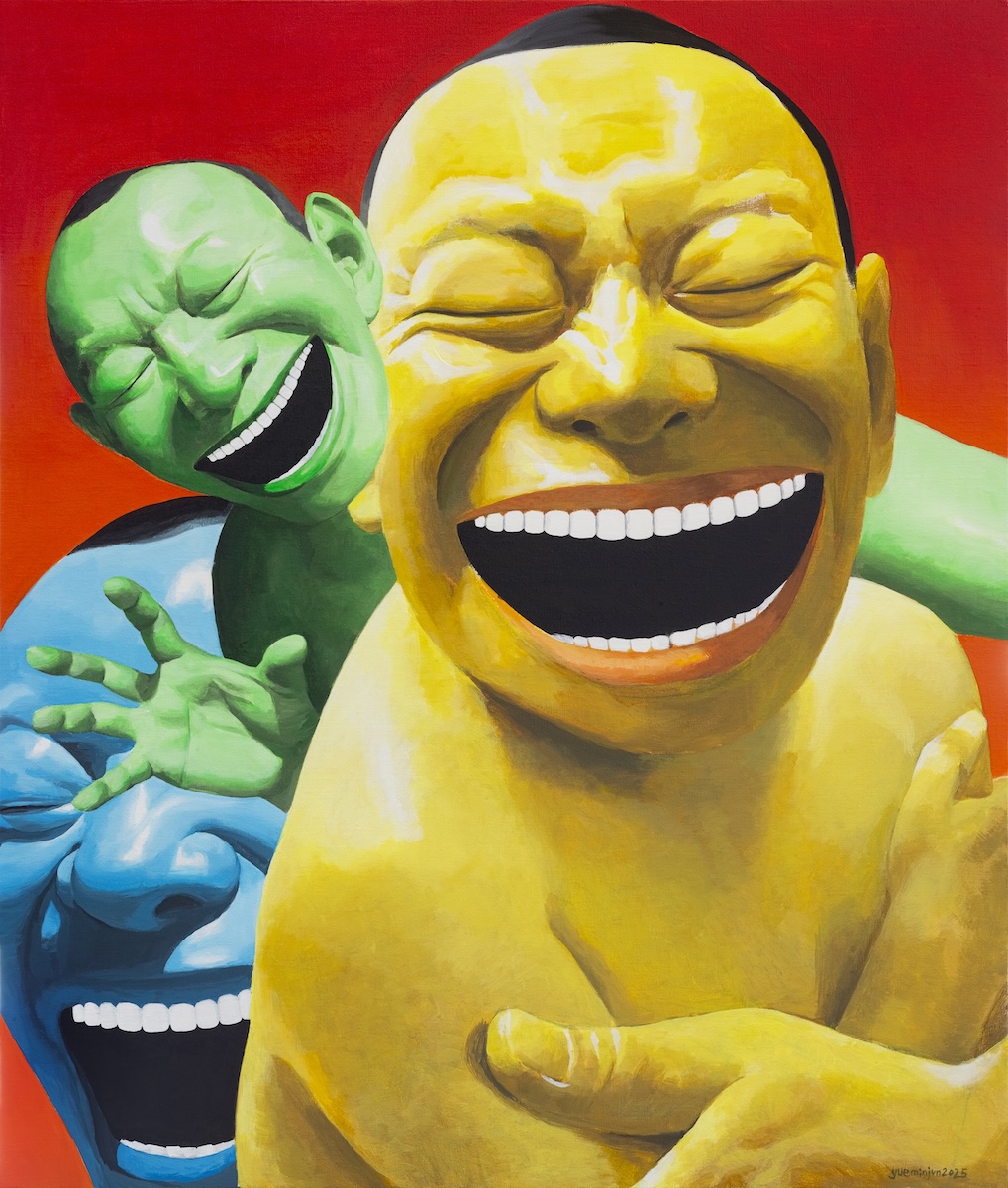
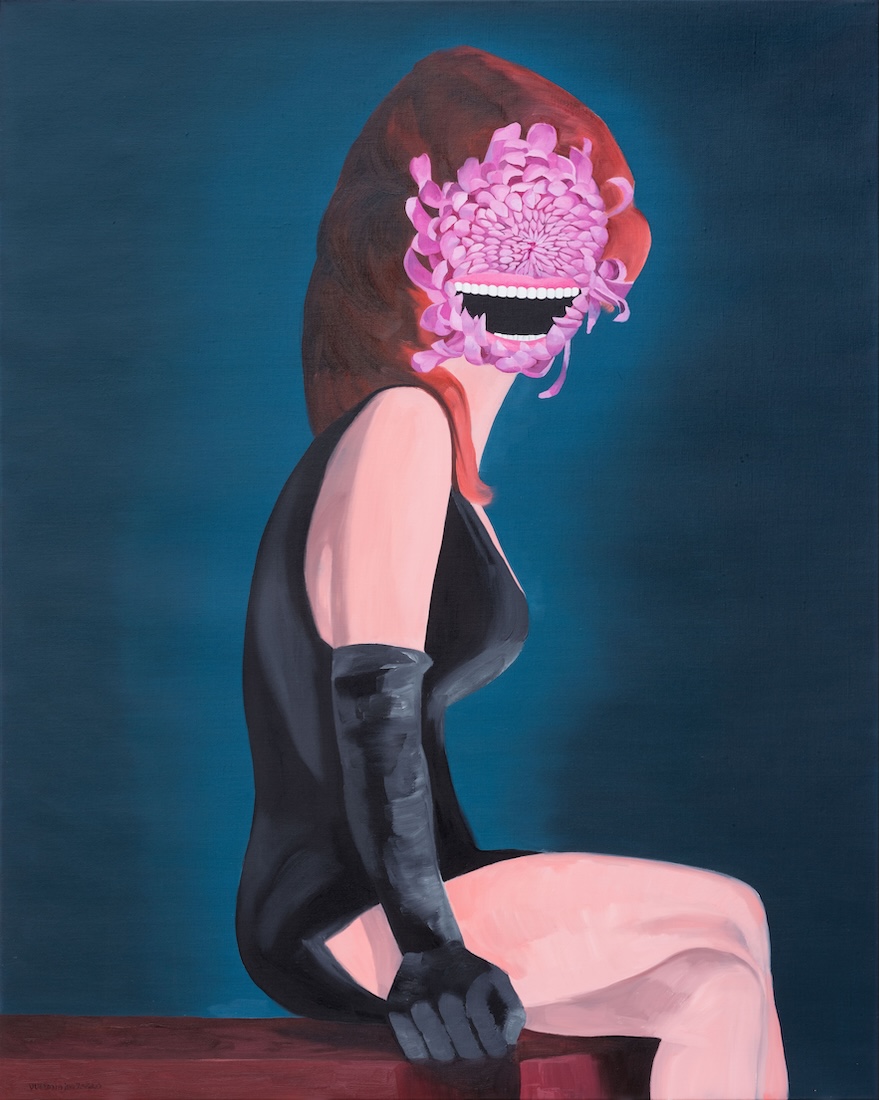
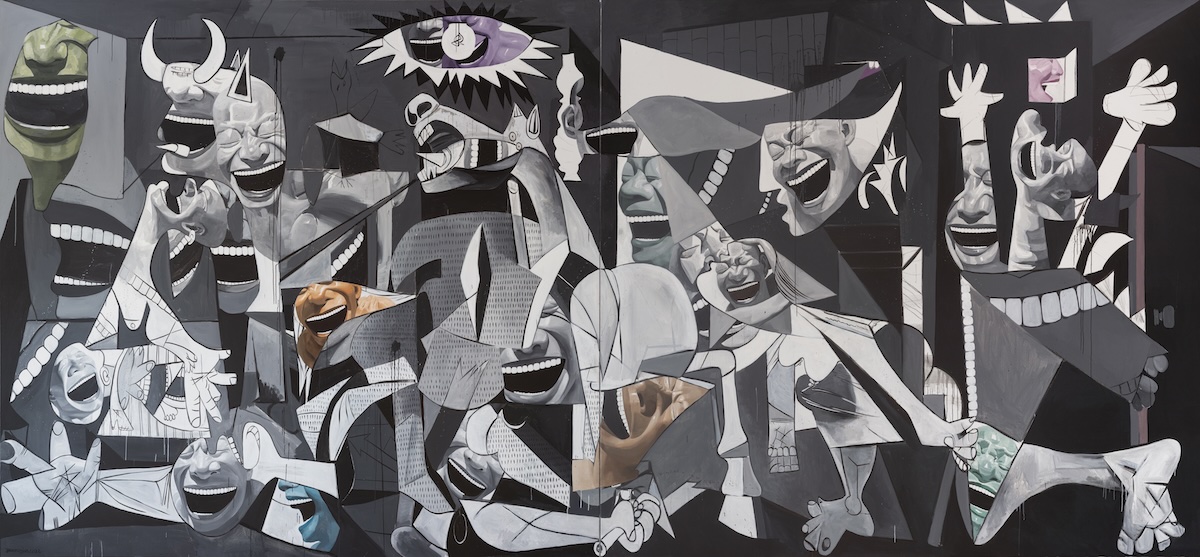
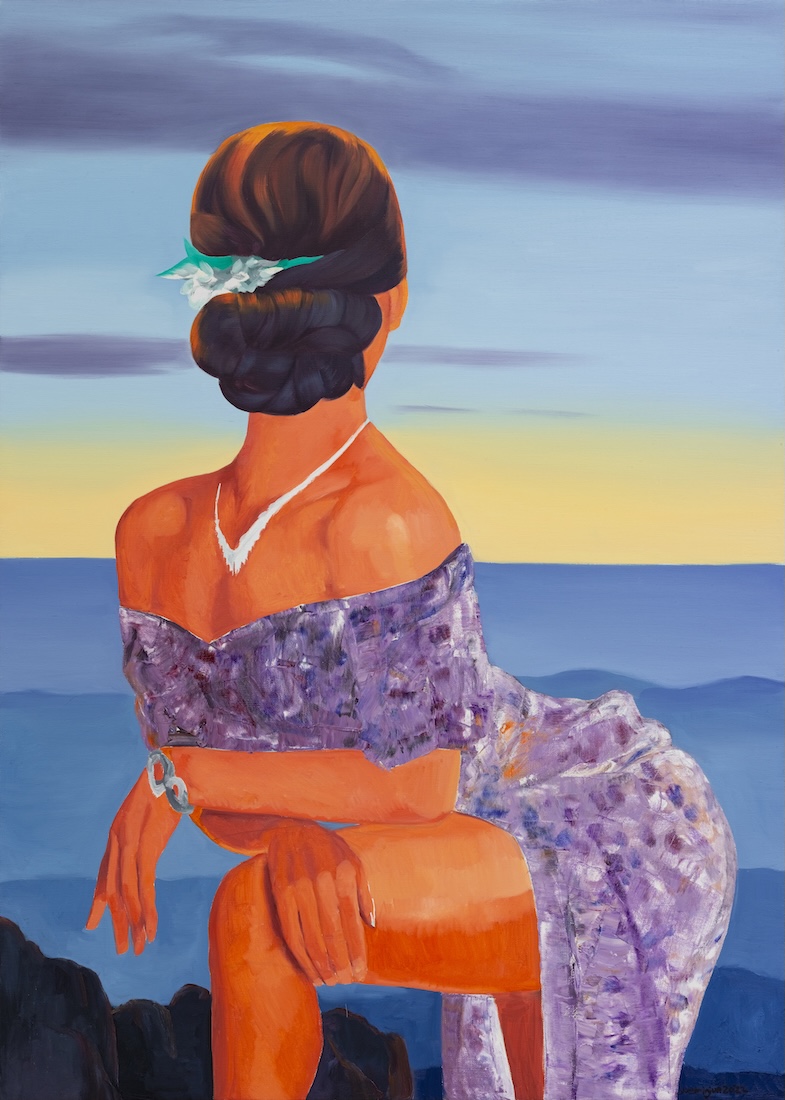
Yue Minjun’s recent paintings mark a decisive shift within a practice long associated with repetition, recognition, and the iconic laughing face. In his latest body of work, presented at Tang Contemporary Art Basel Hong Kong, that face is fractured, obscured, stacked, interrupted, or replaced altogether. Flowers, smoke, and painterly gestures intervene where expression once dominated, introducing instability and resistance into an image that had become fixed in the collective imagination.
Rather than signaling a departure, these works operate as a confrontation with his own visual language. Control and sabotage coexist. Authority is exercised and undermined at once. The image is no longer asked to perform, but to endure pressure, damage, and ambiguity. In this interview, Yue Minjun reflects on power, interruption, repetition, and the necessity of disintegration as a way to access deeper internal logic within his practice.
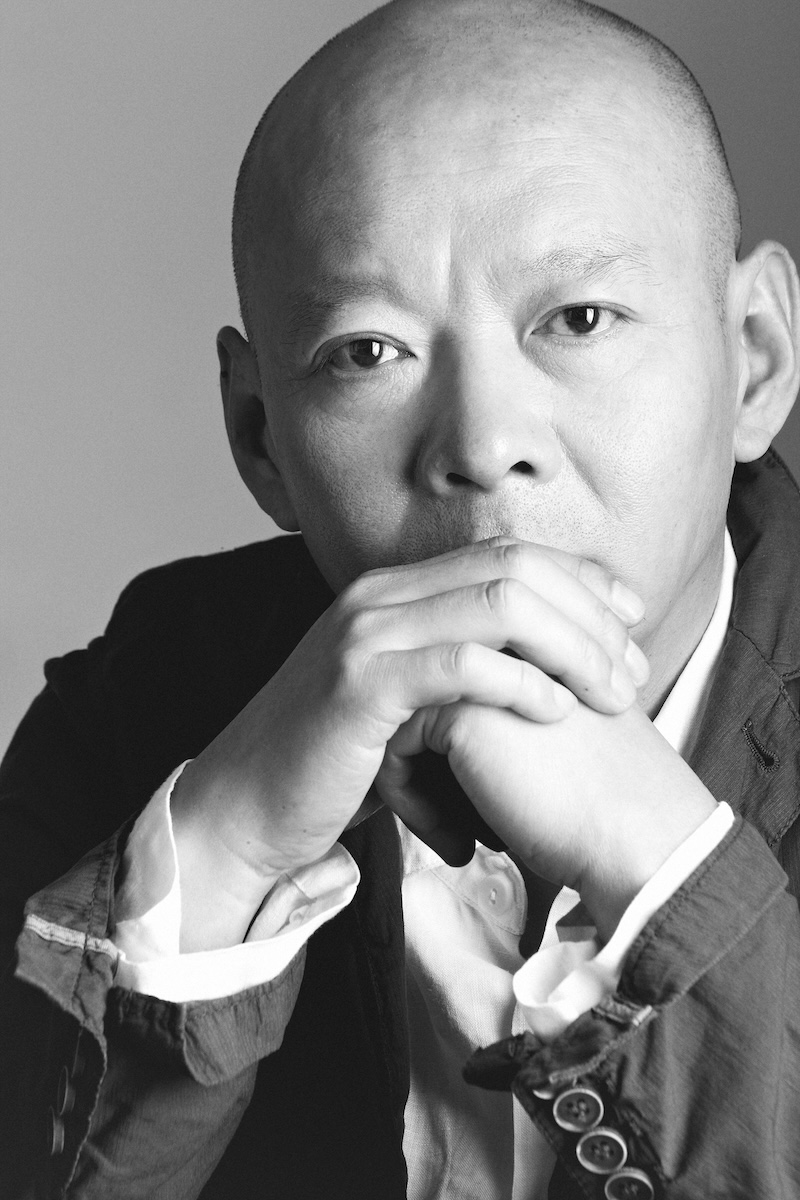
An Interview with Yue Minjun
By Carol Real
Across these recent works, the laughing face is fractured, stacked, concealed, crossed out, or displaced. Do you experience these shifts as formal decisions, or as necessities that emerged over time?
It is an active choice. I am exercising both the mission and the rights of the artist.
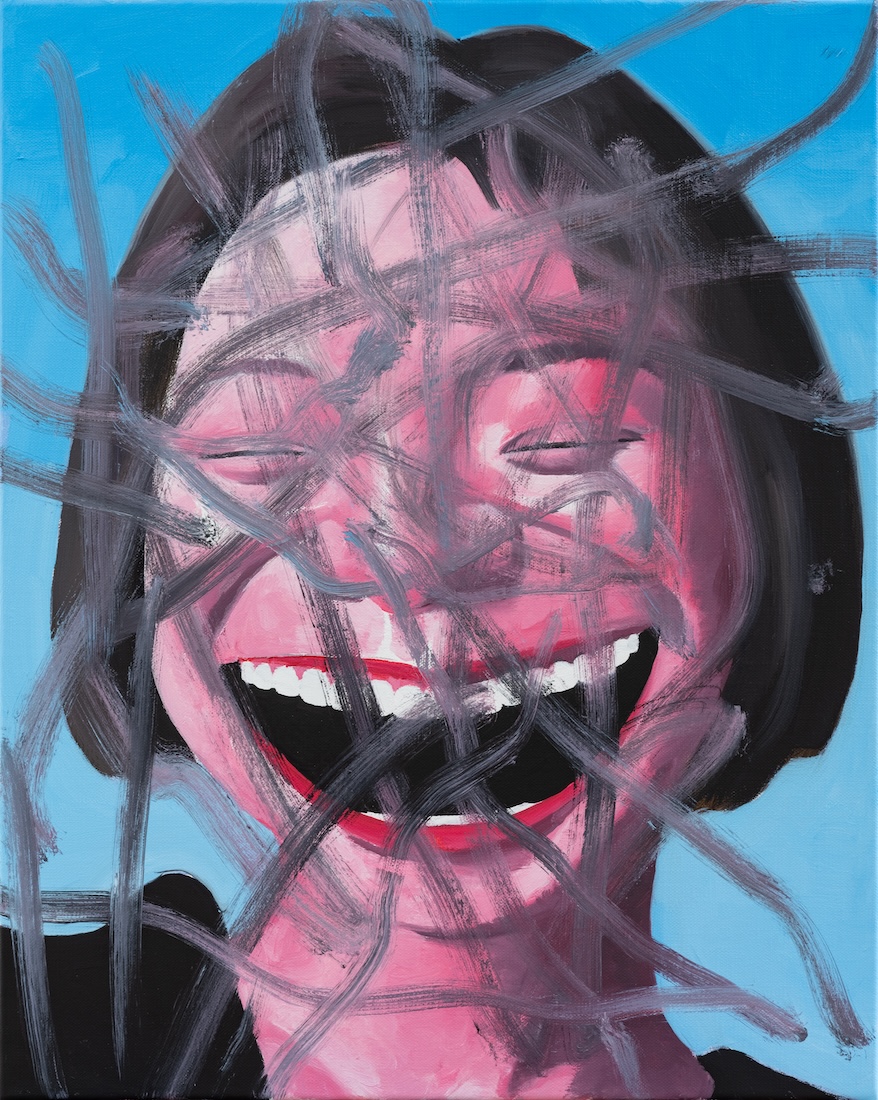
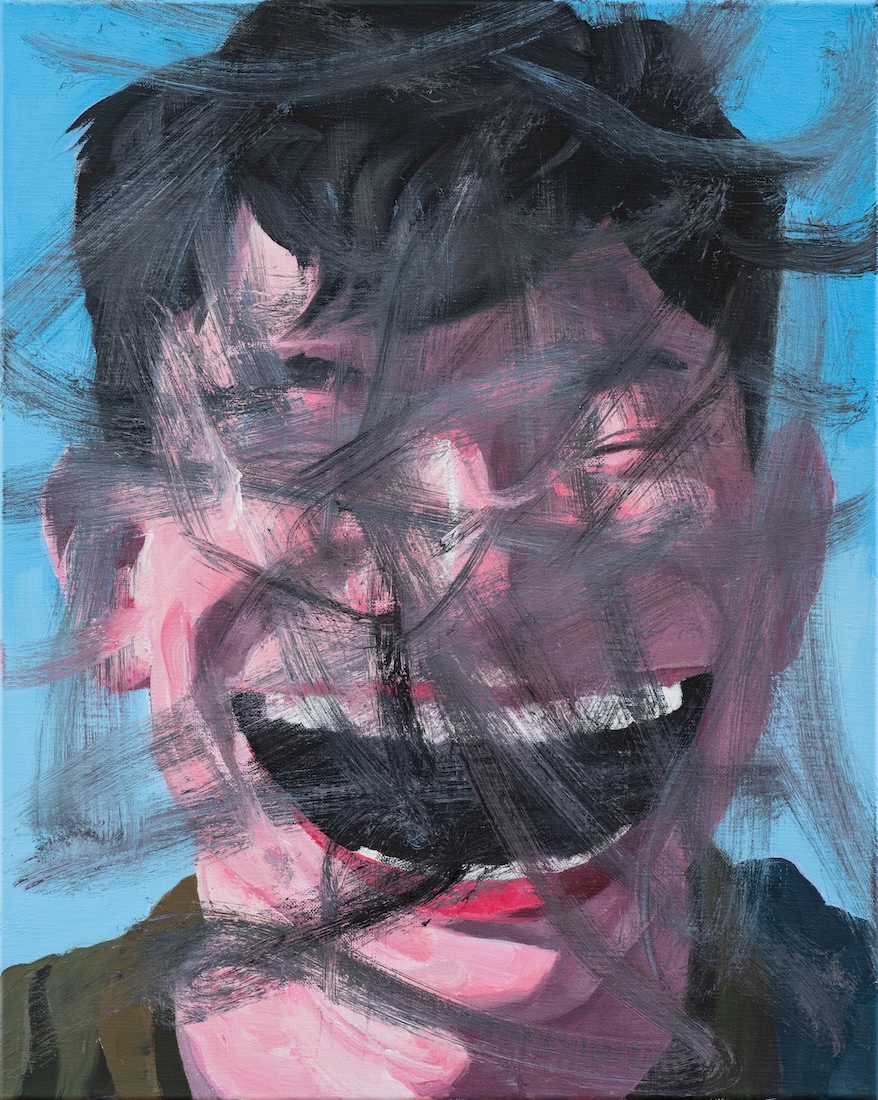
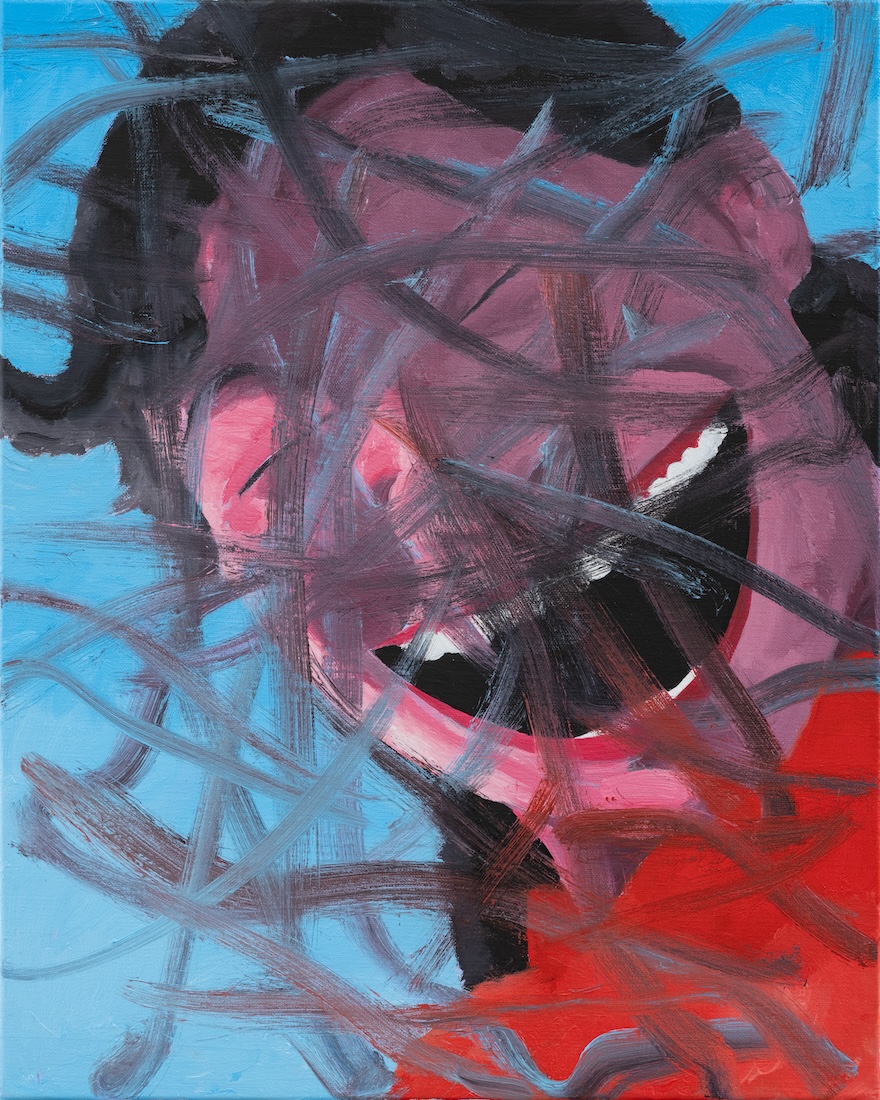
In some paintings, the image seems to resist coherence, while in others it insists on repetition and proximity. How do you decide when an image must break apart and when it must accumulate?
Art always expresses a state of uncertainty and entanglement. Inner conflict is what drives me. When I look inward, I tend to choose disintegration and rupture.
The act of painting over the face feels deliberate and physical. What role does interruption play in your current practice?
Through covering, smearing, interrupting, and interfering, I often assume a position of power. In the handling of the image, I play the role of a dictator.
When you obscure or interfere with an image that is already established in your work, are you protecting it, challenging it, or testing its limits?
Obstructing or damaging the image is a way of testing its boundaries and tolerance.
Several works replace the face with flowers, smoke, or gesture. What interests you in allowing another form to speak where expression once dominated?
Obscuring the image can amplify its original meaning, making it ambiguous and unresolved.
These recent series move between excess and restraint. How do you navigate that balance in the studio?
I hope this balance can lead me into a deeper state, where I can recognize the logic behind my own creative process.
Has your relationship to control changed in these works, particularly when the image seems to resist resolution?
Controlling the behavior of images is a way to reveal and provoke their mystery and unpredictability. I do not want to control their direction.
When repetition no longer feels sufficient, what signals tell you it is time to alter or disrupt the image?
I am trying to express new emotions and forms of awareness through new images.
Do you think of these paintings as conversations with your earlier work, or as attempts to move away from it altogether?
It is a dialogue.
Looking at this body of work as a whole, what feels unresolved for you, and what feels settled for the first time?
Throughout the creative process, the resolution of problems is always intertwined. At times, it feels as though some problems have been resolved.
All artworks © Yue Minjun. Courtesy of the artist and Yue Minjun Studio. Artwork photographs by Yang Xin, 2020–2026. Artist portrait: Yue Minjun. Photograph by Charles Guo Puyuan, 2012.