Dunhuang is not a neutral landscape. It is one of the most charged territories in human history, a crossroads where trade, faith, power, and devotion converged for more than a thousand years. At the edge of the Gobi Desert, along the ancient Silk Road, monks, merchants, and pilgrims carved the Mogao Caves into rock, leaving behind a continuous record of spiritual aspiration, political exchange, and artistic transmission. To work in Dunhuang is not simply to place an artwork in a location. It is to enter a living archive of civilization.
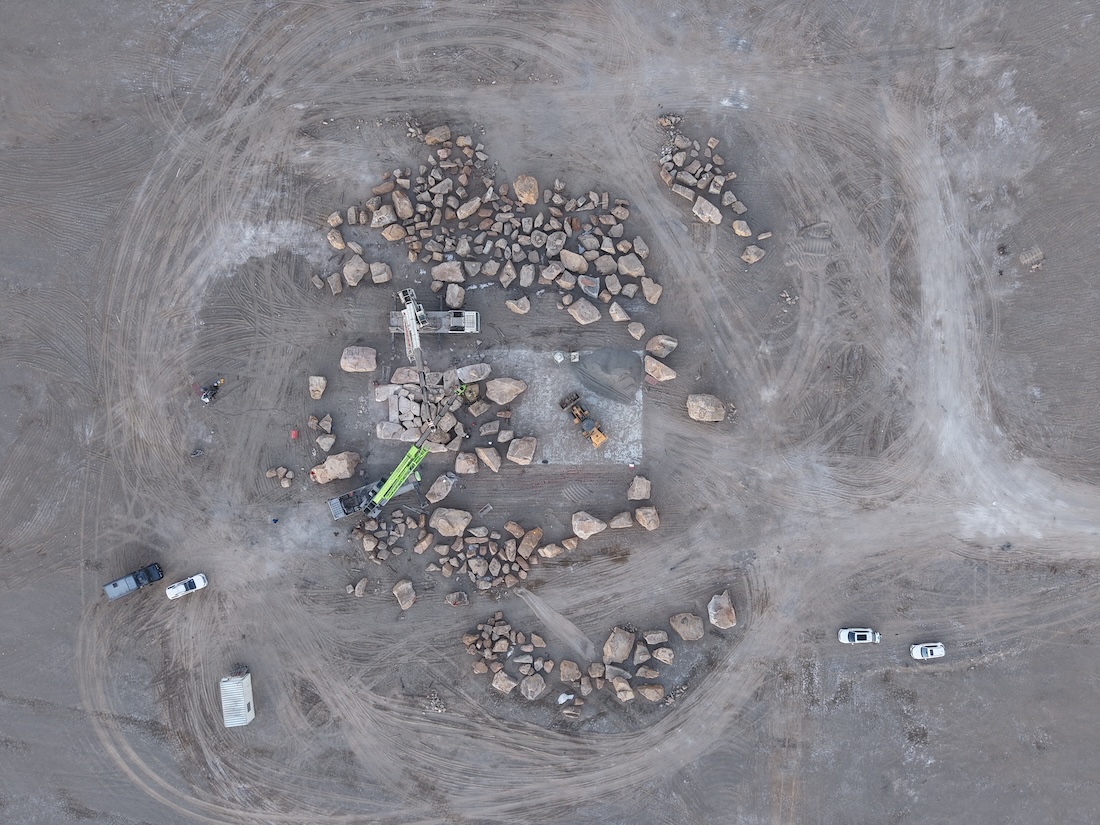
Within this landscape, Hu Jun Jun and Zhang Huan realized Explore Silence, a permanent land art installation composed of more than three thousand tons of granite transported from the Taihang Mountains across more than two thousand kilometers to the desert. Conceived by Hu Jun Jun as the principal creator, in collaboration with Zhang Huan, the work does not attempt to represent history, faith, or memory. Instead, it confronts them through matter itself. Rising from the sand as a monumental stone formation, Explore Silence rejects spectacle and narrative. Its scale feels geological. Its sense of time extends far beyond the human.
Zhang Huan’s practice has long tested the limits of the body, endurance, and belief. In his early performances, the human body served as the site where pain, exposure, and ritual were inscribed. In Dunhuang, that axis shifts. The body recedes. Matter assumes the weight of experience.
Installed near one of the most significant Buddhist sites in the world, Explore Silence deliberately avoids iconography. There are no figures and no symbols. The work does not illustrate history, nor does it approach it through representation. Instead, it responds through restraint. The stones are arranged according to a logic close to natural sedimentation, aligning the installation with processes that precede religion, culture, and image.
This conversation takes place at a moment when Zhang Huan’s work has moved decisively from the body toward matter, and from gesture toward duration. In Dunhuang, confronted with a history that exceeds the individual, the artist proposes neither images nor answers, but a scale through which time once again becomes perceptible.
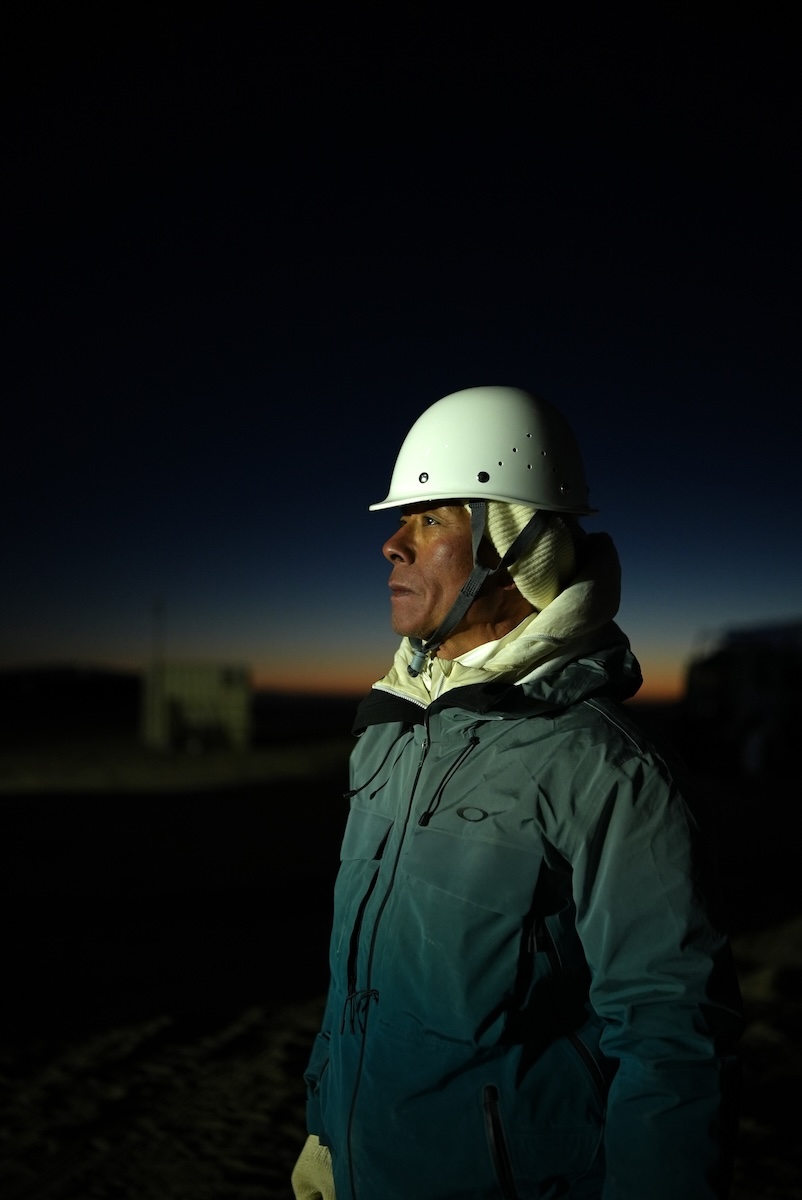
An Interview with Zhang Huan
By Carol Real
Explore Silence stands in a vast, almost empty landscape, yet the work does not feel isolated. It feels inhabited by time. When you conceived this installation, were you thinking of space, or of duration?
For me, Explore Silence is a tribute to Dunhuang and an offering to all humanity. The more than three thousand tons of Taihang granite are, in themselves, condensed time. In the vast desert of Dunhuang, space is infinite, but time is what gives that infinity its scale. The work stands there to capture the moment where an instant becomes eternity, allowing viewers to sense a suspension and fullness of time that spans thousands of years.

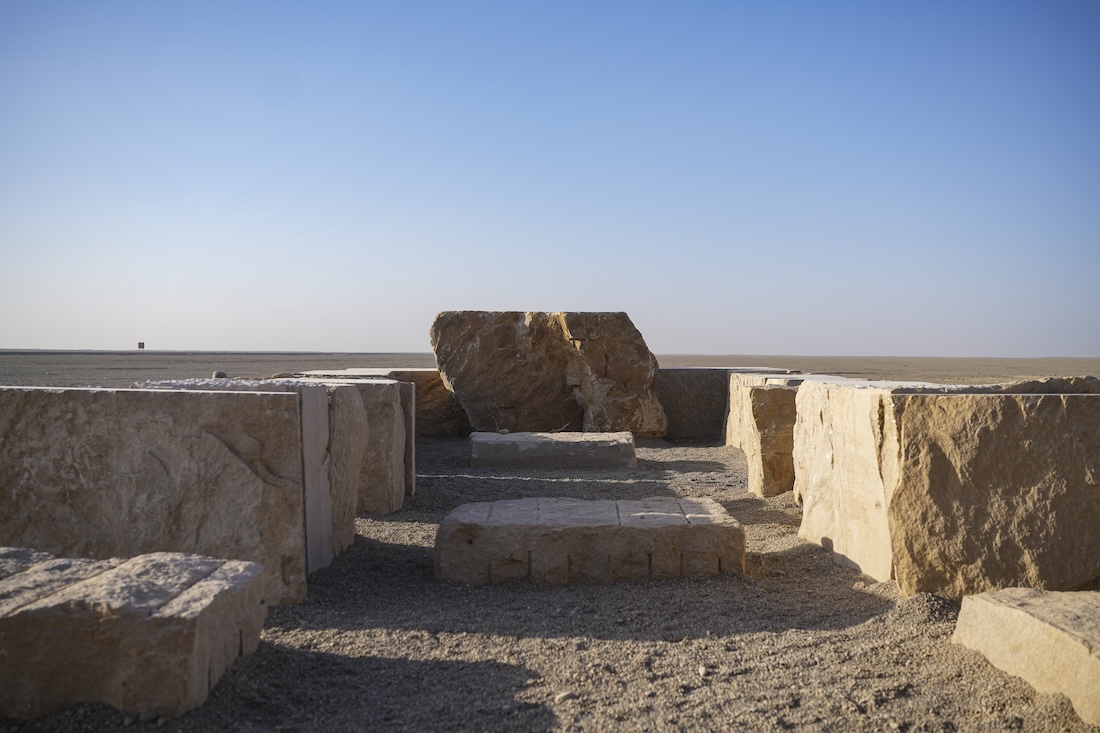
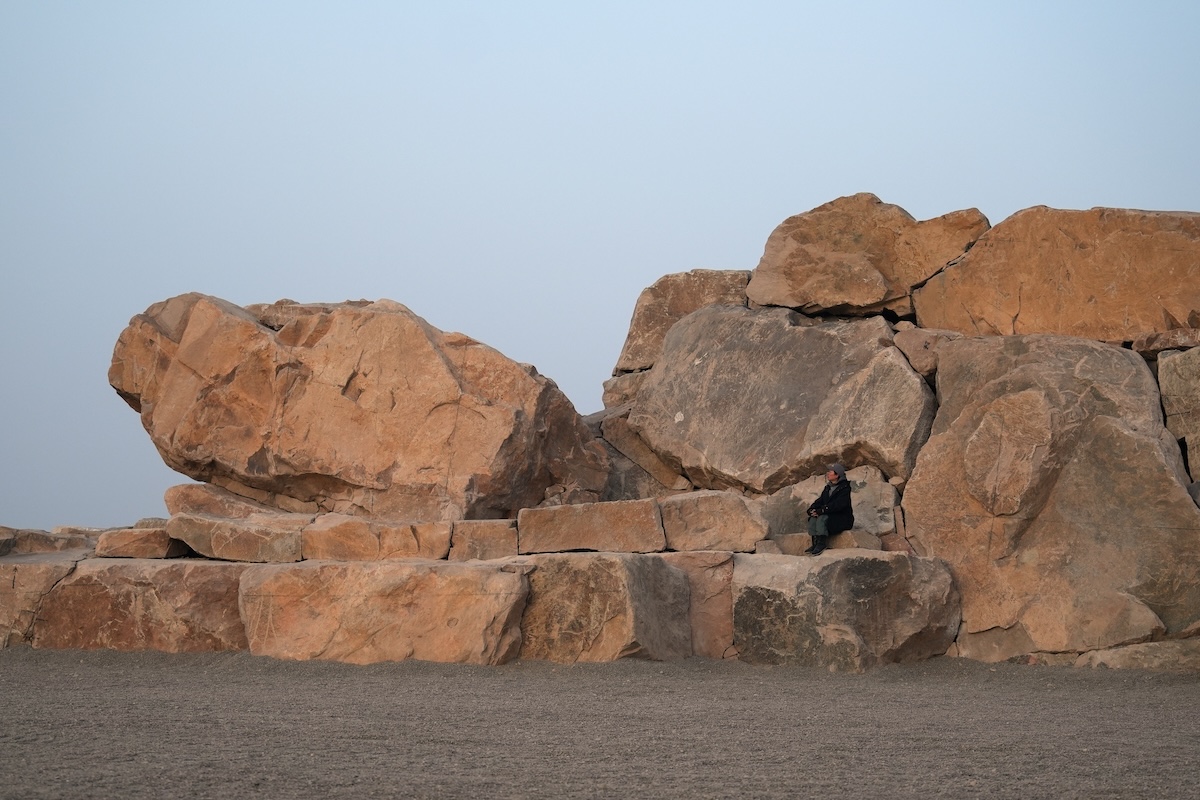
This work required enormous physical labor and the movement of thousands of tons of stone, yet what it proposes is silence. Is this silence something to be seen, or something to be experienced inwardly?
This silence is not the absence of sound. It is the pressure generated by immense material force, which eventually transforms into inner calm. The physical effort required to move and assemble these stones is extreme, and that confrontation with matter dissolves the noise of the self. This silence cannot be seen. It can only arise when one enters the stone formation and feels the weight emerging from deep within the earth.
In Buddhist thought, silence is not the absence of sound, but a state of awareness. Does Explore Silence attempt to materialize that state, or simply to create the conditions where it might emerge?
After traveling thousands of miles west to Dunhuang, you arrive at a place that seems to have nothing, yet contains everything. You see only the horizon, no people. This is the essence of the world and of the universe. It is a land of the soul, the place closest to the cosmos. We are not materializing a state, but creating a field. As Buddhism teaches, silence is the awakening of awareness. The work acts as a medium, offering physical density and scale so that people can step away from fragmented reality and enter conditions where awakening may occur.

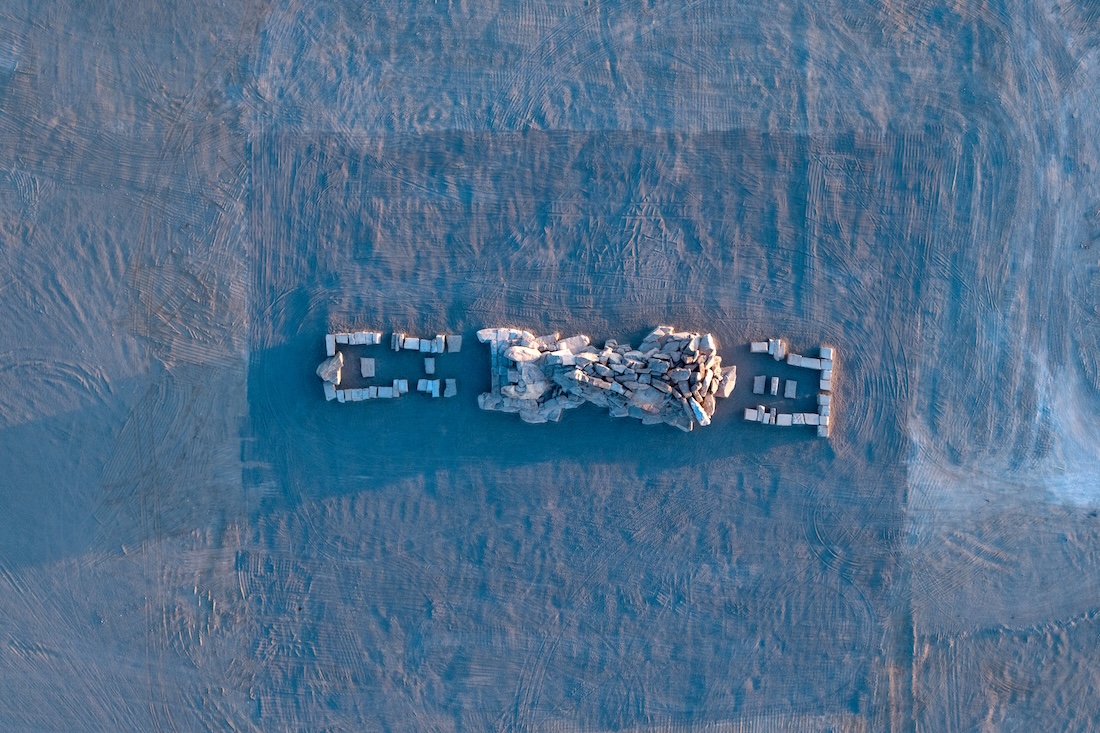
Your early performances placed the human body at the center of experience. Here, the human scale nearly disappears against geological mass. Has the role of the human shifted from subject to witness?
My early performance works focused on the body, on individual struggle and existence in extreme conditions. In Explore Silence, the human scale is reduced, not to negate humanity, but to dissolve the small self into a greater whole. Humans move from being protagonists in confrontation to witnesses who revere nature. In such vastness, the disappearance of the individual marks the beginning of spiritual return. The winds and sands of Dunhuang scatter joy, anger, sorrow, and desire once again.
The stones feel both ancient and newly arranged. Do you see this work as constructing something, or as revealing something that already existed in the landscape?
These stones slept for billions of years in the Taihang Mountains, carrying the memory of mountains and rivers. Rearranged in Dunhuang, it may appear that I am constructing a new order, but I am, in fact, revealing what already exists in this landscape: desolation, grandeur, and compassion. The artist’s hand merely parts the mist so the earth can reveal its true face.
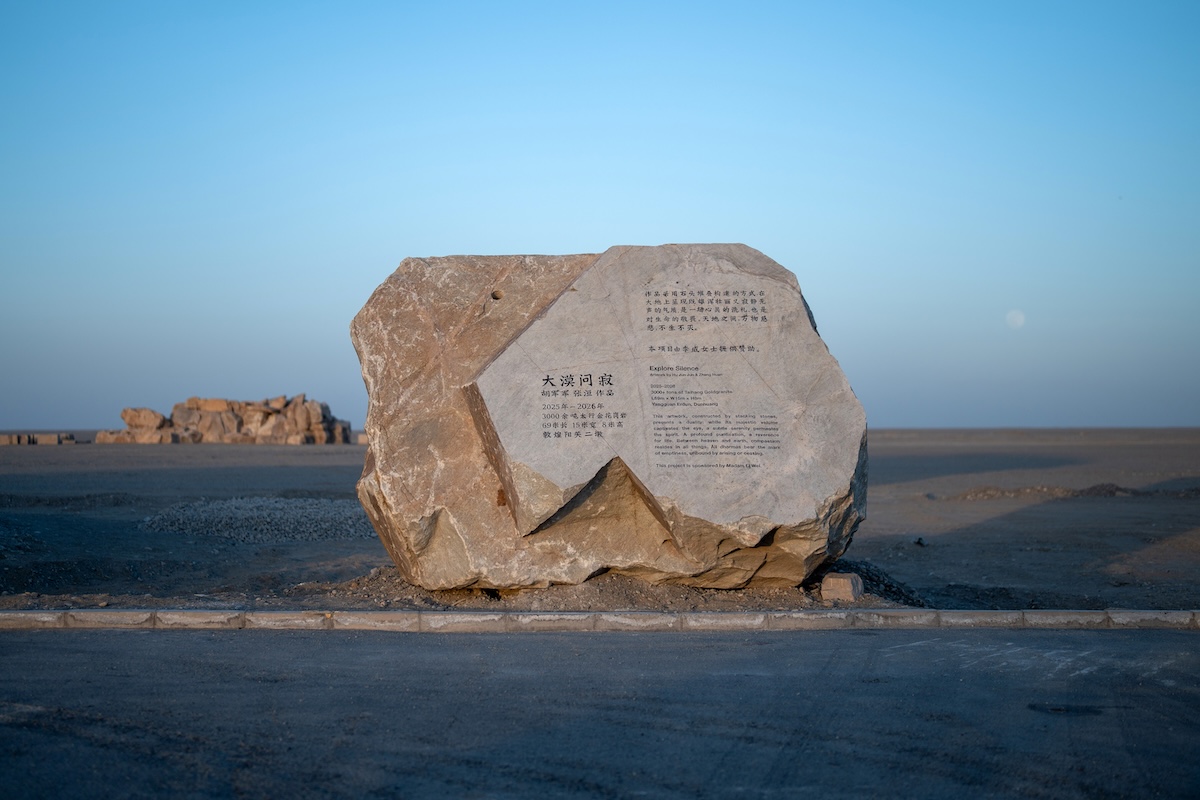
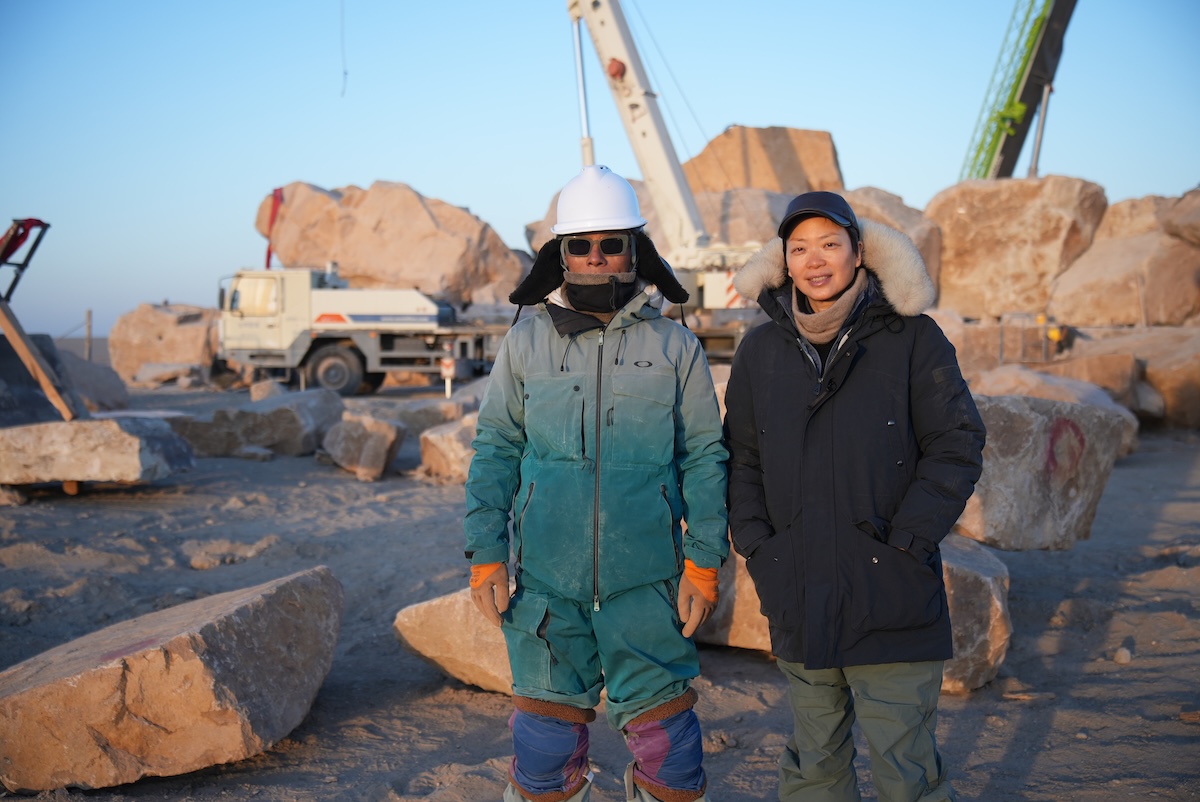
Dunhuang carries centuries of spiritual images and devotional practices. When working in such a place, how do you avoid imposing a contemporary ego onto a site already charged with history?
The energy of Dunhuang is overwhelming. Any attempt to assert personal ego here would feel absurd. During creation, I required myself and my team to maintain a state of selflessness. The stacking of these stones imitates the most primal sedimentation of nature. It is a bow to history and to the religious tradition of Yangguan. We are not adding anything. We are responding to the weight of what is already there. This is a tribute to Dunhuang and to the immortality of all things.
Explore Silence does not represent Buddhism through symbols or figures. Is abstraction, for you, a more truthful way to approach the spiritual than imagery?
Images often confine imagination, while spirit leads toward infinity. Explore Silence avoids traditional religious symbols because the texture, weight, and fissures of stone already embody true Buddha nature. Unadorned and raw expression often reaches the spiritual core more directly than refined icons.
The work has weight, density, and resistance. Do you think matter itself holds memory, beyond human experience?
I believe matter holds a memory beyond humanity. Within the weight of these stones lie the folds of geological change. Within their density, millions of years of wind and sunlight. Within their hardness, the marks carved by time. This memory does not depend on language or perception. It settles physically, like the rings of nature itself, older, quieter, and more truthful than human civilization.
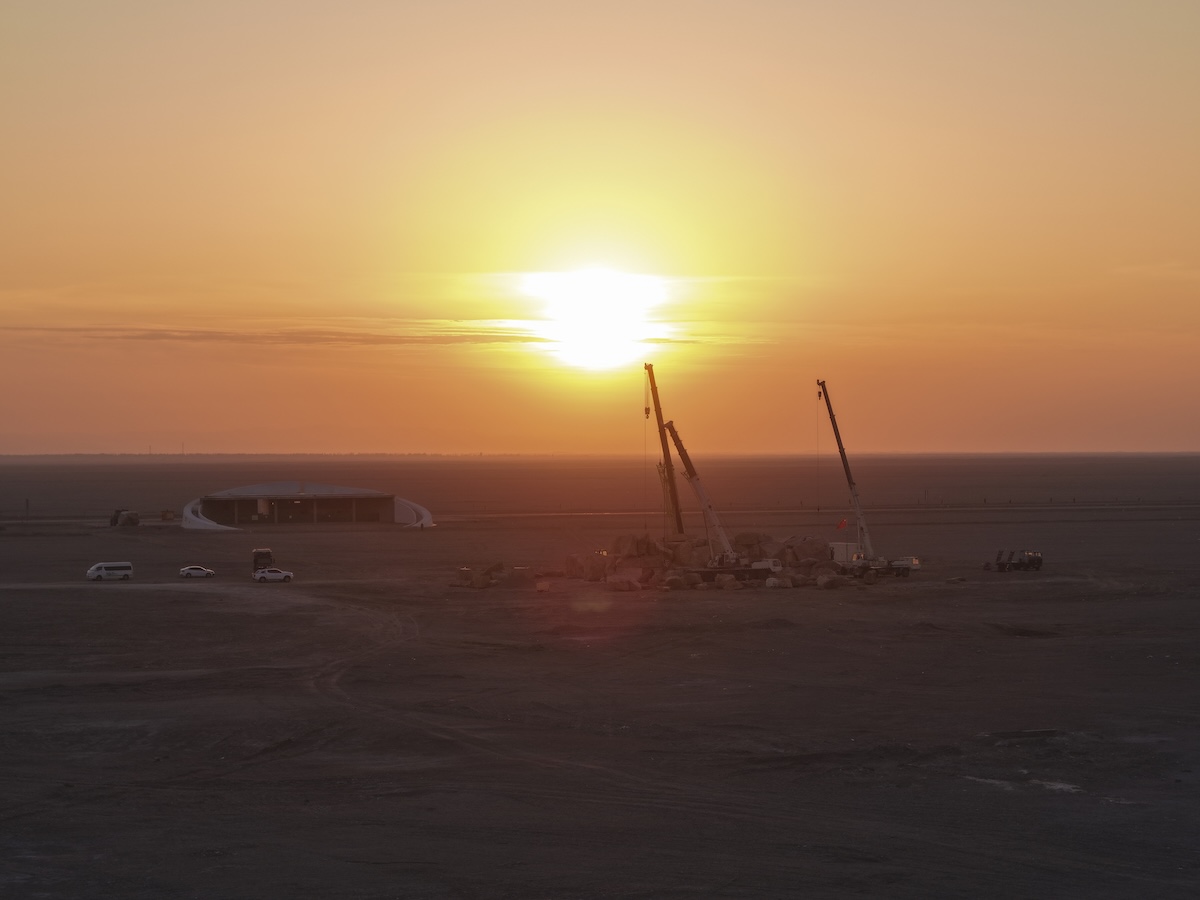
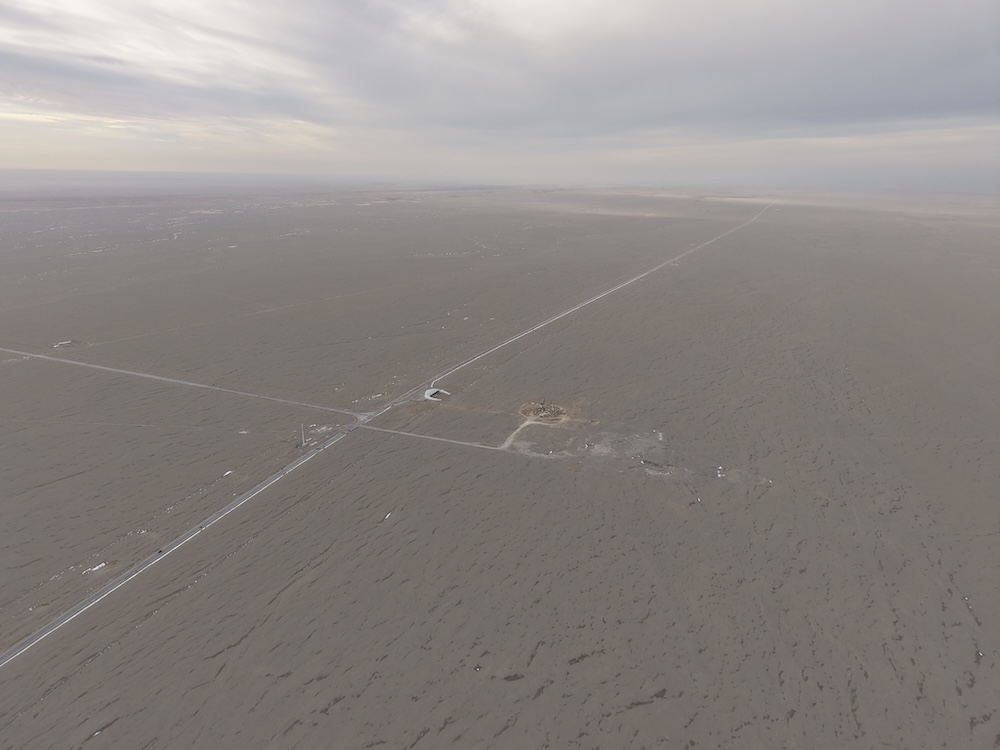
In your earlier works, endurance was located in the human body. In this installation, endurance seems to belong to stone and landscape. Has the site of endurance shifted from the body to matter?
What endures now is the psychological persistence of the viewer when faced with immense silence. From body, to matter, to consciousness. Only then can one reach completion.
The scale of this work alters the viewer’s perception of their own size and presence. Is this change in proportion an essential part of the work’s meaning?
From the road, the work appears small. But when one stands before an eight meter high, fifteen meter wide, sixty nine meter long stone mountain, a deep sense of insignificance emerges. This disparity in scale breaks human arrogance and forces us to reconsider our position within the universe.
Dunhuang is a place where images, faith, and memory have accumulated across centuries. Do you see Explore Silence as continuing a lineage of spiritual marking of space, or as posing a question toward the future?
Explore Silence is, in essence, nirvana, extinction followed by rebirth. The work neither simply continues tradition nor deliberately questions the future. It responds to the past through the present, while leaving space for what is to come. Dunhuang’s spiritual markers have never been fixed symbols, but ongoing acts of reverence toward heaven, earth, and life. We offer no answers, only stone and silence, allowing future viewers to continue exploring.
Standing before this work, the viewer becomes aware of time beyond the human. Is Explore Silence also a meditation on human transience within vast cycles of existence?
This is a gift to humanity, one that will remain guarded by desert winds for countless years. Stones will stay. People will disappear. This contrast is not tragic. It brings humility. Between heaven and earth, all things are compassionate, neither born nor destroyed. Humanity is only one phase. Explore Silence is not about grandeur, but about letting go. When attachment to self dissolves, silence truly appears. A profound purification, a reverence for life. Between heaven and earth, compassion resides in all things. All dharmas bear the mark of emptiness, unbound by arising or ceasing.
Image credits
Explore Silence
Artwork by Hu Jun Jun & Zhang Huan
2025–2026
3000+ tons of Taihang Goldgranite
L69 m × W15 m × H8 m
Yangguan Erdun, Dunhuang
Images courtesy of Hu Jun Jun Studio & Zhang Huan Studio
© Hu Jun Jun Studio & Zhang Huan Studio