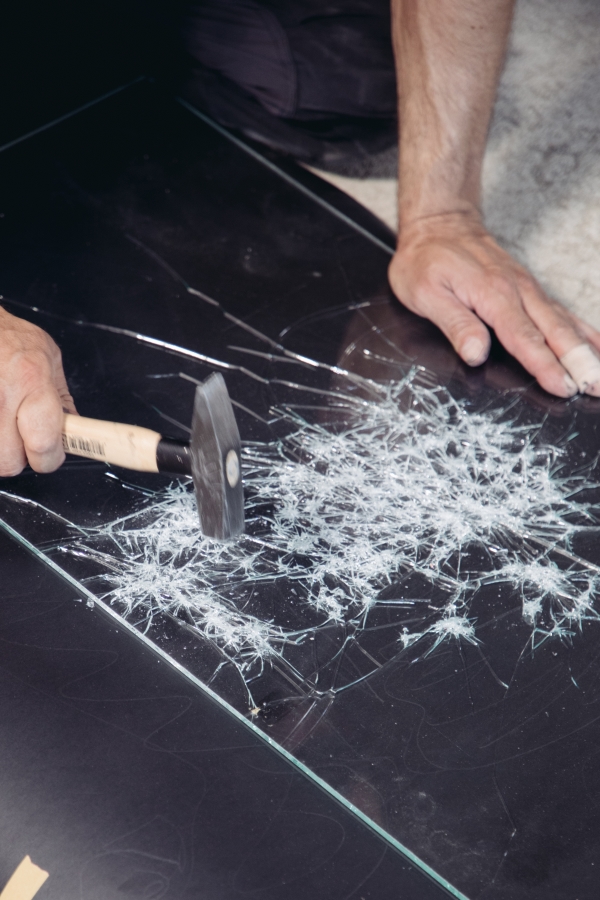
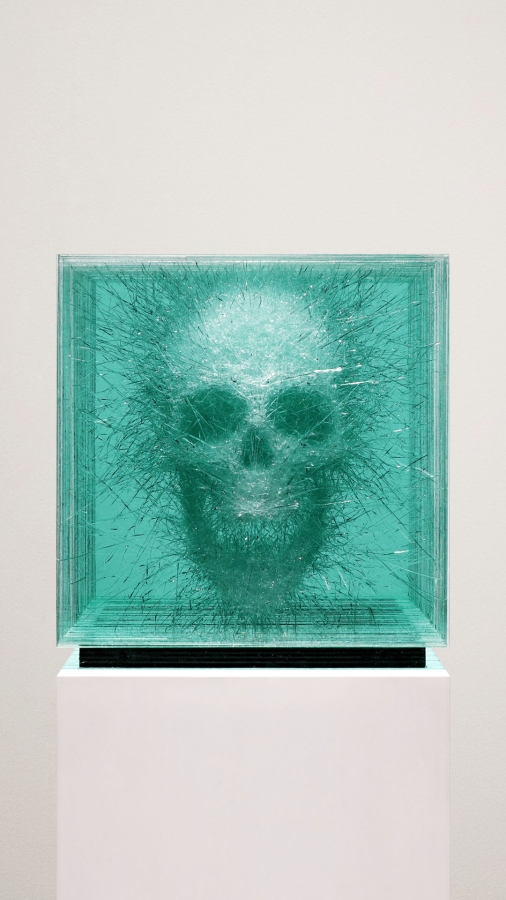
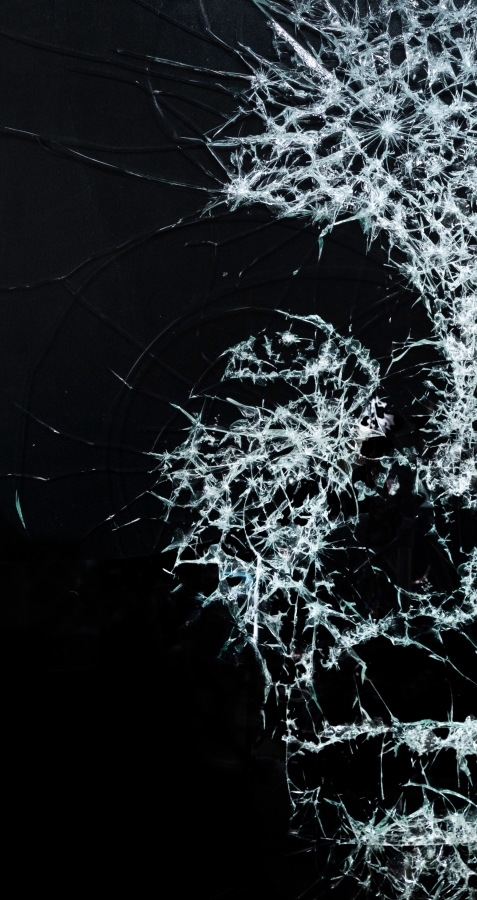
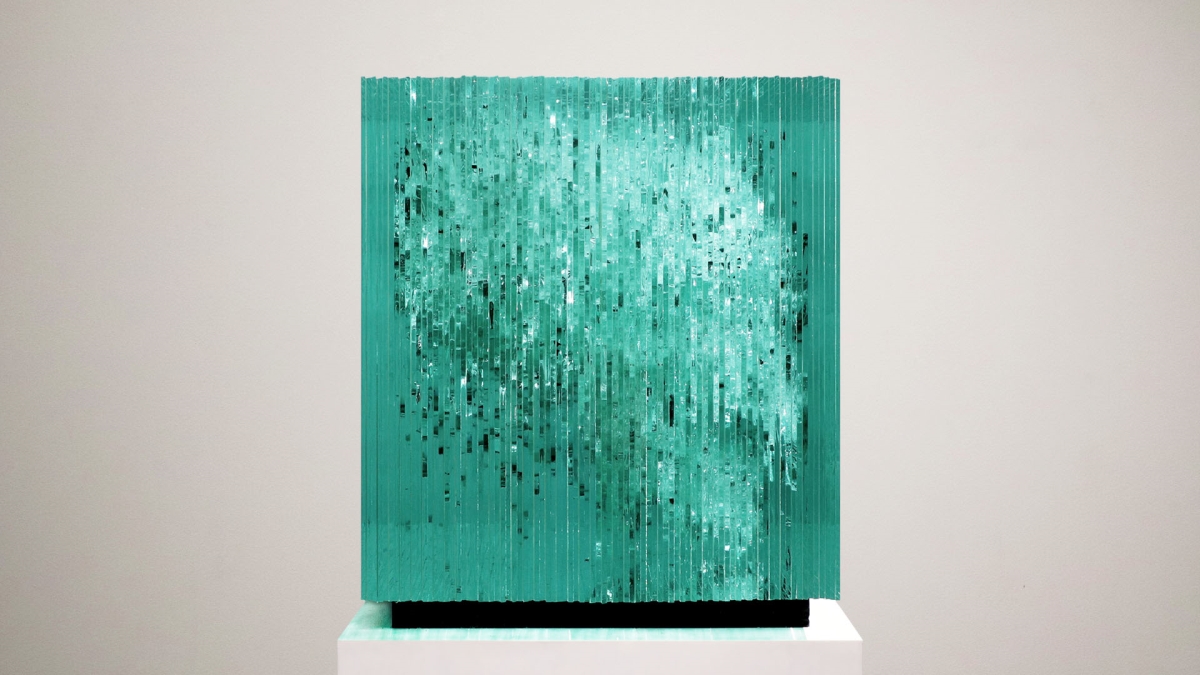
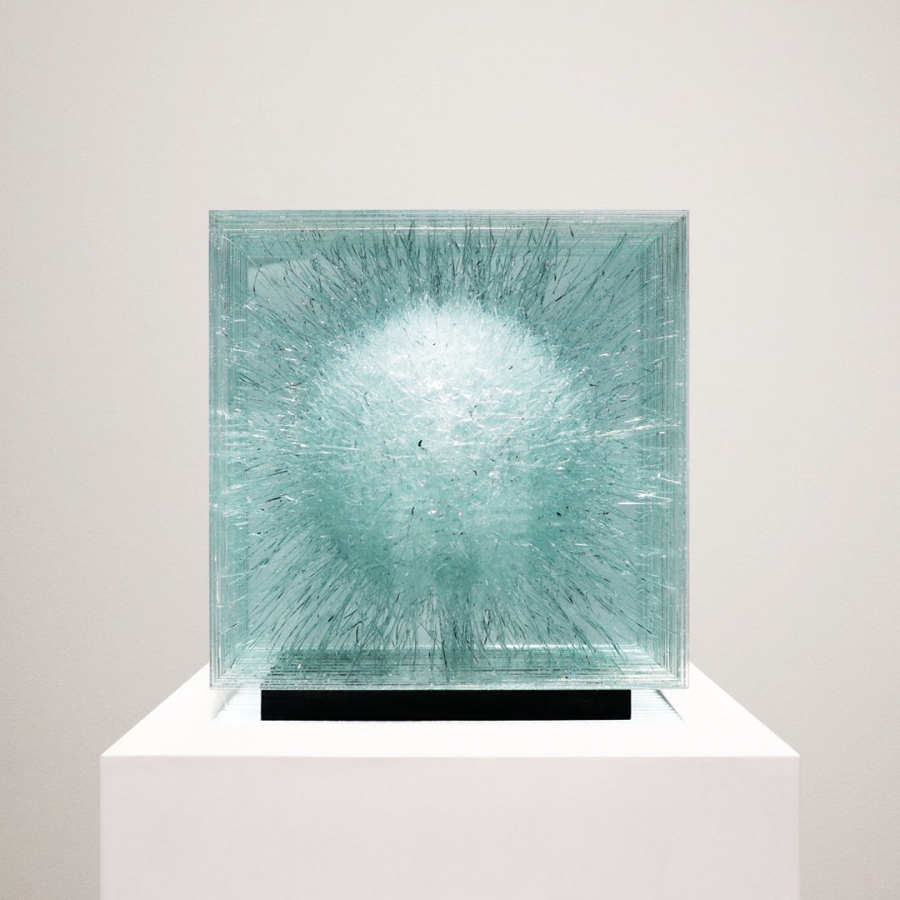
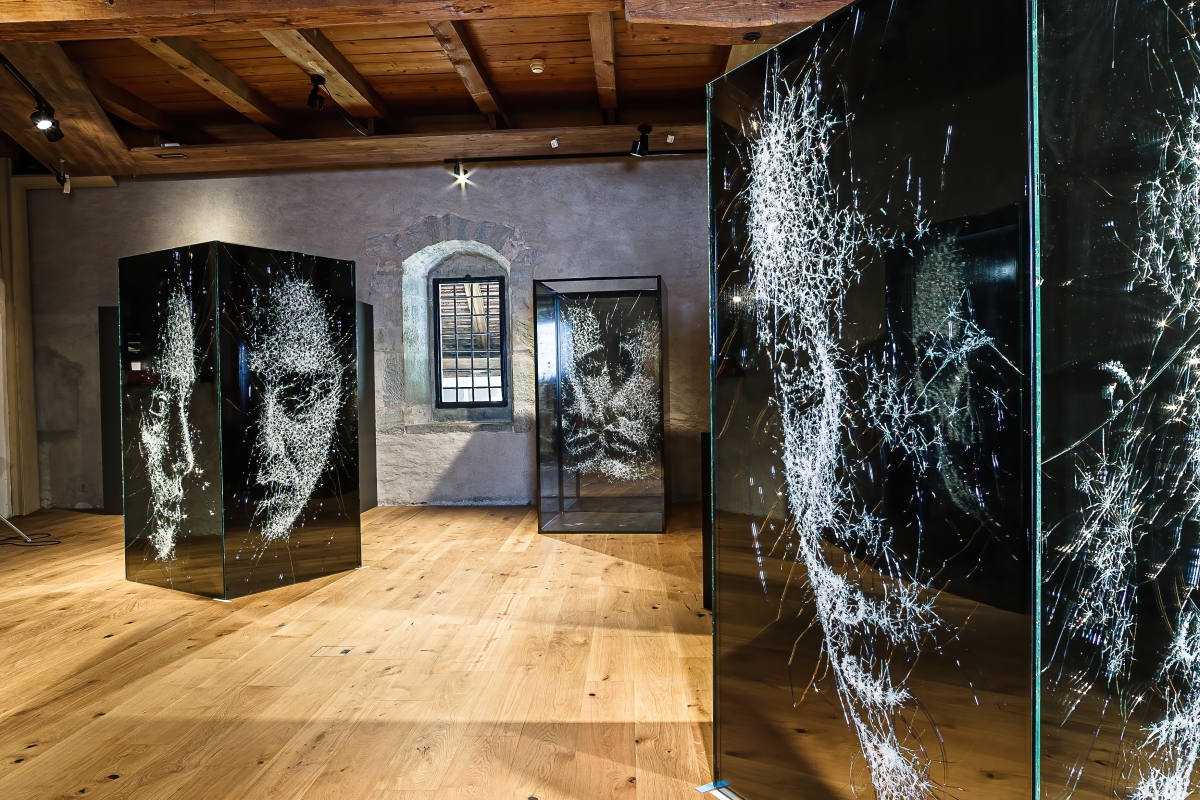
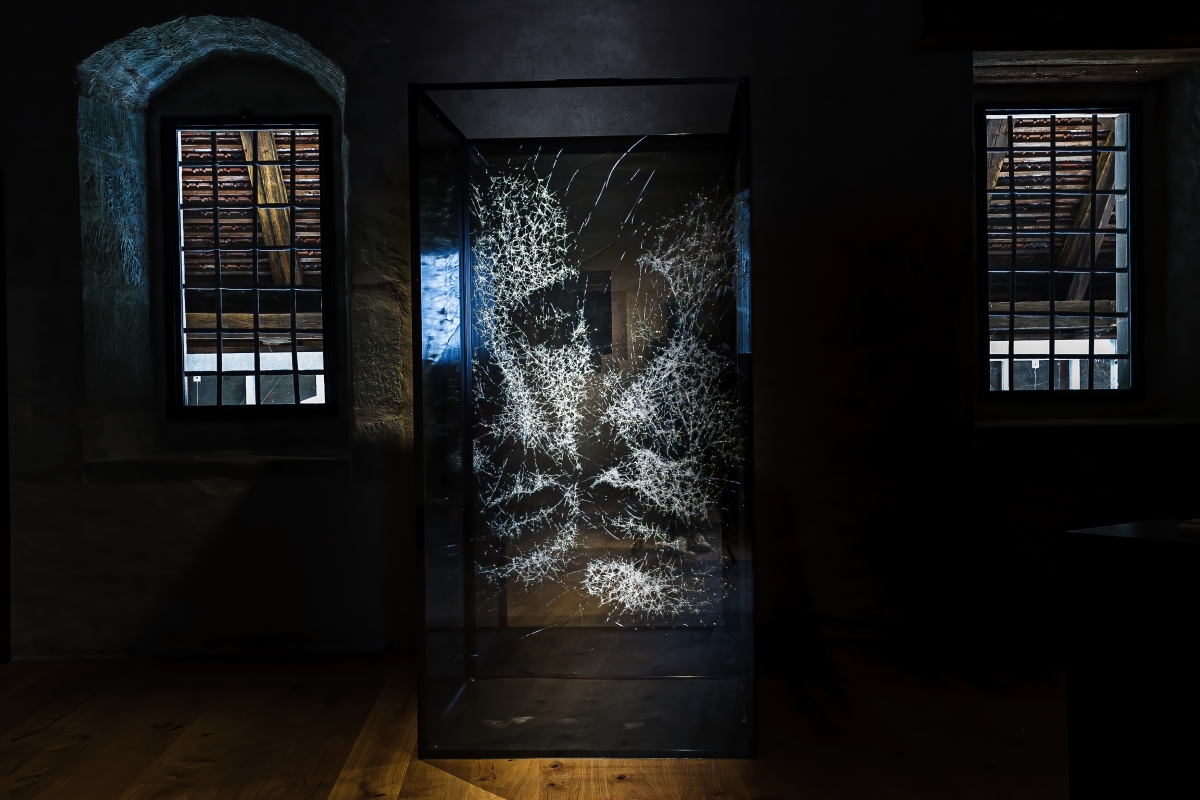
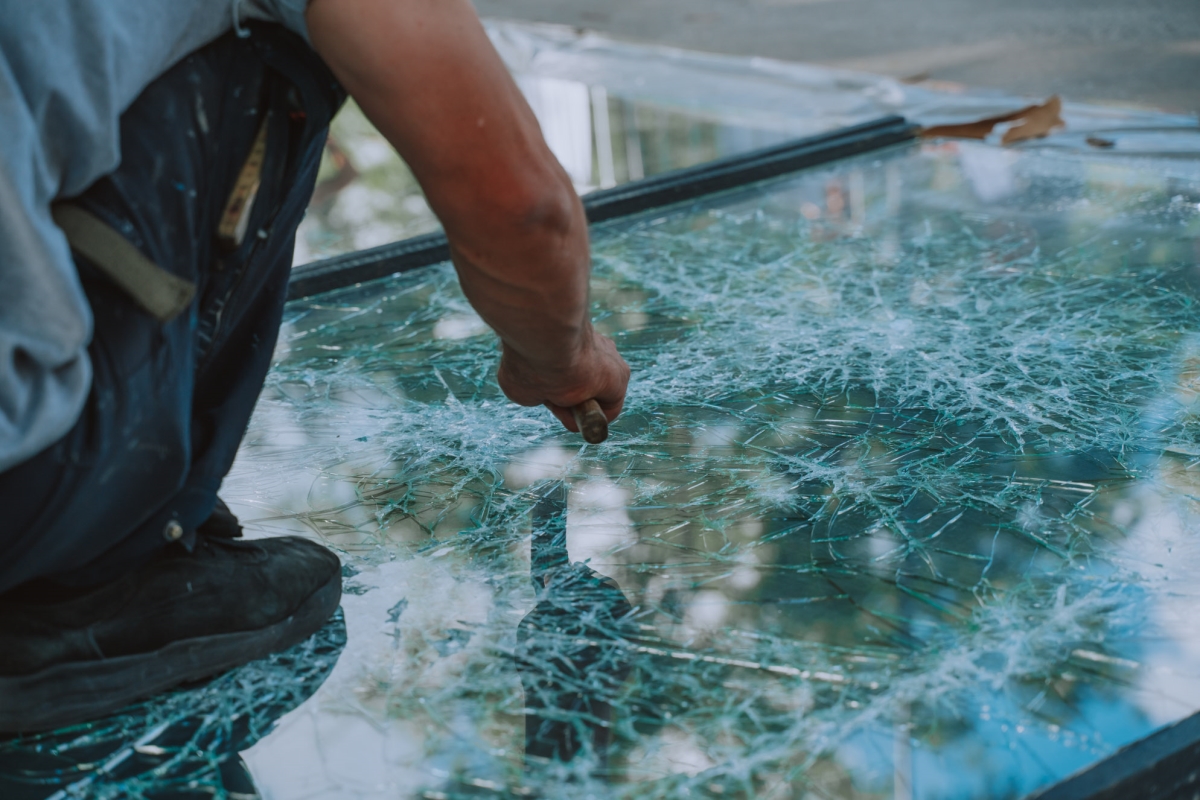
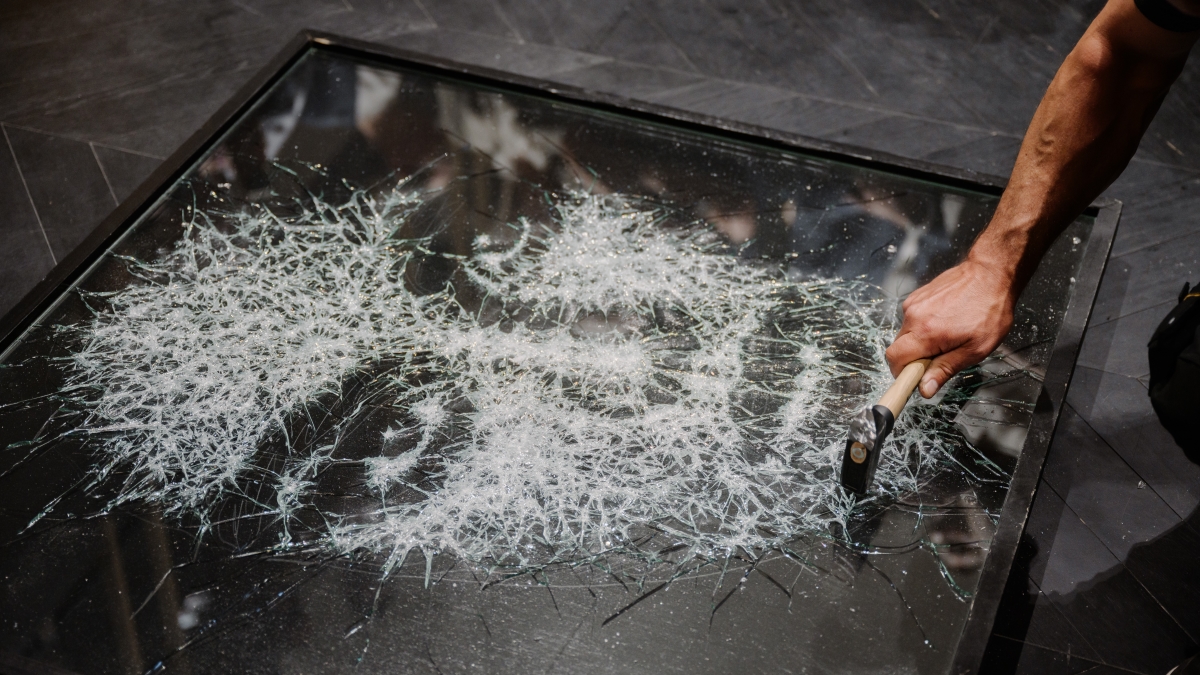
There is a moment of silence before the first blow. For Simon Berger, that instant—between control and fracture—is where art begins. His material is glass, but what he sculpts is perception itself. Using a hammer as his brush, Berger transforms fragility into form, violence into precision, and shattering into revelation.
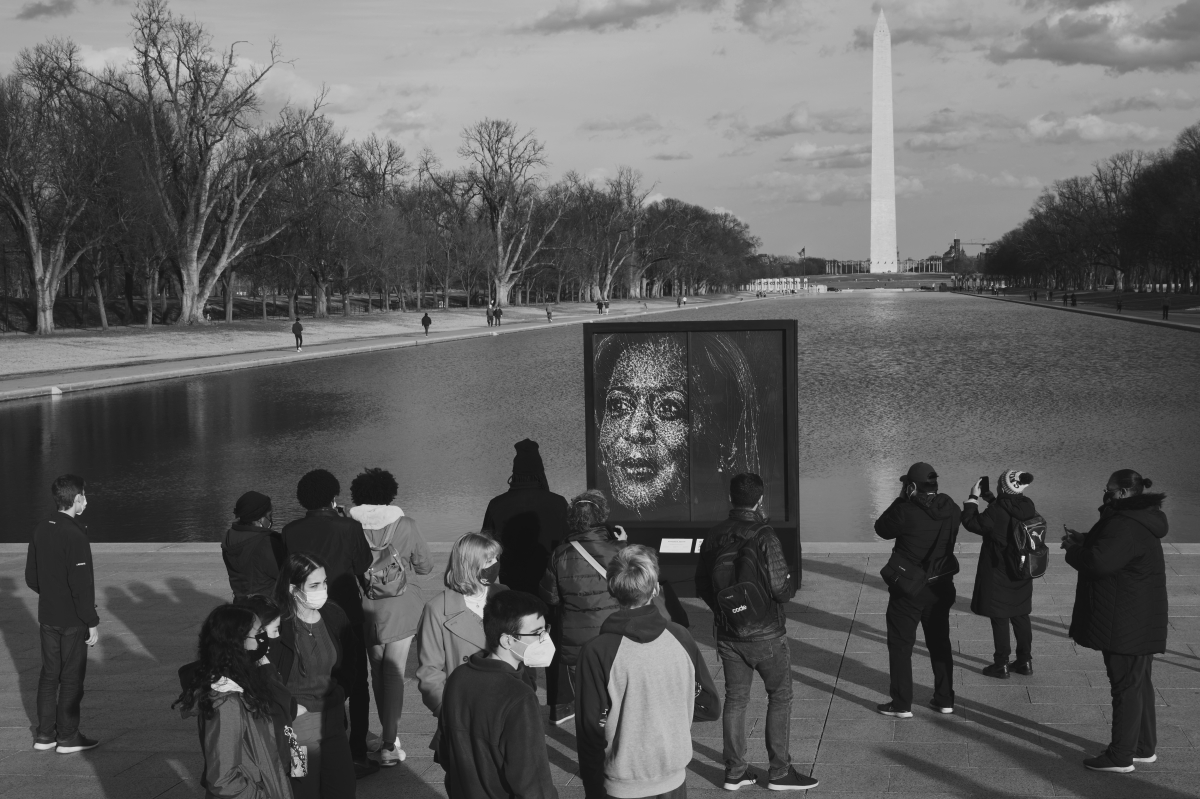
The Swiss artist’s portraits emerge from brokenness, each impact tracing the limits of both matter and emotion. What could be read as destruction becomes a meditation on transformation, a dialogue between chaos and grace. His works seem to breathe through their own wounds, capturing faces that flicker between abstraction and presence, order and collapse.
In this conversation, Berger reflects on his unusual path from carpentry to contemporary art, the tension between fear and control in creation, and the poetic paradox at the heart of his work: that beauty can only exist because something has been broken first.
Interview
Artist: Simon Berger
By Carol Real
You began your professional life as a carpenter before turning to art. How did that transition unfold, and what first drew you to creative expression?
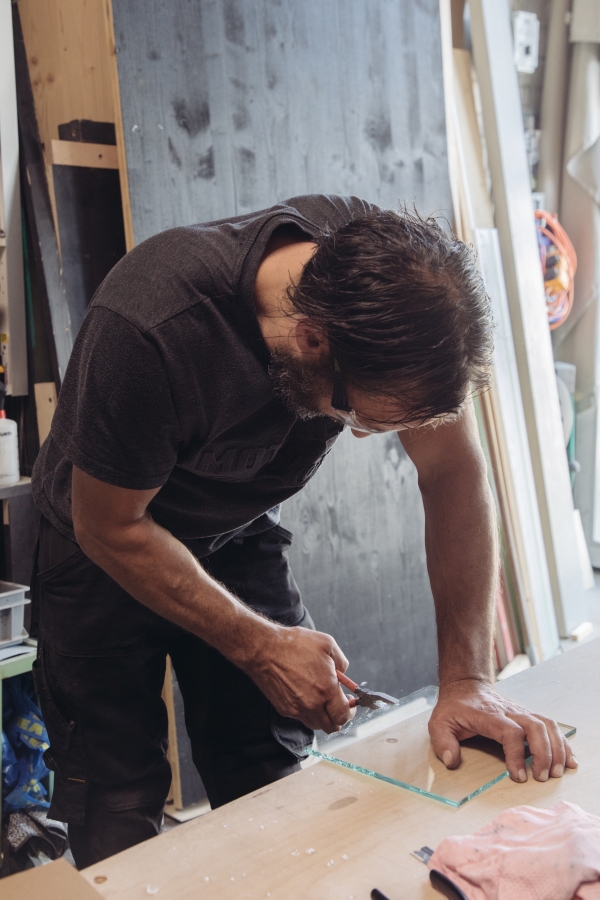
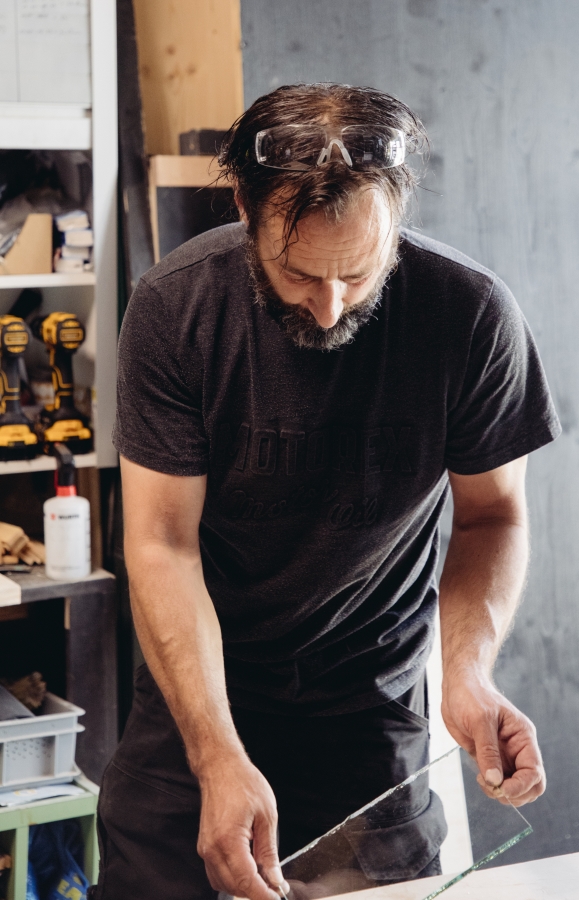
When I was young, I completed an apprenticeship as a carpenter, and then worked for years in this profession. As a craftsman, I spent every day working with my hands and various materials. The first work of art I made was a gift for my now wife. I created a portrait of her; however, at that time, I was using spray cans to paint. Seeing the joy in her eyes when I gave her the work, and the appreciation I received for it, filled me with enjoyment. At that moment, I realized that I wanted to continue to discover artistic creation, and to further explore my own artistic language.
At what point did you realize that art would become not just a passion, but your life’s work?
Without formal training, how did you shape your own visual language? Were there artists or thinkers who helped guide your vision early on?
Since I didn’t receive any professional art training, I didn’t have mentors in the classical sense that accompanied me as an emerging artist. However, I talked to many people about art in general. From these conversations, I took away elements and inspiration that made sense to me. I then tried to implement these thoughts. In particular, my idols were other artists who moved the art world with something new and ingenious, and were successful. For example, I was fascinated by the force and layering in sculptures by Tony Cragg, or sculptures by John Chamberlain, who works with crushed car steel. Also, Donald Judd’s clearly structured works were a source of inspiration.
Glass has become your primary medium, and the hammer your instrument. What led you to explore this dialogue between fragility and impact?
immersive works that also play with the position of the viewer in a space. What I like about the face as a motif, however, is that faces are universally recognizable. Everyone knows what a face looks like. It takes very little visual information to make a face recognizable; it works worldwide.
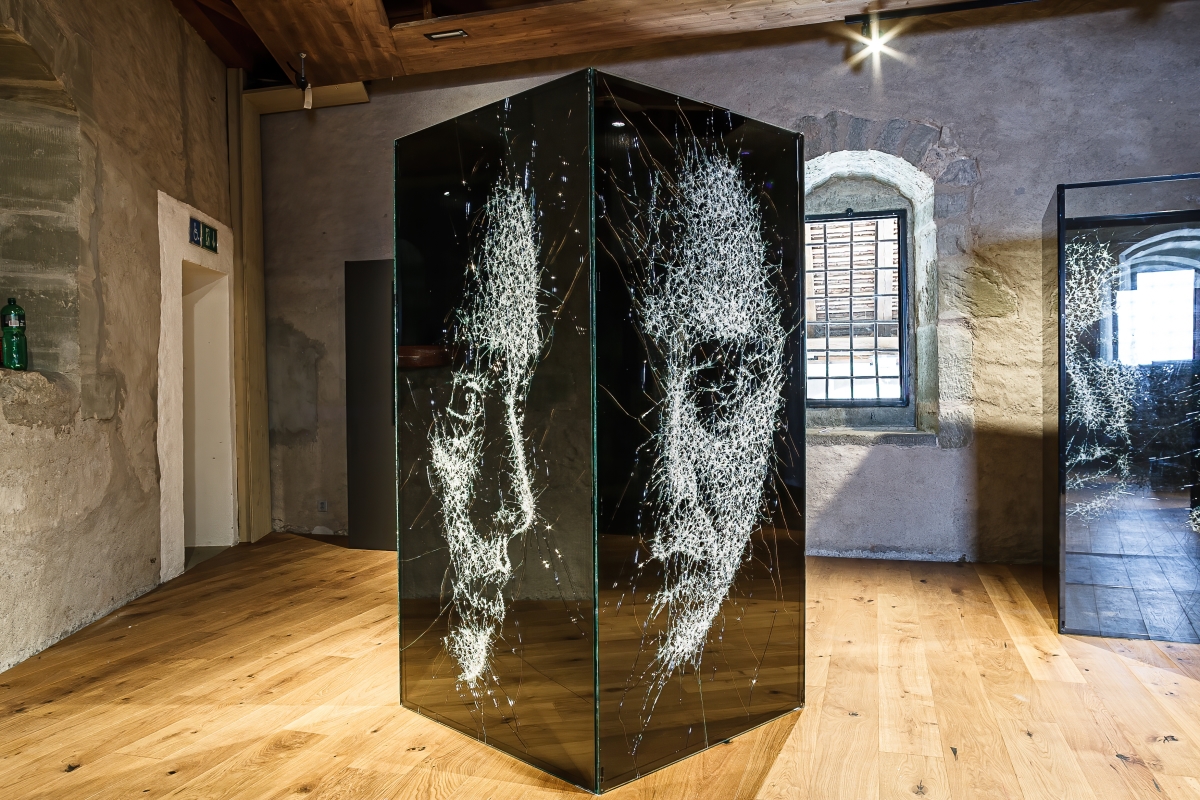
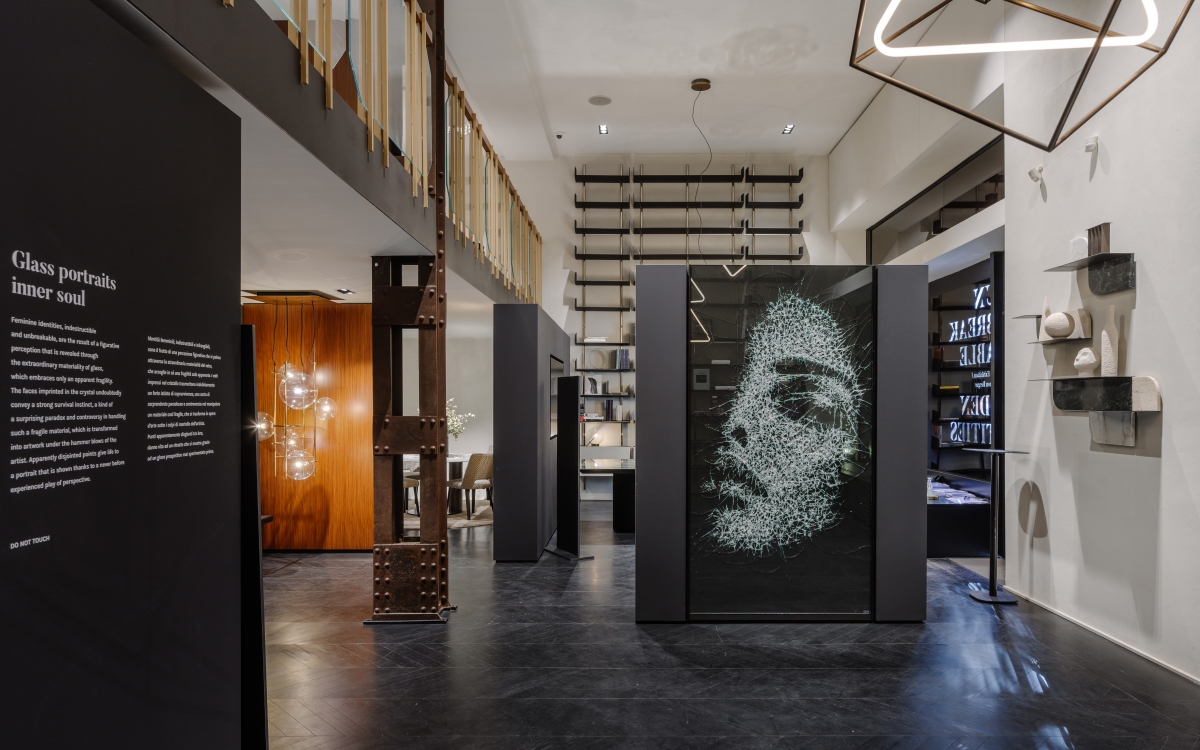
Also, my personal expectations and the fear of not meeting my own requirements sometimes prevent me from starting a new work. In these moments, I then try to block out these thoughts, and concentrate on the essentials: my passion for making art, and my heart and soul that I put into its creation.
Your portraits often seem to appear from within the glass, as if already living inside it. How long does it take to bring one to life?
Art has become both your profession and your refuge. Outside the studio, what brings you peace or inspiration?
Social media has expanded your audience worldwide. How has this visibility influenced your creative direction?
You’ve experimented with light, mirrors, and space. What role does interdisciplinary exploration play in your evolution as an artist?
Architecture as a discipline has always interested me very much; this is perhaps a result of my background in carpentry. I especially like an interdisciplinary approach—the mixture of art and architecture and projects that combine both. For instance, Not Vital is artist who inspires me again and again.
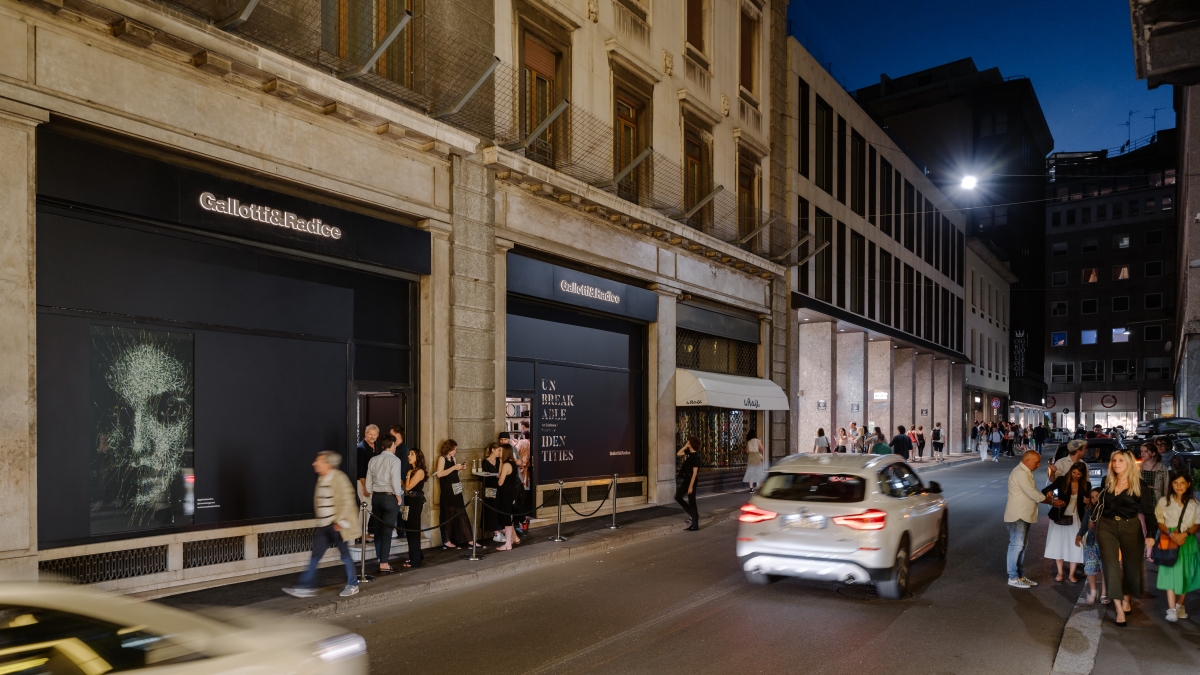
The solo exhibition at Museo del Vetro marks an important chapter in your career. What does this show represent for you personally and artistically?
It is an insanely exciting time for my artistic development. This new context allows for a transformation of my ideas that are currently in the process of being created. The change is exactly what inspires me. Transformation is also at the center of my art: a portrait emerges from broken glass; beauty emerges from destruction.
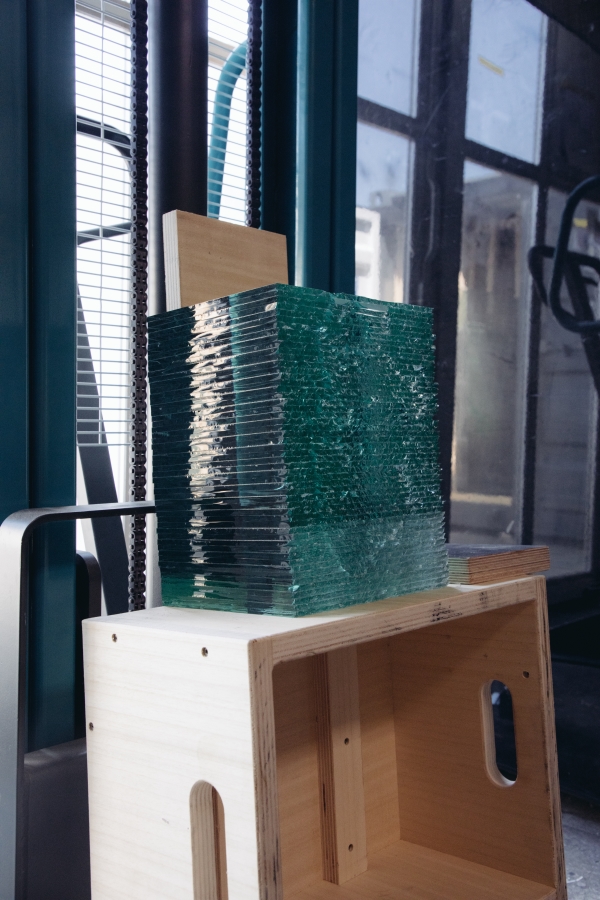
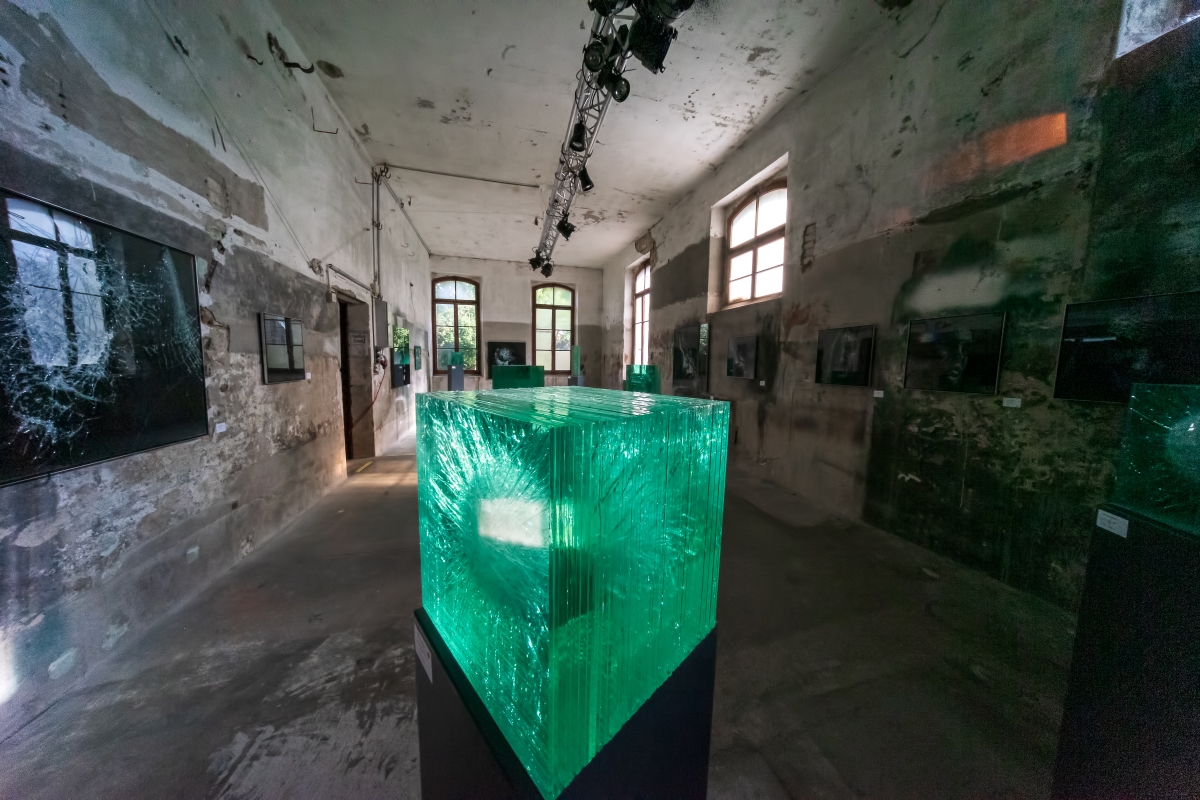
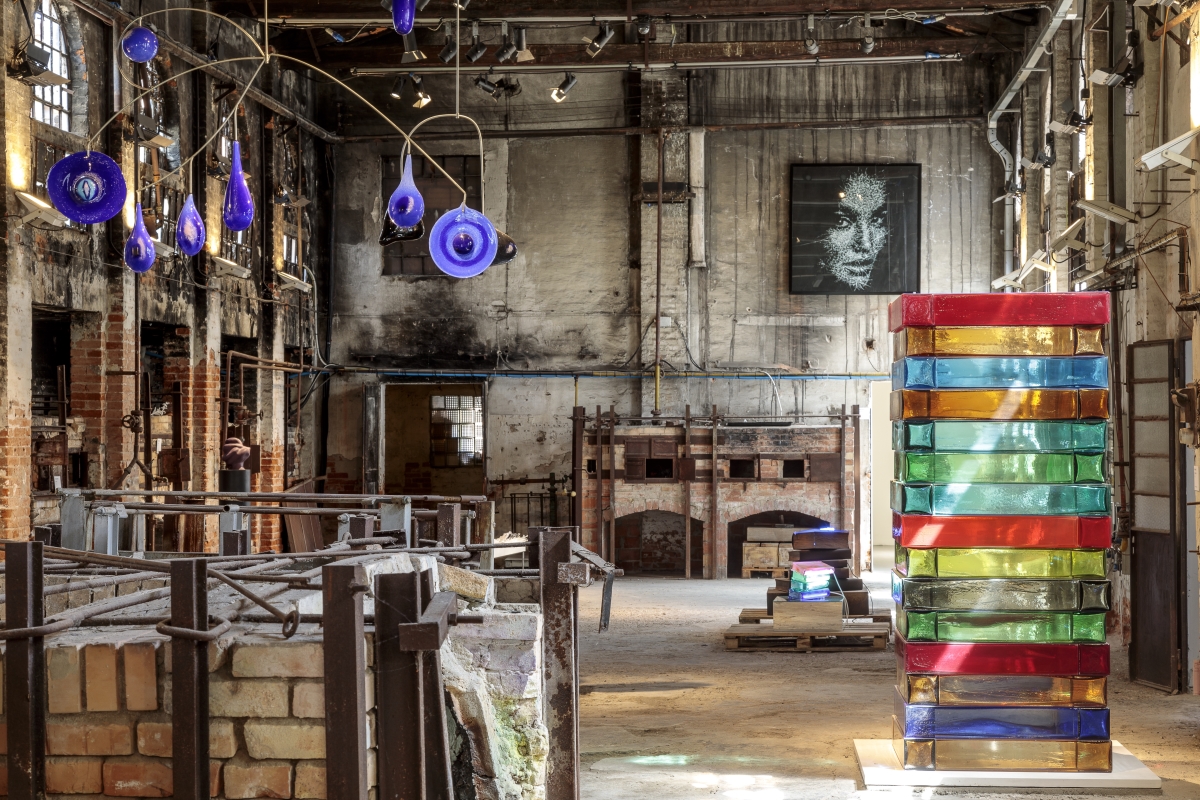
Of course, it is a great honor for me as an artist, but also personally, to show my “destroyed“ glass works in this stronghold of glass making. It is an exciting new playground for the unfolding of my works. Transformation is constantly present in glasswork: the heating, the fusing, the shaping of the glass, and the coloring. The fact that I can now exhibit here with destroyed glass works is a great milestone.
In the Glasstress exhibition last year, I was able to exhibit with artists such as Tony Cragg, Erwin Wurm, Jaume Plensa, and Thomas Schütte. Now my works are shown in a solo exhibition, as was the case of Tony Cragg, who is one of my artist idols.
Your favorite phrase…
It‘s all difficult until it becomes easy.
Editor: Kristen Evangelista
Artist contact www.simonberger.art