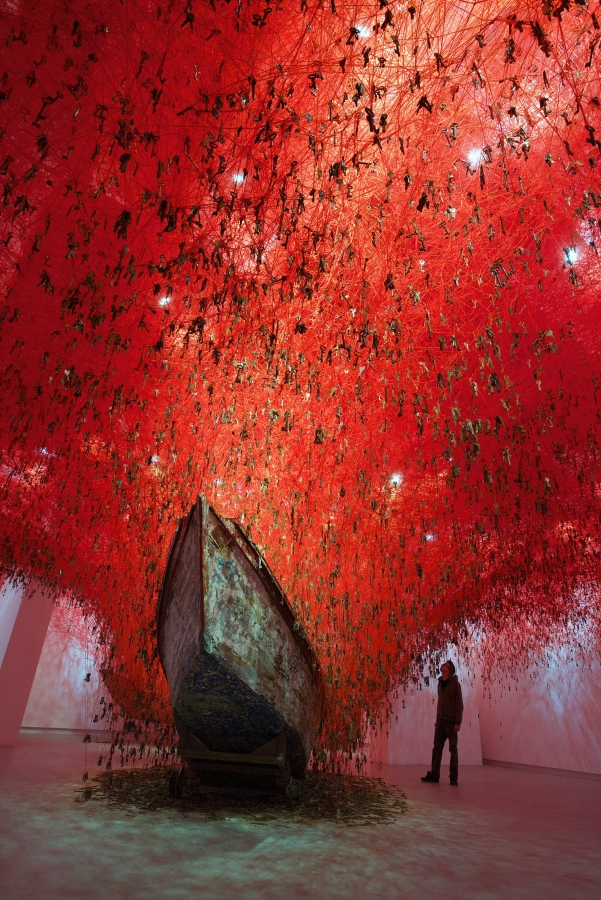
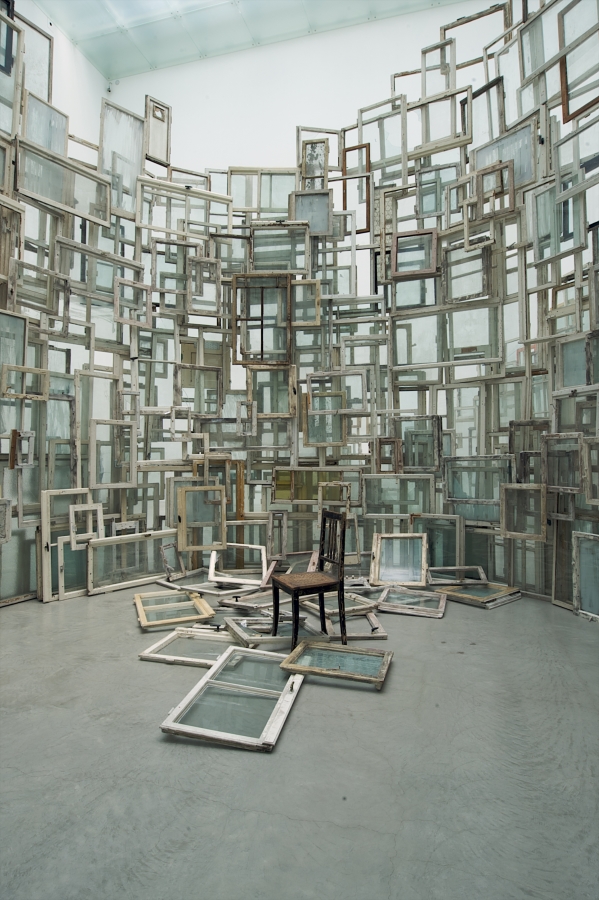
Chiharu Shiota weaves spaces that exist between the visible and the invisible, transforming memory into architecture. Born in Osaka in 1972 and based in Berlin since 1999, she is known for her vast thread installations that turn entire rooms into haunting, immersive environments. Her works, made of interlaced webs of yarn, suspended objects, and fragments of everyday life, explore themes of connection, absence, and the fragile continuity of existence.
Each installation is both personal and universal, a meditation on what binds people together and what remains when they are gone. Whether filled with keys, dresses, letters, or boats, Shiota’s spaces become metaphors for the body and soul—sites where emotions, memories, and time are held in delicate suspension. Her art confronts mortality not with despair but with tenderness, tracing the invisible threads that link life and loss.
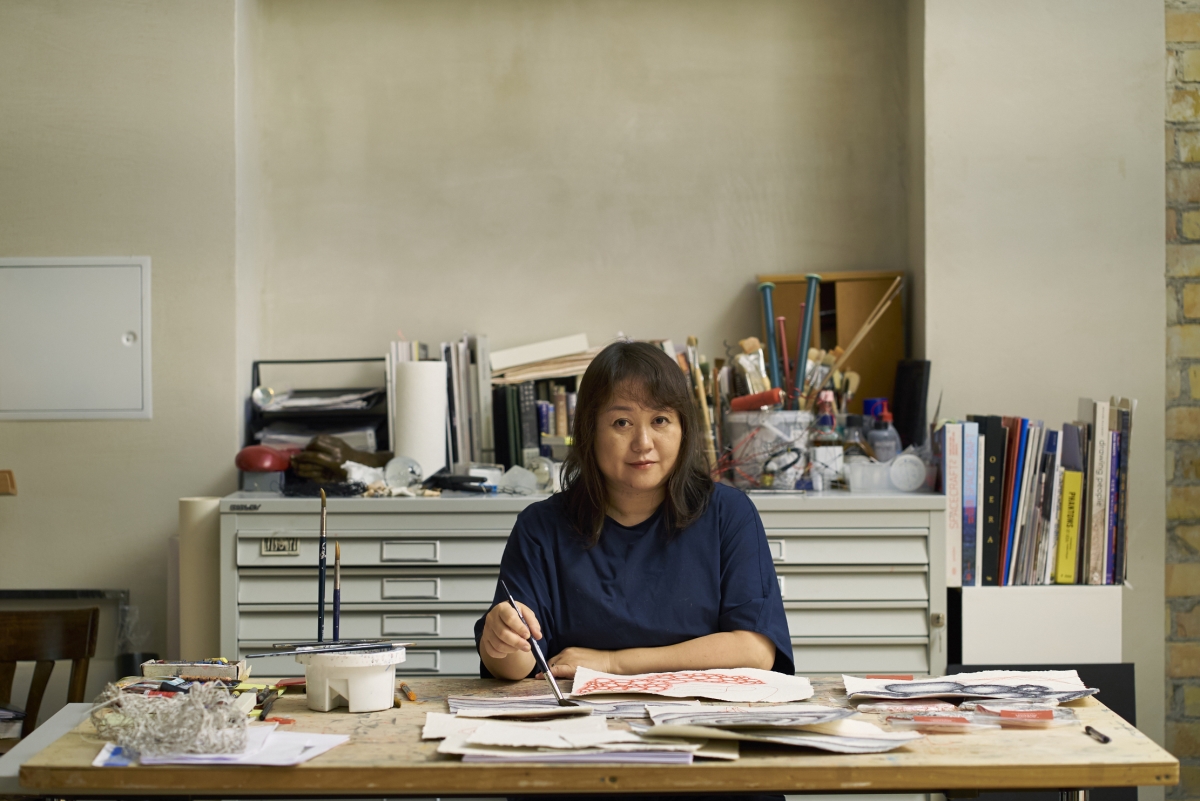
In this conversation, Shiota reflects on her journey from Japan to Germany, her evolution from painting to performance and installation, and the profound shift in her practice after facing illness. Speaking from her studio in Berlin, she reveals how her work continues to grow from a single impulse: the need to connect what cannot be seen, to give form to memory before it disappears.
An Interview with Chiharu Shiota
By Carol Real
How would you describe your early years in Japan? What moments or impressions from your childhood have stayed with you?
I was born in Osaka but my parents’ house was in the countryside. I always played outside, picked flowers, or played with the earth. I made a kind of vegetable shop with handmade mud squares and flowers or grass. We went fishing and spent a lot of time in nature. While I spent a lot of time alone and created my own world, I also played with friends.
When did you first realize that art would become your path?
My parents owned a small factory and I saw the factory workers every day. They were making a lot of fish boxes every day and they were working with machines, almost becoming like machines. I started to think that I wanted to do more spiritual and creative work, and then I decided to become an artist. When I had my first solo exhibition as a student, I felt like an artist.
Many artists face resistance from their families when choosing a creative path. Did you ever encounter that tension, or were your parents supportive of your decision?
My parents didn’t stop me from becoming an artist and they were never against it. I was quite sure when I was 12 years old. I could make drawings better than other children and my teacher complimented my skills. I was never worried about how to live, and I was sure I could live through my art.
Moving to Berlin in 1999 was a decisive moment for you. How did that change influence your vision as an artist?
Berlin had a different energy after the wall fell. There was construction everywhere and so many artists and curators came to Berlin. It was a mixed culture—people were poor but sexy. All these art shows were happening in old buildings and in basements. I thought I could be myself. I could create my artwork and just have
exhibitions.
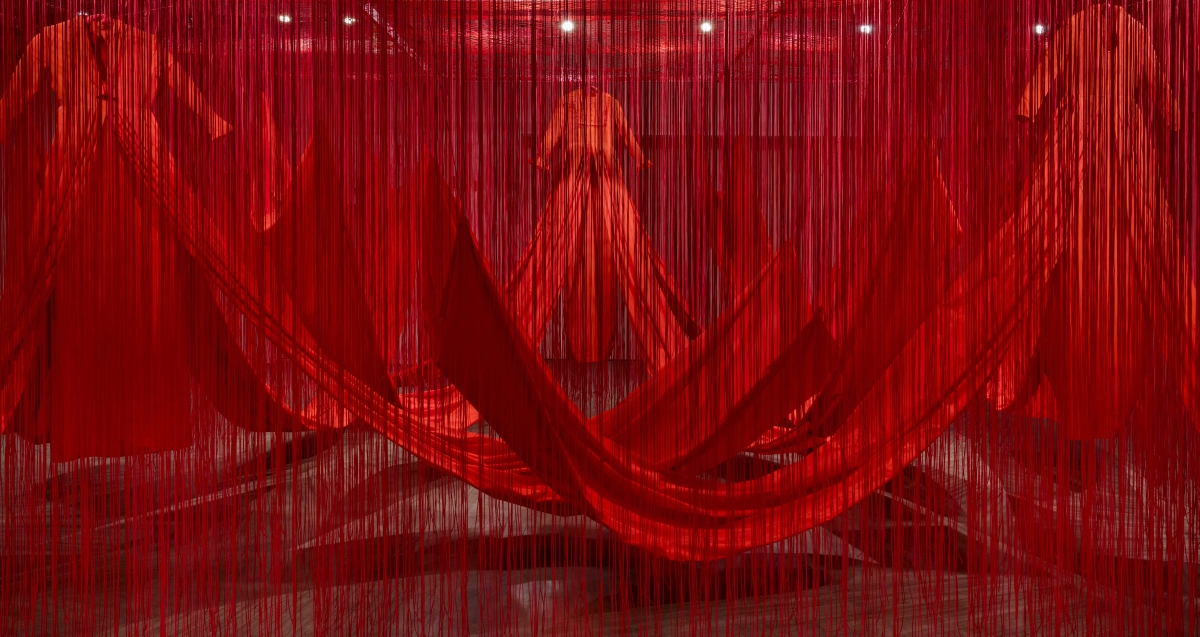
You started your artistic journey as a painter, later explored performance, and eventually found your voice in large-scale installations. How did this transition unfold, and which medium feels most natural to you today?
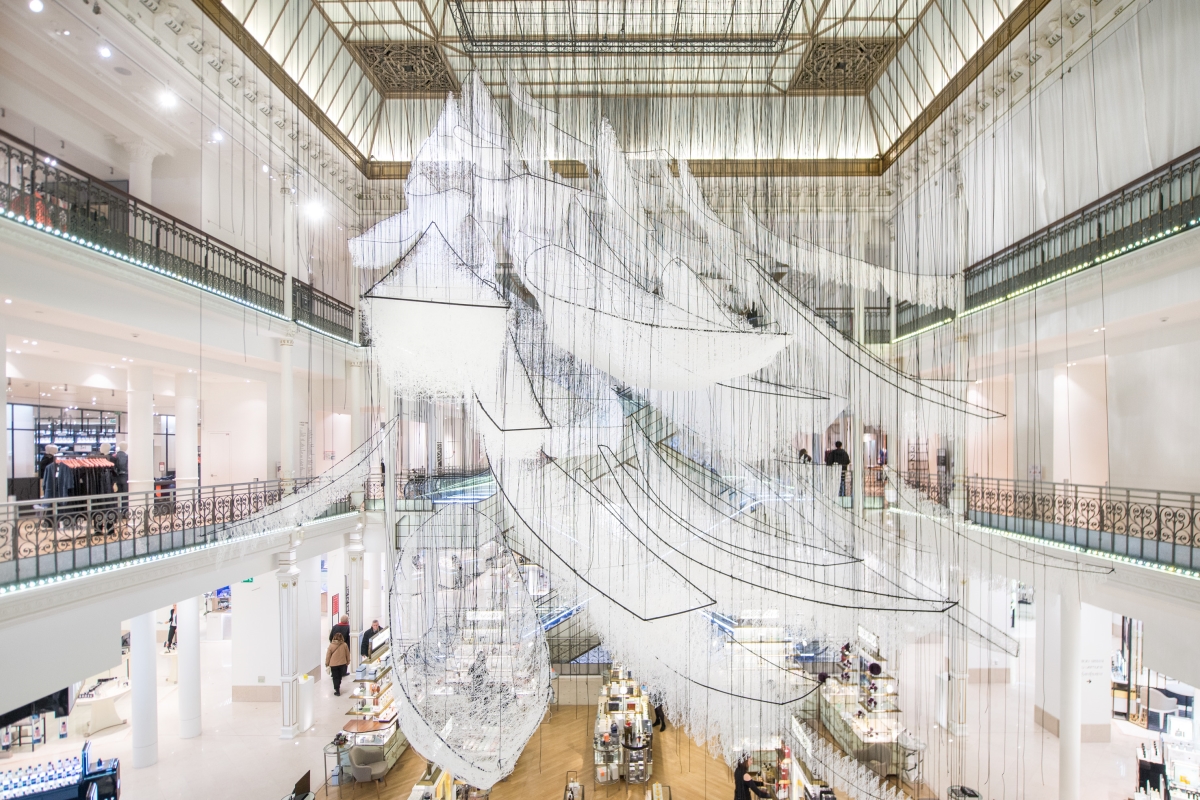
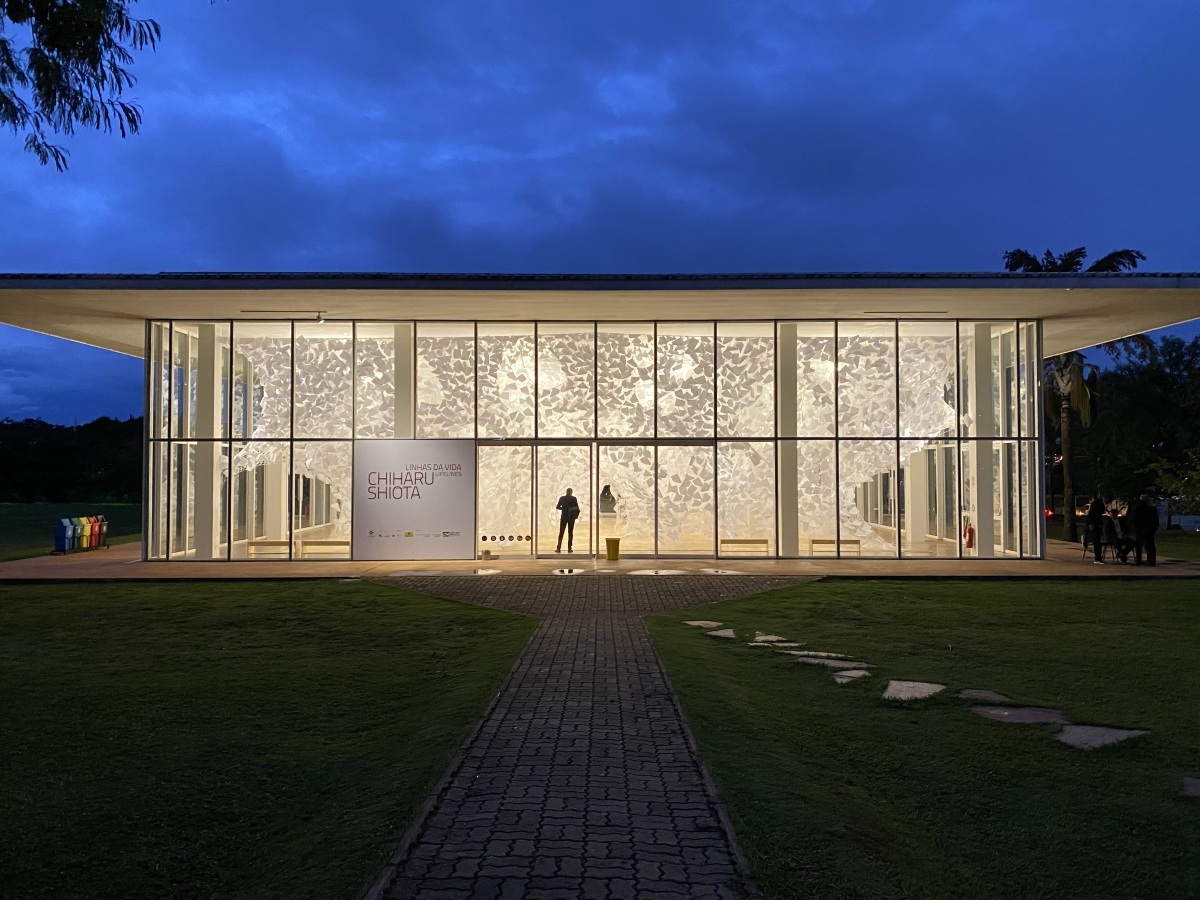
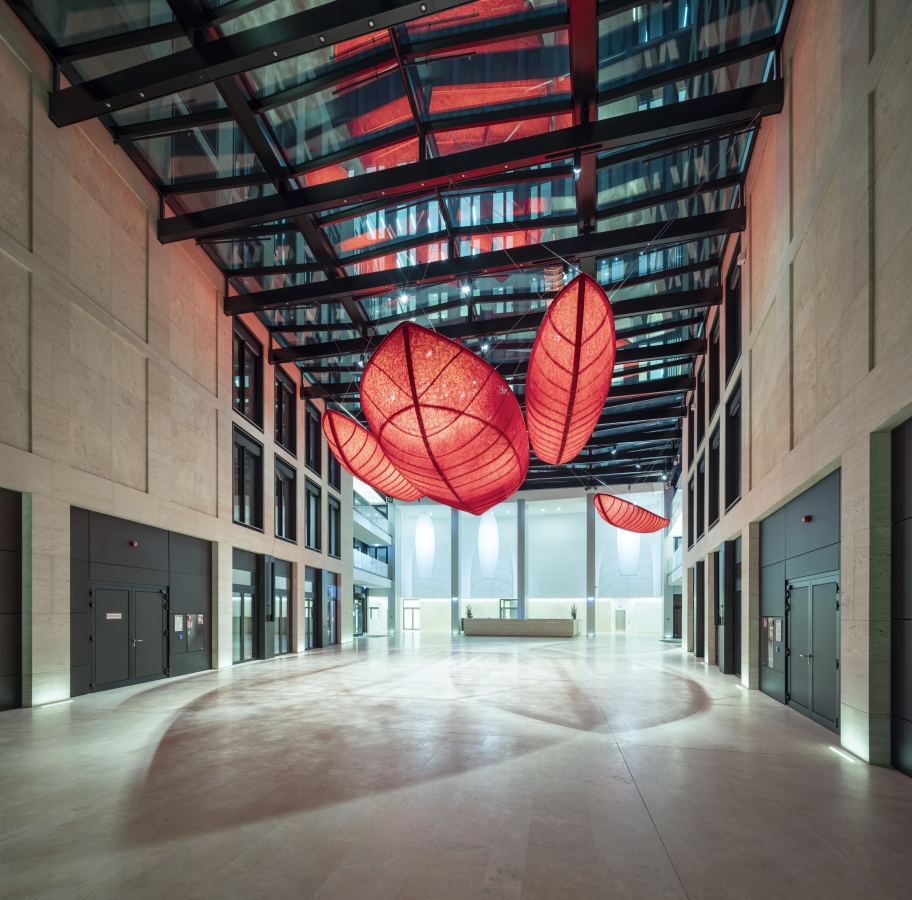
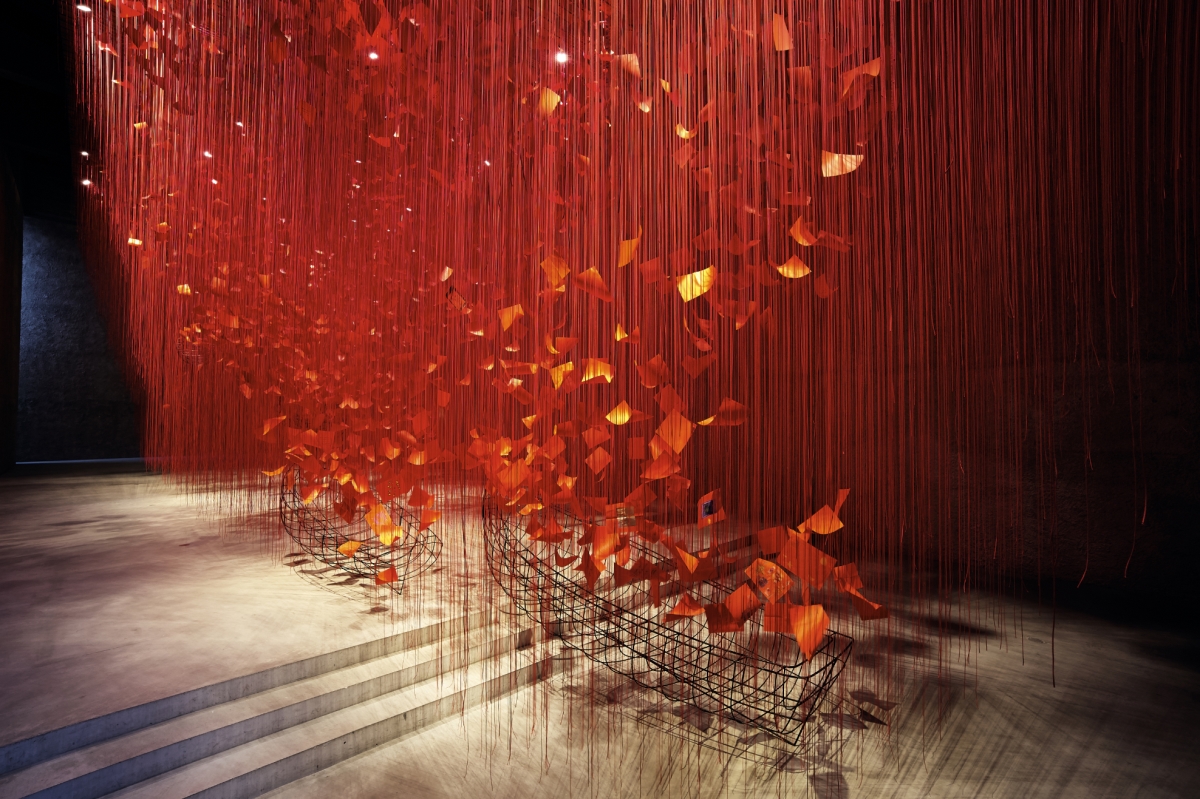
I am an installation artist but almost every day I create drawings too. I began drawing again after my first cancer diagnosis. When visitors come to the room, they are immediately surrounded. Suddenly, I can immerse their whole body in my art space—it is like a drawing in the air.
Much of your work deals with connection—between people, memories, and time. What emotions guide you when creating these immersive environments?
If you are living in this society, you are connected and when someone dies, their memory is even stronger. I believe everyone is connected with an invisible thread.
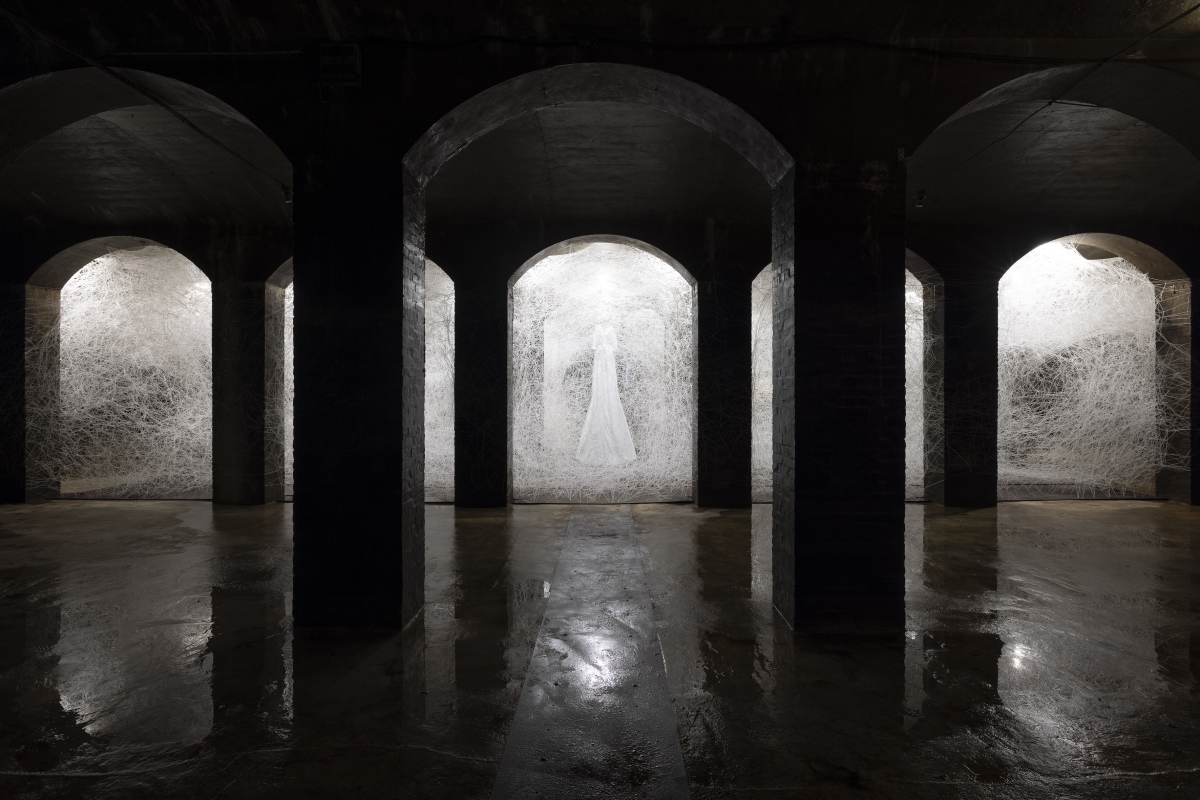
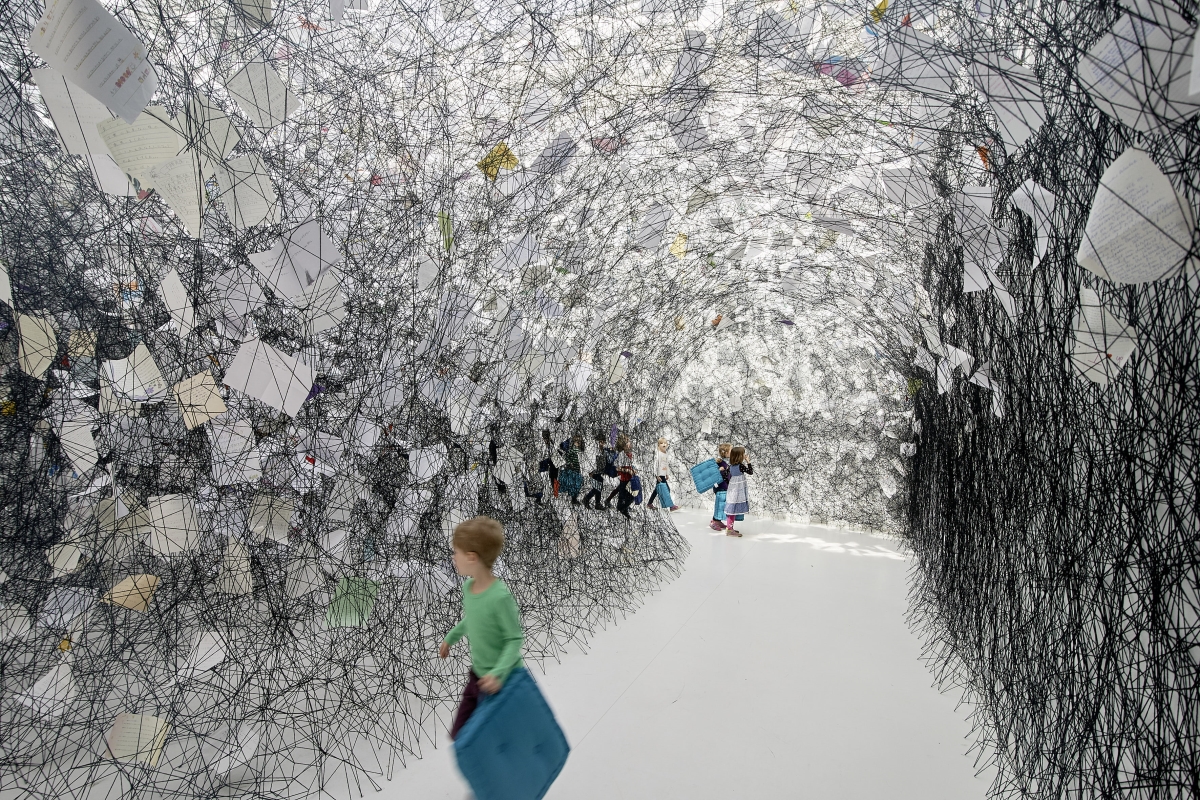
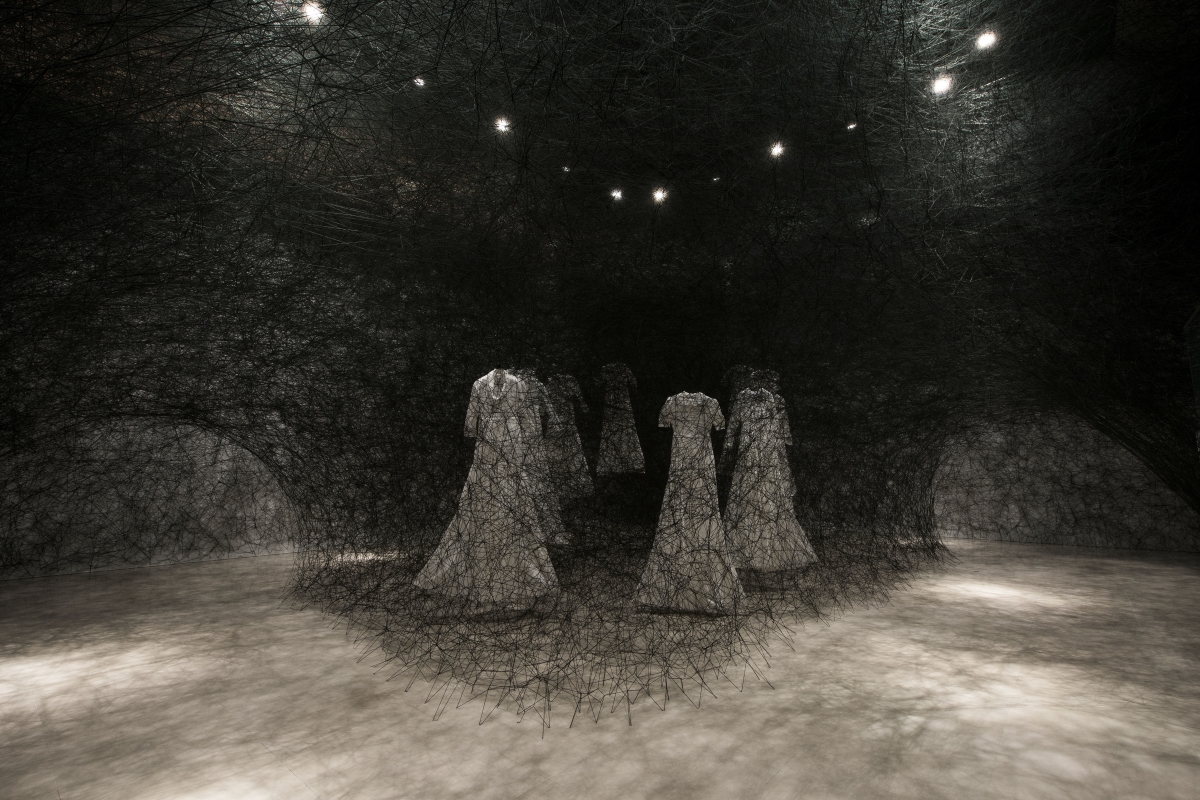
Many of your pieces feel deeply introspective. How have personal experiences influenced that emotional and conceptual depth?
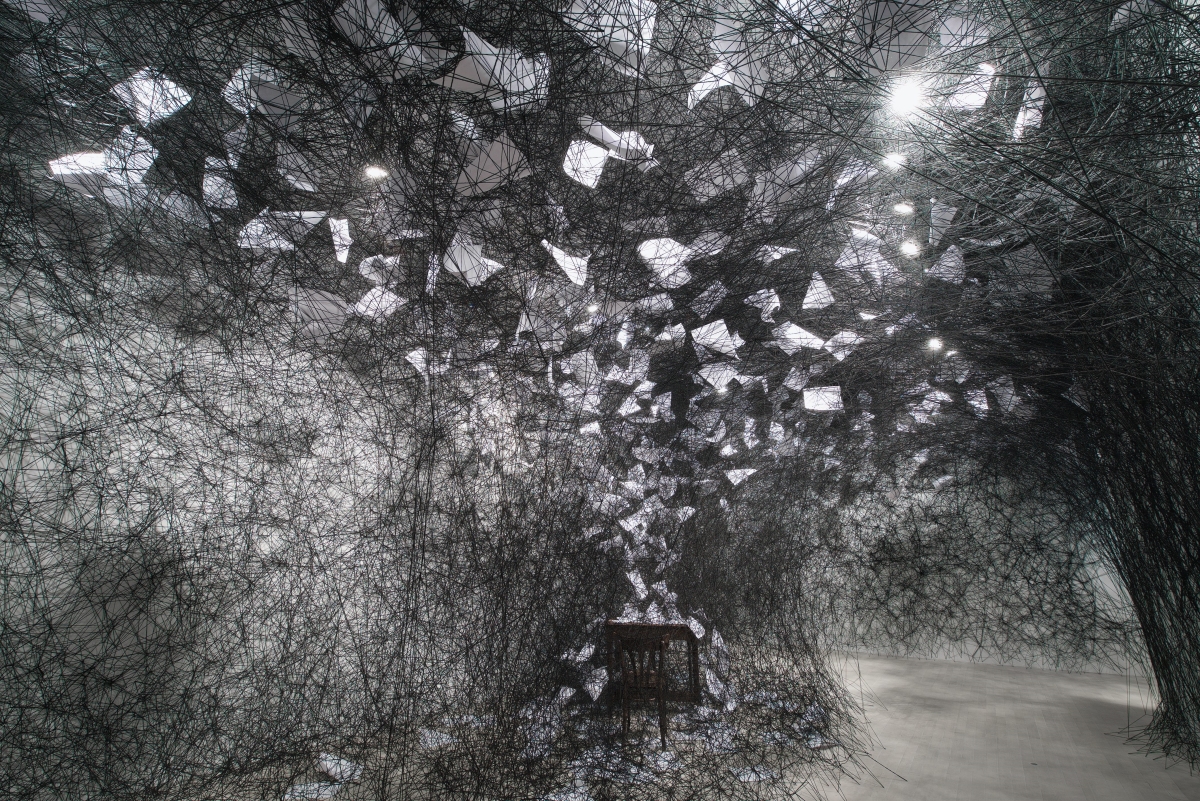
When I was sick and particularly when I was diagnosed with cancer, my art changed. When I had chemotherapy, the medical system was very sterile and I felt detached from my body. I wondered where I was and where my soul was. I needed to explain more with my art. This sentiment has become present in my art.
Viewers often describe your installations as meditative spaces. What steps guide you from the first idea to the final form?
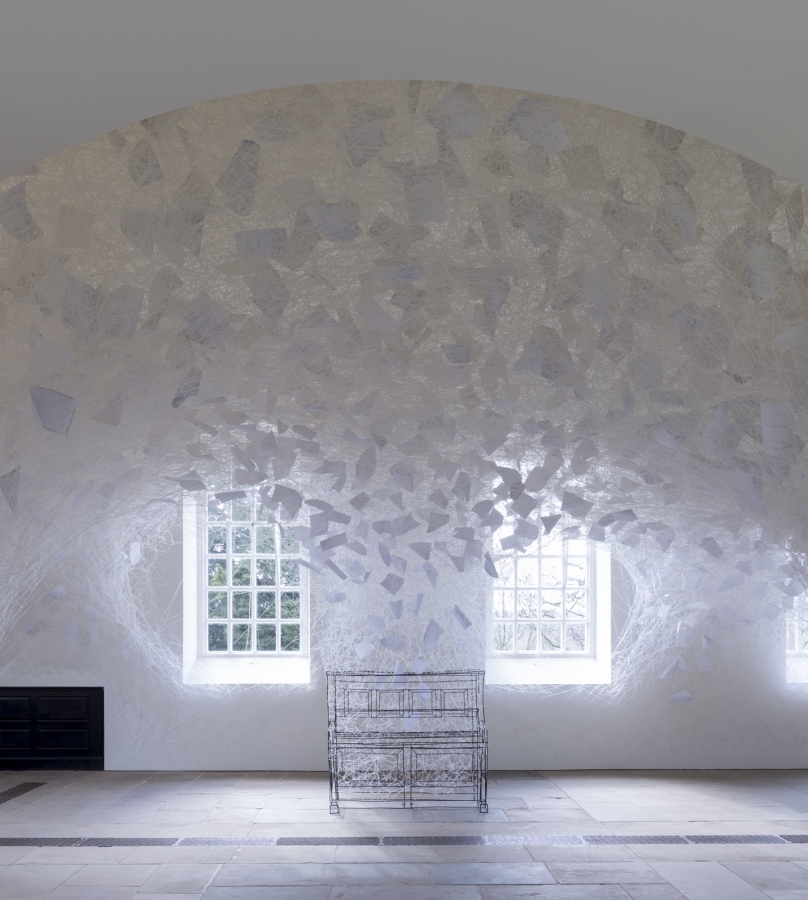
There are different kinds of installations and it normally takes two weeks with ten people. When I see the space, I first make a drawing with yarn. Every time it is different and the yarn is a mirror to different feelings. It is like human relationships—it can be tangled, lost, or cut off. I need to see the space first and start to think; it also depends on the venue. For Manifesta 14, the concept was that everyone has a story. I was collecting the story of everyone in Kosovo because history is so complicated. Everyone has different opinions on life, death, and love. I wanted to know more about
the people.
You frequently include old photographs in your installations, giving them new meaning through your web-like structures. What draws you to these images, and how do you decide which ones to include?
I often go to the flea market in Berlin and I find old photographs from families—a lot of albums—so I feel I know this person, or owner of these photos. People kept these albums all their life and it was so important to see the past memory. When the person dies, it just becomes material and there is nobody anymore—but I see there is memory inside and I want to connect it through string.
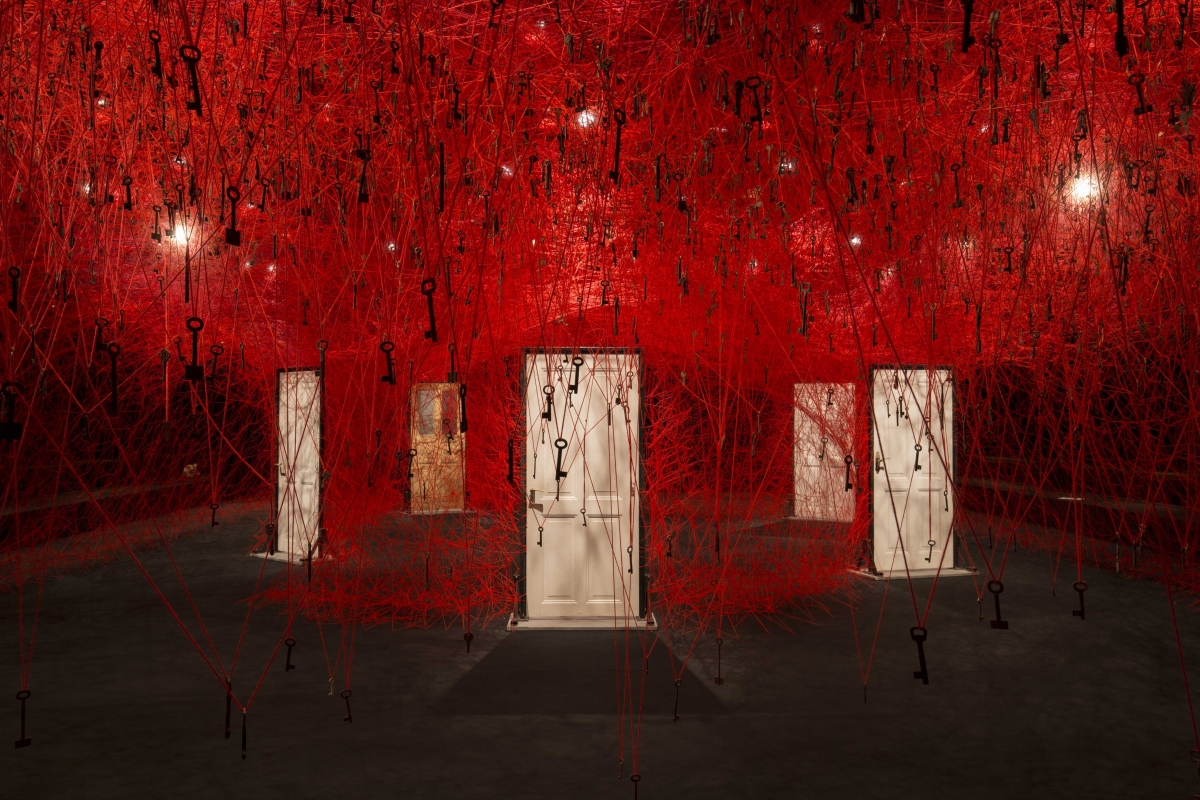
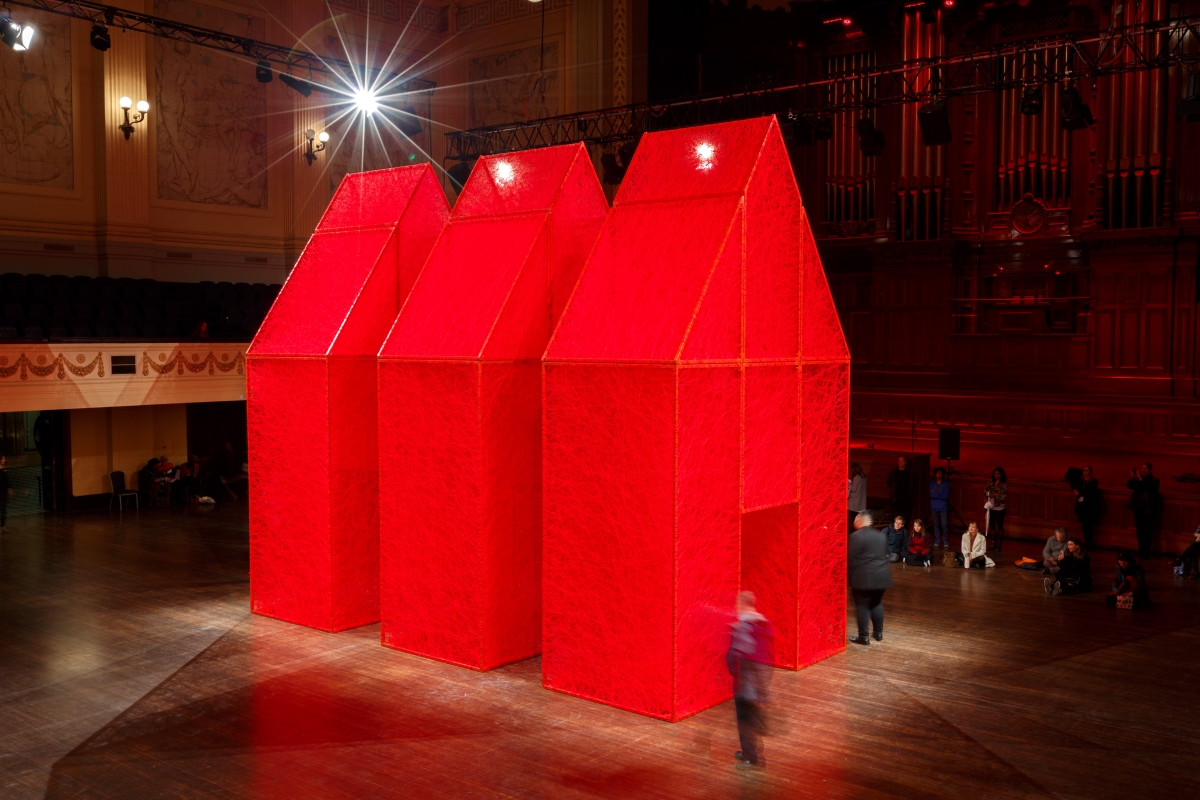
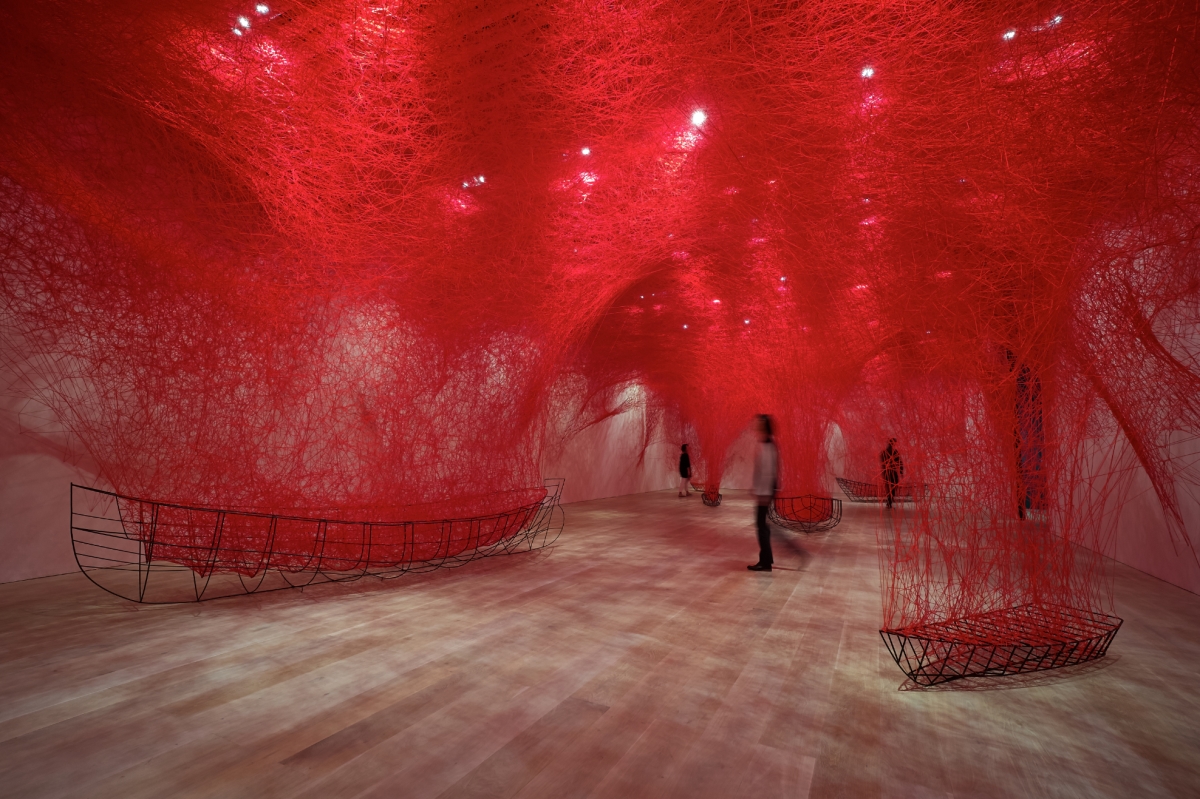
Signs of Life at Galerie Templon drew remarkable attention. Since then, where have you been presenting your work?
I am very happy that the people wanted to see my work and even waited in line. I haven’t had a show in New York but I had exhibitions in recent years at the Smithsonian in Washington, DC, the Museum of Contemporary Art in Jacksonville, The Mattress Factory in Pittsburgh, and all over the world. And now, I also have an exhibition at the Hammer Museum in LA.
How do you think your work stays with viewers long after they’ve seen it?
People see my work and my installations but my installations are ephemeral. I have to cut the string, and I cannot keep the installation yet people remember the
experience for a long time. I don’t know why—maybe because they walk through it or they feel the same emotion.
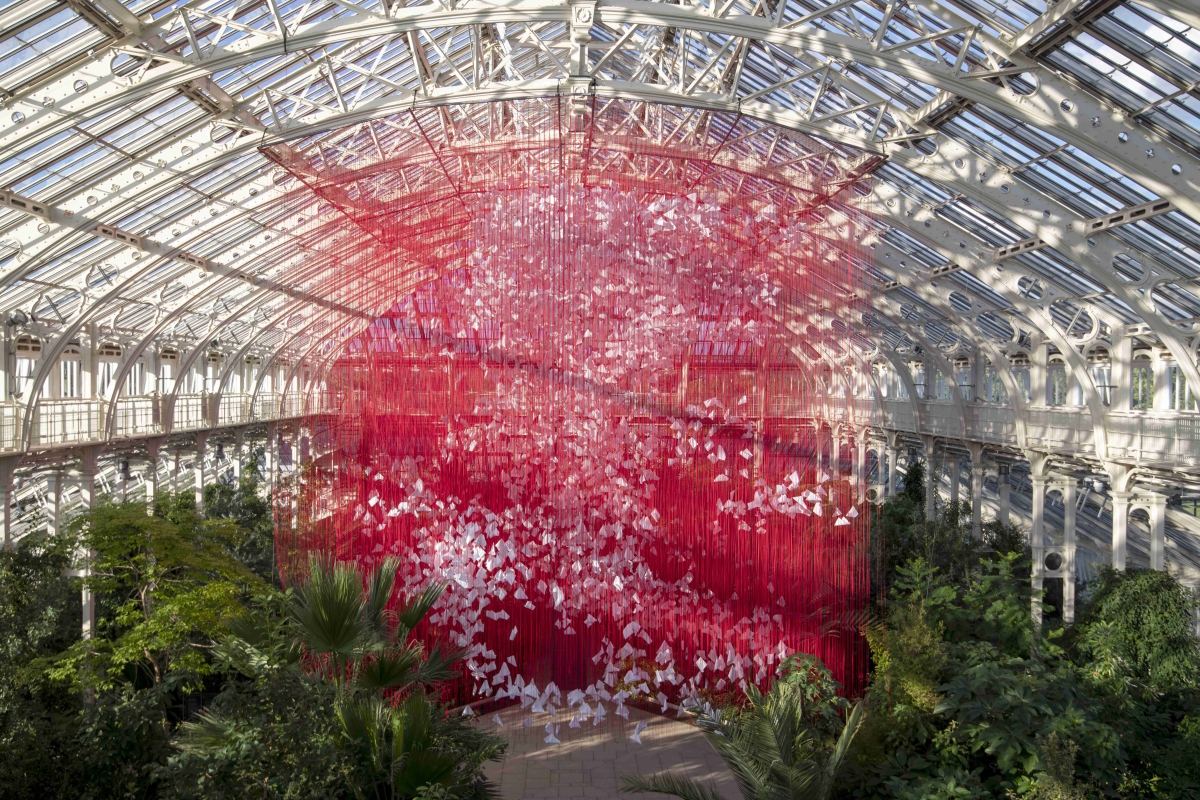
One of your most emblematic works, Dialogue with Absence (2010), is still being discussed. Do you think that women are really making progress towards equality?
When I lived in Japan, it was difficult as a woman and it was a man’s world. Then, I moved to Germany where my complex was gone and I felt like women were more equal. In Japan today, I still have the same feeling that the position of women is very low—there is still a lot to change. It has become better but not enough.
It might be impossible to choose, but is there an exhibition or work that feels especially meaningful to you?
I cannot choose one, but my favorite exhibition was The Soul Trembles, which was held in 2019 at the Mori Art Museum in Tokyo. The exhibition traveled to Korea, Taiwan, China, Australia, and it is in Indonesia at the moment.
What keeps you grounded in your practice, and what continues to drive you forward?
I like to have exhibitions. I cannot live without exhibitions. I live to make art.
Editor: Kristen Evangelista