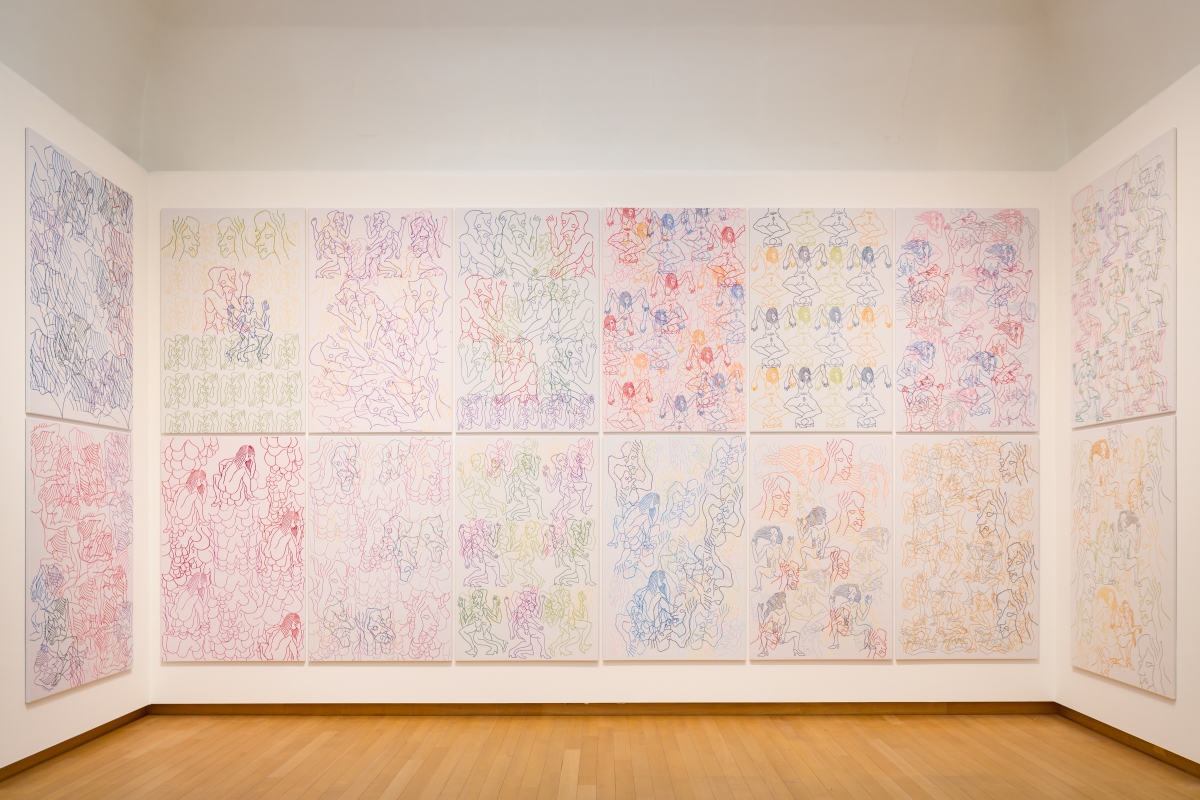
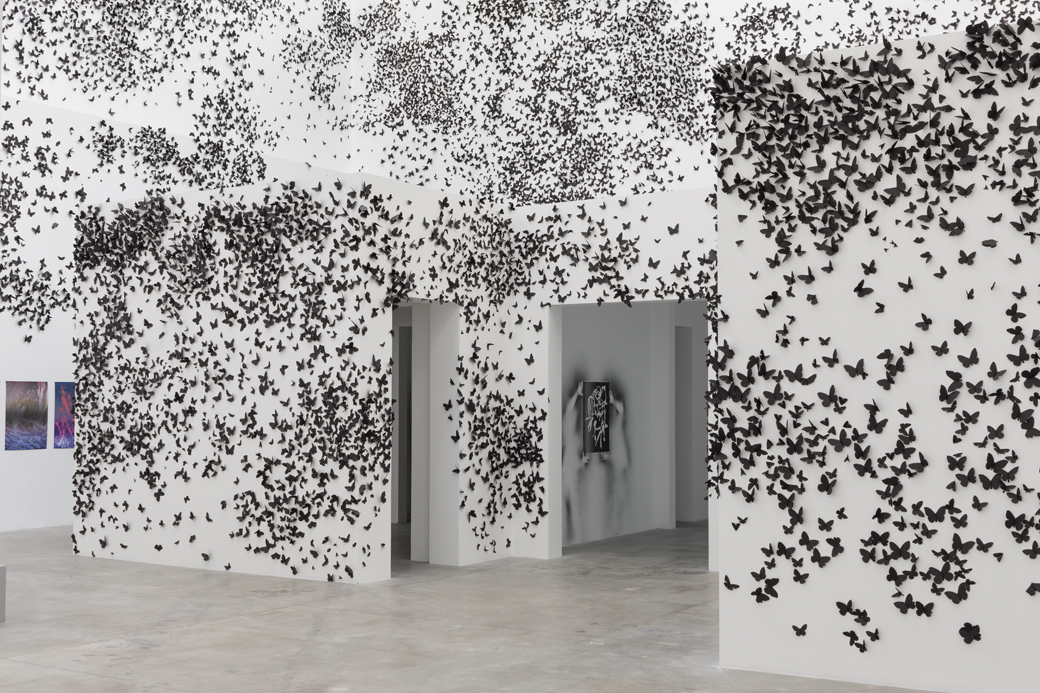
Few artists have explored the limits of communication with the depth and persistence of Carlos Amorales. For more than two decades, the Mexican artist has built a body of work that questions how meaning is produced, translated, and sometimes lost. His practice moves fluidly between film, drawing, performance, and sound, blurring the lines between image and sign, language and silence.
From his Liquid Archive—a vast visual alphabet of shapes and symbols developed since 1998—to his more recent explorations of choral music and gesture, Amorales continues to expand the possibilities of artistic language. His work often emerges from collaboration: with musicians, wrestlers, dancers, and writers, each encounter becoming a way to test how art can exist outside its own boundaries.
In this conversation, Amorales reflects on art’s relationship to society, the fragility of communication, and the poetics of collaboration. Speaking from New York, where his exhibition Words of Mouth and Hands opened at Kurimanzutto, he shares a vision of art that is not only visual but profoundly human—one that listens as much as it speaks.
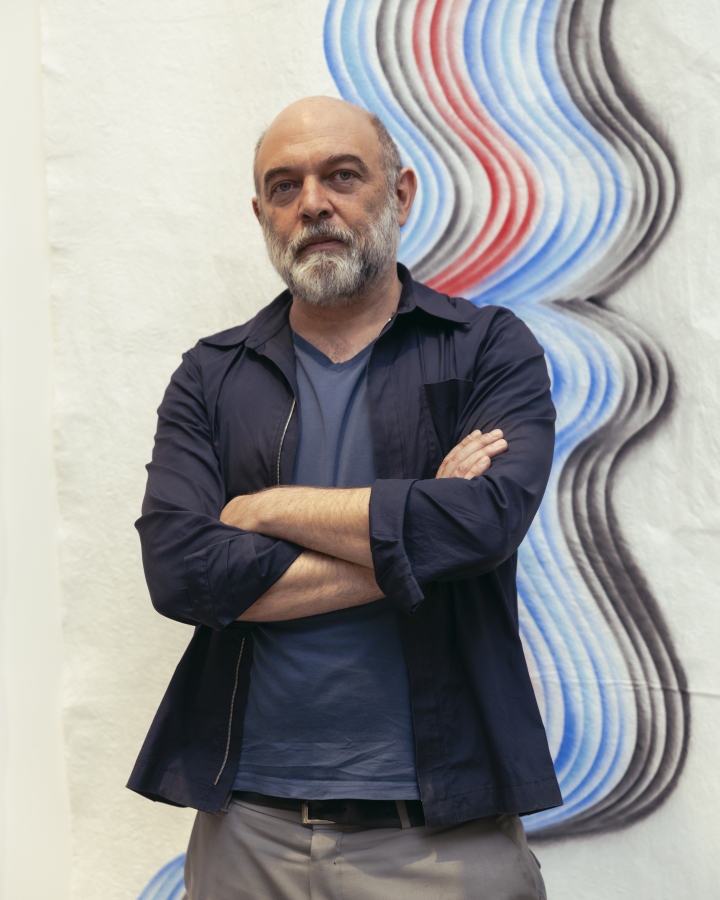
An Interview with Carlos Amorales
By Carol Real
Art often exists beyond its own boundaries. How does the relationship between art and society manifest in the work, and what draws the artist to collaborate with people outside the visual arts?
I have always been interested in how art relates to society beyond the art world. A critical question in my work is whether art remains art when situated outside the art world, or if it becomes something else or loses its meaning. It is because of this question that I have been interested in collaborating with non-visual artists, such as wrestlers, actors, dancers, musicians, writers, journalists, etc. I believe this has allowed me to open up to the world beyond our professional context. Art for art’s sake is fascinating, but even more so when it speaks about life and what we, as people, share.
Language, technology, and the body appear as recurring threads throughout the practice. In what ways do these elements intersect, and what do they reveal about communication and vulnerability?
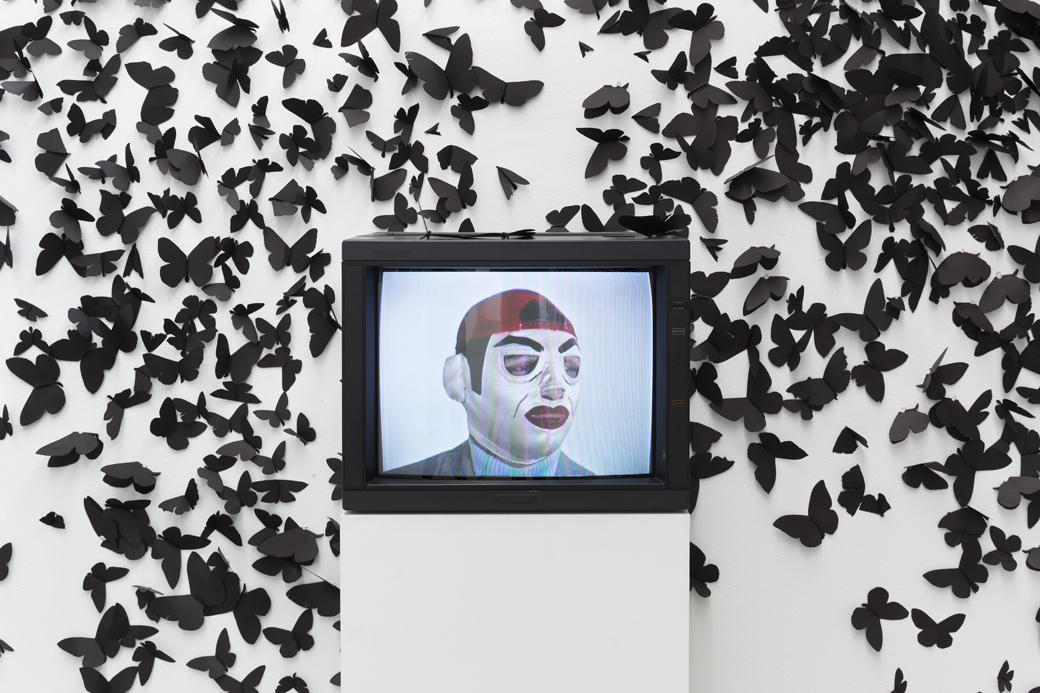
As a member of a Basque-French family that migrated to Mexico during the mid-20th century, and having spent three years of my childhood in London followed by residing in the Netherlands from 19 to 34, I have a complex connection with language. I have experienced the process of acquiring and relinquishing various languages at different stages of my life. I am very interested in the moment when, faced with language incomprehension, one becomes defenseless and loses agency. The foreigner always has to make sense of signs in relation to the context in which they are inscribed, so they are perpetually suspended in a second or third plane, in a second or third time, meaning they always arrive a bit late. The foreigner is never on time. This exhibition addresses that sense of foreignness, not in a cultural or geographical sense, but in terms of an artistic discipline. It is about venturing into music as a foreigner. To do so, I work with musicians who use their own bodies (voice and clapping) and film them using the ubiquitous contemporary technology of ZOOM, as it records slightly delayed, out of sync.
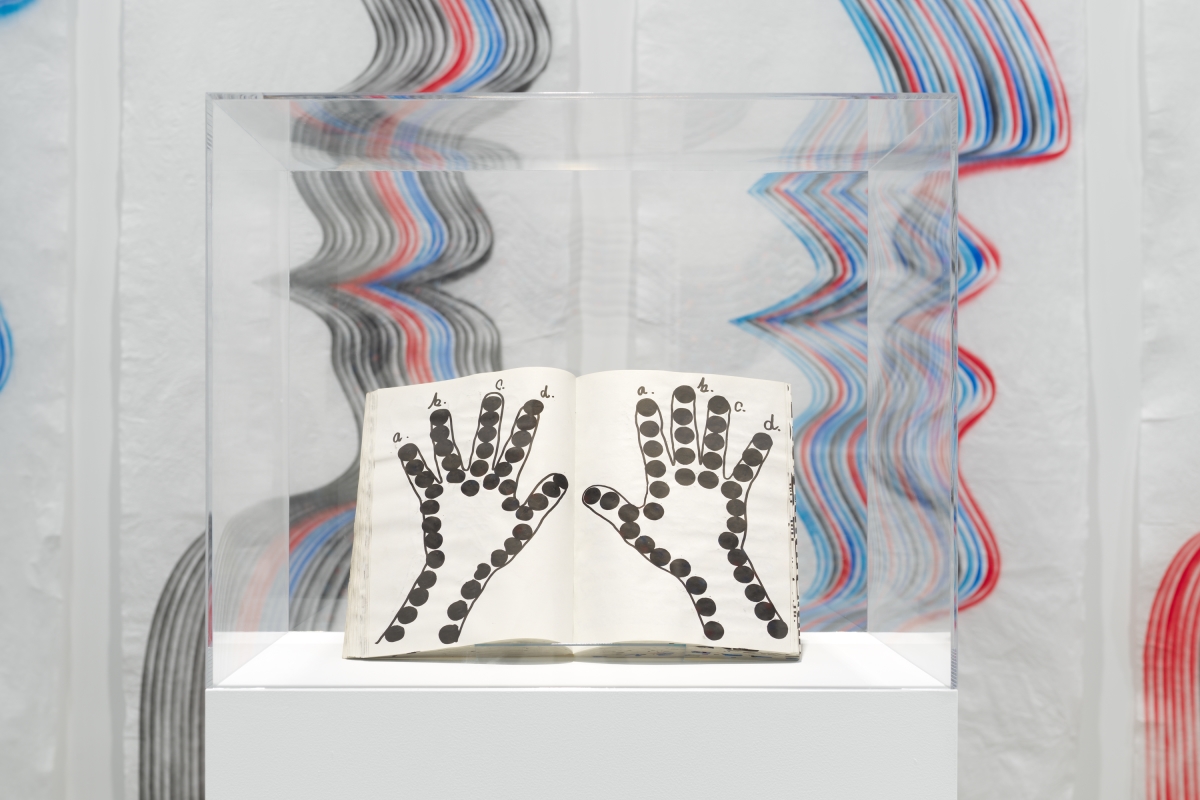
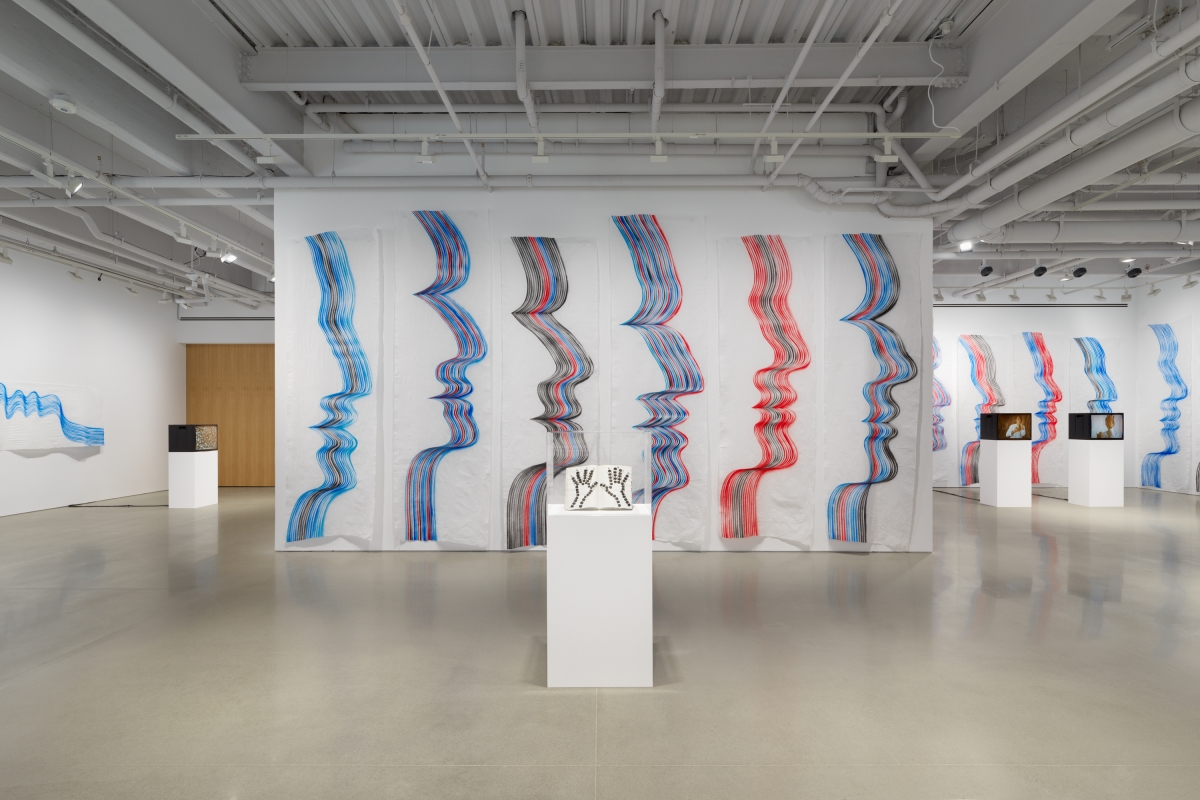
Carlos Amorales, installation view of Words of Mouth and Hands, Kurimanzutto, New York, 2023. Photo by Dan Bradica
From the early performance in the Tijuana Arena to major museum retrospectives, several moments have marked the artistic journey. Which have been the most transformative?
That’s a difficult question to answer! There have been very different and significant moments, like when in 2000, dressed as a wrestler, I entered the Tijuana Arena in front of an audience of 3,000 fans booing me! Or more recently, in 2019, when I presented a retrospective of my artistic career at the Stedelijk Museum in Amsterdam, the city where I studied and spent a lot of time when I was younger. Exhibiting in New York is always very exciting, and I currently have an exhibition at Kurimanzutto in Chelsea.
Collaboration has always been central to the creative process. What lessons emerge from working with musicians, dancers, and other creative professionals, and how do these exchanges shape the work?
Working with other artists and professionals always involves communication challenges. It might seem simple to understand each other among creative individuals, but it requires joint effort. Throughout my career, for example, I have collaborated with many different musicians (from classical musicians to rockers), and it has consistently involved opening up a series of dialogues to reach a common goal. I really enjoy that moment of collaboration because it allows me to discover someone else’s world and broaden my knowledge.
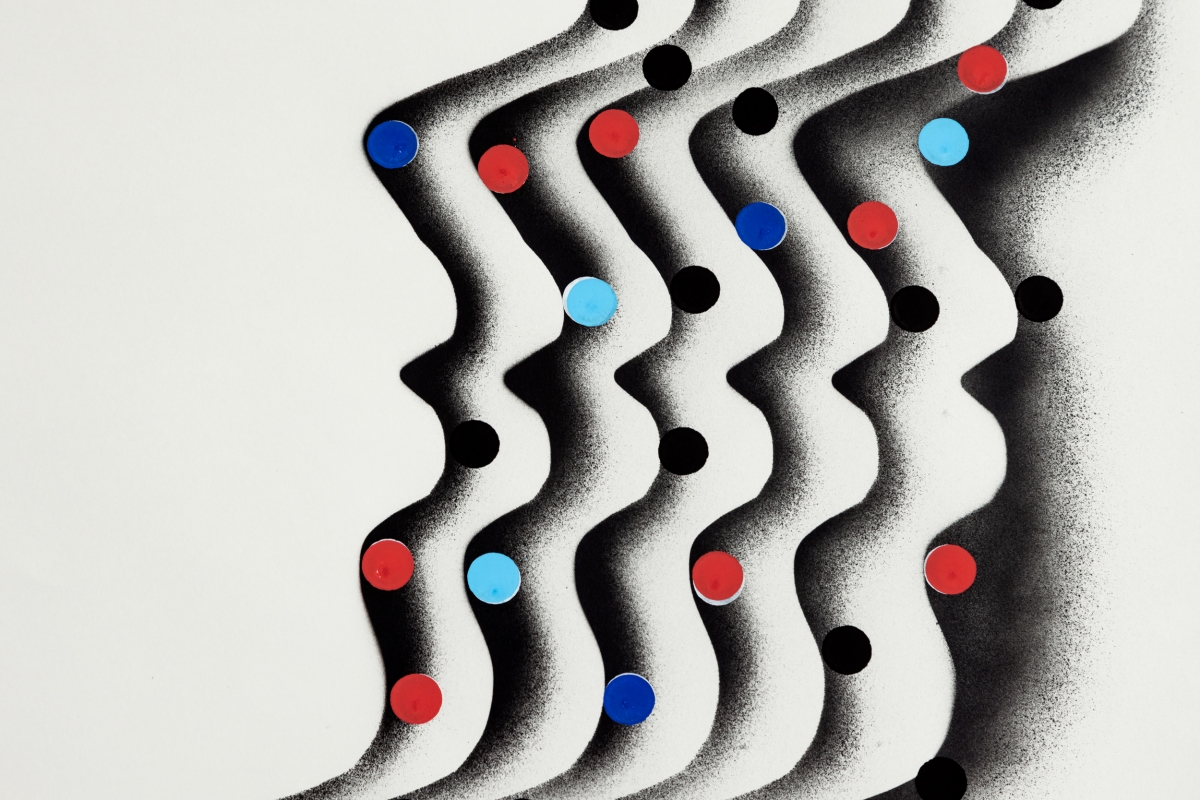
The recent exhibition Words of Mouth and Hands explores voice, gesture, and collective sound. What inspired this project, and how did the idea of conducting choirs through signs and symbols take form?
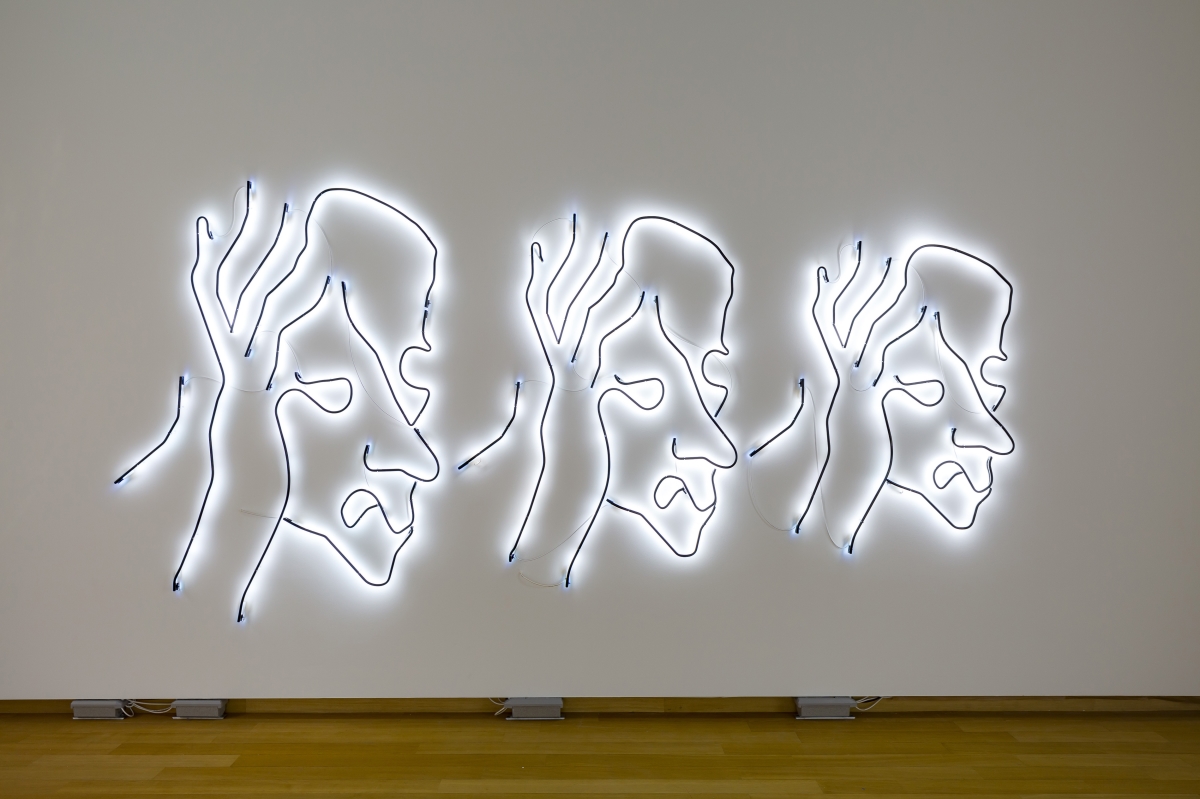
This project originated from a public art commission I received in the Netherlands before the pandemic. For this commission, I collaborated with choirs since 25% of the Dutch population participates in choral singing. The exhibition revolves around my interest in voice, specifically choirs. I developed a series of signs and symbols specifically designed to conduct a choir. I am particularly fascinated by the way a choir conductor leads the group and shapes the sound by drawing forms in the air, as if sculpting the sound itself. I am captivated by how these polyphonic chants (such as Baroque madrigals) occupy space, as if they were gaseous matter, creating sublime forms. I wanted to create an exhibition about these sublime forms, which are light and delicate.
Each exhibition is conceived as an experience rather than a collection of works. How is the audience imagined within that space, and what kind of dialogue is intended to unfold?
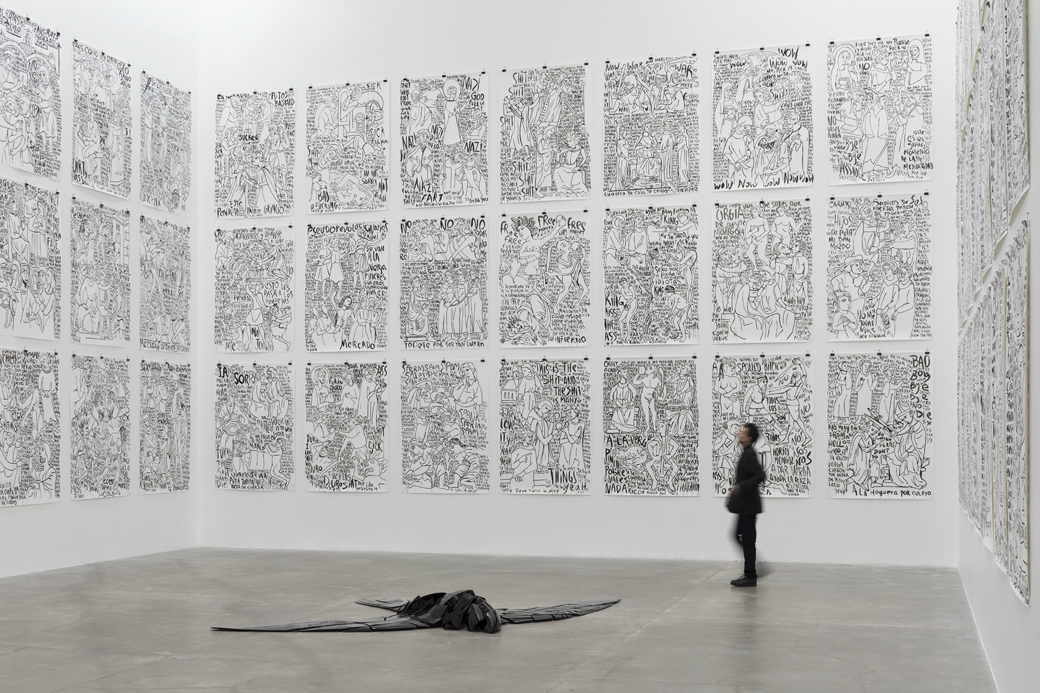
I’m the kind of artist who lets the audience interpret my work. I don’t know if it’s something about me personally, but I don’t feel that I can tell people truths, so I like to suggest things in a more poetic way, allowing each person to arrive at their own interpretation of the artwork. That being said, I am very interested in how spectators discover and navigate through artworks in an exhibition. I carefully consider the architecture of the exhibition space and make the most of the journey. Filmmakers make movies, writers create novels, musicians compose symphonies, and we, visual artists, create exhibitions. For me, the exhibition is more critical than the individual artwork itself, which means I always consider the audience.
Image credits: All images courtesy of the artist and Kurimanzutto.
Editor: Kristen Evangelista