In Mark Milroy’s work, the painted gesture intertwines with memory, daily observation, and an ongoing search to understand the human face as an emotional landscape. Born in St. Paul, Minnesota, and raised in a small Canadian town where being an artist wasn’t a visible path, Milroy first found refuge in drawing and later discovered in painting a language of his own.
Over more than three decades, he has developed a deeply personal practice in which portraits, everyday objects, and family memories coexist in a visual narrative that feels both intimate and universal. Without following trends or responding to market demands, Milroy’s paintings are grounded in frontal composition, emotion, and quiet honesty—drawing subtle affinities with Marsden Hartley, Alice Neel, or David Hockney. Like them, he distills human presence through gesture and gaze. While younger figurative painters such as Salman Toor or Louis Fratino explore identity through social or queer lenses, Milroy remains committed to the poetic resonance of the ordinary. His portraits and still lifes do not aim to impress but to accompany—to remember rather than to illustrate.
In this conversation for Art Summit Magazine, Milroy reflects on the development of his artistic voice, the figure as both conceptual and emotional challenge, the role of memory in painting, and the ways his work has evolved over time. With honesty and clarity, he speaks about his childhood in St. Thomas, his formative years, the impact of mentorship, and how his sons Emerson and Angus inhabit not only his daily life, but also his canvases.

An Interview with Mark Milroy
By Carol Real
You’ve spoken about how personal narrative shapes your work. Has painting ever revealed something about yourself you hadn’t fully realized?
For me, the biggest revelation has emerged through memory, especially when engaging with personal narratives.
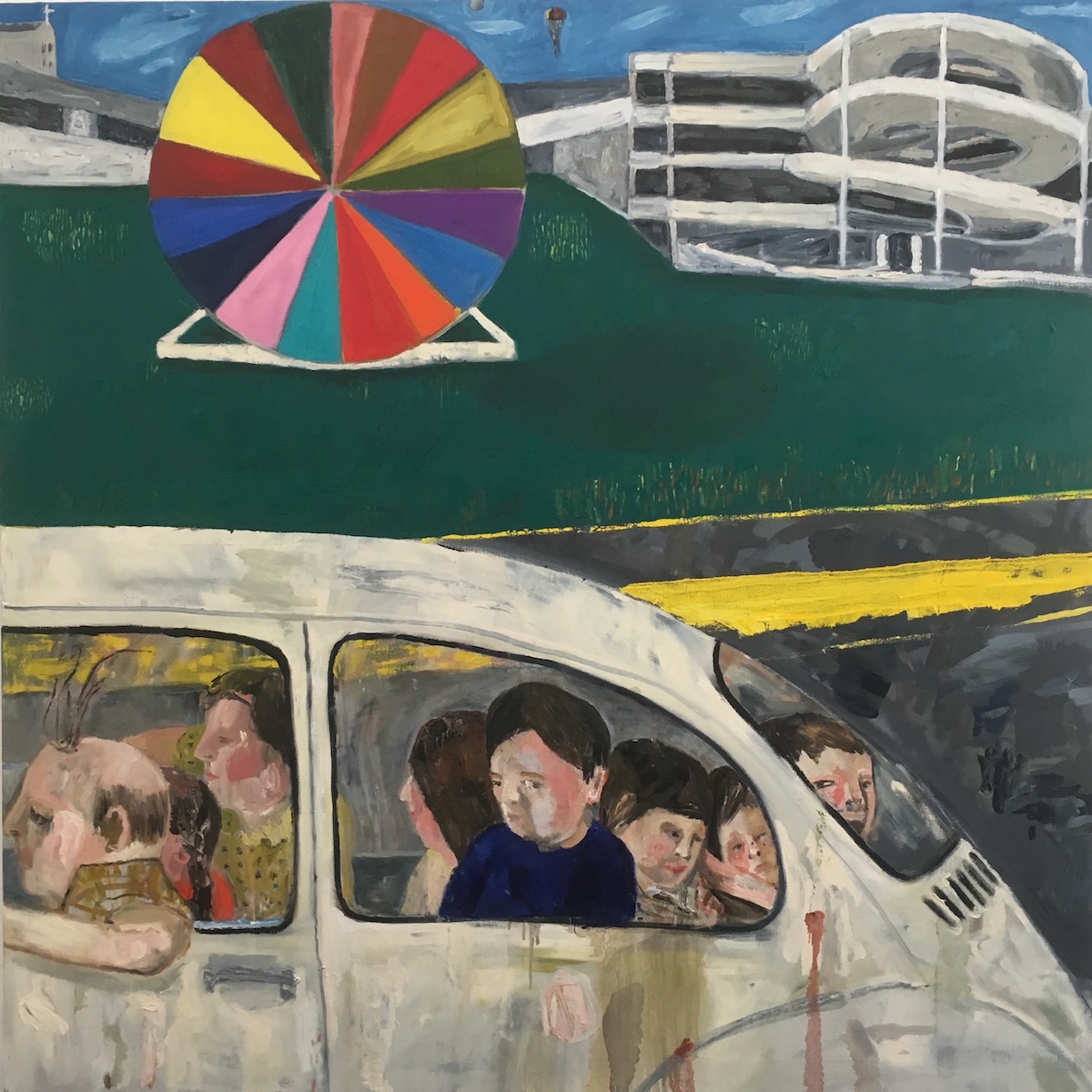
I grew up in a large family—I’m number five out of six kids, each of us just a year apart. When I’ve painted certain memories, like a large painting I did of my family sitting around the dinner table, each person had a different recollection of where they sat. I was insistent that the order I remembered was the correct one, the one we sat in at every dinner. However, my siblings remembered it differently—some even flipped the arrangement entirely.
That experience made me think about how we rewrite our memories. If there’s anything truly revealing about painting these narratives, it’s the question: How accurate is my memory? And even if it’s not entirely accurate, does that matter?

Do you remember when making art first became a form of refuge?
I found refuge in drawing from a young age—whether it was drawing an exquisite corpse with my childhood friend Harold or one of my older brother’s album covers. We had little to no art education in high school, so that sense of refuge didn’t come to me until maybe my third year of university. Once it did, it gave me a deep sense of focus—something I could never find in numbers, writing, or reading.
After more than 30 years of painting, how would you describe the evolution of your artistic voice? What has stayed essential, and what has changed?
What has stayed essential: whether the paint is thick or thin—it’s the marks I make on the canvas. That’s been consistent throughout. Even during one period, for about four or five years when I was very young, I was painting with an extremely heavy application, sometimes up to half an inch of oil on the canvas. But if you look closely at the marks, they’re the same ones I’d make with just a single layer. The gesture, the way I use the brush, has stayed the same.
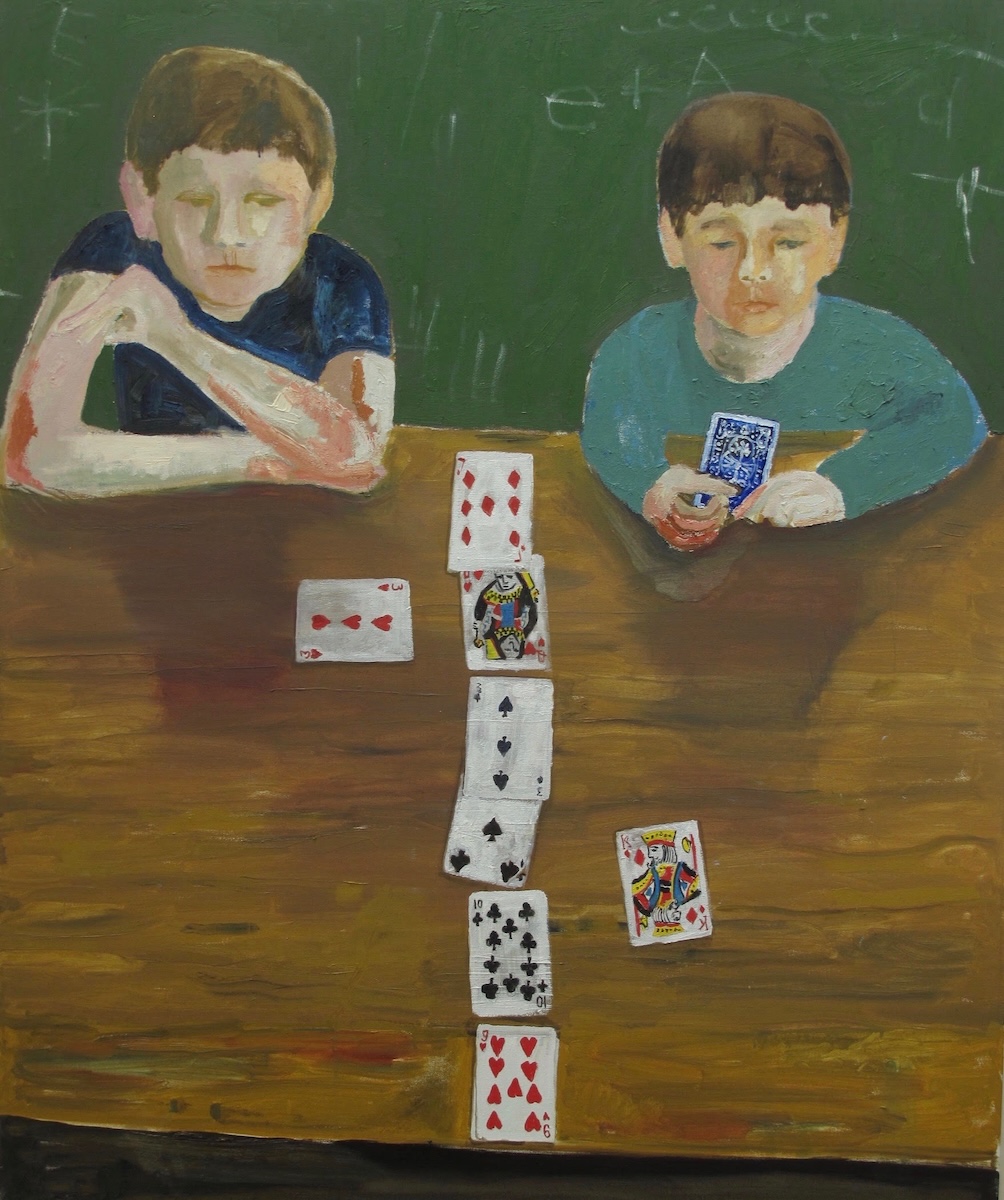
Everything else has evolved. For a long time, I was rooted in portraits, landscapes, and still lifes. In the last decade, personal narrative has emerged. It took those first twenty years to develop the skill—the acumen—with painting and drawing to get to a place where I could express those ideas.
If you’re rooted in painting from direct observation—painting your physical world, the people around you, the things right in front of you—that’s one kind of relationship with image-making. When you’re working from memory, that’s a very different process. Everything I painted in those first two decades gave me the foundation to make this shift.
How did growing up in St. Thomas, Ontario, shape your visual instincts?
It’s a little railroad town, right on Lake Erie. There’s one small visual arts center. I remember my mother would rent pictures for the house from the local art center, and I would make copies for her. There were no art galleries to speak of. There were no trips to museums or anything of the sort. Being an artist wasn’t an option—the artists I saw made a very specific kind of local artwork, and that shaped my understanding of what art was. There were landscapes of the local golf course, and lots of paintings of the Canadian wilderness. When I think of where I came from, compared to what I make and who I am today, it makes no sense. Ha ha.
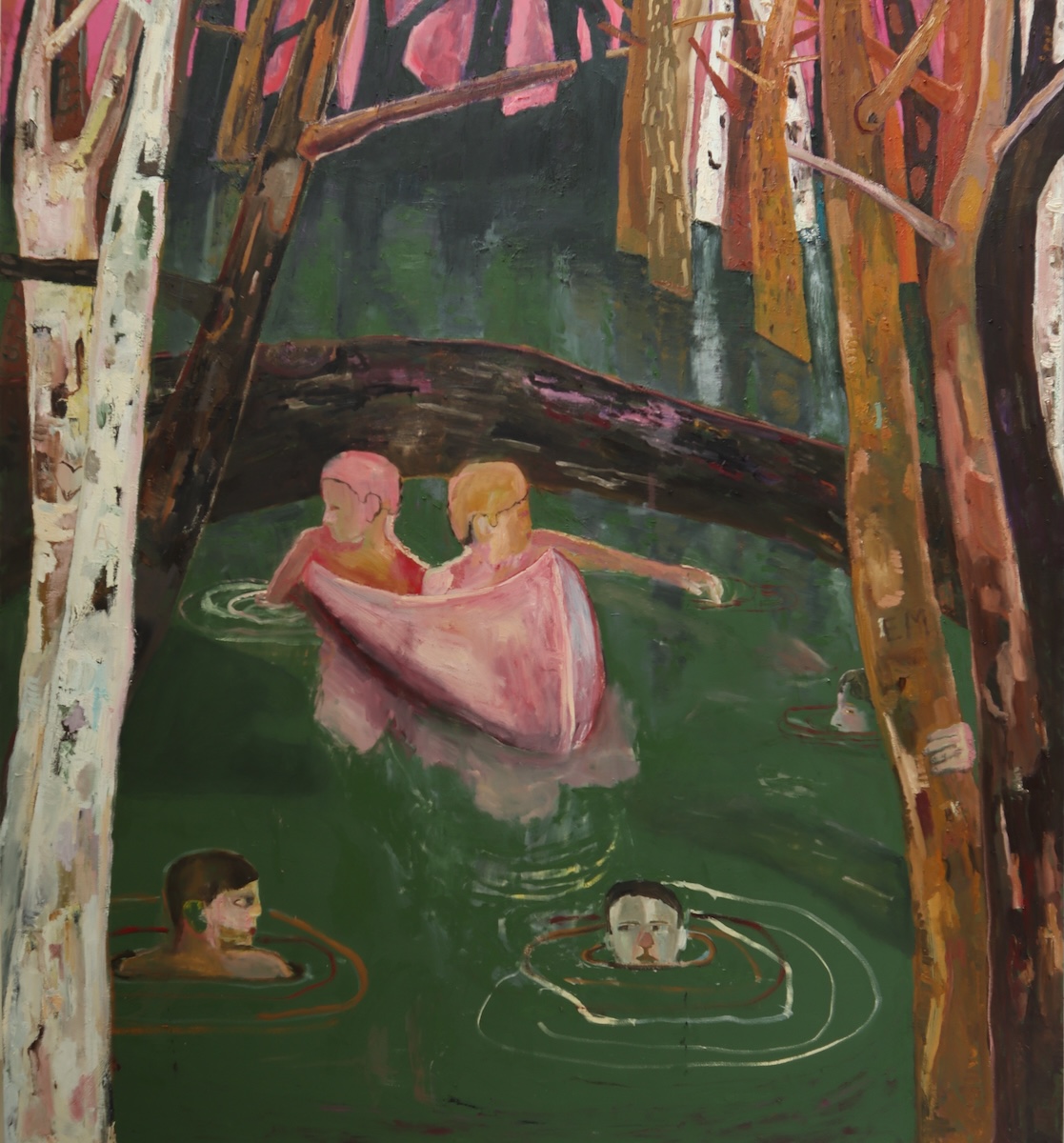
Growing up in a family that didn’t look at or investigate art, it was in our collection of encyclopedias that I found pictures of Vincent van Gogh, da Vinci, Rembrandt, etc. In my family, boys didn’t make art. My sister had lessons, and I would sneak in and make copies. If I go back to the question, I think growing up in this very small rural town and thinking of all my personal narratives—we did things that, not to say would be unheard of today, but many of the experiences I draw upon in my work might not have happened if I’d grown up somewhere else. I wouldn’t have all these narratives to draw upon. Maybe that’s the key. Maybe that’s what really shaped it.
Was there a particular mentor, artist, or moment early on that helped define your path?
I was fortunate. There was a Canadian painter named Duncan de Kergommeaux, and after my foundation year, he was teaching second-year painting. He let me paint at home in my own studio. He just said, “Be ready for critique.” I worked so hard that I had to borrow a friend’s pickup truck in my first semester just to bring all the paintings in for critique. After years of failure, I was still very insecure. During the critique, he looked at the students and asked what they thought of the work. Then he looked at me and pointed: “That one, and that one—bring them to my office.”
And I thought, Oh God, am I in trouble?
However, he just wanted to know how I made the colors. He gave me a few tubes of paint to try, and from there, our friendship formed. That year—or maybe that summer—he invited me to live with him and his wife in their home in Canada. I had a bedroom just outside his studio. He taught me how to run a studio. I stretched canvases for him, helped him with framing. He was the reason I ended up at the School of the Art Institute of Chicago and why I came to New York City.
You painted portraits when the art world had largely turned away from figuration. What kept you committed to the figure?
The first school I attended in 1992 was very conceptual. The idea of painting a portrait from life seemed to irritate my teachers so much that I felt it was the most conceptual thing I could do at that time. After that painting, I found it to be the most thrilling thing I had done up to that point, and I have not stopped since.
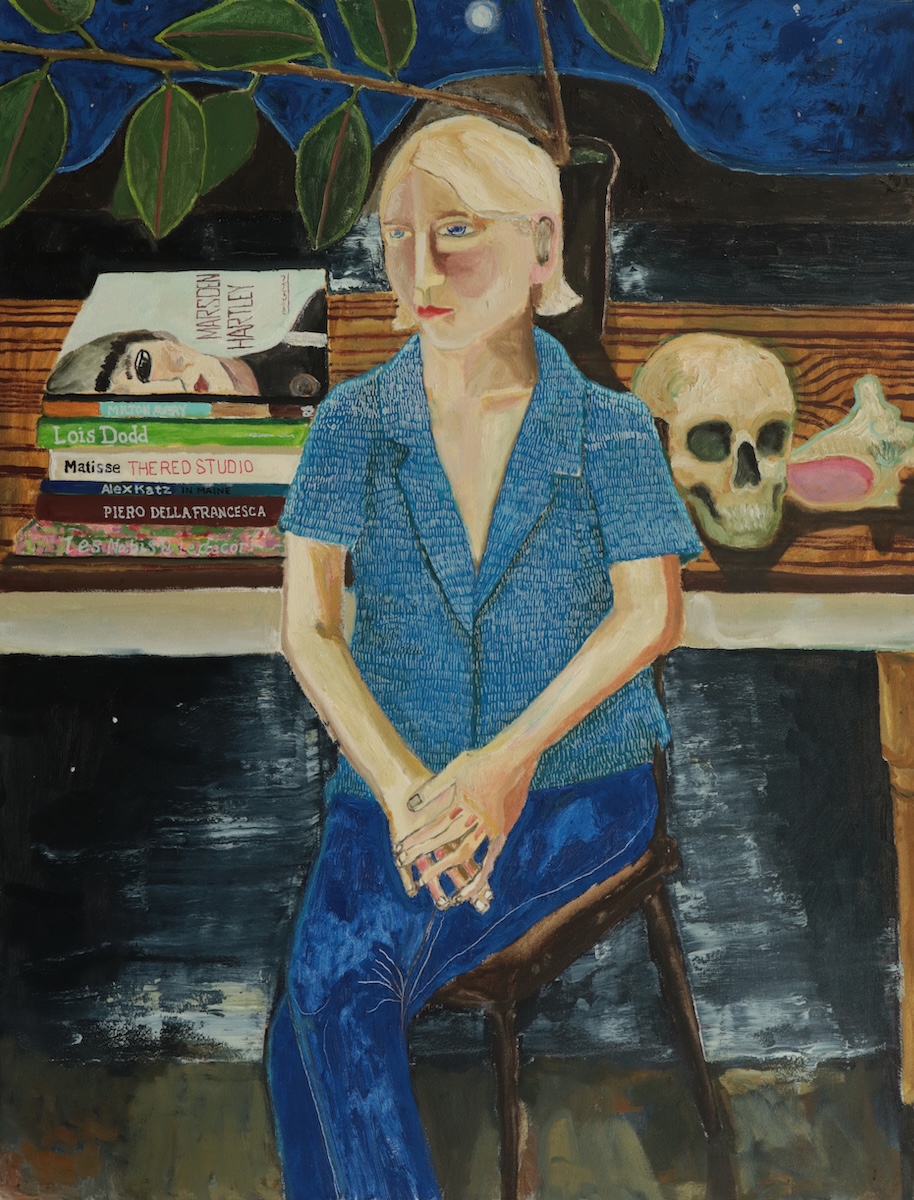
On a whole other level, I find people—and painting a face—endlessly, endlessly fascinating. It’s endlessly challenging. You’d think after all these years, it would be simple: two eyes (for the most part, unless you’re in profile), a nose, a mouth, ears… you’d think it would be easy. Yet it’s still one of the most complicated things I can imagine doing—trying to paint someone—not just my preconceived idea of them, but who they truly are.
I also find, when painting people, that clothing—the folds, the patterns, the colors, the textures—brings so much more to the canvas than just painting a nude or semi-nude. I love nothing more than having someone sit right in front of me and paint from life.
When you paint a face, are you aiming to capture the likeness, reveal the psychology, or convey something else entirely?
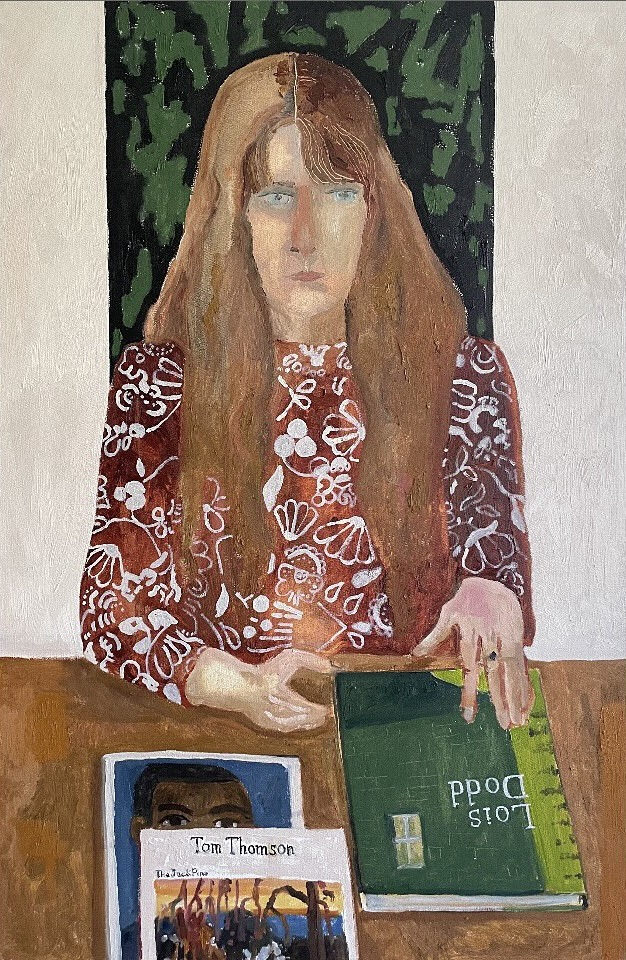
Both. I think the number one job is to capture a likeness. Even if it’s not a perfect likeness, to have something that feels like them. Often people even grow into their likeness—I’ve seen that happen.
Then, if you have achieved the likeness, I think everything else we’ve discussed—color, pattern, texture—even something that’s revealed during the sitting, through conversation—can find its way into the painting. That’s what gives it a certain psychological potency. It can say something beyond just the likeness of the sitter.
Do you think of your subjects as people or as characters? Do they carry stories?
People, for sure. Through conversation and stories during a sitting, there’s a point where the sitter will reveal themselves. I think it takes a long time to fully understand what someone actually looks like. I’m always searching for something more.
How do you see your contribution to portraiture within the broader contemporary conversation?
I hope that it can show the portrait as something more than just a picture of a person, but as a work of art. That’s my main hope: that they’re seen as works of art. That’s been my ultimate goal—to hopefully shift people’s perception of what a portrait is, or what it could be.
Your drawings are not studies—they function as stand-alone works. How does your mindset shift between drawing and painting?
There are working drawings and drawings that I consider to be the work. I keep small notebooks that read more like a diary of images, memories, and thoughts, but they’re small. Whereas when I’m closely looking at something and making a drawing, it’s all about that very moment on the paper, and I’m not thinking if this could be a painting or any other kind of work, but a drawing.
There’s a certain intimacy in drawing that’s different from painting. With drawing, you’re right up close to it, whether it’s large-scale drawings in charcoal or small ones done on a drawing pad.
Over a decade ago—maybe longer—I decided to focus on drawing with just a pencil, trying to get it as right as I could see it. When you’re drawing a contour line, there’s no cheating. You either get it or you don’t.
I don’t know if I answered that very well… after years of being insecure about my abilities to draw, I’ve found a love for it.
What does drawing allow that painting doesn’t?
I don’t think one exists without the other. I was taught to draw with the paint as much as one would paint with the paint. Drawing—if one isn’t using color—must make marks on the paper to indicate depth, feeling, space, form, texture, whereas the painter using color can do this with the emotional weight of the color itself.
You return to certain motifs—books, animals, plants, and found elements. What drives that repetition?
Books, postcards, plants, and the surrounding ephemera—my return to certain objects comes from curiosity: what they hold, how they function, and the ways they can take on multiple roles within a picture.
One of the very first paintings I ever made is of a gold armchair. There’s a table next to it with a lamp, and it has two books on it. Behind the chair is a bulletin board with pinups. These elements were there in the beginning and still are to this day.
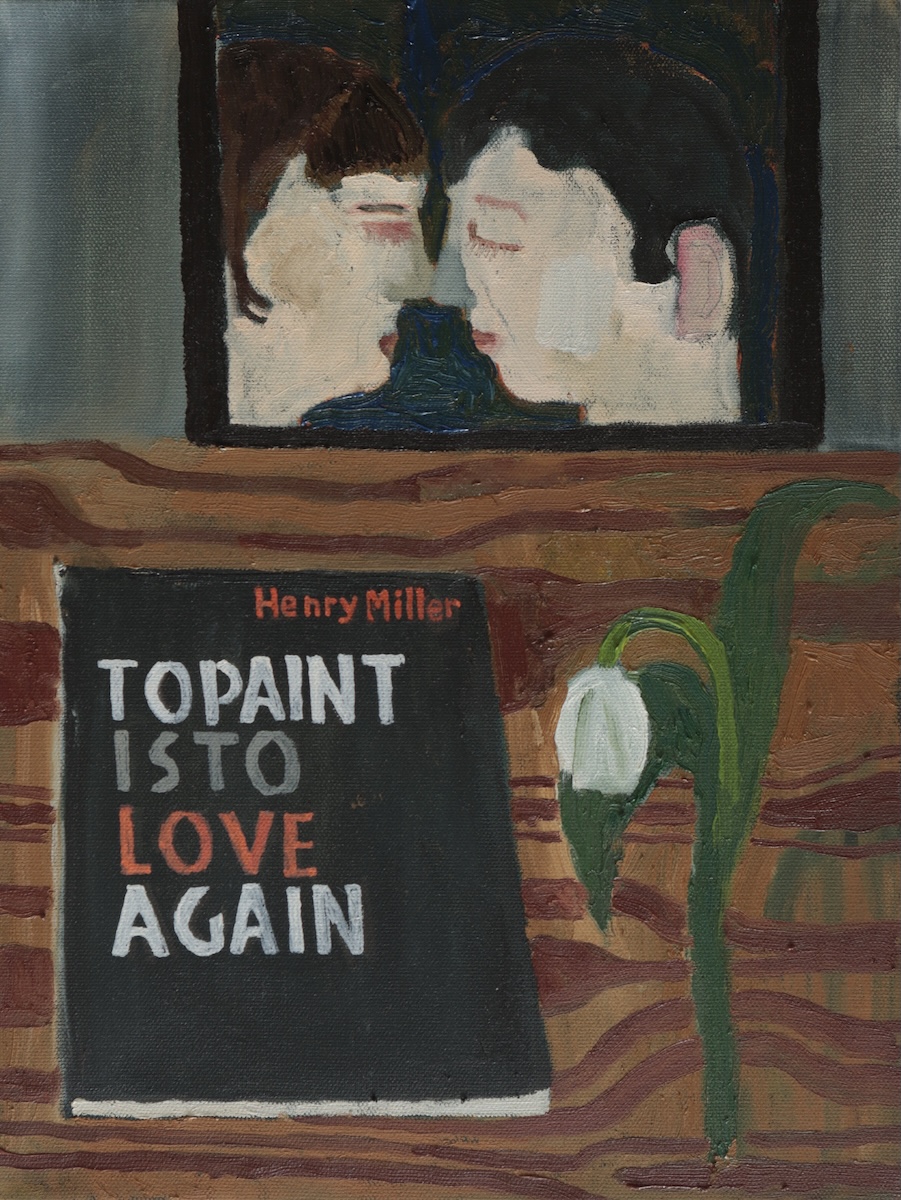
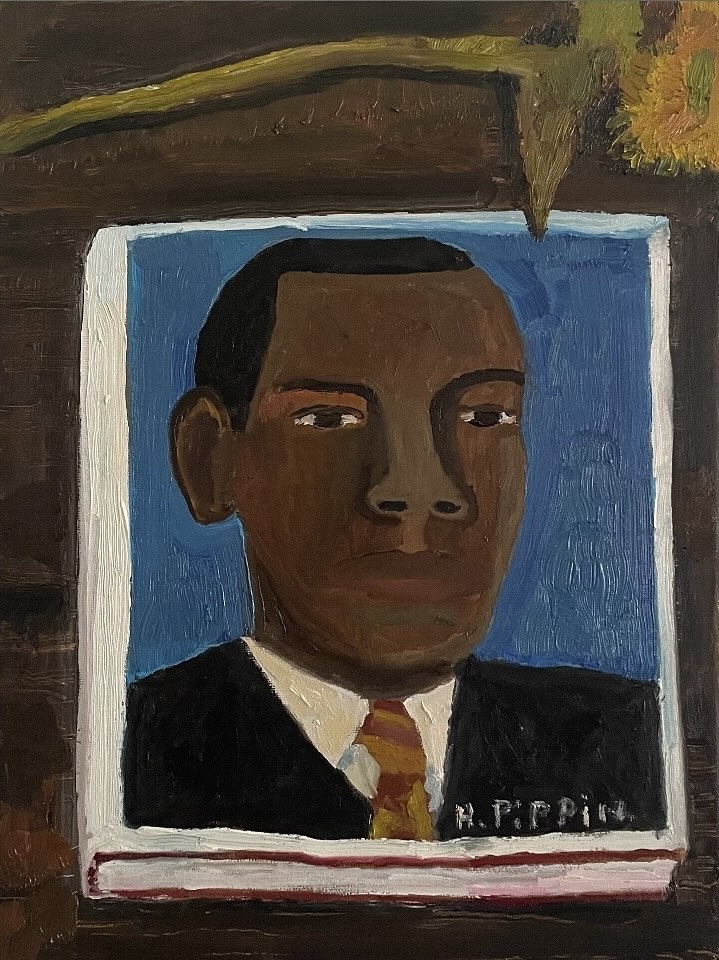
Books appear frequently in your work. Are they symbolic, personal, or compositional anchors?
They’re very personal, and I also use them compositionally. They can function like a window in a painting. If I want to shift the narrative—or if I’m interested in a certain artist—I can use a book to make a transcription of that artist’s work. The book instantly becomes a still life.
I find that endlessly fascinating. One of my favorite challenges is painting something like a pile of books, especially capturing all the text. The goal is to make it work not graphically, but in a painterly way.
Your chapbook reads like a visual-poetic extension of your practice. What made you decide to pair image and text?
The chapbook started when I went to do my master’s at the New York Studio School. We had to present a thesis, and the thesis could be on anything we wanted. I thought, Okay, I want to paint these narratives, so I’ll tell the stories behind them. That’s how it started. It turned into a much larger project, one that’s still ongoing today. I realized my narratives went beyond myself. The chapbook is the story of a person finding their way to this artistic life. And the moments I paint—whether they’re painful, joyous, or difficult—are these seminal memories that shaped me and put me on this path.
The chapbook gushed forth from that moment. I am still writing, and I am still painting the narratives.
Your recent show was titled A Colorful Universe. Does the title resonate with you on an emotional or philosophical level?
I think more emotionally.
When I was a kid, I had undiagnosed dyslexia and ADHD. Sometimes I could be very charismatic—haha—which, if you think about it, is one of those “colorful” adjectives people often use. So, there’s that.
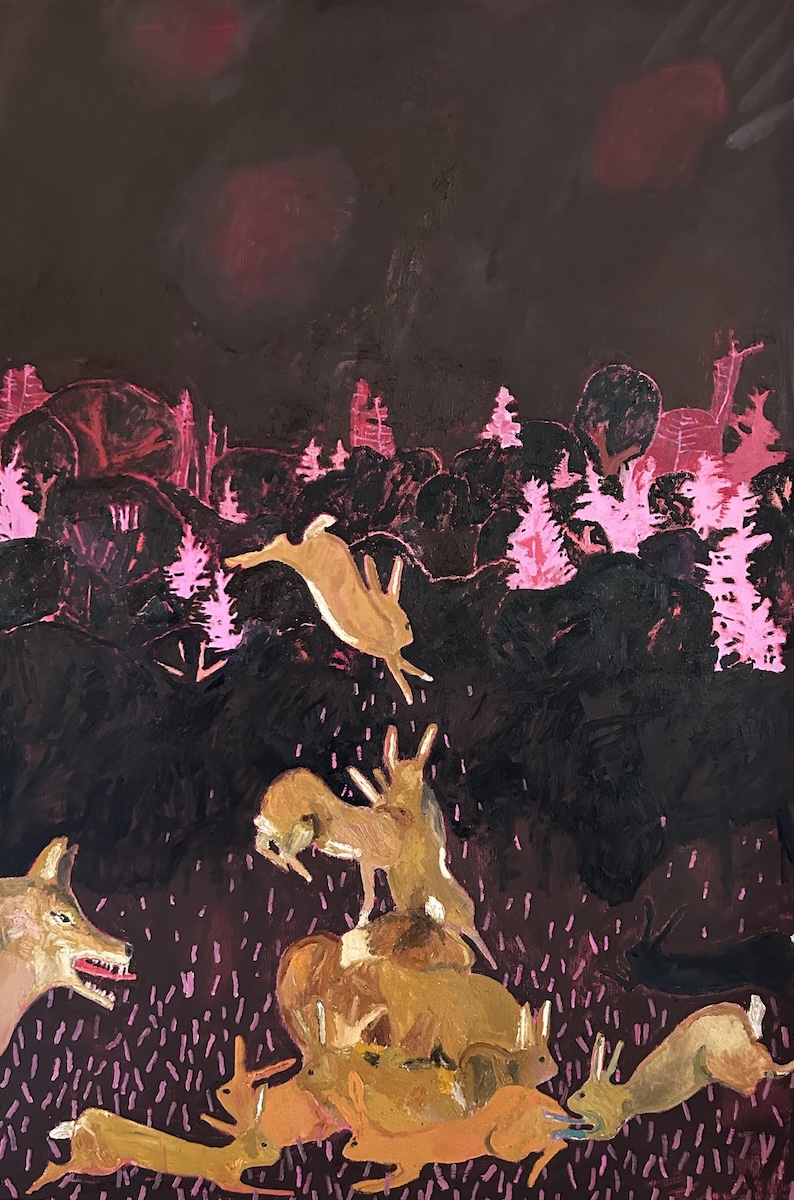
Color can be expressive. Certain colors can evoke certain emotions. I think we’re living in a time right now that feels very, very dark—emotionally. I just finished a large painting of a pile of rabbits. It’s done in black, red, and pink—it reflects how the world feels today.
What do you hope a viewer notices first when they see your work?
I hope they notice all the underlying currents in any one painting, even if it’s just a small portrait.
If they spend time with it, the painting will open up, and they’ll begin to see different threads. Whether those threads are intentional or not, I hope they find their own narratives through my pictures.
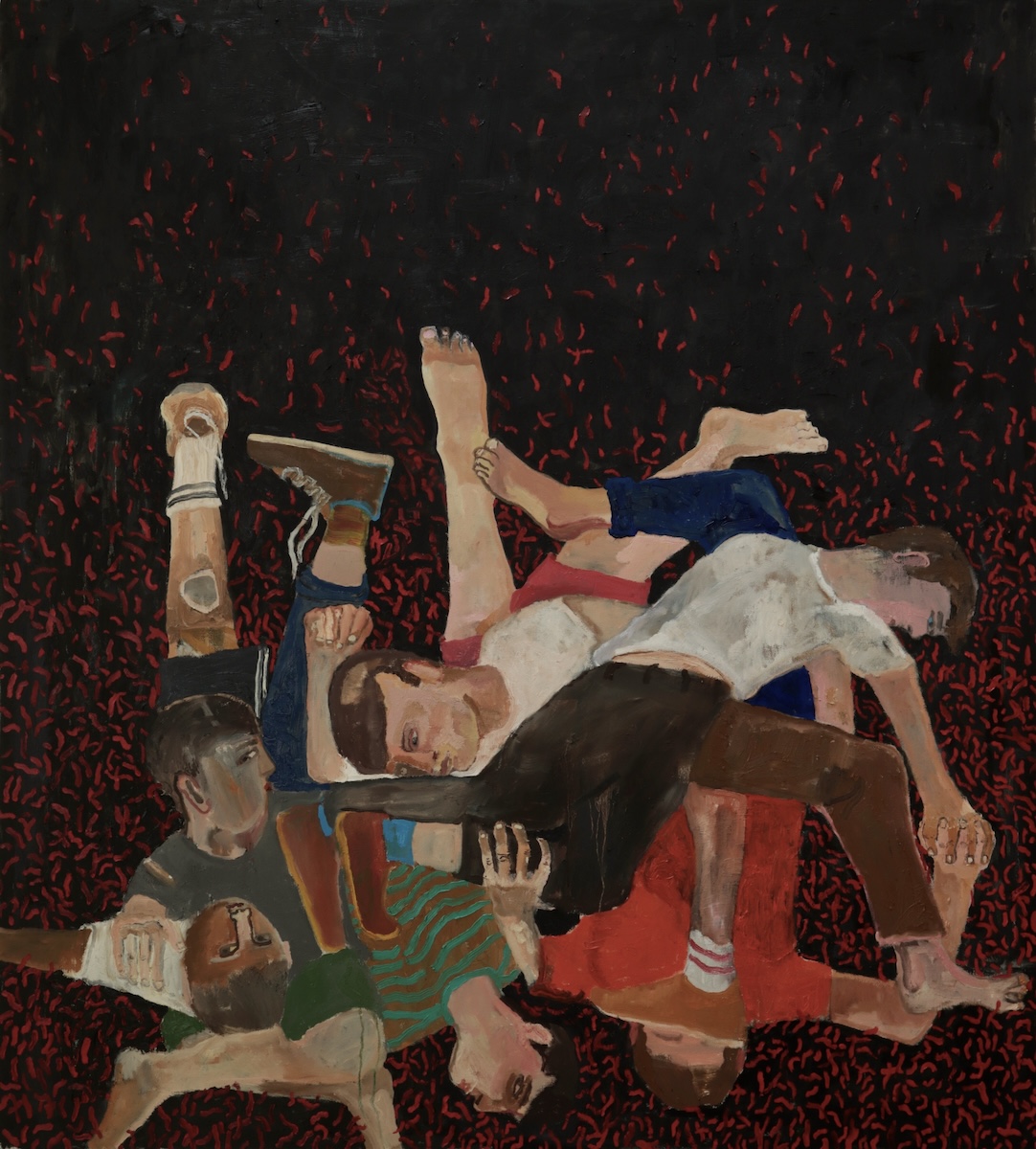
The Wrestle Match paintings are among your most physically charged. What are they wrestling with—visually and conceptually?
They stem from childhood games we used to play in my family. One was called Snowplow, another one—Airplane—which I’ll be showing with Karma Gallery in a group show in Maine. I just completed another one—it’s called Tree Chopper. They’re all personal narratives, but at the same time, they carry a complex emotional weight—these figures piled on top of each other.
I’m working on another very large one right now based on a personal narrative. It includes an elephant, a railroad train car from where I grew up, the corners of the buildings from my first school, and a pile-up—and I’m in there, being piled on.
They also have a strong political undertone. Groups are piling on other groups. Leaders of countries are piling on other leaders of countries. It feels like a big pile-on. I didn’t anticipate that when I started painting these pictures, but as I worked on them, I saw how they could be interpreted that way. I think that’s fantastic.
Now that your work is receiving more attention, how are you experiencing that shift?
It’s exciting. I need a bigger studio and more time! I love this quote by Matisse: “Inspiration comes from work itself.” And that goes back to having the time. Even just a moment to sit and look. I feel an urgency. You just get to work.
What would you want your sons, Emerson and Angus, to understand about your work, and what it has meant to you?
A great deal of what I do, I do for them. I hope that someday they’ll understand that.
I hope someday, when they see these pictures—whether it’s a portrait of them or one of my narratives—they’ll understand I was just telling stories.
Editor: Kristen Evangelista
All images courtesy of the artist
Website: www.markmilroy.com