For the past five years, Charles Moore has been a steady, thoughtful presence in the art world. As a writer, curator, and critic, he has built a career on asking meaningful questions — of artists, institutions, and the art market itself. His interviews don’t chase headlines or spectacle. Instead, they pursue clarity, connection, and depth. He listens closely, with curiosity and care.
Moore has published work on the subject of contemporary art and related topics in Artnet, Artsy, Cultured Magazine, and many other publications. Based in New York City, he graduated from Harvard University and holds a PhD from Columbia University. A polyglot and global marathoner, he brings intellectual rigor and personal discipline to every aspect of his practice.
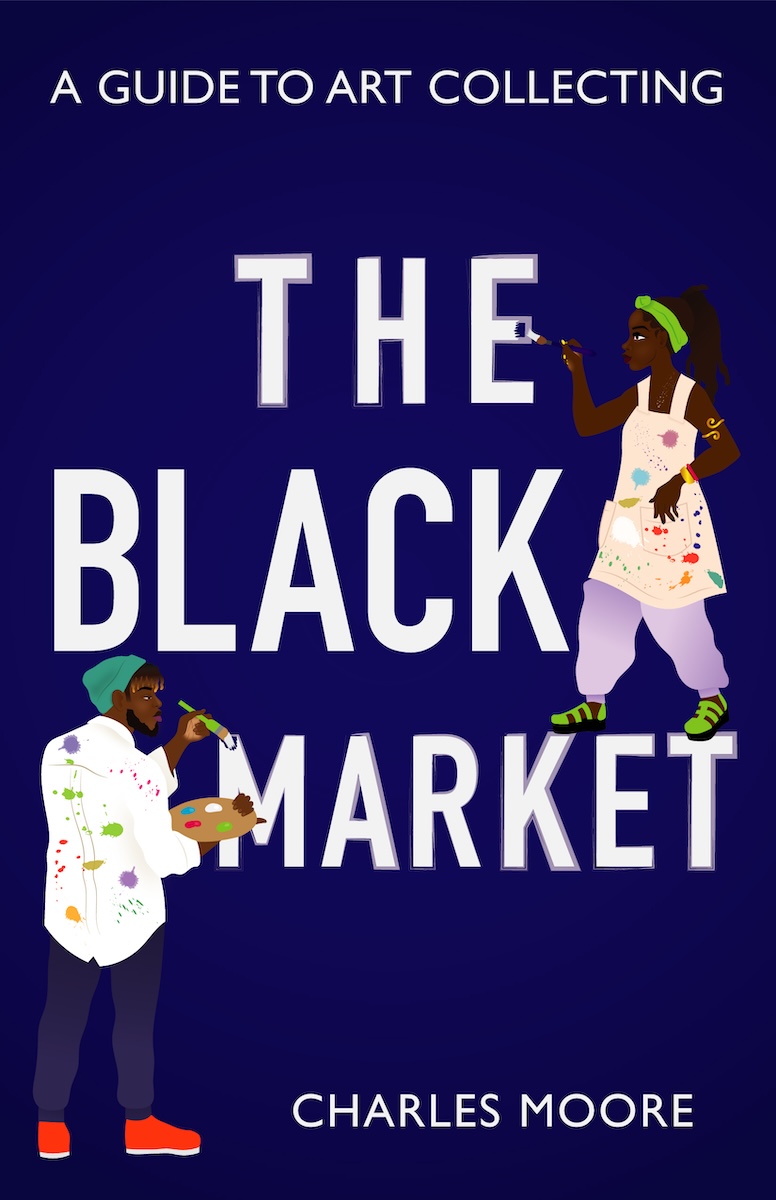
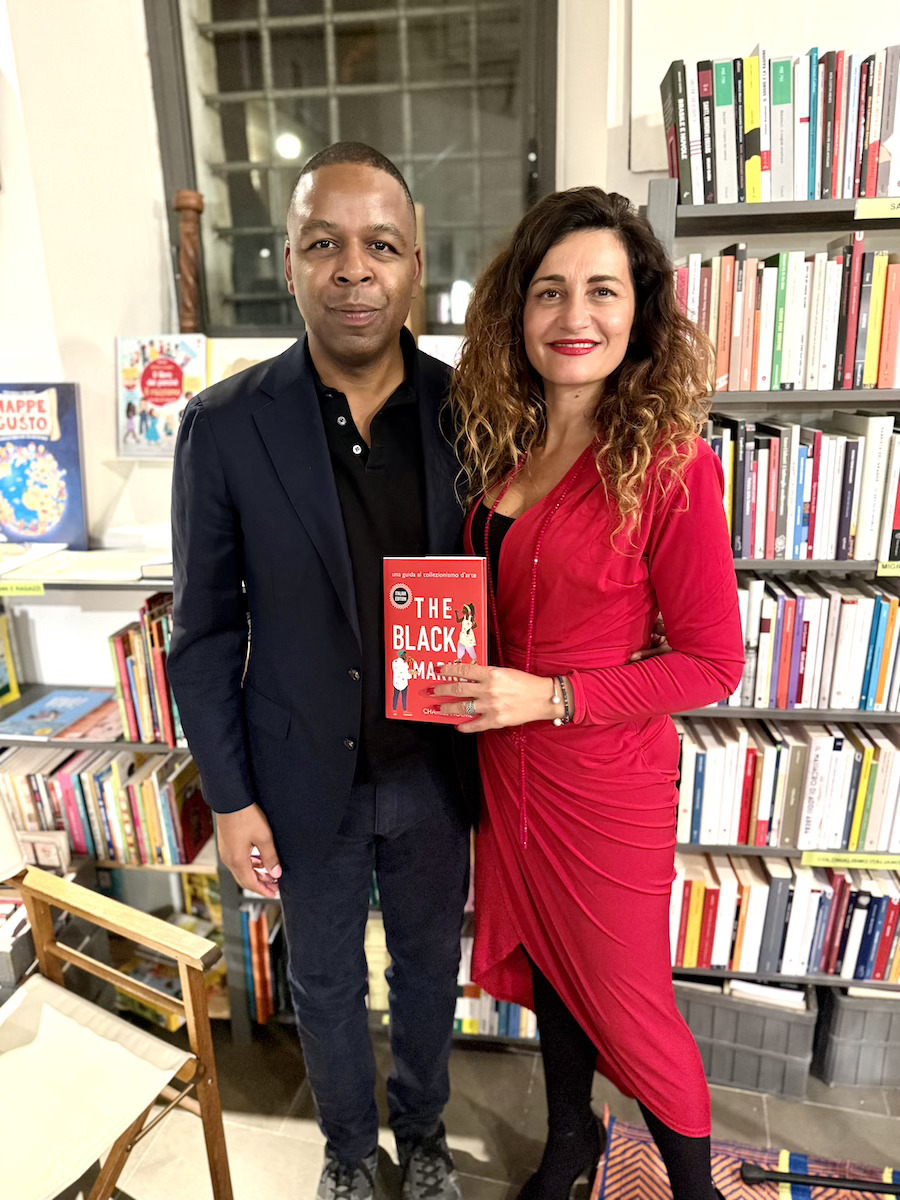
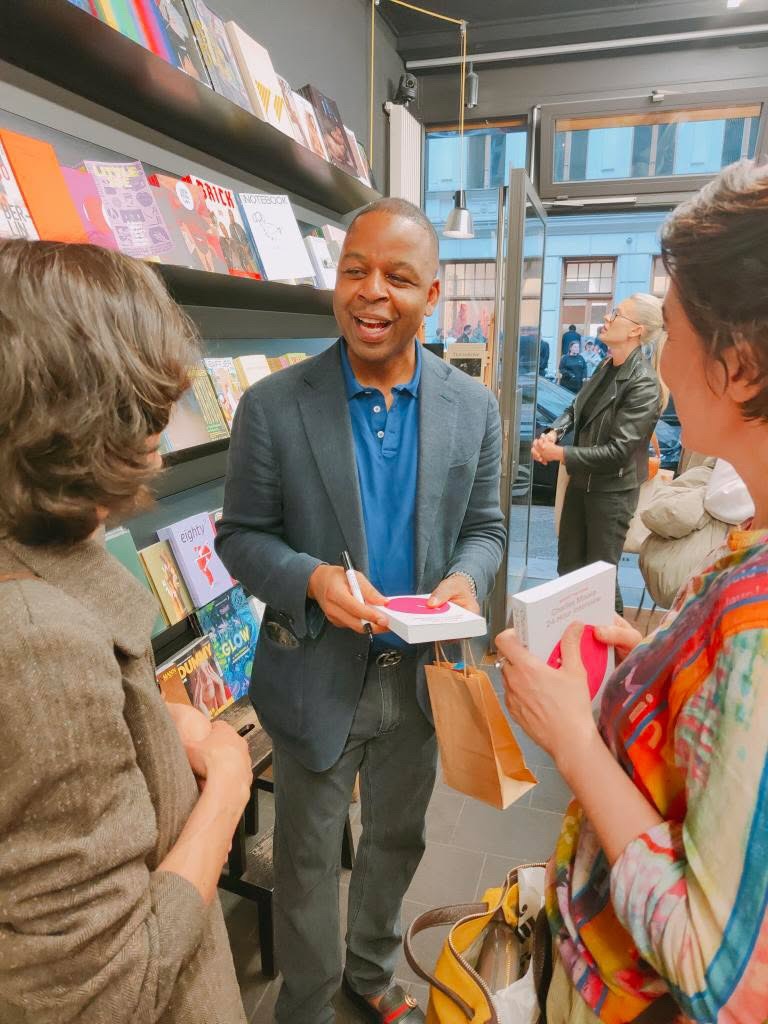
Through books like The Black Market, Art and Economics, and his recent 24-Hour Interview, Moore has assembled an archive of voices that reflect the complexity of art today. His conversations with figures such as George Condo, Nadya Tolokonnikova, Nari Ward, and Rusudan Khizanishvili reveal not just ideas, but the emotional and intellectual landscapes behind them.
In this conversation, Moore becomes the one answering. He speaks about the early days of collecting, the evolving role of the curator, and the value of paying attention in a distracted age. He reflects on the rise of younger, more diverse collectors, the tension between intuition and discourse, and what it means to approach artists and audiences with respect.
What emerges is a portrait not of authority, but of engagement. Moore reminds us that listening is not passive. It is a form of practice — and perhaps, a form of making.
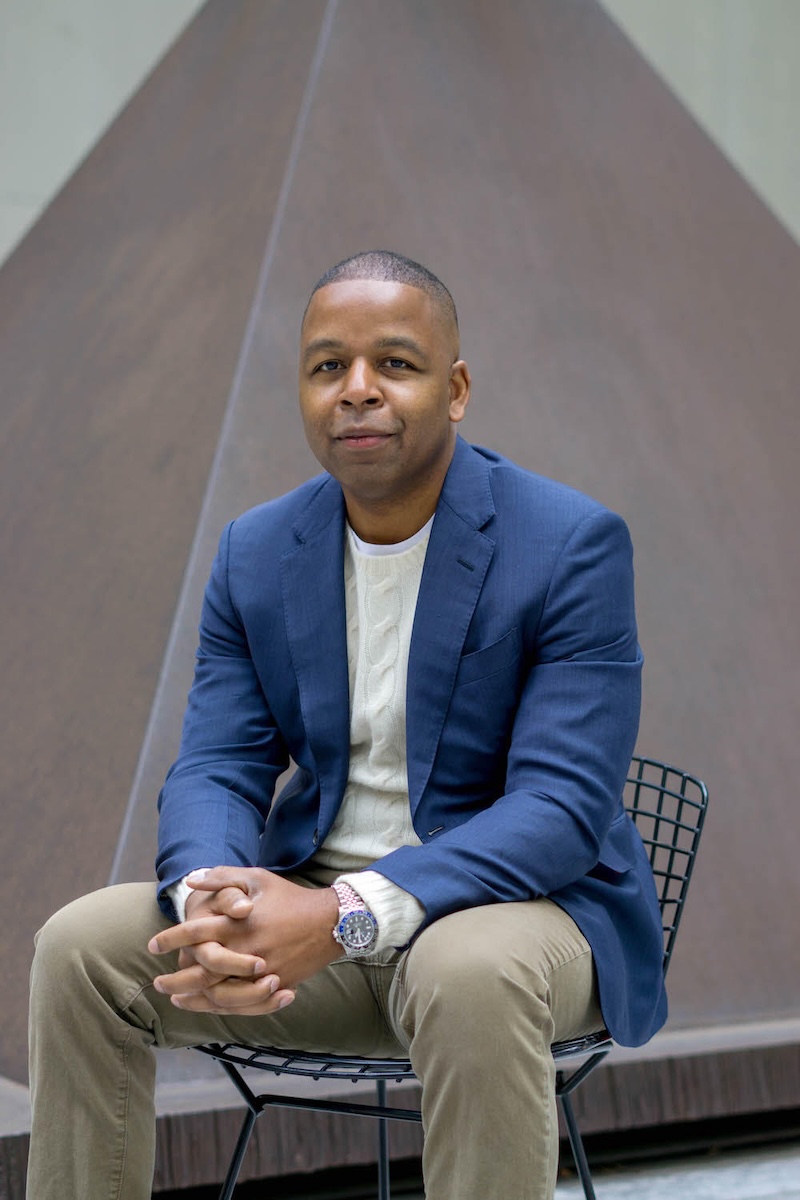
An Interview with Charles Moore
By Carol Real
Can you recall your first aesthetic awakening—the book, artwork, or artist that made you realize your life would be tied to art?
I was in an art history class at Harvard. The first artist I ever wrote about was Kiki Smith. My professor pointed out the most important paragraph in my essay, saying it held the thesis statement hostage. She told me to read John Berger’s Ways of Seeing and revise that paragraph. To my surprise, she was right—and I’ve continued to go back to that work and reference it ever since.
If you were to interview your “future self” ten years from now, what would you want to ask?
Probably a lot. But I’d want to know what I read that inspired me to continue to grow, learn, and stay excited.
How do emerging collectors typically go wrong in the early stages of building a collection?
They don’t read enough and see enough art before buying. I think it can be interesting to be impulsive, but collecting art is an expensive hobby. Often, collectors jump in because they’ve read something somewhere about the speculative financial gains someone made from flipping art. Those instances, especially for a novice, are quite rare, and collectors should find a bigger purpose. I always recommend reading something that gives a general introduction to art history, a few exhibition catalogs, and maybe even a biography of an artist they admire. Additionally, I can’t stress enough the importance of looking, seeing, and really sitting with contemporary art—not only at museums but also at galleries, art fairs, and even BFA or MFA thesis shows. This helps one understand the types of work students are making, the artists vetted by galleries, and those with institutional support. It also helps them understand their own taste.
What advice would you give someone with a limited budget but a genuine desire to build a meaningful collection?
I always tell this story about the first work of art I purchased. It was a $50 limited edition print by Shepard Fairey. I went on to collect many of his politically engaging prints over the next few years. I spent time with them in my home and slowly increased my budget as my knowledge of contemporary art grew. The more I learned, the more comfortable I felt making decisions far above my initial budget. But if I didn’t have the resources to spend more, I would’ve been just as happy learning about and collecting art from other artists who were making work that fit into a modest budget. And there are hundreds, even thousands of them. Collectors shouldn’t feel pressured to step outside their comfort zone before they’re ready.
How has the profile of the art collector changed over the past five years, and where do you see it going?
There are far more young people collecting art than when I first started. They’re choosing to allocate resources they may have spent on watches, cars, or other luxury experiences and are focusing instead on being patrons of the cultural zeitgeist. Additionally, collectors are coming from broader backgrounds and becoming powerhouses more quickly. There are far more women collectors, Black, Latin, and Asian collectors. These collectors represent a shift from the historically dominant white male figure who was the gatekeeper of taste. We now see collectors more interested in protecting and preserving culture—especially their own.
In Art and Economics, you offer a deep analysis of collecting. What do you find most revealing today about the relationship between art and money?
Art and money go together. In many instances, art cannot exist without money. Supplies are costly, and the time to consider and create is even more expensive.
How do you see the growing prominence of art fairs shifting the role of traditional galleries?
I don’t see it as a rise in art fairs versus traditional galleries. They work in unison. There are no art fairs without galleries, and art fairs provide almost 40% of global art sales. They need each other to offer collectors choices. And there are art fairs at every economic and social level.
Did NFTs and digital art mark a real turning point, or were they just a loud interruption?
NFTs? What’s that? [insert joke here, and a roaring laugh]
What signs tell you that a work of art has the potential to become cultural heritage—beyond its market value?
The intent. The level of thought by the artist. The choice of materials, the richness of culture embedded in the work. The artwork’s ability to represent a moment in time that remains timeless and evokes discourse. Kant argued that art does not want the representation of a beautiful thing, but the representation of something beautiful. More importantly, Tolstoy said, “A true work of art is the revelation of a new conception of life arising in the artist’s soul, which, when expressed, lights up the path along which humanity progresses.” If art is able to do this, it becomes an invaluable example of what culture is.
You’ve curated exhibitions in the United States, Europe, and Latin America. What shifts and what remains in your gaze when you change geographies?
I remember spending time with a group of Ethiopian Jewish artists from Israel early in my career. What stood out the most was my assumption that I already had their trust—and that was far from the case. I had to exercise patience and care, and listen more than I spoke. I had to do my own homework to gain a foundation of who they are as a community, what challenges they face, and what they deem important. They demanded respect before I could spend any time with them. It taught me a lot about our differences and similarities as humans, and the importance of respect when researching people from a different part of the world. Whether I’m curating a show in Mexico with artists from Latin America, bringing a Georgian artist to Romania, a Chinese artist to Italy, interviewing a German artist in German, or being interviewed by an Italian artist in Italian, I begin with respect.
Before deciding to work with an artist, what qualities or insights are you hoping to discover?
I hope I learn something new. And I hope I can offer something in return. When that happens, it’s a win.
Do you follow intuition, discourse, the work itself—or the tension between all those things?
It’s interesting. I really love to read, and I love incorporating works of literature into the philosophy of the exhibitions I curate. I’m currently working on an exhibition called The Intuitionist. It’s a dialogue between two representational, technically skilled oil painters, and we’ve talked a lot about intuition in our group chats. I love the tension between intuition and discourse. The work comes easily.
In a world where visibility is so volatile, how do you define your greatest responsibility as a curator today?
My greatest responsibility is to help tell stories that capture the cultural zeitgeist. The closer I get to that in a show, the more I feel the job is going well. And because culture is always changing, I have to be a chameleon.
What did 24-Hour Interview teach you—staying awake and speaking with people for 24 hours straight?
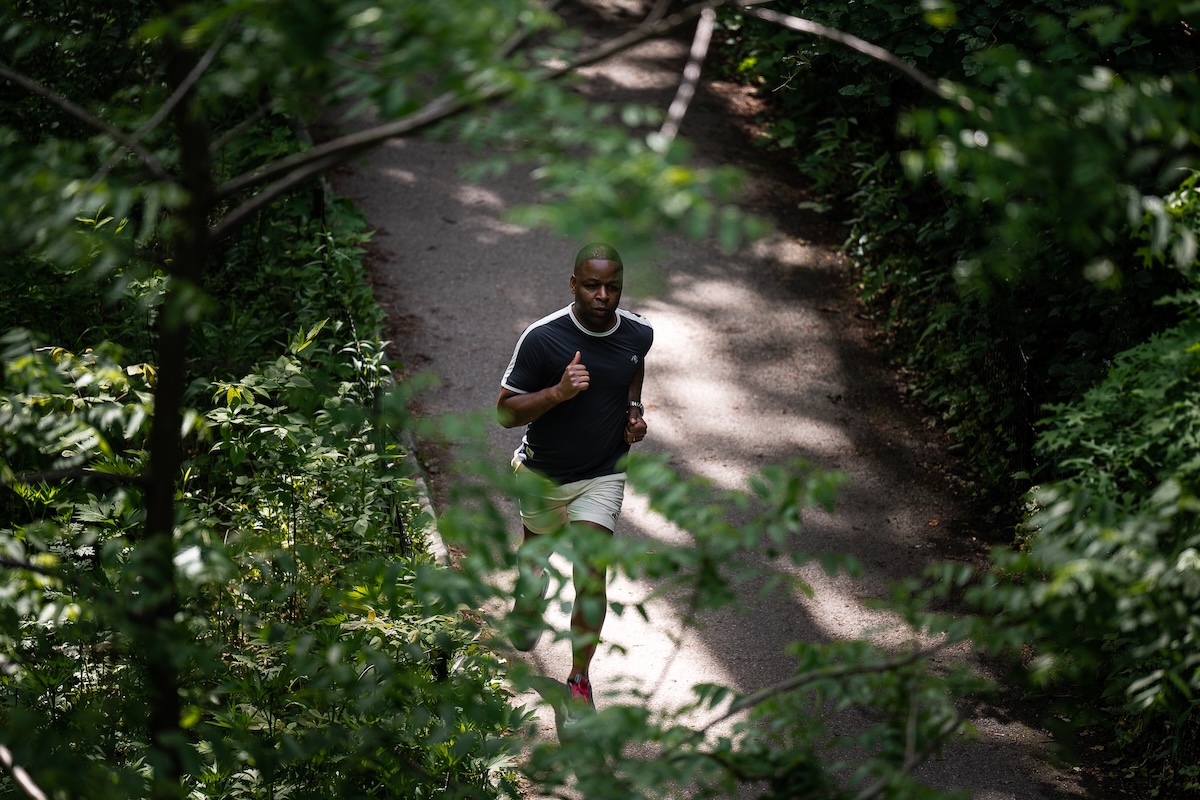
I ran marathons for a while. In fact, I ran 25 full marathons, including one ultramarathon, and completed all six of the world marathon majors. I guess I’m always willing to place my body in a position where I will test its limits—not just physically but mentally as well. I didn’t realize at first how much my marathon training would come into play, but I barely slept the night before. I woke up at 5:30 am, started my day at 6:00 am, and ended at 6:00 am the next day. By then, my adrenaline was pumping so hard that I couldn’t go right to sleep either. If I ever pondered what incredible things the human body can do, I was reminded on May 20-21, 2024, at The Betsy Hotel in Miami Beach.
Was there a conversation during that experience that deeply moved you or left you speechless?
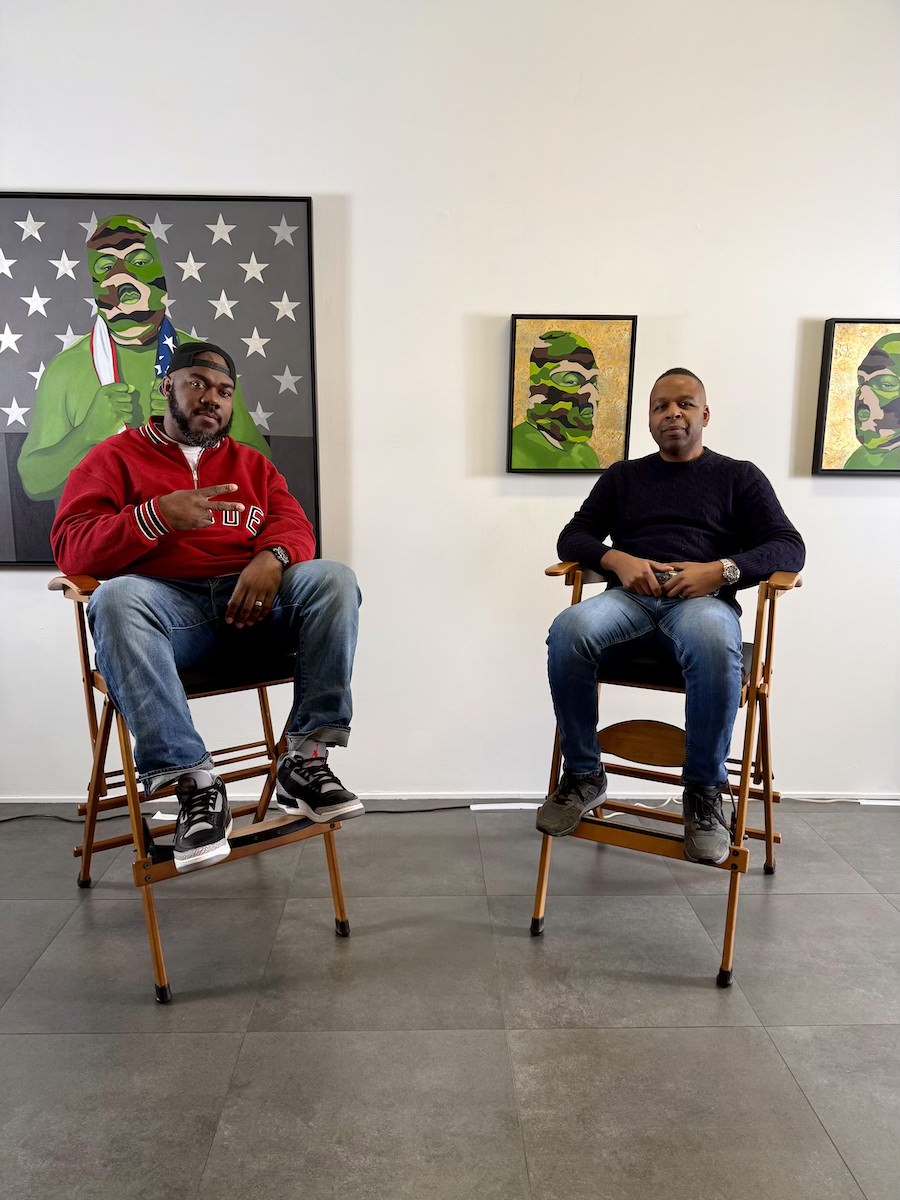
There were many. I had just started reading some obscure Russian writers—at least obscure to me. Of course, Dostoyevsky is my favorite, and I love Tolstoy. I posed a question to Azu Nwagbogu about Nikolai Chernyshevsky’s novel What Is to Be Done? Not knowing him personally at the time, I wasn’t aware of how vast his reading knowledge was. It was quite interesting to learn more about him in that organic way. There were many conversations I found intriguing, and I find myself going back to reread the interviews—which I almost never do.
Is there a question you wish you had asked but didn’t?
It’s not a matter of wishing I asked something. I wish I had more time. Some interviews went long, and some were shorter than expected. For example, I had already interviewed Nari Ward more than once, so our initial conversation was, “What are we going to talk about this time?” But once we got started, we could’ve kept going. I also had multiple conversations with Japanese sculptor En Iwamura. I remember getting on with Francis Upritchard, Pia Lindman, and Ana Prvacki and feeling like I could’ve talked to each of them for another hour. Our dialogue felt like we were old friends. I don’t have a particular question I’d have asked, but I’d like to have had more time.
Has an interview ever completely changed your opinion of someone?
I’ve had the pleasure of interviewing a number of MacArthur Genius awardees. Tomeka Reid was one I was really looking forward to chatting with. What changed for me was my understanding of the types of genius that exist. She is definitely a genius, with or without the award.
You’ve interviewed artists like George Condo, Nari Ward, Bosco Sodi, Olafur Eliasson, and Rusudan Khizanishvili. What do you notice in common among artists who have sustained a distinct voice?
There is nothing else in the world they could be doing aside from expressing themselves through art.
Which young artists are you currently interested in—and why?
This is a difficult question. First, how do we define young? Is it age or how long they’ve been making art? I recently interviewed Katherine Bradford, who spoke about her “late start” in her 30s. So back then, would she not be considered a young artist?
Let’s assume we mean age—under 30 or 35. In the U.S., I really like Telvin Wallace, Alexandra Couch, and Ariel Mitchell. In Finland, Taru Happonen. In Italy, Krizia Galfo and Adji Dieye. In Mexico, performance artist Columba Diaz. I met many artists recently in Romania, but Marta Mattioli, Ioana Maria Sisea, and Ana Ion Leonte stand out. In Germany, Shanee Roe. Lydia Merrett in the UK. In Colombia, Camilo Bojacá. And Chigozie Obi from Nigeria. I could double this list with a bit more thought. But I never ask people for their ID when I visit a studio, interview them, or see their work in a show. It’s about asking hard questions, being immersed in research like Telvin, having a unique and complex voice like Shanee or Taru, or just being able to flat-out paint, like Krizia.
Has the desire for knowledge among younger audiences evolved—or simply changed form?
We assumed that younger audiences would not be interested in art, and that has proven to be wrong. In fact, what we’re seeing is a gravitation toward accepting how younger audiences view and consume art, while institutions scramble to capture their attention. We see it at the opera, where there has been a focus on bringing in new voices and producers. Classical productions are modernized while incorporating works by younger and more diverse composers. Museums have become community gathering places after hours. Look at what Tiff Massey has done at the Detroit Institute of Arts. Look at how many young members’ programs are popping up at museums, accompanied by events that focus more on music, dancing, and celebration. Sometimes the art is background noise. But it gets them in the door.
Are there areas in your practice today—whether geographic, cultural, or conceptual—that you’re drawn to now, even if they weren’t a focus in the past?
I never avoided anything. It was always only a matter of time before the questions would come up and I would seek answers—or the answers would come up and I would question them with a critical lens. I’m turning my attention toward what the art world might deem as underrepresented or marginalized communities, but not in the traditional Eurocentric or Americanized sense. I have a strong interest in the contemporary scenes of Latin America, particularly Mexico. I’m interested in artists like Gonzalo Garcia, Nicholas Guzman, Alejandra España, Bosco Sodi, Perla Krauze, and rising talents like Chavis Mármol. In Europe, my focus has turned to Romania. Of course there’s Adrian Ghenie, but I’ve also been following Serban Savu, Aurora Kiraly, Ioana Maria Sisea, Nicholae Comănescu, and the fascinating projects at the RAD art fair.