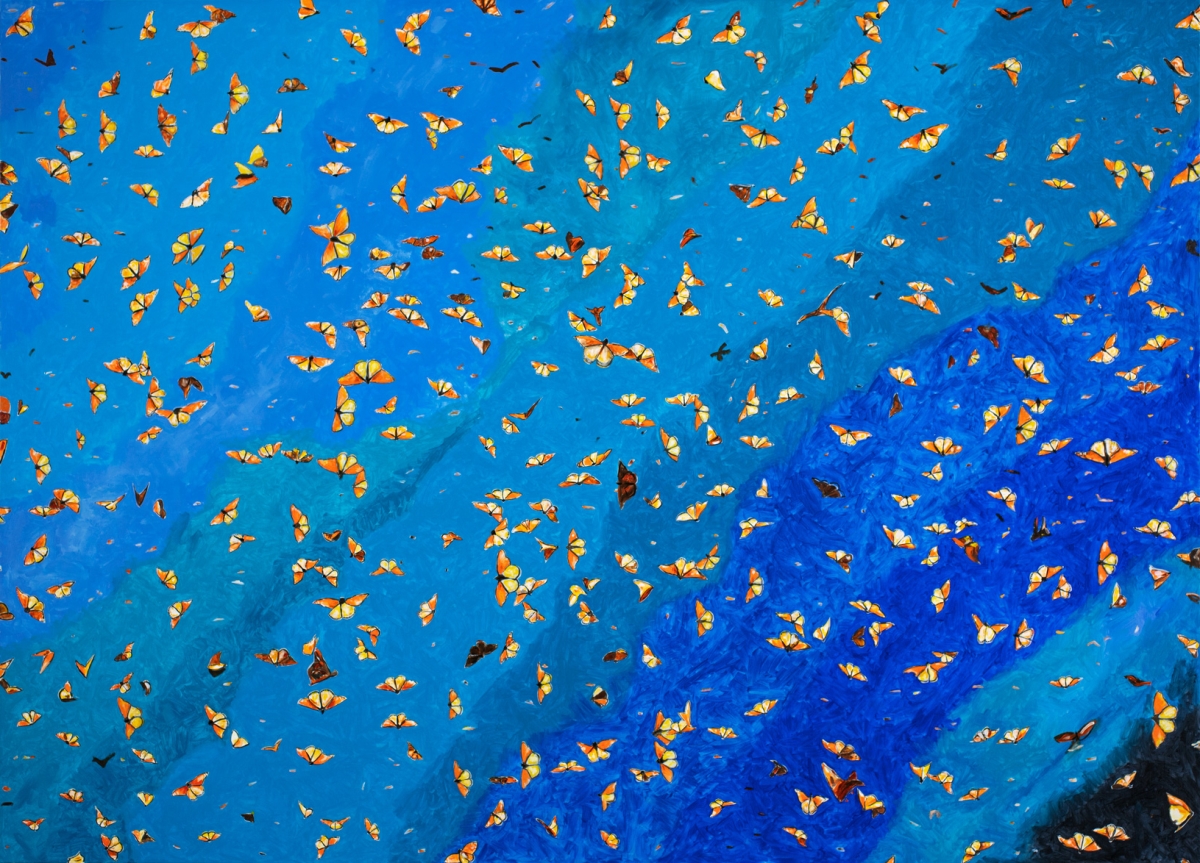
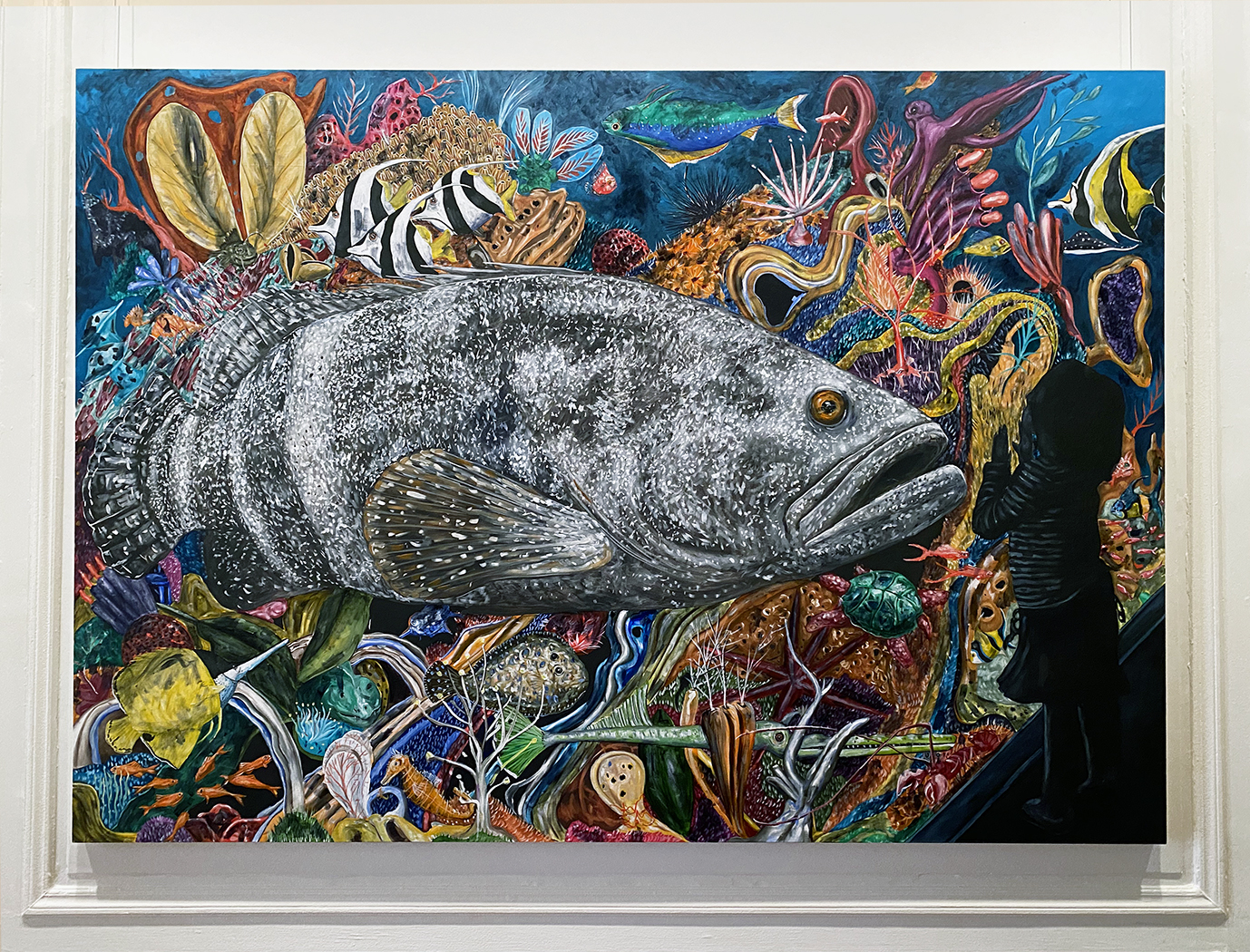
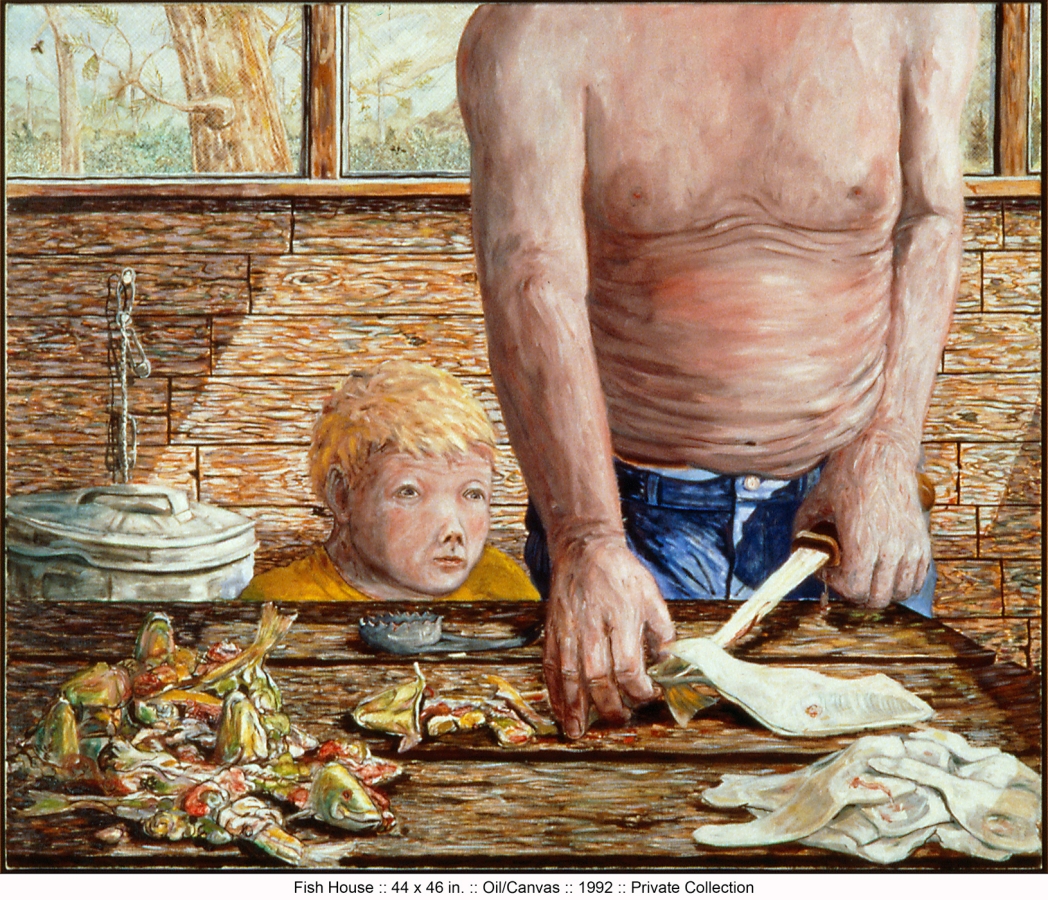
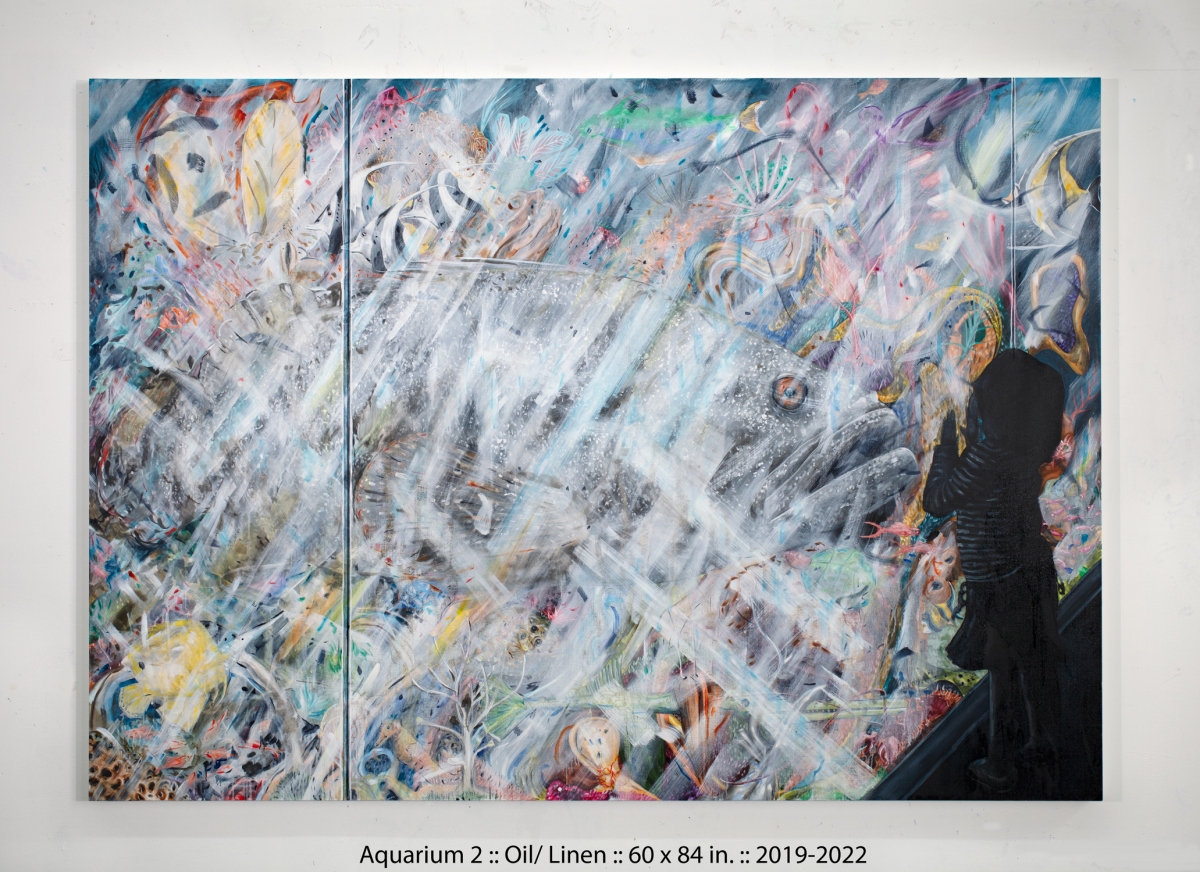
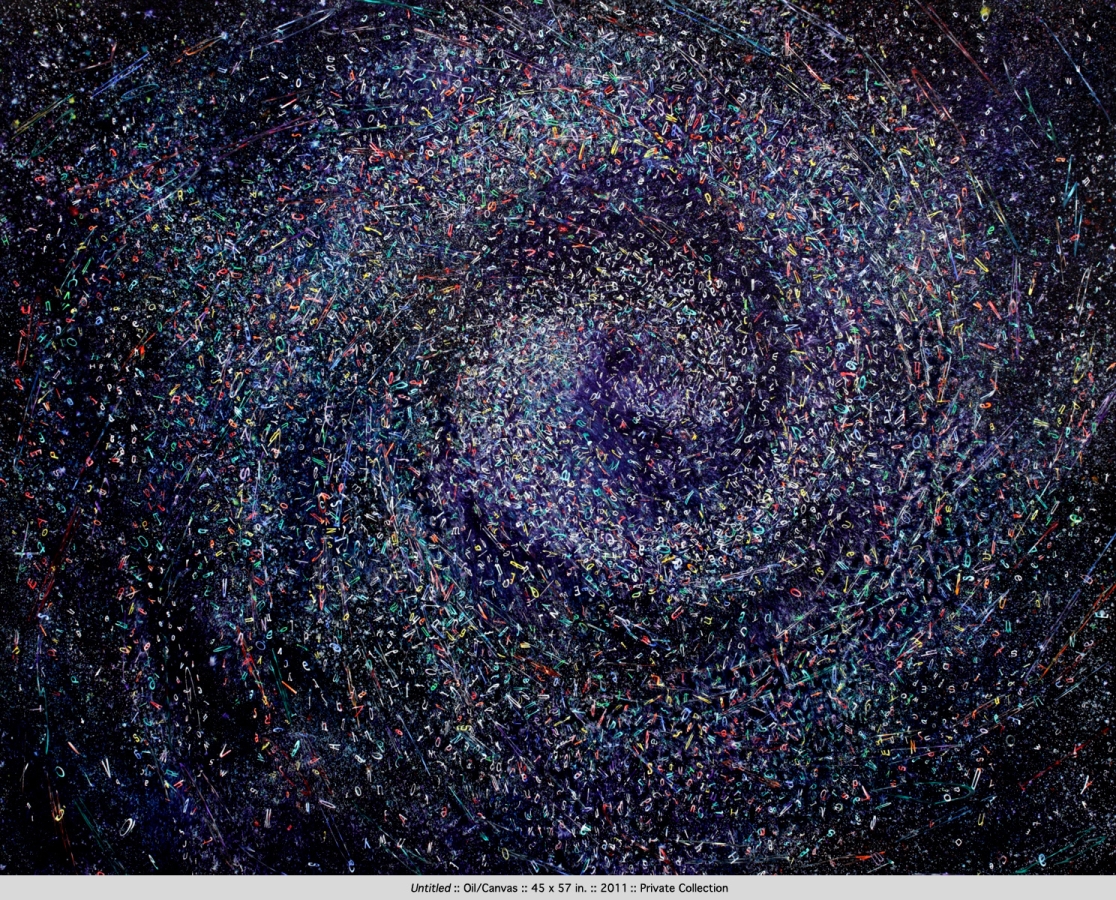
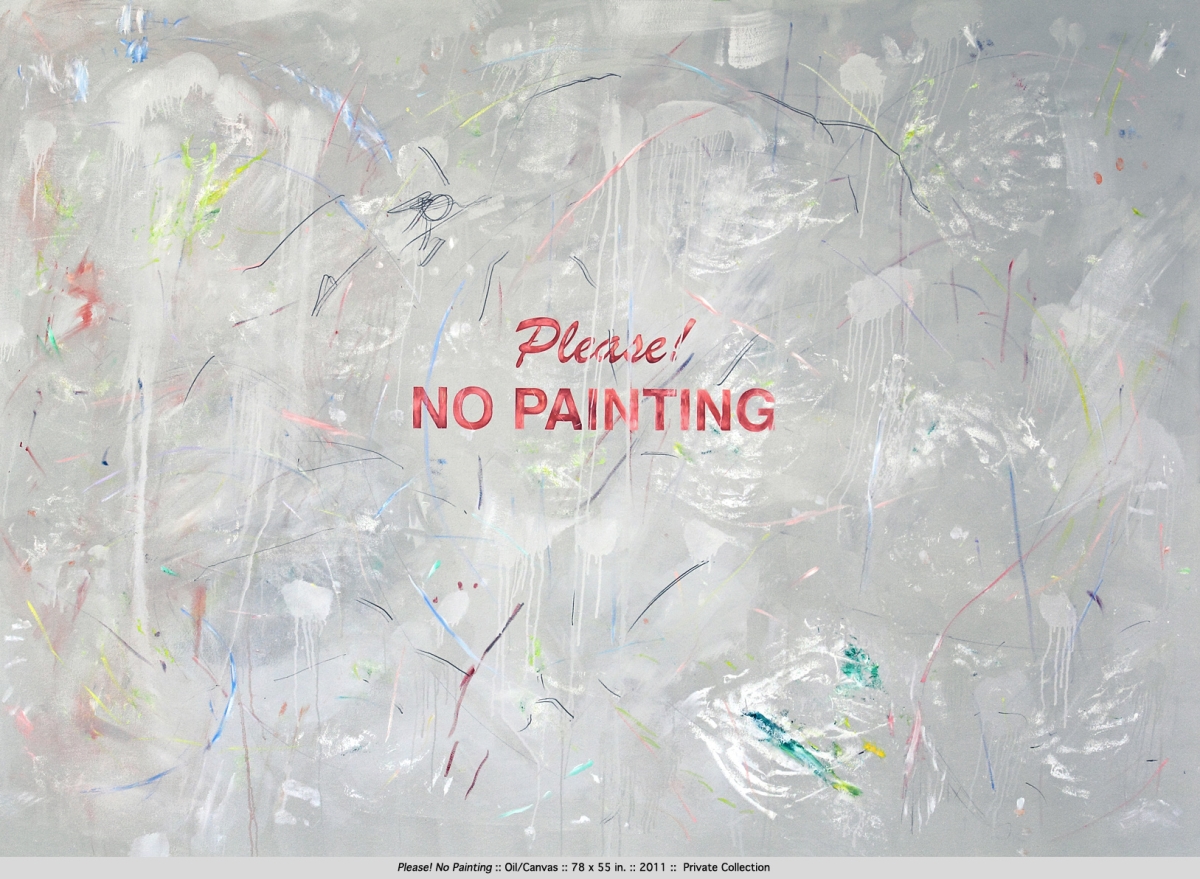
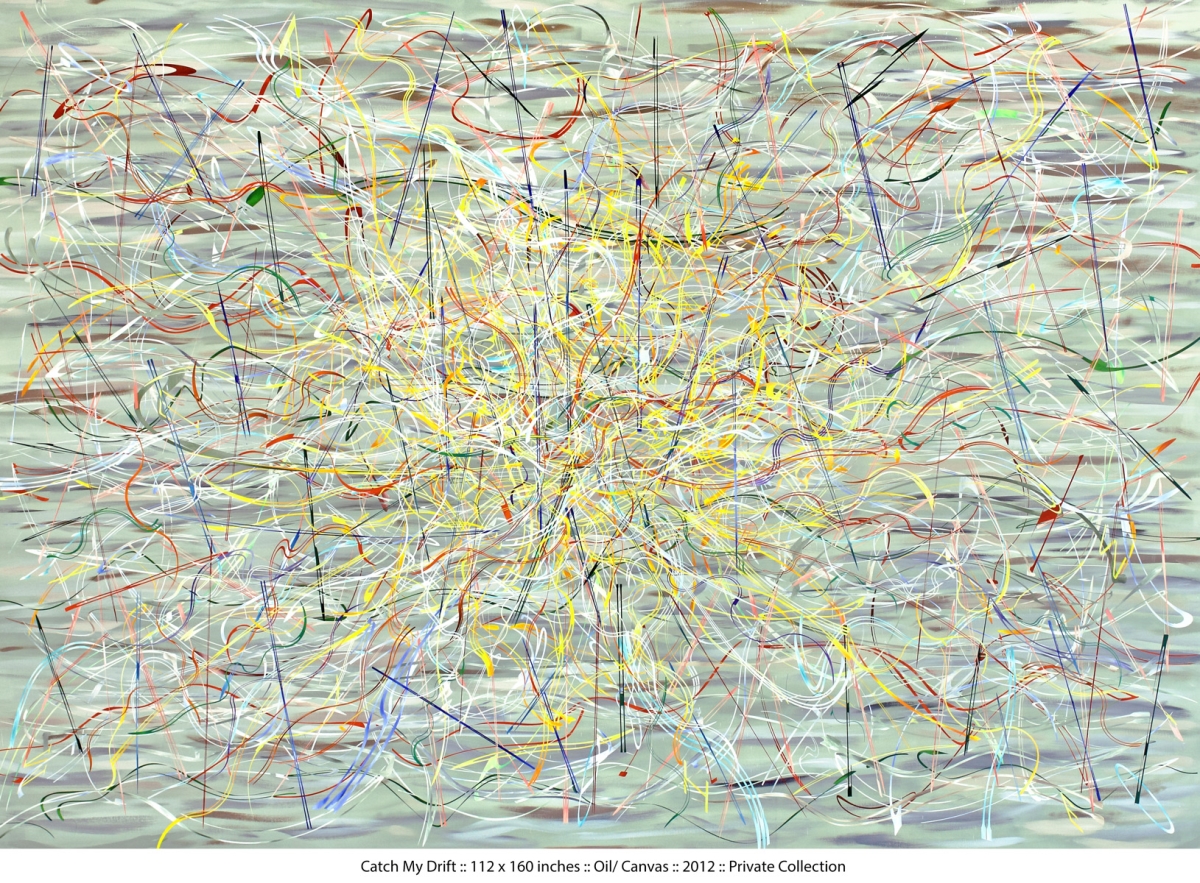
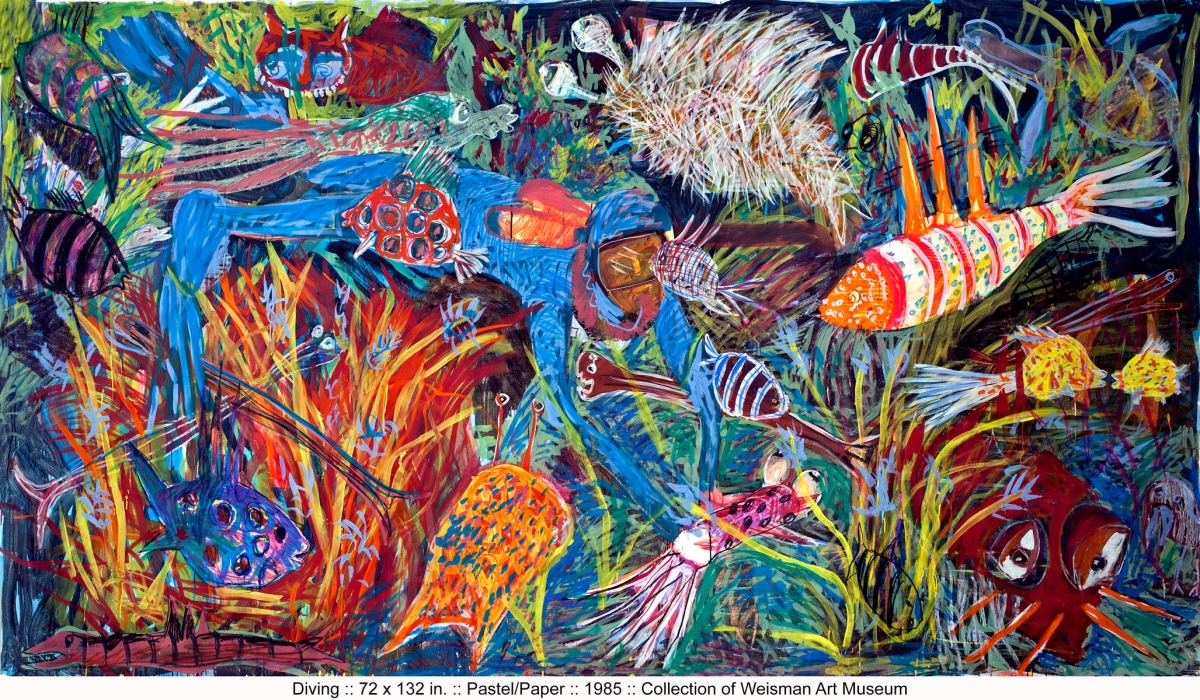
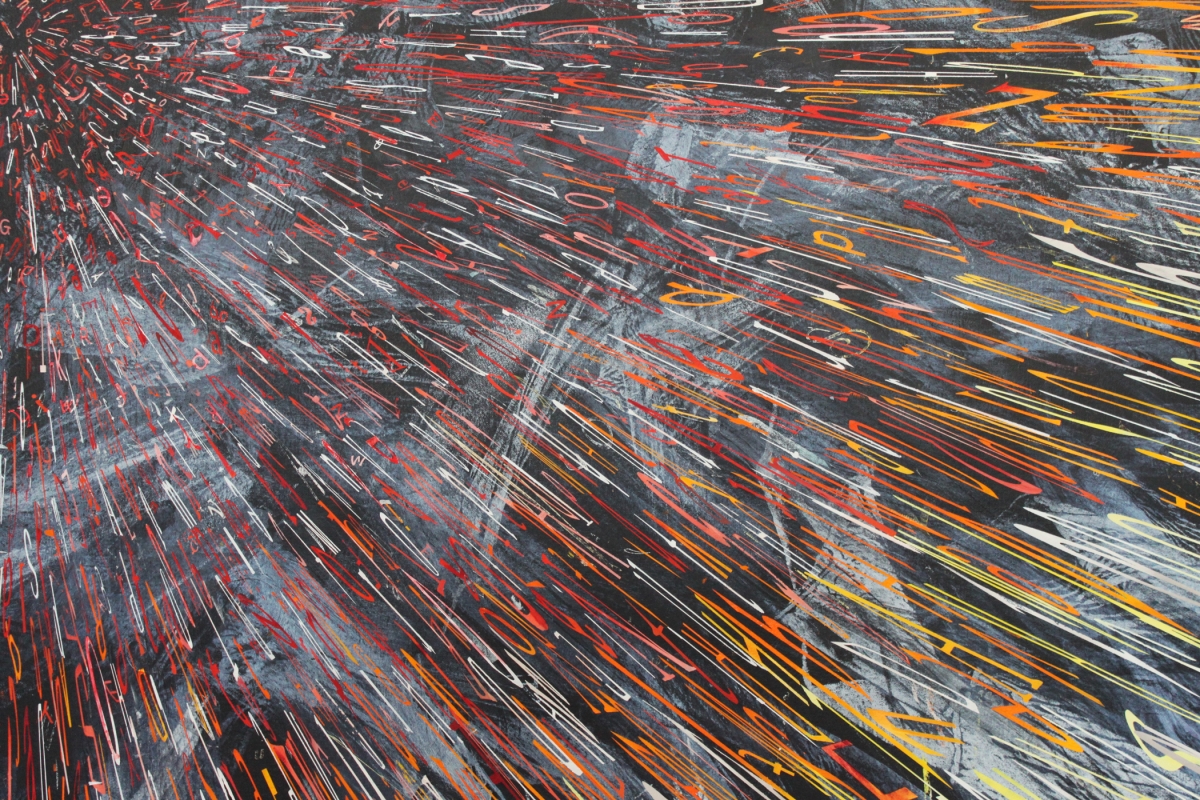
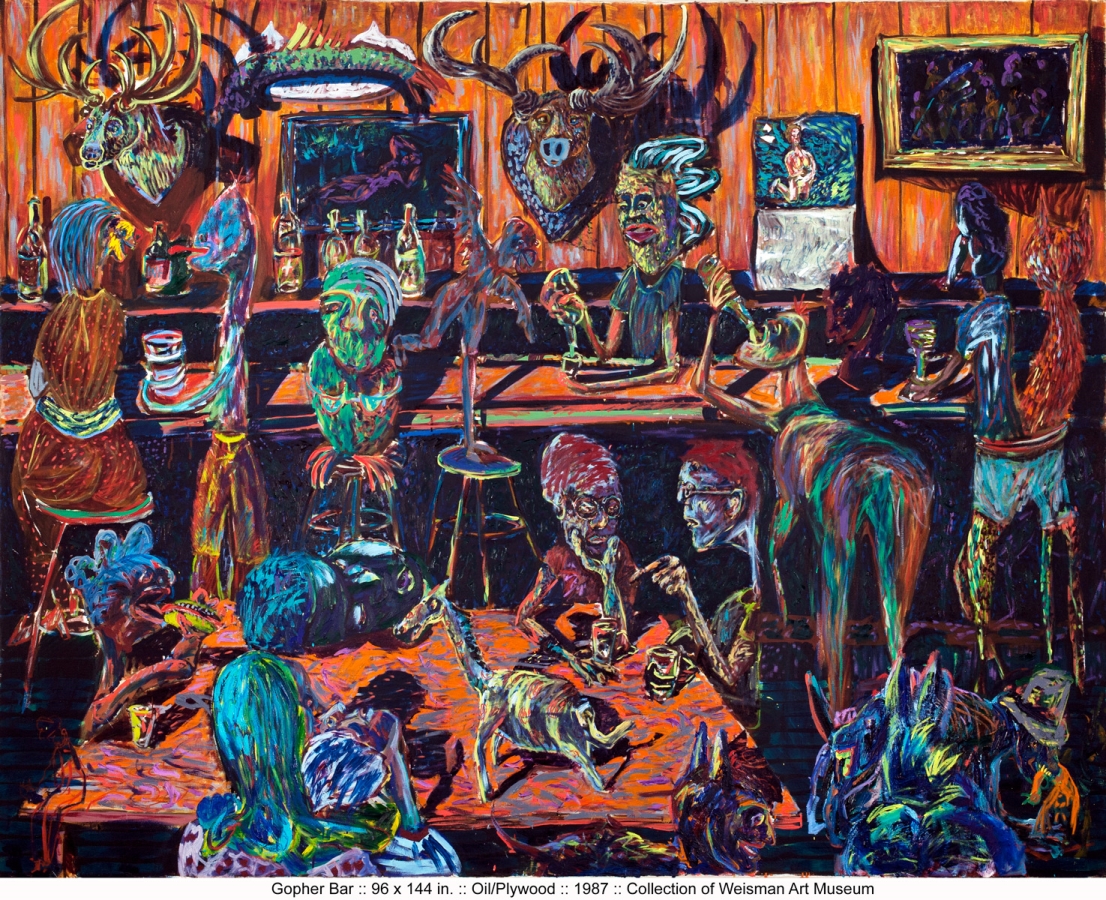
Doug Argue’s paintings unfold like visual essays—dense with language, rhythm, and the residue of time. Over the past three decades, his canvases have evolved from large-scale figural works to vast abstractions where letters, colors, and fragments of meaning drift across the surface like constellations of thought. Each piece becomes a meditation on transformation, on how matter—whether linguistic or atomic—rearranges itself endlessly, creating the illusion of permanence within perpetual change.
Born in Minnesota and now based in New York, Argue bridges literature and visual art with a rare sensitivity. His use of scattered letters—borrowed from texts as varied as Moby-Dick and Petrarch’s sonnets—reflects an ongoing fascination with the architecture of language and its capacity to both reveal and conceal. The words in his paintings do not speak; they orbit. They are particles of consciousness caught in the flux of memory, history, and imagination.
Argue’s canvases have been compared to symphonies, their layers of paint and text building toward a sense of vastness that is both personal and universal. His reflections on matter, perception, and time blur the boundary between science and poetry, between the painter’s gesture and the writer’s sentence.
In this conversation, Argue discusses the evolution of his visual language, the literary sources that shape his vision, and the enduring mystery of creation. His voice, like his work, is contemplative yet searching—a reminder that art, at its core, is not about answers but the exquisite pursuit of meaning itself.
An Interview with Doug Argue
By Carol Real
Relocating from Minneapolis to New York marked a turning point. How did that transition unfold, and what new perspectives emerged upon arrival?
In 1998, I won the Rome Prize and moved to Rome for a year, and in 2001, I moved to San Francisco for 10 years. So I had some experience of living outside of Minneapolis before arriving in New York. When I moved to New York I signed a contract with two big galleries—one in Chelsea and the other on the Upper East Side. They sold almost all the work I had done for the past ten years. It was a big change for me in that context. I’ve always loved New York, with its 800 plus languages spoken. It’s a beautiful multi-cultural city, and I feel at home here: little old me disappearing in the multitude. I have supporters and dear friends in Minnesota who’ve continued all these years to buy work, and support me, and the same is true for San Francisco. I’m very, very grateful for the long-term relationships but the possibilities in New York are so much greater than anywhere else in the world.
Art often bridges generations and cultures. Which figures or ideas have most profoundly shaped this creative philosophy?
I like the idea that art is a bridge between generations so there is not an abrupt start and finish to culture as we live and die. Every generation forges ahead and dismisses the old, but art can be something that bridges the time between the lives and deaths of people and allows for the feeling of a continuation of culture even as it changes. I’m not one of those people who doesn’t like museums. I like how they act as a window into the past and future and allow me to mingle with artists long dead and yet to be born. I’m assuming a continuation in the future here; I’m not speaking literally of course. The same is true with writing and poetry, which has been one of the great joys in my life. We have genetic knowledge which literally builds us from the ground up, bones, heart, and mind, without a bit of thought from us, and of course gives us language. We have the sciences with their cumulative everchanging gift of knowledge, but in art of all kinds we get a sense of what it was like for someone to be alive—an experience. I think it helps us to feel less alone and adds the spice to life. It’s also another way of passing on ideas and thoughts outside of genetics and biology.
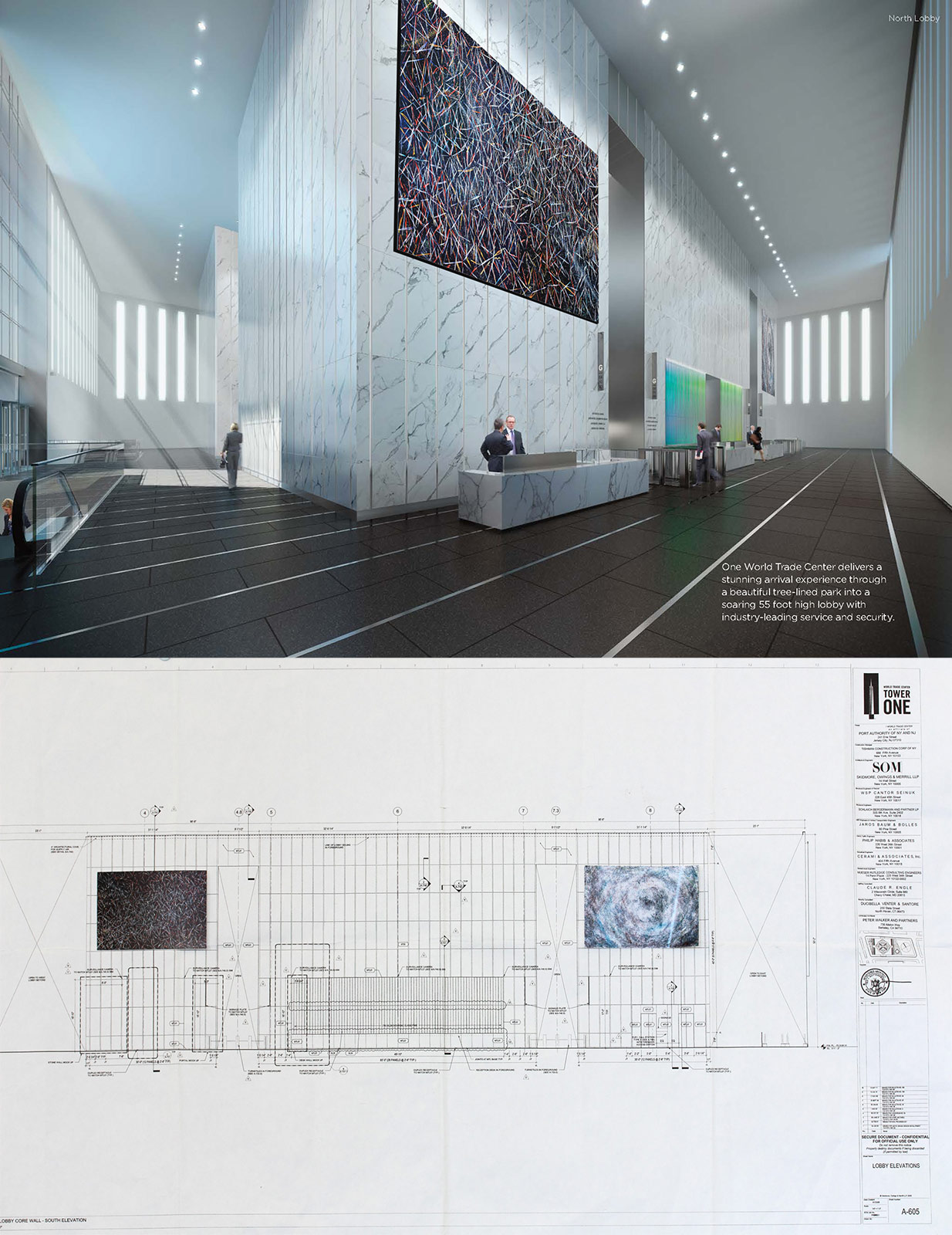
Literature plays a central role in this practice. How did the relationship with words begin, and in what ways do they continue to inform the visual language of the work?
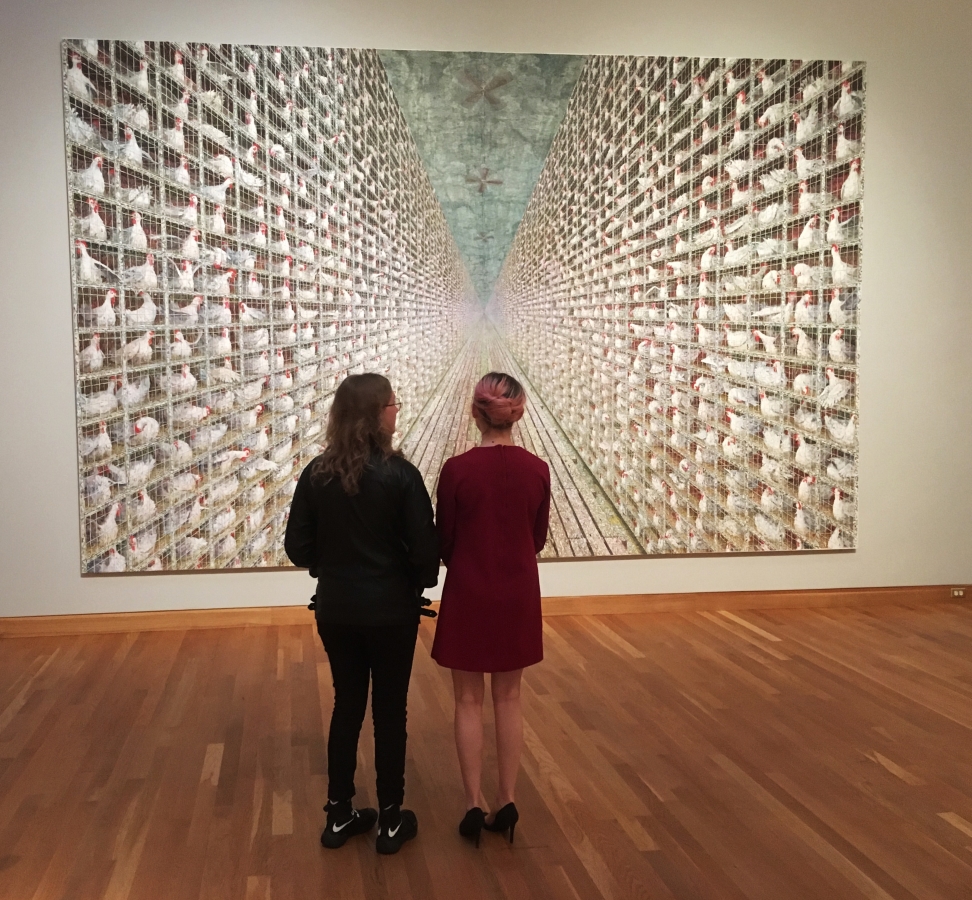
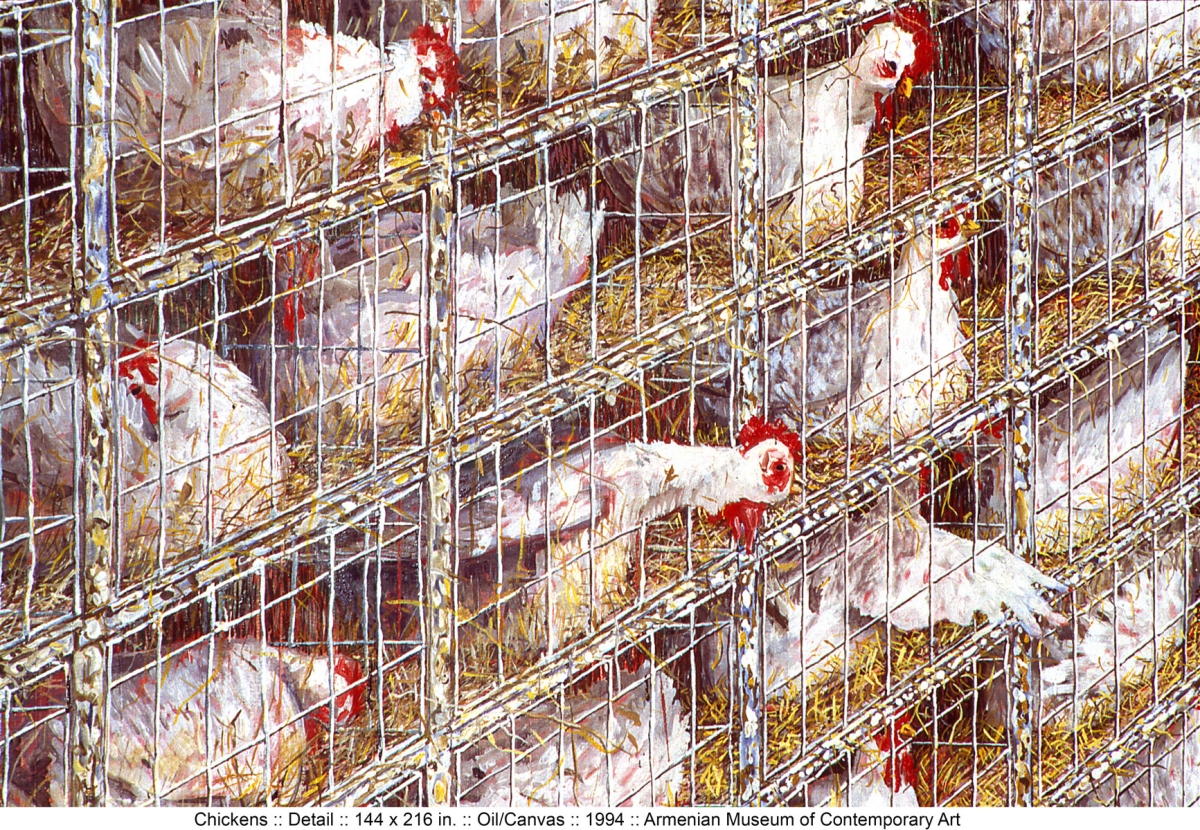
I have always been interested in literature and poetry. It’s just something that’s always been a part of my life. At a very young age, I was reading James Michener for hours on end in the warm bath. Hawaii was born, evolved, and was populated with people and creatures right before my eyes. You can both escape from the world, learn, and be more in the world at the same time. Someone said it’s the gaps between words where the meanings lie, and that’s certainly often true in poetry. In the beginning, it influenced my work by creating these complete imaginative worlds in each painting, almost the way a poem or a novel does. A lot of my ideas for paintings come to me when I’m reading, and I pause and daydream based on the reading. For example, when I did the large painting of chickens, I was reading a Kafka short story about a dancing dog whose owner played an organ grinder on the street. Meanwhile the dog, wearing a tutu, danced for tips and contemplated how he got his food is related to who he was as a dog. I daydreamed in my mind about where I got my food and saw the image of the chickens exactly in my mind’s eye, and then it took three years to paint it.
The notion of “particulate matter” appears as both a scientific and poetic metaphor. How does this idea connect to the process of painting and to the structures of language itself?
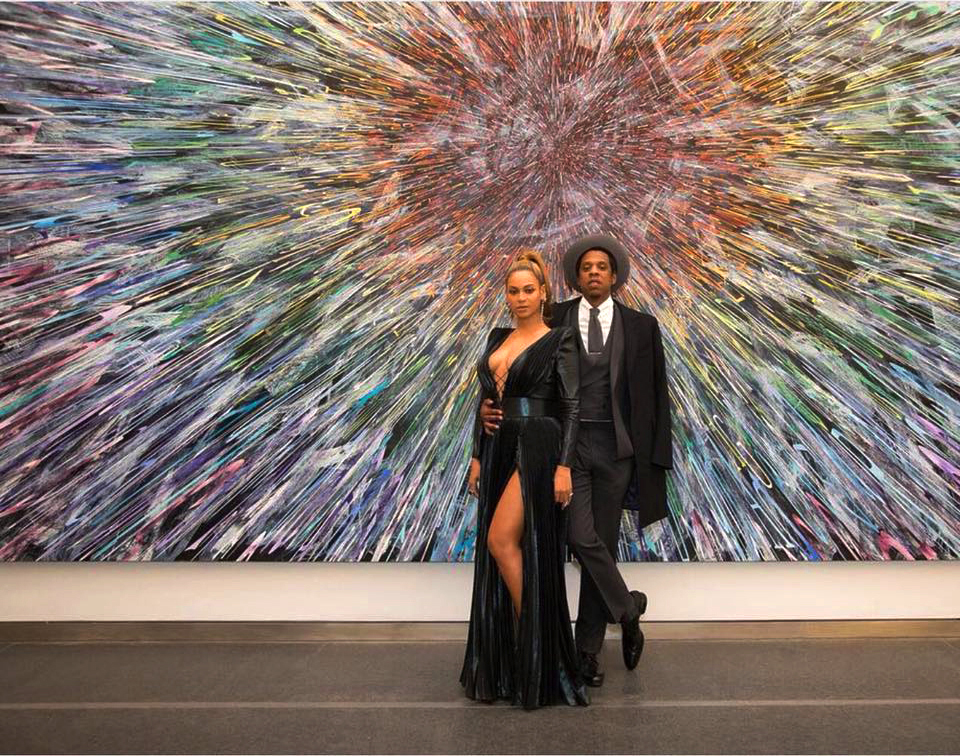
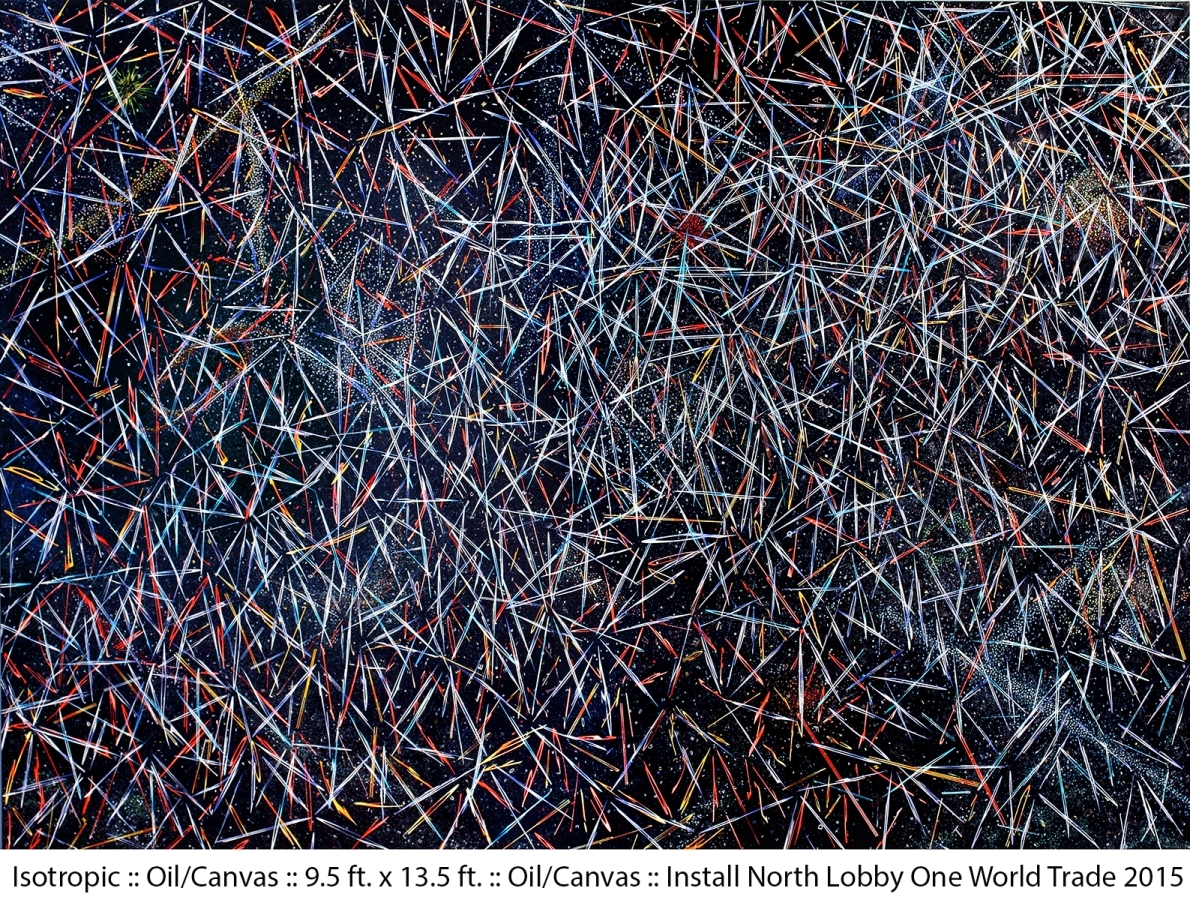
Matter is particulate. There are a limited number of elements, about ninety I think, and that limited number combines and recombines to make all matter. The atom is the basic unit of the element and is the building block of all matter, and so life as we know it, and combines in various ways to make up all matter. Language is genetic and is encoded in human babies at birth. Writing systems are a human invention, and the Roman alphabet works in a very similar way as atoms do, where the letters can be combined and recombined in an almost infinite number of ways. This allows every person and every generation to say something different and still be understood. It seemed to me that I could draw a comparison between the basic building blocks of culture in terms of letters, and the basic building blocks of the universe which are atoms. Both are systems that allow for constant flux and change as they recombine in different ways. This is not science but the idea has worked very well for me in making some very good paintings.
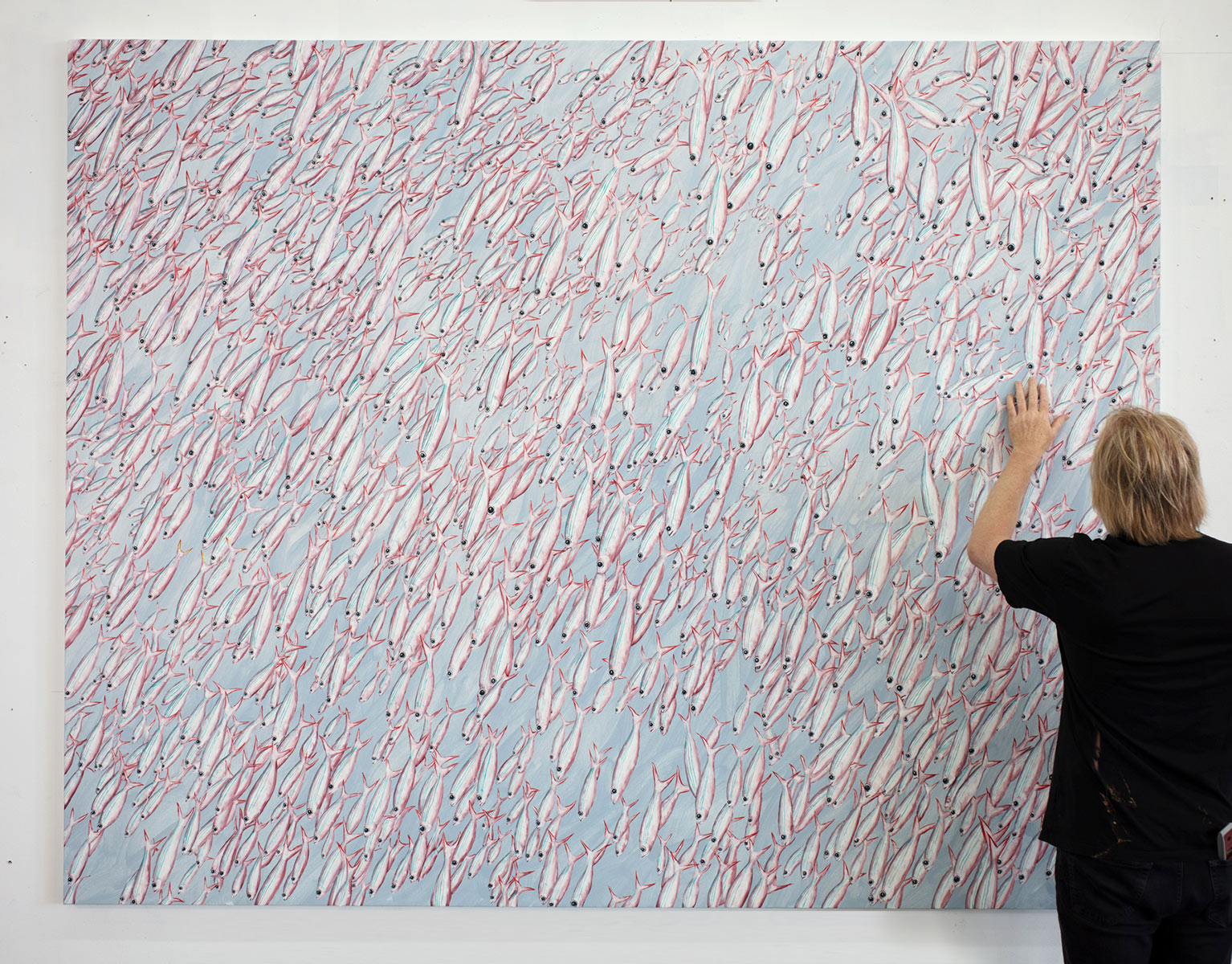
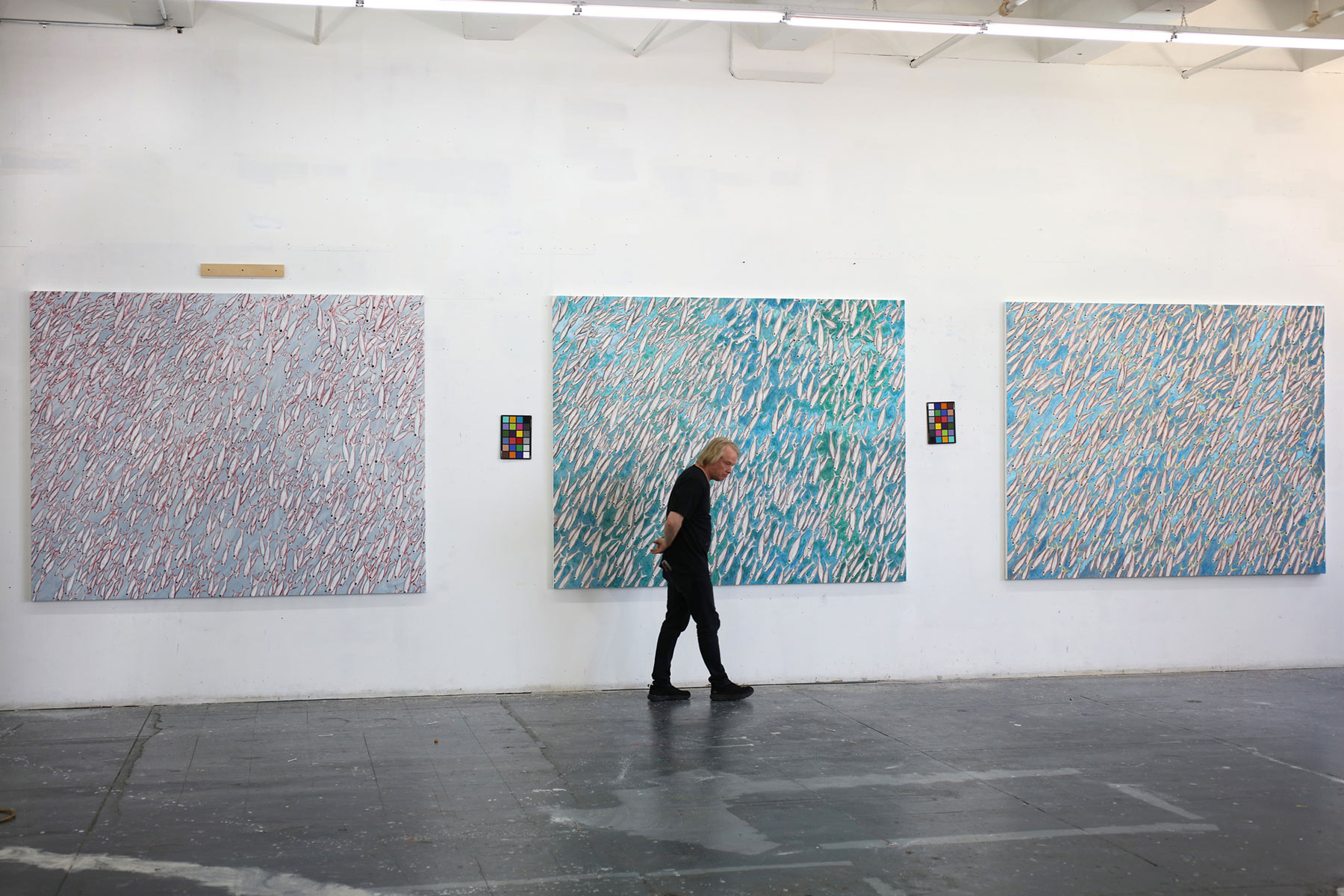
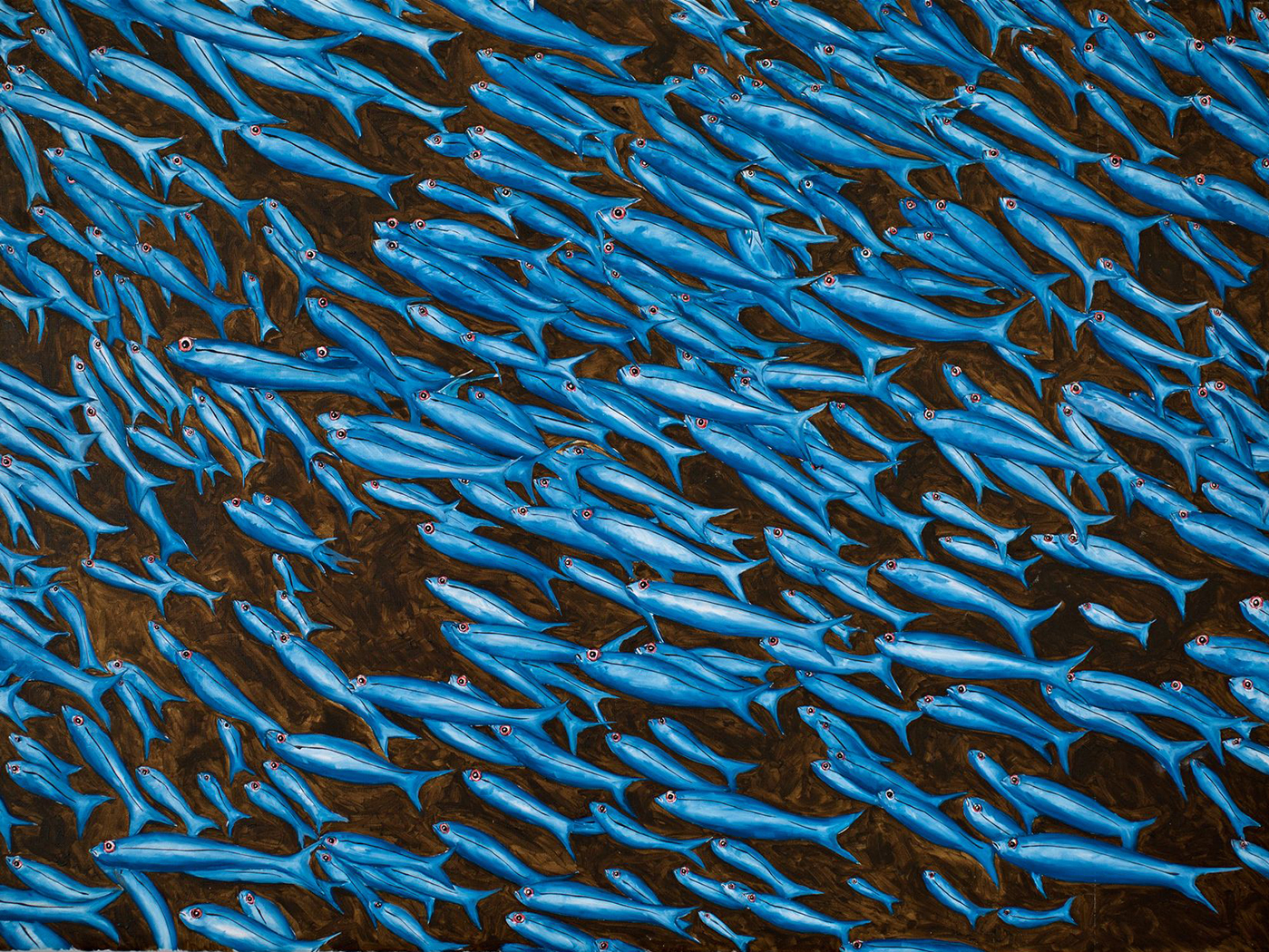
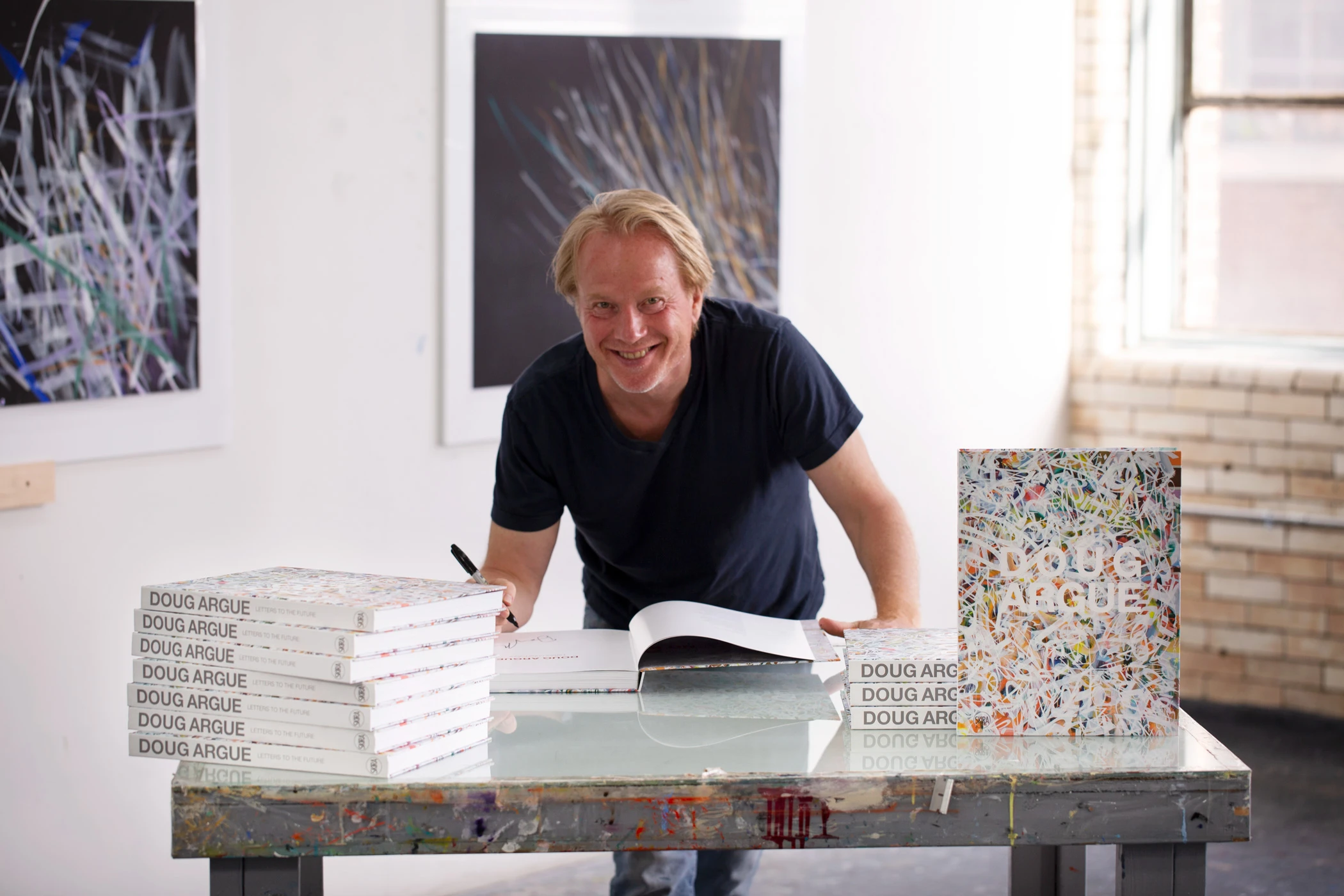
The evolution of style reflects an openness to change. How would this artistic identity be defined today?
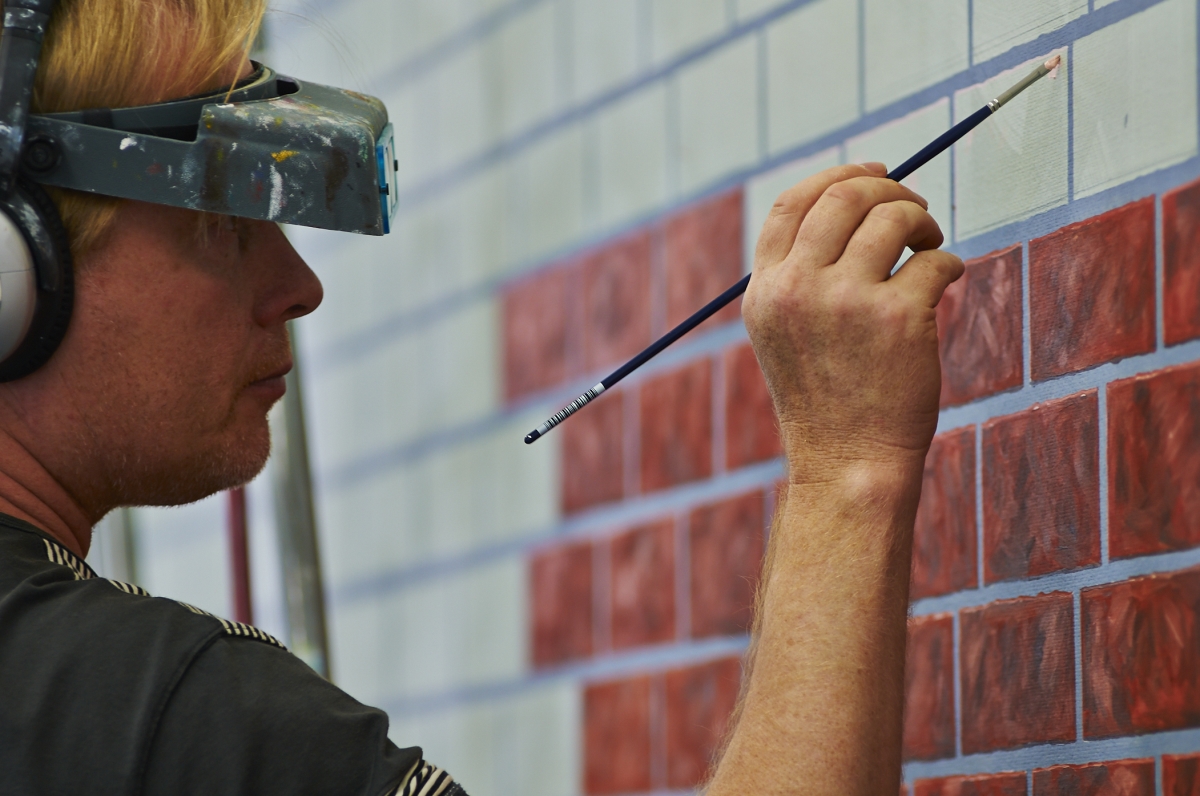
I try and see what comes next for me and embrace the change. Since I am a maker, everything is always connected.
Certain works seem to capture an essential moment in the creative journey. Which paintings hold particular meaning or resonance at this stage?
Well, that’s impossible. I would just say I’m usually most interested in whatever I’m working on because it’s more present.
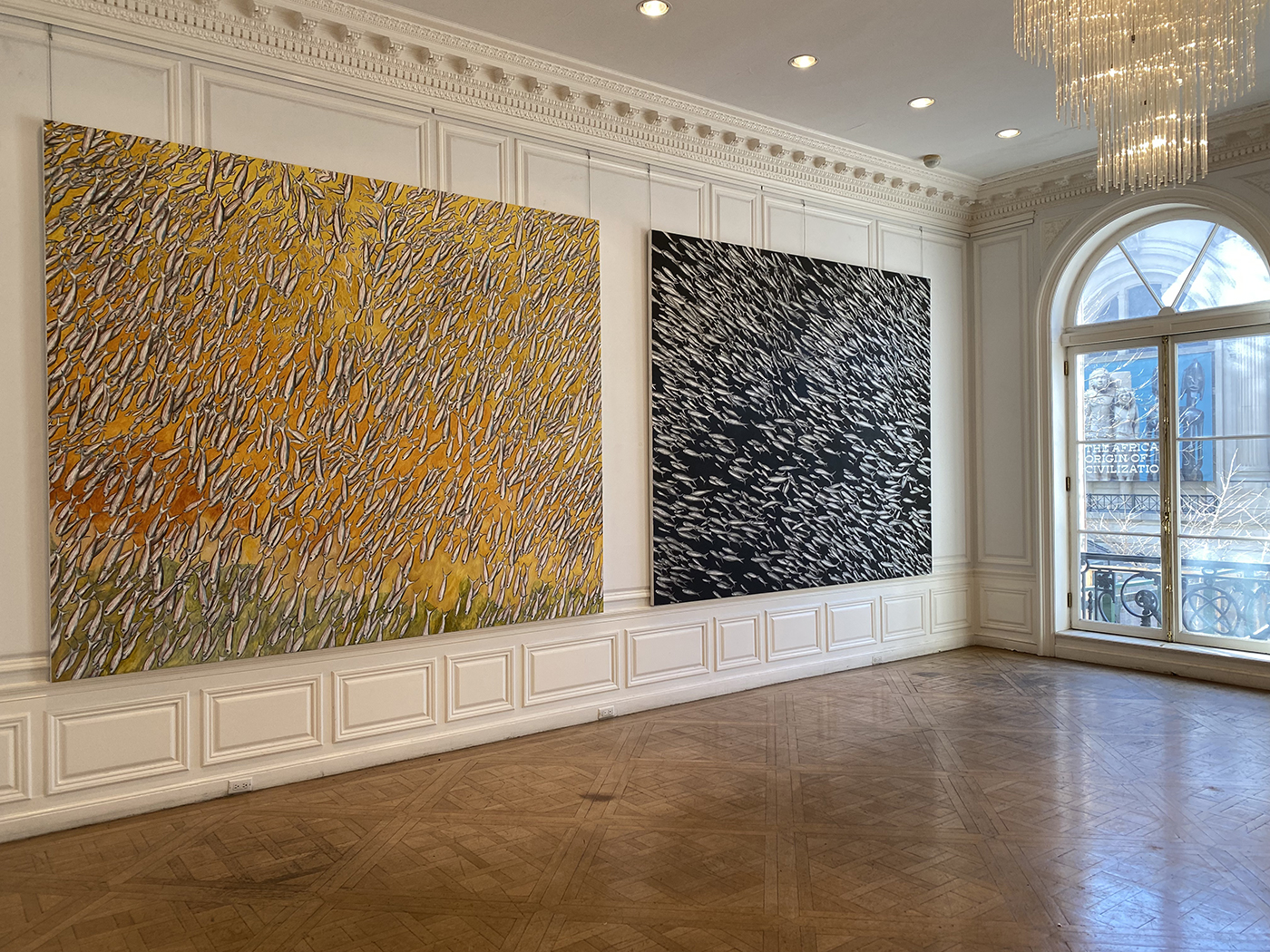
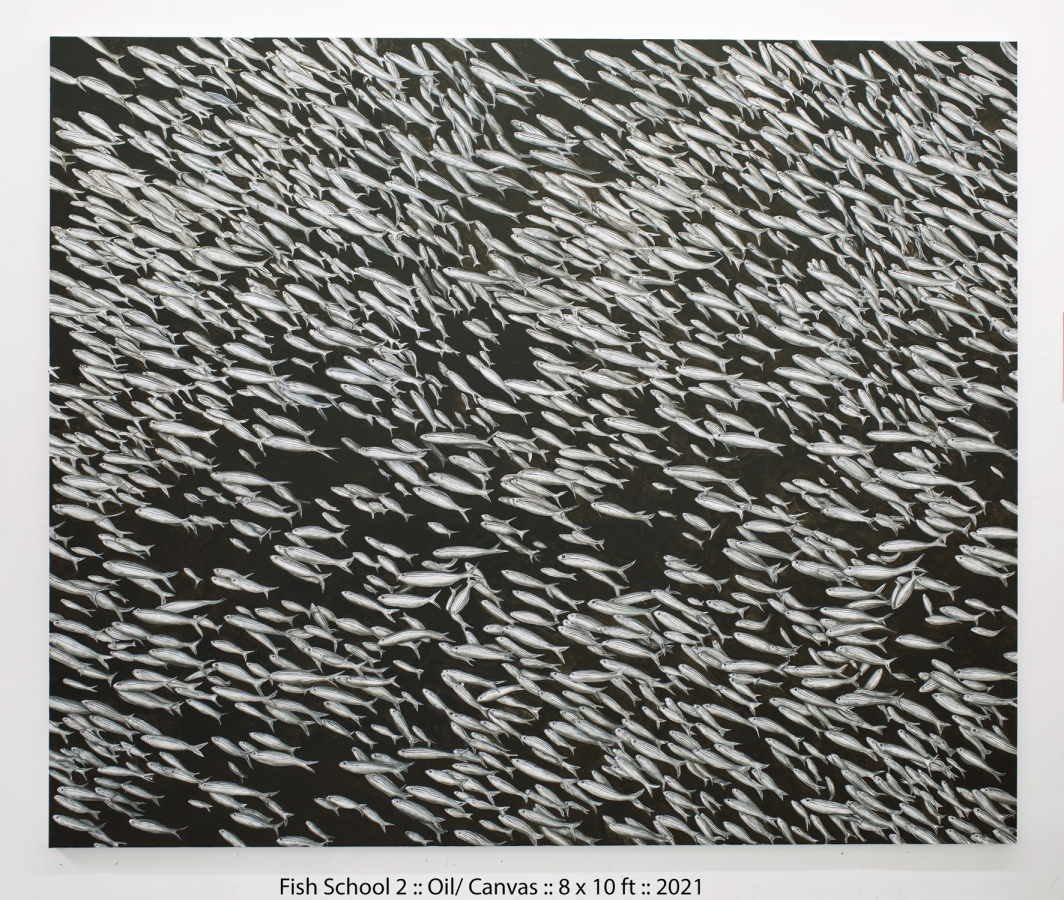
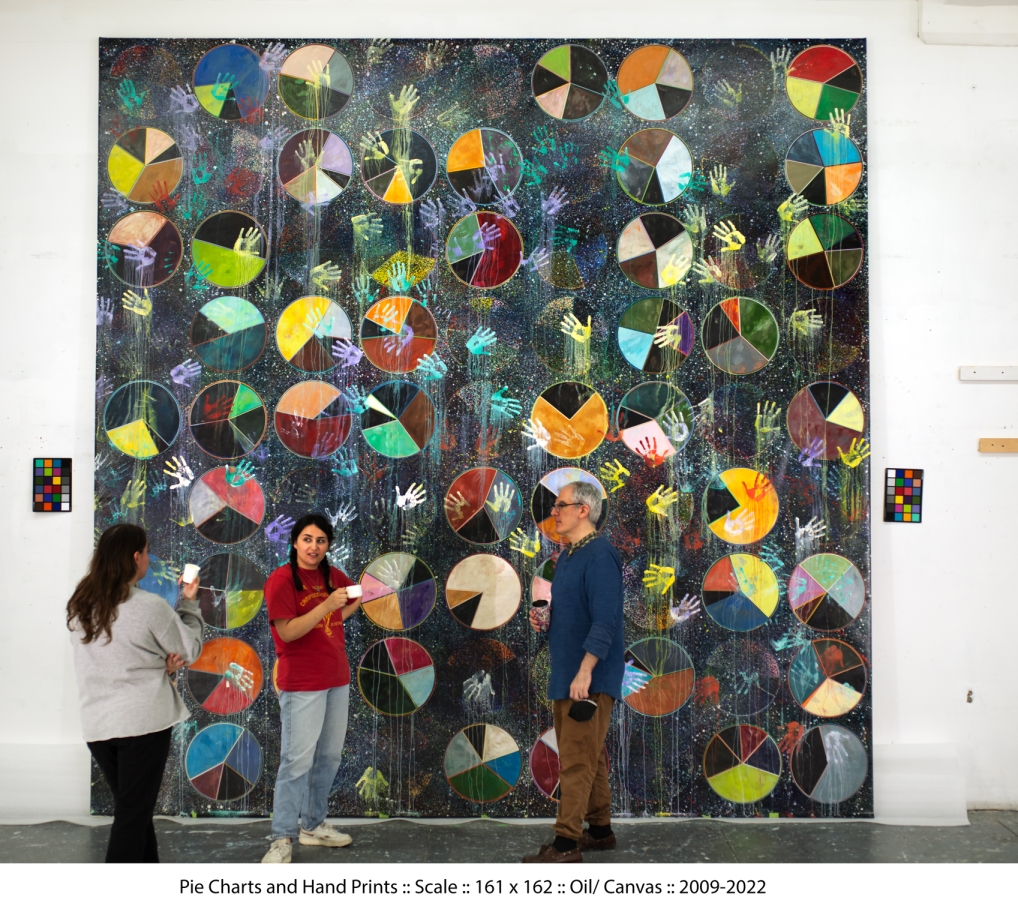

Scale has become a defining feature of the practice. What role does size play in shaping perception and experience?
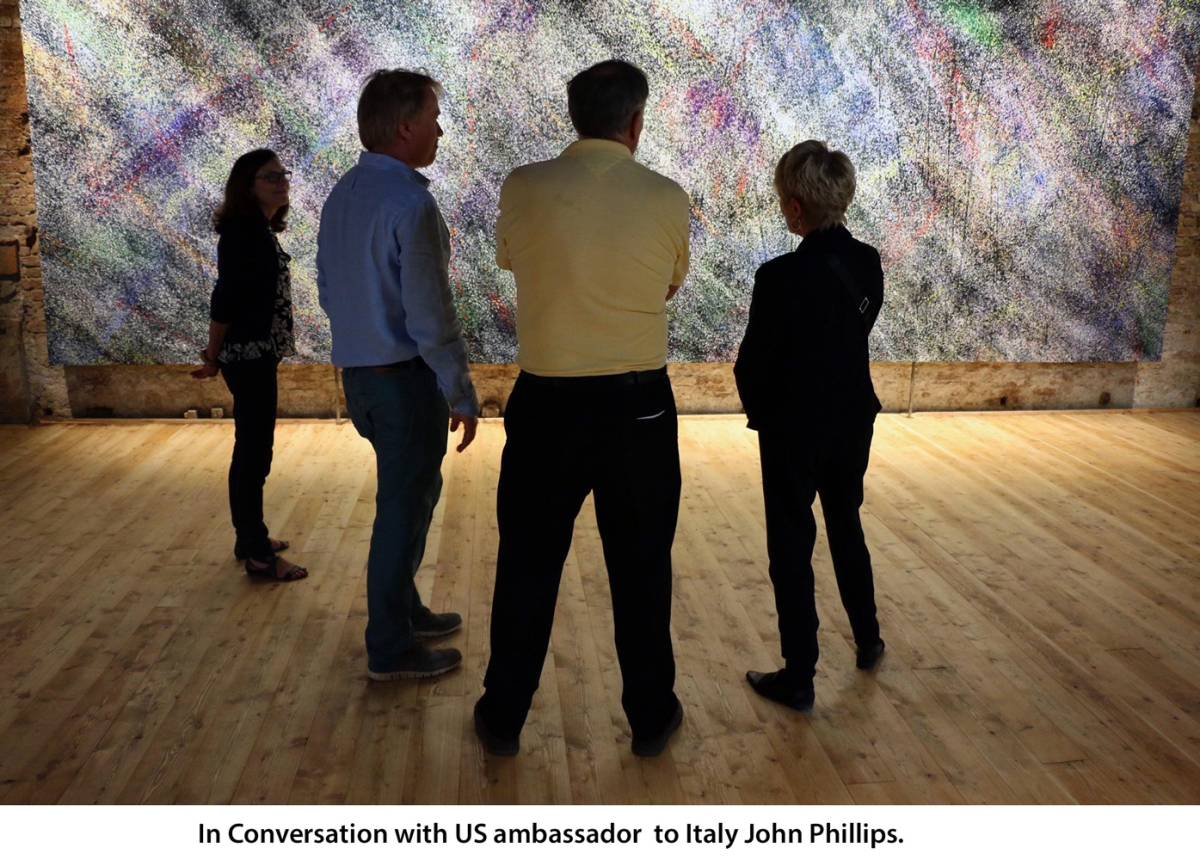
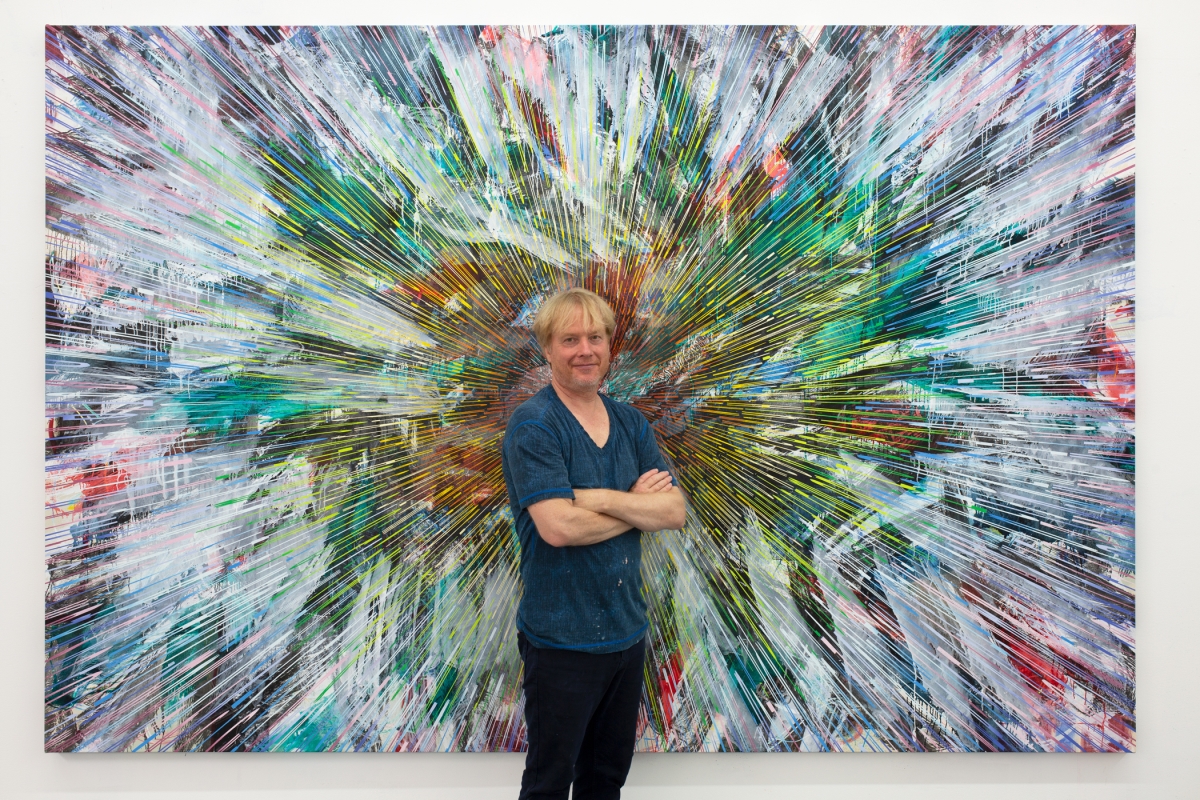
I do lots of smaller works as well but not a lot of people can make the big ones anymore, so I think it does stand out. What interested me after I saw some large Tintoretto paintings in Venice was how that scale of those paintings were outside of my peripheral vision; it pushed my eyes to the edges and I couldn’t take in the whole. I like that experience of being enveloped and swallowed up into the painting. I have always been interested in the idea of infinity, and I’ve always wanted to push the sides and the edges of a painting so it feels like they can keep going forever. I first thought of this after looking at a lot of early Asian paintings where the landscapes are dominant and seem like they extend in every direction endlessly. The people are decentralized and scattered through the forests or the house. Working in a large scale and exploring infinity are combined with the idea of the group—of large numbers of individuals all slightly different—as opposed to a centralized important individual like Napoleon on his horse.
Younger generations often look to established artists for guidance. What principles or lessons would be most valuable to share with emerging creators?
The best advice I ever heard was from David Bowie; I think I saw it on Tik Tok, where he said “never work for other people…always remember that the reason that you initially started working was that there was something inside yourself that you felt that if you could manifest it in some way you would understand more about yourself and how you coexist with the rest of the society…I think it’s terribly dangerous for an artist to fulfill other people’s expectations. I think they produce their worst work when they do.”


After decades of exploration and recognition, what creative frontiers remain to be discovered?
I have lots of ideas for new paintings, and a grandson who I hope will enjoy listening to me tell all my crazy stories. I would hope that I could open different possibilities and realities in his curious mind.
The upcoming retrospective at the Weisman Art Museum marks a homecoming of sorts. What can visitors expect from this exhibition, and how does it reflect the evolution of the work?
The Weisman Art Museum is Frank Gehry’s first museum building and part of the University of Minnesota, where I went to school. I have not had any exhibitions that combined the work that I’m known for in the Twin Cities where I lived and worked there for 20 years, and the work I did in San Francisco and in New York. I’m looking forward to seeing the show myself. I think and hope people will have fun making all the mental leaps and connections that I made when I created them.
Favorite quote
Excerpt from The Tenth Duino Elegy
Someday, emerging at last from the violent insight,
let me sing out jubilation and praise to assenting angels.
Let not even one of the clearly-struck hammers of my heart
fail to sound because of a slack, a doubtful,
or a broken string. Let my joyfully streaming face
make me more radiant; let my hidden weeping arise
and blossom. How dear you will be to me then, you nights
of anguish. Why didn’t I kneel more deeply to accept you,
inconsolable sisters, and surrendering, lose myself
in your loosened hair. How we squander our hours of pain.
How we gaze beyond them into the bitter duration
to see if they have an end. Though they are really
our winter-enduring foliage, our dark evergreen,
one season in our inner year –, not only a season
in time –, but are place and settlement, foundation and soil and home.
Rainer Maria Rilke
Artist website Doug Argue
Editor: Kristen Evangelista