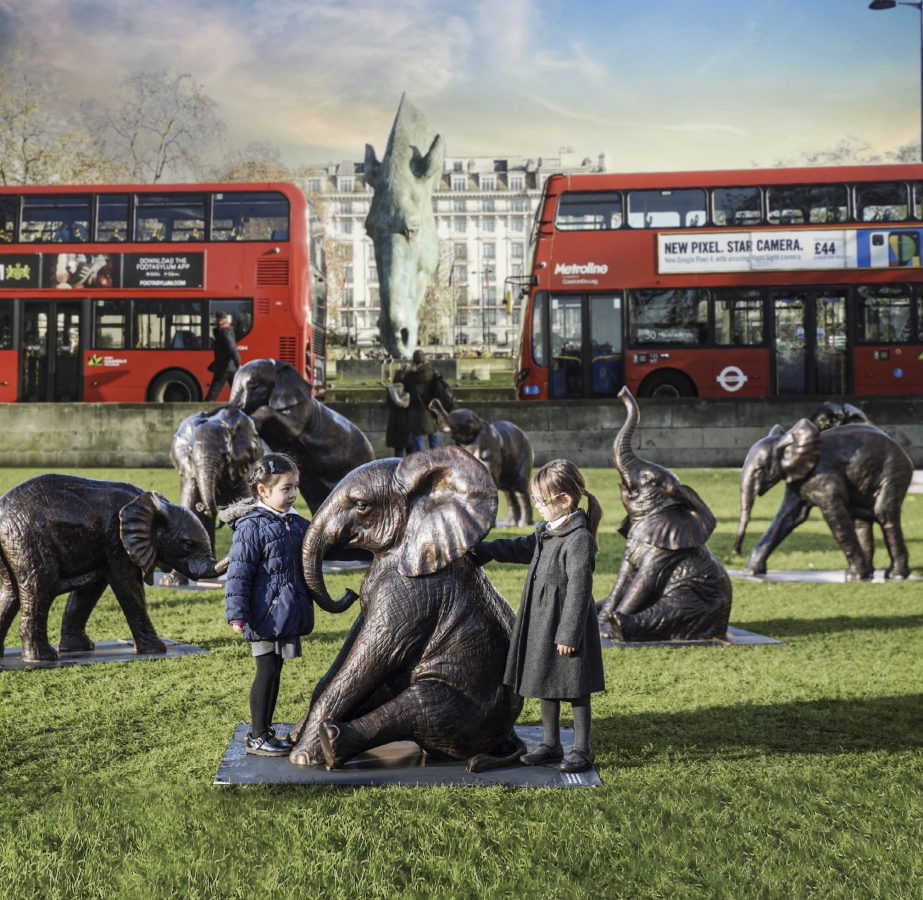
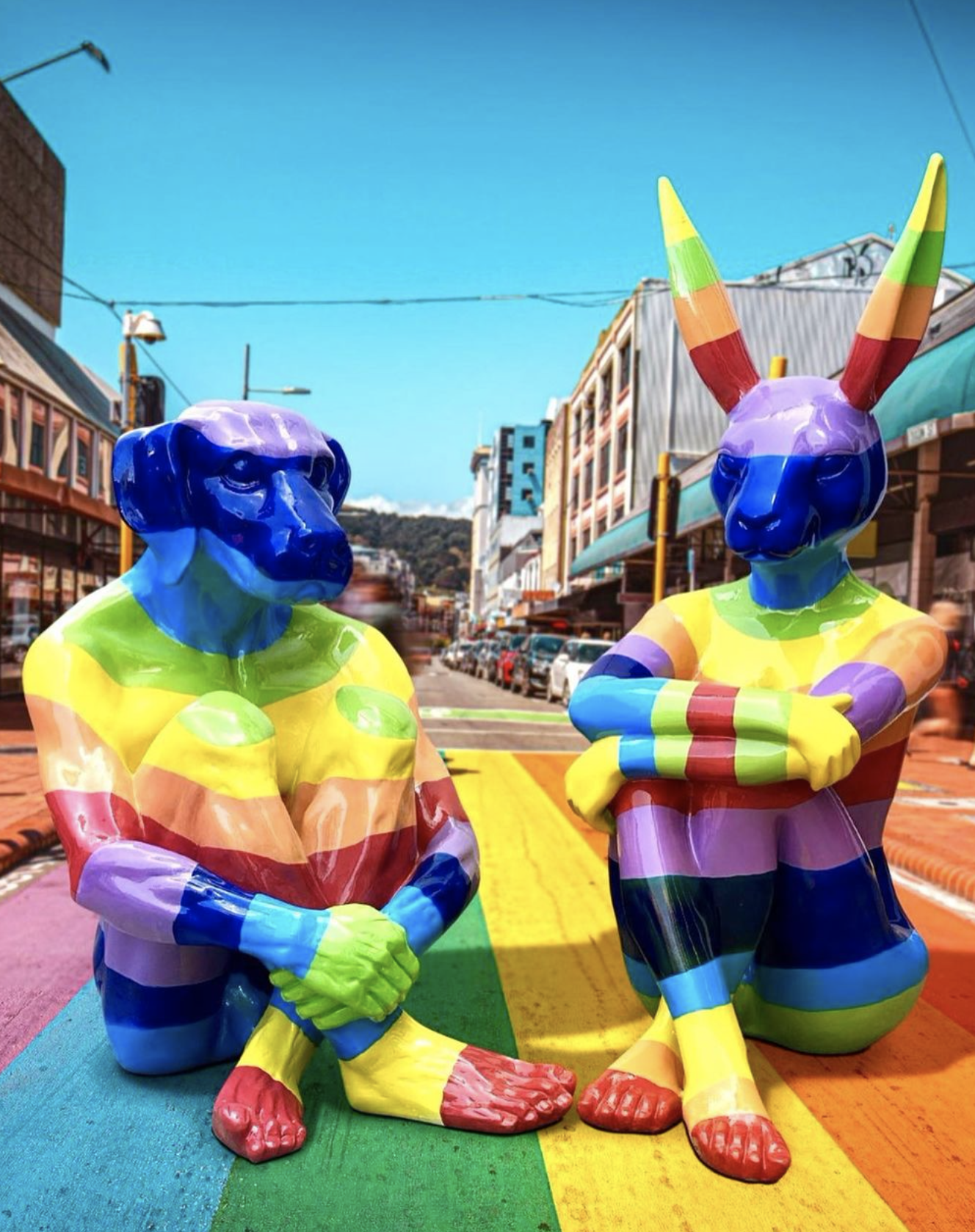
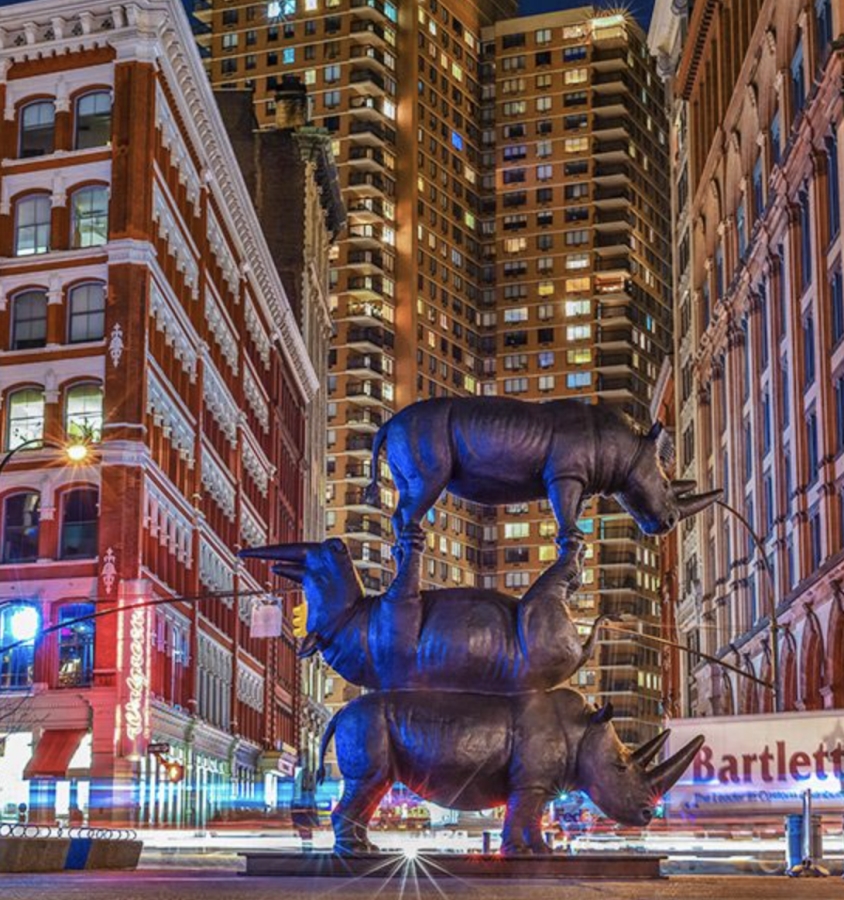
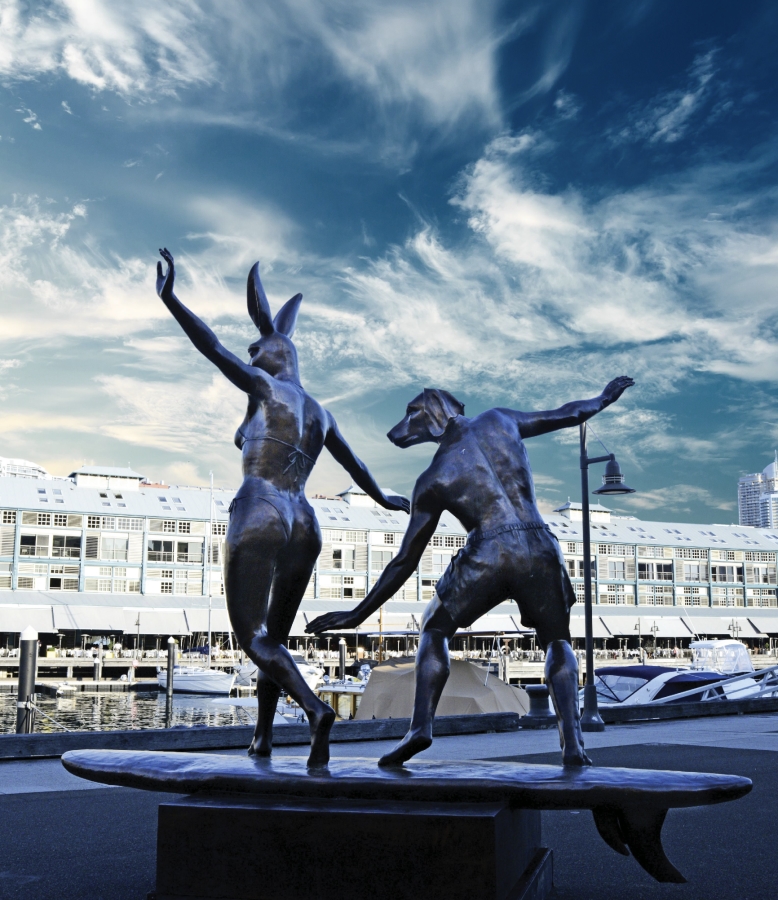
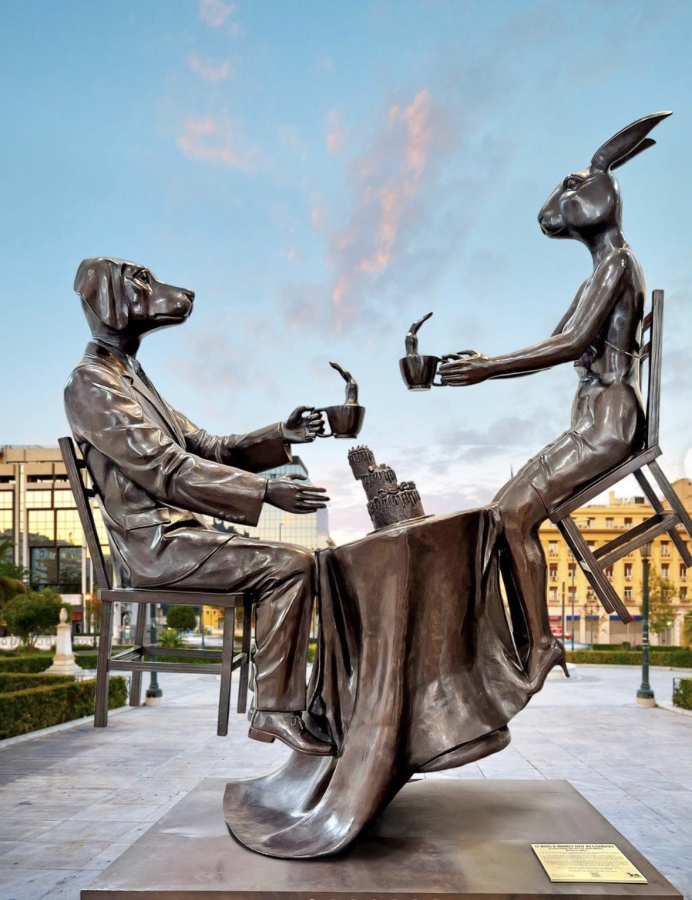
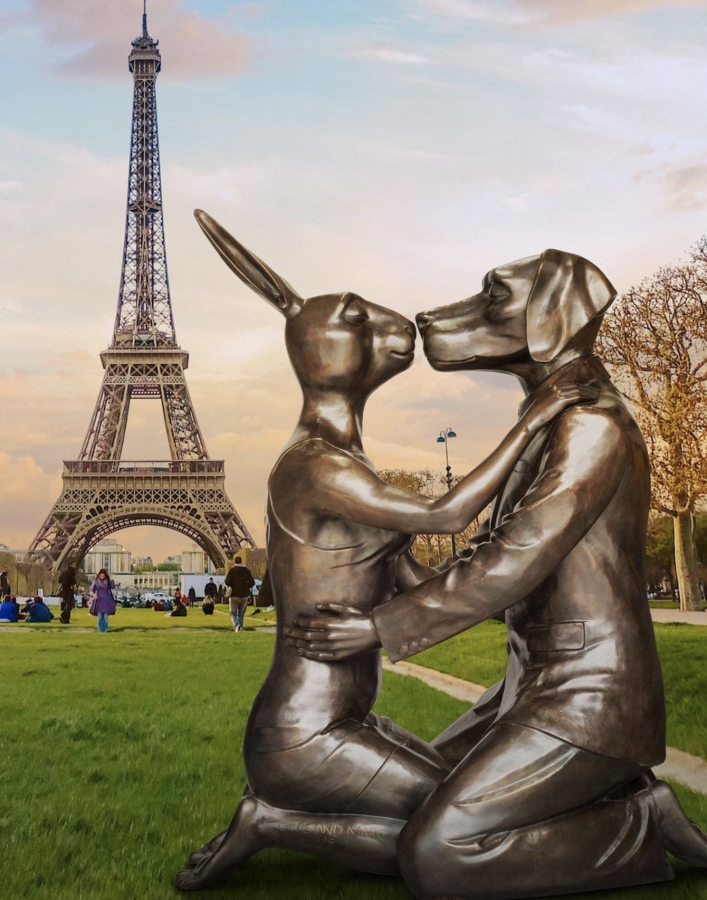
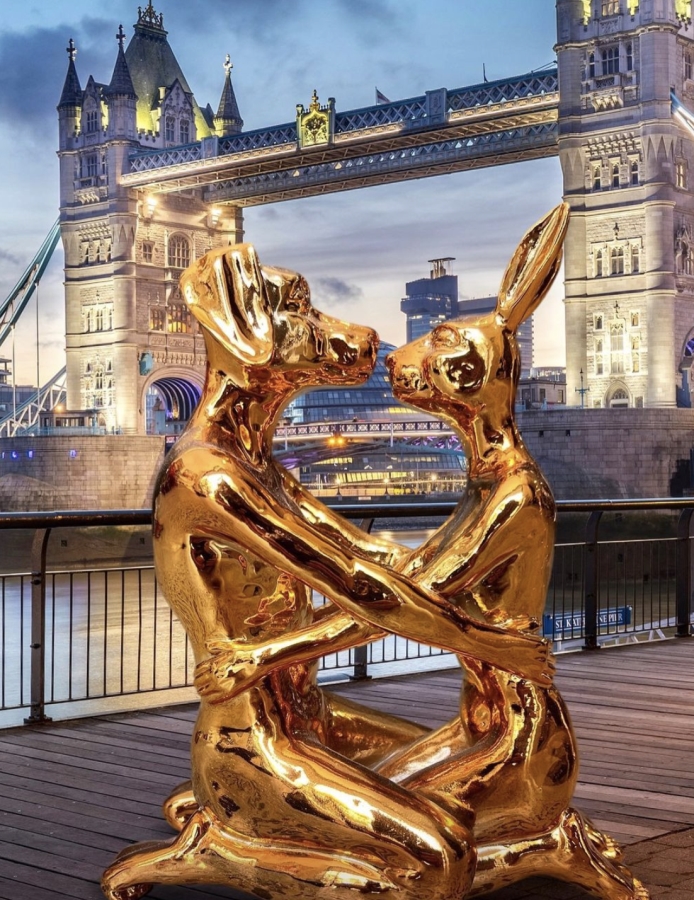
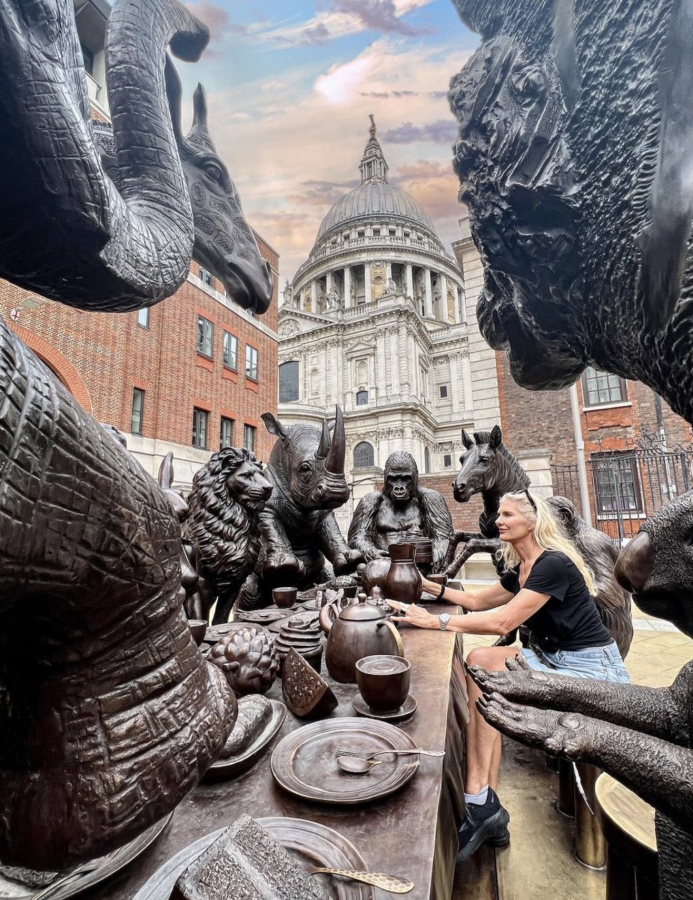
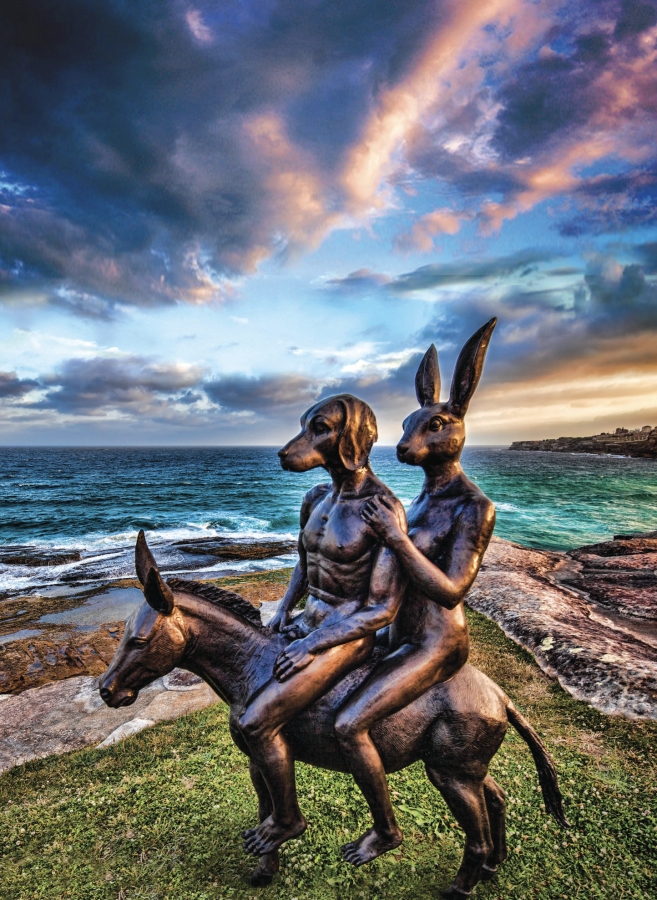
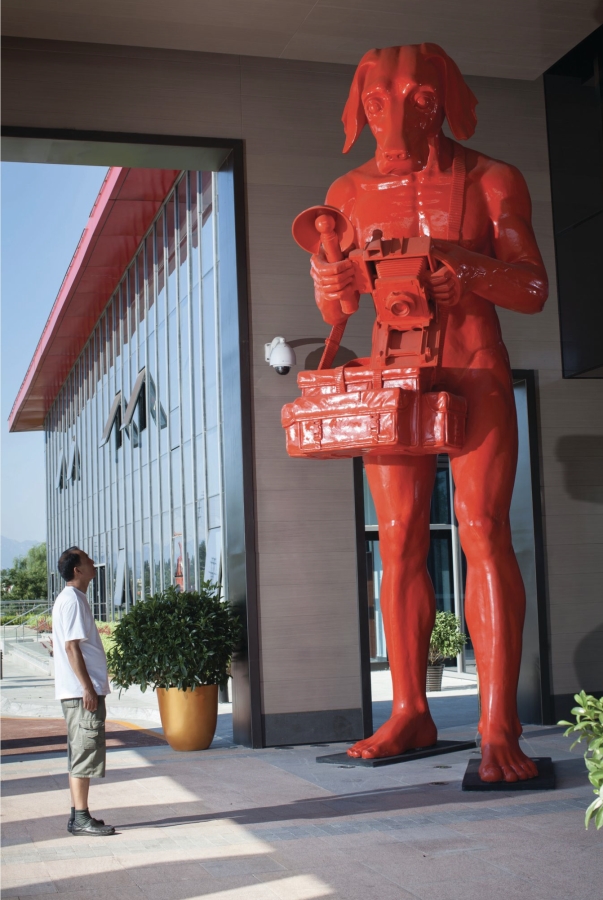
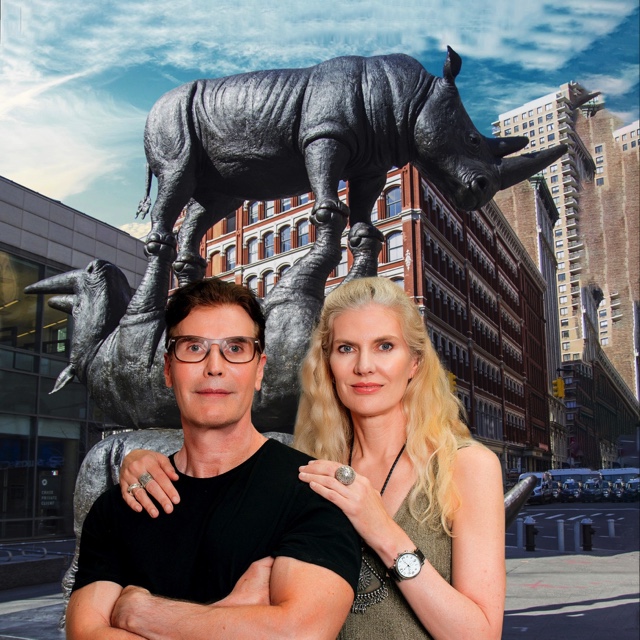
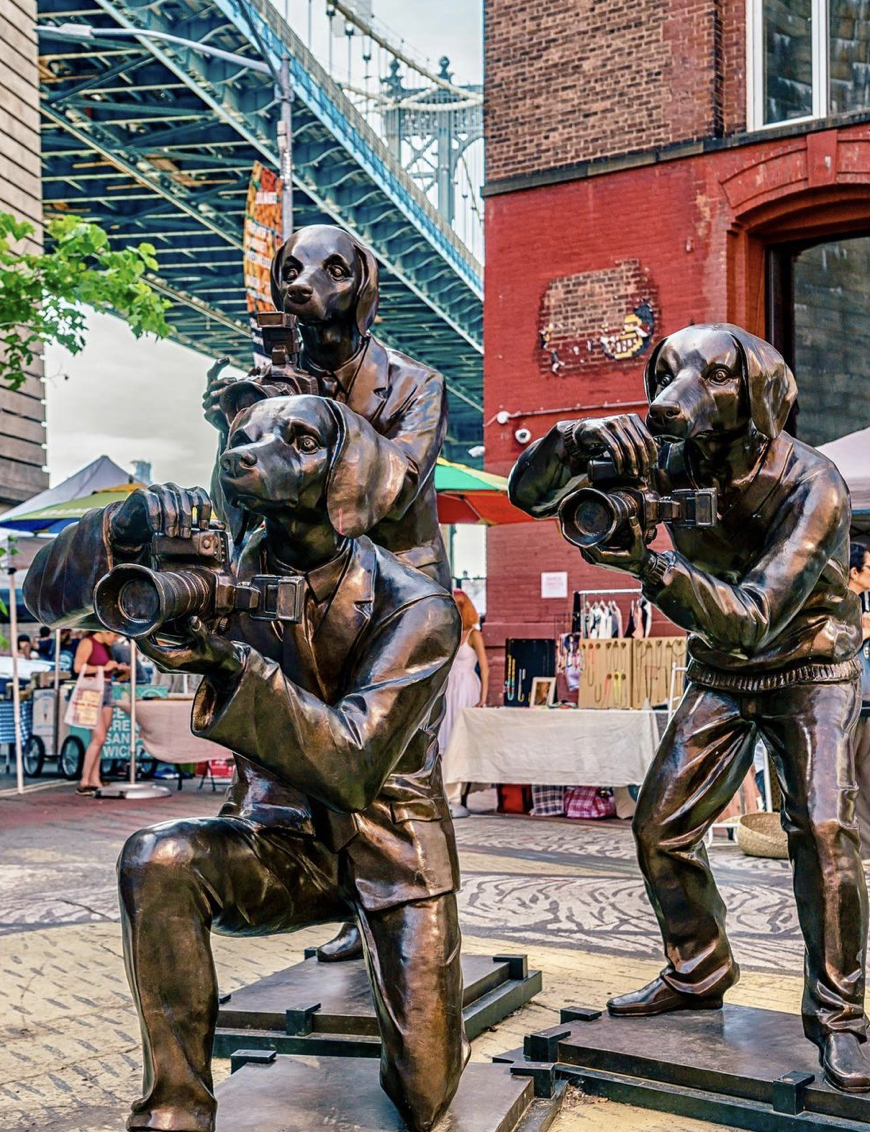
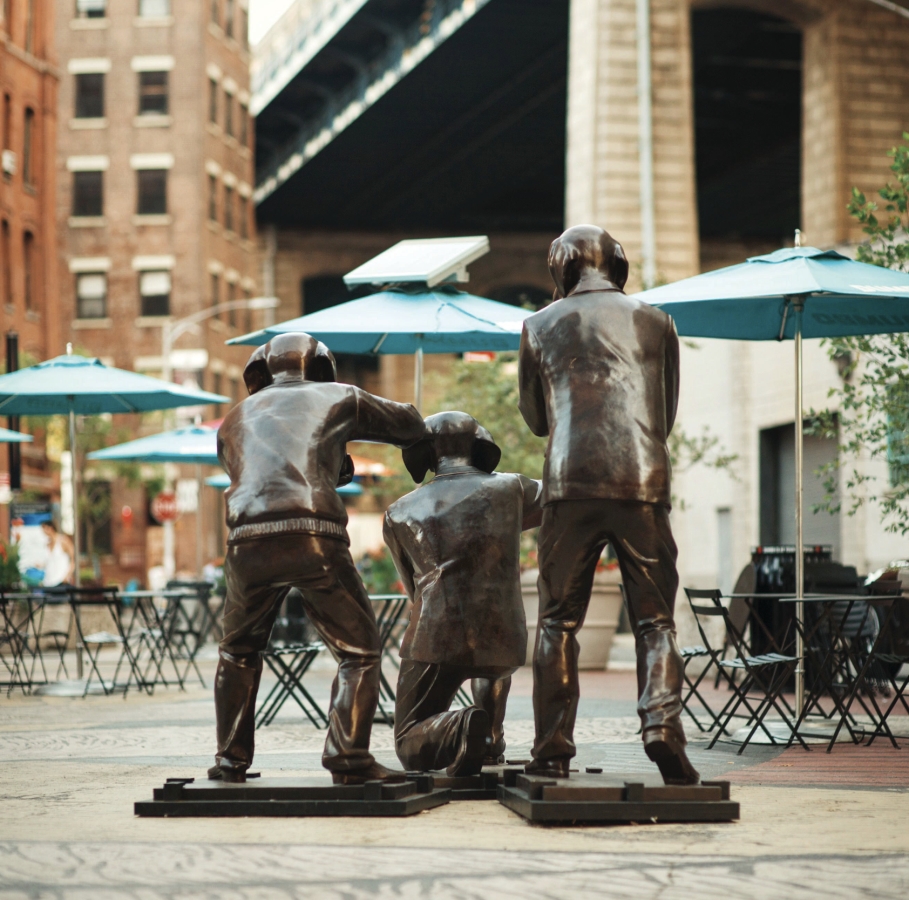
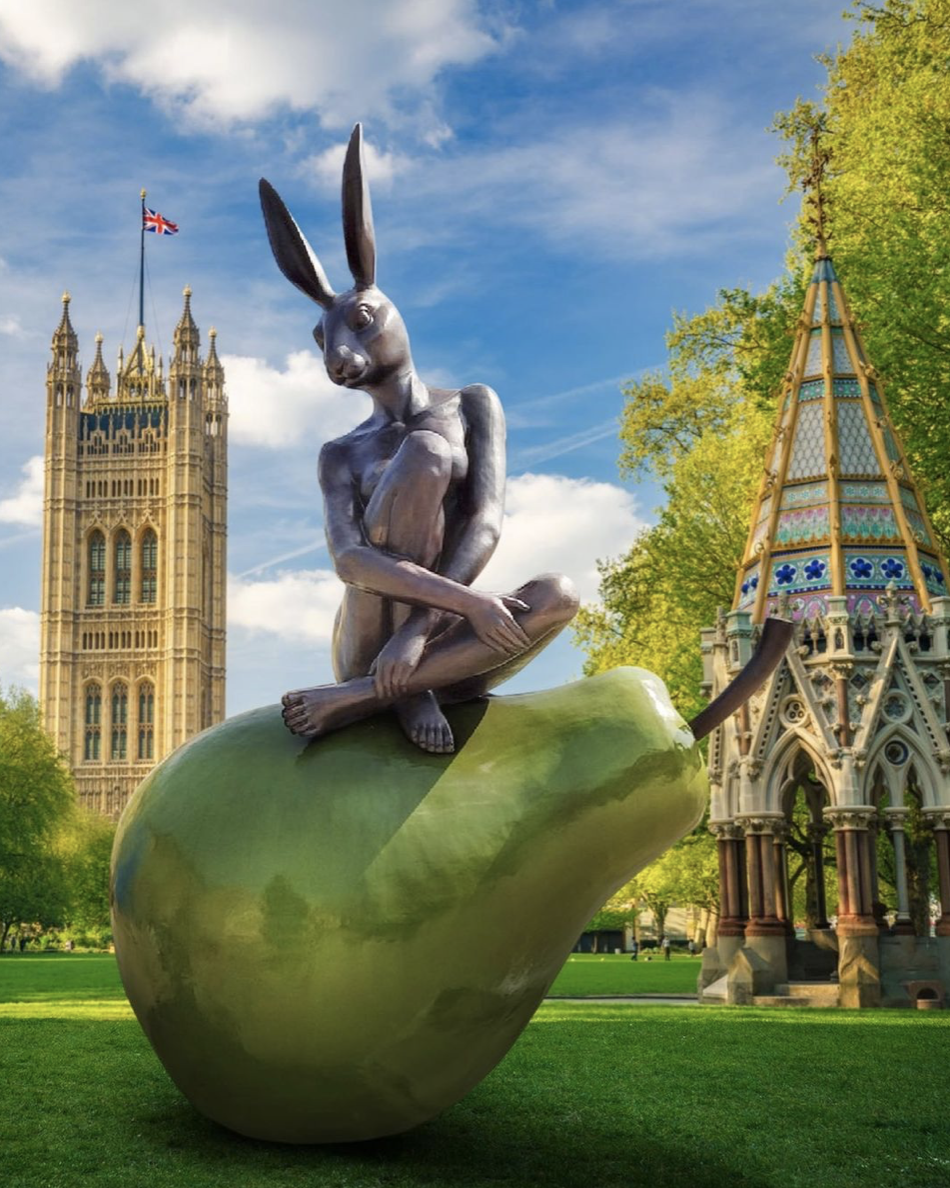
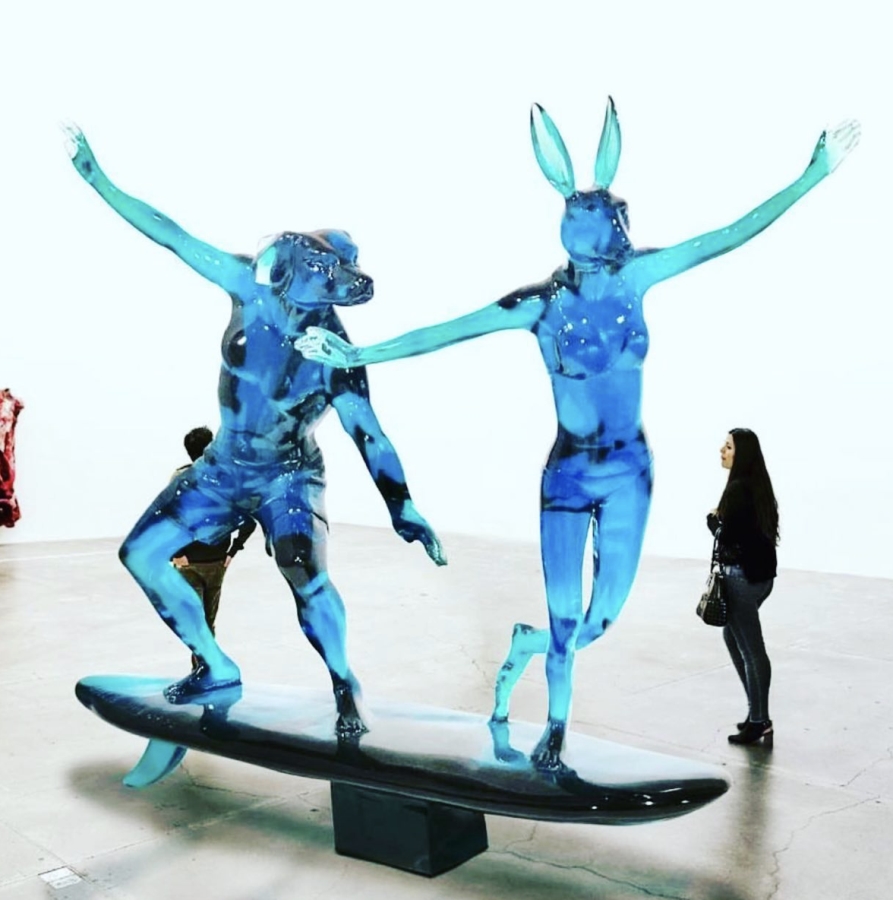
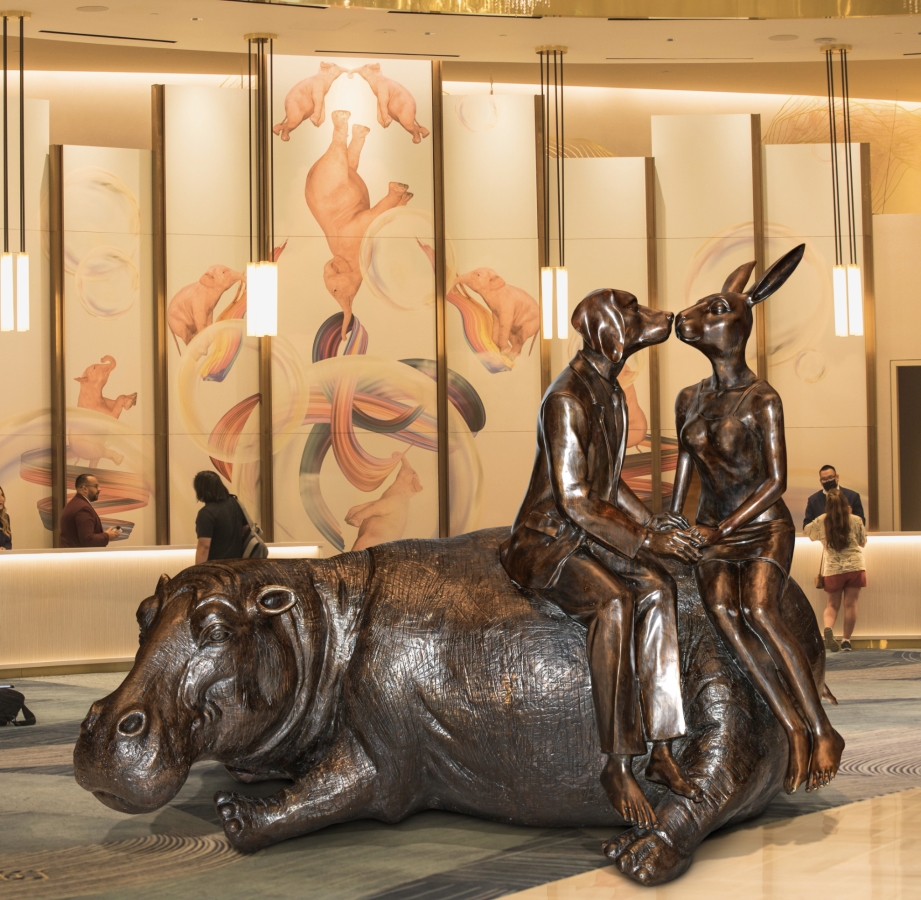
In the world of contemporary public art, Gillie and Marc have created a language of their own. Their sculptures appear in unexpected corners of cities around the world, yet they always seem to belong—arriving not as monuments, but as invitations. Through Rabbitwoman and Dogman, their half-human, half-animal alter egos, the artists tell a story about coexistence, love, and the fragile balance that connects all living beings.
Their work blurs the lines between art and activism. Each piece carries a sense of urgency and tenderness, addressing global issues like extinction and climate change through an aesthetic rooted in empathy. Whether in New York, Sydney, or London, their sculptures turn public spaces into moments of reflection—reminders that compassion can be a revolutionary act.
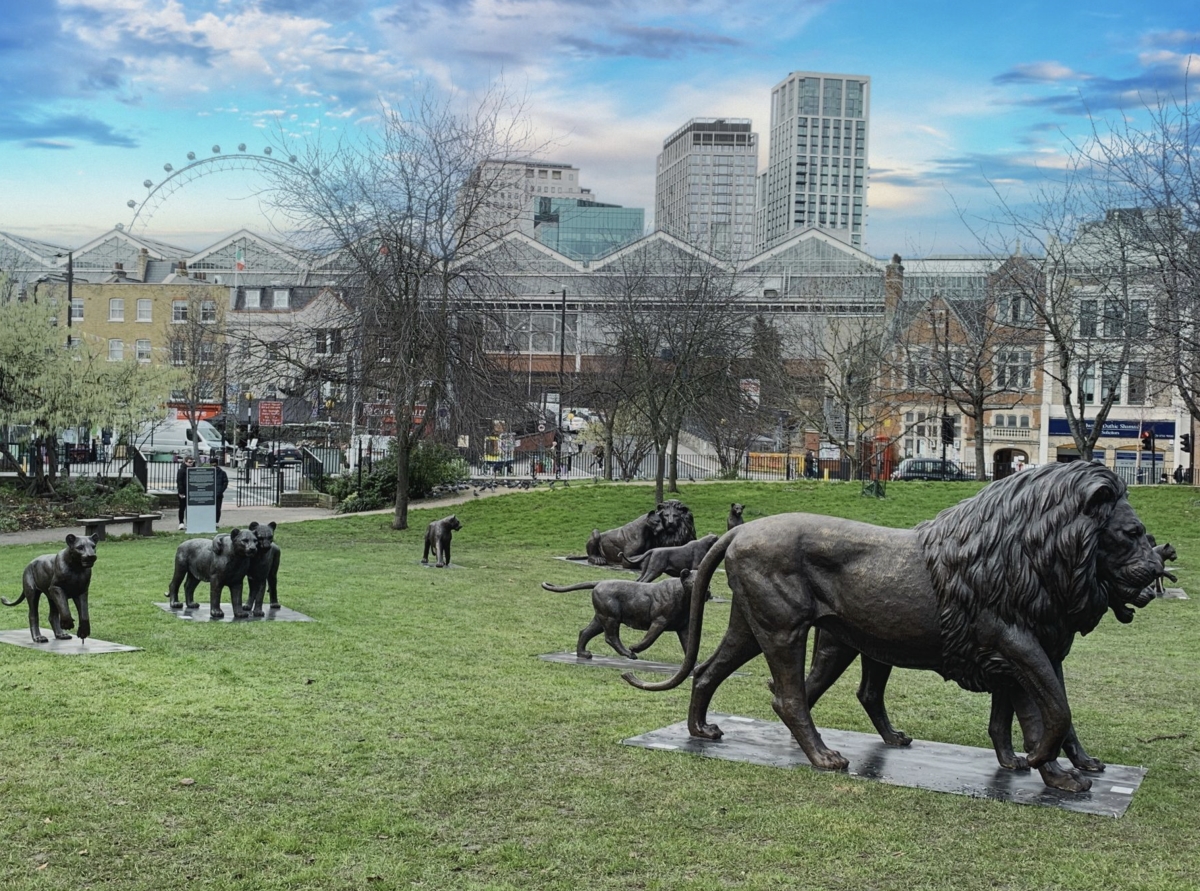
Their most ambitious project, Love The Last March, unveiled in Singapore’s Gardens by the Bay, reimagines what public sculpture can be. Spanning 192 meters, it depicts a silent parade of endangered species walking together toward an uncertain horizon. Inspired by Sir David Attenborough’s A Life on Our Planet, the work calls for “rewilding”—a return to harmony between humans and the natural world. Crafted in bronze and infused with a sense of movement and urgency, it functions as both memorial and manifesto, a poetic resistance against disappearance.
In this conversation, Gillie and Marc reflect on the shared vision that has guided their collaboration for decades. They speak about art as a form of activism, the emotional power of beauty, and the conviction that empathy, once awakened, can become a force for change.
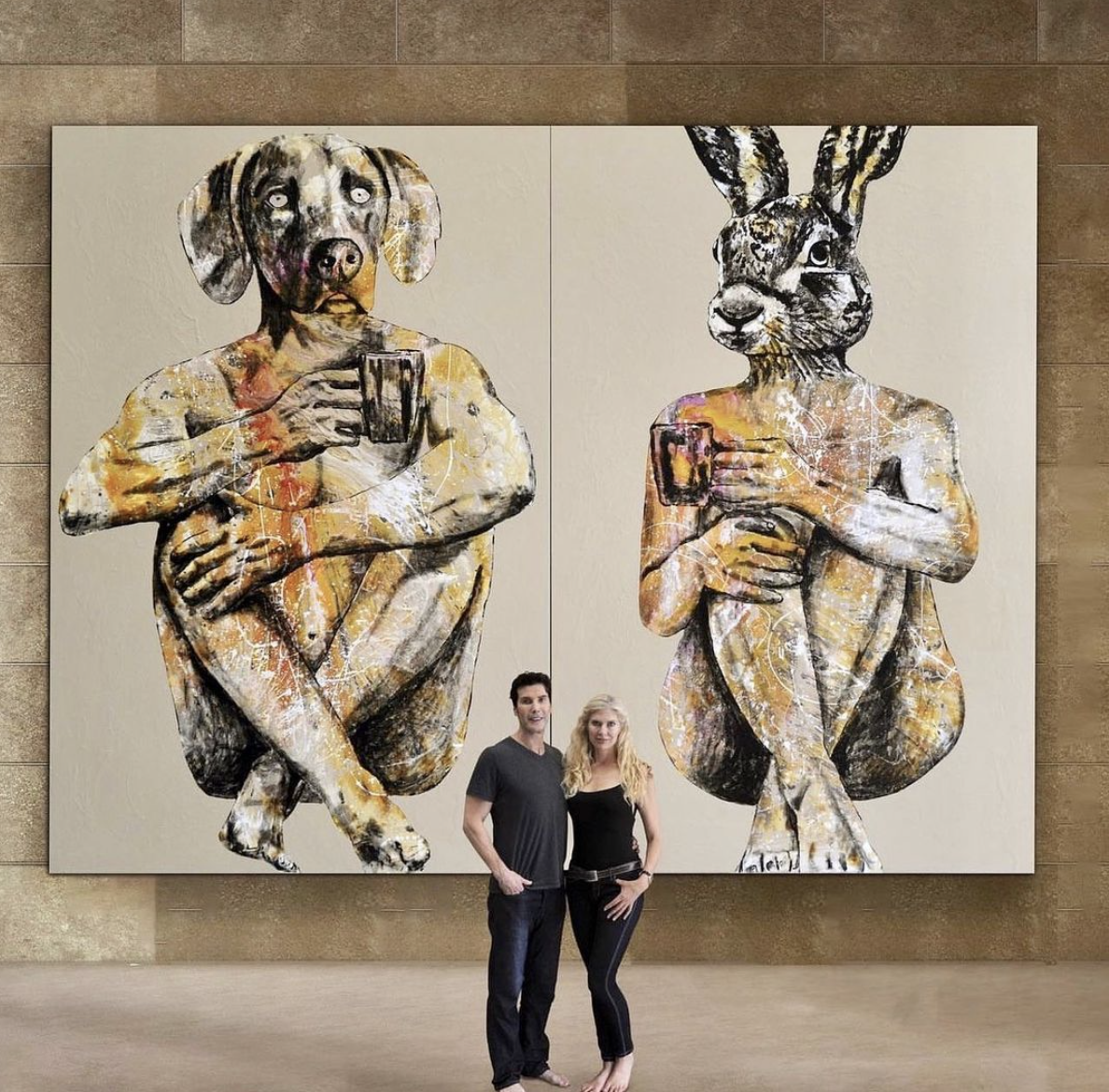
An Interview with Gillie and Marc
By Carol Real
How does your creative process unfold when developing a new sculpture together? With two distinct perspectives and artistic voices, how do you merge ideas into a single vision—and how long does it usually take for a piece to come to life?
Typically it takes 12 months to create a sculpture, from the initial idea to installation. Of course, it can take much longer. It depends on things like size, partner input, and many other aspects.
When it comes to working together on a project, it has never been a problem. We love different perspectives. It helps bring out creativity in each other, challenging us to think outside of our comfort zones. Logistically, before we begin a project we sit down with a pencil, paper, and a cup of coffee, and discuss our ideas in detail. This way we have a clear idea about what we’re trying to do and the final vision of the project. It syncs us up so that we’re on the same page when we create the work.
By creating art for a better tomorrow, you bring hope and beauty. How is it possible to reverse the indifference of people who deny the consequences of climate change or species extinction through art? What message would you like to convey to the public?
People are indifferent about things because it doesn’t immediately affect them. It doesn’t directly impact their lives, so why would they care? We try to bring big issues far away from big cities into their lives. Wildlife extinction stops being a remote concept and becomes a part of their everyday life, something they walk past every day.
We want to share conservation messages with the public, helping them understand what extinction is, why it’s happening, and why it’s critical to do something about it. We’re losing habitats and species at a terrifying rate so it’s crucial that as many people as possible join the movement to save all wildlife. In addition, we want to share the idea that everyone can make a difference. This is a big problem that we can’t tackle alone. But one person can still make a world of difference.
What can you tell us about your sculptural megaproject in Singapore? How did the idea emerge? What materials are involved? How will this mega sculpture compare to your other works?
We are so excited about Love The Last March! This has been a huge undertaking and we’re so excited for the launch at Singapore’s Gardens By the Bay on Endangered Species Day, May 19th.
The inspiration came from Sir David Attenborough’s brilliant documentary, A Life on Our Planet. Everyone should watch this film. It’s so compelling and follows the journey he’s taken over his monumental career. It most importantly tells us about the gigantic shifts and changes he’s seen while working in some of the wildest places in the world. It’s shocking that in one man’s lifetime, humans have changed the world so dramatically. In his opinion, if we want to save the planet from complete habitat destruction, mass extinction, and ecological collapse, we must re-wild the world. And we must do it soon.
We love the concept of rewilding. It gives us this beautiful fantasy of nature falling back into harmony, with a gorgeous diversity of plant and animal life all around. To us, living with nature is an absolute dream come true. But it’s also crucial if we are to continue living on Earth.
Humans have dramatically changed the face of this planet. According to a 2018 report, humans comprise just 0.01% of the world’s inhabitants. However, they have caused the loss of 83% of wild animals and 50% of all plants. Furthermore, the animals on the planet are heavily skewed towards livestock raised for consumption. 70% of all birds on Earth are farmed for poultry. It gets even scarier when we look at mammals. 60% of animals are livestock, 36% are humans, and 4% are wild animals. That’s crazy!
Like most of our public sculptures, we chose bronze as our medium. It’s incredibly imperative to ensure that all the materials we use for our work are sustainable and non-polluting. Silicon bronze is a wonderful choice for us as it contains no lead or any other elements that are harmful to humans or the environment. Bronze sculptures are also highly resilient. They have been used for millennia, with some over 2500 years old.
With Love The Last March, we wanted to help spread this critical message of rewilding and show the world that we can live alongside wildlife while inspiring them to join the movement. The idea evolved into creating the longest sculpture in the world at 192 meters long. This is the biggest sculpture we have ever done in every sense of the word because it is such a powerful message. Thousands of species and habitats could be protected if enough people joined the movement. This transcends beyond protecting a single species. It hopes to inspire a global change in the way we live and interact with wild spaces.
Do you think activists, scientists, and artists share any common communication path to convey a message about environmental preservation and the protection of endangered species?
Definitely. You need all three to effectively convey a message like conservation. You need the passion of an activist to inspire others to join the cause, you need facts and information from scientists to help others understand the issue, and you need the creativity of an artist to find ways to communicate these messages and create an emotional response in the public. In this way, activists, scientists, and artists are the perfect team to inspire the world to join this cause.
What is your ultimate goal when working? Do you think there is any way to ensure that viewers are visually interested and engaged with the conservation cause?
Ultimately we want to create an emotional response. We believe that if we can create love, people will care and take action.
There’s no way to ensure viewers are 100% engaged. Art is too subjective. But we can greatly increase the odds with a few tricks. We make our sculptures large-scale so they’re difficult to miss. We make them interactive, allowing the public to get up close, climb on them, and look into the eyes of endangered species. We include information about the species for a deeper understanding. And sometimes, as we did for Love The Last March, we incorporate technology, creating a VR experience that brings animals to life.
You will visit New York City in May too. What can you tell us about this trip?
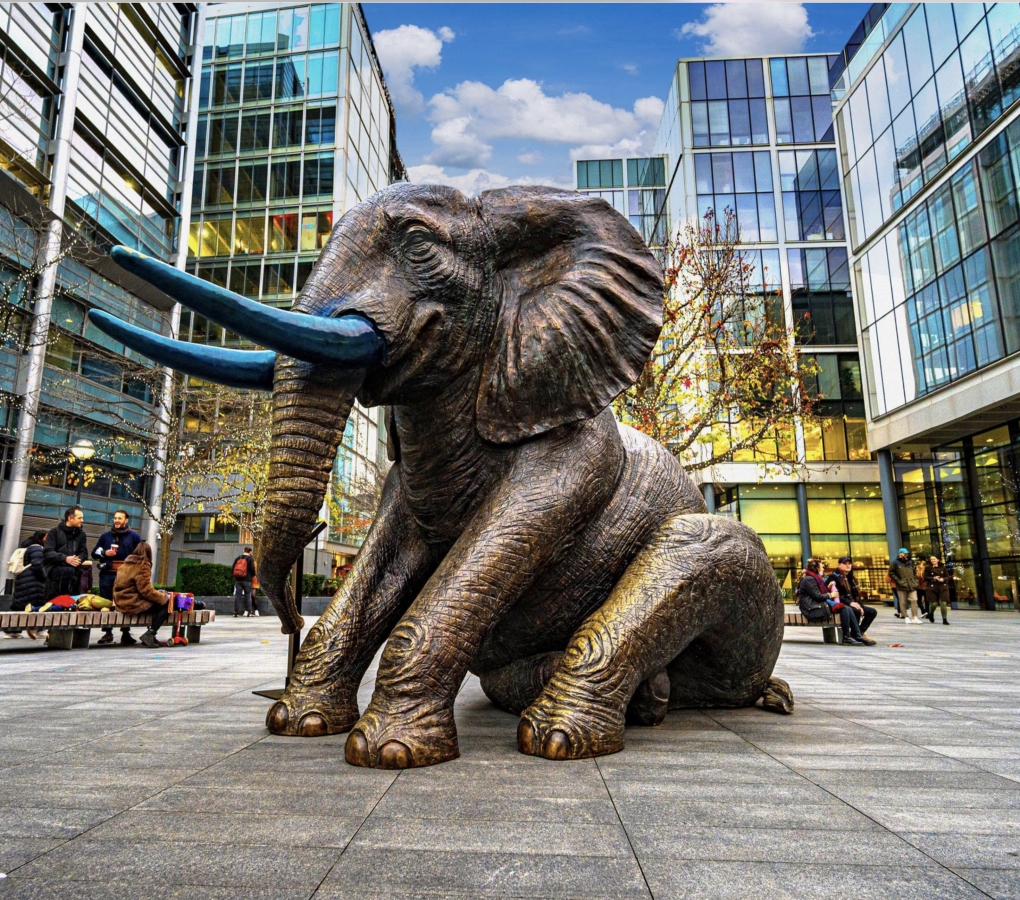
Yes, on May 24th we’re launching the exhibition A Wild Life for Wildlife in New York. On view at the World Trade Center for one year, this project includes three weird, wonderful, and interactive sculptures. The first is an 11-strong tandem bike ridden by some of the most endangered animals in the world. The public can climb aboard and help them pedal away from extinction. The second is an intense chess game between a white rhino and our character Dogman. It explains the importance of staying one step ahead in the fight for survival. The third is a quiet moment with an African elephant and the other half of our character duo, Rabbitwoman. She is reading a book and drinking a coffee, reminding us of the importance of sharing knowledge and learning.
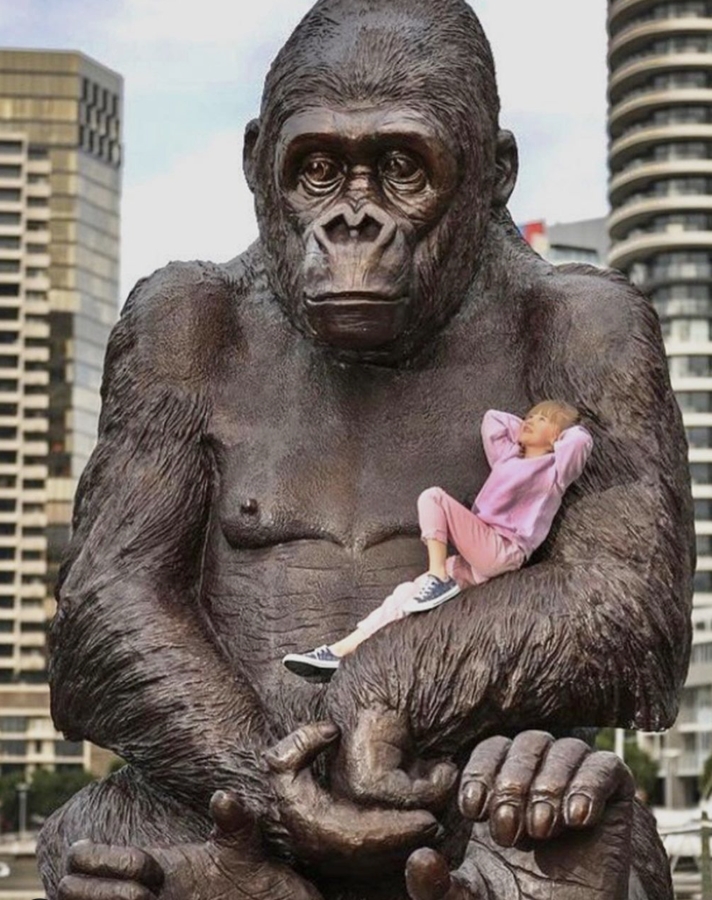
Each of these sculptures shows wildlife in a setting we could find ourselves in on an ordinary day. By showing them in these scenes we hope to normalize the idea of wildlife being a part of our world rather than being a separate, far-off reality.
Is there a place where you still have not arrived with your art and want to visit?
We would love to get to Tokyo. It’s such a vibrant and exciting city full of expression. We can imagine Rabbitwoman and Dogman fitting in nicely.
Editor: Kristen Evangelista