Hao Liang’s paintings move between precision and atmosphere. Working with ink and mineral pigments on silk, he draws from the language of classical Chinese painting while making work that feels entirely anchored in the present. His images carry a particular stillness, one shaped as much by control as by sensitivity.
In this conversation, Hao Liang reflects on painting as a way of organizing emotion, memory, and attention. Rather than approaching tradition as something to preserve, he treats it as a living structure: something to absorb, rework, and make his own.
Across the interview, he speaks with unusual clarity about slowness, sorrow, discipline, and the demands of sustained looking. His paintings resist fixed time and place, unfolding instead as spaces where memory, feeling, and thought are held in balance. What emerges is a view of painting not as escape, but as a way of staying present through difficulty.
An Interview with Hao Liang
By Carol Real
Your work draws deeply from classical Chinese painting materials and visual language, yet it does not feel nostalgic. How do you understand tradition, as inheritance, as structure, or as something that must be transformed in order to remain alive?
I was born and grew up in Chengdu, a place where daily life unfolds at a leisurely pace. Though it underwent socialist transformation, it remained far from the center of political movements, and still retains faint traces of classical Chinese cultural tastes, social order, and way of life. Deeply influenced by my family, I developed a love for literature and art from an early age, particularly a fascination with traditional Chinese ink painting—especially the texture of its materials. The interplay between translucent brushwork and the weighty sense of form and composition struck me as a harmonious resolution of contradictions, achieving a kind of refined order. This ultimately led me to take the entrance exam for art academy, to study art, and to embark on the path of becoming a professional artist. For me, the journey from the tradition of ink painting to the forms and techniques of Western painting is like a never ending river. It resembles a writer learning grammar and vocabulary—when creating, one must employ them flexibly to accurately convey the complex mix of emotions I experience in the present moment. Painting has become the vessel for my feelings. Of course, I also draw inspiration from film, literature, philosophy, poetry, antiques, nature… from all around me.
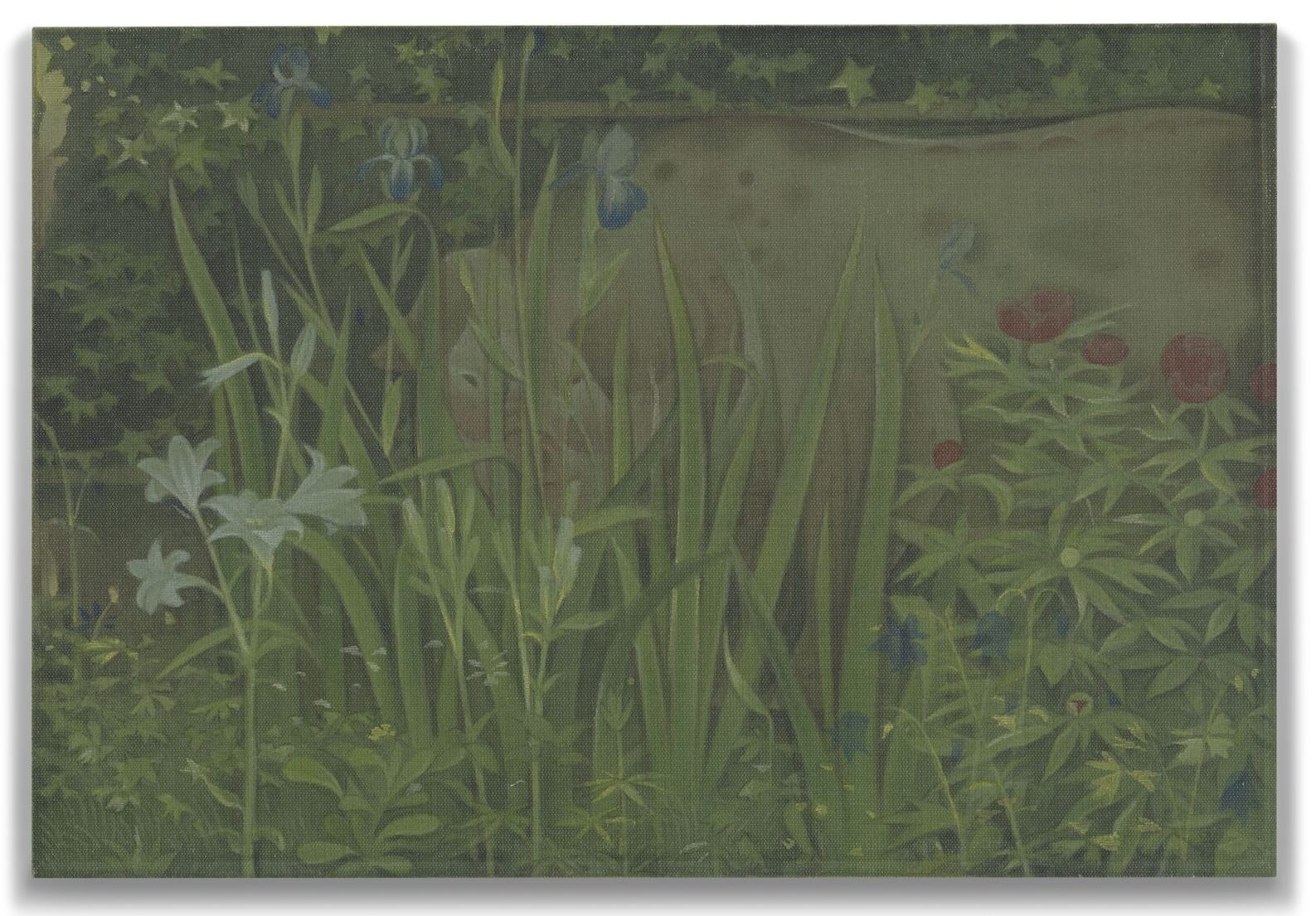
Across these paintings, different temporalities seem to coexist within the same image. Is cultural memory something to preserve, or something that is continuously rewritten through the act of painting?
In daily life, I delight in observing and reflecting, always searching for images, spaces, and colors that are worth painting. When an occasion sparks a moment of inspiration and the impulse to paint swells within me, I reach into the palace of memory to retrieve fragments that fit the theme, then skillfully transform them and weave them together with undivided attention. I am well-versed in cultural traditions, but I am not particularly concerned with preserving or advancing them.
There is often a sense of placelessness in your work, as if the landscape belongs to no fixed geography. Is this a reflection of the contemporary condition, or a deliberate distancing from historical specificity?
I am deeply influenced by traditional Chinese landscape painting, striving to reconcile opposites within my work—such as eternity and transience—while situating the human condition within the order of nature. Moreover, as I can only live in the here and now, I have no choice but to express my thoughts and feelings in ways that are subtle and implicit.
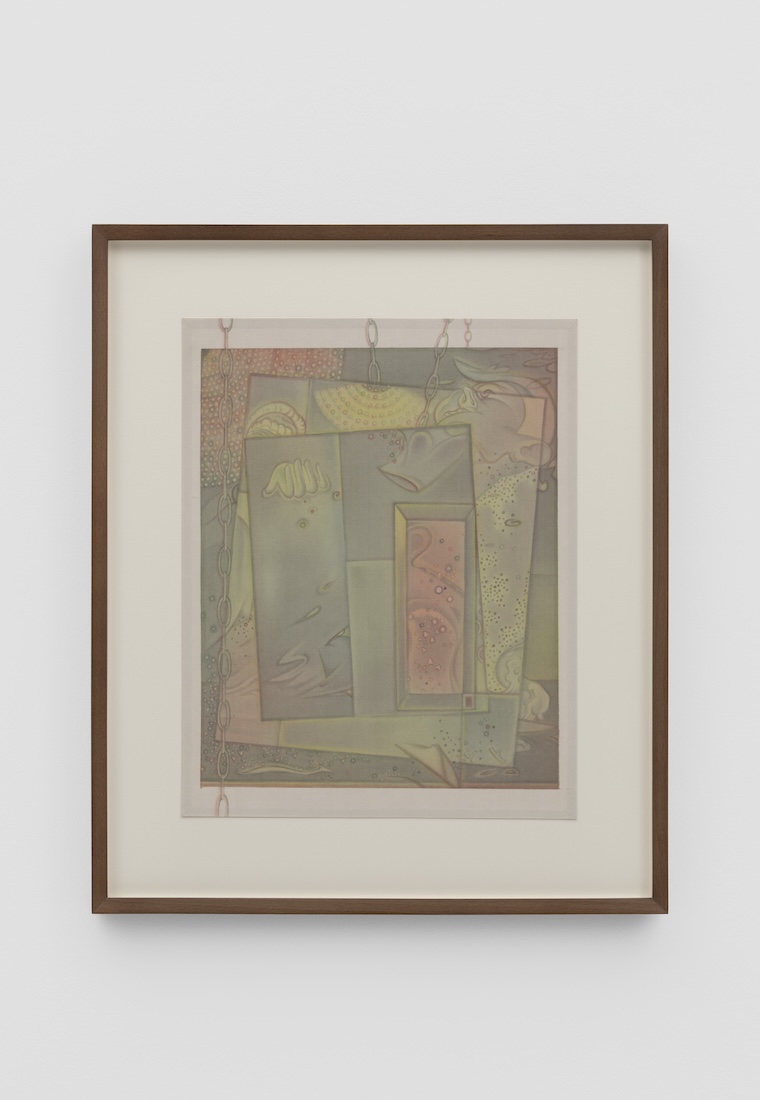
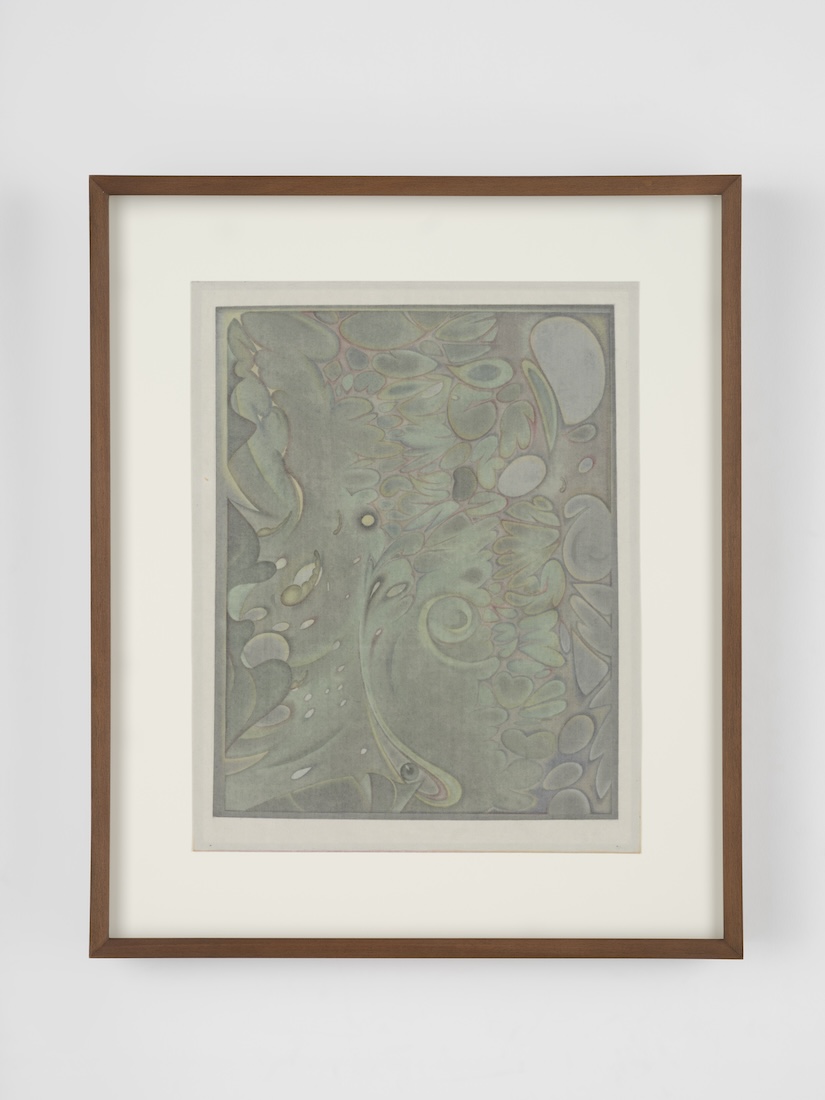
Rather than unfolding as narrative scenes, the images read as states of consciousness. Does painting operate here as a way of representing the world, or as a space where thought itself takes form?
I lean toward the latter—I conceal subtle intricacies within the spatial order of my work. This has been especially evident in my recent years of painting; my works have become a vessel for alleviating sorrow, as if all my emotions are projected onto them. In doing so, I find life itself feels a little lighter.
Many of your works are quiet in tone, yet structurally complex. How do you balance restraint with density, and what role does silence play in your composition?
Balancing restraint with density can be achieved through studying masterworks and refining painting techniques. Yet it begins first with the subtle harmony between concept and compositional structure. On this foundation, I arrange the imagery—ensuring nothing overshadows the whole—and strive to reduce complexity to simplicity. I hope my works blur the traces of any specific era. Only through quietude can one truly connect with the heart, allowing a poetic composition to emerge naturally.
You work with ink and mineral pigments on silk, a material historically associated with literati painting and imperial culture. Beyond technique, what does silk represent for you today? Is it a material choice, or a conceptual position?
As I mentioned earlier, my fascination with traditional Chinese ink painting lies primarily in the texture of its materials. Later, having mastered the techniques of painting on silk, I found myself able to express my emotions freely, and the medium no longer poses any obstacle to my expression. The beauty of the material itself has, in turn, become an integral part of my personal painting language. My choice of materials has come about naturally, without any deliberate intention.
In a time when images circulate instantly and painting is often consumed as surface, what does it mean for you to continue working slowly, on silk, within a language shaped by centuries of history?
I am deeply devoted to it—painting helps me alleviate my worries and overcome difficulties. Even though the process is often arduous, it remains the spiritual pillar that sustains me.
All images courtesy of the artist. © Hao Liang.