In the contemporary art landscape, Marco Grassi has distinguished himself as one of the most refined interpreters of hyperrealism. His paintings are both strikingly precise and quietly unsettling, merging technical perfection with a dreamlike sense of suspension. Faces emerge from silence, bodies dissolve into abstraction, and surfaces seem to breathe—a reminder that hyperrealism, in Grassi’s hands, is not about imitation but transformation.
Born in Italy, Grassi’s relationship with art began at home, surrounded by a family that valued painting and the great traditions of craftsmanship. His early exposure to the techniques of the old masters evolved into a personal language where realism meets introspection. Through oil painting—his chosen medium for its depth and expressive range—he explores the fragile boundary between physical reality and inner life.
In this interview, Grassi reflects on the process behind his intricate works, his obsession with technical excellence, and the inner discipline that drives him to refine each gesture on the canvas. He speaks about art as a form of study and devotion, where precision and emotion coexist, and where even the most static portrait conveys a quiet sense of motion. His reflections reveal an artist whose pursuit of beauty is inseparable from an unrelenting search for truth.
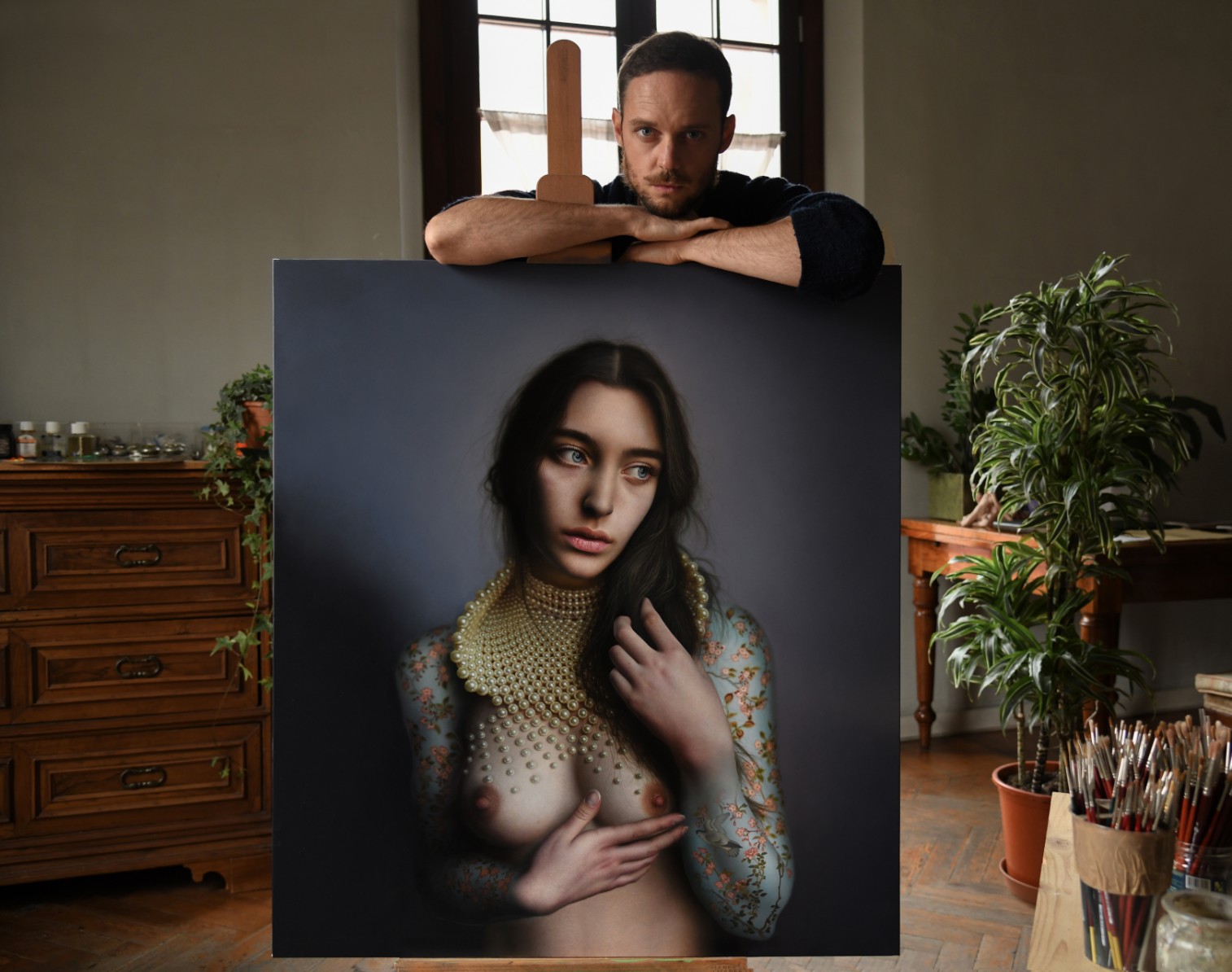
An Interview with Marco Grassi
By Carol Real
What are your first memories of growing up in Italy, and how did your environment shape your appreciation for art?
Growing up in Italy is like living in a museum. You learn every day, even just walking through the cities or villages. The whole atmosphere you breathe has something magical and from which you can only learn. My family has always collected works of art, and I was able to observe closely the way the ancient painters worked.
Were you artistically inclined from a young age?
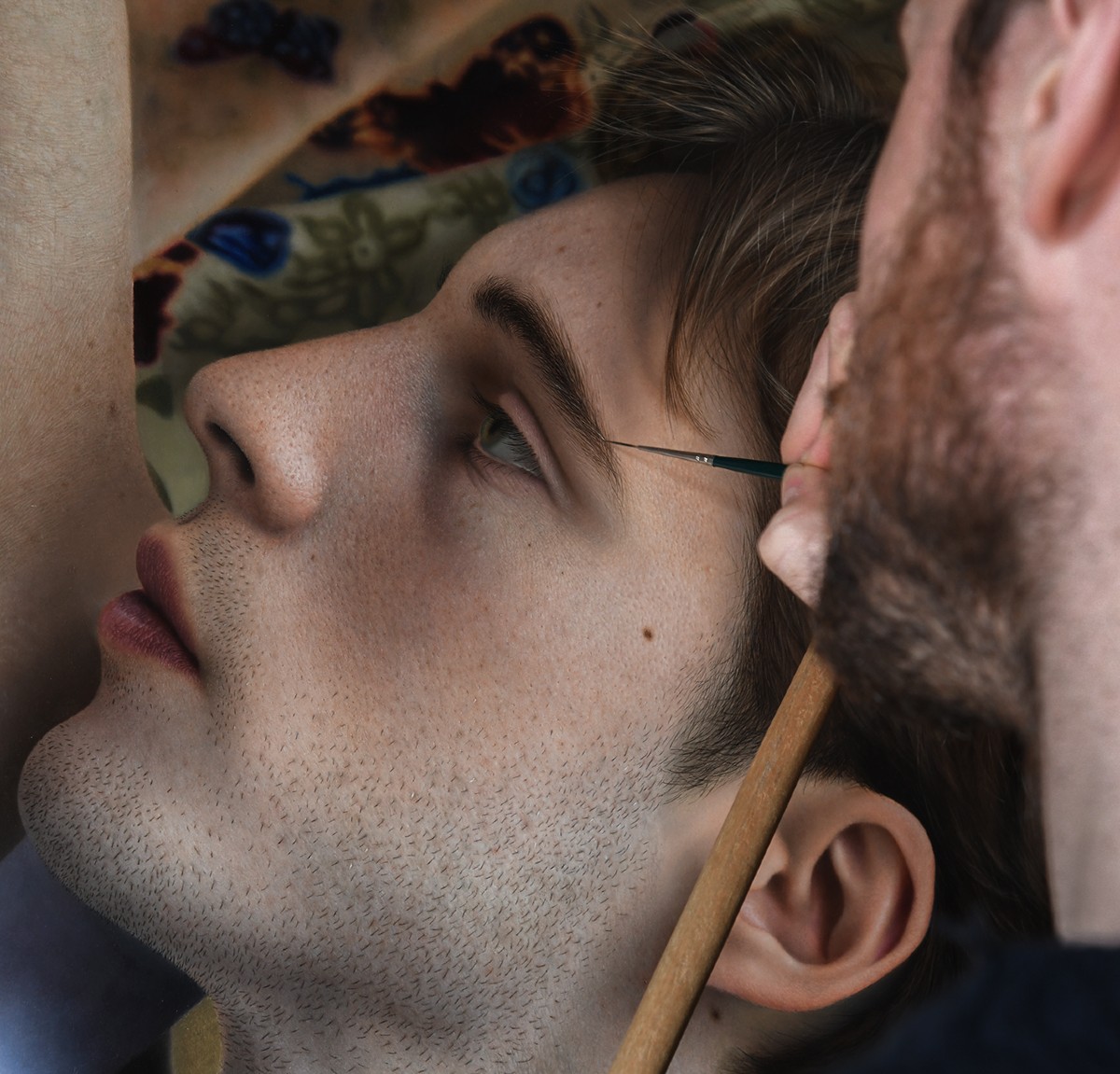
I would say yes, even if I did not attend art school as a child. I have always had great interest in learning artistic techniques, not only drawing or painting, but also sculpture and carving. They were passions that I cultivated independently and that gave me a great sense of relaxation and satisfaction.
How did you arrive at your signature style? What led you to choose oil painting as your primary medium? What do you hope to achieve as a painter?
After experimenting with various ancient techniques, starting from learning the technique of painting with egg tempera and acrylic, I understood that my ideal medium was oil, as it allowed me to create what I wanted most, in the most qualitative way possible, for me there is no better medium. Style is simply the result of a spontaneous process that defines you autonomously, based on your personality and what you want to achieve. I wouldn’t say that you can talk about choice, but rather a natural outcome of your artistic research.
I don’t set long-term goals, I don’t know what I can become someday. My constant research foresees a continuous improvement, picture after picture, from a technical and expressive point of view, determined by a perpetual sense of dissatisfaction that distinguishes me on a personal level.
Can you describe your creative process? How does an idea evolve into a finished painting, and how long does that process usually take?
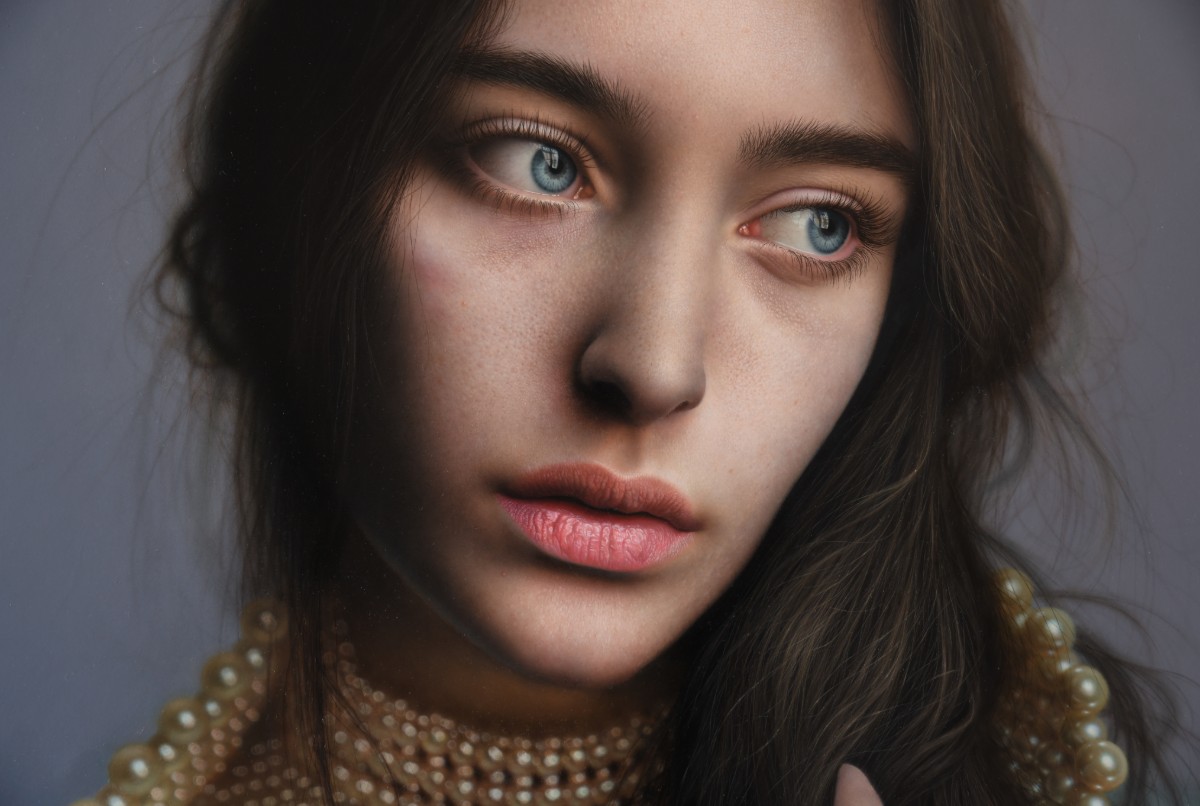
Describing the creative process from a technical point of view is quite complex, and personally I find it very varied depending on the case. Sometimes it has happened that I have to modify different parts of the painting in progress, significantly changing the look and the content.
It always starts from an idea, from some sketches, but which in most cases arises from an intuition, something that you perceive and that is defined only over time, even when the work is about to end.
Times are also extremely variable. Sometimes it takes many months to complete a work, in other cases, it took years.
Your paintings balance hyperrealist precision with surreal elements. How do you merge these two worlds?
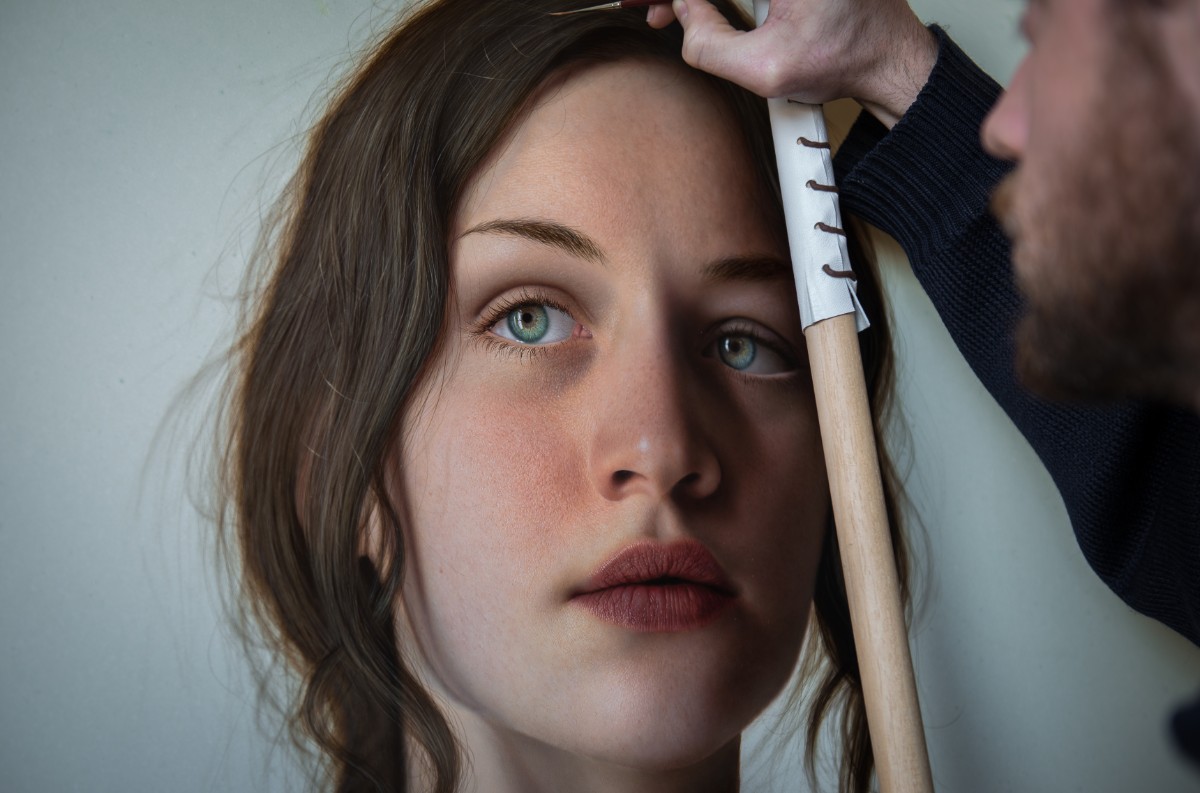
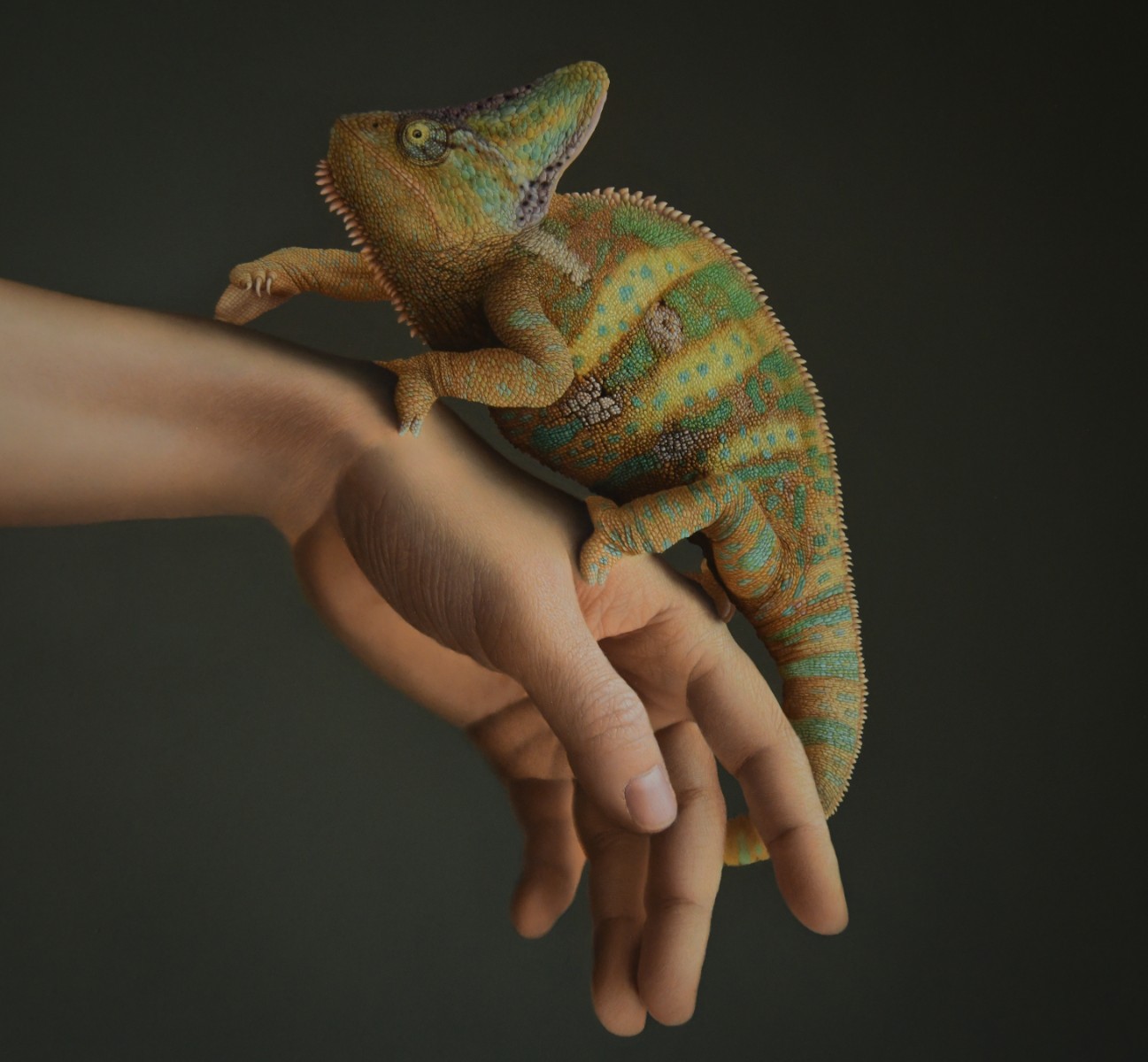
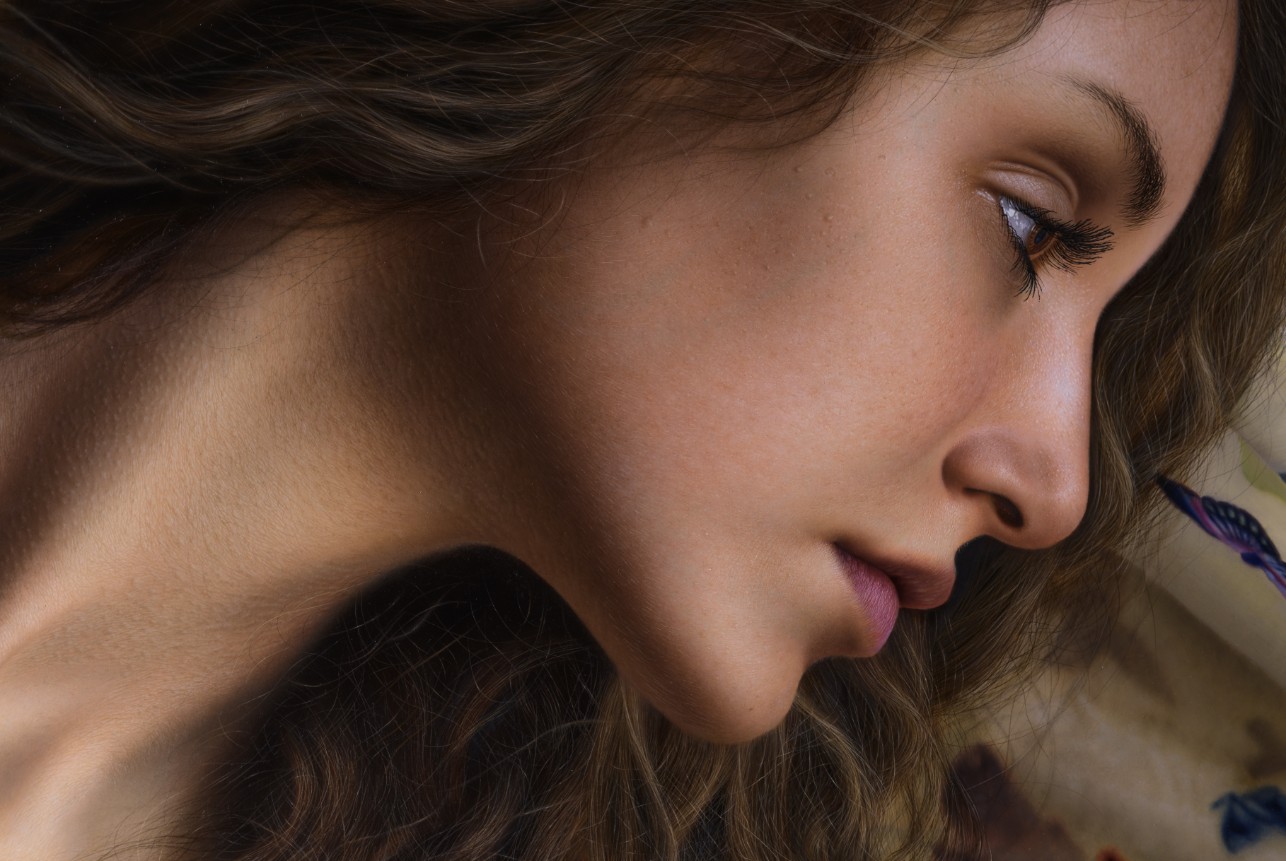
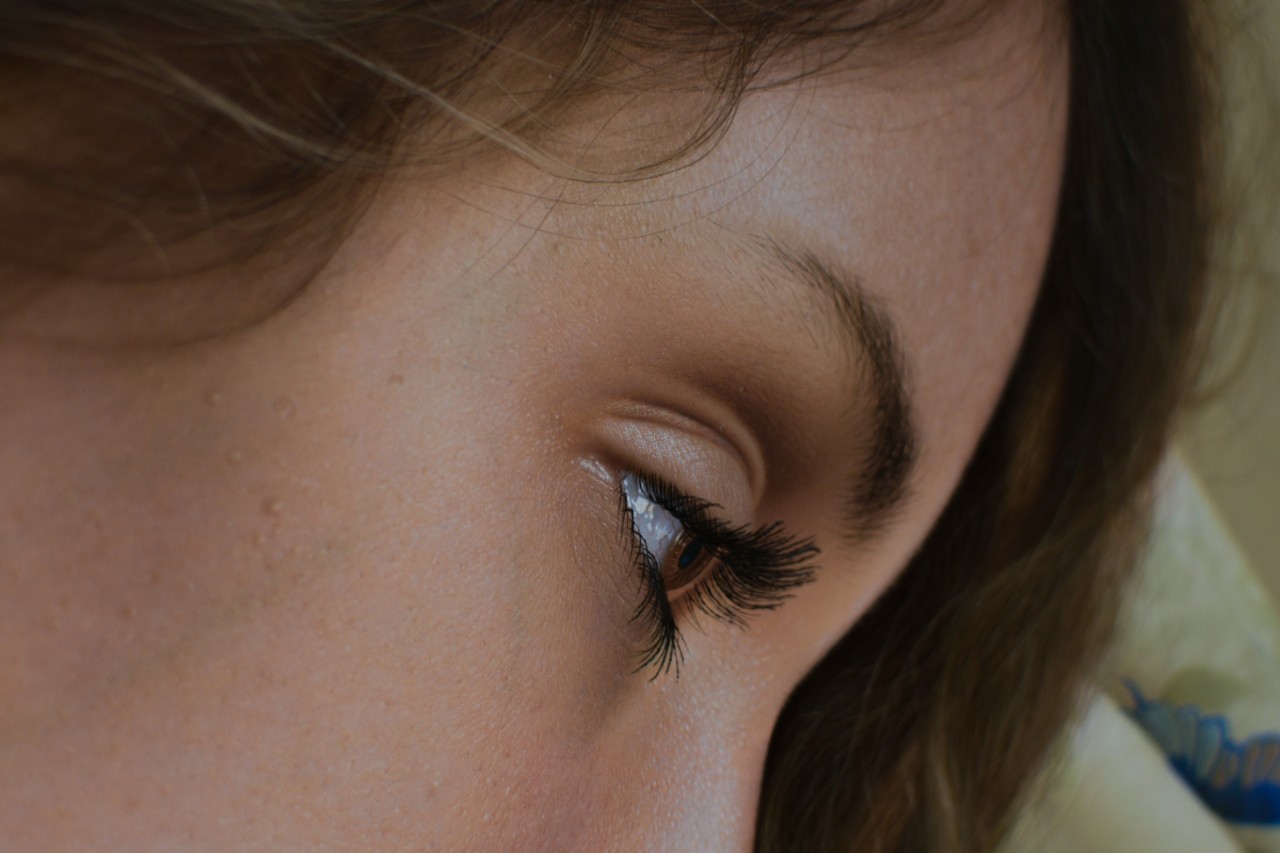
Personally I believe that an high level painting always corresponds to an high quality painting. If you want to express something, this will have a better effect if it is expressed with a high technical level. A bit like a song – the lyrics can be very nice, but if it is played poorly, the result will be poor.
I believe that the technical aspect in art is essential, and represents a factor that everyone can understand, it can hit the emotions of anyone, even those who have no particular interest in art or painting.
At the same time I have great interest in exploring areas that have not been faced yet and above all I did not want to stop at the simple realistic representation, leaving a personal and unique imprint in my works must be a constant, even if this technique imposes great limits from a creative point of view, especially if you want to maintain a pictorial level of the highest quality.
What are the studio essentials you rely on most in your practice?
I can’t name one in particular – if you want to reach the highest technical level, everything is important, the materials, the best colors, the brushes, the light, also how you dress while you’re painting.
Is there something in your life outside of art that might surprise people?
I really like cooking. It’s something that relaxes me a lot and distracts my mind.
What kind of music or musicians help fuel your creativity?
I don’t have a favorite band or singer, but music is fundamental for what I do. It helps me to think and imagine; it gives me the necessary motivation to work and get the brain moving again.
What are you currently working on, and what can we expect from you in the near future?
I have several very important projects I’m working on, but unfortunately for the moment I can’t reveal anything.
A quote you live by?
“Be so good that people can’t ignore you.”
All images courtesy of the artist
© 2025. All rights reserved.
© Art Summit Magazine