Renelle White Buffalo’s art moves between memory and reclamation. A member of the Lakota Nation, her work transforms ancestral symbolism into a contemporary visual language that resists simplification. Through bold color, layered abstraction, and narrative depth, she redefines what Native identity looks like in today’s art world.
Born and raised on the Rosebud Reservation in South Dakota, White Buffalo’s path as an artist has been shaped by both personal history and cultural resilience. Her canvases speak of heritage, grief, and renewal, inviting viewers to question how Native art is perceived and where it belongs within the broader story of contemporary art.
In this conversation, White Buffalo reflects on her early influences, the power of representation, and how moving from South Dakota to New York transformed her creative practice. She speaks about confronting stereotypes, finding beauty in complexity, and using art as a bridge between worlds—past and present, collective and personal.
An Interview with Renelle White Buffalo
By Carol Real
When did art first become a language for you, and who were the people who helped shape that voice?
I would constantly ask my grandma to draw for me, and we eventually started to draw together. She taught me to use it as an outlet, which became a protection for both of us. Art became my passion, and I knew it would eventually enable me to leave the reservation and move to a big city. I was lucky to have Mr. John LeBouef as my art teacher from elementary school through high school. He influenced me to go to college and major in fine art. After college, I moved to Los Angeles where I started to work on art that reflected my culture—and me. I began to use acrylic paint and met many Indigenous artists such as Ernesto Yerena Montejano and Vyal Reyes. I also had the honor to work with master printmakers like Jose Alpuche and the late Richard Duardo. When I switched from the West to the East Coast, I met Marc Dennis, who often reminds me of the unique voice I have. He recognizes the ambitions and motivations behind my paintings.
How would you describe your childhood on the reservation, and how did that experience shape the way you see the world today?
Growing up on a reservation is a different experience for everyone. Mine was tough, and I had to go through a lot at a very young age. I have blocked out most of my childhood. That I grew up in the country was a positive thing. I rode horses, went fishing and camping, built forts and tree houses, and picked chokecherries and wildflowers. We didn’t have “things,” so imagination was essential—and even more so, art was absolutely necessary.
Your work translates Lakota symbolism into a contemporary visual language. What guides that transformation from tradition to abstraction?
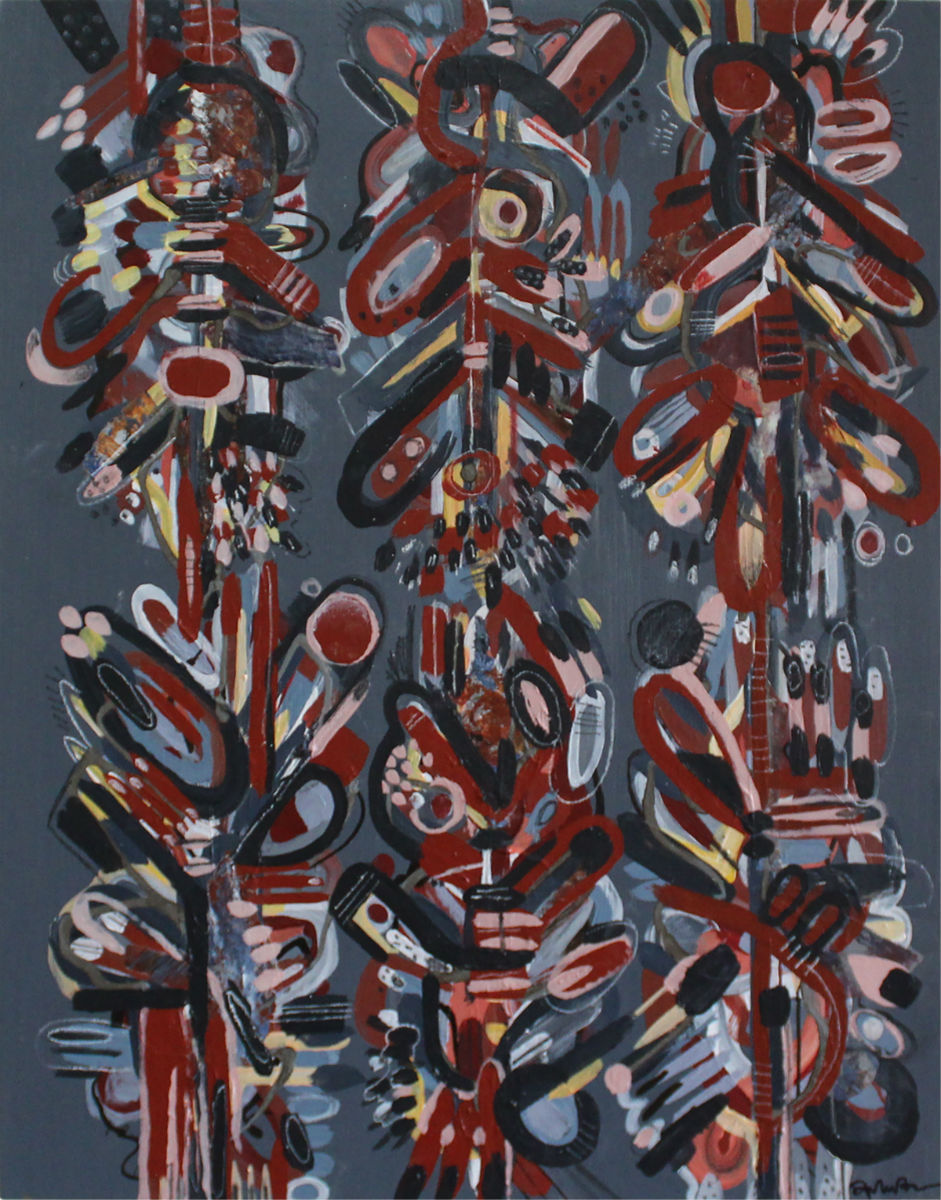
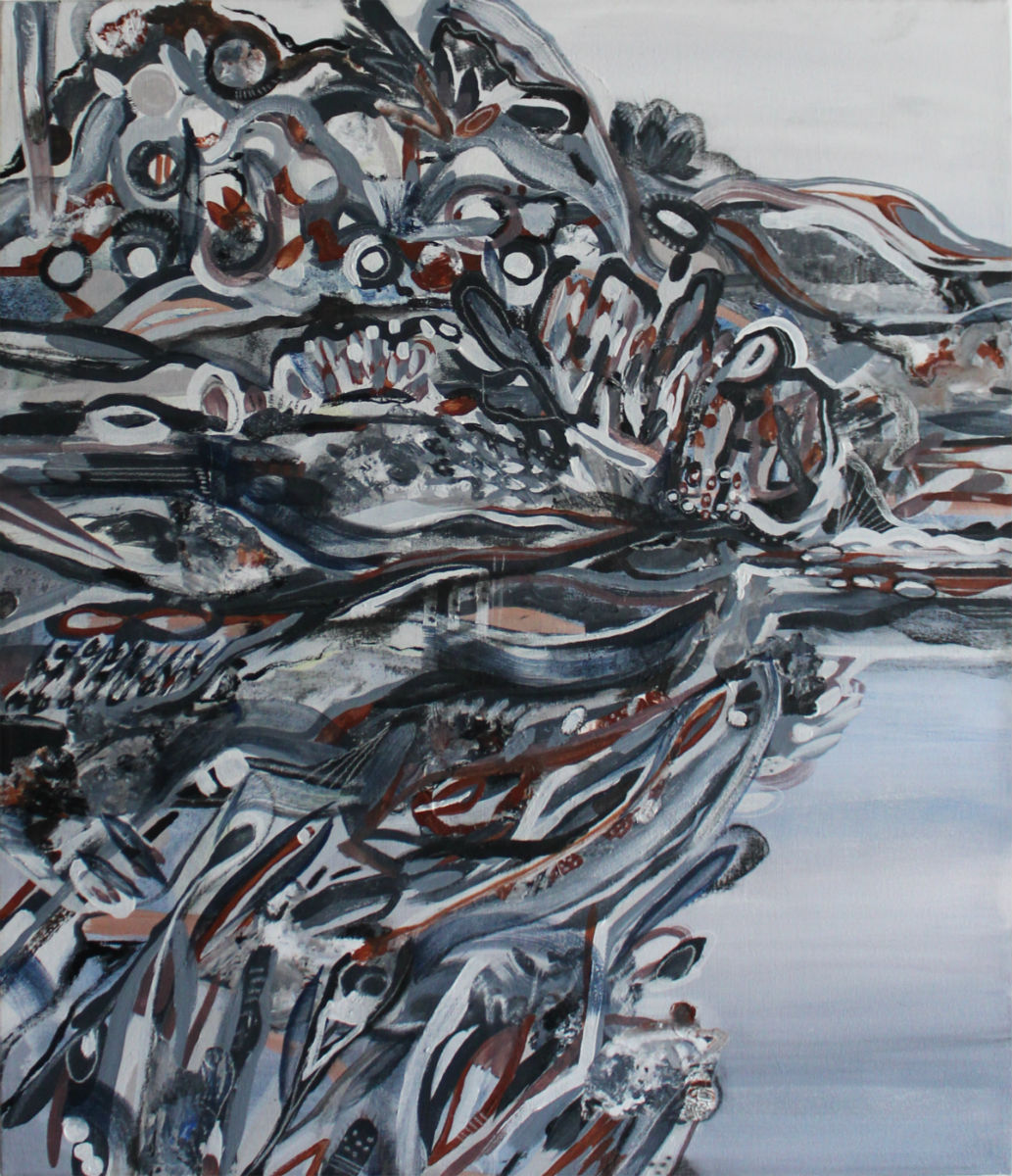
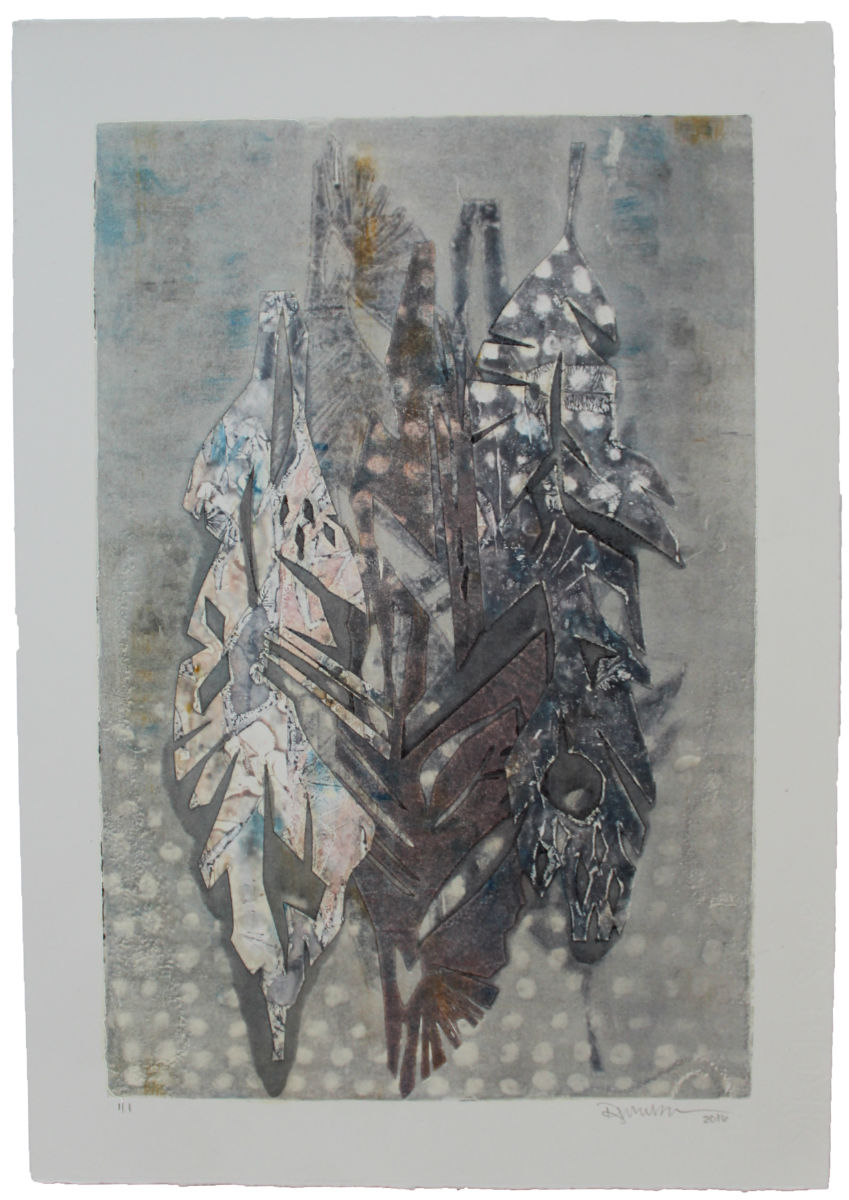
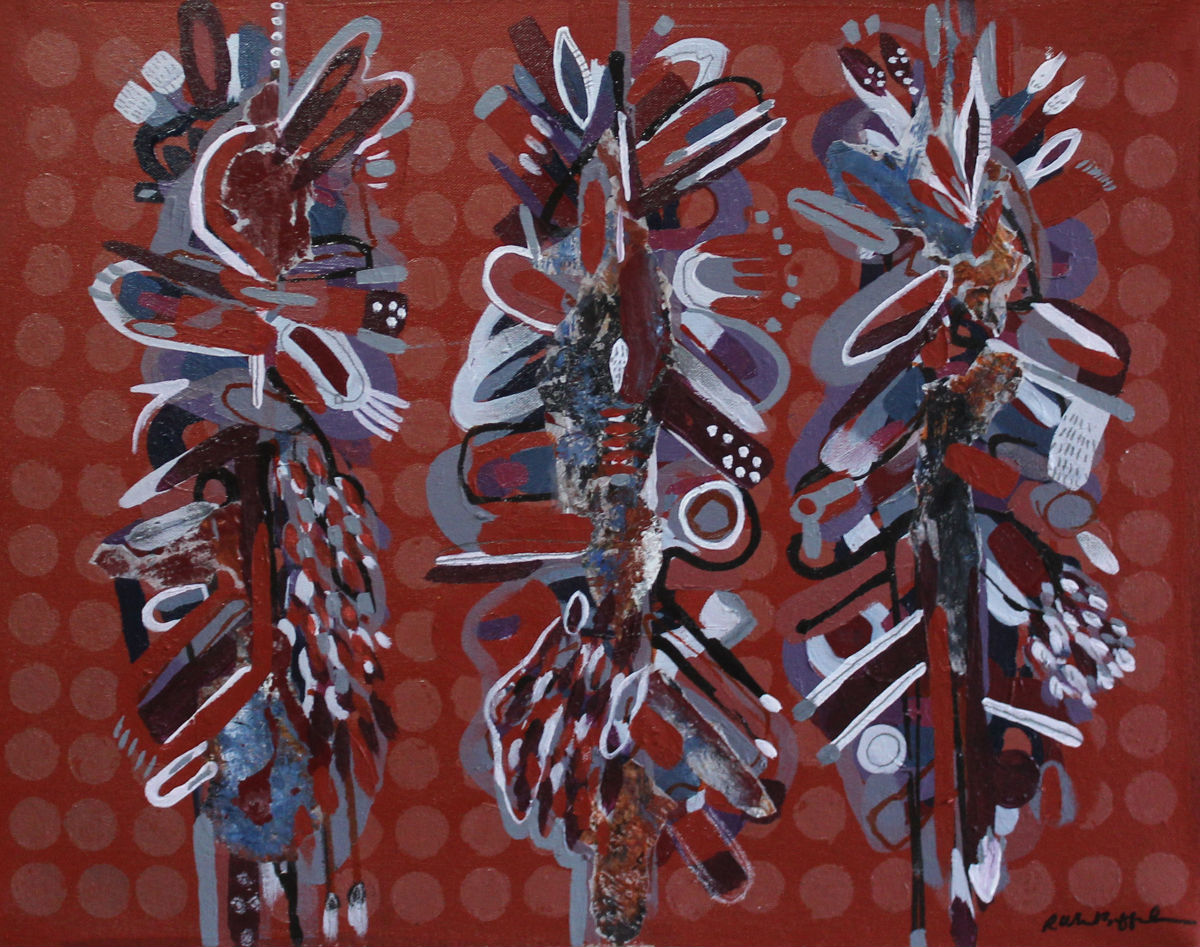
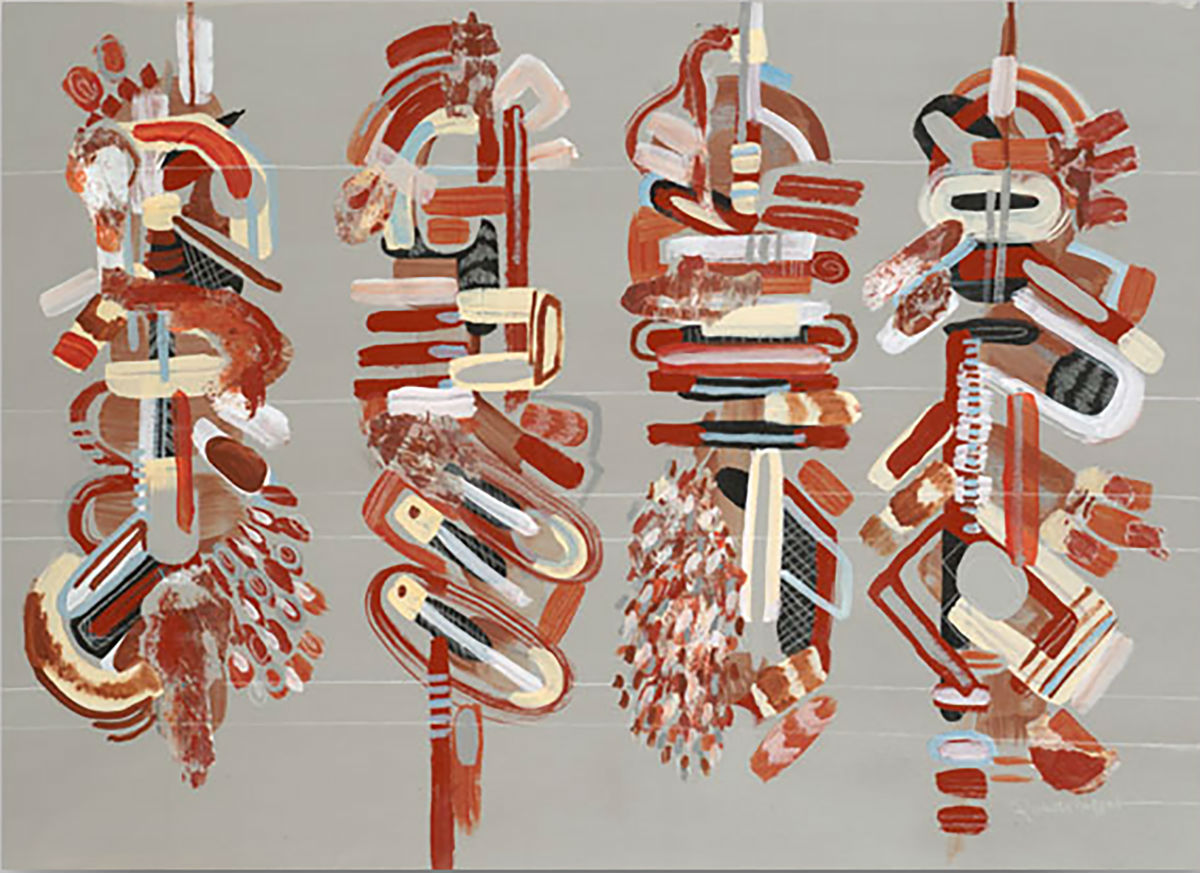
One of my objectives is to tell a new story about the contemporary Native American. I remember the symbolism and stories of my youth. Then I recreate them in a less literal way, allowing them to expand both deliberately and unintentionally. For example, intentionally, I painted a feather laying horizontally, having in mind a panoramic landscape that would vary the perception of it. When playing with the composition and putting multiple feathers vertically in a row, I saw the feathers transforming into powwow dancers, lined up and ready for a grand entrance. My initial concept expanded. However, after exhibiting the piece in the Southwest, I heard the feather interpreted as a Kachina doll. I had never before seen a Kachina doll, but I enjoyed that kind of connection from a viewer.
How did your move from South Dakota to New York influence your sense of artistic identity and experimentation?
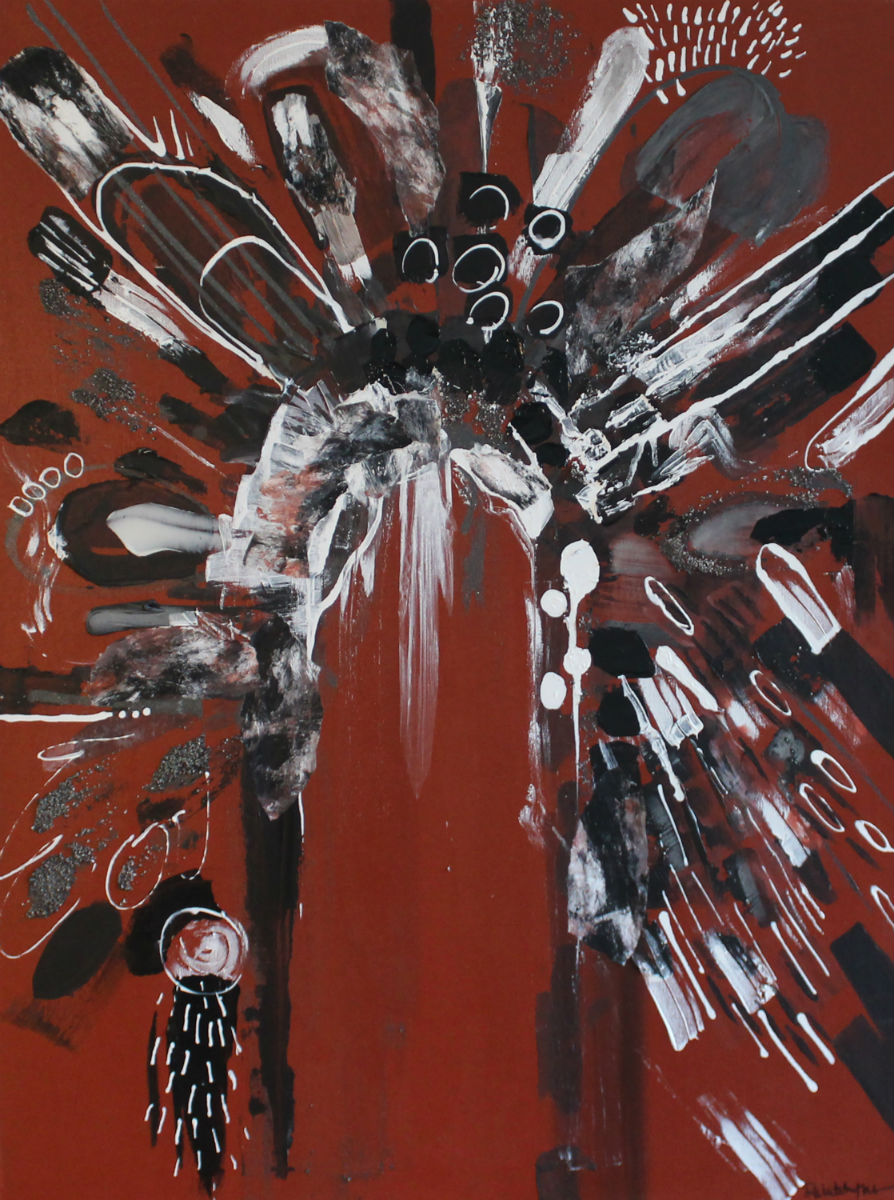
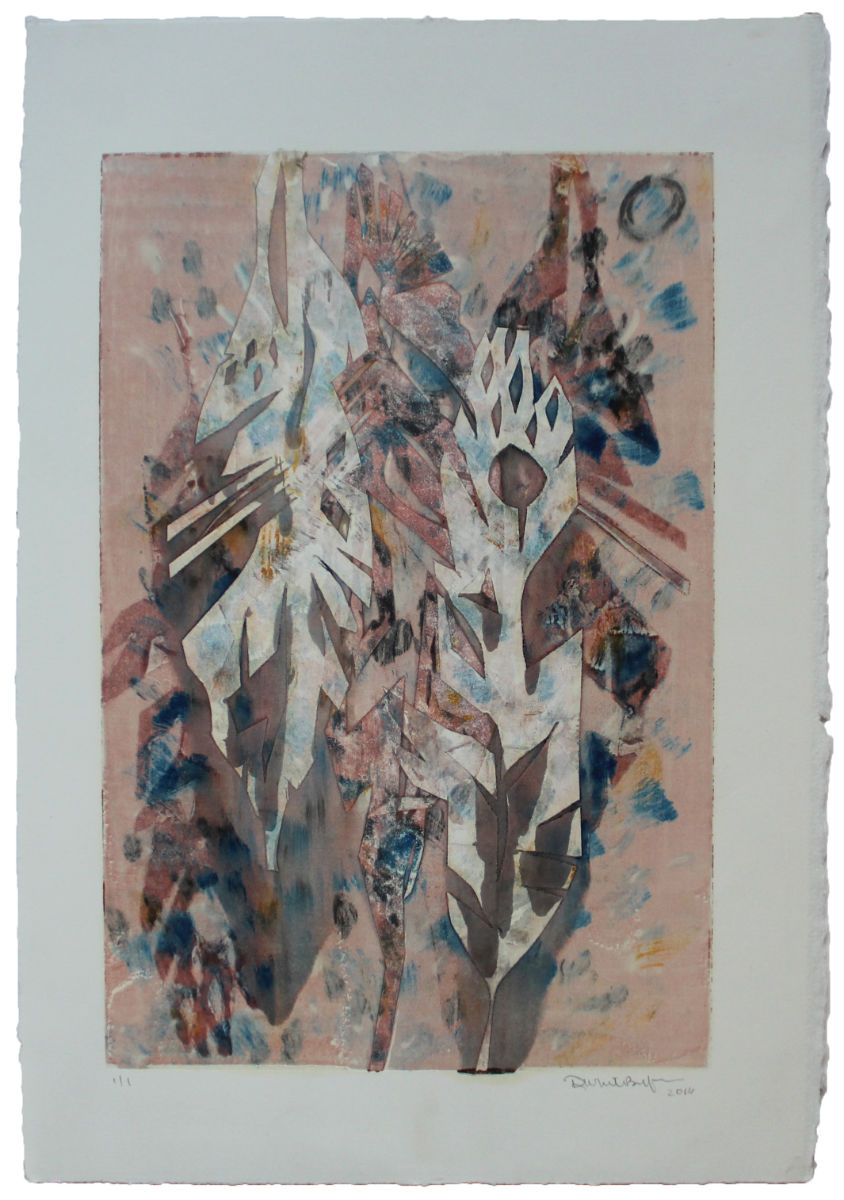
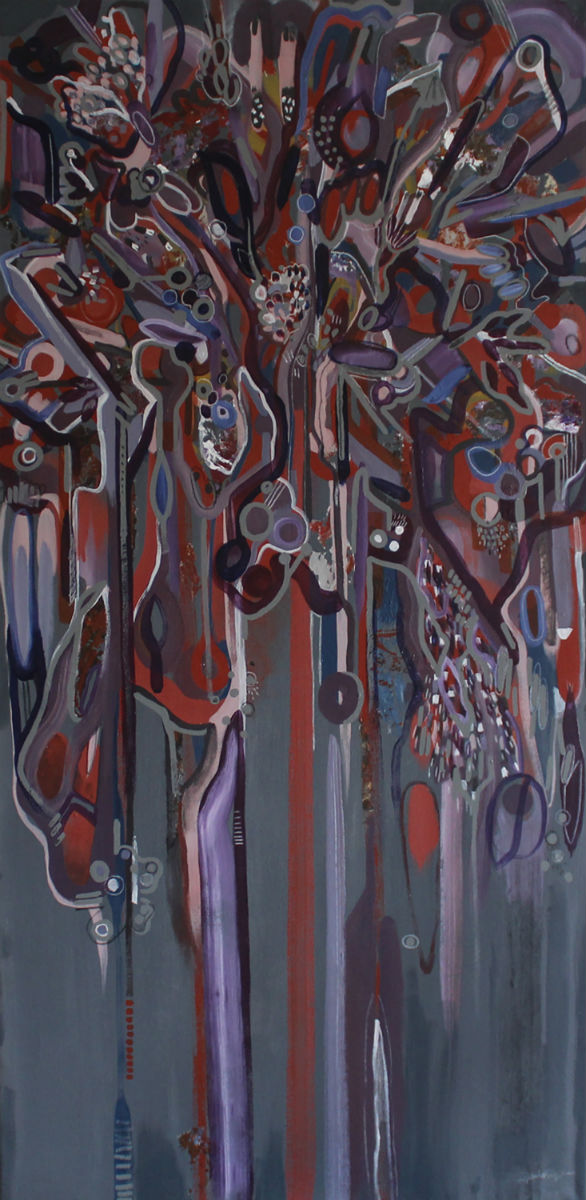
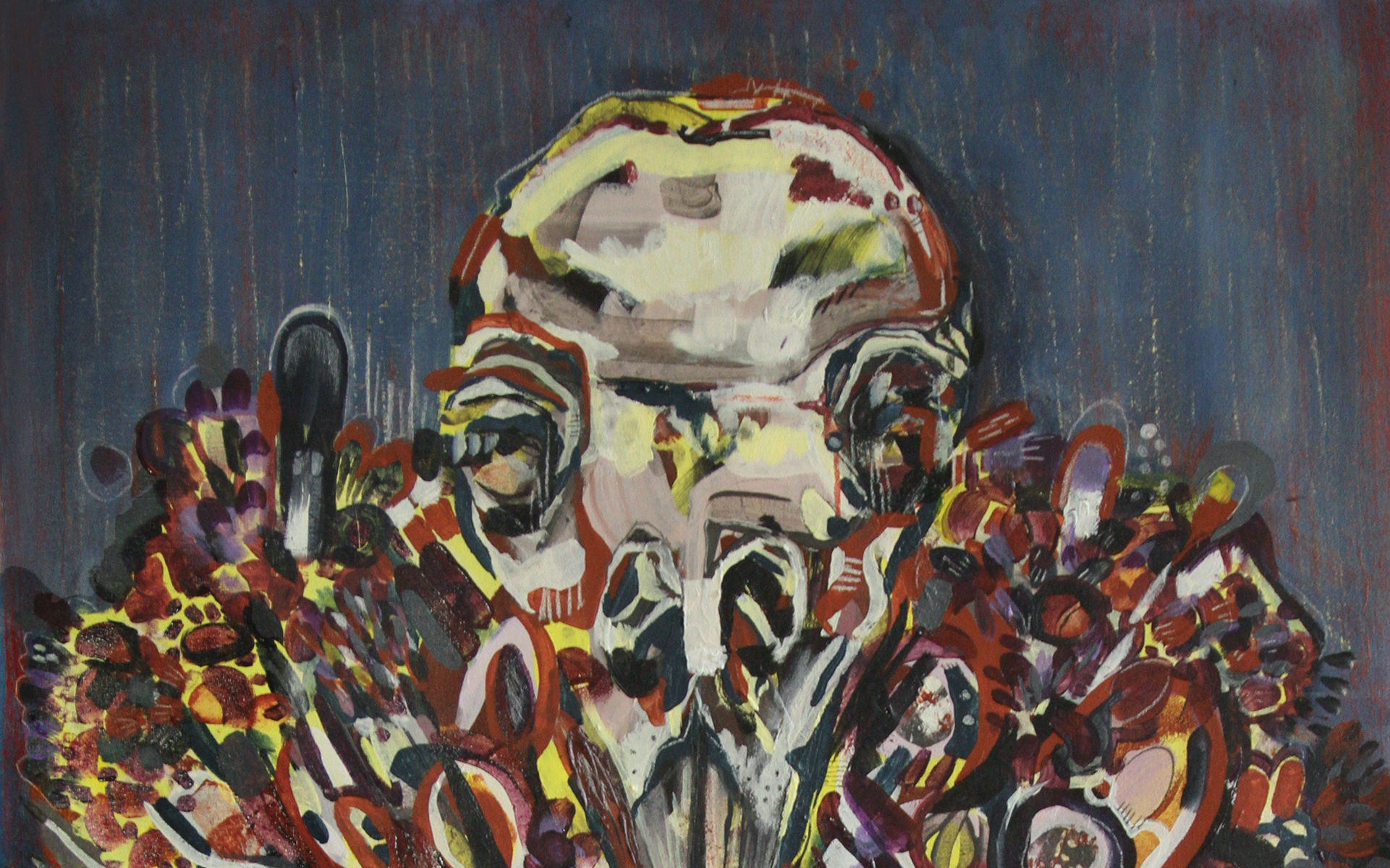
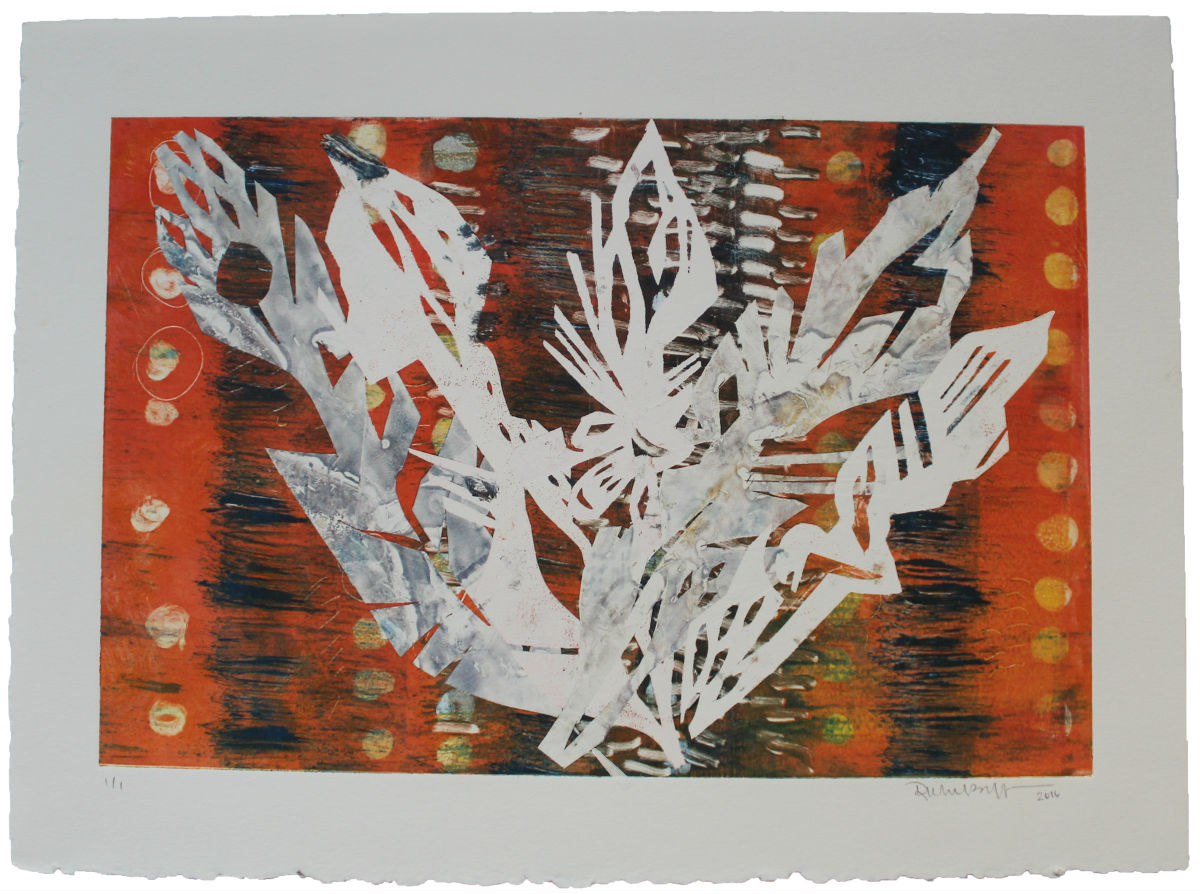
When I leave my studio, I connect with other artists and witness art from all over the world without even leaving the city. It is a constant source of energy and inspiration. In New York, I have become more experimental. Since Los Angeles, I have been incorporating more of the printmaking process into my work. I am also using more layers and colors and starting to fill more of the negative space in my compositions to create more energy. I am trying to instill more significance and purposefulness behind my artwork. I have to find a way to stand out and stand for something.
Your paintings challenge long-held stereotypes of Native identity. How do you approach that confrontation through art?
When people think of “Native American art,” they probably imagine a hunky native guy sitting in a loincloth next to his wolf, who happens to be howling at the moon. Or they think about the native woman in skin-tight buckskin with a dream catcher behind her, longing for a John Smith to come to her rescue. Maybe they think of artifacts, with beads, animal skin, feathers or turquoise, set in a museum next to the ancient Egyptians. They do not think of art in contemporary galleries.
These perceptions of Native art are damaging. They allow the American genocide to continue. They don’t allow for acknowledgement of Natives in present-day society, let alone in the contemporary art world. I knew this was an issue long before I started my career as an artist. At one point, it made me hesitant to acknowledge myself as a Native American artist. Even the Native artists that I grew up admiring are not fully recognized in the contemporary art world. It made me believe that I either had to be a Native American artist or abandon everything Native American about my art. Now, when I create, I aim to abolish limited perceptions about what Native art really is.
Last year, you presented a solo exhibition at the Sioux Indian Journey Museum. What made that show especially meaningful for you?
It was an honor to have such a personal show in my home state. Even though my work had appeared there in a group show, the solo exhibit (curated by CAIRNS, Center of American Indians Research and Native Studies) was especially welcome, as I had been artistically unmotivated about painting during the prior year. This was an opportunity to re-focus and explore more deeply my personal background. As a child I loved that museum, and I had set a goal of showing my work there someday.
What gives you the greatest sense of fulfillment as an artist and cultural voice?
It is that I am doing it. I am making my art and my culture my life. It constantly challenges me and shows me what I am capable of. It gives me a reason to converse about my culture and share why that culture means so much to me. It’s also gratifying to see my impact on students—after a class, for example—or when they tell me about the reports they are doing on my art. I’m not sure I deserve it, but I am grateful to feel that I am giving back to my community and to South Dakota. I try to live up to the task, and I hope to be able to shift our national perspective on what being Native is.
Outside the studio, how do you recharge or find new sources of inspiration?
I enjoy watching art documentaries, studying the Lakota language, and reading books by Sherman Alexie or books about other artists and entrepreneurs. I am always learning more about SEO tactics, social media strategies, and how to become more productive with my time away from painting. I discover artists through Instagram, attend art openings and museum exhibits, travel, and become immersed in virtual reality.
What are you currently reading, listening to, or observing that is influencing your work right now?
For inspiration, I frequently reference colors and shapes from pictures I took while visiting the Midwest or during my travels. I pull colors from even simple things like rocks or other nature-related objects. I also look into catalogues and books searching for a particular feeling. I flip through Georgia O’Keeffe and Fritz Scholder, and the Reservation X exhibit catalogue regularly.
While creating, I listen to podcasts such as The Embers and Broken Boxes, as well as audiobooks about different entrepreneurs’ memoirs or business strategies. Audiobooks help me focus without having to constantly skip through playlists.
In my studio space, I have photos of my grandma and of my favorite art. They are a direct source of inspiration. I also have photos of my great-grandparents, paintings that my great-grandfather created, some swatches of colors that I have used in past paintings, and some flowers I love.
In addition to galleries and museums and walking around the city, I love the NY Botanical Garden and visiting family in New Jersey.
Can you share what you’re currently working on and what directions you’re hoping to explore next?
My last piece was for a group show curated by CAIRNS. It is a show that creates a timeline for the Wounded Knee Massacre.
In April, I will be speaking and working with some of the students at Northern State University in Aberdeen, South Dakota.
My plan is to visualize and incorporate paths and people who have traveled them. I want to find more colors that are found in nature, particularly those at some of our sacred sites. I intend to do some larger-scale work on canvas, do printmaking, and explore mediums such as oil paint and sculpture. I am reworking my website, and I plan to have it translated into the Lakota language. I plan to constantly learn and adapt.