Tarik Currimbhoy designs movement into stillness. Trained as a painter, architect, and industrial designer, he brings these disciplines together to explore how structure, gravity, and balance form the poetry of sculpture. Born in Mumbai and based between New York and India, Currimbhoy grounds his work in classical craft and ancient casting methods, yet his forms feel distinctly modern.
His sculptures shift between the static and the alive. They rock, tilt, and respond to touch, transforming metal into something almost weightless. Whether monumental or intimate, each piece is a study in simplicity, the purity of a curve, the elegance of a single gesture, the quiet tension between mass and motion.
For Currimbhoy, beauty lies in forms that endure. His designs speak to architecture, to engineering, and to the timeless human fascination with objects that move through space with grace. In these kinetic works, he captures both the force of gravity and the thrill of overcoming it.
An Interview with Tarik Currimbhoy
By Carol Real
How did the spaces and objects of your childhood in Mumbai influence your early curiosity for mechanics, motion, and form?
My childhood days were spent in Mumbai, India. My father was a playwright who would visit America, where his plays were staged on Broadway, and bring back toys for me that had to be constructed. They were balsa wood airplanes, kites, cars and transistor radios that I had to put together. I loved trying to figure out how to assemble them all. My favorite was a plastic toy airplane that worked on fuel, triggered by a battery controlled by tension cables that operated the tail fin up and down. I used to make my own kites and fly them from the terrace of our home. I took great delight in understanding how things worked.
Your training spans painting, industrial design, and architecture. How do these disciplines converge in your sculpture?
I came to America to attend Pratt Institute to be a painter and found that sculpture appealed to me more, so I got my Bachelor of Fine Arts with Industrial Design as my major. Then I went to Cornell and again to Pratt, getting first a Master of Arts degree followed by a degree in Architecture. Luis Barragán, the Mexican architect and sculptor, was my inspiration. I was fascinated by his use of forms and water, with horses to give them scale.
I loved St. Patrick’s Cathedral in New York, where flying buttresses supported the central open space of the church, as well as the lintels that supported entryways and windows. I loved the city of Jaisalmer in India, where one stone is placed over another, structurally supporting each other and together forming a vocabulary of shapes.
Movement is central to your work. What draws you to the dialogue between stillness and motion?
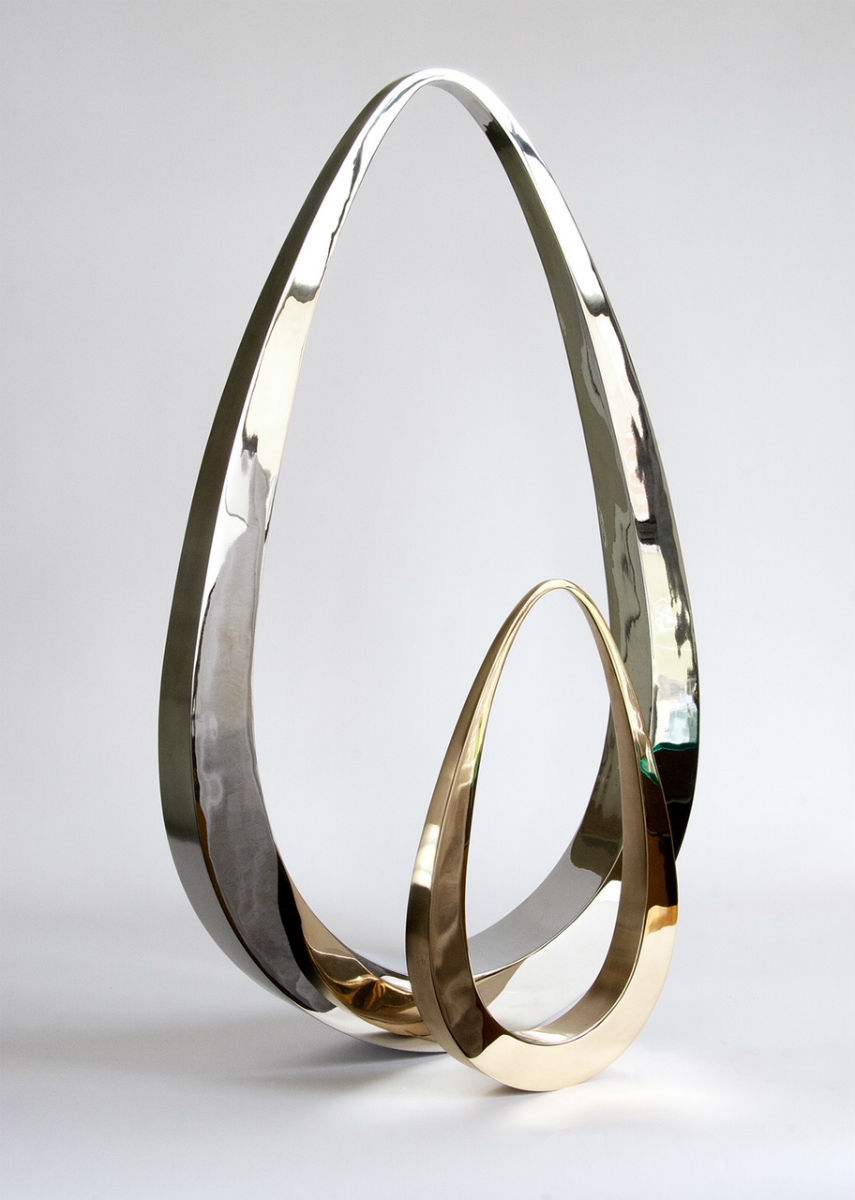
I love to see a ballerina balancing on her toes. When she dances, she creates kinetic energy all around her, composing shapes and forms as she gracefully moves. This conversation of static and kinetic movement is the inspiration for my sculpture. I see my sculpture as simple, gentle and graceful; when moved, it takes a life of its own. In Pendulum, the large stainless steel sculpture rocking with its smaller bronze pendulum creates its own magic—talking to each other, moving at different speeds, creating its own rhythm.
Your process blends ancient casting methods with contemporary precision. How do material, weight, and balance guide the creation of each piece?
My process of creating a sculpture is a distillation process, where the form is reduced to its basic element of simplicity. The material used is pure and its weight balances the sculpture; the center of gravity, when moved, causes it to rock gently. It takes six months to create a sculpture. The techniques used are ancient methods to create modern forms.
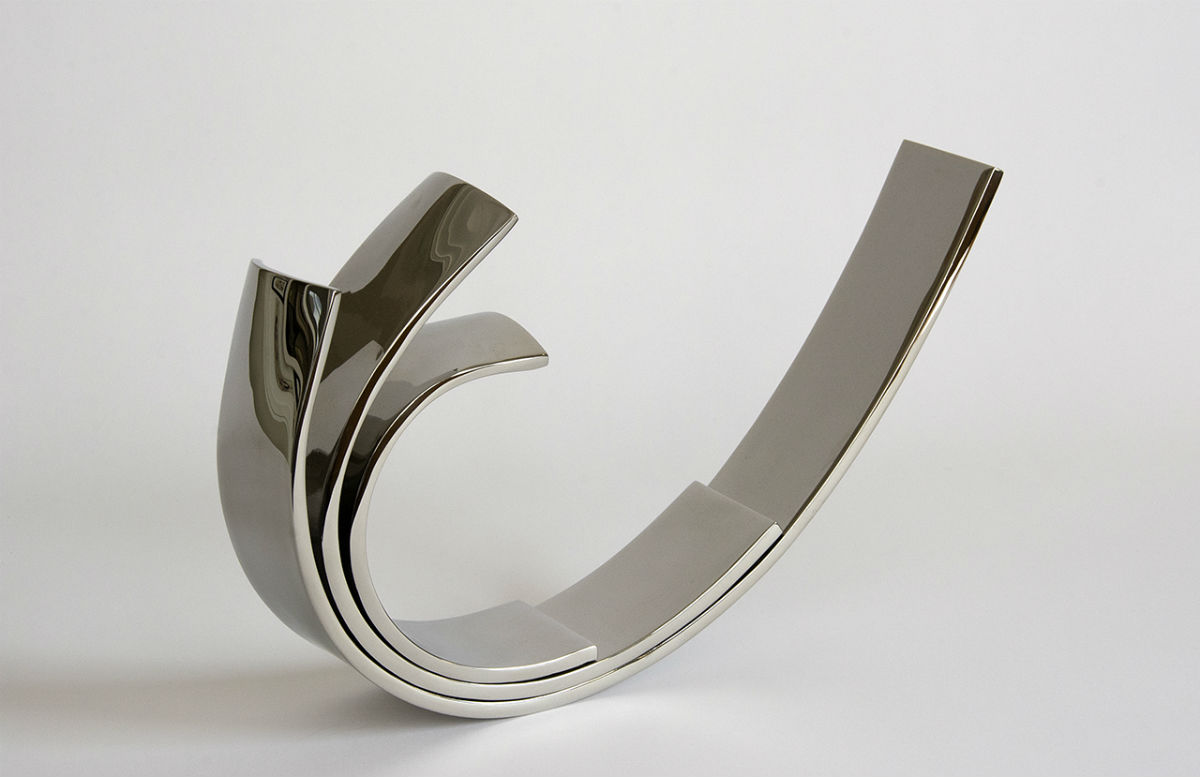
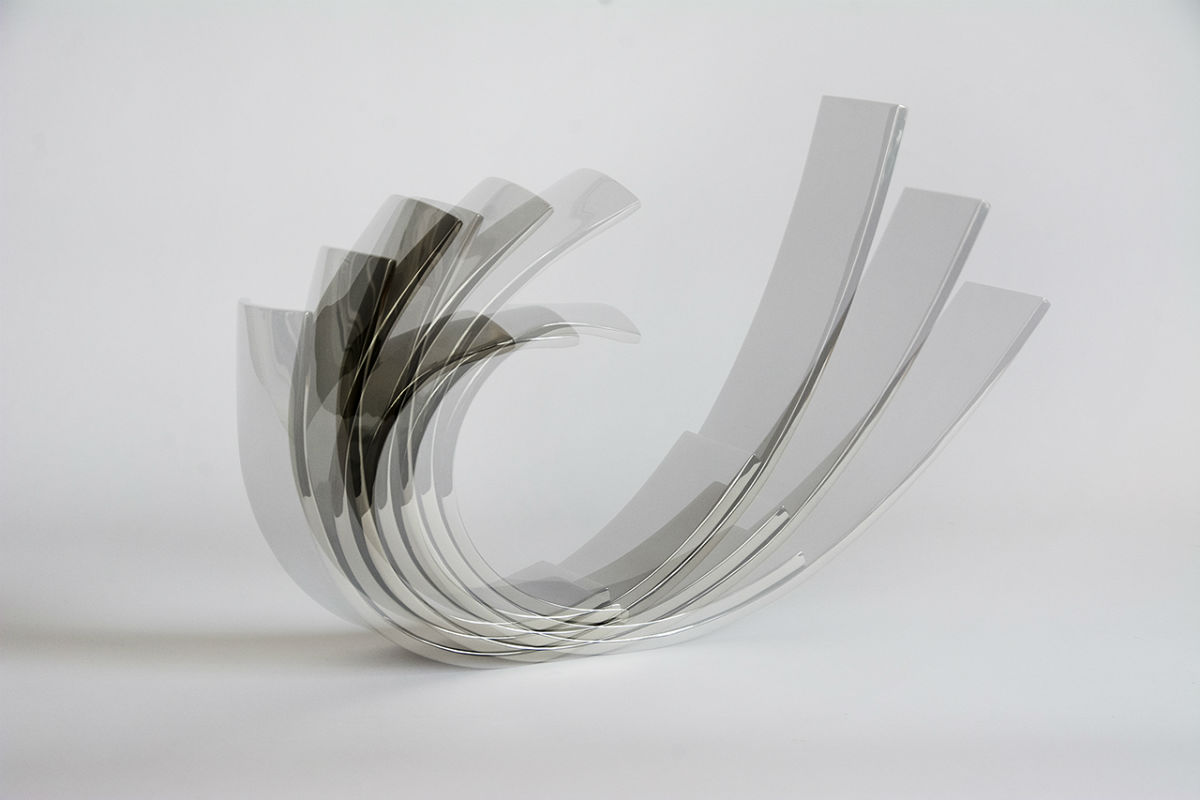
The process goes through various stages. Empathetic sketch, models in cardboard and plaster, then in styrene to get its beauty. Followed by wood and aluminum to study its weight and movement. Finally, the aluminum is sand cast into bronze or heated on a fire and hammered into shape. The aluminum is covered in sand and melted. Into this sand mold liquid bronze is poured. The process is much like lost-wax cast, as with Pendulum. Another blacksmith process is when the steel is heated and then hammered into shape, as with The Wave. When cooled, the sculpture is hand sanded and polished.
Your installations range from intimate works to large-scale public commissions. How does context influence your approach?
As an architect I believe in context. I like my work to be a part of nature, yet having its own personality. All my sculpture is based on the religion of gravity and weight creating simplicity and purity. Like a ball, it is easy to read and enjoy as it rolls.
Is there a sculpture that you feel encapsulates your vision of grace, movement, and structural clarity?
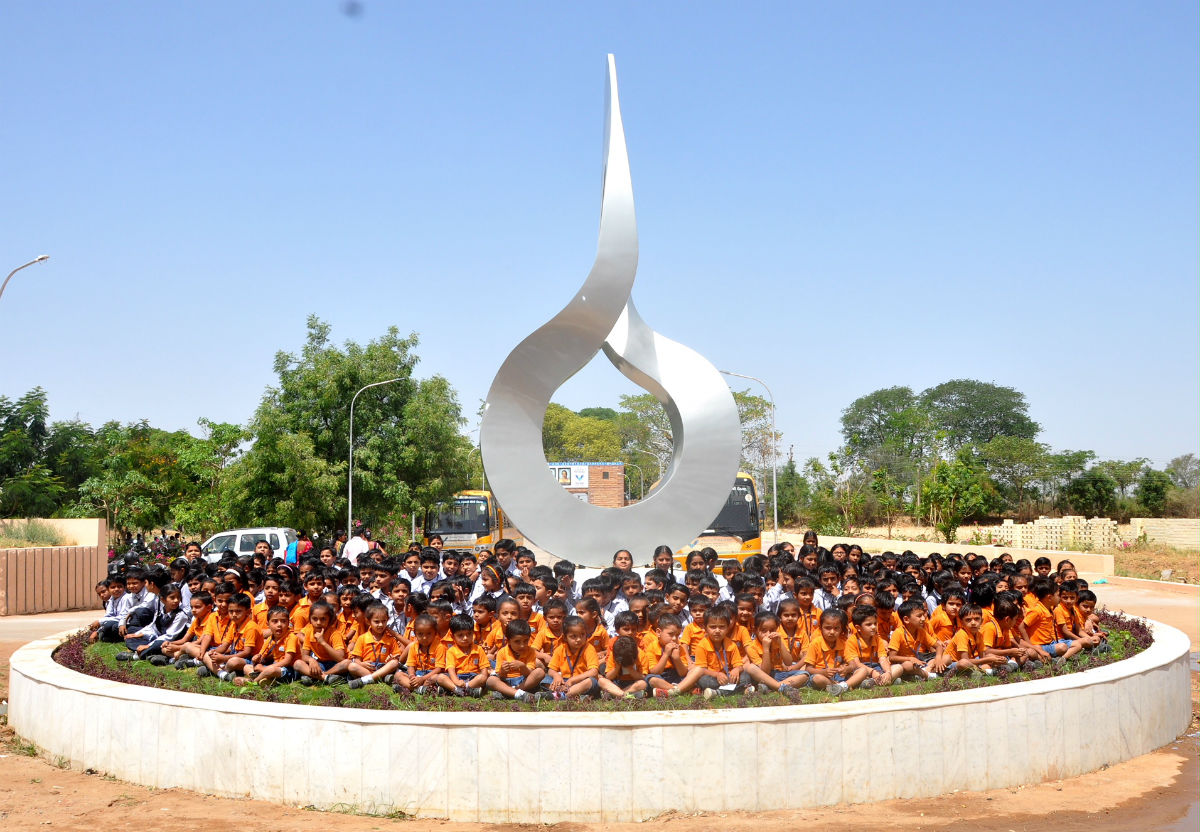
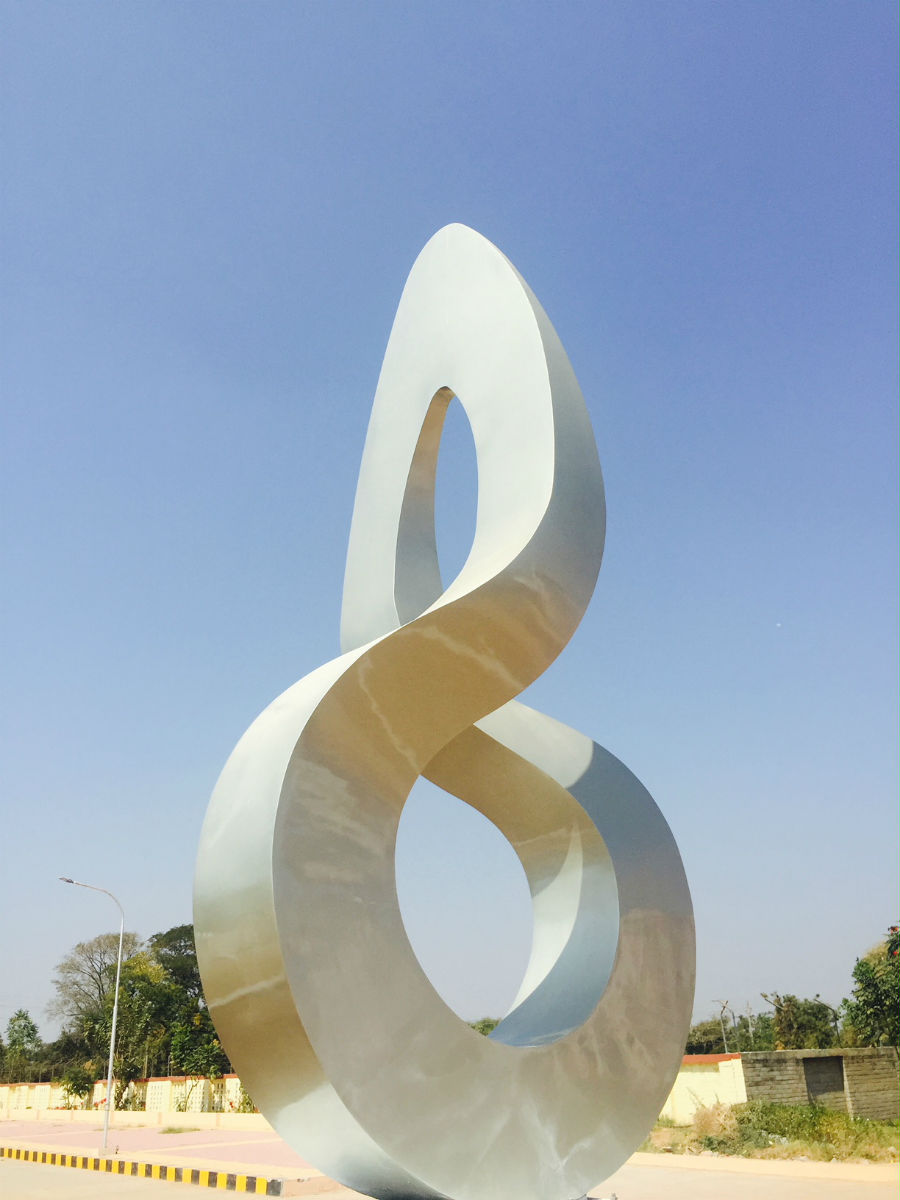
As a sculptor, Tarana has been most challenging. It grew from a circle that twisted and stretched itself out to the sky at 20 feet tall. Like a ballerina, it stands gracefully. When looked at from various angles the conversation between the positive and negative spaces is fluid and natural. Various models were made in styrene, wood and stainless steel at 18 inches high, then it was blown up at 20 feet and changed accordingly to make it read right in a monumental size. It was structurally engineered and detailed with utmost care. Finally, a plinth with footings 15 feet deep was designed to hold the 2-ton structure at wind speeds of 60 miles an hour. Today this sculpture stands at Vimala Vidyalaya, a school in India. It was designed to be made in stainless steel for Harvard Business School in America and was nominated by Dean Nitin Nohria. This whole experience was my most significant achievement.
Beauty is a complex concept. How do you define it in relation to motion and longevity in sculpture?
A form that withstands the test of time in its simplicity, grace, and beauty is a successful sculpture. It is beautiful when stationary, and when moving creates its own dynamics. This lives on forever through life, timeless. I strive for this success in my sculpture.
Outside the studio, what restores your imagination and keeps you attentive to movement in the everyday?
I love to people-watch in New York City. It is a mecca where tourists come from all over the world. On the weekend I love to barbecue for family and friends. I love to draw, freezing memories.
What advice would you give a young artist seeking their own language in a world that demands originality and resilience?
I would say, “Dream.” Fall in love and follow your dreams. Everyone has a genius within them that needs to be nurtured and developed. Life is a long journey and let this genius within you be the fire that leads you forward into the world.
All images courtesy of the artist
© 2025 Tarik Currimbhoy . All rights reserved.
© Art Summit Magazine